Thursday, December 19, 2013

...the PH Azkal's new rank

Philippines reaches new high in FIFA ranking


Posted at 12/19/2013
 
 
MANILA – The Philippine Azkals recorded another milestone by reaching its highest ranking ever in the FIFA world men’s list.


Previously ranked number 133 in the world, the Philippines jumped six places higher at number 127.

The Azkals are now a notch above Kazakhstan and one place below Cyprus.

The Philippines also improved its ranking in the Asian level, climbing to 17th place from its previous ranking of 19th.

Spain remained on top of the world’s list, followed by Germany and Argentina.

In their most recent outing last November, the Filipino booters held India to a 1-1 draw.

The Azkals are set to compete in the AFC Challenge Cup main draw, which kicks off in Maldives in May 2014.

Wednesday, December 18, 2013

...the world's fastest economies

Phl still among world’s fastest growing economies


MANILA, Philippines - The Philippine economy is expected to sustain its strong growth next year and remain as one of the world’s fastest growing economies, Moody’s Analytics said yesterday.

“The Philippines continues to outperform and will remain one of the world’s fastest growing economies in 2014,” senior economist Glenn Levine said in a report titled Asia Pacific Outlook 2014: Realizing Potential.

“Confidence is high, and investment, both public and private, is driving the economy forward.
Demand should rebound quickly after Typhoon Haiyan,” he continued.

The Philippine economy expanded by 7.4 percent in the first nine months of the year, faster than the government’s six to seven percent target for the year.

The growth was attributed to strong consumer demand that continues to make up the bulk of the country’s gross domestic product (gdp), government spending, and rising investments.

Although the government and economists forecast a dip in economic output in the fourth quarter following the devastation caused by Super Typhoon Yolanda and other recent calamities, rebuilding efforts in early 2014 are expected to prop up the economy.

Thus, growth is expected to remain within the government’s target of a 6.5 to 7.5 percent range next year.
 
Levine said the Philippine economy’s performance will be in line with the region’s performance as global demand picks up.

“The Asia Pacific region enters 2014 growing solidly with a mild tailwind from growing global demand. The global and regional economies are on a slow cyclical upturn and downside risks are receding,” Levine said.

“Next year should be better than 2013, with most national economies growing near or at potential rates by year’s end,” he continued.

“Yet there are reasons to believe 2014 will be better. The OECD (Organization for Economic Cooperation and Development) leading indicator of economic activity is accelerating, suggesting that developed world GDP will improve in the coming quarters,” Levine said.


Tuesday, December 17, 2013

...the Miss International 2013

Miss Philippines wins Miss International 2013


Rappler.com
12/17/2013


MANILA, Philippines – Miss Philippines Bea Rose Santiago was crowned Miss International 2013 on Tuesday, December 17, at the Shinagawa Prince Hotel Hall in Tokyo.

This is the 5th Miss International title for the Philippines and the 3rd major crown by a Filipina this year, following wins by Megan Young at Miss World and Mutya Datul at Miss Supranational.

Minutes before her crowning, Santiago delivered her final statement using the opportunity to thank the world for standing with the Philippines during the onslaught of Typhoon Haiyan. Calling for unity among nations, she said, "If I win the crown, I will help promote camaraderie among countries."

Santiago dedicated her win to her countrymen. "This is for the Philippines. I love you, Philippines.”
Miss Netherlands was crowned first runner up and Miss New Zealand was second runner up. Other members of the Top 5 were Colombia and Hungary.

The Top 15 were Gibraltar, Brazil, Puerto Rico, Ecuador, Hungary, Netherlands, United States, Philippines, New Zealand, Lithuania, Iceland, Colombia, Russia, Thailand, and Spain.


Special Awards:
Miss National Costume: Miss Aruba Erialda Croes
Miss Friendship: Miss New Zealand Casey Radley
Miss Internet: Miss Macau Adela Ka-Wai Sou
Miss Photogenic: Miss Lithuania Elma Segzdaviciute


Over 60 candidates from all over the world competed in the pageant held to "promote people-to-people and cultural exchanges as international contributions."

Since 1960, the pageant has been strengthening ties among nations through international exchanges and social programs geared toward "world peace and mutual understanding."

The Philippines has a rich history in the Miss International pageant beginning with Gemma Teresa Cruz (Araneta) who was the first Filipino and first Asian to win the pageant in 1964. Other winners include Aurora Pijuan in 1970, Melanie Marquez in 1979, and Precious Lara Quigaman in 2005. – Rappler.com


Sunday, December 15, 2013

...the Miss Intercontinental 2013 runner-up

Philippines is Miss Intercontinental 2013 3rd runner-up


SunStar
Sunday, December 15, 2013


MANILA -- Philippines pride Koreen Medina landed third runner-up in Saturday's Miss Intercontinental 2013 held in Maritim Hotel Magdeburg, Germany.

Miss Russia Ekaterina Plekhova bested the other contestants as she bagged the top crown, followed by Miss Puerto Rico Aleyda E. Ortiz Rodriguez, 1st runner-up; Miss Colombia Margarita Maria Peralta Tovar, 2nd runner-up; and Miss South Africa Kayla Nel; 4th runner-up.

Miss Philippines
Photo courtesy: Koreen Medina's official Facebook fan page

Other intercontinental beauties who also took home special awards were Miss Portugal, Miss Photogenic; Miss Turkey, Miss Press; Miss Germany, Miss Congeniality; Miss Argentina, Best in Evening Gown; Miss Puerto rico, Best in Swimsuit and Best in Smile; and Miss Panama, Best in National Costume.

Medina represented the country after winning Mutya ng Pilipinas - Asia Pacific International 2013.

She also won several beauty and talent search competitions like ABS-CBN's My Girl 2012 and Coca Cola Music 2011. (NMP/Sunnex)


Thursday, December 12, 2013

...the Top 10 Food Trends of 2013

It’s a Wrap: Andrew Zimmern’s Top 10 Food Trends of 2013


People.com
12/12/2013
Andrew Zimmern's Top 10 Food Trends of 2013
Getty (3)
Andrew Zimmern is a James Beard award-winning TV personality, chef, food writer and teacher. As the creator and host of Travel Channel’s Bizarre Foods with Andrew Zimmern and co-host of the Go Fork Yourself podcast, he travels the globe, exploring food in its own terroir.

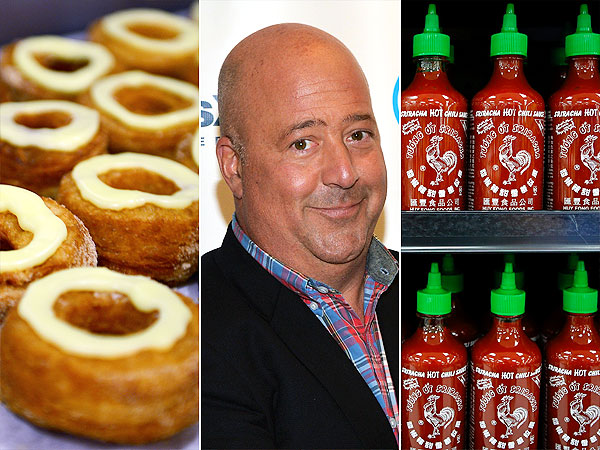
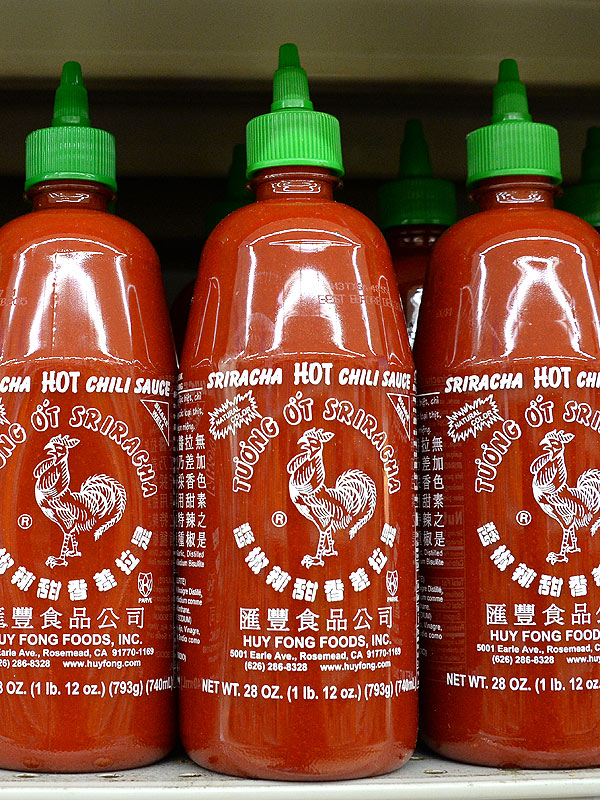
There were highs (brilliant Filipino food!), lows (Twitterverse predicts Sriracha shortage!) and things that were downright baffling (New Yorkers lining up for pastry at 3 a.m.?). Here’s a round-up of the moments that captivated the food world this past year.

Andrew Zimmern's Top 10 Food Trends of 2013
Getty

1. THE CRONUT

This is a brilliant marketing lesson that should be taught at business schools around the country. Here is a dish that has been cooked in many forms for a hundred years. But now a superb New York City chef, Dominique Ansel, has perfected a version of it—proving that with scarcity comes power. As thousands of people willing to line up in the wee hours of the morning have shown, the Cronutization of America is a social construct built around wanting something you can’t have.

Andrew Zimmern's Top 10 Food Trends of 2013
Getty

2. FILIPINO FOOD

This is the year, finally, that Pinoy foods have their day in the sun. Chinese, Japanese, Thai, Korean, Vietnamese: One by one, they’ve all delighted and inspired American diners, and Filipino cuisine is next. Just as the Southern food revival can be tethered to chef Sean Brock’s early legacy at Husk restaurant in Charleston, South Carolina, the Filipino foods movement will one day be traceable to Paul Qui serving dinuguan (pork blood stew) at his restaurant Qui in Austin, Texas.
Andrew Zimmern's Top 10 Food Trends of 2013
Getty

3. FRIED EGGS ON EVERYTHING

I love it, and do it at home all the time. Thirty years ago, I was a line cook in New York City and would do the same thing. It’s stoner food, it’s what cooks make each other for snacks—but it went mainstream and is now overdone. It’s like The Gypsy Kings: They were cool in 1983, but if I hear “Bombaleo” one more time, I will kill whomever is playing it.
Andrew Zimmern's Top 10 Food Trends of 2013
Getty

4. SRIRACHA HOT SAUCE

It’s the most overrated item of last 20 years, but brilliantly marketed and distributed. I’ve written a lot on this subject and I’m bored with my own opinions of it. There are a hundred hot sauces and chile condiments I prefer, but I wish I owned this company.
Andrew Zimmern's Top 10 Food Trends of 2013
Getty

5. CROWD-FUNDED FOOD PROJECTS

It works, it’s cool and it makes a difference. Kevin Sousa, for example, is trying to use food and restaurants as engines for urban renewal in depressed areas of Pittsburgh. His latest project is in the old steel town of Braddock, Pennsylvania. It’s a desperate place in need of real help. Sousa has launched the Kickstarter Braddock project, which will house a restaurant, a job-training facility and a farm in a former Chevy dealership. This is just one example of how we can help our communities by taking ownership, literally.
Andrew Zimmern's Top 10 Food Trends of 2013
Getty

6. GREEK YOGURT

I devour it. I have always hated the thin, watery, American yogurt since the first time I visited Eastern Europe in the late 1960s with my dad. I dug into the thick stuff and never went back. And its mainstream appeal just continues to grow: Nearly every major brand is in on the Hellenic act, such as Yoplait, who launched a new Greek version this year, and Danone, who will be expanding its Oikos line to include Starbucks parfaits.
Andrew Zimmern's Top 10 Food Trends of 2013
Getty

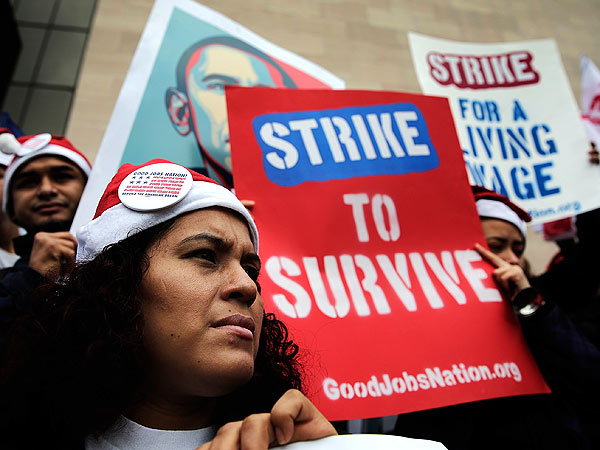
7. RAISING MINIMUM WAGE

This year Punch Pizza, a fast-casual restaurant in Minnesota’s Twin Cities of Minneapolis and Saint Paul guaranteed all new hires a living wage of $10 an hour. This kind of investing in people is a smart trend that creates a more vibrant economy. It’s the type of big thinking that launched an upwardly mobile U.S. middle class and grew our country into a superpower. We should get back to that. Fast food workers should all be guaranteed the same fair wage. So should everyone else.
Andrew Zimmern's Top 10 Food Trends of 2013
Getty

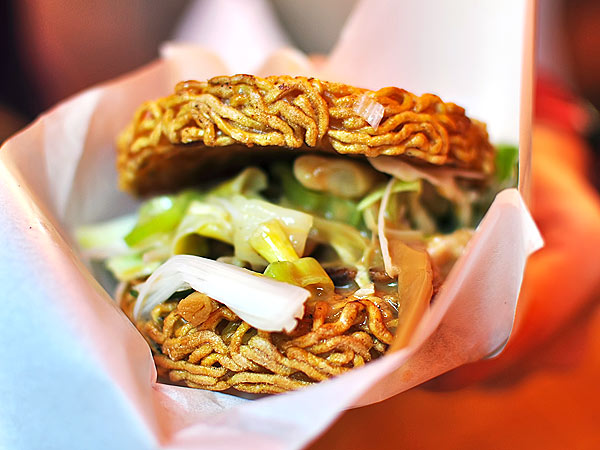
8. RAMEN BURGER

Everything that’s wrong with the world is summed up in this dish that has gone nowhere in a hurry but had its Warholian 15 minutes of fame this past summer. Who wants a noodle bun? It’s a terrible gimmick. Say what you want about the Cronut or sriracha, but at least they taste good.
Andrew Zimmern's Top 10 Food Trends of 2013
Getty

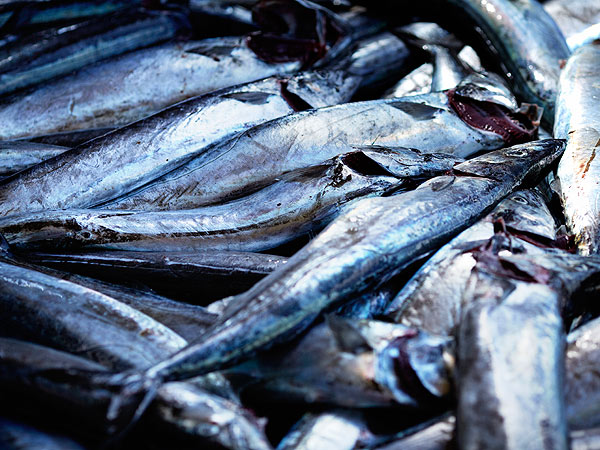
9. OVERFISHING

As Greenpeace reports, “The fish don’t stand a chance.” This threat is real, yet for whatever reason, the notion that we need to eat sustainably is thought of as an idea or at best a suggestion. Fish are going to be gone from our oceans in thirty years unless we make some hard choices and diversify our food choices and our diets.
Andrew Zimmern's Top 10 Food Trends of 2013
Getty

10. HIGH-TECH EDIBLE MARVELS

Hampton Creek Foods created a plant-based egg last year and is using it in a commercial vegan mayonnaise called Just Mayo. Plant-based eggs require very little energy to produce, cost less, present no health hazards like chicken eggs, are shelf stable and offer superior nutrition. Mark my words, HCF founder Josh Tetrick will win a Nobel Prize one day. You heard it here first.

Wednesday, December 4, 2013

...the PH fashion czar

Fashion win for the Philippines

           
Avel Bacudio, named 'Asia's Most Influential Designer of 2014', with a model wearing his designs.

AVEL Bacudio from the Philippines has been awarded the title 'Asia’s Most Influential Designer of 2014' at the close of the Mercedes-Benz STYLO Asia Fashion Week yesterday.
 
As the winner, the Filipino designer walked away with an all-expenses paid trip back to KL for a solo showing at the next Asia Fashion Week in 2014.

Public online voting accounted for 50 percent of the decision. Input by the official Asian delegation – comprising heads of fashion weeks and associations, international fashion media and trade buyers, was also taken into consideration.

The event, created by Mercedes-Benz Malaysia’s fashion partner STYLO International, is the first business to business (B2B) fashion week in South-East Asia.

Its debut this year saw an assembly of top designers from 11 Asian countries showcasing in both Langkawi and Kuala Lumpur over the span of four days.

Datuk Nancy Yeoh, chairman of the Mercedes-Benz STYLO Asia Fashion Week said: "The 25 designers vying for the title could not be more talented, varied and colourful than they already are. All of them truly represent what fashion from Asia is really about."

Mercedes-Benz STYLO Asia Fashion Week is supported by MyCreative Ventures and IM4U, which are new initiatives under the Malaysian Government and Langkawi’s tourism development authority, LADA Eco-Tourism.

With 29 fashion weeks already spread across all continents bearing the Mercedes-Benz name, this is the 30th fashion week for the German luxury automaker.

Datuk Professor Jimmy Choo acted as honorary advisor for the Mercedes-Benz STYLO Asia Fashion Week.

Event partners included Starwood Hotels and The Andaman, with A Cut Above as Official Hair and Diva Productions as Official Make Up. Kinohimitsu, Kronenbourg 1664 and Tropical Charters were event sponsors.


...the Aquinomics

Philippines’ Aquino Races the World’s Fastest Economies

 
Bloomberg Markets Magazine
 
Manila is the capital of a country blessed by an economic resurgence -- and yet afflicted still by misery. Photograph: Virgile Simon Bertrand/Bloomberg Markets
 
 
Just after midnight one sultry Friday in August 1987, Manila became a battleground as rebel troops attempted a coup against Philippine President Corazon Aquino. Two blocks from the besieged presidential palace, insurgents opened fire on a car carrying Aquino’s only son, a bespectacled and soft-spoken 27-year-old junior insurance executive nicknamed Noynoy.


Dec. 2 (Bloomberg) -- Timothy Riddell, the Singapore-based head of Asian global markets research at Australia & New Zealand Banking Group Ltd., talks about the region's economies and markets. He speaks with Mia Saini on Bloomberg Television's "First Up." (Source: Bloomberg)

President Benigno S. Aquino III

President Benigno S. Aquino III

The leader of the Philippines, President Benigno S. Aquino III, has a strong economy to build on as he faces a new challenge: reconstructing a nation battered by Super Typhoon Haiyan. Photograph: Steve Tirona
 

In the Storm's Wake

In the Storm's Wake

A resident sells fruits and vegetables next to a public market destroyed by Typhoon Haiyan. Photograph: Ted Aljibe/AFP/Getty Images
 

Bonifacio Global City

Bonifacio Global City

Bonifacio Global City, a major new building development, rises on the edge of Manila. Photograph: Virgile Simon Bertrand/Bloomberg Markets
 
 
By the time soldiers still loyal to the president fought their way to the scene, three of Noynoy’s four bodyguards lay dead. Shot five times, the intended target improbably survived, albeit with a bullet in the neck that he still carries today, Bloomberg Markets magazine will report in its January issue.

“I’m living a second life,” says Noynoy Aquino, now himself the president of this Southeast Asian nation of almost 100 million people. “I was saved for a certain purpose and will not squander that opportunity.”

So far, Benigno S. Aquino III -- his full name -- has largely proved true to his word and given the Philippines a second life of its own in the process. Since moving into an official residence known as the House of Dreams, following his election victory in June 2010, Aquino, 53, has overseen a national resurgence beyond the reveries of most investors.

Bankrupted in the 1980s by dictator Ferdinand Marcos, the Philippines lagged far behind rival Asian economies, averaging just 3 percent annual growth from 1984 to 2009, according to data compiled by Bloomberg. Under Aquino, that figure has more than doubled. And in the first half of 2013, output surged at a 7.65 percent annual pace, surpassing that of China, the world’s fastest-growing major economy, before easing back to 7 percent in the third quarter.

Super Typhoon

In the aftermath of Super Typhoon Haiyan, Aquino must now try to sustain that growth while rebuilding whole swaths of his country and reinforcing its defenses against future, similar disasters. The tropical storm, which struck on Nov. 8, may have caused losses of as much as between $10 and $15 billion, according to early estimates.

Still, reconstruction is within Aquino’s reach, JPMorgan said in a November 22 report. The bank forecast that while the typhoon may cut full-year 2013 GDP growth to 6.9 percent from its earlier estimate of 7.1 percent, the nationwide impact won’t be long-lasting and the 2014 estimates should rise to 6 percent from 5.6 percent due to the boost from rebuilding.

The history of comparable catastrophes shows that reconstruction can be a boost for developing nations.

In 2012, Thailand’s economy rebounded 7.1 percent, following floods that swamped thousands of factories and a vast strip of agricultural land the previous year. In 2005, the Indonesian economy grew to 5.6 percent from 5 percent the year before, when a tsunami claimed about 200,000 lives and devastated Aceh province.

Best Performer

Investors in the Philippines weren’t unduly scared off by Haiyan, with the Philippines Stock Exchange Index falling 2.8 percent since Nov. 8 when Haiyan hit the Philippines.

From the time Aquino took office, the index has soared 86 percent, becoming the world’s best performer out of 45 emerging and developed markets tracked by MSCI indexes. The nation’s debt, meanwhile, has been raised to investment grade by Fitch Ratings, Moody’s Investors Service and Standard & Poor’s.

Now, investors are awaiting full-year GDP figures to see by how much the typhoon dented the country’s China-challenging growth rate.

Aquino has achieved this transformation by pruning a record $7 billion budget deficit in 2010 to $2.3 billion in the first nine months of 2013, declaring war on rampant corruption, announcing plans to more than double state spending on public works to $19 billion -- or about 5 percent of GDP -- by 2016, and exploiting Filipinos’ English-language skills to promote industries as diverse as casinos and call centers.

Filipinos Overseas

Foreign income from those call centers, together with remittances from 10.5 million Filipinos who work overseas, even helped Aquino defy the 2013 rout in other emerging markets -- especially those such as India with current-account deficits -- as investors anticipate an end to U.S. monetary easing.

The Philippines, by contrast, boasts a current-account surplus of more than 4 percent of GDP and should remain well placed to deal with the U.S. Federal Reserve’s eventual tapering, according to the International Monetary Fund.

That surplus has helped prop up the currency, the peso. Its 6.5 percent decline against the dollar in the 12 months ended on Dec. 3 is only a little more than half that of the Indian rupee. And although the stock market has fallen back from its May 15 record high, it was still up 9 percent during the same one-year period compared with less than 1 percent in the MSCI Emerging Markets Index.

Rolls-Royce

During that time frame, Philippine bonds have returned 8.7 percent, the best performance among 10 local-currency Asian bond markets tracked by HSBC Holdings Plc.

Such is the wealth being generated in at least the upper echelons of Philippine society that Bayerische Motoren Werke AG in September opened its first Rolls-Royce showroom in Manila.

“The Philippines for decades was a lost country,” says Ruchir Sharma, New York–based head of emerging markets at Morgan Stanley Investment Management who oversees $25 billion, including Philippine shares. “Now, it could end up being among the fastest growing in the world in 2013. It comes from having the right leader at the right time.”

Maintaining such investor enthusiasm is more problematic. The stock market surge since Aquino took office now makes the Philippines the world’s second most expensive emerging market after Mexico, with a 12-month forward price-earnings ratio of 16.9 compared with 7.8 for Chinese stocks listed in Hong Kong, according to data compiled by Bloomberg.

‘Too Expensive’

Investor Mark Mobius says he’s not buying at those prices.

“It’s just too expensive,” says Singapore-based Mobius, who oversees $53 billion at San Mateo, California–based Templeton Emerging Markets Group. “There’s a shortage of good companies. They need more IPOs.”

That isn’t the only challenge facing the Philippines. The nation is locked in a territorial dispute with its giant neighbor, China, over the potentially oil-rich Spratly Islands in the South China Sea, while at home it is struggling to pacify a four-decade-old Muslim insurgency in southern Mindanao.

Even as the economy soars, almost 20 percent of the population continues to live on less than $1.20 a day -- the poorest in squalid slums or sometimes in cemeteries, where they squat in the family tombs of the wealthy.

Calamitous Storm

More than 10 million people were affected by November’s typhoon. An unemployment rate of 7.3 percent is Asia’s second highest, after India. Foreign direct investment is the lowest in Southeast Asia -- just $2.8 billion in 2012 compared with $8.6 billion for Thailand. The $250 billion economy remains dependent on the $21 billion sent home annually by Filipinos working overseas.

While Haiyan was an exceptionally calamitous storm, natural disasters are far from rare in the Philippines, costing the nation an average of $1.6 billion a year, according to the Asian Development Bank.

Aquino’s battle against graft perhaps best reflects the enormity of his task. During his 2010 election campaign, he argued that it was impossible to beat poverty without first eradicating corruption.

Soon after being elected, he set about doing that by sacking Chief Justice Renato Corona for failing to disclose his assets. Aquino also arrested Gloria Macapagal-Arroyo, his immediate predecessor, on corruption charges that have yet to come to court. Both Corona and Macapagal-Arroyo deny wrongdoing.

Crusading Commissioner

Aquino also hired a crusading female tax commissioner, Kim Henares, 53, who has so incensed some of her targets that she has taken to carrying a pistol for self-defense.

Aquino’s efforts appear to have borne some fruit. His country’s ranking in Transparency International’s 2013 Corruption Perceptions Index, announced on Dec. 3, improved 11 places to 94th out of 177 countries.

Still, in recent months, these victories have been clouded by the disclosure that pork-barreling politicians have been misusing a $568 million poverty-reduction fund that they have been allowed to access at their own discretion. The scandal has wounded Aquino: His net satisfaction rating fell 15 points to plus-49 in September, according to polling firm Social Weather Stations.

For Aquino himself, time is running short. He is constitutionally barred from running for a second six-year term, and June will mark his fourth anniversary in office.

“You will quickly see him moving toward lame-duck status,” says Frederic Neumann, Hong Kong–based co-head of Asian economics at HSBC. “That means the reforms in which he is taking on vested interests could fall by the wayside.”

Defying Expectations

Looking relaxed in a traditional barong tagalog -- a translucent lightweight formal shirt -- Aquino said in a May interview in the presidential compound that he can emerge victorious. He has defied expectations before. A bachelor with a weakness for cigarettes and computer games, he spent much of his life in the shadow of his parents, the two most-revered figures in the nation’s struggle for democracy.

His father, Benigno Aquino Jr. -- nicknamed Ninoy -- was a charismatic opposition leader and senator jailed for eight years by Marcos before being allowed to travel to the U.S. for heart surgery in 1980. On his return to Manila in 1983, Ninoy Aquino was led off the plane by Marcos’s troops and shot dead by soldiers on the tarmac of the airport that now bears his name.

Marcos’s widow, Imelda, said in an interview with Bloomberg Markets in June that neither she nor her husband ordered the assassination.

People Power

However, the killing was the catalyst for a fragmented opposition to unite behind the widowed Corazon, who challenged Marcos and was swept into the presidency in a 1986 People Power uprising. The devoutly Catholic former housewife then withstood at least six coup plots to complete her full term and hand over power to an elected successor, Fidel Ramos.

By contrast, Noynoy had an uninspiring track record in business and politics. After graduating with a bachelor’s degree in economics from Ateneo de Manila University in 1981, he worked in various management positions in the family insurance company, Intra-Strata Assurance Corp., and on the Aquinos’ 6,400-hectare (15,800-acre) sugar plantation, Hacienda Luisita.

In 1998, standing for the centrist Liberal Party, he was elected to the House of Representatives and served there for nine years before voters sent him to the Senate in 2007.

Aquino wasn’t even originally supposed to be the Liberal candidate in the last presidential election. The chosen contender was Mar Roxas, a graduate of the Wharton School at the University of Pennsylvania and a former investment banker at New York–based Allen & Co.

‘Definitely Surprised’

Then, in August 2009, nine months before the poll, the revered Corazon Aquino died, sparking a wave of emotion among Filipinos, 300,000 of whom turned out for her funeral. Petitions circulated urging her son to run for president, and a month later Roxas stood down in favor of Aquino, who won the presidency by more than 5 million votes.

Filipinos were lucky that Aquino rose to the challenge, says Edwin Gutierrez, a London-based Filipino-American portfolio manager with Aberdeen Asset Management Plc.

“He’s definitely surprised on the upside,” says Gutierrez, who helps manage $10 billion in emerging-markets debt.

Filipinos may not be so fortunate with their next president, given their preference for personality rather than party-driven politics, Gutierrez says.

The Marcos family, for instance, still wields clout. Ferdinand Marcos Jr., 56, the dictator’s son, won a Senate seat in May and confirmed in an interview that he is considering a bid for the presidency.

Aquino brushes aside fears about who will succeed him.

“I didn’t have any ambition to be president,” he says. “It was fate. The people found me. I am sure they will be able to find another one out of 95 million.”

Leaving the choice to fate sounds risky in a country that has been so let down by leaders in the past. If Aquino is to make the most of his second life, he may have to play an active role in persuading Filipinos to elect someone who can build on his legacy.