Tuesday, June 7, 2011

...the Prague's Editor-in-chief

Filipino is appointed Editor-in-chief of Czech Republic daily


June 7th, 2011 under We are Pinoys!  
Repost: goodnewspilipinas.com


Randy Gener

Randy Gener, the Filipino-American Nathan Award-winning editor, writer and drama critic, has been appointed Editor-in-Chief of Prague Quadrennial Daily in the Czech Republic.

In addition to producing and editing a daily newspaper, Gener has been invited to present a lecture at the Faculty of the Arts of Charles University in Prague (Univerzita Karlova v Praze), the oldest and largest university in the Czech Republic and one of the oldest universities in Europe in continuous operation.

And Gener will co-host a series of gallery talks with renowned U.S. designers at the USA National exhibition entry, From the Edge. The talks will be held daily at 4:00 pm at Veletzrini Palace, Prague’s national gallery.

From the Edge’s gallery talks will showcase, among others, SITI Company’s BobRauschenbergAmerica; The Civilians’ This Beautiful City; Ping Chong & Company’s Cocktail and Inside Out; 3-Legged Dog’s Fire Island; Goodman Theatre of Chicago’s Desire Under the Elms; Second Stage’s The Elaborate Entrance of Chad Deity; Pig Iron Theatre Company’s Love Unpunished; Nancy Keystone and Justin Townsend’s productions of Apollo and Suzan-Lori Parks’s The America Play. Gener served as the curatorial advisor of the team of U.S. theater designers that created From the Edge.

Gener returns to Prague having served in June 2007 as Editor and Columnist of Prague Quadrennial Daily as well as Scenofest Team Leader of the press/publication project of the Prague Quadrennial’s educational events, known as Scenofest, organized in joint cooperation with OISTAT, the International Organization of Scenographers, Theatre Architects and Technicians. In 2007, with the generous support of the Ford Foundation/Institute of International Education, Gener also presented two lecture presentations on narrative design and contemporary currents in U.S. theater design.

A broadsheet, the Prague Quadrennial Daily will take a lively, irreverent, pop-culture approach to covering PQ events. Published in English and Czech languages, the daily paper will be distributed throughout the city center of Prague for the 11-day duration of the Prague Quadrennial of Performance Design and Space. One of the world’s largest theater events held every four years since 1967, the Prague Quadrennial will take place from June 16 to 26, 2011.

“The PQ is the planet’s largest competitive exposition of contemporary stage design and theater architecture,” states Randy Gener in “All the World’s a Pavilion” (American Theatre, September 2007). “PQ is to the Czech Republic what the Venice Biennale is to Italy – a global tapas where everyone who cares about the stage flocks to look, sample and judge the state of new theater from around the world.”

Curated by the costume designer and Carnegie Mellon University professor Susan Tsu for the USITT, the United States association of design, production and technology professionals in the entertainment industry, From the Edge will be the 10th time the USA is represented at the Prague Quadrennial where it will compete with a record number of 62 countries for the Golden Triga and other medals. The USA will also participate in the Architecture competition, the Student Section competition and the Extreme Costume exhibition.

Randy Gener is a New York City-based writer, editor, curator and drama critic. His nonfiction writing, journalism and art criticism have appeared in The New York Times, Expressen, Norwegian Shakespeare and Theatre Magazine, Mumbia Theatre Guide, The International Herald Tribune, The Star Ledger, The Village Voice, The Daily News, Time Out New York, New Yorkmagazine, Gannett Newspapers, Korean Theatre Journal and other publications in Europe, Asia and the United States. A major contributor to the encyclopedia Cambridge Guide to the American Theater, as well as scholarly books and play anthologies, Gener is Section Editor of Critical Stages, the web journal of the International Association of Theatre Critics, a UNESCO-affiliated organization founded in Paris in 1956.

In 2010, Gener won two travel media awards from the North American Travel Journalists Association for excellence in travel writing, the SPJ Deadline Club Award for Best Arts Reporting from the New York chapter of the Society of Professional Journalists (“for shedding light on government censorship and repression of artists”); and Journalist of the Year 2010 from the National Lesbian & Gay Journalists Association. Gener is the 2009 recipient of the George Jean Nathan Award for Dramatic Criticism – the highest U.S. award for dramatic criticism and one of the most distinguished awards in the American theater – for his essays in American Theatre magazine, published by Theatre Communications Group. Gener was conferred a 2010 Pamana ng Pilipino Presidential Award by His Excellency Benigno S. Aquino III, President of the Philippines (the title translates as “Legacy of the Filipino Nation”).

The Prague Quadrennial of Performance Design and Space is organized and funded by the Ministry of Culture of the Czech Republic and realized by Prague’s Arts and Theatre Institute.

Under the auspices of the President of the Czech Republic Václav Klaus, the Mayor of the City of Prague Bohuslav Svoboda and the Mayor of Prague 7 Marek Je?mének.

With the support of the Culture Program of the European Union. Supported by UNESCO, Trust for Mutual Understanding, the City of Prague, Czech-German Fund For The Future.

...the world class service provider

World Bank ranks Phl among the best in services exports


June 7th, 2011
Repost: goodnewspilipinas.com


The World Bank has ranked the Philippines among the best performers in the services exports, particularly in the business process outsourcing (BPO) sector.

World Bank senior trade economist Sebastian Saez said in a report that the services sector depends on human capital, the quality of the telecommunications network, and the quality of institutions.

“The experience of exporting outsourced business services in the Philippines shows that by creating an enabling environment where the private sector can deploy its creativity, developing countries can reap the benefits that services exports opportunities are opening,” Saez added.

The Philippine experience shows that services are a viable option for export diversification, he said, adding that trade in goods is no longer the only vehicle to diversify exports for developing countries.

Services exports as a percentage of total exports increased from nine percent in 1999 to 21 percent in 2009 in the Philippines. Its services exports rose 3.6 percent on average per year during the period, higher than that of Asia as a group, which averaged 1.5 percent per year. Unlike many developing countries, the Philippines had been a net exporter of services since 2006.

The Philippines is currently the third largest player in BPO in the world, accounting for 15 percent of the global BPO market, after India (37 percent) and Canada (27 percent).

Business Processing Association Philippines (BPAP) chairman Fred Ayala said that the BPO sector currently employs close to 500,000 people and generated about $9 billion worth of exports in 2010.

The industry’s target in terms of annual revenue is $25 billion by 2016 and a direct workforce of 1.3 million.

“There is an urgent need to develop supervisors, middle managers, and more skilled workers to respond to increasing market demand for a broadening array of knowledge-based, complex services,” Ayala said.

The World Bank report also highlights the importance of developing the travel and tourism sector if the country intends to sustain growth moving forward.

Tourism accounts for about nearly seven percent of the country’s gross domestic product (GDP), and directly employs about 3.5 million people. But the report said that tourism could contribute more to help address poverty should reforms outlined in the National Tourism Development Plan (NTDP) are effectively implemented.

The study said major impediments to tourism competitiveness are largely associated with weak ground and air transport infrastructure – roads, railways, ground transport network, and airports. Weak physical infrastructure, it says, lowers accessibility to tourism destinations and discourages private sector investments in accommodation facilities.

Tourism Undersecretary Daniel Corpuz said the government has already started to put in place important reforms that will increase tourism arrivals in the country. The Philippines implemented a liberalized air policy in selected international airports outside Metro Manila to promote greater tourism flows to the country.

“More reforms are underway to transform the Philippines into a ‘must experience destination in Asia,’” Corpuz added.

(Story courtesy of Philippine Star’s Ted P. Torres)

...the Pinoy breakfast

The Pinoy Breakfast


Lori Baltazar
Classic Pinoy: Fresh coffee and pan de sal, "sawsaw"-style


Time was when a Filipino breakfast would without question be a permutation of a "silog" meal, a processed meat eaten with fried egg and sinangag (fried rice). This still holds true of course but there are other items on the menu for a native breakfast, some of which have more than a touch of global flavor. Here, a short list.

Pan de sal et al


Lori Baltazar
Fresh from the pugon


A common sight in the morning are long lines snaking out of the panaderia. There, bleary-eyed folk clutch loose change and soiled bills as they wait their turn to pay for a brown paper bag full of pan de sal. Far from the decidedly insipid oven-baked and plastic-wrapped buns available in the supermarket, pugon or wood-oven baked pan de sal is infinitely better tasting and more satisfying. Its crusty exterior bites down with an audible crunch into a pillowy interior possessing still a memory of warmth from the oven's heat. Dipped into hot coffee — usually instant, usually overly sweet, this is the breakfast people wake up for.

Milo and Native Breads

The Filipino panaderia has some bread probably not found anywhere else in the world. There are some off-putting ones admittedly, dyed in strange colors like purple and fearful fuchsia. But two of my favorites are the ensaymada and Spanish Bread.


Lori Baltazar
Ensaymada hits the spot


The former is nothing like the fancy, fluffy ones sold with real butter and eggs. No, the panaderia ensaymada is made from the same dough as the pan de sal with the addition of margarine, some cheap grated cheese, and a sprinkling of sugar. It's dense and heavy, but really hits the spot.

Photographed by Lori Baltazar
A malted drink is a delicious match for Spanish or cheese bread

Spanish bread, though I don't know why it's called that, is usually cylinder-shaped spiraled through with a mixture of bread crumbs, margarine, and sugar.


Photographed by Lori Baltazar
Also available at bakeries, cheese bread is a popular breakfast option


The perfect partner for these homely breads is a cup of Milo. It could be Ovaltine, but Milo is what I grew up with. Hot and sweet with too much non-dairy creamer spooned in, the searing sweetness is cushioned by the breads' delicious doughyness.

Kakanin

Adjacent to many public markets is a carinderia where hot meals are served in the early morning. I see people eating pares and bowls of mami but I also see others enjoying sizable chunks of kakanins. Kakanin, or local rice cakes, is called so because these are delicacies made from rice that has been ground and then soaked in water or a variation thereof. Regular or glutinous rice is used and then it's often combined with coconut milk and sugar. Cooking methods include baking, boiling, and steaming, usually in banana leaves, which imbues the kakanin with a particular flavor.


Photographed by Lori Baltazar
Kakanins are enjoyed any time of the day, not just breakfast


Favorite morning kakanins that are also eaten at any time of the day include bibingka, puto, and suman.

Kaya Toast & Jam

This is a breakfast that comes to Filipinos by way of Singapore and Malaysia. A chain of stores called Kopi Roti serves a breakfast that especially delights devotees of soft-boiled eggs and sweet coffee. The eggs are eaten with brown toast slathered with a coconut jam called "kaya." Several Filipinos have become familiar with this during their travels to Singapore, so much so that it's become quite the common breakfast, at least in Metro Manila.

The Singapore/Malaysian breakfast: "kopi roti" and "kaya" toast


It's wonderful piercing the eggs' yolky goodness with the toast's tip and watching the golden liquid flow out. The kaya jam's sweetness cuts through the cloy of the egg and the pleasure is intensified with each swallow of hot coffee laced with condensed milk.


Photographed by Lori Baltazar
A fresh brew, ready for "sawsaw"


Lori Baltazar is the whiz behind the popular food blog, Dessert Comes First.

...the budding Aussie singer

Singer Chris Cayzer conquers Australia


By MAUREEN MARIE BELMONTE
June 7, 2011
Manila Bulletin
Filipino-Australian singer Chris Cayzer

Filipino-Australian singer Chris Cayzer


MANILA, Philippines – Filipino-Australian singer Chris Cayzer is making it big in Australia, according to a “Juicy” report that aired June 7.


The R&B and acoustic singer left for Australia last May 12 to spend some quality time with his family. “Juicy” reports that the singer landed a plum record deal there and is allegedly rehearsing for a concert in the Land Down Under.


The singer is yet to confirm the reports. What's certain is that Australia's going to hear more of him as Cayzer posted on his Twitter account yesterday, “Got good news from my agent here! I got 12 bookings at least for the next 4 months :) Australian market here I come!!!”


Although he is in Australia mainly for vacation, Cayzer has had a singing stint at the Cathedral grounds in Brisbane last May 27. The singer even took his excitement to Twitter via this May 26 post: “Playing tomorrow for ‘Friday night Gig’ Free entrance, Parking and music! Also with Joey Hizon and Helena Montegrande.:) Can’t wait to play.”


It appears that the singer’s Australian sojourn was never intended to last longer than a week when he tweeted last May 23, “Damn, 1 month na ako sa Australia. Mixed Emotions.”


Prior to that, he also tweeted actress Anne Curtis’ younger sister Jasmine Curtis-Smith on May 12 saying, “I'm staying for a week! I forgot you were here! Haha dm me you number ASAP!!! @jascurtissmith.”


The acoustic singer recently released the music video of his song “Drive” directed by Treb Monteras.

..the whiz kids

Filipino whiz kids make it to spelling bee finals


NATIONAL HARBOR, Maryland – Almost 300 kids from around and outside the U.S. gathered for the National Spelling Bee championship last week.

For the Henares family of Avon, Connecticut, this is their second trip to the finals. John Henares’ eldest son, Joseph, finished third in 2007. Now, it’s his youngest son, John Paul’s turn to spell words with the nation’s best.


John said, “Since Joseph’s win, we encouraged his younger brother to also make it to the finals. We’re happy they’re enjoying themselves.”

Andrea Mirasol of Vernon, Texas said it’s tougher this year than the 2 times she’s made the finals.

Mirasol said, “The competition is more fierce and there’s a lot of talented, smart kids out there.”

These Filipino bets were knocked out in the semi-finals but they remain unfazed. For some, it was a chance to make new friends…and for others…a motivation to come back and make it all the way next year.

Monday, June 6, 2011

...the "Rosario"

Albert Martinez's 'Rosario' nominated in Shanghai Film fest

 06/06/2011

MANILA, Philippines -  Despite its bittersweet finish in last year's Metro Manila Film Festival race, actor Albert Martinez's directorial debut has been nominated in an international award-giving body.


According to Pilipino Star Ngayon, the drama film "Rosario," starring Jennylyn Mercado, made it to list of nominees in the 14th Shanghai Film Festival.


The movie, featuring the life of Filipino business tycoon Manuel V. Pangilinan, is vying for "Best Film" as well as "Best Director," also known "Jury Prix" awards.

The Shanghai Film Festival, which will be held on June 11-19, features the most-coveted Golden Goblet Award and the Asian New Talent Award.

This year's festival will be judged by American director Barry Levinson, Vietnamese-French director Anh Hung Tran, British screenwriter Christopher Hampton, Japanese director Yoichi Sai, Spanish actress Paz Vega, Chinese director Wang Quanan, and Chinese actress Zhang Jingchu.

Aside from "Rosario," Indie film "Halaw" by Sheron Dayoc, is another Philippine entry in the festival.

...the cave that housed the extinct sea cow

Extinct sea cow fossil found in Philippines


MANILA, Philippines — The bones of an extinct sea cow species that lived about 20 million years ago have been discovered in a cave in the Philippines by a team of Italian scientists, the expedition head said Monday.

Several ribs and spine parts of the aquatic mammal were found in February and March in limestone rock above the waters of an underground river on the island of Palawan, said University of Florence geologist Leonardo Piccini.

“The fossil is in the rock, in the cave. We cannot remove it and we don’t want to extract it. We would like to wait (for) when the technology will allow us to study the fossil without extracting it,” Piccini told Agence France Presse.

Speaking on the sidelines of a symposium at the Philippine presidential palace where the find was announced, Piccini said it was a rare discovery in the region from the Miocene era — 20 million years ago.

“It’s the first remains of this kind of animal in the area, so it is important in reconstructing the habitat and the diffusions of this animal in the Miocene,” he added.

Initial comparisons with fossil specimens suggest it belongs to one of two extinct species of plant-eating sirenia, also known as sea cows, according to research by Federico Panti and Paolo Forti, a member of the Palawan expedition.

They said the animal would have been about 180 centimetres (about six feet) long.

Two sea cow species live to this day, the dugong of the Indo-Pacific region and manatees of the Atlantic basin.

The paper said such fossil finds in the East had been limited to India along with some fragmentary finds in Madagascar, Pakistan, Sri Lanka, and the Indonesian island of Java.

“The specimens (found) in the Palawan Island represent the first from the Philippines and the easternmost occurrence in the region,” it added.

It called on the government to protect the area of the find in the Puerto Princesa subterranean river, which is being heavily promoted as a major tourist destination.

...the Fil-Dutch youth passion

Fil-Dutch youth form SK Holland

06/06/2011

In an effort to unite the youth of the Filipino-Dutch community, 5 young Fil-Dutch established the Sangguniang Kabataan Holland, named after the youth federations in the Philippines.

SK Holland aims to reach out to the young Fil-Dutch crowd and encourage them to be active in the community. They are guided by the Kalayaan Fiesta Foundation Netherlands (KFFN), which also organizes the Independence Day celebrations ni Holland.

The organization was originally formed 2 years ago as a think-thank committee to help KFFN organize activities for the youth.

“Our main goal is to attract young people to be more involved,” says Rodenor Estimada, SK Holland coordinator.

KFFN-SK Holland’s main project is to involve the Fil-Dutch youth in the celebration of the Philippine Independence Day and to inculcate in them the history and significance of the celebration.

“We noticed that there are a lot of young Filipinos walking around here, maybe a lot of them don’t even know the true story of Independence Day,” Estimada said.

“We also try to inform them about the Philippine history via our website that. (We also) ecncourage the young Filipino to come and celebrate not only here as visitors but also as part of the organizations,” he continued.

This year, KFFN-SK Holland led an interactive talent show competition for the youth until 35 years old. Participants were encouraged to make a video of their performances and upload it to their website through YouTube, where families and friends can vote.

The 5 entries with the most votes will perform at the Independence Day celebration on June 11 in Amsterdam, where the winner will be judged.

“It all started with us thinking how we an involve the youth with Independence Day,” said Bryan Mendean, KFFN-SK Holland member. He added that until that point, Independence Day had been celebrated only by the older generation.

“What Filipino people got in common all over the world is that they like to peform, they like to sing, they like to dance... and they also like to put themselves on the Internet. So we thought, OK, let’s do something with that,” he added.

Both young men hope that through this competition, Fil-Dutch youth will interact and get to know each other and help preserve the Filipino culture in Netherlands.

The organization is also planning to hold a basketball tournament this summer.

They also hope that more young people will join SK Holland.

“We’re trying to expand as much as possible so we can have a community of younger Filipinos. We thought that it’s a good idea to have the younger generation gathered together, give them a source for connecting with each other,” Estimada said.

For more information about SK Holland and its projects, visit www.kffn-sk.com.

...the Philippine artifact

PHL artifacts now a permanent collection of Spain museum


Philippine items and artifacts are now part of the permanent collection of the prestigious Barcelona Ethnology Museum ("Museu Etnològic" in Catalan), one of the largest in Spain and the whole of Europe.

The Department of Foreign Affairs (DFA) said on Monday the Philippine artifacts will be included among items from Catalonia and all regions of the world in the collection.

"The Philippine items, consisting of artifacts, tools and crafts from the Ifugao and other northern Philippine groups, were part of a larger Philippine exposition called 'FILIPINES: Un segle després, una doble mirada' (Catalan for 'The Philippines: A Century Later, Another Glance') which was opened in 1998 to mark the Philippine Centennial," the DFA said in a news release posted on its website.


The DFA noted this was in time for the Philippine Cultural Heritage Month of May as well as the coming celebration of Philippine-Spanish Friendship Day on June 30.

The DFA also said Philippine Consul General Eduardo de Vega recently visited the Museum to discuss the possibility of the reopening of an exposition centered on the Philippines.

In a guided tour of the existing collection in the museum, Museum director Josep Fornés and conservator Dolors Soriano Marín explained to de Vega that except for particular exhibitions with specific themes, the over 70,000 items in the museum are displayed "under equal footing" ("plano de igualdad").

"This means that items from one part of the world may share the same area as items from a completely different part of the world, instead of being categorized according to the country's region or current level of economic development," the DFA said.

The DFA added this was intended to highlight the message of the commonality of all humanity.

De Vega saluted this concept, and it was agreed that, together with the collaboration of the Filipino community in Barcelona, a future exposition of Philippine items should once again be planned for the museum.

"This would help educate children of Filipino migrants of the glory of their parents' native cultures, and to highlight the current deep ties of friendship and cooperation between the peoples of the Philippines and Catalonia and the rest of Spain," the DFA said. - VVP, GMA News

...the Fil-Ams that loves the native tongue

Is it okay to lose your language? Not for these Fil-Ams

By: Dennis Clemente
Philippine Daily Inquirer


NEW YORK—“Would you like to learn Filipino?”

Ask a very young Filipino-American, and you will most likely draw a blank. It’s okay. He can’t decide for himself yet.

When puberty hits, that’s when it hits them. They can’t communicate with their parents or relatives as much as they want to. Speaking only in English, they feel isolated in family gatherings or Filipino parties.

Agnes “Bing” Magtoto knows a thing or two about the frustrations of Filipino-Americans trying to learn Filipino. Since 2004, Magtoto has seen all sorts of Filipino-language learners from her basic to advanced classes. Magtoto is adjunct instructor at New York University’s Department of Social and Cultural Analysis, Asian/Pacific/American Studies Program.

Aside from Filipinos, she has had non-Filipino students who surprised her with their enthusiasm in learning and practicing the language.

A Jewish guy turned out to be her best student. Being a linguist, he learned the language like a native speaker. She also points out the dedication of one American woman to learn Filipino before her move to the Philippines.

And what could be more motivating than having an inspiration? An American guy tried to learn as much as he could to show his affection for his Filipino girlfriend, Filipino-style.

Not easy to learn

Magtoto knows Filipino is not easy to learn past puberty, so she digs into her thespian roots to make the lessons fun and interactive. Having been a theater artist for the Philippine Educational Theater Association (Peta) in 1978-1996, she has her class go beyond lectures to role-playing and immersion in Filipino enclaves where they can interact with other Filipinos, especially native speakers like herself.

At her basic Filipino-language weekly class in February-March outside of NYU, her seven students consisted of Filipino-Americans, some of pure Filipino descent.

The classes were held weekly in different locations. Magtoto admits she didn’t want to pay what she considered steep rent, even at the Philippine Consulate, so she relied on the kindness of friends to accommodate them in one office at one time and a school in another.

One student who takes the classes seriously is Katrina Landeta, a 22-year-old immigration paralegal in the city—for a good reason. When she interviewed domestic helpers in Hong Kong as part of her internship with a nonprofit organization, she said she needed a translator. Landeta was born in San Diego, California, to Filipino parents from Cagayan Valley in the Philippines.

“I felt I was letting them down when I told them I couldn’t understand Tagalog, and we would have to communicate in English,” says Landeta, who, transformed by the experience, proceeded to write her senior thesis on New York Domestic Workers’ Bill of Rights. She lives in New York now.

Landeta admits to having a little knowledge of the Filipino language, but hopes to learn more, so she can better communicate with Filipino clients at her place of work. She is eager to take more lessons, because she sees how her classmate, Isis Arias, decided to take a lesson again six years after her first lesson.

Arias, 27, a marketing professional, attended her first Filipino-language lesson in Los Baños, Laguna, in 2005. It’s a long way from the Bronx, where she lives, but she said she learned a lot from her Philippine trip.

“From not knowing Tagalog at all, I’d say my knowledge increased about 45 percent,” she says, thanks to the program she attended with the organization Tagalog On Site (tagalogonsite.org), an organization headed by Susan Quimpo, an educator and community organizer who moved back to the Philippines from Athens, Ohio. Today, she says her level of understanding is at 65 percent.

Asked why she didn’t learn Filipino when she was younger, Arias says her mother didn’t speak the language and her grandparents didn’t teach her, although they spoke it at home.

She is half-Filipino, half African-American. She hopes to learn more as she interacts with Filipino customers in her sister’s Filipino restaurant, called Maharlika.

Learning the culture

Learning the language is one thing, but for Lorial Crowder, 29, a social worker from Norwalk, Connecticut, it’s also about getting involved in the Philippine community. She is vice president of the Filipino American National Historical Society.

It was Crowder who encouraged Magtoto to hold a special Filipino language class for Filipino-Americans. The two women met briefly in 2005 and again in 2007, when Crowder attended two sessions of Magtoto’s Filipino language class. Crowder also went to a class at the University of the Philippines Diliman.

For all her sociocivic efforts, it seems the only thing Crowder is missing is the language of her motherland. Her reason for learning it is admirable. “I want to pass it on to my 4-year-old son.”

Crowder did not have a chance to learn Filipino; an American couple visiting Olongapo adopted her when she was 5 years old, and she grew up in a predominantly white neighborhood in Connecticut.

She knows how adoptees like herself feel disconnected from their Filipino roots, so next year she plans to host a two-week Philippine tour with the Filipino Adoptees Network.

In the last day of class, it was interesting to see all the students introduce and describe themselves. Katrina says she is “malinis, maunawain at bata”; Isis, “masipag at matapat”; and Crowder, “payat, malikot at masaya.”

In a city where about 800 languages are spoken daily, making it the most linguistically diverse city in the world, learning one’s language gives one a sense of belonging. Ethnic neighborhoods abound and celebrate their culture.

Many affluent parents are aware of the city’s rich diverse population, which is also why they require baby sitters to know another language other than English, a newspaper report said. They believe their children will grow up with a richer vocabulary and higher IQs.

But why is it so important to learn your parents’ language?

For other ethnic groups that stick to their languages, it’s about retaining one’s culture. Many Latinos, Chinese and Koreans pass on the legacy of their languages to their children, more than young Filipino Americans, in fact.

It doesn’t help that first-generation Filipinos know English only too well that they end up speaking in English all the time with their kids.

But what exactly will Filipino-Americans lose when they lose their language? Will they lose their distinct voice, relevance and culture in the general American marketplace? If language is culture, you know the answer.
For Magtoto’s students, though, “Hindi pwede ’yan.” (No way.)

Sunday, June 5, 2011

...the World Bank guy anew

Marcelo gets World Bank offer


By LEONARD D. POSTRADO
June 5, 2011
Manila Bulletin

MANILA, Philippines -- The World Bank (WB) has offered former Ombudsman Simeon Marcelo a fresh three-year term as adviser on good governance, citing his stance and dedication against corruption in the Philippine government.


WB President Robert Zoellick, through Managing Director Sri Mulyani, urged Marcelo to accept a second three-year term as adviser on good governance and anti-corruption during the final session of the mid-year meeting of the WB-Independent Advisory Board (IAB) held in Washington, D.C. last June 3.
 
Aside from Marcelo, Zoellick also invited former Australian Treasurer and Asia-Pacific and Economic Cooperation Chair Peter Costello and leading anti-corruption and governance expert and Basle University professor Chester Mark Pieth.
 
Established in September, 2008, the IAB provides advice to the WB Group on a range of governance and anti-corruption measures, fulfilling a recommendation made by the Independent Review of the World Bank’s Integrity Vice-Presidency, led by former US Federal Reserve Chairman Paul Volcker.

The IAB aims to protect the independence and strengthen the accountability of the WB’s Department of Institutional Integrity (INT), a critical part of the Bank’s Governance and Anti-Corruption (GAC) strategy – by giving advice on policies and procedures and on the Department’s interactions within the WB Group.
It also provides advice to WB President Zoellick and the WB Group Audit Committee on the Performance of INT and the implementation of related recommendations of the Volcker panel.

According to Zoellick, the members of the IAB are mandated to give advice on policies and procedures relating to INT in the carrying out of its mandated functions and its interactions within the World Bank Group, including investigative policy matters and issues arising from the collaboration across units.

The IAB also gives the WB President and the Audit Committee advice on the performance of INT.

It would also advise and submit reports annually to the President and the Audit Committee on progress in implementation of agreed World Bank Group actions on key recommendations of the Volcker panel report relating to INT, said Zoellick.

Marcelo has maintained his advocacy against corruption after leaving public office and returning to the private sector as the chief litigator of CVCLAW, also known as “The Firm.”

Recently, he led the widespread opposition to the controversial plea bargain deal involving retired Major General Carlos Garcia and participated in congressional inquiries on the matter.

..the Asian Star

Christian (Bautista) wins Asian TV, movies

By: Bayani San Diego Jr.
Philippine Daily Inquirer


CHRISTIAN and Karylle worked together earlier in a local stage production of “West Side Story.” TITIKPILIPINO.COM


Christian Bautista’s star continues to burn brightly over the whole of Asia.

After releasing records in Indonesia, Thailand, Hong Kong, Taiwan, Singapore and Malaysia, the 29-year-old Filipino pop singer is crossing over to regional television and movies.

Bautista recently finished shooting the film “Simfoni Luar Biasa (A Special Symphony)” in Indonesia. He plays a despondent Filipino rock singer who embarks on a journey of discovery after signing up as music teacher for special children in Jakarta.

He got to work with Indonesian actress Iwa Ribowo, who plays his mom in the movie. “I thought she would be my leading lady. She looks so young, even though she’s a veteran actress. She’s generous with acting advice, too. She made me feel relaxed on the set,” Bautista recounts.

He also shared the screen with a Filipina singer, Maribeth, who’s now based in Jakarta. He recalls, “She’s been living there for a long time. She taught me about Indonesian culture.”

He also had a blast working with the kids – particularly one child actress with Down syndrome. “She got along very well with the other kids,” he says. The experience was an eye-opener for him: “Even if you are differently abled, you can lead a full life.”

Plus Karylle

Christian is also set to invade Asian TV, as he top-bills “The Kitchen Musical,” produced by Singaporean firm The Group, with Karylle and other Filipino actors Ikey Canoy, Arthur Acuña and Joseph Reyes in the cast.

The series will be aired by four Asian channels: nTV7 in Malaysia, Metro TV in Indonesia, cable channel AXN (all over the region) and Studio 23 in the Philippines. All in all, it will be seen in 19 Asian countries.

Producers hope to air the show in other territories like Guam and Hawaii and launch a touring stage production, too.

Taping for the show will take Christian and Karylle to Singapore, where they will stay for four months.

In light of the popularity of singing-and-dancing shows on TV, he asserts that “The Kitchen Musical” is no “Glee” clone.

“The main difference is that our show is set in a restaurant, and we play chefs,” he says. “Apart from the music, we will also showcase the food. We will teach viewers how to prepare the meals. It’s like a cooking show crossed with a musical.”

In this regard, Christian and Karylle are set to embark on an intensive Food Boot Camp in Singapore.
“We will learn how to slice and sauté, broil and bake,” he says. “We’ll get the chance to be singing cooks and waiters.”

...the Woven Hope


2 UP students bag award for cogon grass business

The Philippine Star
June 05, 2011
By Ranier Allan Ronda


Photo is loading...
Using cogon grass, UP students Kevin Paolo Hernandez and Ponce Ernest Samaniego make furniture pieces such as this table under their ‘Woven Hope’ business.| Zoom
MANILA, Philippines - Two senior business administration students of the University of the Philippines in Diliman won the Philippine Business for Social Progress (PBSP) business proposal competition last week for their idea of manufacturing furniture from cogon grass.

The Woven Hope business proposition, submitted by Kevin Paolo Hernandez, 19, and Ponce Ernest Samaniego, 22, was one of three business ideas that topped the PBSP’s Business in Development (BiD) challenge.

Hernandez said Woven Hope is an idea for a social enterprise that he, Samaniego and former classmates in the UP College of Business Administration came up with to pursue after college.

“We despised the idea that after four years worth of college hard work, we will just end up as corporate slaves in some multinational company. We felt that our curriculum was geared more toward the corporate track, that we were being trained to be mere employees. So we asked ourselves: why don’t we start up a company of our own?” Hernandez said.

The students started the company Outliers Inc. as a vehicle company for Woven Hope last month with the help of Hernandez’s mother, interior decorator Clariza Hernandez, who had come up with three furniture pieces to jumpstart the fledgling firm.

“We have a standing lamp, a sun-inspired hanging lamp, and a center table. Aside from cogon, we used other materials such as scrap metal, wood, and glass,” Hernandez said.

“We will be opening our own showroom very soon and we are contemplating on six to seven new designs to be displayed there and to be included in our brochures. We are also talking to different designers like Mr. Ito Kish to take part in our social enterprise by helping us out with our future designs,” he added.

Hernandez said cogon grass grows in 1.25 billion acres of land worldwide, a nuisance to farmers that can be a source of livelihood for poor communities.

“Farmers rid their lands of this pest by burning them or through the use of chemicals to treat them. So why not turn something considered as waste into something that will create value for underprivileged communities in far-flung areas by giving them jobs?” he said.

“This will be a steady source of income for our beneficiaries and probably a source of national pride when we go global. We hit the triple bottom line: People, Planet, Profit,” he added.

Aside from Hernandez’s and Samaniego’s Woven Hope, other winners in the PBSP BiD 2011 challenge were Healthy Sweets, a coconut sugar business proposed by Betty Marfil-More from Davao.

Hernandez and Marfil-More will represent the Philippines in an international business idea competition in Bogota city in Colombia.

Thirty-nine-year-old community entrepreneur Nathalie Arsonillo of Bukidnon, meanwhile, won in the BiD women entrepreneurship category for the cassava mobile processing unit developed by her group, Sustainable Growth for Rural Ventures Inc. (SUGRUVI).

The enterprise was developed to help cassava farmers in Bukidnon process their harvest and sell it for better prices in the market.

The BiD Challenge Philippines is an annual international online business plan competition that promotes poverty reduction through enterprise development.

Since 2007, PBSP, together with Citibank, holds the annual competition to recognize the most innovative, viable and socially developmental enterprises that combine the potential for making profit and reducing poverty in poor communities.

PBSP also offers mentoring and guidance to some participants whose business ideas have piqued their interest.

..the mentors in NYC


2 Pinays shine in Big Apple

By Jose Katigbak,
The STAR Washington Bureau
The Philippine Star
June 05, 2011


WASHINGTON – Two Filipino women have been honored in New York for their outstanding role as teachers.

Sheila Coronel was an investigative reporter in Manila before going to New York City in 2006 to head the Toni Stabile Center for Investigative Journalism at Columbia University.


Coronel received the university’s Presidential Award for Excellence in Teaching in May although she admits she didn’t have much teaching experience.

Susan Dalmas, on the other hand, made a career of helping people learn to speak and read English, teaching the language to Indochina refugees in Bataan in the 1980s before immigrating to the United States and becoming director of adult literacy programs at Queens Library in New York.


Dalmas was honored by New York City as an outstanding civil servant and received the Sloan Public Award and a cash prize of $7,500.

Coronel was also honored for being a significant influence on the intellectual development of students. She was also awarded for her teaching excellence at both the undergraduate and graduate level.

She was included among the six honorees picked out from the 250,000 eligible New York City public workers.

The Sloan Public Service Awards, widely regarded as the Nobel Prizes of NYC government, honors outstanding civil servants whose work performance and commitment to the public transcend not merely the ordinary but the extraordinary– day after day and year after year.

Dalmas, a native of Baguio City, said it was a big honor for her to represent the Philippines at the awards ceremony in March presided over by New York Mayor Michael Bloomberg.

“It was a thrilling and humbling moment for me,” she said.

“Susan has worked tirelessly to develop new and innovative programs for adult learners that are recognized and imitated by libraries throughout the US,” said Diana Chapin, executive director of the Queens Library Foundation.

Dalmas joined the Queens Library in 1989.

“This woman is the energizer bunny,” remarked former Queens Library chief operating officer Maureen O’Connor.

Coronel, in a comment quoted in the Columbia University website said: “I came to the Journalism School from Manila in the fall of 2006... I didn’t have much teaching experience nor had I lived in the US before.

“But I was privileged to have fabulous students and a warm, supportive community at the Journalism School... I’m thrilled – and grateful – that the university has recognized the work we’ve done,” she said.

Coronel co-founded the Philippine Center for Investigative Journalism in 1989, seven years after she began her career as a reporter.

Saturday, June 4, 2011

...the hearty party

Dubai OFWs raise funds for poor elderly in PH via exercise

06/04/2011

DUBAI, UAE - A professionally successful couple from Dubai chose to celebrate their birthdays in May by organizing Hearty Party, an exercise event for a cause. This is to raise funds for the poor and abandoned elderly being sheltered in a home in the Philippines.

Web manager Rocky Parroco, who works at a well known global electronics company, with wife Lou, an HR global manager, managed to raise AED 4,815 (P56,760) from the recent event which was conducted on three Friday mornings.

A fee of AED 30 (P354) was collected per participant per session. This is on top of the collected AED 1,350 (P16,000) from sponsors. Overall, the three sessions were attended by about 200 overseas Filipino workers from Dubai.

It helped that Lou’s brother, currently the president of the local Filipino Dance Club, conducted the 2-hour fitness activity held in a new 5-star hotel in the city.

"My husband and I both celebrate our birthdays in May," Lou explained. “A couple of years ago, we have decided to celebrate our birthdays in a different way. Instead of spending our energy, time and money on big parties with the same privileged friends, we thought of organizing small charity projects," she added.

Both have been living and working in Dubai for more than 10 years.

In May 2009, Rocky raised funds by organizing photography workshops called "Shoot and Shelter" to provide houses for the poor in the Philippines. The series of workshops generated enough funds for two houses through Gawad Kalinga.

A year after, in May 2010, Lou initiated a project called "Color for Her" where she collected a thousand lipsticks from friends and supporters. The lipsticks had brought smiles to women, mostly mothers, in the Philippines who were too poor to afford anything, let alone to buy a lipstick. Those women were fish vendors, street cleaners, nannies and rice field workers.

Rocky, a gifted photographer, again organized a photography workshop in the same year with the help of the Lightbenders group. The proceeds were used to purchase additional lipsticks as well as rice.

This May 2011, the funds from the dance exercise sessions will be given to the elderly housed at the Anawim Foundation in the Philippines particularly those who suffer from cardiovascular disease.

JayR Magbanua, one of the Hearty Party participants, said, “I love to dance and had enjoyed myself dancing Waka Waka steps. I told myself it is really a great way to be fit and healthy while participating in a charity cause.”

He added that he admires the Parrocos because they chose to think of others before themselves. "They are such an amazing couple with a generous heart. We will be supporting future charity events they will organize in the future."

For her part, Lou expressed: "Due to many requests, we are planning to make 'Hearty Party' a recurring project every year on top of new projects. We'll probably campaign for participation on a bigger scale."
For this Dubai couple, no birthdays will definitely be celebrated alone.

...the trusted TV network


ABS-CBN is Reader's Digest trusted TV network

The Philippine Star
June 04, 2011


Photo is loading...
| Zoom
From left: ABS-CBN corporate communications head Bong Osorio, ABS-CBN marketing head Cookie Bartolome and Channel 2 head Cory Vidanes
MANILA, Philippines - ABS-CBN is the country’s trusted TV network according to Reader’s Digest.


The Kapamilya network won a Gold Award for the second straight year in the international publication’s Trusted Brand awards, which is voted on by consumers.

ABS-CBN has proven once again to be the choice of Filipinos when it comes to credible news reportage and quality television programming.

ABS-CBN Channel 2 head Cory Vidanes received the award last June 2 with ABS-CBN Corporate Communications head Bong Osorio and ABS-CBN marketing head Cookie Bartolome in a ceremony held at the Resorts World.

Reader’s Digest has a “well-established reputation as the premier consumer-based, international measure of brand preference.”


Apart from the Philippines, it also awards organizations in Hong Kong, India, China, Malaysia, Singapore, Taiwan and Thailand.

Meanwhile, ABS-CBN’s flagship newscast TV Patrol also topped the recent survey by StratPolls, Inc. as the most credible news team on Philippine television.


Based on the survey conducted from April 25 to April 29 in the National Capital Region, 45.6 percent of the 250 random respondents picked the team of Noli “Kabayan” de Castro, Korina Sanchez, Ted Failon and Gretchen Fullido (Star Patrol) as most credible news team.

...the spectacular Philippine sea

...the "bagong bayani"s (OFWs) in Brunei

Pinoys find respect in Brunei

 
By RAYMUND F. ANTONIO
June 3, 2011
Manila Bulletin
 

BANDAR SERI BEGAWAN, Brunei — One takes charge of the sartorial style of the Brunei royal family while the other takes charge of keeping the royal home in tip-top condition.

They arrived here under different conditions, motivations, and circumstances, but there is no denying they found a second home here in Brunei.

Fashion designer Edwin Bantigue and mechanical inspector Feliciano Caringal Jr. are just two of the thousands of Filipinos working here who have made themselves indispensable in their adopted country.

They are the country’s unsung ambassadors of goodwill—earning the respect of the people of Brunei and making their “kababayans” here proud that they are Filipinos.

Filipino workers here have a high sense of self-worth and command respect from the Brunei people. Some of them are professionals, in high-paying jobs and in managerial positions.

He may be relatively unknown in Manila’s fashion world, but here, Bantigue brushes elbows with the members of the royal family and wives of politicians.

He has been one of the most sought fashion designers in Brunei, with his works combining contemporary and traditional styles.

Bantingue wanted to become a priest but God had other plans for him.

His talent for fashion designing blossomed when he was still a college student at the University of Santo Tomas. He found part-time work with some of the fashion designers in Manila.

After college, he worked at a local garments firm and was tasked to oversee the product development division. “We create products for the next fashion season. We scour materials in the US for launch in the Philippines.”

In 1987, an offer came for him to work in Brunei. “I was fish out of a pond. I don’t know Brunei,” he admitted.

His initial clients were flight stewardess of Lufthansa Airlines. “They opened the doors for me,” he said.
Eventually, a member of the royal family, a sibling of the Sultan, became a regular client.

Thereafter, he found himself designing clothes for the princesses and the Queen’s sister.

In 1994, at the height of his fashion career, he went back to the Philippines. He felt he had a “calling.”
“I wanted to enter the seminary,” he said.

He joined the Oasis of Love, a Catholic charismatic group which counts among its members artists from the entertainment industry.

He renewed his life in Manila, putting up a business. But Brunei beckoned for the second time.

In 2005, he went back to Brunei only for a visit. But while there, his old clients, finding out he was there, sought and begged him to design gowns for them.

He realized his calling is really in Brunei.

Bantigue said the royal family and the rich and moneyed Bruneians liked his contemporary take on the traditional clothes, like the Badyo Kurong and Kabaya, without compromising convention.

His clients expanded to the wives of politicians and government officials.

He would adopt and adapt his designs according to the fashion taste of the client. “Is she conservative or fashionable, things like that,” he said.

Like most overseas Filipino workers, Bantigue helps support his family and relatives in the Philippines. What he liked most in Brunei “is everything is accessible.”

For his part, Caringal arrived in Brunei in 1982 and was among the construction staff that built the $350 million official residence of Sultan Haji Hassanal Bolkiah—the Istana Nurul Iman.

“I was a mechanical inspector during the construction of the Palace. I was in-charge of the mechanical construction, from the airconditioning to plumbing,” he said.

He has not looked back since.

Caringal decided to stay for work, and now, he is the assistant technical working officer of the Palace — overseeing the maintenance of the whole Nurul Istana Iman complex from gardening to electrical and other utilities.

“Well, it’s a very demanding and challenging job actually. Of course they are expecting a high level performance. Everything has to be done expeditiously and accurately,” Caringal said.

With his more than two decades of work here, Caringal said however he could only count with his fingers the time he personally met the Sultan.

“I mean, basically the security within the palace is quite tight,” he said.

Such matters are of little consequence to him.

Caringal said he is proud of the fact that Filipinos like him are well-loved in their adopted country.

“I can say that Filipinos are well-respected community in Brunei in the nation building. I think the local Bruneians are recognizing the contributions of Filipino nationals and other walks of life,” he said.

This high sense of self-worth was evident in interviews with other OFWs here in Brunei.

Ramir Arcena, a native of Ilocos Sur, quickly found work at the Giant Times Square in a grocery store.
Compared with workers in the Philippines, Arcena said he earns a monthly income of 500 Bruneian dollars, or P16,000.

And he is pleased to say that he is a regular worker here.

“It is easy to find work here, especially if they find out you are a Filipino,” he said.

Arcena, a father of a two-month old baby girl, said he is satisfied with the working conditions in Brunei. He has been working here for the past three years.

The only downside, like most OFWs, of working in Brunei is the fact is that they are away from their love ones. “But I go back home every two years. We are doing good here,” he said.

Friday, June 3, 2011

...the MMA fighter

Another Fil-Am tries to carve name in MMA

06/03/2011

SAN FRANCISCO – Justin Buchholz is known for his killer front kick.


For this 27-year old Filipino-American mixed martial arts (MMA) fighter, the best way to end a fight is to knock out an opponent.

Buchholz said, “When you end a fight in a knockout, it’s the best feeling. If you actually put a guy to sleep, he can’t do anything for 30 seconds to a minute. It’s the best way to end a fight.”

Buchholz, an Ultimate Fighting Championship (UFC) fighter, delivered a third-round knockout against Steve Lopez in Las Vegas last May 21.

“It was pretty-surreal when it happened. I was more surprised than anything that the kick actually landed. I did learn that from Steven Seagal and it’s cool to be able to use that to end the fight," he said.

The Sacramento-based Buchholz was born and raised in Fairbanks, Alaska to a Filipina mother from Negros Occidental named Belle Banzuelo, and a Caucasian father. In Alaska, he competed in wrestling for Lathrop High School.

Buchholz is a former Icon Sport Lightweight Champion. He was also a fighter for Elite XC before signing with UFC.

Buchholz, who has a record of 11 wins and 6 losses, is a master at Muay Thai. He trains with Team Alpha Male, the team of MMA veteran Urijah Faber.

Besides training for his fights, Buchholz is also working with Tony Horton, the man behind the famed PX 90 Workout, to develop a fitness video series based on MMA.

He said his ultimate dream is to fight in front of his kababayans in the Philippines. Buchholz is among the mixed martial artists fighting for the World Kickboxing Championship in Manila Grand Resorts on June 26.

“I’ve always wanted to go to the Philippines and learn about the culture. That’s the pinnacle of my career — to have the chance to fight in the Philippines," he said.

Thursday, June 2, 2011

...the hero's books

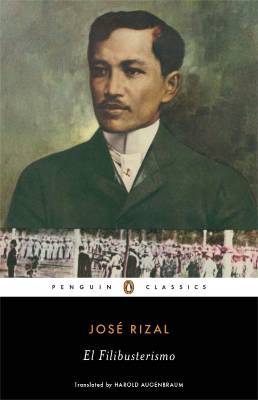
Penguin Books to publish Rizal’s ‘El Fili’

Another Jose Rizal classic will soon join the ranks of William Shakespeare, John Steinbeck, and Charles Dickens.

Three days before the 150th birth anniversary of Philippine National Hero Jose Rizal on June 19, Penguin Books will launch its English translation of “El Filibusterismo" at the Philippine Center in New York City.

The paperback version of “El Filibusterismo" will be available on September 1, 2011 according to the Penguin Books website.

Source: Penguin Books
Five years ago, Rizal’s first novel “Noli Me Tangere" was also published under the imprint Penguin Classics. The book deals with the themes of love and martyrdom and features the lead character Crisostomo Ibarra, who has just finished his studies abroad and wants to bring education reform to the small town of San Diego.

“El Filibusterismo" is the sequel to “Noli Me Tangere." Set 13 years after the events of the first novel, the book revolves around Simoun, a rich jeweler who is bent on starting a revolution. He also wants to rescue Mara Clara, one of the main characters from the first novel who entered the town nunnery towards the end of “Noli Me Tangere."

Many of the other characters and settings from the first novel make their reappearance in “El Filibusterismo" albeit with a darker, more sinister air.

The second novel’s themes, revenge and obsession, are a stark contrast to the focus of “Noli Me Tangere,’" according to the Penguin Books website. Both however, are generally regarded to have helped push forward the Philippine Revolution against Spanish colonizers toward the end of the 19th century.

High school and college students in the Philippines are required to study the life and works of Rizal, particularly the two novels, as mandated by Republic Act 1425.

Penguin Classics, an imprint of Penguin Books, is known for publishing inexpensive paperback versions. It is “the leading publisher of classic literature in the English-speaking world," according to their website. The company is also known for using sleek and modern designs in their editions of popular books.

E.V. Rieu’s translation of “The Odyssey" in 1946 was the first book published by Penguin Classics. Authors with the most titles under the brand include William Shakespeare, John Steinbeck, Henry James, Charles Dickens, and Graham Green.

Penguin Books’ announcement of the new El Filibusterismo publication is one of many events leading up to Rizal’s birth anniversary.

In early May, the Philippine and German governments unveiled plans to restore the original manuscripts of the two novels. The original manuscripts are in danger of being permanently ruined because of poor preservation conditions in the National Library.

Malacañang has declared June 20, the day after Rizal’s actual birth date, a special non-working holiday.

Click here to watch “Ang Mahiwagang Ngiti ni Rizal," a 2011 documentary by Howie Severino about the photographs of Jose Rizal and the stories behind them. – Bea Cupin/YA, GMA News

...the superstar athlete

Pacquiao 24th in Forbes' 50 highest-paid athletes list


Manny Pacquiao dislodged Floyd Mayweather Jr. in Forbes.com's highest-paid athletes list as the boxing superstar and first-term Congressman in the Philippine House of Representatives placed 24th among 50 superstars of the sporting world.


Mayweather Jr. placed second behind Tiger Woods in last year's list with $65 million in total earnings. But the undefeated American boxer has not fought in 13 months since a dominating win over Sugar Shane Mosley.

Mayweather's 12-round non-title bout against Mosley on May 1, 2010 earned 1.4 million pay-per-view buys, the second-most lucrative non-heavyweight bout ever.

Pacquiao, 32, is the only boxer in this year's list joining 29-year-old Brazilian football star Kaka at 24th spot.

Kaka, an attacking midfielder, appeared with British striker Wayne Rooney on the cover of the Electronic Arts Sports soccer video game FIFA 11, which sold 100 million units.

Pacquiao is currently boxing's biggest draw, said Forbes.com. His last six fights generated more than six million pay-per-view buys combined.

Forbes.com added that Pacquiao has also begun to beef up his endorsement portfolio after the eight-division world champion signed a three-year deal with Hewlett-Packard for a global ad campaign. - Joseph G. Lariosa, JVP, GMA News

...the Baritone in LA

Filipino baritone shines in Russian roles in LA


Baritone Andrew Fernando has tackled another Russian role with flying colors in Shostakovich's  lone operetta, "Moscow, Cherry Town," mounted recently by the Long Beach Opera (LBO) in California.


Fernando as Sasha in the Shoskatovich operetta, “ Moscow Cherry Town.” Photo by Keith Ian Po …

Fernando said the audience loved last weekend's opening night of the operetta --- a musical comedy in three acts with libretto by Vladimir Mass and Mikhail Chervinsky.

"On the whole, it was a good feeling…lots of laughter and satisfaction from our patrons,"  he said. "This one wasn't particularly difficult but still a singer has to be careful and smart to deliver the message without losing its subtle hint of satire."

Known as "Moskva, Cheryomushki" in Russian transliteration,  the operetta's story is indeed one that would never have been told under the repressive regime of Josef Stalin, who loaded honors on Shostakovich but also twice (in 1936 and 1948) had his music denounced publicly.  Stalin's  opera "Lady Macbeth of Mtsensk" (1934) was sharply criticized by the Soviet press reportedly on Stalin's orders.

The Long Beach critic dissected  the operetta as  "a carefully calibrated satire gussied up as a frenetic farce, concerns Khrushchev's mass housing
 projects,  those concrete behemoths that upgraded citizens' living conditions while pummeling their aesthetic sense and nearly choking them to death with red tape."

The waiting list for these apartments was usually long so that married couples, like the characters of Sasha (played by Andrew Fernando) and Mas
ha (Peabody Southwell), were often forced to live apart until they could get an appropriate residence.

According to Fernando, what was difficult in staging this operetta was telling the story because "it can be quite complex."

Fernando, who received a rousing standing ovation in his intimate concert series "Kiss The Cook Gourmet" in Manila last March, compared his two Russian roles and his operatic transition from the noble man in Tchaikovsky's Eugene Onegin to Sasha, the government housing unit dweller in Khrushchev's Moscow circa 1980s.

The Filipino singer said he got into the Soviet psyche in the opera by just understanding how people in then Soviet Union felt about the system. In the case of his character, Sasha, he had to internalize the pain of not being a
ble to live in the same house with his wife.

"Sasha is a commoner with no money (while) Onegin is a person of higher status," he noted. "Singing Onegin is truly amazing though. The dramatic content of the character is more vast and deep."

Fernando said he found the Shostakovich operetta extremely singer-friendly.

"The music---to my surprise ---is very tuneful!" he said. "I know that when we mention the name Shoskatovich, we may right away think we would hear very complex music but not 'Cherry Town.' It turned
out a delightful bright operetta!"

He continued: "I think Russian music in general is always beautiful. The part for my role  Sasha is very melodic and sing-able, so to speak."

On opening night, Fernando admitted he was as usual nervous in a positive kind of way. "When I perform, I downplay the critics' coming verdict and think more of communicating the story and music! I always pray I
get to do my best!"

Fernando's journey to vocal maturity was probably helped in no small way when he was presented in public master classes given by  legendary names in opera, namely, Carlo Bergonzi, Tom Krause, Jane Eaglen, Deborah Voight and Dolora Zadjick. He has shared the opera stage with Helen Donath, Vinson Cole, Maria Ewing, Federica Von Stade and  Lauren Flannigan, among others.

He was the first Filipino First Prize winner of the prestigious 2003 Loren L. Zachary National Vocal Competition in the United States and an alumnus of the world renowned San Francisco Opera Merola Program.

Described by Musical America as a "major presence," the  Filipino baritone sang "Rigoletto" in Modesto in February 2007 to critical acclaim. He created the role of Powhatan in the World Premiere of Linda Tutas Haugen's and Joan Vail Thorne's "Pocahontas," presented by the Virginia Arts Festival in cooperation with Virginia Opera in May of 2007 as a contribution to the 400th Anniversary of the settlement in Jamestown, Virginia.  He also sang the lead role in  Bartok's "Bluebeard's Castle," presented by Let's Shout Out Inc. of Boston.

On the present state of his vocal instrument, he had this to say: "It has become more mature with a lot more ring and focus. We, baritones, develop more as we age. We are like good wine better with age, granted that we are well guided and continue to work hard."

On July 22, Fernando will teram up with  mezzo-soprano Clarissa Ocampo, flutist Christopher Oracion and pianist Mary Anne Espina for an intimate concert at Bahay Kalinaw at the University of the Philippines in Diliman, Quezon City.

(VERA Files is put out by veteran journalists taking a deeper look at current issues. Vera is Latin for
"true.")