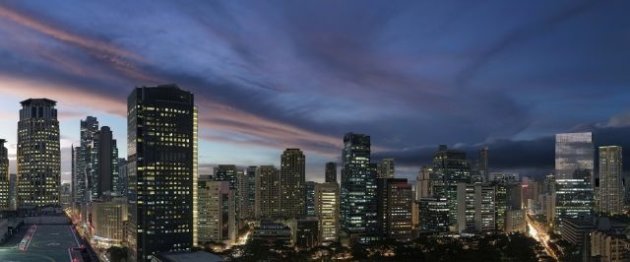
Philippines leapfrogs 25 places in global biz growth index

MANILA, Philippines - The Philippines posted its biggest climb in a global index of dynamic business growth environments, British-based advisory firm Grant Thornton International reported on Monday.
The country leapfrogged by 25 places to land at the 21st spot in this year's Global Dynamism Index (GDI), improving the most among 60 countries included in the report.
“The fast-paced growth of the Philippine economy certainly underlined our substantial rise in this year’s GDI. This means our business growth environment improved quicker than any other country in 2012,” said Marivic Españo, chair and chief executive officer of Punongbayan & Araullo (P&A), the Grant Thornton member firm in the Philippines.
Among countries in the Association of Southeast Asian Nations included in the report, the country ranked behind Singapore (7th), Malaysia (13th) and Thailand (19th), and ahead of Vietnam (27th).
Australia, Chile, China, New Zealand and Canada topped the list while Ukraine, Italy, Kenya, Algeria and Greece placed at the bottom.
On the area of economics and growth, the Philippines jumped by 11 places to tie at fourth place with Peru. It posted the biggest improvement in terms of labor and human capital, galloping by 40 places to rank fifth globally.
“I think the key point here is that the Philippines is starting to realize its potential domestically. Aside from remittances, which have recovered well since the global financial crisis, private construction and government spending on infrastructure contributed to our above-target expansion. Domestic demand in the form of private investment and consumer growth has also helped the country outpace its Southeast Asian neighbors, which are showing signs of slowing down,” Españo said.
In terms of science and technology, however, the country ranked 51st, indicating the lack of infrastructure improvements needed for businesses to expand. P&A said while spending on information technology improved by 9.5 percent last year, it only translated to 0.1 percent of the country's gross domestic product, the fourth lowest among the 60 economies studied.
“The government recognizes that local infrastructure needs to be improved. Eighty public-private partnerships with around $17.6 billion of capital to boost the investment environment were supposed to be launched between 2011 and 2016, but progress is well behind schedule. Add to this a rank of 44 for business operating environment, which looks at how easy and risky it is to operate in an economy, and you can clearly see there is some room for improvement,” Españo said.
“The good news is that both total and worker output is expanding rapidly. The key now is to combine this growth with infrastructure and operating environment improvements. With the right mix of policies in place, our economy could offer even more opportunities for dynamic businesses,” she added.
The country leapfrogged by 25 places to land at the 21st spot in this year's Global Dynamism Index (GDI), improving the most among 60 countries included in the report.
“The fast-paced growth of the Philippine economy certainly underlined our substantial rise in this year’s GDI. This means our business growth environment improved quicker than any other country in 2012,” said Marivic Españo, chair and chief executive officer of Punongbayan & Araullo (P&A), the Grant Thornton member firm in the Philippines.
Among countries in the Association of Southeast Asian Nations included in the report, the country ranked behind Singapore (7th), Malaysia (13th) and Thailand (19th), and ahead of Vietnam (27th).
Australia, Chile, China, New Zealand and Canada topped the list while Ukraine, Italy, Kenya, Algeria and Greece placed at the bottom.
On the area of economics and growth, the Philippines jumped by 11 places to tie at fourth place with Peru. It posted the biggest improvement in terms of labor and human capital, galloping by 40 places to rank fifth globally.
“I think the key point here is that the Philippines is starting to realize its potential domestically. Aside from remittances, which have recovered well since the global financial crisis, private construction and government spending on infrastructure contributed to our above-target expansion. Domestic demand in the form of private investment and consumer growth has also helped the country outpace its Southeast Asian neighbors, which are showing signs of slowing down,” Españo said.
In terms of science and technology, however, the country ranked 51st, indicating the lack of infrastructure improvements needed for businesses to expand. P&A said while spending on information technology improved by 9.5 percent last year, it only translated to 0.1 percent of the country's gross domestic product, the fourth lowest among the 60 economies studied.
“The government recognizes that local infrastructure needs to be improved. Eighty public-private partnerships with around $17.6 billion of capital to boost the investment environment were supposed to be launched between 2011 and 2016, but progress is well behind schedule. Add to this a rank of 44 for business operating environment, which looks at how easy and risky it is to operate in an economy, and you can clearly see there is some room for improvement,” Españo said.
“The good news is that both total and worker output is expanding rapidly. The key now is to combine this growth with infrastructure and operating environment improvements. With the right mix of policies in place, our economy could offer even more opportunities for dynamic businesses,” she added.