William Depasupil The Manila Times 21 September 2019
Eon Insight: Focus on the Filipino in the UAE, revealed highly skilled Filipinos are now represented across all industries contributing to the country’s economy, with 64 percent of Filipino workers being college graduates and 6.7 percent holding post-graduate degrees.
A large number of overseas Filipino workers in the United Arab Emirates (UAE), who are professionals and highly skilled workers, are employed in industries and economic activities that fuel the Emirates’ engine of growth and hub of economic activities, a recent study by a communications firm showed.
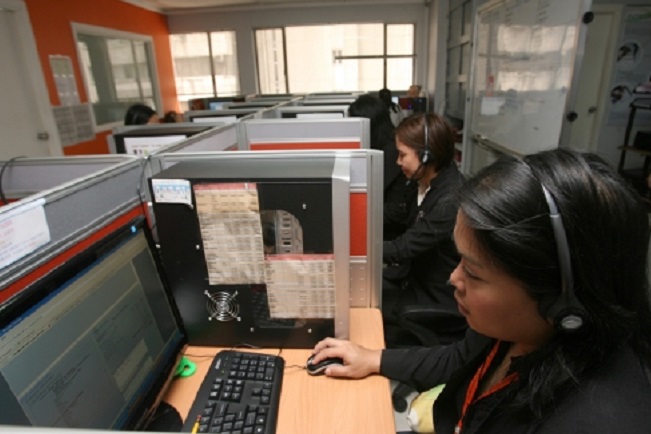
The study, released on Tuesday by EON Group, showed there are now more than 750,000 Filipino workers across the seven-state UAE, namely Dubai, Abu Dhabi, Sharjah, Ajman, Umm Al Quwain, Ras Al Khaimah and Fujairah.
Photo: filipinotimes.net
“We are very proud of our relationship with the UAE thus far and we continue to be optimistic that our people to people exchanges and our economic ties will even deepen as the years go on,” Paul Raymund Cortes, Philippine consul general in Dubai and Northern Emirates, said.
“Our ties with the UAE are one of our most strategic relationships, be it trade, cultural and human relationship,” he added.
The study, titled Eon Insight: Focus on the Filipino in the UAE, revealed highly skilled Filipinos are now represented across all industries contributing to the country’s economy, with 64 percent of Filipino workers being college graduates and 6.7 percent holding post-graduate degrees.
It is the first ever study into the contribution of the Filipino community in the UAE. The study sought to understand the size, scale and contribution of the UAE’s third largest expatriate demographic.
According to the study, 62 percent of Filipinos surveyed could be found in sectors that are seen to contribute to UAE’s economic diversification and expansion.
The top 5 sectors they work in are architecture, engineering and construction (17 percent); tourism and hospitality (16 percent); customer service (13 percent); health and medical fields (10 percent); and marketing and advertising (8 percent).
An increasing number of Filipino workers are further providing semi-skilled and highly skilled labor, shifting away from low-skilled work areas. In job positions, 46 percent of Filipinos were in associate, supervisory and mid-senior level manager roles, according to the survey.
It also showed 37 percent of Filipinos earn at least AED 8,000 a month or roughly P112,000, with 20 percent earning AED 13,000 a month or P182,000.
Aside from the high demand for their skills, Filipinos workers, with their big salaries, also help boost economic activities in terms of spending habits.
According to the study, Fillipinos are big spenders, with 48 percent going to malls at least once or twice a month; with 45 percent willing to spend up to AED 50 for one meal and 16 percent willing to spend more than AED 80.
It added that the Filipino community in UAE has a long-term commitment, with Filipinos increasingly looking to invest and build deeper interlinked roots in the country.
The survey showed that 41.3 percent of Filipinos have been living in the UAE for two to five years and 37 percent for more than six years, while 31.5 percent plan to stay for another three to five years.
Survey data showed that their home country’s culture plays a key role in shaping Filipinos’ activities in the UAE like spending their free time participating in church activities such as Bible studies and community service programs.
The Filipino weekly Mass, held every Friday at St. Mary’s Catholic Church in Dubai, sees an average weekly attendance of more than 2,000.
During the Christmas season, simbang gabi (midnight Mass), a Filipino tradition of daily masses over a nine-day period, has attendees between 30,000 and 35,000 per day.
Also, the social media connectivity and positive promotion of the UAE by the Filipino community there has contributed to the country being a top 10 destination for traveling compatriots.
It said Filipinos were an untapped force of marketing in the UAE as they are constantly connected online.
Philippines' Economic Development and the 'Pacquiao Paradox': Shining Individually, Whimpering Collectively
Richard Javad Heydarian
Academic, policy adviser, and author of "Asia's New Battlefield:
US, China, and the Struggle for Western Pacific"
Posted: 5/8/15
For years, I have covered the emergence of the Philippines as the darling of global investors. (In fact, a number of my works on HuffPo have focused on this issue.) After countless exchanges with economists, consultancy agencies, and businessmen in the country and beyond, it is quite clear to me that there is a growing sense of optimism (Keynesian "animal spirits") in and over the long-term economic potentials of the Philippines. Business confidence is building up.
Undoubtedly, the Southeast Asian country is once again on the radar. Certain macroeconomic trends are highly encouraging, particularly in terms of inflation and interest rates, projected annual growth rates, fiscal reforms, debt payments, gross foreign reserves and trade and investment inflows. Recent years have also seen growing regulatory predictability in the government and sustained efforts at closing the country's gnawing infrastructure gap.
Yet, sustained economic development doesn't take place in a vacuum. For the Philippines to become a true "tiger economy" in the coming decades, it has to also experience some changes in its cultural foundations.
A Country of Stars
I vividly recall a poster advertising "Filipino singers" in the elevator of an upscale hotel in Beijing when I was there for an academic visit few years back. Of course, there was nothing surprising about Filipino singers performing in major hotel chains. After all, from the Middle East to East Asia and North America, I constantly came across affable, highly competent, and extremely nice Filipinos, who were at the forefront of the hospitality and tourism business.
But what struck me was how, especially when it comes to singing, being a "Filipino" alone represents a brand. If you are Filipino, you are expected to be a great singer. Countless Filipinos, from Charmaine Clarice Relucio Pempengco to Christian Bautista, have made it big on the international stage. When it comes to singing and dancing, the Filipinos can compete with the best in the world, and often emerge as the indisputable victors. Not to mention, the Philippines' superpower status when it comes to beauty pageants. I have lost count of how many Filipinas (pure- or part-Filipino) have managed to make it to the top 5-10 contestants in every major global beauty contest.
No wonder then that many see the Philippines as the extension of Latin America into the heart of Asia, an island nation filled with the Iberian spirit of musicality and overflowing talent. In certain sports, especially the "Four B's" of basketball, billiards, bowling and boxing, the Philippines has also showcased its ability to go toe-to-toe with the best in the world. From the Philippines' impressive performance in the latest FIBA World Championship, to globally-renowned billiard wizards such as Efren "Bata" Reyes, Francisco Bustamente, Dennis Ocrollo, as well as world bowling champions such as Rafael "Paeng" Nepomuceno, it is clear that there has been no shortage of world-class talent in the Philippines.
Above all, perhaps, stands Manny "Pacman" Pacquiao, who is widely considered as one of the best pound-for-pound boxers of his generation. He is the first and only boxer to have won world championships in eight divisions, and his recent (controversial) loss to Floyd "Money" Mayweather should take nothing away from his impeccable legacy.
Yet, astonishingly the Philippines stands among few counties which have yet to win a single gold medal in the Olympics. Despite having one of the most articulate and talented journalists, lawyers, and artists as well as an army of engineers, doctors, and scientists, the Philippines is yet to break out of its "lower-middle income trap". And despite having among the world's best singing and dancing talents, it is South Korea's"K-pop" phenomenon, which is transforming the entertainment landscape in Asia.
The Philippines is a paradoxical nation, where individual glories often clash with a long history of collective disappointment.
The Anti-Asian Values
Singapore's late-founder, Lee Kuan Yew, was fond of talking about the peculiarities of the so-called "Asian Values" (AV). He always insisted that unlike Western countries, Asians are more predisposed to thinking and behaving in collective-communitarian terms, putting the interest of the family and broader community above their individual impulses.
"I don't think there is an Asian model as such. But Asian societies are unlike Western ones... [an Asian person] is not pristine and separate," Lee Kuan Yew argued in an interview with Foreign Affairs back in 1994. To be fair, the legendary Singaporean leader had a more specific notion of "Asia" in mind, since he was primarily referring to "Confucian countries" of China, Taiwan, South Korea, Japan, Singapore and Vietnam.
His Malaysian counterpart, Mahathir Mohamad, was even more all-encompassing in conceptualizing of and passionate in his advocacy for the notion of "Asian Values", consistently questioning the universality of liberal democracy, which is primarily found upon the principles of individualism, procedural accountability, and freedom of expression. Instead of embracing democratic capitalism as the ideological end point of history, he envisioned an alternative episteme anchored by principles of deference to authority, limits on individual freedom, and emphasis on hard work and economic productivity.
Obviously, the concept of "Asian Values" has been largely discarded by the experience of countries such as India, Indonesia, Japan, Taiwan, South Korea, which have embraced liberal democracy, albeit with certain modifications, without necessarily becoming "un-Asian". For its critics, the AV concept has been largely dismissed as a thinly-veiled propaganda for autocratic leadership and, quite ironically, an orientalist perspective, which ignores the almost universal demand for Vox Populi and freedom of expression.
Among Asian countries, the Philippines perhaps stands as the extreme opposite of the so-called "Asian Values". It is a country where individualism and lively public discourse undergirds the body-politic, animating the conduct of day-to-day politics and the broader national political culture. It is a country where the mainstream media constantly prioritizes endless gossip about individual celebrities over deep strategic discussions about national interest and development.
It is a country where actors and entertainers are constantly overwhelmed by public attention, while intellectuals are constantly pushed to the margins of public discourse. It is a country where the interests of an individual and his/her family stand as concrete, tangible priorities, while notions of nation and nationalism are treated as largely abstract points of reference, fondly cited in poems, movies and history books.
Philippine Exceptionalism
To be honest, I am not very convinced with cultural theories on national development, always preferring to focus on the impact of trade and industrial policies, the state-building process, and the structure of opportunity in the global economic system. The concept of "culture" is itself too broad and imprecise, often interchangeable with religion, national psyche, or "institutions", which pertain to regularized practices that have gained value over time, shaping the behavior of societies and individuals.
A century ago, leading sociologist such as Max Weber dismissed the ability of Confucian countries such as China to ever catch up with the West, (mistakenly) arguing that Far Eastern cultures tend to emphasize submission, passivity, and spirituality over the mastery of nature and a hunger for material accumulation, which underpin capitalist modernization. Yet, the past decades have seen the likes of Singapore, South Korea, Taiwan, and China emerging as history's greatest (capitalist) economic miracles. Confucian Vietnam is obviously in the midst of its own industrialization bonanza.
As Fareed Zakaria cogently points out in his Foreign Affairs interview with the Singaporean leader, "Cultures change. Under the impact of economic growth, technological change and social transformation, no culture has remained the same. Most of the attributes that Lee sees in Eastern cultures were once part of the West. Four hundred years of economic growth changed things."
Few recall how in the past even Germany and Japan used to be dismissed as non-Western countries, predisposed to autocratic rule. The European intellectual giant Jurgen Habermas' post-World War II personal project was precisely about transforming Germany into a more Anglo-Saxon like democratic polity. Today, Germany and Japan stand as among the most stable democratic societies in the world, untouched by the bickering and political paralysis that afflicts old democracies such as the United States and France.
Obviously, culture is malleable and subject to change. But in the case of the Philippines, decades of economic stagnation has gone hand in hand with cultural immutability. While a predatory oligarchy has instituted a "shallow capitalism", and exploited hollow electoral institutions in the country, a persistently individualistic/family-centered culture, in turn, has come at the expense of building a collective, national spirit, which has been instrumental to development of most countries in the region.
Perhaps, instead of just creating global stars, the Philippines should also develop a socio-economic ecosystem, found upon a progressive national culture, which nurtures the talents of and provides opportunities for fruition of the vast potentials of the broader Filipino population -- that is to say, every Juan/Juana de la Cruz. And the Filipino political leadership, media, and intellectual class should play a key role in this transformation. This is their sacred duty.
Since booking a trip to the Philippines in 2009, American traveler Bob Bales has been back 7 times. Here, he shares what he loves about the Philippines
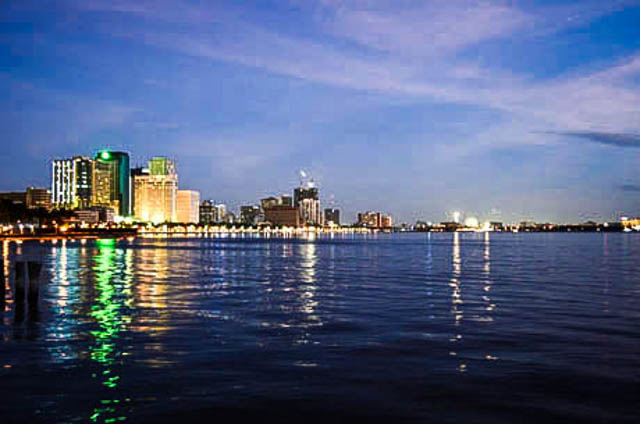
MANILA SKYLINE. Back 7 times since my first trip in 2009. All photos provided by Bob Bales
My first visit to the Philippines occurred in 2009. I was working in the Middle East and had a 3-week break. Having always been intrigued about the possibilities of visiting the Philippines, I took the plunge and booked a ticket.
Since that time, I have been back an additional 7 times. My trips have lasted anywhere from two weeks in length to two months. I guess you can say I have adopted the Philippines as a second home.
During my travels I have spent a lot of time in Manila but also traveled to other parts of the country as well. I have been to Puerto Galera, Bohol, Cebu, Palawan, and spent 10 days onBantayan Island. In all my travels I have discovered one thing. The Philippines suits me, from the many friendly people I have met to the beautiful beaches, small towns and big city activities.
HISTORY. Pay a visit to Fort Santiago
There were a few things to get adjusted to – one being Filipino time. Having spent time in the military, I am used to being on time. I learned long ago that when someone says to be somewhere at a certain time, I show up 10 minutes early. Not so in the Philippines. When someone in the Philippines says they will meet you at 6 pm, that might mean anywhere in a 4-hour window, or not at all. When you’re told something will be done on Tuesday that might mean this week or next. Things are a little more laid-back.
Traveling in the Philippines, like some other countries, might mean the electricity may be working and it may not. Or in some places the electricity might only work a few hours in the day. There are also some very beautiful island getaways where there is no hot water at all. I really need hot water for showers – I just can’t get used to cold showers; I don’t care what the outside temperature is.
I have overheard, on more than a few occasions, tourists complaining about the service, or the fact that things are not as efficient as it is in their country. To them I say, stay home. I mean, come on – you’re traveling in a foreign country to see and experience new things. If you want things to be the same, then stay home.
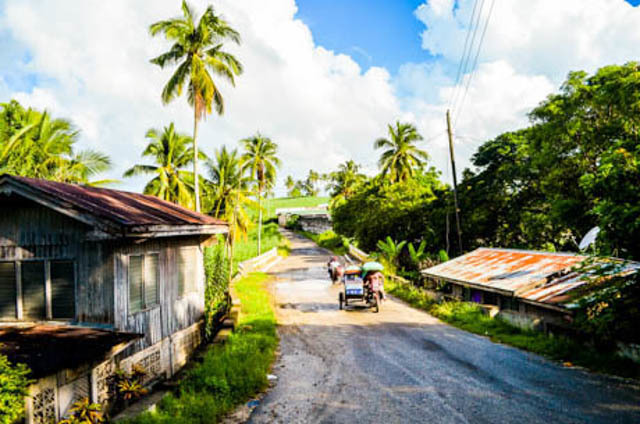
SOMETHING DIFFERENT. Visit the Philippines in 2015
Some people say the food in the Philippines is disappointing. Nothing like the extraordinary and diversified food you get in Thailand, Singapore and other parts of Asia. For me that just isn’t true. One thing I like to do when traveling is to eat where the locals eat.
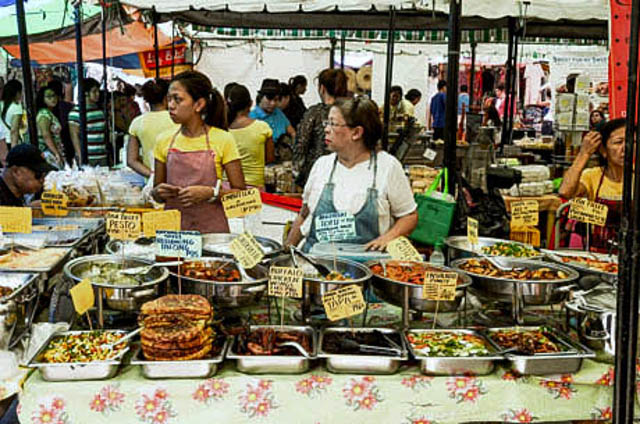
I love the various nighttime food markets in Manila. Something I wish we had back in Texas, where I am from. When I am in Manila, I always look up the food markets that are scheduled for the week and make plans to visit them.
READY TO EAT. The scene at one of Manila's many food markets
I was warned to be careful as a foreigner walking around at night in Manila. Well maybe because I’m a big guy, 6’1, or maybe because I don’t get drunk and wander down dark alleys, I have never had any problems. The people I have met for the most part have all been friendly and helpful.
Maybe some of that is because I don’t treat everyone as inferior and as if they need to cater to me, like so many tourists expect. I try to speak to everyone I meet, say hi to the waiters, please and thank you, just normal manners I was brought up with. I figure, I am a guest in your house. (RELATED: German traveler's 20 reasons to fall in love with the Philippines)
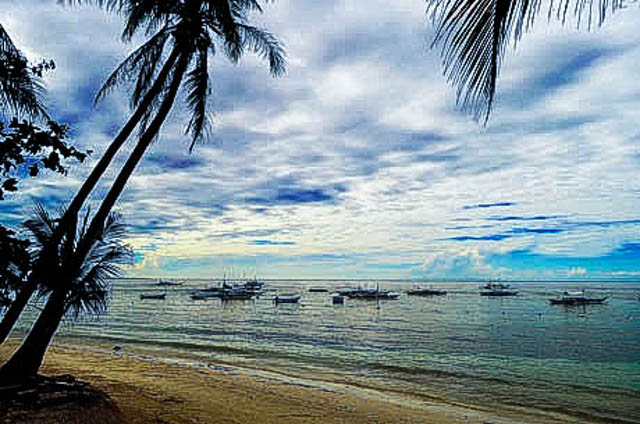
The beaches are my favorite place. I have visited a few, and there are many more I want to see. I enjoy seeing the all the tourist sites but what I really enjoy is a laid-back beach where there are few tourists and I can sample the culture. The Philippines offers many beaches just like that.
SPECIAL PLACE. Serene beaches of Bohol
There are many more places in the Philippines I want to visit and experience, and it seems I just never have enough time. I guess that means more trips in the future.
All in all I would say my decision in 2009 to visit the Philippines was a good idea. I seemed to have found a place that suits me. – Rappler.com
MANILA, Philippines–The Philippines is the best performer within the Asia-Pacific region when it comes to gender equality and the country has likewise improved its global ranking to 5th place from 8th in the 2013 Global Gender Gap Report.
This latest annual gender equality-focused report of the World Economic Forum ranked 136 countries on their ability to close the gender gap in four key areas: economic equality, political participation, health and survival and educational attainment.
“The Philippines remains the most advanced country in the (Asia-Pacific) region in terms of gender equality, ranking 5th in the global index. It improves as a result of advances in economic participation and opportunity, a subindex of the report, as well as having a strong score in terms of political participation,” WEF said in a statement issued on Friday.
The report said the Asia Pacific region had now closed 67 percent of its gender gap but still lagged every region in the world except the Middle East and North Africa when it comes to economic equality between the sexes having closed only 56 percent, the report said.
The eighth annual edition of the Report ranked Iceland closest to equality for the fifth year running.
It, along with Finland (2nd), Norway (3rd) and Sweden (4th), has now closed over 80 percent of its gender gap.
“Countries will need to start thinking of human capital very differently – including how they integrate women into leadership roles. This shift in mindset and practice is not a goalpost for the future, it is an imperative today,” said Klaus Schwab, WEF founder and executive chair.
“Both within countries and between countries are two distinct tracks to economic gender equality, with education serving as the accelerator. For countries that provide this basic investment, women’s integration in the workforce is the next frontier of change. For those that haven’t invested in women’s education, addressing this obstacle is critical to women’s lives as well as the strength of economies,” said Saadia Zahidi, co-author of the report and head of the Women Leaders and Gender Parity Programme.
Elsewhere in Asia, China continues to hold 69th position after improving its overall score. Japan loses four places to 105, mainly because of a decrease in the number of women in parliament which overshadows a rise in its economic participation and opportunity score. Korea, on 111, slips three places largely on account of a decrease in labor force participation and perceived wage equality.
Germany, in 14th place, is the highest-placed individual G20 economy, although it fell by one notch from 2012.
The best performer among BRICS (the grouping of fast-growing emerging markets coined to refer to Brazil, Russia, India, China and South Africa) is South Africa at 17th place, followed by Russia (61th), Brazil (62nd), while the two Asian BRICS ranked lowest, with China at 69th and India at 101st.
At the global level, the report found that in 2013, 96 percent of the health and survival gender gap had now been closed. It is the only one of the four pillars that has widened since the report was first compiled in 2006.
In terms of education, the global gender gap stood at 93 percent, with 25 countries having closed their gaps completely. The gender gaps for economic equality and political participation are only 60 percent and 21 percent closed respectively, although progress is being made in these areas, with political participation narrowing by almost 2 percent in the past year.
In both emerging and developed countries alike, relative to the numbers of women in tertiary education and in the workforce overall, women’s presence in economic leadership positions is limited.
Europe’s progress towards eliminating its gender gap is polarized, with countries from Northern and Western Europe presenting a stark contrast to those from the South and East. Spain came in 30th, having closed 72 percent of its gender gap. France ranked 45th (70 percent closed) while Italy ranked 71st.
Latin America’s leading nation when it comes to closing the gender gap is Nicaragua. At 10th place, it has now ranked in the top 10 for two years, largely on the back of a strong performance in terms of political empowerment. Cuba is next (15th), followed by Ecuador (25th). Mexico climbed 16 places to 68, due to increases in the number of female parliamentarians and the number of women in professional roles. Brazil held firm at 62nd despite a slight improvement in its overall score.
Filipino brands continue to create waves in the international franchise arena, proving that the local franchise industry is fast becoming one of the country’s biggest dollar earners.
“With at least $11 billion in earnings, Philippine franchising is no less a major export player. Some of our members have successfully established their brands overseas, paving the way for more players to try and conquer new markets,” says Armando Bartolome, president of the Association of Filipino Franchisers Inc. (AFFI).
Throughout the years AFFI, the country’s leading franchise group, has helped franchise brands expand to Asia, the United States, as well as in less familiar territories overseas.
AFFI is showcasing these local franchise brands that have gone global in a three-day event dubbed “Galing ng Pinoy, the 12th Filipino Franchise Show” slated on Oct. 4-6 at the World Trade Center, Pasay City.
Going global
With at least 25 outlets scattered around America, 28 in Jakarta, Indonesia, and one in Panama, Potato Corner is certainly one of the most inspiring franchise success stories. Operating for 20 years now, the company through its CEO Jose Magsaysay Jr., recently announced that they are considering listing at the Philippine Stock Exchange (PSE).
Crystal Clear Water dubbed “the business that never runs dry” has invaded Indonesia, Malaysia and South Africa. Locally, the company has at least 500 branches nationwide.
Fiorgelato, a famous ice cream franchise, is now in Japan and the US, while Sweet Corner’s (corn) cart business now operates in Australia and is soon to open in the Middle East.
Food franchisors are not the only success stories abroad. Lay Bare Waxing has three branches in the US; Eat Bulaga, the country’s most popular afternoon program has been franchised in Indonesia.
“Operating a franchise overseas comes with a unique set of challenges. These include not only different laws, languages, and cultural differences in how business is conducted but also finding a franchisee to partner with,” says Bartolome.
The franchisor’s local partner should help translate the concept and the brand into a commodity that is both acceptable and profitable thus one has to make adjustments, he adds.
Despite risks, however, the venture is definitely most rewarding. “With an international franchise, you are bringing a Pinoy brand into the international spotlight. You become a source of pride for the country. What can be more inspiring?” the AFFI chief says.
Philippines recognised for efforts after 2012 typhoon
AMEinfo.com
United Arab Emirates
10 May 2013
"The Philippines, its government and its people, have shown remarkable fortitude and a stoic determination to get both communities and the local economy back on track following the devastation wreaked by Typhoon Bopha late last year, and their resilience in the face of such a monumental crisis is commendable," - Mark Walsh, Portfolio Director, Reed Travel Exhibitions
Arabian Travel Market (ATM), the Middle East's premier travel and tourism exhibition, has named the Philippines as the recipient of the New Frontiers Award 2013 during a special seminar event held on the second day of the show.
L-R Mr. Benito C. Bengzon, Jr., Assistant Secretary, International Tourism Promotions, Department of Tourism Middle East office - Philippines, receiving his award from Mark Walsh, Portfolio Director, Reed Travel Exhibitions.
Mr. Benito C. Bengzon, Jr., Assistant Secretary, International Tourism Promotions, Department of Tourism Middle East office - Philippines, accepted the award on behalf of the country's Department of Tourism from Mark Walsh, Portfolio Director, Reed Travel Exhibitions, with previous recipients, Japan and Chile, represented respectively by Daisuke Matsunaga, Consul General of Japan, and Carlos Salas, the Chilean Trade Commissioner.
"The Philippines, its government and its people, have shown remarkable fortitude and a stoic determination to get both communities and the local economy back on track following the devastation wreaked by Typhoon Bopha late last year, and their resilience in the face of such a monumental crisis is commendable," said Walsh.
The award was made in recognition of the Philippines' ongoing efforts to rebuild physical infrastructure and its tourism economy in the wake of the December 2012 typhoon, which affected 6.2 million people in the south of the country leaving close to one million displaced persons.
Accepting the award, Benito C Bengzon Jr, said, "The Philippine government, under the administration of President Aquino, and the Department of Tourism have worked hand-in-hand to establish tourism as a major generator of income for the people and the country. At times of adversity, such as this, the determined spirit of our countrymen, supported by assistance from the international community, shines through and, it is this same spirit that is driving our tourism industry forward."
Typhoon Bopha was the deadliest in the world in 2012, damaging more than 216,000 houses and leveling large tracts of land including key public infrastructure and agricultural communities.
The subsequent development of the Typhoon Bopha Action Plan for Recovery requested $65m to provide immediate life-saving aid and support to the most-affected communities, with a total of $76m required to administer 46 projects through to the end of H1 2013 in order to fast track economic regeneration.
According to the latest figures released by the country's Department of Tourism, tourist traffic to the Philippines from the Middle East is showing steady growth with visitor arrivals for the first three months of the year showing a 22.1% growth against the same period last year.
Emirates has also announced that it will commence daily direct flights to Clark International Airport located in the north of the country on 1st October 2013, the second Philippines destination for the carrier. Cebu Pacific will also begin daily non-stop flights from Dubai to Manila in the same month.
A major initiative under the ATM brand, and now in its seventh year, the New Frontiers Award 2013 reinforced the overall focus of the programme, communicated under the theme 'Recover, Repair, Rebuild'.
Awarded to destinations that have overcome great adversity to bring much needed tourism back to their shores, the award also honours the strength and determination of the local people who work tirelessly to rebuild lives and communities following disaster as well as highlighting the crisis management capabilities of local tourism authorities.
"This year, as well as acknowledging the efforts of the Philippines in rebuilding its tourism infrastructure, we also looked back at past award recipients' Japan and Chile, and heard how the New Frontiers recognition has helped them on their road to recovery, and how they have rebuilt, or are continuing to reconstruct their respective tourism industries," remarked Walsh.
In addition to the prestigious crystal trophy, the New Frontiers Award comprises ATM exhibition space valued at US$10,000 along with additional marketing support in promoting the outstanding tourism opportunities offered by the recipient nation.
The Philippines was selected as winner of the New Frontiers Award 2013 by a panel of judges consisting of industry professionals from across the globe. From an original selection of 10 countries, which was then refined to a shortlist also comprising New York state (Hurricane Sandy) and Pakistan (2012 floods).
Filipinos have been migrating to New Zealand for the last 15 years and many New Zealand employers have become aware of their work ethics and skills. Many other countries around the world have been recruiting Filipinos for years because of their skills and their willingness to work in jobs that their local population has been unwilling to undertake. There is an increasing interest from New Zealand employers recently in hiring skilled migrant workers from the Philippines to fill the skills shortage in the local market. For some years many hundreds of dairy farm workers have been employed by New Zealand farmers if they have been unable to find suitable staff locally.
Today the NZ dairy farming industry has become dependent on Filipino workers to provide the labour force to meet their requirements of this rapidly growing industry. Many of the Filipinos coming to NZ have previously been working on commercial dairy farms in the Middle East or Japan, and have settled as residents with their families.
Over 11 million Filipinos work outside the Philippines. They can be found working around the world. Many Middle Eastern countries are dependent on their Filipino guest workers to keep their economies growing, where they work under contract for a certain number of years. Employers have recognised their willingness to work, their cheerful dispositions, and their ability to pick up language and new skills. Before Filipinos can leave their country to work abroad they must obtain an Overseas Employment Certificate from the Philippines Overseas Employment Agency (POEA). Without this they cannot depart though many thousands do illegally out of desperation to find jobs abroad. The reason why the POEA requires this process is to ensure that workers going abroad have a genuine job offer and not subject to scams. The process requires employers to have their employment contracts examined and approved by the POEA, along with other under-takings before the workers they wish to hire will be issues their OECs. Why have so many Filipinos forced to work abroad, rather than in their own country? The main reason is the lack of job opportunities for Filipinos in the Philippines.
Unlike most of the rest of Asia, the Philippines have been unable to attract overseas investment to finance the growth in manufacturing and jobs as elsewhere in Asia. Yet the Philippines are one of the richest countries in Asia, with many natural resources and a talented English-speaking work-force. Overseas investors have preferred other Asian countries for investment as a result of poor government policies, and less flexible labour laws, a weak and corrupt legal system, poor infrastructure and high electricity costs. (As recently pointed out in an IMF report).
Yet in recent years the country has benefited enormously from the remittances from their overseas workers (OFWS) – over $US20 billion is sent back into the country annually providing an inflow of capital to fiancé domestic growth. The No 1 earner of overseas currency is the remittances from OFWs.
In spite of this, nearly a third of the population lives in poverty and wages in the Philippines remain low. While the economy is expected to grow 7% this year driven by a boom in property construction, the population is growing faster than new jobs are being created. As in the nineteenth century, when many migrated from the UK and Ireland to settle around the world, today Filipinos are likewise migrating around the world to seek better opportunities than can be obtained at home. Migration of Filipinos is likely to continue until structural changes are made to the Philippines economy to become competitive to investors with other Asian economies.
As the only New Zealand Company based in the Philippines (for the last five years) supplying skilled migrants to meet the skills shortage in New Zealand, Immigration Placement Services Ltd has helped settle many hundreds of Filipinos successfully in the country. Many of these have now bought their families to New Zealand and have since become permanent residents, contributing to our society.
New Zealand is a preferred destination for Filipinos as Immigration policies allow for approved skilled migrants on a work visa to bring their partners and children, something that is not possible for many Filipinos working in many other countries.
Many Filipino children grew up not knowing their parents as one or both need to work abroad to provide for their children’s education and necessities in live. Filipinos have integrated into NZ society well. As English is widely spoken throughout the Philippines they have fitted into NZ society much better than other Asian ethic groups, and can now be found from one end of NZ to the other.
Philippines tourism slogan promoted at Global Village
Expats encouraged to visit the Philippines
By Carolina D’Souza, Staff Reporter
February 23, 2013
Dubai: With folk dances and traditional performances, the tourism arm of the Philippines government began to promote the country at Global Village on Friday.
The aim was to market the tourism slogan -- It’s more fun in the Philippines.
The international slogan was rolled out in international markets by the Philippines’ Department of Tourism (DOT) in 2012, the year that the country attracted more than 4,272,811 million tourists.
Speaking to Gulf News, Vice Consul Geronimo Suliguin said, “We are hoping to exceed the number of tourists in 2013.”
Global Village, a premier outdoor cultural, shopping and entertainment venue in the UAE, is visited by more than five million people annually.
The Philippines’ Department of Tourism – Middle East Office, in cooperation with the Filipino community in Dubai and the northern emirates, hopes that the cultural event at Global Village will entice international tourists to visit the Philippines.
Targeted at non-Filipino expatriates, the series of performances at the World Cultural Stage highlight the tourism slogan and campaign and promote the Philippines as a top tourist destination, Suliguin said.
The performances, which involve 65 Filipino organisations and 15 performing groups, will end on March 1.
“These provide a window into the cultural history of the Philippines. We want to drum up awareness about our cultural history,” he said.
Some places like Manila, Bohol, Cebu and Davao are already popular tourist spots, he added.
The performances included Philippine folk dances, Pandanggo Sa Ilaw (dance with lights) and Cariñosa (courtship dance).
Angeline Rivera, Manager at the Philippine Department of Tourism - Middle East Office, told Gulf News, “We are making concerted efforts to push our tourism strategy. It is the first time we are hosting performances at Global Village.”
Gulf News spoke to a few Filipinos expatriates on the tourism strategy.
“Our hospitality is part of our nature. I would be proud to see expatriates from Dubai experience our hospitality and see our country that has much to offer,” said Arlyn Lansang, a Dubai-based professional in finance.
Another expatriate, John Samson, a client services professional in Dubai, added, “Given the large Filipino community here, most nationalities have interacted with us. It would be a privilege to show them our country.”
The Philippines edged its Asian neighbors in providing an environment that attracts big foreign companies. Besides traditional investment sources such as United States of America, Japan, South Korea, and Taiwan, potential investors from Europe, the Middle East, and Africa now look at the country as investment site.
The Board of Investments (BOI) reported that R75 billion worth of investments poured in the first month of 2013 the biggest of which was the R40-billion Subic power project. BOI-registered investments come with tax holiday packages and incentives to attract more big companies. The growing investor confidence is fueled by the robust 6.6% growth in the economy in 2012, a competitive labor force, and a stable government.
The International Finance Corp. (IFC), the private sector financing arm of the World Bank, plans to invest up to $400 million in the Philippines in 2013 in Public-Private Partnership (PPP) projects, transport, tollroads, water, and power, particularly renewable.
The United Kingdom (UK) has increased trade and investment in the Philippines, particularly in information and communications technology, PPP, retail, education, energy, and health care.
Investments from Taiwan rose over 30 percent to $400 million in 2012 from $300 million in 2011, according to the Taipei-based Manila Economic and Cultural Office. Some $400 million in investments were infused by 16 companies in various Philippine industries, of which about $100 million went to Clark and the rest to economic zones in Batangas, Laguna, and Cavite. Some 800,000 Filipinos are employed today by foreign investors in 275 special economic zones nationwide.
We congratulate the Department of Trade and Industry, headed by Secretary Gregory L. Domingo, and other Officers, in their collective efforts to push for long-term and sustainable investments to ensure a strong economy in the Republic of the Philippines. CONGRATULATIONS AND MABUHAY!