Showing posts with label IMF. Show all posts

Wednesday, March 26, 2014

...thr PH growth forecast 2014 (S & P, IMF)

S&P, IMF raise PH growth forecast


03/26/2014
 
 
MANILA, Philippines – Ratings company Standard and Poor's (S&P) upgraded its full-year growth forecast for the Philippines on the back of rebuilding efforts in areas affected by typhoon "Yolanda" last year.

S&P now expects the country's economy to expand 6.6 percent this year, slightly up from its forecast last December of 6.4 percent.

The ratings agency’s forecast is within the government's target, but still slower than last year's growth of 7.2 percent.

"In the Philippines, growth could normalize from its rapid pace in 2013, although post-disaster rebuilding efforts could provide an offset in the short-term," S&P said in its report.

Typhoon Yolanda devastated the Visayas region in November and caused more than 6,000 deaths. More than P36 billion worth of infrastructure and agriculture was damaged.

S&P cited several risks facing the country this year, including slowing growth in China, which is the second biggest buyer of our local exports.

S&P was the second of the big three ratings companies that upgraded the Philippines from junk to investment grade status last year.

S&P rates the country with a 'BBB-' with a stable outlook.

The International Monetary Fund (IMF), meanwhile, said the Philippine economy is expected to grow 6.5 percent this year, faster than its earlier estimate of 6.3 percent.

The upgrade was also driven by spending related to Yolanda reconstruction efforts.

"While this envisaged growth path is faster than what was achieved during the previous decades, realizing the Philippines' full potential for rapid, sustained and inclusive growth calls for further reducing bottlenecks to investment and formal sector employment that may be discouraging broader-based business activities," said Rachel van Elkan, IMF's mission chief to the Philippines.

"The challenge therefore is to continue implementing policies that deliver high quality, sustainable growth," she added.

Van Elkan also said monetary policymakers need to watch out for potential risks as advanced economies start tightening monetary policy.

"Further reforms are needed to create a more enabling business environment and to generate additional employment," she said.

"Successfully executing PPPs (public-private partnership projects) and public capital spending projects would relieve infrastructure bottlenecks and help catalyze private investment," she added.

The IMF, concluding a regular consultation with the country's economic managers, also slightly lowered its 2015 GDP forecast to 6.5 percent from a 6.6 percent estimate in January.

It said in a statement the need for accommodative policies in the country had waned with the stronger global outlook.

The IMF also said it expects average inflation this year to be slower at 4 percent against its projection of 4.4 percent in January.

The latest forecast is higher than actual 3.0 percent inflation in 2013, though it is at the midpoint of the 3 to 5 percent government target this year. -- With Reuters


Saturday, January 25, 2014

...the PH economic growth (IMF, 2014)

IMF upgrades Phl growth forecast


MANILA, Philippines - The International Monetary Fund (IMF) has upgraded its full-year forecast for Philippine economic growth to 6.3 percent this year on the back of reconstruction efforts following Super Typhoon Yolanda and the expected rise in merchandise exports.

“We upgraded the 2014 [forecast] to 6.3 percent based partly on slightly better advanced economies outlook which would mean the external sector in the Philippines would improve,” IMF resident representative Shanaka Jayanath Peiris said in a briefing yesterday.

“Then you have the counteracting effects of Yolanda which would be negative but we believe the impact is relatively limited... but the reconstruction will have a positive impact on the fiscal stimulus,” he continued.

Peiris explained rosy prospects for the advanced economies this year such as the US will help increase Philippine merchandise exports. The government hopes to grow its outbound shipments by six percent this year from year-ago levels.

Meanwhile, planned rehabilitation and reconstruction efforts following Yolanda which hit the country in November will boost government spending and drive economic growth.

Budget Secretary Butch Abad has said the government will be spending P360.8 billion over three years for rebuilding efforts following Yolanda.

IMF’s current projection is slightly higher than its September forecast of six percent but still below the government’s target of 6.5 percent to 7.5 percent.

Peiris recounted the lower figure as compared to the government’s target is due to a high base in 2013, during which economic growth has already averaged 7.4 percent as of September.

“But if the reconstruction [efforts] are implemented in the medium-term, growth can be anywhere between 6.5 and 7.5 percent. That is, if spending happens according to government’s plans,” Peiris pointed out.

The Fund expects Philippine gross domestic product to have settled at 6.8 percent in 2013, unchanged from its September projection.

“Growth was strong last year because of the strong government spending,” Peiris recounted.

This, however, decelerated in the latter part as government spending and construction also slowed down, he added.

Official 2013 economic growth data will be released by the government on Jan. 30, although officials earlier said GDP may still hit the upper-end of the six to seven percent target.

The main risk for the Philippine economy this year remain to be capital outflows resulting from portfolio rebalancing after the US Federal Reserve announced a modest cut in its monthly asset purchases to $75 billion, Peiris said.

Meanwhile, economic growth is expected to pick up to 6.6 percent next year, Peiris said, noting this is a preliminary number based on initial reconstruction needs and spending plans of the government.


Thursday, July 11, 2013

...the PH economy 2013 (IMF)

News Analysis: IMF raises growth forecast for Philippines but study shows income gap widens
MANILA, Philippines (Xinhua) - The International Monetary Fund ( IMF) has again raised its growth forecast for the Philippines this year to 7 percent, which is the high-end of the 6-7 percent growth forecast of the government for 2013.

In media briefing on Wednesday, Shanaka Peiris, IMF's resident representative for the country, said that the Philippine economy relied heavily on domestic demand rather than export revenues that fuel the economies of neighbors like Malaysia, Thailand and Singapore. "This showed that the country was one of the few emerging markets that could better cope with current global economic conditions,"Peiris said.

The Philippines, the IMF said, remains one of the few bright spots in the global economy, with domestic demand fueled by remittances from migrant workers and increased government spending expected to offset the slowdown in the developed world.

Remittances from overseas Filipino workers (OFWs), which the IMF expects to grow by 5 percent this year, also remain stable, fueling domestic demand.

OFW remittances are expected to reach $22.5 billion this year. Remittances from the country's 10 million migrant workers are the Philippines' biggest source of foreign exchange, which protects the economy from any sudden shortage of cash from overseas.

Amidst this positive assessment on the Philippines by the Washington-based multilateral financing institution, officials of the government of President Benigno Aquino III cannot seem put their act together on the question of whether the country's robust economic growth has reduced poverty or narrowed the gap between the rich and the poor.

A paper, written by Secretary General Jose Ramon Albert of the National Statistical Coordination Board (NSCB), detailed the country's national income accounts that supported the perception that the benefits of the robust economy were enjoyed more by the rich than the poor.

The NSCB is a government agency under the National Economic and Development Authority (NEDA), the highest economic policy-making body of the government.

The paper confirmed that gap between the country's rich and poor is widening, with high-earning individuals enjoying significantly faster growth in incomes compared with people from the middle- and low-income classes.

Albert said that people from the high-income class, which account for between 15.1 and 15.9 percent of the country's population, enjoyed a 10.4 percent annual growth in income in 2011. The study used data covering 2010 and 2011.

In contrast, incomes of people in the middle-income segment grew by only 4.3 percent and incomes of those in the low-income group by 8.2 percent.

But Malacanang, the seat of the Philippine government, on Wednesday debunked the findings of one of its own agencies, saying that poverty is not widespread and the gap between the rich and poor in the country has not widened.

"I'm not sure if that's correct. There has been growth even in the lowest levels," Presidential Spokesman Edwin Lacierda said at a briefing, disputing the conclusion of an NSCB study.

Lacierda pointed to the continued increase in the income levels of Filipinos belonging to the middle class. "For instance, there's a growth (in income) of 8 percent in the lowest level; 4.3 percent in the middle income; and, from the high (income individuals), it is about 10 (percent). All those growths, if you notice, are above inflation rates. Inflation is 3. 2 (percent). There's real growth even in the low level," he said.

This was the second time that the Aquino administration questioned data from the NSCB, which are based on official statistics.

In April this year, President Aquino himself doubted the veracity of poverty statistics released by the NSCB that indicated that economic growth had hardly made a dent in poverty incidence in the country.
The NSCB reported that the poverty incidence stood at 27.9 percent in the first semester of 2012 - a level that was " practically unchanged" from the same period in 2009 (28.6 percent) and 2006 (28.8 percent).

Lacierda insisted that the Aquino administration was pursuing its"inclusive growth" policy but added that"it's not going to happen overnight."

Meanwhile, the Bangko Sentral ng Pilipinas, the country's central bank, announced Wednesday that foreign direct investments (FDIs) to the country reached a net inflow of $202 million for April, up 61 percent year-on-year.

The net inflow for April was a reversal from the $78 million in FDI capital that left the country the month before.

This brought the year-to-date level to a net inflow of $1.5 billion, roughly just slightly lower than the level in the same four-month period in 2012.


Thursday, June 20, 2013

...the resilient economy (IMF)

IMF says PH can weather market volatility


06/20/2013


MANILA -- The Philippines can endure market volatility with its current robust economic growth and strong fundamentals, the International Monetary Fund said on Thursday.
 
Shanaka Peiris, IMF Representative to the Philippines, made the comment as the Philippine stock market recorded losses and the peso weakend on Thursday morning, following a US Federal Reserve announcement that it will reduce stimulus due to an improving US economy.

"The Philippine condition is very strong, reserves are very high and that is the first line of defense... you can smooth down the volatility," Peiris told reporters on Thursday.

Peiris noted that "markets are markets, they're supposed to react."

Us Fed Chairman Ben Bernanke on Wednesday (early Thursday in Manila) said the US central bank will decrease bond purchases amid an improving US economy.

His announcements resulted in sell-offs in Asian markets, including the Philippines', and weakening in regional currencies against the greenback.

"It's a gradual tapering off so it's kind of what the market was expecting...It's very gradual pull out so there's nothing to worry about," said.

Earlier on Thursday, the Bangko Sentral ng Pilipinas and the Department of Finance said market and peso's volatility following the US Fed's comment was expected, allaying fears such may destabilize the current strong economy.

"Such expectation should recognize that the US Fed is gunning for a gradual, calibrated reduction of monetary stimulus," BSP Deputy Governor Diwa C. Guinigundo said in a text message to reporters. "Thus, economies and markets should take advantage of the space to do the required rebalancing and appropriate adjustment."

Monday, April 29, 2013

...the robust growth of asian emerging economies

IMF sees robust growth for emerging Asian economies


MANILA, Philippines - Emerging Asian economies are expected to post robust growth this year but are advised to boost technology and human capital to avoid falling into the “middle income trap,” the International Monetary Fund (IMF) said.

In its Asia-Pacific economic outlook released yesterday, the IMF projects emerging Asia – including the Philippines – to grow 7.2 percent this year, before slightly accelerating to 7.4 percent by 2014.

An emerging economy falls into a “middle income trap” if it suffers from “sustained growth slowdown” after years of fast growth.

Emerging Asia also includes China, India, Indonesia, Malaysia, Thailand and Vietnam.

The local economy, in particular, is seen to grow six percent this year and 5.5 percent next year as earlier projected by the IMF in its World Economic Outlook.

“A small, gradual pick-up in growth is expected to continue throughout 2013, underpinned by continued robust domestic demand and some modest strengthening in external demand,” the IMF said.

Economic expansion would be on the back of a strong labor force, record-low interest rates and contained inflation, it said. Capital inflows, triggered by investors fleeing developed markets, would also significantly contribute to the growth.

Inflows, the IMF said, could be channeled into equity and bond placements to boost private consumption, while foreign direct investments could buoy investments, especially in infrastructure.
The IMF also cited “more balanced” risks to the region’s bright prospects.

“The impact of external risks on Asia remains substantial. In the event of a severe global slowdown, capital inflow reversals and falling external demand would exert a powerful drag,” it said.

The report also said emerging economies are in danger if they fail to develop total productivity factor, which includes advances in technology and in human capital.

“In a nutshell, sound economic institutions as well as favorable demographics and trade structure can all reduce the likelihood of a growth slowdown,” the IMF said.

“By contrast, strong capital inflows as well as investment booms, while good for growth, also entail risks of bust further down the road, because boom-bust cycles can have long lasting adverse effects on living standards,” it added.


Thursday, January 31, 2013

...the 2012 PH economic growth (official)

PH economy grows 6.6% in 2012, exceeds forecast


"With the robust growth of the services sector led by trade, and real estate, renting and business activities, accentuated by the sturdy performances of manufacturing and construction, the country's gross domestic product grew by 6.8% in the fourth quarter of 2012, paving the way for the annual GDP to post a broad-based growth of 6.6%," NSCB Secretary General Jose Ramon G. Albert said.

The 2012 economic growth exceeded market expectations and even breached the 5% to 6% target earlier set by the government.

Socioeconomic Planning Secretary Arsenio Balisacan earlier has said last year's growth may hover around 6.5%, while President Benigno Aquino III earlier this week noted "all of us will be impressed" with the 2012 growth figures.

The International Monetary Fund and the World Bank both forecast the Philippine economy to have grown by 6% last year.

A Bloomberg survey of analysts pegged the Philippines' 2012 growth at 6.3%, while a Reuters poll put it at 6.4%.


Stellar economic growth at 6.6%


Palace: Good governance means good economics

By Riza T. Olchondra, TJ Burgonio
Philippine Daily Inquirer


ECONOMIC TEAM President Aquino (right) predicts an impressive Philippine economic growth of more than 6 percent in a speech during the 40th anniversary of Neda on  Tuesday. He is shown with (from left) former Neda Director General Cayetano Paderanga, Neda Deputy Director General Rolando Tungpalan and current Neda chief Arsenio Balisacan. Lyn Rillon


Living up to President Aquino’s advance information that the numbers would impress, the Philippine economy expanded 6.8 percent in the fourth quarter of 2012, lifting full-year growth to 6.6 percent.

The figures that government economists and statisticians announced Thursday beat their targets and analysts’ expectations.

Socioeconomic Planning Secretary Arsenio M. Balisacan said that on hindsight, the government’s 5- to 6-percent growth target for the past year seemed conservative.

Median forecasts from the World Bank and other institutions were 5.9 percent for the fourth quarter and 6.4 percent for the full year.

Compared with the latest available data from other Asean countries, the Philippines’ fourth quarter growth in gross domestic product (GDP), the value of goods produced and services rendered in a given period, was higher than Vietnam’s 5.4 percent and Singapore’s 1.1 percent.

China’s economy expanded by 7.8 percent in the last quarter. Other countries still do not have available data for the full year.

Unsurprisingly, the GDP announcement by the National Economic and Development Authority (Neda) and the National Statistical Coordination Board (NSCB) was trending on Twitter, earning kudos from industry groups, such as the Makati Business Club.

Private economists, however, were not as impressed, noting that the lingering question was whether such figures could be sustained and translated into better incomes for many Filipinos.

Expectedly, Malacañang cheered the “exceptional” growth rate, trumpeting it as proof of the country’s ability to move toward “equitable progress” on a policy of good governance.

“It is a resounding affirmation of the Aquino administration’s fiscal strategy, backed as it is by our robust macroeconomic fundamentals and more importantly, the principles of good governance,” Budget Secretary Florencio Abad said in a statement.

Presidential spokesperson Edwin Lacierda attributed the economic growth to private sector activity goaded by the administration’s policy reforms.

While it was initially driven by government stimulus, the economic growth was now increasingly being driven by private sector activity, including investments, which grew by 8.7 percent in 2012, Lacierda said in a briefing.

“This means growth is becoming more sustainable from a fiscal and macroeconomic perspective. Private sector activity has been enabled by the Aquino administration’s dedication to positive reform. Without doubt, good governance means good economics,” he said.

Not quite impressed

Benjamin E. Diokno of the University of the Philippines School of Economics, however, was not impressed.

Diokno said that under President Corazon Aquino, the economy grew by 6.8 percent in 1988 after a weak growth in 1987, while under President Gloria Macapagal-Arroyo, the economy grew 6.7 percent in 2004 after a weak growth in 2003, and again by 7.6 percent in 2010, after a near recession in 2009.

“I agree it’s a strong growth. Considering its long-term growth potential and growth higher than 6 percent might be considered strong. Is it sustainable? That remains to be seen. We’ve seen this kind of growth before and they were not sustained. Is it inclusive? I’m afraid not,” he said.

Diokno said the contribution of agriculture to GDP continued to shrink, posting the lowest growth among the three major sectors.

“Based on the October labor statistics, the recent growth may be characterized as labor-shredding growth. Close to 1 million jobs were lost,” Diokno said. Most Filipinos still depend on agriculture and related sectors for a living.

NSCB Secretary General Jose Ramon G. Albert said industry and services led economic growth on the supply side (sources of goods and services).

On the demand side (where goods and services are used), growth was still largely driven by household consumption and external trade.

Industry grew 6.5 percent, more than twice the 2.3-percent growth in 2011.

The Neda said the expansion in public and private construction, and the electricity, gas and water sector led the growth.

In the first two quarters of last year, it was public construction that took up the slack in construction, but the private sector took over beginning the third quarter.

“This is what we mean by the private sector upping its stakes in the economy,” said Balisacan, who is also the Neda director general.

“Equally remarkable was the growth in the electricity, gas and water sector, growing by 5.1 percent, a far cry from its growth of 0.6 percent in 2011. No doubt this was in support of the increased economic activity in 2012,” he said.

The service sector also beat expectations with a 7.4-percent growth from trade, transport and communications, real estate, renting and business activities and other services.

Trade grew by 7.5 percent in 2012, more than twice the figure in 2011. Growth in transport and communications accelerated at 9.1 percent compared with 4.3 the previous year.

“We had expected a slower growth for the real estate, renting and business activities, which includes the IT-BPO, owing to the continued slowdown in the global economy. And yet the sector still managed to grow faster than expected at close to 8 percent,” Balisacan said.

There were also notable gains in other services, particularly, tourism-related subsectors, such as hotels and restaurants, and recreational, cultural and sporting activities. These subsectors grew 13.3 percent, compared with only 7.1 percent in 2011.

Balisacan said he was also pleasantly surprised with the growth in agriculture (2.7 percent).

“We only expected a 2.2-percent growth from the sector owing to weather disturbances forecast for the year,” he said.

In the first two quarters of 2012, it looked like the sector would underperform with a contraction in the fisheries sector. However, the turnaround happened beginning the third quarter and especially in the fourth quarter when the sector grew by 4.7 percent.

“We are also pleased to note that the output in the fishery sector had gone up by 3.3 percent, from eight consecutive quarters of contraction if not stagnant growth,” Balisacan said.

Household consumption

On the demand side, household consumption remained the largest contributor to growth in 2012, growing by 6.1 percent. Although the growth was slower than the 6.3 percent in 2011.

Balisacan noted that the growth had been on the increase coming from 5.1 percent in the first quarter up to 6.9 percent in the fourth.

Growth was supported by the higher level of economic activity, low and stable inflation, inflows of overseas Filipinos’ remittances and government subsidy mainly through the conditional cash transfers.

“Note, however, that remittances of overseas Filipinos increased by 8 percent in dollar terms, but only by 2.8 percent in peso terms in October and November 2012,” Balisacan said.

Exports of goods recovered with a growth of 8.7 percent for the year from a contraction of 4.2 percent in 2011. Exports of services grew by 9.8 percent, more than twice the growth the previous year.

“However, this growth was actually slower than expected. Perhaps the sector is already feeling the pinch from the combined impact of the global economic slowdown and the appreciating peso,” Balisacan said.

Fixed capital formation also improved to 8.7 percent in 2012 as growth in investments for public and private construction and durable equipment registered significant increases.

In spite of the country’s achievements in 2012, Balisacan said the government would not be “lulled” into complacency.

“It is our immediate task to put in place policies and implement programs that will sustain our economy’s growth over the medium term. We shall continue planting the seeds of a structural transformation in our economy to make it more investment and industry-led. This, in turn, will mean more jobs and employment opportunities of high quality for Filipinos, thus ensuring that growth is inclusive and benefits all sectors of society,” he said.

Raise productivity

Cid L. Terosa of the University of Asia and the Pacific said the growth level of at least 6 percent could be maintained as long as the Philippines kept building up productivity.

So far, Terosa said, the fourth quarter and full year 2012 growth rates were impressive but the question remained whether those numbers could translate into better income for many.

“Employment and continuous structural changes are keys to economic growth over the medium-term,” he said.             

Thursday, January 24, 2013

...the SEA growth leader

PHL to outpace SEA growth - IMF


Philippine Star
24 January 2013


MANILA, Philippines - The Philippines is expected to grow faster than its Southeast Asian neighbors this year, following above-target growth in 2012, as strong consumption and investment persist amid an expected pick-up in global growth.

Growth could hit six percent this year, the International Monetary Fund (IMF) said. This is slower than the 6.5 percent projected for last year, but faster than the October forecast of 4.8 percent. For 2014, growth could ease to 5.5 percent.

The new growth figures are stronger than the aggregate growth estimate for ASEAN-5, which is only seen to expand 5.5 percent in 2013 and 5.7 percent in 2014. ASEAN-5 is composed of the Philippines, Malaysia, Indonesia, Thailand and Vietnam.

Compared to government targets, the 2013 outlook meets the low-end of the six- to seven-percent goal.

“This growth resilience and more favorable outlook is both a testament to the Philippines’ improved macroeconomic fundamentals, policy reforms and a reflection of the exceptional goal setting,” said IMF mission chief Rachel van Elkan in a briefing yesterday.

“The focus on good governance has buoyed confidence and is supportive of more-inclusive growth,” she added. The IMF just concluded its Article IV consultation with Philippine authorities that included an examination of government policies.
As of the third quarter of last year, economic growth hit 6.5 percent, way above the Aquino administration’s five- to six-percent goal that year. Official full-year growth data will be released Jan. 31.

For this year, Van Elkan said domestic demand will be supported by continued government spending, which will benefit from more revenues from the excise tax reform. Low inflation, she said, will also be supportive of consumer purchasing power.

Inflation is expected to stay at “the low-end of the target band” of three- to five-percent this year and the next, she explained.

Risks remain however, Van Elkan said, with exports still suffering from weak demand from developed markets in the Europe and the United States, which are reeling from debt crises.

A similar scenario is expected for the rest of emerging market economies, the latest IMF World Economic Update said. These markets are seen to grow 5.5 percent this year, slightly down from 5.6 percent forecast last October. Growth could accelerate to 5.9 percent in 2014.

Of these countries, developing Asia, which groups China, India and the ASEAN-5, will likely expand by 7.1 percent, picking up pace to 7.5 percent next year, IMF said. The 2013 projection was 0.1 percentage-points slower than the October figure.

Emerging economies put in place “supportive policies”— such as central banks easing policy rates— last year to cushion the impact of the financial crises abroad. This however, the IMF said, has already “diminished” in some territories.

“Weakness in advanced economies will weigh on external demand, as well as on the terms of trade of commodity exporters, given the assumption of lower commodity prices in 2013,” it added.

As for the Philippines, Van Elkan said the challenges will also include capital inflows and the threat they may bring.

“Large, stable foreign earnings over the past decade as well as potentially volatile capital flows are placing upward pressure on the exchange rate. Low interest rates are fuelling prices of financial assets and pushing resources to non-tradable sectors,” Van Elkan said.

“We commend the BSP for utilizing a variety of instruments to help insulate domestic monetary conditions from the abundant liquidity abroad,” she added.

Wednesday, January 23, 2013

...the PH growth forecast 2013 (IMF)

IMF hikes PHL growth forecast for 2013


January 23, 2013

The International Monetary Fund (IMF) has raised its outlook for the country’s economic growth for this year and the last on the back of robust domestic consumption and investments, officials of the multilateral lender said Wednesday.

“During 2012, the Philippine economy shrugged off weakness abroad by growing at around 6.5 percent while also maintaining price stability,” Rachel Van Elkan, head of the IMF’s mission to the Philippines, told reporters at a briefing in Pasay City.

Van Elkan noted that the faster forecast was due to “accelerating consumption and investment, fuelled by remittances, higher public spending and low interest rates.”

“Going forward, growth is expected to moderate to a more sustainable level, but to remain strong compared to the past, with annual growth projected by the IMF staff at 6 percent and 5.5 percent,” she added.

The IMF earlier forecast the Philippine economy to grow by 4.8 percent for both 2012 and 2013. It did not have a previous projection for 2014.

Van Elkan said the slower but still strong growth forecast this year and the next were due to waning base effects.

Apart from robust consumption, stronger growth forecast last year was also partly attributed to base effects, as the country grew by a disappointing 3.7 percent in 2011.

On Tuesday, Socioeconomic Planning Secretary Arsenio Balisacan said he expects that the Philippine economy grew by 6.5 percent last year, adding that the economy has gained momentum for this year.

The interagency Development Budget Coordination Committee targets a 6 percent to 7 percent growth this year and 6.5 percent to 7.5 percent in 2014.

IMF, however, warned of downside risks to growth. “Macro-financial challenges are emerging, even as structural issues remain,” Van Elkan said.

Van Elkan noted that potentially volatile capital flows place upward pressure in the peso, while low interest rates may fuel financial assets.

But “policymakers have responded in a timely and flexible manner to the difficult global conditions,” she said. — BM, GMA News

Saturday, December 1, 2012

...the Filipino talent

‘(Filipino) talent is a million times better than the others’


By Marlet D. Salazar
Philippine Daily Inquirer


The Philippines has been cited as one of the emerging economies in Asia and the only country that recently posted an impressive economic growth.

People are taking notice. One independent production house did an investment feature on the Philippines entitled “Philippines Moves Forward,” to be aired through Singapore-based cable Channel News Asia.


Asia Business Channel is coming up with a two-part series which will focus on various industries and sectors that helped the Philippines gain momentum on economic growth.

“The Philippines is the only country in the world upgraded by the IMF (International Monetary Fund),” said Carleen Krug, program manager of Asia Business Channel. “It shows an economic prosperity we haven’t seen for quite some time.”

The first part of the investment feature, which will be aired in January, focuses on energy and tourism. The Philippines has been aggressive in promoting the country as a tourist destination with international campaigns aimed to entice different nations to visit.

The focus on the energy sector was triggered by what Krugg has described as “unexplored opportunities” and the need for more investments in places like Mindanao.

The second part, which is hoped to be completed by the first quarter of next year, puts the spotlight on banking and finance, health, information and technology, property development, telecommunications, trade and industry, and transportation.

“We are lucky to have a ringside seat of Philippines transformation,” Krug said, “And we feel that it is imperative that the country capitalize on investors’ renewed interest by presenting a clear picture of the strides that have been made in the Philippines.”

“Philippines Moves Forward” features the country’s challenges and successes during the present administration. “There is too much good happening in the country to fit in just 30 minutes,” Krug said.

Francisco “Kit” Reyes, is a Filipino who migrated to Canada when he was 14, is the producer of the feature. He and filmmaker Stefan Herbruger shot for three months in different locations in Metro Manila and other provinces. The whole production lasted for almost half a year.

Reyes said that they didn’t have any problems with access to the Philippine government and cabinet secretaries.

Reyes said that he is proud to promote his birth country to the rest of Asia. The main objective of the feature is to prompt investors take a closer look at the Philippines to continue on its positive performance.

Reyes, who has a degree in radio and television from Ryerson University in Toronto, Canada, said that a lot of people come to the Philippines because “the labor is cheap.” But what other countries and companies overlook is the enormous talent Filipinos have. “(Filipino) Talent is a million times better than the others,” he said.

Asia Business Channel is an independent production company specializing global developments with Asian perspectives and jointly works with Channel News Asia in airing its productions. Channel News Asia airs in 24 Asian territories and other cities including London, Moscow, New York, and Washington, D.C.

Friday, November 16, 2012

...the strong economy


IMF upgrades growth forecast for Philippines

By Michael Lim Ubac
Philippine Daily Inquirer


MANILA, Philippines—The Philippines is probably the only country for which the International Monetary Fund is upgrading its growth forecast for 2012, the IMF’s managing director Christine Lagarde announced at a Malacañang news briefing Thursday.
 
 
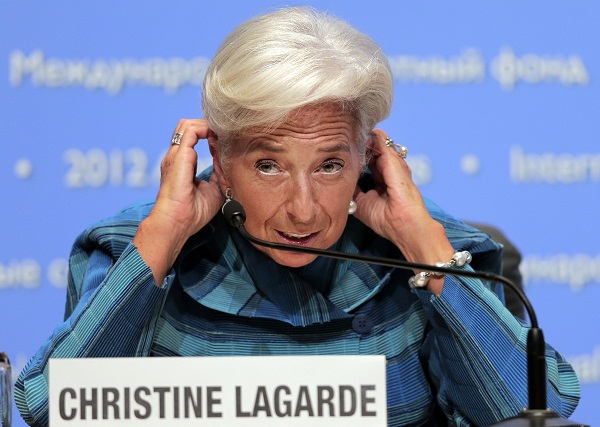
International Monetary Fund Managing Director Christine Legarde gestures while answering questions from the media during a news conference Friday, Nov. 16, 2012 at Malacanang Palace in Manila, Philippines. Legarde lauded the Philippines for transforming the country from being a "borrower" to a "small creditor."(AP Photo)
 
 
While the economies of Europe and the United States are mired in recession, the Philippines is on the road to economic growth in excess of 5 percent this year, Lagarde said.
 
“I congratulated the Filipino authorities for their excellent economic stewardship during difficult times. In the last decade, the Philippines managed to have an average growth of about 5 percent,” Lagarde said. “And you will be interested to know that this year, 2012, at a very difficult time because of the financial crisis in other parts of the world, the Philippines is probably the only country of which we have increased the growth forecast as opposed to other places in the world where we actually decreased our forecast.”
 
The Aquino administration has set a growth target of between 5 and 6 percent this year, 6 and 7 percent in 2013, and at least 7 percent in the succeeding years.
 
Lagarde’s remarks gave credence to a statement visiting Canadian Prime Minister Stephen Harper made last week that the Philippines was “an emerging Asian tiger.”
 
Officials of other first-world countries such as Australia had earlier arrived at the same observation, with the business establishment led by Asia Society Australia telling the President, during a state visit to Australia last moth, that the Philippines was now “the fastest-growing economy in Asia.”
 
Lagarde said she knew that the growth in 2012 would be “way in excess of five percent” even as the IMF looked forward to the country’s growth rate for 2013 being in the range of 5 percent, as well.
Lagarde credited this robust economic growth of the country—once the basket case of Asia—on the two-year-old Aquino administration’s fiscal reforms.
 
“This is due in no little part to the excellent policy mix deployed both by the secretary of finance and the Central Bank of the Philippines, and the combination of sound fiscal policy as well as sound monetary policy,” she added.
 
However, she said, she hoped for more “inclusive growth” that would trickle down to the poor.

Sunday, November 4, 2012

...the PH to the world

IMF chief coming to see how PH can help


By Michelle V. Remo
Philippine Daily Inquirer


International Monetary Fund (IMF) chief Christine Lagarde reacts during a news conference at the IMF and World Bank’s annual general assembly in Tokyo, Thursday, October 11, 2012. AP/Itsuo Inouye


MANILA, Philippines—International Monetary Fund (IMF) head Christine Lagarde will visit the country this month to discuss the role of emerging economies in helping resolve global economic woes.

The IMF made the announcement as it scheduled meetings between its top official and the Philippines’ key government officials. The IMF managing director will also meet the Philippine media in a press conference.

Lagarde is also expected to reiterate IMF support for the reforms being pushed by the Philippine government to accelerate the domestic economy’s growth.

These reforms include higher taxes on cigarettes and alcohol, the lifting of unnecessary tax incentives for businesses, and administrative measures to shore up tax collection.

The IMF likewise supports calls to amend the Bangko Sentral ng Pilipinas (BSP) charter with the aim of further improving its ability to manage liquidity within the economy and to supervise the country’s banks.

In particular, the BSP wants to be able to trade its own bonds and have its examiners exempted from the Deposit Secrecy Law to better determine irregularities in bank transactions, among other things.

Unlike some countries visited by IMF officials, the Philippines is not expected to seek financial assistance from Legarde. The country, which has $82 billion in foreign exchange reserves, is now a creditor to the IMF.

In June, the BSP said the country was lending $1 billion to the IMF, which would use the money to help crisis-stricken economies in the euro zone.

Lagarde’s visit to Manila follows her trips to other Asian countries. She went to China and India in March, and Indonesia, Japan and Thailand in July.

Lagarde is the first woman managing director of the IMF. She began her five-year term as head of the IMF in July last year following the resignation of Dominique Strauss-Kahn.

Prior to her stint as IMF managing director, Lagarde held various positions in the French government.

She was the first woman finance minister for a G8 economy.

In 2009, the Financial Times named her best finance minister in the euro zone. In 2011, she was ranked by Forbes magazine as the 8th most powerful woman in the world.

Tuesday, October 23, 2012

...the PH strong position

Tetangco says PH in a position of strength

10/23/2012
 
 
MANILA, Philippines - Amid the challenging global financial climate, Bangko Sentral ng Pilipinas (BSP) Governor Amando Tetangco Jr. believes the Philippines is in a "position of strength."
 
The country’s top central banker mentioned this in a recent interview with Emerging Markets magazine, which awarded him the distinction of being the central bank governor of the year for the Asian region.

“The central bank, under Governor Amando Tetangco’s stewardship, has managed monetary policy with considerable skill, not least given the twin threats of China slowdown and spillover from the euro zone crisis,” said Taimur Ahmad, editor-in-chief of Emerging Markets, in a statement.

Tetangco, who received the award on the sidelines of the World Bank-International Monetary Fund meetings in Japan two weeks ago, boasted of the country’s strong macroeconomic fundamentals that allowed it to grow 6.1 percent in the first semester.

“I think, over-all, we are in a position of strength at this point in time. Our interest rates are still significantly positive. The BSP borrowing rate is at 3.75 percent, so there is room there. The government has a fiscal deficit that is substantially below the projection for the year, so they also have room to accelerate spending,” the BSP chief explained.

BSP’s policy-making Monetary Board has slashed policy rates by an aggregate of 75 basis points this year as inflation, which averaged 3.2 percent as of the third quarter, remained manageable and growth continued to be strong.

It is scheduled to meet again this Thursday and the market is expecting it to cut key rates again by another 25 basis points in a bid to tame the peso’s appreciation and support export growth. That would put interest rates at new record-lows of 3.5 percent and 5.5 percent for overnight borrowing and lending, respectively.

Latest data showed merchandise exports dropped nine percent in August. A strong peso, while making imports cheaper, also trims the value of dollar export earnings and remittances when they are converted into local money.

While easier monetary policy has helped boost growth, it has also sparked concerns of asset bubble formation or a situation when value of assets, given huge demand, tends to rise beyond real market prices.

Wednesday, September 12, 2012

...the right path

PH economy on the 'right path' - Aquino


09/12/2012
 
MANILA, Philippines - President Benigno Aquino on Wednesday said the Philippine economy is on the "right path," amid grim warnings of an global economic slowdown from the International Monetary Fund (IMF).
 
Aquino said IMF managing director Christine Lagarde gave "very dire predictions or prognosis about the world’s economy" during a meeting with world leaders at the APEC Summit in Vladivostok last weekend.

"Madam Christine Lagarde, managing director of the IMF, made references to external pressures and factors that can impede, and have already impeded, the progress of some global economies—but at the same time, these factors can also open up new prospects for others," he said, in a speech at the IBM Think Forum in Makati City.

The President believes the Philippines can take advantage of opportunities in these challenging times.

"For example, with instances of capital outflow from more developed, but troubled economies, emerging markets like the Philippines are given the opportunity to make the most of their competitive advantages and become prime locations for investment. We all need to take advantage of opportunities like this."

Aquino noted the Philippine economy's strong performance in the second quarter, growing by 5.9%, on track to achieve the full-year GDP target of 5-6%. He also cited the 44 record-highs of the Philippine Stock Exchange, as well as the fact that the Philippines is just one level below investment grade according to 2 credit ratings agencies.

"The Philippines is truly on the right path. Everyone — from our countrymen and tourists, to leaders of industry both in the country and beyond its shores, to organizations and other governments — shares our optimism. And this has allowed us to succeed: to regain our confidence and make the most of even more opportunities to achieve inclusive growth for all Filipinos," he said.

The President also mentioned the Philippines' significant improvement in the World Economic Forum’s Global Competitiveness Report for 2012-2013. The Philippines jumped 10 spots to rank 65th out of 144 economies, compared to 85th spot in 2010.

"That is, in total—for those less challenged in math—a 20-place jump in rankings since we took office; and allow me to emphasize that this is the first time we have broken into the top 50 percent of countries, I’m told, since 1994, the year the Philippines was first included in the report," he said.

Aquino ended his speech by saying that it is not just the government that acted on these opportunites but an "empowered citizenry." - With report from Nina Corpuz, ABS-CBN News

Saturday, July 21, 2012

...the IMF projection

IMF: 'Solid momentum' to push PHL 2012 growth to 4.8%, possibly higher


July 20, 2012
GMA News

The International Monetary Fund (IMF) said Friday it sees the Philippines’ economy growing this year by 4.8 percent and could pull off a “surprise on the upside” if the 6.4 percent expansion posted in the first quarter gains momentum that persists the rest of the year.


Only last Thursday, the World Bank revised upward its growth estimates for the country, but forecast slightly slower growth of 4.6 percent.

The IMF issued its latest estimates at the conclusion of a staff mission review done from July 16 to 19 and included meetings with top Filipino economic officials, other senior public officials and representatives of the private sector.

It partly based its forecast on expected surpluses of the current account, balance of payments and inflation from July until the yearend

The IMF mission also keeps close watch over public finance matters of the Department of Budget and Management and other economic agencies.

“The current account and the overall balance of payments are forecast to remain in surplus and inflation is expected to remain well within the target. Public finance continues to improve while the financial system has sustained its resiliency notwithstanding the more challenging external markets,” the IMF mission said in its statement.

Interest rates

In the eyes of the IMF mission, “the Philippines has the policy space to support growth if needed.”

This policy space includes the Bangko Sentral ng Pilipinas’ calibration of interest rates, which BPI Family Bank chief executive officer Jose Limcaoco said on Friday at an investment forum “have more room to fall.”

“The BSP cut special deposit account (SDA) rates by three basis points last week. We think that’s a cue cut—that’s how we call it. We think they’re sending a signal…not because the economy is slow but because they’re just reacting to what the rest of the world is doing,” Limcaoco said.

He posited that the BSP is being “proactive.”

“They cannot fall behind what the other central banks (are doing). The whole world is cutting rates. We cannot be seen as having relatively higher rates than the rest of the world or else we will just have a lot more hot money coming in which will cause problems,” the bank president said.

Limcaoco added that rate cuts loom in the near horizon. “I think the Monetary Board has a big decision to make next week. If they don’t cut next week, I believe they may be cutting in the month to follow. There is room for rates to fall both in government securities (GS) market and even in the lower rates.”

On the public finance dimension, the Aquino administration said it has the “fiscal space” that can allow it to put on hold its plan to source $750 million from external financing sources in the reamining months of 2012.

Finance Secretary Cesar Purisima said on the sidelines of a meeting of the Asia Pacific Economic Cooperation (APEC) that “we are in control of our fiscal destiny” because it can afford to wait to for better conditions in the international financial market, which is beset by worries about Europe’s lingering debt crisis.

The country raised $1.5 billion last January from a global bond issue maturing in 2037.

The Department of Finance had programmed to source $4.02 billion from the international markets. Some $2 .25 billion would be commercial debt while $1.77 billion will be program and project loans. — Earl Victor Rosero, GMA News

Monday, July 16, 2012

...the IMF forecast

IMF maintains growth forecast for ASEAN

 
July 16, 2012
GMA News
 
 
The International Monetary Fund has maintained its 5.4-percent average growth forecast for the ASEAN-5, which includes the Philippines.

But it cut its global growth projection to 3.5 percent amid the perceived worsening of the eurozone debt crisis in recent months. The latest global growth forecast was slightly lower than the 3.6 percent the IMF made in April. 
 
“The euro area periphery has been at the epicenter of a further escalation in financial market stress, triggered by increased political and financial uncertainty in Greece, banking sector problems in Spain, and doubts about governments’ ability to deliver on fiscal adjustment and reform as well as about the extent of partner countries’ willingness to help,” the IMF said in its latest World Economic Outlook. 
 
The IMF said emerging markets like the Philippines will not be immune from the adverse impact of the prolonged debt woes in the eurozone. Nonetheless, it said that the ASEAN-5, which also includes Indonesia, Thailand, Malaysia, and Vietnam, will manage to grow as initially estimated given their relatively better economic fundamentals. 
 
But the IMF said emerging economies must brace for likely anemic export earnings over the coming months as foreign demand for their goods are dampened by the crisis in the eurozone.
 
“In emerging and developing economies, policymakers should stand ready to adjust policies, given spillovers from weaker advanced economy prospects and slowing export growth and volatile capital flows,” the IMF said.
 
For 2013, the IMF expects the global economy to grow at a faster clip of 3.9 percent. Consequently, it said, the ASEAN-5 may also grow faster at 6.1 percent. 
 
The latest 2013 projection for world economic growth is a revision from the previous forecast of 4.1 percent. Similarly, the latest growth forecast for the ASEAN-5 is lower than the original 6.2 percent. — DVM, GMA News

Thursday, June 21, 2012

...the new creditor

Palace: $1B IMF pledge is a case of paying it forward

 
June 21, 2012
 
 
Now that we (the Philippines) have been considered a creditor nation, we feel it is our obligation to assist those nations who require funding from then IMF,”  - Presidential Spokesperson Edwin Lacierda
 
 
Malacañang described on Thursday the government’s decision to extend a $1 billion pledge to the International Monetary Fund as “paying forward” the international organization as it has in the past assisted the Philippines during times of crisis.
 
“Now that we (the Philippines) have been considered a creditor nation, we feel it is our obligation to assist those nations who require funding from then IMF,” Presidential Spokesperson Edwin Lacierda said at a press briefing.
 
He said the country had been a recipient of IMF assistance for the past 40 years.
 
Lacierda expressed confidence that the IMF “will act judiciously on the funds” which is expected to help in stabilizing the crisis in Europe.
 
He said there is now a $456 billion standby fund for that purpose and the “Philippines contributed one billion dollars to that fund.”
 
Lacierda said the fund is kind of investment in global stability.
 
“It is our responsibility; it is part of our obligation,” said Lacierda.
 
Bangko Sentral ng Pilipinas Governor Amando Tetangco Jr. said Wednesday that the $1 billion pledge extended by the Philippines will earn interest while helping other countries beset with financial problems.
 
The pledge to the IMF fund marks the third time that the country has extended a helping hand to other countries that were in troubled fiscal waters. 
 
Since 2010, the Philippines has lent $251.5 million to distressed European countries Greece, Portugal and Ireland.  The country also pitched in $4.55 billion to another buffer fund, the Chiang Mai Multilateral Initiative. — DVM, GMA News

Saturday, April 21, 2012

...the model


WB: Phl a model for cash transfer


By Neil Jerome Morales
The Philippine Star
Updated April 21, 2012


WASHINGTON – The World Bank (WB) has tagged the Philippines as a model in providing a social safety net that cushions the impact of global financial and economic problems.

The Philippines, for its part, wants to improve its Pantawid Pamilyang Pilipino Program (4P) by lengthening the period that beneficiaries receive cash.

“We at the Bank have helped extend conditional cash transfer programs to about 40 other countries. So we had the Philippines (Social Welfare) secretary here and they have expanded to three million families,” World Bank president Robert Zoellick said on Thursday, at the start of the 2012 WB-IMF Spring Meetings here.

“Let us focus on basic safety nets for every country to deal with the volatility and uncertainty, because the other lesson we learned is if you wait until the crisis, it is too late,” Zoellick added.

The Philippines began its 4P or the conditional cash transfer program in 2008, targeting to regularly provide cash to 5.2 million households.

“In the General Appropriations Act, we were given P39 million to add 700,000 beneficiaries this year and we have done so,” Social Welfare Secretary Corazon Soliman told The STAR in a forum at the sidelines of the meetings.

“We are on target and we are now at three million households. What we are doing now is strengthening and ensuring that we are doing well,” Soliman said.

The Department of Social Welfare and Development wants to reach 5.2 million households in 2015.

But new plans are under way for the safety net program of the country.

“We are reviewing it to increase the age because we want to make it 0-18 years old. That would require additional funds so that is what we are looking at and we are doing some computation if we can afford it,” Soliman said.

To date, 4P helps keep 0-14-year-old children in school through $7 per month aid per child, with a maximum of three children per household.

“We are looking at the need for children to finish high school,” Soliman said.

Fourteen-year-old children are usually in second or third year of the four-year secondary school curriculum.

Under the K+12 basic education program that will be implemented this year, students will have four years of junior high school (Grades 7 to 10) and two years of senior high school (Grades 11 to 12).

Soliman said the department can implement its lengthened aid as early as 2014 if there is sufficient funding, which is still subject to approval of the Department of Budget and Management.

The World Bank said that worldwide, three out of five people in developing countries and four of five people in the world’s poorest countries lack safety net coverage.

The World Bank said countries are struggling to protect their most vulnerable citizens from the negative impacts of global financial volatility and food and fuel price hikes.

“Effective safety net coverage overcomes poverty and promotes economic opportunity and gender equality by helping people find jobs, cope with economic shocks, and improve the health, education, and wellbeing of their children,” Zoellick said.

“There is a push for the national government to deliver education, health and infrastructures well because people need it,” Soliman said.

The World Bank said expanding cost-effective safety nets like cash transfers, food assistance, public works programs, and fee waivers help countries respond to crises.

“It is not a question of whether countries can afford to have safety net programs... It is whether we can afford not to have them,” said Ato Sufian Ahmed, Minister of Finance and Economic Development of Ethiopia, where the Productive Safety Nets Program has protected millions from famine.

The World Bank Group support for social protection and labor programs reached $11.5 billion in 83 countries during the last decade.

Serious threats

Meanwhile, in its Global Monitoring Report (GMR) 2012, the World Bank said developing nations continue to face serious threats to the mortality levels of child and mother, as well as reducing levels of poverty and potable water.

The World Bank said that the world is significantly off-track on the Millennium Development Goals (MDG) to reduce mortality rates of mothers and children under five.

“As a result, these goals will not be met in any developing region by 2015. Progress is slowest on maternal mortality, with only one-third of the targeted reduction achieved thus far. Progress on reducing infant and child mortality is similarly dismal, with only 50 percent of the targeted decline achieved,” the report stated.

WB chief economist and senior vice president Justin Yifu Lin said that high and volatile food price works against the attainment of many MDGs, as they erode consumer purchasing power and prevent millions of people from escaping poverty and hunger.

“Dealing with food price volatility must be a high priority, especially as nutrition has been one of the forgotten MDGs,” Lin added.

The report stressed that a fragile global economy would slow down human development goals.

The report estimated that 1.02 billion will remain in extreme poverty in 2015.

“According to our projections, an estimated 1.02 billion people will still be living in extreme poverty in 2015.

Clearly, assistance must be leveraged in new ways if we are to improve food security and nutrition, particularly for the poor and vulnerable,” said Jos Verbeek, lead author of the report and lead economist for the World Bank.

Regional progress towards the MDGs is uneven.

The report said that while upper middle-income countries are on track to achieve most targets, low-income or fragile countries are lagging, with only two goals achieved or on-track.

What is worse is that commodity prices remain volatile while food prices are also declining, it said.

The World Bank, however, said that complicating matters is that development assistance is starting to dry up or shrink due to the crisis as well as the strengthening of some currencies in the Asian region. – With Ted Torres


Tuesday, March 13, 2012

...the economic recovery

Economic recovery owing to FDIs, foreign exchange reserves increases

(philstar.com)
March 14, 2012


MANILA, Philippines (Xinhua) - Indications have showed that the Philippines is well on its way to full economic recovery, a huge inflow of foreign direct investments (FDIs) into the country last year and a surge of foreign exchange reserves to a record high in February this year.

In a statement, the National Statistical Coordination Board ( NSCB) said that total approved FDIs in the country in 2011 reached P256.1 billion ($6.03 billion), or a growth of 30. 6 percent from the previous year's level.

The NSCB, an agency of the National Economic and Development Authority (NEDA), said this was the highest level of approved FDIs in a single year since 1996. NEDA is the highest economic planning body of the government.

According to NSCB Secretary General Romulo Virola, FDI applications last year also exceeded the P241.1 billion ($5.67 billion) recorded in 1997, before the Asian financial crisis hit.

Virola said that of the total FDIs in 2011, the Philippine Economic Zone Authority (PEZA) accounted for P193.6 billion ($4.56 billion) while the Board of Investments (BoI) recorded investment commitments worth P23.2 billion ($513.27 million).

Investments registered with PEZA grew by 36.2 percent and with BoI, by 4.1 percent.

In the first two months of this year, investment pledges registered with PEZA surged by 47 percent to P16.22 billion ($358.85 million), from P11.04 billion ($259.76 million) in the same period last year, owing to the country's improved business investment climate.

PEZA Director General Lilia de Lima said that the growth in investment commitments is expected to be sustained until the end of 2012, due to the large number of prospects in the pipeline, particularly projects of Japanese firms that are coming to the Philippines to either relocate or expand their operations.

"This is our banner year.. Our best bet is still Japan (for investments). I'm very happy with our Japanese investors, they treat our people well, so we want to invite more Japanese investors into the country,"De Lima said last week on the sidelines of the 500,000 unit production milestone of Toyota Motor Philippines Corp.

In terms of country of origin, Japan accounted for P77.4 billion ($1.82 billion) of the FDIs approved, accounting for 30.2 percent of last year's total.

Investment commitments from investors based in the United States reached P70.4 billion ($1.66 billion), or 27.5 percent of total, while P28.3 billion ($665.88 million), or 11.1 percent, came from the Netherlands.
Earlier, the Bangko Sentral ng Pilipinas (BSP), the country's central bank, also reported that the country's foreign exchange reserves in February surged further to a record high of P77.77 billion.

The BSP said that the surge in the country's gross international reserves (GIR) in February was due to foreign currency inflow like remittances and foreign portfolio investments or hot money, dollar-denominated loans secured by the national government and earnings by the BSP from its investments in foreign securities.

The latest GIR, an indicator of the country's ability to service its debts to foreign creditors, pay imports and engage in other forms of commercial transactions with the rest of the world, rose nearly 22 percent from $63.89 billion in the same period last year.

BSP Governor Amando Tetangco Jr. said that the rising foreign exchange reserves showed the country's improving ability to service its maturing obligations with foreign creditors and "thus make the country worthy of better credit ratings."

The Philippines, after getting favorable credit-rating actions last year, is hoping for another round of upgrades from various international rating agencies to finally hit investment grade.

The country's credit ratings with Moody's Investors Service and Standard & Poor's both stand at two notches below investment grade, while that with Fitch Ratings stands at a notch below.

In its latest assessment of the Philippine economy, the International Monetary Fund (IMF) said the Philippines' growing foreign exchange reserves will keep the country safe from shocks brought on by problems now gripping the global economy.

The Washington-based multilateral institution said that the Philippines' GIR of $77.77 billion by the end of February would be sufficient to allow monetary officials of the country to respond to sharp capital outflows, a risk emerging economies now face due to global economic uncertainties.

"Should volatile (capital) outflows occur, there is scope to use reserves to smoothen the effects of such outflows,"the IMF said.

According to the IMF, in times of uncertainties, foreign investors tend to withdraw their funds from emerging markets, like the Philippines, preferring to hold on to their cash or put their money in what they consider to be less risky assets.

As a result, emerging market currencies, such as the Philippine peso, is prone to sharp depreciation.

But in the case of the Philippines, the IMF said that the BSP has enough resources to intervene in the foreign exchange market, particularly by using its dollar reserves to control the peso, preventing any sharp and sudden depreciation of the local currency.

Wednesday, March 7, 2012

...the growth projection (2)

Philippines eyes 6% growth despite China, oil worries


 "...the Philippines was firmly on track for its 5-6 percent GDP growth target this year." - Ruperto Majuca, Assistant Director-general, National Development Office for Planning


The Philippines will hit or top its growth target of 5-6 percent this year despite rising oil prices and China's forecast of slightly slower economic expansion, officials said Tuesday.

Central bank governor Amando Tetangco and other officials said China's 7.5 percent gross domestic product (GDP) growth target this year, from 8.0 percent last year, was not a cause for concern.

"While the growth projection has been downscaled, they can still beat that target," he told a news conference.
"If that's the case then there won't be any significant impact," he said, adding that some deceleration had been expected.

Announced by Premier Wen Jiabao on Tuesday, the new target remained substantial for a large economy despite the "temporary" jitters it caused on financial markets, said Tetangco.

Ruperto Majuca, assistant director-general of the economic planning ministry, said the Philippines was firmly on track for its 5-6 percent GDP growth target this year.

"We will probably hit the higher end of our forecast, and we will not be surprised if we will exceed it," Majuca added.

Vivek Arora, the International Monetary Fund representative in the Philippines, said GDP growth should recover to 4.2 percent this year, from 3.7 percent last year.

Higher government spending, robust salary remittances by millions of Filipinos abroad, and supportive monetary conditions will be key, he told a conference call.

"So far we see the authorities' policy focus as appropriate in the sense that macro policies are supporting growth while keeping inflation manageable," Arora added.

Tetangco said that despite the surge in oil prices amid tensions over Iran's nuclear programme, the Philippines remained on course for 3-5 percent inflation this year.

"The current assumption is oil prices of between $90-110 (a barrel) for the whole year," he said.

They would have to spike to $150-160 per barrel, for the outlook to change, he added.

The government announced Tuesday inflation slowed to 2.7 percent in February from a revised 4.0 percent in January.

Tetangco said this vindicated the central bank's move to cut its key interest rates by a full percentage point this year.

Tuesday, March 6, 2012

...the growth via domestic demand

PH growth to rise on domestic demand: IMF

03/06/2012

"The challenge now is to navigate through the period of global uncertainty to maintain macroeconomic stability," the IMF said in its yearly economic health-check for the Philippines.

WASHINGTON - The Philippine economy should grow modestly this year on domestic demand, despite the risks to the broader global economy from Europe's sovereign debt crisis, the International Monetary Fund said on Monday.
In its annual review of the Philippine economy, the IMF forecast growth would rise to 4.2% this year, up from 3.7% in 2011.

Growth over the next two years could recover to around 5%, while inflation is likely to remain within the 3% to 5% official target range, it said.

"The challenge now is to navigate through the period of global uncertainty to maintain macroeconomic stability," the IMF said in its yearly economic health-check for the Philippines.

Concerns about Europe's debt crisis have increased financial market turbulence. World equity markets slipped on Monday after economic data raised expectations of a recession in Europe and China cut its annual growth forecast.

Philippine policymakers, however, are hoping that higher public spending on infrastructure projects will fuel growth of at least 5% this year after 2011's slower-than-expected pace.

The IMF report, which was completed on Jan. 18, said monetary policy in the Philippines was supportive of growth. The IMF suggested that cutting rates was not needed at the time.

The Philippine central bank cut its main policy interest rate to a record low of 4% last Thursday in line with the dovish policy stance of most central banks in Asia, which have focused on boosting growth as inflation worries wane globally.

The IMF said the Philippine financial system had only limited exposure to Europe - about 1.5% of total assets - although it cautioned that financial contagion could be felt if European banks pull back credit to the corporate sector.

The IMF said the authorities had informed IMF staff that European banks in the Philippines "were liquid, had access to a large local deposit base, and had not displayed undue signs of stress".

IMF staff estimated that the value of the Philippines' exchange rate was "broadly in line with medium-term fundamentals."