Showing posts with label education. Show all posts

Tuesday, November 12, 2019

...the Filipino language in German University

Leading German university launches Filipino language course 


Philippine Star 
12 November 2019

 
MANILA, Philippines— The Embassy of the Philippines in Berlin, Germany recently announced that one of the leading Germany universities, Humboldt University, would be offering a Filipino language course for the first time.


The course was launched during the first week of November by the Advancing Philippine Studies Program.

“Filipino language will be offered as a full module for the first time at the institute,” the organizers of the Advancing Philippine Studies Program in HU said on a Facebook post.


Advancing Philippine Studies Program, launched in July 2019, seeks to advance and promote Philippine and Filipino studies in HU "by developing academic programs, projects and activities related to the culture, society, and history of the Philippines and the Filipino people."

These projects are conceptualized and managed by Filipina sociocultural anthropologist and assistant professor at the Department for Southeast Asian Studies, Rosa Cordillera Castillo.

The Filipino language course, would be offered for the Winter term and would serve as one the major components of the Philippine Studies program.

It would be would be administered by Filipino language instructor Antonio Galang Jr. from the University of the Philippines.

The Philippine Studies program is overseen by HU's Institute of Asian and African Studies in partnership with the Philippine Embassy in Germany.

It is funded by a donation offered to HU through the office of former Sen. Loren Legarda and npw De[ity Speaker Loren Legarda and the Philippine Embassy in Berlin under the Cultural Diplomacy funds of the Department of Foreign Affairs.

HU, founded in 1810, is Germany’s premiere tertiary-level educational institution. It currently ranks 120th at the QS World University Ranking.

In May 2019, the Supreme Court ruled with finality that Filipino and Panitikan or Philippine Literature can be excluded as core subjects in college in the Philippines. —Rosette Adel

Thursday, October 24, 2019

...the PH report in UN's Sustainable Development Goals

The Philippines reports substantial progress in achieving UN mandated SDG's


By Roy Mabasa
Manila Bulletin
24 October 2019


On the occasion of the United Nations Day, the Philippines on Thursday expressed its support and a renewed commitment to the call of UN Secretary-General António Guterres to find solutions and accelerate efforts to achieve the Sustainable Development Goals (SDGs).

(Facebook)

In its second Voluntary National Review (VNR) of the SDG which is 10 years away from the deadline, the Philippines has shown progress in achieving the global goals based on the report of the National Economic and Development Authority (NEDA).

Adopted by all UN member-states in 2015, the SDG is a universal call to action to end poverty, protect the planet and ensure that all people enjoy peace and prosperity by 2030.

“The country has achieved a near-universal primary enrolment rate of 94.2 percent in 2017 under Quality Education or SDG 4, and improved access to education for vulnerable groups. There were also significant increases in completion rates for primary and secondary education by more than 8 and 10 percent in the past two years,” according to a joint statement issued by the Department of Foreign Affairs and the UN.

On decent work and economic growth or SDG 8, the Philippines noted a Gross Domestic Product (GDP) growth rate of over 6 percent and the lowest national unemployment rate in almost 15 years.

It noted that the Green Jobs Act further promoted decent jobs that are environment-friendly, protect the ecosystem and biodiversity, and help reduce waste generation and pollution.

While the Philippines rank third in the world as “most vulnerable to hazards,” data, however, showed a decrease in persons directly affected by disasters from 2015 to 2018.

It also cited the roles of the private sector in bringing inclusive business models and value chains, while the disadvantaged groups availed of livelihood support programs to lift communities out of poverty.

On gender issue, the Philippines has expanded maternity leave benefits and extended its conditional cash transfer to poor families in order to promote social protection and to narrow the gap between male and female labor force,

Significantly, private companies now hire more persons with disability, and poor communities were also empowered through a community-driven development approach.

On peace, justice, and strong institutions, cumulative initiatives including those by the international community resulted to the Bangsamoro Organic Law to address the conflict in Mindanao. The National ID System, the government’s digital identification platform, is under implementation to facilitate access of the marginalized to government assistance, among others.

In the statement, both the DFA and the UN recognized the whole-of-government and a whole-of-society approach as “crucial” to sustain the progress that has been made to address remaining challenges, realize aspirations, and ensure that no one is left behind.

Yearly, the DFA and the UN office in the Philippines co-hosts the UN Day celebration in pursuit of common goals.

As one of the founding members, the Philippines was among the first signatories of the UN Charter in June 1945 along with 49 other countries. October 24 has been celebrated globally as UN Day since 1948.

Monday, October 14, 2019

...the Pinoy summa cum laude in Europe

Filipino scholar graduate s summa cum laude in Europe


Neil Arwin Mercado
Inquirer.net
14 October 2019


MANILA, Philippines — Not only did a Filipino scholar return from Europe with new learnings from a foreign land, he was also able to finished his degree summa cum laude.


While many would think that studying abroad, especially in Europe, comes at a hefty price, Kent Tangcalagan would tell you otherwise as he finished his degree as a beneficiary of a scholarship program.

Tangcalagan learned about the Erasmus+ scholarship program, formerly known as Erasmus Mundos, from one of the delegates at a conference he attended abroad.


“There was an Indonesian delegate there, she applied for Erasmus for two years already and she gave me the website,” Tangcalagan said in an interview with INQUIRER.net.

“So when we went back to the Philippines, I asked my mentors, my advisors that I met from work—like advice, some of their recommendations regarding applying for studies abroad. I also asked people to write my recommendation letter,” he added.


The scholarship covers tuition fee, annual travel allowance, establishment allowance to help scholars in their adjustment period in a foreign land, and a monthly contribution cost which includes accommodation.


During the application, applicants are allowed to select three education programs. Should they be accepted in all three, they will have the option to select which program they would like to enter.


Tangcalagan was accepted under the Erasmus Joint Masters Degree in Comparative Local Development in May 2017, a two-year program where he would study in one university in a European Union (EU) country per semester.


In his first semester, he studied in Corvinus University of Budapest in Hungary, University of Regensberg in Germany in his second semester, and University of Trento in Italy for his third semester.
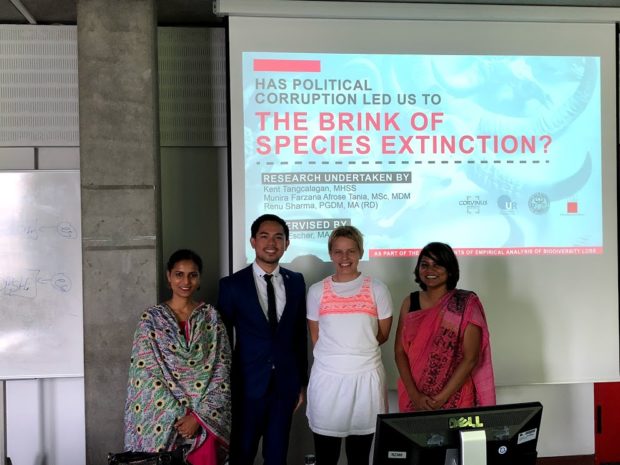


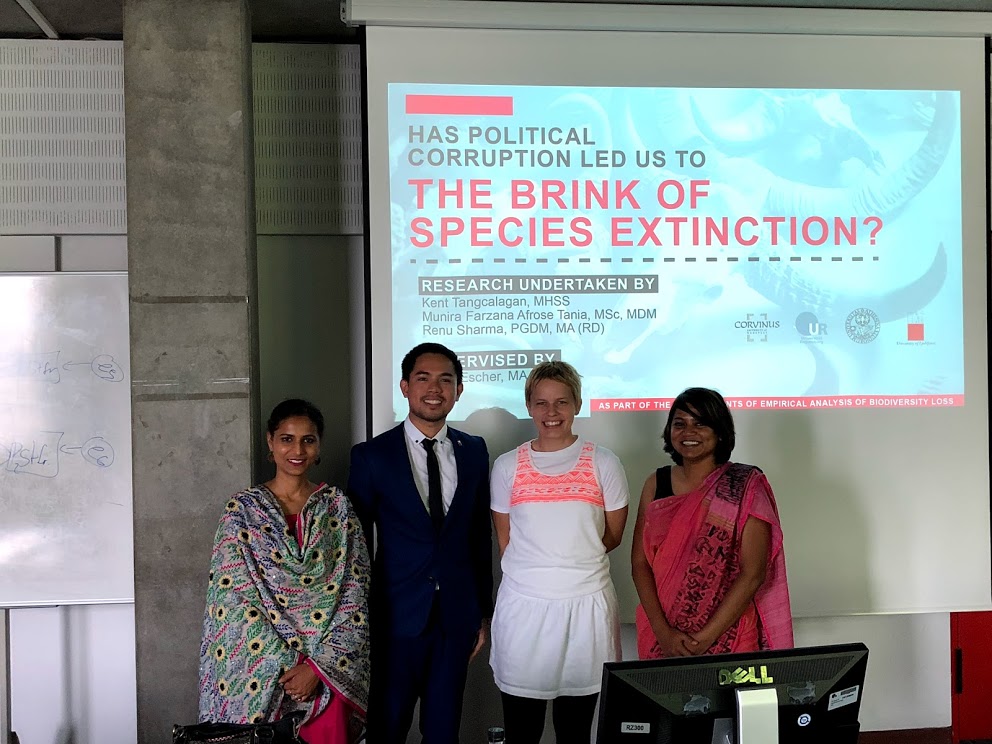
Filipino scholar Kent Tangcalagan presents one of his research outputs in one of his classes at the University of Regensberg in Germany during the second semester of his masters degree.
“When I got there, it was very different because all of my classmates came from different countries as well. We came from different countries so you have different nationalities, different cultures, different opinions,” Tangcalagan said.


“Since our program was on development sector, we got to talk about social, economic, and political issues in class. In my case I got shocked because there are very differing opinions on different things,” he added.


But instead of seeing the cons of being surrounded by varying perspectives, especially on the complex topic of his program which is development, Tangcalagan saw it as an opportunity to challenge his own views.


“There was a sense of ‘culture shock’ at first but when you go through it after a few months, you get used to it and you see how advantageous it is and how beneficial it is for you,” he said.


Living and studying abroad


Tangcalagan said that being a student in Europe is very convenient, but this also comes with living away from your family for some time.


“You are away from the traffic that we have here in Manila. The public transport is very convenient. It’s very cheap for students because as a student you get to have a transport card so you can travel easily in different cities,” Tangcalagan said.


“It is also fairly cheap to travel across countries because we have this student resident’s permit so it allows us to cross different borders, we get to visit other countries during breaks,” he added.
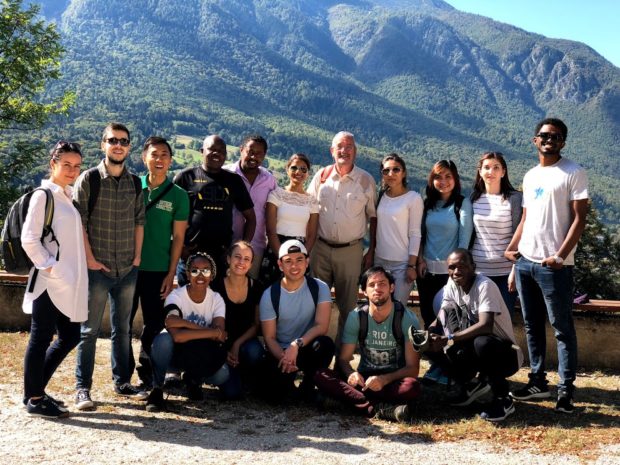


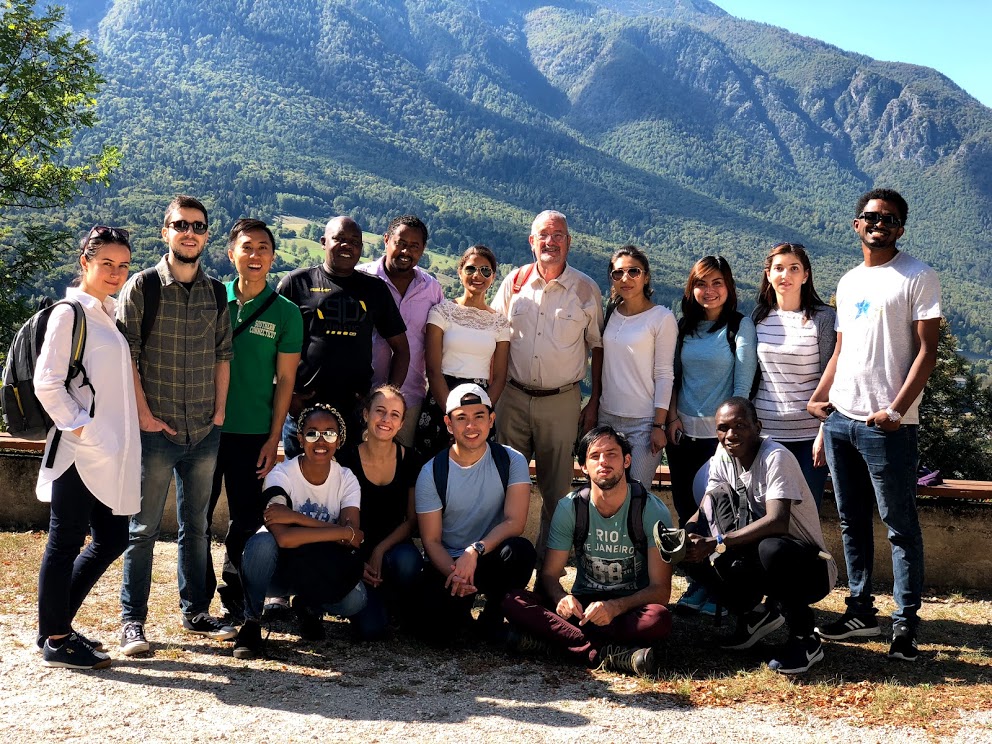
Tangcalagan (center, seated) travels with his classmates and the head of the scholarship program in Italy in the area of University of Trento in Italy.

As per the education system, he narrated that there are more than 15 professors per subject. The professors came from different areas in the world, which helped in providing different perspectives in the context of development.


“That’s also very beneficial because some of our professors come from different countries, even outside Europe so we get different perspectives on our subject matter which is development,” Tangcalagan said.

“You get to hear about development projects that they implemented in Africa, or in the US, or Latin America, also in Asia. You get to discuss different things with people who really implemented these projects so for me, it is one of the part of the European education that makes it very unique… That’s also another aspect of the diversity that Europe provides in terms of education,” he added.


More than education, an added bonus..


In his last semester, Tangcalagan did his internship at a research institution called Max Planck Institute for the Study of Societies in Germany before working on his thesis and defense.


Every semester, they are shown their grades. So when he saw that he is getting excellent grades from his courses, Tangcalagan pushed himself to strive for something bigger—finishing his degree with flying colors.
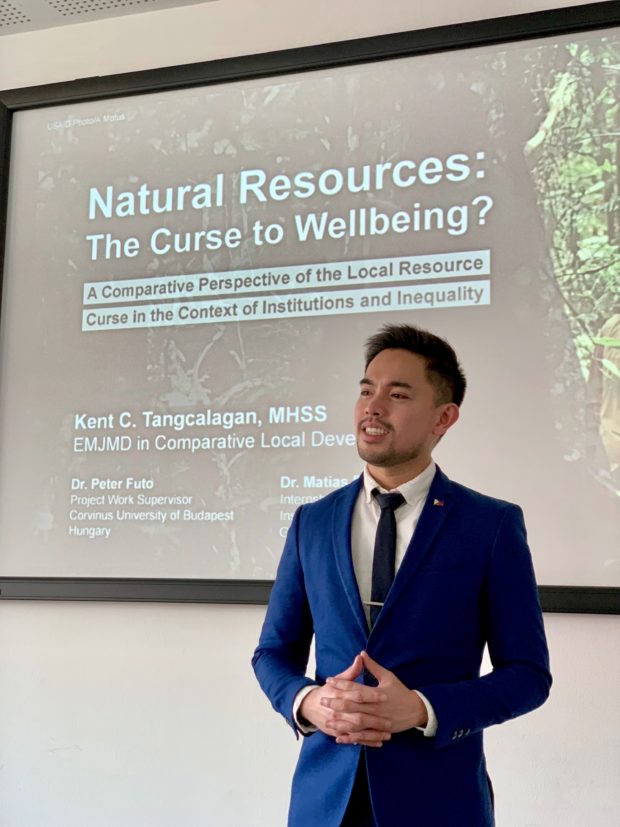


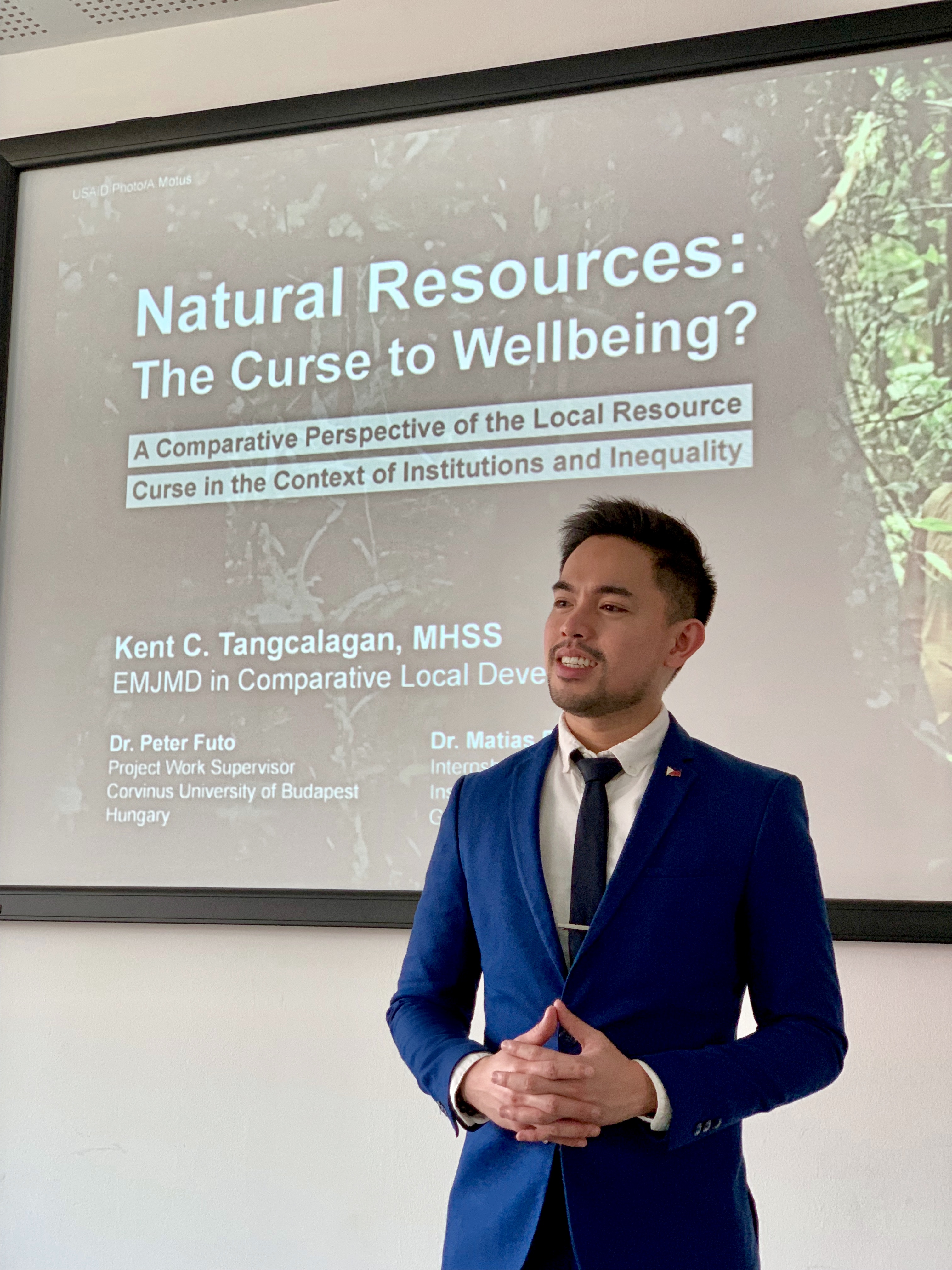
Tangcalagan presents his thesis titled, “Natural Resources: The Curse to Wellbeing? A Comparative Perspective of the Local Resource Curse in the Context of Institutions and Inequality” to complete his masters degree.

“I was nervous for the thesis and defense since we are aiming for the best. All of my grades—I got all excellent. I have to maintain that with my thesis and defense so after I finished my thesis and defense and I also got five (highest in Hungarian education), I was really really happy since all my hard work, and the sacrifices of being away from the Philippines [paid off],” he said.


But for him, it was only an added bonus as his mere goal was to make the most out of his experience.

“My goal was to make the best out of the scholarship. AS a scholar, I feel I was very privileged and honored to be studying in Europe. I am not spending any money, it’s the European taxpayers’ money that I was using for my education so I felt like I have the responsibility to make the best out of the education and scholarship that I am getting,” he said.


“Also I wanted to make my family and friends back home proud and even my colleagues at work since I left the Philippines for this education so at least by the end of the program there is something—this is what I did,” he added.
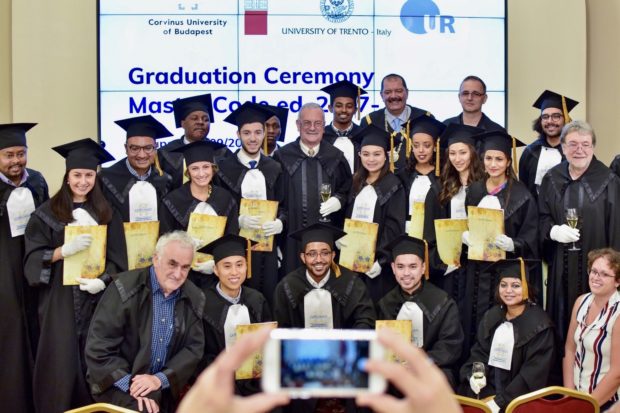


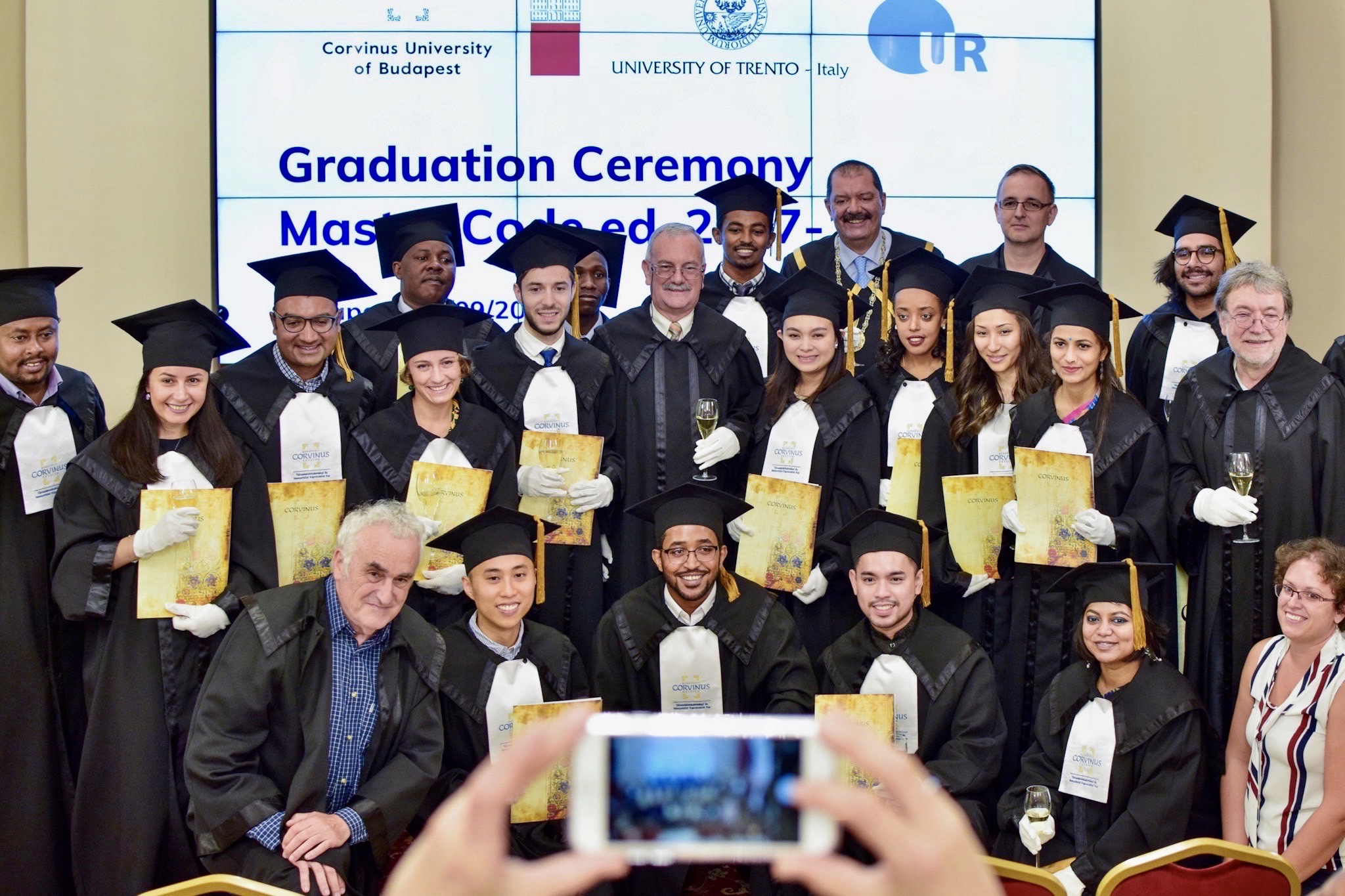
Tangcalagan (third from right, seated) finishes his masters degree as summa cum laude.

His advice to those who want to have the similar experience as his and study abroad? “Forget about all your doubts, don’t be afraid to try.”


Scholarship program of the EU


Thelma Gecolea, the public affairs officer of the EU Delegation to the Philippines, said that Erasmus+ is the scholarship and mobility program of the EU and managed by the European Commission.


Under the program, masteral and doctorate students from third world countries such as the Philippines are offered the chance to study in two to three EU member states.

As of 2019, there had been over 400 Erasmus scholars from the Philippines, 66 of whom were accepted this year.


“The Philippines has been ranking first in Southeast Asia in terms of scholars’ intake for the past three to four years,” Gecolea told INQUIRER.net.


Information about higher education opportunities in the EU are discussed in gatherings such as the European Higher Education Fair (EHEF).


Gecolea said that during EHEF, representatives 48 universities from the EU will be in attendance to inform the public about the advantage of “learning in a borderless Europe.”


In this year’s EHEF, universities from Austria and Finland will be participating in the event.

The event will be held on October 28 at the Lyceum of the Philippines University – Cavite from 9 a.m. to 3 p.m. and at the Grand Atrium in Shangri-La Plaza on October 26 from 11 a.m. to 6 p.m.


“There are the advantages of immersing in the EU’s charming past and the cutting-edge technology of the future,” Gecolea said. /je
Thursday, September 5, 2019

...the Pinoy English teacher in Cambodian Senate

Pinoy teaches English to Cambodian Senate staff 


Pia Lee-Brago
Philippine Star 
04 September 2019


MANILA, Philippines — A Filipino educator trained another batch of staff members of the Cambodian Senate in using the English language.

Teodoro Ariel Publico conducted an English language training program for more than 40 staff members of the Secretariat-General of the Cambodian Senate at the Pannsãstra University of Cambodia’s Institute of Foreign Languages.

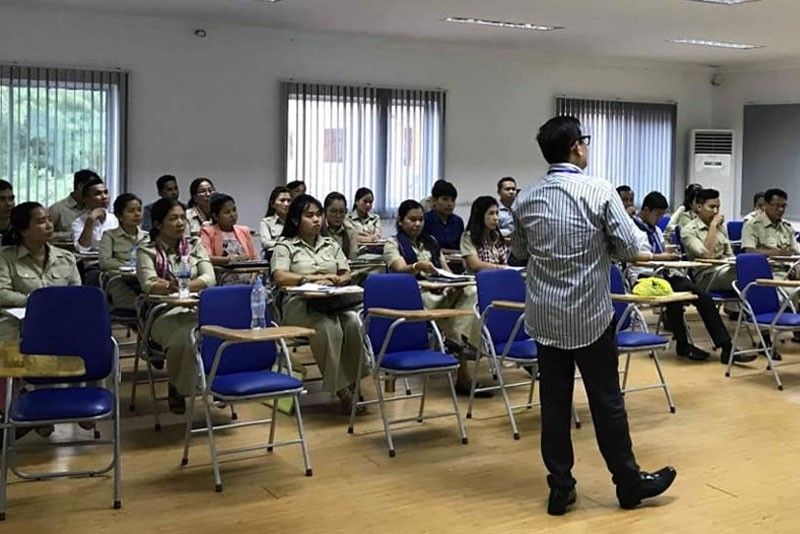
Teodoro Ariel Publico conducted an English language training program for more than 40 staff members of the Secretariat-General of the Cambodian Senate at the Pannsãstra University of Cambodia’s Institute of Foreign Languages.
dfa.gov.ph

The three-month training was organized by the Philippine embassy in Phnom Penh upon request of the Cambodian Senate.

Embassy chargé d’affaires Myca Fischer said the Philippine government has provided various capacity-building programs to Cambodians.

“The English language training is a manifestation of our continuing commitment to an ASEAN community that is socially cohesive and people-oriented,” Fischer said, referring to the Association of Southeast Asian Nations.

English is the working language of the ASEAN.

The embassy tapped the services of Publico, who committed to deliver quality English education for professionals and promote the tatak gurong Pinoy (mark of a world-class Filipino teacher).
Publico, who hails from Cavite, arrived in Phnom Penh in 2014.

This is the third English language class arranged by the embassy for the Secretariat-General.

The initial three-month course was held in May 2015 and benefited 18 participants.

The second three-month module was offered in January 2016 to 20 Senate staffers.

As of June this year, there are 1,023 education professionals among the 6,773 Filipinos in Cambodia registered with the embassy.

The Filipino teachers are working in universities, international schools, language training centers and kindergartens.

Some of them teach music, physical education, mathematics, science and English.

Fischer said the embassy has received feedback from students and their parents that they appreciate the nurturing and hardworking nature of Filipino teachers in Cambodia.


Tuesday, August 27, 2019

...the UC professor

UC professor is first Asian, Filipino to helm

environmental law academy


Cris Evert Lato-Ruffalo
Cebu Daily News
23 August 2019


CEBU CITY, Philippines–Lawyer Rose Liza Eisma-Osorio of the University of Cebu is the newly-elected chairperson of the International Union for Conservation of Nature (IUCN) Academy of Environmental Law (IUCNAEL).


Eisma-Osorio teaches environmental law public and private international law, legal research and writing, and human rights law at the UC College of Law.


Osorio is also the Faculty Adviser and Editor-in-Chief of the Journal of Research in Law and Policy.


According to the news announcement published in the IUCNAEL website, Eisma-Osorio is also one of the faculty members who acts as official representative to the IUCNAEL.


One of the founders and managing trustee of the Philippine Earth Justice Center (PEJC), Eisma Osorio received the prestigious Tatak UP awards in 2018.UCNAEL noted that PEJC filed several environmental cases in the Philippines.


One of the cases is the  landmark decision of the Supreme Court in Resident Marine Mammals and Dolphins vs. Reyes where she (Eisma-Osorio was one of the “two lawyers who were recognized as the stewards of the dolphins and whales of Tañon Strait Protected Seascape in Central Philippines against illegal oil exploration in a protected seascape.”


Fellow environmental lawyer Gloria Estenzo-Ramos congratulated Eisma-Osorio’s feat and described her as the first Filipino chairperson of the IUCNAEL.


The University of Cebu also congratulated Eisma-Osorio in a Facebook post saying that the UC Law senior professor was recently elected as chairman of the governing board of the IUCNAEL.

She is also reportedly the first person from Asia to hold the post.


The IUCNAEL is an international network of approximately 200 environmental law faculties and research centres from 60 countries.


Its academy secretariat is currently located at the University of Maryland, USA.


According to the IUCNAEL website, the Academy is “uniquely positioned in building environmental law education capacity and promoting the conceptual development of environmental law.”


“It recognizes that environmental legal education is a vital contributor to the rule of law and to robust environmental governance essential for sustainable development,” the statement reads. / celr