Showing posts with label Camiguin. Show all posts

Saturday, November 23, 2013

...the PH best Islands

The Philippines: a guide to the best islands


Six of the country's 7,000-plus islands were devastated by Typhoon Haiyan; many of the others badly need tourists to return. Local writer Aya Lowe picks the best places to go.
 
 
Aya Lowe
theguardian.com (United Kingdom)              


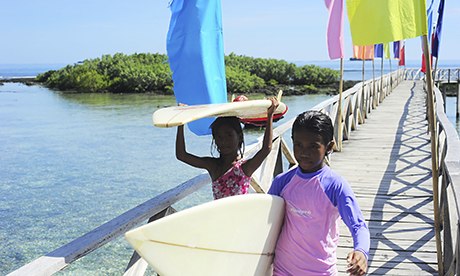
Young surfers at Cloud Nine surf point, Siargao, Philippines
Two young surfers carrying boards at Cloud Nine surf point, Siargao. Photograph: Alamy
 
For a country with thousands of idyllic islands, plus world-class surfing and diving, the Philippines is a relatively undiscovered travel destination. Tourism is crucial to the country's economy, accounting for eight per cent of its GDP, but compare the UK visitor numbers – 120,000 in 2012 – to those of Thailand (800,000 per year) and you get some idea of just how off the radar this vast archipelago is.

This month, of course, the country is firmly on the world's radar – for all the wrong reasons. Typhoon Haiyan caused wide spread destruction across the provinces of Leyte and eastern Samar on the mid-eastern side of the Philippines and some parts of Palawan and Cebu on the mid-western side. But while the areas in the path of the typhoon were devastated, much of the country was not damaged.

The storm caused havoc on six of the country's 7,107 islands, so most resorts and tourists activities are open and fully functional, and those that were hit are quickly getting back on their feet in the run up to December and January, two of their busiest months of the year.

The tourist board and tour operators are reassuring visitors that the country is not only safe, but in desperate need of visitors to bring a vital boost to the economy. Those who go will receive a very warm welcome. So, how do you choose which of those 7,000-plus islands to visit? Here's our guide to 10 islands, each offering something different.

1. Chill out in El Nido, Palawan
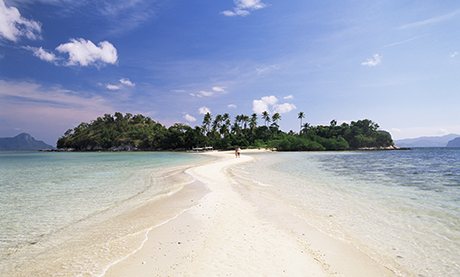
Bacuit Bay, Palawan, Philippines Bacuit Bay, Palawan, Philippines. Photograph: Alamy
 
This jungle beach town on the northern tip of Palawan hasn't changed much since before Spanish colonisation and has been cited as Alex Garland's The Beach. Explore the many islets of the nearby Bacuit archipelago on a boat-hopping tour, where the water so clear you can see the fish darting in between coral at 15 metres deep. Prices range from around £17-£20 per day for a tour and that usually includes lunch. There is grilled seafood is in abundance across the island.

Palawan was one of the islands in the path of Typhoon Haiyan, however it was only the city of Coron and the nearby island communities that were hit. El Nido has not suffered any damage and the surrounding coral reefs are intact, with only very shallow ones sustaining damage.

Where to stay: For beachfront living, Rainforest Beach Hotel offers rooms from £31 per night in high season. For a high-quality budget option, try Residencia Katrina , five minutes from the beach (from £21 per night).

How to get there: Local airlines fly directly to Palawan's capital, Puerto Princesa. From the city's main bus terminal, you can take a seven-hour Roll-On Roll-Off (RORO) bus to El Nido for £7, one way.

2. Shake your tail feather in Boracay
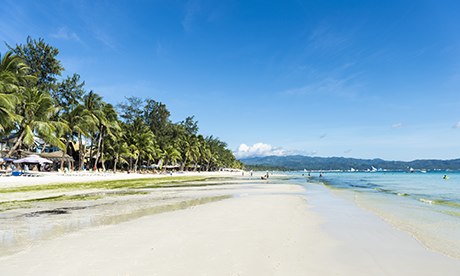
White Beach, Boracay, Philippines White Beach, Boracay Island, is often voted the best beach in Asia. Photograph: John Harper/Corbis


With endless beaches of powdery-white sand, long happy hours, abundance of restaurants and hotels to suit all budgets, and plenty of watersports, Boracay is the party island.

It has 12 beaches, the most popular being White beach and Bulabog. The island is divided up into "boat stations", which are used a reference points. Station One in the north is known for its high-end resorts and tranquillity; station two is the liveliest part, and station three is where all the budget accommodation can be found. While many locals look back longingly at good old days in the 70s before the hotels and restaurants started springing up, Boracay is still a Phuket in its infancy.

There was some storm damage to the island. Electricity still remains a problem for many parts of the island, but most hotels are up and running with generators.

Where to stay: Frendz Resort Boracay has one of the best beach locations out of all the midrange options (£50 for a beachside bungalow, sleeping four). Nigi Nigi Nu Noos has Balinese-style bamboo cottages furnished with handicrafts and wooden sculptures. Rooms are £70 per night.

How to get there: You can fly via Kalibo and then take a two-hour bus ride for £4, then a 15-minute ferry.

3. See a UNESCO World Heritage sight in Banaue, North Luzon
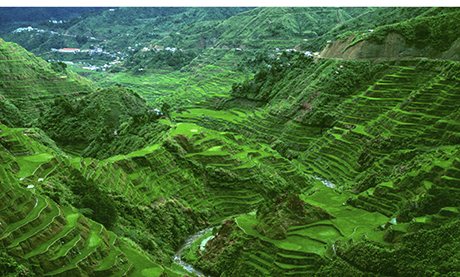
Rice terraces, northern Luzon, Philippines Amazing two thousand year old rice terraces, Banaue, northern Luzon. Photograph: Alamy
 
North Luzon, the biggest island of the Philippines, is a land of misty mountains, where pines replace palm trees. Head to Banaue and Batad to admire the 2,000-year-old rice terraces etched along plunging ravines. The 20,000km UNESCO-listed terraces still provide a livelihood for the various tribal groups that continue to live in relative isolation in the mountains. Treks along the rice terraces to various villages and waterfalls can be organised through the Banaue Tourist Information Center. Expect to pay around £10 for a guide for a whole day.

Where to stay: If you want to wake up to a view of the famous rice terraces, head to Batad, where a number of low-cost, basic guest houses line the mountains. Try Ramon's Homestay, where the owners are a great source of information about the local culture. It's £2.80 for a regular room or £3.50 to stay in a traditional Ifugao (local tribe) hut.

How to get there: North Luzon is best reached by bus, but be prepared for a long journey. Buses leave regularly from Manila and take nine hours to get to Banaue, costing £7.

4. See the curious in Bohol

Chocolate Hills Natural, Bohol, Philippines
Asia
Chocolate Hills, Bohol Island. Photograph: Per-Andre Hoffman/Alamy
 
Located just off Cebu, Bohol's most famous attraction is the surreal Chocolate Hills: over 1,500 mounds formed by coral deposits sculpted by a millennia of erosion. Depending on the season, they will either be green or brown. The island's famous resident is the camera-shy tarsier, the world's smallest monkey. Visit them in their protected enclosure at the Philippines Tarsier Foundation. Don't visit them in the cages kept along the river; they are mistreated and don't live long there. Either hire a motorbike or book a tour from a local company, such as Bohol Travel Tours, for around £35 with car, guide and lunch.

In October this year, the island suffered from a 7.2-magnitude earthquake, destroying many houses. Two weeks afterwards, Bohol was back on its feet, bringing in tourists as normal. The island was also hit by Typhoon Haiyan, but sustained little damage to its infrastructure. Tour operators and hotels remain fully open. The main issue being tackled by the island's authority is limited power supply, which is slowly but surely getting fixed.

Where to stay:Alumbung Bohol is a comfortable resort of beachside bungalows on popular Panglao island (from £20 per night). For something different head to Bohol Bee Farm , an organic vegetable and bee farm with rooms on Panglao, from £28 to £70 per person.

How to get there: Local airlines, including Cebu Pacific, fly to Tagbilaran airport from Manila, or you can catch a two-hour ferry from Cebu to Bohol (£7, one way).

5. Go surfing in Siargao

Facing the Pacific Ocean, just north of the island of Mindanao, is Siargao, one of the Philippines' surf centres. The town sees a steady stream of dedicated surfers who arrive to challenge themselves on the island's famous Cloud 9 reef break. The small beachside town hosts a number of international surfing competition, which make it a busy during surf season, but completely dead when the waves are down.

Novices can hire trainers, who you can find on the beach, for around £7 per hour, or you can book a package from a surf hotel, such as Kermit Surf Resort , which has a package for £394 per person per week, including accommodation, transfers and one-to-one surf lessons.

Where to stay: The no-frills, £5-a-night Bamboo Garden is popular among backpackers. Surfers tend to stay in Kermit Surf Resort (bungalows are £11 per night).

How to get there: There are direct flights to Siargao Island. Siargao airport is 45 minutes away from General Luna, the location of the popular Cloud 9 beach.

6. Get off the beaten track in Camiguin Island
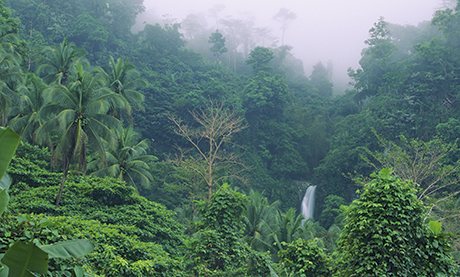
Camiguin Island, Philippines Camiguin Island, Philippines. Photograph: Stuart Dee/Getty Images
 
This pear-shaped volcanic island, just off the northern tip of Mindanao, is often bypassed because of various Islamist uprisings that have been reported on Mindanoa. However, Camiguin itself has never had any incidents and those who make the effort to travel there are rewarded with an island barely touched by tourism. For such a small landmass, this tiny island packs quite a punch, its 29,187 hectares including seven volcanoes. It also offers good diving through an eerie sunken cemetery, waterfalls, a lagoon, and hot and cold springs. All of these can be reached easily by foot, or hire a motorbike (£11 a day with a driver,£7 without).

Where to stay: If you want to splurge, go to Bahay Bakasyunan sa Camiguin for £50 per night. If you are on a budget, try the Enigmata Tree House homestay at £15 per night (minimum of two people).

How to get there: The easiest way is to book a flight from Cebu, via Cebu Pacific Air, then take an 11-hour ferry to the island for (£2.30).

7. Go witch hunting in Siguijor
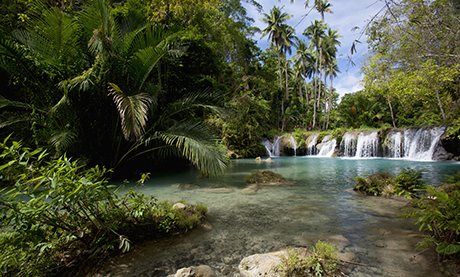
Cambugahay Falls, Siquijor, Philippines Cambugahay Falls, Siquijor. Photograph: Deddeda/Design Pics/Corbis

The magical Siquijor is both feared and revered by locals. It's the place to go, if you're looking for a boroboro, or witch doctor. The Provincial Tourism Department has a list of "official healers", or just ask any local and they'll be able to point you in the right direction. You'll need to rent a tricycle (a local motor taxi) for around £14 for half a day, as most of the healers live high in the mountains.

These witch doctors or healers welcome paying visitors – but be polite and respectful as it is an age-old tradition that is widely believed by locals. Away from all the magic, it's also a beautiful island for relaxing, snorkelling and diving.

Where to stay: Beachside bungalows at Coco Grove Beach Resort cost £19 per person.
How to get there: There are no direct flights. Fly to Dumaguete city, then take an hour-long ferry to Siquijor (£1.60).

8. Explore the misty mountains of Batanes
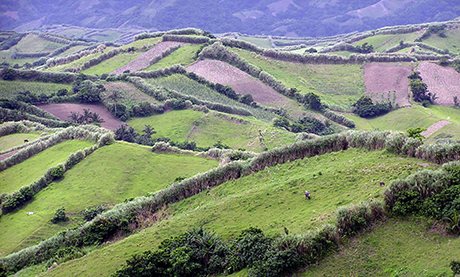
Batanes hills, Philippines Batanes, Philippines. Photograph: Ferdz Decena/Getty Images/Flickr RF

The Batanes Islands are found on the very northern tip of the Philippines archipelago, a land of gently sloping hills, thatched roof houses and locals who wear traditional straw hats. With weather reminiscent of drizzly British summers, locals visit the islands for some respite from the tropical heat, while tourists travel here for a completely different island experience from the rest of the Philippines. To get around, rent a bicycle or book a tour with a company, such as Batanes Travel and Tours , which charges £211 for a three-day trip including accommodation, transport and guide.

Where to stay: Batanes Resort offers comfortable, air-conditioned cottages for £25 per night.
How to get there: There are direct flights from Manila to Batanes, but being at the very tip of the country it's one of the more expensive islands to reach. Flights are often cancelled during bad weather.

9. Go diving in Mindoro
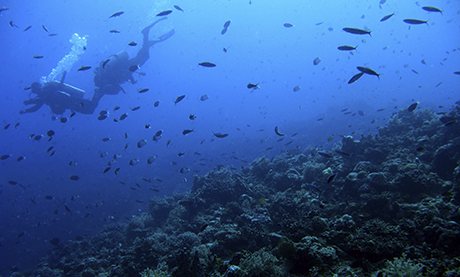
Apo Reef, Philippines Filipino divers swimming at the Apo Reef. Photograph: Dennis M Sabangan/EPA

Good dives spots are a dime a dozen in the Philippines, but the best scuba spots can be a bit harder to reach. Apo Reef is one of them. A mostly sunken atoll, two hours off the west coast of Mindoro, the 40 sq km reef is famous among the diving community for its abundance of larger creatures, such as sharks, rays and sea turtles. Most divers stay on Pandan Island (a 20-minute boat ride from Mindoro) and, from there, access the reef via a three-hour boat ride. Apo Reef Club is one of the closest dive operators to the reef. A package of five dives, including two night's accommodation and transfers, is £212.

Where to stay: As well as dive trips, Apo Reef Club offers clean, simple accommodation . Prices range from £10 to £46 per room.

How to get there: Domestic flights go from Manila to San Jose in Mindoro. Once you get on the island, head to Sablayan port (near the town market) and get a 30-minute boat ride to Pandan island (£7, one way).

10. Go hiking in Davao, Mindanao
Mindanao island, Philippines Mindanao island, with Mount Apo in the background. Photograph: Alamy

Davao is the biggest city on the island of Mindanao, an area that is scarce of tourists due to the aforementioned Islamist insurgencies. Davao City is widely regarded as a safe haven on the island and has been ranked as one best places to live in the country. This is where the world's smelliest fruit, the Durian, originates from. It is also home to the rare Philippine eagle (pay a visit to the Philippine Eagle Centre for an educational tour).

But the island's crown jewel is the country's tallest peak and semi-active volcano, Mount Apo. A 2,956-metre climb to the top will take you through the full spectrum of Filipino biodiversity, from steamy jungle to pine forests, and belching sulphuric vents. Join a group tour with Climb Mt Apo for £56 per person. If you go independently you will need a permit from the city hall in Santa Cruz, an hour south of Davao (contact Julius Paner, +63 2 441 1467). The permit costs £4 per person. You can then hire a freelance guide and/or porter at a rate of £4 per day for the porter and £7 per day for the guide. The permit office will be able to put you in touch with a certified porter and guide.

Where to stay: Green Windows hostel in the city centre offers clean and spacious dorm beds for £2.60 per night. A smarter option is Casa Leticia, £40 per night.

How to get there: Davao is a 1.5hr flight from Manila and there are at least six flights servicing the city on a daily basis.

Getting to the Philippines: Philippine Airlines flies to Manila five times a week from Heathrow. Once in Manila, the cost of domestic flights to get to the different islands can vary depending on what time of year you are flying and where. Local airlines such as Cebu Pacific, Air Asia and Tiger Airways offer seat sales throughout the year, where you can often bag return flights for around £50. Outside of the sales, expect to payaround £100 return.


Monday, October 28, 2013

...the most powerful man in Asian MMA

Victor Cui The most powerful man in Asian MMA is a Filipino

By Randy Caluag
October 27, 2013


With barely two years old in existence, the One Fighting Championship is now widely regarded as the best and largest mixed martial arts organization in Asia.

So why has ONE FC become a byword in the Asian mixed martial arts community?

Khim Dima of Cambodia pummels Filipino Rene Catalan on the back of his head in the recent ONE FC Total Domination in Singapore. Their flyweight bout was ruled a no-contest due to illegal blows.


This is simply because One FC has brought together the best fighters in Asia and the world, pit them against each other in well-balanced cards to come up with high-octane, colorful fight promotions to the delight of the fans in the Asian continent.

The result is a 90% percent market share in terms of fan following in Asia—one billion plus viewership in the first three quarters of the year and an unprecedented ten-year TV deal with Fox and Star Sports for a coverage that spans 70 countries around world.

There is no doubt that ONE FC is MMA’s real deal in this part of the world.

And behind the powerful brand is a young visionary in Victor Cui, who was recently recognized by USA Today as the most powerful man in Asian MMA.

Filipino CEO

The 42-year-old Victor, ONE FC’s chief executive officer, is a pure-blooded Filipino but who has made himself a citizen of the world.

Victor’s father is a Cebuano and his mother is from Camiguin Island, but , Victor was born in Canada and spent part of his childhood in Africa because of his father’s work as an engineer diplomat.

After finishing his degrees in Business and Politics, he took up executive masters in Luxury Branding.

Cui ( center) with the Philippine contingents in ONE FC Asia Summit held in Singapore last May

His educational background led him to the exciting world of sports marketing, where he handled various executive positions at ESPN Star Sports, PGA Tour, X Games Asia, the Commonwealth Games and the Olympics for 15 years. He has traveled extensively and has made Singapore his home where ONE FC is based.

The rich experience has served him in good stead in founding ONE FC and making it the fastest growing promotion in MMA history.

One FC has so far staged live competitions in Indonesia, Philippines,Singapore and Malaysia and had attracted television audiences not only in Southeast Asia, but to as far as China, India, Russia and the Middle East because its promotions feature top fighters from various Asian countries.

And with still three months to go before the year ends, ONE FC has already breached the one-billion barrier in TV viewership.

Fastest-growing sport
Of all sports, why MMA?
 
“MMA is the fastest growing sport. Its skyrocketing popularity is phenomenal. It’s hard to resist such kind of business opportunity,” Victor told the Manila Standard in a one-on-one interview.
 
“While other sports struggle to fight decline, MMA is exploding.”
 
Repucom.com, a sports-dedicated website, verifies Victor’s claim.

According to its study, MMA is now ranked third behind football and Formula One among the sports which drew the fans’ highest level of interest, surpassing more established sports events such as golf, rugby and Moto GP.

As a testament to MMA’s powerful presence in Asia, Fox and Star Sports recently signed a 10-year coverage deal with ONE FC. Even big sponsors like oil giant Petron and Japan’s Sony, have recognized the marketing viability of the sport that was once held underground.

Mainstream media such as CNN and BBC have also featured fighters from ONE FC. “My success principle is about going for the best. I work with the best people and treat them well—the best gym partners, best fighters, best staff and all.”

Best in the world
 
ONE FC CEO Victor Cui announces the year-end promotion in December

Victor however thinks of ONE FC as not just a fight organization.

“We’re not just a foreign company that goes to one country and take all the fans’ money. We want to be the platform for growth of the sport and the athletes. One FC is a media company. But first,we are creating the brand. We’re building heroes, superstars. Our dream is to become the best media company in the world.”

Despite the lofty goals that he has set for ONE FC, Victor does not forget his Filipino lineage. He takes pride in the Filipino warrior’s heritage, and this is why in every ONE FC event, there are always Filipino fighters seeing action. He has so much faith in the Filipino fighters even as they keep on losing in the circular cage of ONE FC tournaments.

“I do not just look on winning or losing. It’s about how they fight in the cage. How they excite the fans. Most Filipino MMA fighters like to fight the way Manny Pacquiao fights. That’s why fans love them. That’s what make ONE FC exciting,” explained Victor.

“But Filipinos fighters have to train harder and continue to learn. Everybody is learning fast. The level of competition is rising along with the popularity of the sport.”

Baguio City-based Team Lakay, for instance, is one of the mainstays in ONE FC. In fact, former featherweight champon Honorio Banario and veteran Eduard Folayang, both coming off disappointing losses, are coming back to the cage on Dec. 6 for the ONE FC Moment of Truth at the Mall of Asia.

Banario, a multi-title wushu athlete, wants to take back the title from Japanese Koji Oishi who knocked him out in their previous title duel last May, also held at the MOA Arena.

It’s the ONE FC’s year-ending event that Victor wants to end with a bang. For Victor, the Philippines remains the fight capital of Asia. And no one seems to argue.

After all, he just happens to be the most powerful man in Asian MMA, bar none.


Thursday, May 30, 2013

...the most photogenic places in PH

The most photogenic places in the Philippines


By Karla Rey for Yahoo! Southeast Asia
All photos by Angel Juarez


Travelling the Philippines with your point-and-shoot camera? Fret not. Angel Juarez, the traveller behind the award-winning blog, www.lakwatsero.com, names his top spots for capturing amazing photos. No high-end DSLRs and powerful lenses nor Photoshop necessary!

Batad's Amphitheatre Rice Terraces
The elegant amphitheatre-like Rice Terraces of Batad in Banaue, Ifugao produces awe-inspiring shots in every angle. A UNESCO World Heritage Site, it is considered as the most beautiful of all the rice terraces in Banaue. The best time to see it is during summer, from March to early May, when the rice terraces are at its greenest.
Calaguas' Powdery Sand BeachKnown as "Mahabang Buhangin" (Long Sand) in the Calaguas Group of Islands off the coast of Camarines Norte, the wide stretch of fine white sand that gently slopes into the crystal clear water is a sight to behold. Generally unspoiled and deserted, Mahabang Buhangin is a picture of a perfect beach. Juarez says, “Going there may be an adventure, but a truly worthy one.”

Cordillera's Sea of CloudsOne of Cordillera's prides, the famous sea of clouds is one that guarantees a postcard perfect image of the highlands. Juarez shares, “Be in the summit of Mt. Pulag or in Sagada's Kiltepan's View Deck before sunrise to capture the sun as it slowly rise in the horizon of clouds and you'll end up having amazing photos that others will surely envy"
 
Boracay's Seascape at SundownThe idyllic scene of the silhouettes of the local sailing boats called " paraws" in the foreground of the golden sunset in the horizon of the world famous Boracay Island is always a stunner. “Make sure to be in the Stations 1 or 2 before sundown, and wait patiently for the golden hour to capture a thought evoking composition of Boracay sunset,” advises Juarez. While you are at it, you can also enjoy the happy hour that begins right about the same time.
 
Bislig's Tinuy-an FallsThis massive waterfall of Tinuy-an in Bislig, Surigao del Norte is dubbed as the "Niagara Falls of the Philippines." It may not be as massive as Niagara Falls but Tinuy-an Falls is among the widest waterfalls in the country. The striking beauty and grandeur you see in person registers well into stills. “What you see, is what you get,” says Juarez.
 
Coron's Kayangan Cove
Perhaps the most photographed spot in Coron—calm turquoise waters with a limestone island in the centre guarantees an amazing output whatever camera (or smartphone) you use. Just be careful when you need to go down to the lake below as the rocks and the trail can be slippery. But the trek reveals a beautiful freshwater lake cocooned by the limestones from the sea.
 
El Nido's Karst Limestone Cliffs
The karst limestone cliffs and islets that dot Bacuit Bay create the most fascinating, picture-perfect features of El Nido in Northern Palawan. Juarez says, “During dry months, from February to May, the place turns into a surreal scenery of natural beauty with the limestone cliffs, turquoise waters, blue skies and pearl white cotton clouds that paint an enchanting image of paradise. Truly beyond compare!”
 
Camiguin's SandbarNo shot can ever go wrong with the white sandbar of Camiguin and Mt. Hibok-Hibok in the backdrop. “The dramatic blend of the disappearing sandbar and a mighty volcano always produces a captivating image of Camiguin like those we always see in postcards.”
 
Century-old Churches of Ilocos
Ilocos Province is one of the places in the Philippines that has successfully preserved its heritage including the century-old churches and bell towers. Some of the popular churches in the area are that of Sta. Maria, Bantay, Vigan, Bacarra and Laoag. But the most striking of all is the St. Augustine Church of Paoay, one of the Baroque Churches of the Philippines inscribed in UNESCO’s World Heritage Site list. “Every image of Paoay Church becomes special because of its imposing beauty and charm.”
 

Manila at twilight
The image of Manila at twilight is a picture that may sound cliché but will surely gather “likes.” Where’s a good spot to get the lovely Manila Bay sunset? By the Manila Yacht Club area, where sailboats provide a foreground to the setting sun. You can also catch a classic image of the city along Roxas Boulevard at sundown
 

Monday, August 20, 2012

...the PH owls

Two new owls discovered in PH

08/20/2012


(Top left) Cebu Hawk owl and (bottom right) the Camiguin Hawk owl. Photo courtesy of Oriental Bird Club: original painting by John Gale

MANILA, Philippines -- Two new species of owls have been discovered in the Philippines, according to the Michigan State University (MSU), whose researcher played a key role in confirming the birds' existence.

The news is featured in the current issue of Forktail, the Journal of Asian Ornithology.

According to the paper's lead author Pam Rasmussen, an assistant professor of zoology at the Msu and assistant curator of mammalogy and ornithology at the MSU Museum, the discovery took years to confirm but was well worth the effort.

"More than 15 years ago, we realized that new subspecies of Ninox hawk-owls existed in the Philippines," she said. "But it wasn't until last year that we obtained enough recordings that we could confirm that they were not just subspecies, but two new species of owls."

"Announcing the finding of a single bird is rare enough. But the discovery of two new bird species in a single paper is so rare that Rasmussen and the other researchers couldn't recall the last time it happened," the MSU said in a statement.

The first owl, the Camiguin Hawk-owl, is said to be found only in Camiguin Sur.

"At night, it gives a long solo song that builds in intensity, with a distinctive low growling tone. Pairs of owls give short barking duets that start with a growl. They also are the only owls to have blue-gray eyes," the MSU said.

The second new discovery was the Cebu Hawk-owl, which was thought to be extinct due to deforestation.

"The owls don't learn their songs, which are genetically programmed in their DNA and are used to attract mates or defend their territory; so if they're very different, they must be new species," Rasmussen said.

"When we first heard the songs of both owls, we were amazed because they were so distinctly different that we realized they were new species."

The owls have avoided recognition as distinct species for so long "because the group shows complex variation in appearance that had been poorly studied, and their songs were unknown," the MSU saod, adding that both islands are "off the beaten path" for ornithologists and birders, who usually visit the larger islands that host more bird species.

Sound recordings of both new owl species and those from other islands are available free on AVoCet, the university said.

The MSU said a team of scientists and contributors to confirm the owls' existence, which included individuals from BirdLife International, the Oriental Bird Club, Philippines Biodiversity Conservation Foundation Inc. and Birdtour Asia.

Additional support was also provided by National Geographic.

Tuesday, December 6, 2011

...the blue list island

Norwegian missionary promotes Camiguin as eco-tourist spot

12/06/2011
 
 
NORWAY - It's all in a day's work for Norwegian missionary Wenche Thorkildsen, director of Sea and Sun Ministries International (SSMI), Inc.
 
Barely a few days back from the Philippines, she spoke at the Drammen Library Scene last November 30 giving a passionate appeal to her fellow Norwegians to travel to Camiguin Island in the Philippines. Eco-tourism mission


Thorkildsen said her mission is to get everyone to put Camiguin on their "blue list," or as she describes it "the list of places one must go to before one dies."

Gushing about the country's beauty, she said she did not choose the Philippines as a site of her mission, but it was chosen for her by God.

"I am very happy that I am there. I think the Philippines is a wonderful country, and especially, Camiguin island where we are which is a beautiful, beautiful island," she said.

Showing photos of the beautiful spots in the Camiguin like a seasoned tourism official, Thorkildsen promised the island is worth the visit.

She emphasized that she is promoting "ecotourism," following the principles as outlined by the International Ecotourism Society. This involves "responsible tourism in nature-rich areas" and "taking care of the environment and improving the local community."

SSMI achievements

Thorkildsen also presented her ministry's charity works in the island for the the past ten years.

SSMI rents out apartments to tourist families during their stay in Camiguin. Profits are used to fund its various projects in the island which includes an orphanage, scholarship programs and medical and health missions.

SSMI's biggest achievement, she said, is being able to send 1,000 poor students to school, including 18 students in college, 34 in high school, as well as support for two elementary schools in the area.

Bigger dreams

But she has even bigger dreams for the project in the future, such as opening a bigger restaurant and cafe for the guests, acquiring a landholding for distribution to farmers to plant coffee and adding more apartments to rent out to tourists.

All these plans, she noted however, can only be possible if she can convince more Norwegians to make Camiguin a destination for their holidays.

Norwegian travellers

Hundreds of thousands of cash-rich Norwegian families travel abroad annually in search of exotic and warmer destinations during their holidays, courtesy of an employment regulation that allocates a certain amount of the annual pay to "feriepenger" or vacation money.

A travel industry study showed Norwegians use half of their vacation money to travel overseas.

Wednesday, July 20, 2011

...the small town with a big heart

Small town in Holland helps Pinoys big time

07/20/2011

HOLLAND - For more than two decades now, a small community of elderly Dutch has been collecting donations from all over Holland and sending them to the rural areas in the Philippines.

Everyday, big heavy boxes of donations for the Philippines are dropped in a warehouse in Heeten, a tiny community here in Holland of mostly elderly Dutch citizens.

The warehouse will be filled up with boxes of mainly medical supplies and hospital equipment until the day the boxes are loaded for shipment. Every loading day, many elderly Dutch go out of their respective homes in order to assist preparing the crates and filling a 16-wheeler truck.

The huge truck will bring the crates to a shipping company in Rotterdam which will deliver the goods to the Philippines.

ABS-CBN Europe News Bureau was invited to witness the loading process. Also present were Vice Mayor Roger de Groot and several staff from the Philippine Embassy led by Charge d’Affaires Frank Cimafranca.

After the last crate was successfully squeezed into the truck, the door was closed and locked.

But the last step is always symbolic. De Groot and Cimafranca jointly put the lock on the door of the truck, signifying the solid ties that remain between the Dutch and Filipinos.

This was the scene, for more than two decades now, at the Foundation Center Relief Supplies Heeten Philippines or HHCP.

HHCP is headed by couple Jo and Truus Schoorlemeer, who initially set up a group that collects goods for the depressed areas in the Philippines to help Jo’s now-deceased brother, who was a missionary in Philippines in the 90s.

“Exactly on the 16 of August this year, we'll be 21 [years] because we started in 1990 with the earthquake in Baguio. That’s the way we started collecting goods for the Philippines,” Jo said.

In fact, the couple just recently received medals from Queen Beatrix for their continued charity work for the Philippines.

The couple received the Knight of the Order of Queen Orange of Nassau, which is the highest award bestowed on a civilian.

Their hard work also did not go unnoticed in the Philippines as they received a medal from former President Gloria Macapagal Arroyo in 2008.

HHCP has already extended its gigantic help to many provinces in the Philippines, particularly in the hospitals in Camiguin, Bicol and Batanes.

As a token of gratitude on the day of the loading, a group of Pinays who are married to Dutch nationals and who are living close to Heeten, came over to serenade the elderly Dutch during their break from loading the crates.

“They're here to also, you know, to give thanks to the foundation here in Heeten that is helping our countrymen back home. It's really a very, very, significant event for all of us,” Cimafranca said.

Even de Groot cannot help but marvel at the magnanimity of the work and the volume of goods during loading.

He was impressed at the Dutch Pinays’ musical number but was more in awe of his fellow countrymen’s dedication and hard work for the Philippines.

“I am very impressed and I love the songs from the Philippine women and it was very good. It’s very good what the volunteers are doing for the Philippines,” de Groot said.

Jo and Truus are not getting any younger, yet they still do not plan to retire from running the foundation because they said that they have left, a long time ago, their hearts in the Philippines.

Tuesday, May 31, 2011

..the local tourism

DOT eyes 32.1 mil Filipino travelers, 3 mil new jobs by 2016


Voltaire Domingo/NPPA Images

The Department of Tourism is optimistic that by 2016, there will be 32.1 million Filipino travelers, which is projected to generate 3 million new jobs in the tourism industry.

"Domestic tourism redistributes income to the countryside where there is higher incidence of poverty," said DOT secretary Alberto Lim, adding, "It is picking up not only because of low airfares but because the destinations are getting the interests of (younger travelers)."

In 2009, the National Statistics Office recorded 22.8 million Filipino travelers, with an average of two trips a year per person.  Out of the 22.8 million Filipinos, 7.8 million traveled for leisure trips and vacations.

The top destinations were Manila, Camarines Sur, Cebu, Davao City, Cagayan Valley, Baguio, Boracay, Zambales, Puerto Princesa, Bohol, Negros Oriental, Camiguin, and Ilocos Norte.

Early this year, the DOT launched the campaign, "Pilipinas, Tara Na!" to encourage Filipinos to explore the country.  Lim said that the campaign's focus areas were on culture, history, eco-tourism, nature and adventure.

In line with this, Smart Communications, DOT's partner in the campaign, identified destinations which attract the youth market such as Boracay, Baler, Batanes, Anawangin, Donsol, Camarines Sur, Mt. Pinatubo, Palawan, and Mt.Pulag.

Lim related that as part of the promotional campaign, Smart would provide information on the tourist destinations via short messaging service.