Showing posts with label World Heritage Site. Show all posts

Sunday, June 15, 2014

...the capital of fun

Manila depicted as ‘capital of fun’


Manila, the second largest city and capital of the Philippines, is the subject of the newest “It’s more Fun in the Philippines” campaign.


The thirty-three second video clip released by the Department of Tourism (DOT) defined Manila as the capital of fun. The video showcased several remarkable places in Manila such as the historical Luneta Park, Intramuros as a UNESCO World Heritage Site, and Makati which is the financial capital of the Philippines.

In its website, DOT said Makati is the perfect place to indulge in world-class cuisine while Intramuros is the best place for a cultural escapade.

The DOT said the new advertisement “shows Manila as the city that has everything under the sun.”

The country's tourism slogan “It’s more fun in the Philippines” was launched in 2012 to attract visitors to the country. The campaign hopes to enjoin the whole country in creating positive buzz around this tagline. The campaign has earlier featured Davao City and Boracay. (Mary Rose A. Hogaza)

Thursday, November 21, 2013

...the PH seat in UNESCO body

Philippines wins seat in UNESCO'€™s World Heritage Committee


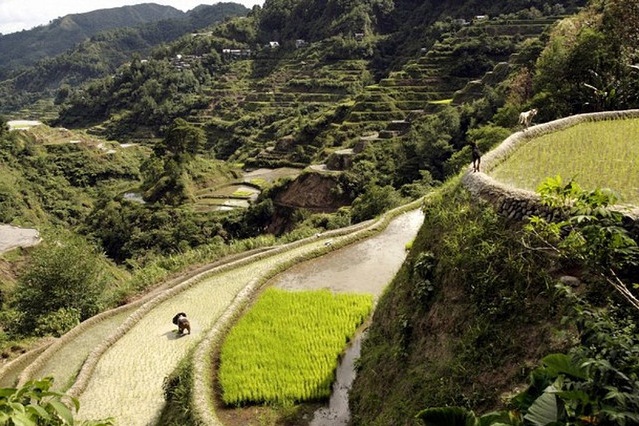
The Ifugao Rice Terraces is one of the five World Heritage Sites in the Philippines designated by UNESCO. (Photo: Lira Dalangin-Fernandez, InterAksyon.com)
 
Tourism in the Philippines got an added boost as the country won a seat in the prestigious World Heritage Committee on Wednesday after elections were held during the 19th Session of the General Assembly of States Parties to the World Heritage Convention.

This year’s elections brought together 22 country candidates who vied for 12 available seats in the Committee.

The Philippines garnered the second highest vote in the elections, having received 116 votes from the total of 173 votes cast. This was a clear indication of States Parties’ support for and belief in the country’s capabilities to perform the important mission of the Committee.

Together with the Philippines, Croatia, Finland, Jamaica, Kazakhstan, Republic of Korea, Lebanon, Peru, Poland, Portugal, Turkey and Viet Nam will now join the other 9 current members of the World Heritage Committee.
 
The Philippines will serve a 4-year term until 2017.

During her remarks before the General Assembly, Ambassador Cristina G. Ortega expressed appreciation for the trust bestowed upon the Philippines. She assured the Assembly that the Philippines will be an active and responsible member who will work hard for the interests of the world’s cultural and natural heritage. She also said “that this is indeed happy news for my country”.

The General Assembly of States Parties meets every two years and elects new members to the World Heritage Committee to replace the outgoing members and it determines the uniform percentage of contributions to the World Heritage Fund applicable to all States Parties.

The 21-member World Heritage Committee is one of the most prestigious bodies associated with UNESCO whose main responsibility is to implement the World Heritage Convention. The Committee decides on whether a property is inscribed in or deleted from the World Heritage List. It examines reports on the state of conservation of inscribed properties and asks States Parties to take action when properties are not being properly managed. It also determines the use of the World Heritage Fund and allocates financial assistance upon requests made by States Parties.

The campaign for the Philippine candidature to the Committee was spearheaded by the Permanent Delegation of the Philippines to UNESCO, led by Ambassador Ortega, with valuable support and coordination provided by the Department of Foreign Affairs and the UNESCO National Commission of the Philippines.


Tuesday, October 22, 2013

...the New 7 Wonder Cities finalists

Vigan among finalists in 'New 7 Wonders Cities' campaign


File photo of the Heritage Village in Vigan City. Val Rodriguez/The Philippine Star
 
MANILA, Philippines - The historic city of Vigan in Ilocos Sur has been included in the shortlist for the "New 7 Wonders Cities" in the world.

Vigan, a United Nations Educational, Scientific and Cultural Organization (UNESCO) World Heritage Site, is the only Philippine city in the list of 28 candidates that were selected as advised by a panel of experts.

Bernard Weber, founder-president of Swiss firm New7Wonders, said the selection of the finalists is "particularly exciting in its variety."

“This outstanding shortlist of 28 cities mirrors the diversity of urban society, especially when, for the first time in history, more than half of our planet’s population lives in cities," Weber said on the New7Wonders website.

Vigan is one of the few Hispanic towns in the country and is best known for its well-preserved colonial architecture.

Like the other finalists, Vigan was selected from an initial long list of 77 voted candidates that also included the cities of Cebu and Iloilo.

The shortlisted cities will now undergo three elimination phases determined by public voting through the New7Wonders website, which will end on December 7, 2014.
 
The 28 finalists are (in alphabetical order):
Athens, Greece
Bangkok, Thailand
Barcelona, Spain
Beirut, Lebanon
Casablanca, Morocco
Chicago, USA
Doha, Qatar
Durban, South Africa
Havana, Cuba
Ho Chi Minh City, Vietnam
Istanbul, Turkey
Kuala Lumpur, Malaysia
Kyoto, Japan
La Paz, Bolivia
London, United Kingdom
Mendoza, Argentina
Mexico City, Mexico
Mumbai, India
Perth, Australia
Phnom Penh, Cambodia
Prague, Czech Republic
Quito, Ecuador
Reykjavik, Iceland
St. Petersburg, Russia
Seoul, South Korea
Shenzhen, China
Vancouver, Canada
Vigan, Philippines

Saturday, November 10, 2012

...the UN Heritage Site Management awardee

Vigan City bags UN award for heritage site management


Keeping history alive is apparently more fun in the Philippines, with Vigan City bagging a United Nations award for world heritage site management.

The UN Educational, Scientific and Cultural Organization (UNESCO) has recently given the city in Ilocos Sur its first-ever "Best practice in World Heritage Site Management" award as the international body ended the 40th World Heritage Convention in Japan Thursday.

Vigan City bested 27 other cities from 23 countries considered for the recognition, which UNESCO said is aimed at highlighting challenges to world heritage conservation, lessons learned, priorities and opportunities.

"Vigan's successful and sustainable management has been achieved with relatively limited resources, which should make it adaptable to sites in all countries..." UNESCO said.

"[T]he local community is well integrated into many aspects of the sustainable conservation and management of the property; and a multi-faceted approach to the protection of the site has been developed," it added.

This year’s convention theme "World Heritage and Sustainable Development: the Role of Local Communities" highlighted the need to marry conservation programs with local community growth.

Vigan City, famous for conserving early architecture and other features, was named a world heritage site in December 1999.
"Vigan is an exceptionally intact and well-preserved example of a European trading town in East and South-East Asia," UNESCO said in its website.

"The architecture is truly reflective of its roots in both materials and design, in its fusion of Asian building design and construction with European colonial architecture and planning," it added.

The case of Vigan City and other sites discussed in this year's World Heritage Convention, UNESCO said, may "enrich current debates about the implementation" of conservation projects the international body is set to name the 1000th world heritage site.

Saturday, September 29, 2012

...the "World Living Museum"

Vigan vies for New 7 Wonders of the World

 
September 29, 2012
 
 
A toast of indulgence. A taste of the past. Scholarly leisure.

Situated 400 kilometers from Manila, on the western coast of the largest island of the country, Vigan never fails to attract history aficionados, tourists or even plain travelers.

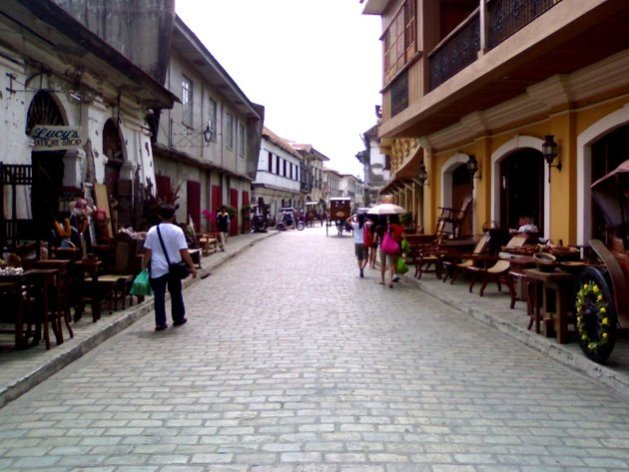
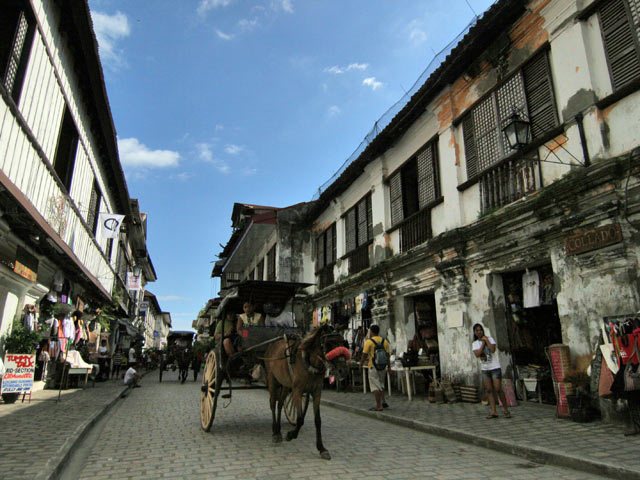
Vigan, the famous historic city in the north of Luzon, offers a brief respite from busy urban life, with its rows of Spanish ancestral houses line cobblestone streets, where kalesas frequently pass by. A church features unique baroque architecture from over two centuries ago, and a plaza houses a 17th century monument. Vigan has everything to quench one's sentimental yearning for the grandeur of the past.

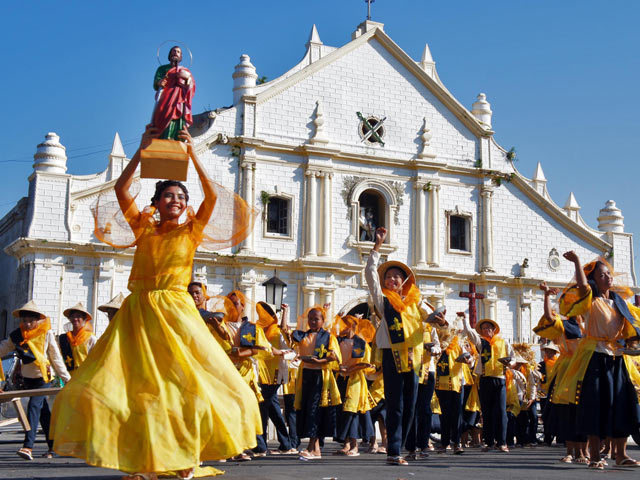
Street dance performance in front of the more than two-century-old St. Paul Cathedral highlights the celebration of Longganisa Festival in Vigan.
Being one of the few Hispanic towns left in the Philippines, Vigan is greatly adored for its vast effort in preserving their centuries-old historical edifices, which have survived the ravages of natural calamities and even the horrors of war.

The heritage city, formerly called Villa Fernandina during the Spanish Occupation, gained recognition both in local and international communities.

In December 1999, UNESCO included Vigan in its World Heritage List. The city also takes pride in being a Hall of Famer as the Cleanest, Greenest and Safest City in Region 1, having been conferred with the recognition for three consecutive years from 2006 to 2008. Just last year, the city bagged another hall of fame award after being proclaimed the “Most Child-Friendly City” for three years in a row.

A kalesa on Calle Crisologo, Vigan City.
But despite the colorful accolades, Vigan chooses not to rest on its laurels.

The city, also known as the “World Living Museum,” embarks on a new journey as it joins the race for the New 7 Wonders — Cities of the World. The city has managed to pass the nomination phase along with six other cities in the country. Now in its qualifying phase, Vigan is on the top spot of the campaign in South East Asia and Oceana.

"We are so proud to have been included in the list," Vigan Mayor Eva Medina said.

To reap yet another international victory, Vigan is not just banking on its rich heritage, but on the collective effort of its people whose cooperation is behind the city's vast achievement.

"We are calling on the Filipinos all over the world to please join us in our quest by voting for Vigan as one of the New 7 Wonders — Cities of the World," Medina appealed. Votes may be cast online at the New Seven Wonders site.

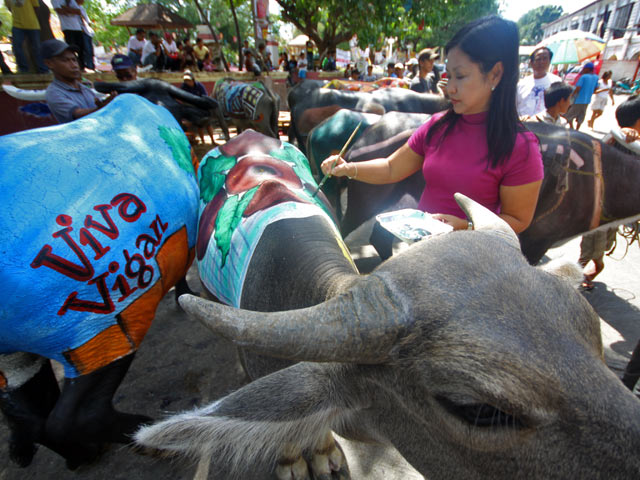
Carabao painting.
After pushing for the inclusion of the now world-famous Puerto Princesa Underground River in the New 7 Wonders of Nature, there's no reason Filipinos can't rally behind Vigan.

The qualifying phase in the competition is from March 7, 2012 to March 7, 2013. This will be followed by the shortlisting process, which runs until March 21, 2013. Cities that will make it to the finals will compete from March 21, 2013 to July 7, 2014. The announcement of the New Seven Wonders — Cities of the World will be on July 7, 2014. — CGL/KG, GMA News

Tuesday, July 24, 2012

...the new Metro (part 3)

Serializing: A NEW CITY, A NEW METRO MANILA, A NEW FUTURE


By ATTY. FRANCIS N. TOLENTINO
July 24, 2012

(The Manila Bulletin is serializing Metro Manila Development Authority (MMDA) Chairman Francis Tolentino's book "A New City: A New Metro Manila, A New Future.")

METRO Manila will always have a special place in our hearts and memories. That‘s one of the best reasons why we should continue the drive for urban renewal and restoration. I believe it is time to consider the construction of a new capital city where we can build a new future and a model city for the country and perhaps for Asia and the world. That new city can be a new symbol of hope, even as we face the myriad problems of rapid urbanization and blight in the present Metro Manila.


Countries That Moved Their Capitals 

Other countries have long realized that building a new city augurs well for the future of their people. Below are some of the countries that moved their respective capital cities — Japan (in 1869), Brazil (in 1956), Pakistan (in 1960), Nigeria (in 1976), Malaysia (in 1993) and Kazakhstan (in 1997).

Tokyo (formerly known as Edo) became the capital of Japan in 1869 replacing Kyoto when the Emperor took up permanent residence there. The size of Edo‘s population, which was more than double that of Paris and London at the time, was augmented by the Tokugawa‘s system of requiring all underlings to spend a portion of each year in the city. Thus, their presence gave rise to artisans, craftsmen, and other townsfolk, and promoted many of the arts. Edo became the center of commerce even before it became the capital of Japan. The city was broken up into distinct trade districts - cobbler sections, tailor sections, and even fish sections that were kept completely separate from the fruit and vegetable areas. Today, Tokyo is considered the predominant economic center of East Asia, rivaled only by Hong Kong and Singapore.

Brasilia originated in a campaign promise made by presidential candidate Juscelino Kubitschek in 1956. He appealed to the Brazilians' dream of developing the resources in the interior of their nation. He proposed to build a new capital there, a new city that would demonstrate how Brazil would develop in the future, integrating the sprawling country into a modern industrial nation.

Thus, Brasilia was built in just four years starting in 1957 in the central area of the country and has become a showcase of architectural innovation. Before its construction, the area resembled a desert — unpopulated, scarce water, few animals and plants.

Brasilia is Brazil‘s first planned city and also in effect a planned capital. President Juscelino Kubitschek, who became President in 1956, invited the best Brazilian architects to present projects for the new capital. Oscar Niemeyer, who is considered one of the world's most famous architects today, combined straight and rounded shapes to create innovative architectural masterpieces. Lucio Costa, renowned Brazilian urbanist, devised a lay-out combining beauty, simplicity and functionality.

Urban planner Lucio Costa and architect Oscar Niemeyer "intended that every element – from the layout of the residential and administrative districts (often compared to the shape of a bird in flight) to the symmetry of the buildings themselves – should be in harmony with the city‘s overall design." Brasilia is at present the only 20th century city granted a World Heritage Site status by the UNESCO.

High modernism was embodied in the architectural design of structures in Brasilia. The function of the capital was to be expressly political and administrative — aspects that were understood to be the hallmark of membership in the modern system of states.

Islamabad became the capital and administrative center of Pakistan in 1960. Pakistan needed a new capital city because the existing buildings in Karachi, a port city, were not enough or were below the standards required by a capital. The layout and structure of the existing port city did not allow it to take on the functions of a modern capital. The influx of refugees also intensified existing problems and created new ones.

In September 1959, the government established the Federal Capital Commission for the preparation of the Master Plan for the new capital. A decision was made on February 24, 1960 by the President and his Cabinet to give the new capital of Pakistan the name of Islamabad or "the City of Islam." On May 24, 1960, the preliminary Master Plan and the planning principles that would make Islamabad "A City of the Future," were presented to the Cabinet and approved by the President. The Capital Development Authority took over from the Federal-Capital Commission, and was put in charge of the overall development of the new capital.

The metropolitan area of the capital has been planned for a future population of about 2,500,000 inhabitants within a period of two generations. Its administrative functions include the following: (a) administration on a national level; (b) cultural services physically or symbolically connected with the country's administration, such as a national museum or a national library; (c) special non-governmental institutions of national importance, such as banks, welfare organizations, among others; and (d) the diplomatic representation of foreign countries.

Saturday, July 21, 2012

...the "important" river

Underground river declared ‘wetland of int’l importance’


Philippine Daily Inquirer


Photo courtesy of the New7Wonders of Nature


MANILA, Philippines—When it rains, it pours for the Puerto Princesa Underground River (PPUR).

Barely four months after having been officially installed as one of the world’s New 7 Wonders of Nature in April, the underground river was declared “Wetland of International Importance” during the Ramsar Convention held on July 6-13 in Bucharest, Romania.

The PPUR is the longest navigable under river in the world, flowing 8.2 kilometers through a cathedral-like cave of limestone formations, stalactites and stalagmites. A natural World Heritage site and Puerto Princesa City’s premier eco-tourism destination, it was also recorded in the Unesco World Heritage site list for its outstanding value and ecological significance.

“Once again, it has been proven that caring for the environment is the right way to go. It shows that we were on the right track to commit our leadership to the policy environmental protection and sustainable development,” Puerto Princesa Mayor Edward S. Hagedorn said in a press statement.

Wetlands are areas saturated by water. They support various types of vegetation with the ability to survive in saturated soil conditions. The ecological benefits that can be gained from wetlands spring from its basic function which is to conserve and preserve water.

Environment Secretary Ramon Paje enjoined all Filipinos to “take pride for taking the lead in the global effort to protect wetland areas not only for the economic benefits they provide but also for the ecological service we are now enjoying.”

It was Paje who pushed for PPUR’s nomination to the list of Ramsar Convention of Wetlands, for its importance as a biodiversity conservation covering the entire mountain-to-sea ecosystem and its forests.

Governments worldwide recognized the importance of wetlands in the environment, Hagedorn said. On Feb. 2, 1971, 18 nations adopted the Ramsar Convention on Wetlands of International Importance in the city of Ramsar in Iran, due to the alarming rate of destruction of wetlands. Today, there are currently 160 contracting parties who form the nucleus of Ramsar convention, including the Philippines, who regularly meet every three years for a conference of parties.

The Ramsar Convention provides the framework for national action and international cooperation for the conservation and wise use of wetlands and their resources among member parties. Parties are obliged to designate and nominate one wetland site for inclusion in the “List of Wetlands of International Importance,” following certain criteria.

Wednesday, June 27, 2012

...the rice terraces status

Philippines rice terraces off endangered list–UN

Agence France-Presse
 
A farmer (bottom L) plants rice in a paddy field in the scenic Banaue rice terraces in the northern mountainous Ifugao province on April 16, 2008 that provides local rice supplies to villagers. AFP/TAMMY DAVID


The Philippines’ ancient rice terraces, carved into mountains like giant green stairs, have been removed from a UN list of endangered world heritage sites, the UN office in Manila said Wednesday.

The 2,000-year-old living cultural monuments were put on the World Heritage Committee’s danger list in 2000 at the Philippine government’s request to rally local and international aid, and for better management of their preservation.

“Both actions were successfully undertaken, leading to the conservation of the remote high rice fields,” the UN information office said in a statement.

The UN Educational, Scientific and Cultural Organisation (UNESCO) said it had extended $153,200 to aid Philippine efforts to conserve paddies it said were threatened by deforestation, disuse, climate change and earthquakes.

The terraces, located in five towns in the northern Cordilleras, were named as a UNESCO world heritage site in 1995, citing the need to preserve the traditions of terrace-building peoples in Ifugao province.

Jerry Dalipog, mayor of Banaue town, where two of the five terraced fields are located, said UN-assisted conservation efforts should drive tourist traffic to the sites by up to 30 percent.

“Once the tourists are convinced that there are still terraces left to see, more of them will come and visit us,” he told AFP in a telephone interview.

He said Banaue is set to complete by year’s end a four-month project to repair amphitheatre-shaped rice terraces in the village of Batad, one of the most famous sites, that had been disfigured last year by a huge landslide.

The repair works, estimated to cost 50 million pesos ($1.18 million), are being funded by the government and private donors, Dalipog added.

UNESCO describes the terraces as an “expression of sacred traditions and a delicate social balance,” which have helped create “a landscape of great beauty that expresses the harmony between humankind and the environment.”

Saturday, February 18, 2012

...the new World's New 7 Wonder cities Nominee

Vigan In The Mix For World's New 7 Wonder Cities


By FREDDIE G. LAZARO
February 17, 2012

VIGAN CITY, Ilocos Sur, Philippines — This city, which gives the Philippines pride as a World Heritage Site, has been chosen as one of the nominees for the New 7 Wonder Cities of the World (N7WCW), Mayor Eva Marie Singson Medina revealed Friday.


Vigan City had been nominated for the search of the N7WC with 15 other cities in the country such as Manila, Bacolod, Cebu, General Santos, Vigan, Legaspi, Marikina, Makati, Quezon, Baguio, Davao, Iloilo, Zamboanga, Taguig and Tagaytay.

It was also reported that Vigan is one of the 38 cities nominated worldwide for the said search.

Earlier, the Underground River of the Puerto Princesa in Palawan was voted as one of the New 7 Wonders of Nature (N7WN).

To enlist Vigan in the new seven wonder cities of the world, anyone can vote on-line.

To note, Vigan is a prominent city globally due to its existing Spanish ancestral houses; its delicious delicacies such as ‘longganisa’ (native sausage), ‘empanada,’ (deep-fried rice dough filled with egg and vegetables), bagnet (deep fry pork) and various ricecakes; its attractive “burnay” jars; native woven cloth called “inabel;” horse-drawn carriages or “kalesas;” the Archbishop’s Palace of the Nueva Segovia and Saint Paul Metropolitan Cathedral; and other cultural traditions.


Vigan Longganiza

Vigan Empanada
Bagnet


Abel Iloco


It is also noted that Vigan City has been the recipient of several prestigious national awards.

To name a few are the national hall-of-fame awardee as Most Child Friendly Component City of the Philippines and Best Performing Local Government Unit of Region 1.