Showing posts with label cities. Show all posts

Wednesday, November 13, 2019

...the PH zero-waste city

Ten zero-waste cities: How Taguig in the Philippines became clean


By Sonia Henam, Swati Singh Sambyal
downtoearth.org

Last Updated: Wednesday 13 November 2019


Can we imagine a city in India without waste? Arguably, no. Rather our cities are drowning in their own wastes.

It is a big challenge now to collect, segregate and manage our waste in cities and towns. But there are cities across the world, including in India that have become completely waste-free.

They did so by adopting the ‘zero waste model’. This model is all about significantly reducing waste, eventually completely eliminating it.

Most of what we now waste can be safely and economically recycled, reused, composted, or turned into biogas through anaerobic digestion. It also creates a large number of well-paying jobs. Informal waste collectors are brought into the net and provided with decent earnings and dignity.

This is a unique model of solid waste management — frugal and generating wealth from waste. And it is successfully being implemented.

Down To Earth has curated a list of 10 cities across India and the world which are now ‘zero-waste’.

Taguig’s fight to be clean

The first among them is Taguig in the Philippines, which became clean mainly by segregating waste at source and diverting it. 
File:Bonifacio Global City - skyline (view from Pioneer) (Taguig and Makati)(2018-04-24) cropped.jpg

A few years back, the city, a barangay or community of metropolitan Manila, was known for its dumpsite, a vacant plot, where heaps of mixed waste from its households as well as those in its affluent neighbours landed.

Perhaps the best example of how Taguig’s transformation took place is one of its own barangays, Fort Bonifacio. The youngest barangay in Taguig, Fort Bonifacio had a population of about 11,739 according to the 2015 Census. It produces about 0.32 kilogram per capita per day of waste.

In 2009, Fort Bonifacio officials were facing challenges on managing its waste. They had limited resources and no clue from where to start the process of managing waste.

In order to address the increasing issue of solid waste, the city officials approached Mother Earth Foundation (MEF), a Filipino non-profit, for assistance.

In 2011, under the guidance of MEF, Fort Bonifacio officials visited barangays with the best RA 9003 (a legislation in the Philippines on SWM) practices such as Barangay Bagumbuhay in Quezon City; Teresa in Rizal; and Puerto Prinsesa in Palawan.

They then proceeded with a self-assessment and baseline survey, visiting each of Fort Bonifacio’s eight zones to scope out problem areas where waste accumulated.

The MEF trained barangay officials and project staff on waste analysis and characterisation study (WACS) and ecological solid waste management (ESWM). It followed this by conducting an intensive information education communication (IEC) campaign and finally setting up a materials recovery facility (MRF).

MEF and Fort Bonifacio formally launched ESWM in 2012 and the barangay passed an ordinance in full compliance with the national law on ESWM.

This ordinance formally established the barangay ecological solid waste management programme, mandating correct segregation, collection, recycling, and disposal, as well as an MRF site for the barangay. In 2014, the ordinances were updated to respond to new developments. This further helped the work on ground.

According to the WACS, organic waste comprised 40 per cent of the total waste in Fort Bonifacio, representing the amount that could easily be composted and converted into fertiliser, and thus diverted from the landfill. This showed that there was a value in waste, if segregated.

“Eighty per cent of the waste collected is diverted at the MRF and has 95 per cent household compliance rate,” Sonia Mendoza, chairman of MEF, said.

Source: Mother earth Foundation (2012)

 Waste Composition in Brgy. Fort Bonifacio (2012)


“During the pilot, 15 informal waste pickers were trained and absorbed as official waste collectors of the barangay. Now, the waste pickers earn about PHP 8,000 (US$ 186) as compared to PHP 3,000 (US$ 70),” she added.

Mendoza said this also reduced the number of city trucks collecting waste from the barangay, from the daily average of four trips per day, down to only one trip per day, resulting in savings of around P10, 000 (US $195) per day for the city.

According to the GAIA report on Taguig city, waste diversion serves as an indicator for both income — as recyclables are sold — and project success.

The project resulted in more efficient use of Taguig’s budget, saving PHP 800 (US$ 15) per cubic feet.

As the number of dump trucks dropped from four in 2012 to one per day in 2013, just a year after the project began, hauling expenses were similarly slashed by three-fourths, from PHP 7.3 million (US$ 141,200), to PHP 1.825 million (US$ 35,300) per year.

Today, 95 per cent of Taguig’s households segregate their waste before it is collected. The city is now clean and free of litter, and has shown remarkable progress in the fight against waste.

It was recognised as the ‘cleanest barangay in metro Manila’ in terms of solid waste management (SWM) in 2015.

Friday, November 1, 2019

...the PH world's creative cities

Cebu joins Baguio on UNESCO's list of world's 246 'creative cities'


Jenina P. IbaƱez
Business World 
01 November 2019

CEBU CITY has been counted among the 246 UNESCO Creative Cities around the world, becoming the second Philippine city after Baguio to bag the recognition.
a view of a city
United Nations Educational, Scientific and Cultural Organization (UNESCO) Director-General Audrey Azoulay on Wednesday declared Cebu as one of the 66 new cities to be included on the list of cities that push creativity and innovation as major factors in urban development.
The Department of Trade and Industry (DTI) said in a statement on Thursday that creative cities with varied income levels and populations support sustainable development actions that directly benefit communities at urban level.
Cebu was designated a creative city of design, one of seven UNESCO categories that also include gastronomy, literature, film, music, crafts and folk art, and media arts.
Baguio City was included in the crafts and folk arts category in 2017.
“All over the world, these cities, each in its way, make culture the pillar, not an accessory, of their strategy,” Ms. Azoulay was quoted as saying. “This favors political and social innovation and is particularly important for the young generations.”
Trade and Industry Secretary Ramon M. Lopez in a mobile phone message said that the designation raises the city’s image. “Cebu City as a UNESCO Creative City of Design raises the image of the city and becomes a seal of approval and recognition in the global stage. Therefore, it is a great testimony to the city and the country of our design talents and skills and help in the positive branding of the city and country.”
He added that Cebu and DTI will work to maintain the recognition by nurturing the city’s design ecosystem “from the point of view of enterprise and investment development, talent development and education, and public awareness.”
MATIQ Hub board member Butch Carungay, as a private consultant, led Cebu’s application to UNESCO with support from local government and the DTI. They highlighted contributions of creativity to Cebu City’s economy by tracking business registrations of creative industries and sifting through export databases.
MATIQ Hub is a multi-disciplinary enabling space for creativity that focuses on indigenous materials, art, technology and innovation.
Mr. Carungay said in a telephone interview that Cebu artists export furniture and fashion products, and have strong graphics and animations industries.
“We’re a very small island with very little resources, so we have a resilient industry of being able to maximize what little we have to become a really innovative city,” he said.
He said that he hopes the UNESCO designation will kickstart more projects in the city.
“When we started this process, Cebu has a lot of gaps in hardware. We don’t have the proper infrastructure,” he said.
Continued growth of the creative industry, Mr. Carungay said, would require more hardware: creative venues for artists to congregate and create commercial projects. He also hopes to improve what he calls the creative software of the city: embedding design thinking into education and the workplace.
After joining the network, creative cities are tasked to strengthen the creation and distribution of cultural activities, goods, and services. They commit to developing creativity hubs, improving access to cultural life for vulnerable groups, and integrating creativity into sustainable development plans.
Applicants were required to demonstrate their commitment and capacity to contribute to these objectives by demonstrating a development strategy, creative assets and facilities, and the capacity to involve professional and civil society, among others.
Socioeconomic Planning Secretary Ernesto M. Pernia in a mobile phone message expressed optimism for more Philippine cities to be included in the list. “That’s great — an incentive for Cebu to become even more creative, as well as for other cities to aspire for such recognition,” he said.
ZANY JADRAQUE/UNSPLASH

Friday, October 25, 2019

...the World Smart Cities Awards finalist

Makati finalist in World Smart Cities Awards


Jan Arcilla 
Manila Times
25 October 2019


MAKATI City is the lone Philippine city that has been selected as a finalist for the World Smart Cities Awards, according to Mayor Mar-len Abigail Binay.
The award will be presented during the Smart City Expo World Congress to be held in Barcelona, Spain from November 19 to 21.
“Makati City is proud to have the opportunity to represent our country at a global event that features the best practices of smart cities around the world to promote the sustainable development of cities,” Binay said.
The city was selected as a finalist in the Innovative Idea category.
We have gladly accepted the invitation, and we look forward to having a meaningful exchange of ideas and experiences with fellow advocates of sustainability and inclusivity from other parts of the globe. We are also eager to explore avenues for international collaboration, particularly with cities, academic institutions and corporate leaders that share the vision of thriving, future-proof cities worldwide,” the mayor said.
Makati has been invited to present its project entry titled, “Use of technology to improve city disaster preparedness and communication to and from city citizens” during the awarding ceremony on November 20 at the Fira de Barcelona Gran Via, one of the largest fair venues in Europe.
The annual SmartCity Expo World Congress, which started in 2011, is the meeting point for companies, public sector, startups, academia and citizens working together for the sustainable development of cities.
With the theme, “Cities Made of Dreams,” this year’s congress will focus on five tracks — Digital Transformation, Urban Environment, Mobility, Governance and Finance, and Inclusive and Sharing Cities.
Last month, Binay presented the city’s disaster management plans and strategies at the International Urban Resilience Forum held in Seoul, South Korea.

Sunday, March 10, 2019

...the world's fastest growing luxury market

The world’s fastest growing luxury market is in the Philippines

Luxury prices in Manila shot up by 11.1 percent year-over-year


The Real Deal
10 March 2019

Welcome to Manila, capital of the Philippines and the fastest growing luxury market in the world.

Manila (Credit: Getty, Pixabay)

The city’s luxury sector saw an 11.1 percent price increase year over year, making it the fastest growing city among 100 global prime markets that Knight Frank tracks, according to Mansion Global. This increase is due to the country’s strong economy and low supply of luxury housing.

But Manila’s growth is much lower compared to top cities in prior years, Knight Frank’s head of international residential research Kate Everett-Allen told Mansion Global.
“In the past 12 years that we have been compiling the index, the top-performing market has yet to record annual growth below 21 percent,” she said. “This is a breakaway from the norm.”
The only other cities this year to show double-digit growth were Edinburgh, Berlin, Munich and Buenos Aires. Knight Frank’s overall prime international residential index rose by 1.3 percent in 2018, the lowest annual growth rate since 2012.
New York’s luxury market declined by 2.5 percent thanks to a strong U.S. dollar, a volatile stock market and an over-saturated luxury market. It was still the third most expensive city to buy a prime property, with $1 million getting buyers about 330 square feet.
Monaco was the most expensive city by this metric, with $1 million buying just 172 square feet of space. [Mansion Global] – Eddie Small

Sunday, June 15, 2014

...the inspiration

Inspired by fun in the Philippines


In my two years in this country, I have visited many places that affirm the claim that “It’s More Fun in the Philippines.” Apparently, I am not alone. Many of my fellow Koreans have been visiting the Philippines in the past, and they continue to do so in ever increasing numbers. I am happy to say that Koreans comprise about 25% of the foreigners who visited the country last year, making them the number one tourists.

Koreans are everywhere — from beach resorts to mountain trails, from diving spots to golf courses. Others have taken residence here, either in the suburbs or in the metropolis.

And where there are Koreans, there would be Korean restaurants and grocery stores. They cater as well as to the Filipinos who have developed a taste for Korean cuisine. It is part of the Korean wave or hallyu, that the Philippines has been riding for quite some time, and includes Korean-novelas on TV and K-Pop.

More than anything else, I believe that Korean tourists are flocking to the Philippines for its beauty and the hospitality of its people.

I myself have visited some popular areas, like Boracay and its pristine beaches, Bohol with its Chocolate Hills and tarsier sanctuary, and the mountain peaks of Cebu. This June, I will visit Palawan and finally get to see one of the World’s New 7 Wonders of Nature, the Underground River in Puerto Princesa.

My experiences have been fantastic. While the infrastructure may not be perfect, I expect more foreigners to arrive after the European Union removed the Philippines from its aviation blacklist last year.

On the other hand, there were more than 400,000 Filipinos who visited Korea last year. This was a 20.9% growth from the previous year. This number is significant, and indicates that Korea is becoming one of the favorite vacation spots of Filipino tourists as well.
 
Seoul has a special appeal to many visitors, and so does Jeju Island, which, incidentally, is also one of New 7 Wonders of Nature. People enticed by our own slogan, “Korea, Be Inspired,” probably visit Korea to shop for clothes, cosmetics, and electronic gadgets, as well as to have a taste of authentic Korean food, and enjoy the historical attractions. I heard that some also go to Korea for its salons and cosmetic surgery clinics. Seoul, like Metro Manila, is a “hip” and “stylish” place, especially for women, young and old.

The number of visitors may vary, but it is really a two-way exchange. While many Filipinos are in Korea on vacation, on scholarship, or as skilled and reliable workers, Koreans come to the Philippines to see the sights, to study, or to set up a business.

The affinity between our peoples is understandable. Geographically, the Philippines is our nearest neighbor in Southeast Asia. The weather is perfect for us who come from the temperate zone. And aside from the famous Filipino hospitality, we have shared values, especially with regard to the family.

Koreans in the Philippines may sometimes give the impression of detachment. Filipinos who visit Korea, however, actually have more positive encounters. In general, Koreans are relatively shy and reserved, especially when meeting people for the first time. Once people get to know us, they realize that we cherish meaningful friendships just like everyone else, and that Koreans are also a fun-loving and friendly people. The growth of Philippine tourism may just be one of the means to improve the image of Koreans in this country. After all, it’s more fun to make friends in the Philippines.


Sunday, May 18, 2014

...the emerging city of tomorrow

Why UN Habitat named CDO an ‘emerging city of tomorrow’


By Mozart Pastrano, Ninfa U. Along-Albania
Philippine Daily Inquirer


Cagayan de Oro City (CDO) has been named an “emerging city of tomorrow” in this year’s World Urban Forum in Colombia organized by the United Nations Human Settlements Programme (UN Habitat).
 
CDO is the only Philippine city on the list, which includes Hunchun, China; Johor Bahru, Malaysia; Malmo, Sweden; Nampula, Mozambique; Onitsha, Nigeria; Santa Marta, Colombia; Tetouan, Morocco; and Uberlandia, Brazil.
 
CDO is ranked by the National Competitiveness Council as the Philippines’ most competitive city.
 
The mayor of CDO is former Misamis Oriental 1st District Rep. Oscar S. Moreno.
 
The city government has pioneered in the computerization of business permits and licensing, as well as the assessment and payment of real property tax.
 
“Getting a business permit takes up less than an hour,” said Eileen Canoy Escobar-San Juan, the city’s local economic and investment promotions officer.
 
She also noted that a key driver in the city’s remarkable growth was the “very strong private sector support and initiative.”
CDO is the growth driver of Northern Mindanao (Region 10), whose economic growth continues to exceed those of the other regions in Mindanao.
 
CDO’s gross regional domestic product (GRDP) was P240 billion in 2012, up by 7.4 percent compared to its 5.8 percent growth in 2011. This was largely due to the acceleration of the industry and services sectors, which rose by 9.2 percent and 9.0 percent, respectively.
 
Although agriculture stepped up by only 2.4 percent, contributing 28 percent to the region’s economy.
 
Nationwide, Northern Mindanao (Region 10), which includes CDO, ranked third in per capita GRDP.
 
Dynamism
 
Fueling the region’s growth is CDO’s economic dynamism, government efficiency and appropriate infrastructure. New industries utilizing information technology are being established in the city.
This fast-growing city of over 600,000 people provides easy access to an enormous concentration of markets in Northern Mindanao.
 
The Mindanao Container Terminal (MCT) facilitates direct and cost-efficient movement of containerized cargoes to Manila, Cebu and international shipping hubs.
 
The multi-berth Cagayan de Oro Baseport handles inter-island passenger travel with connectivity to the country’s nautical highway and the logistics corridors of Mindanao.
 
Laguindingan Airport services air logistics requirements, while an extensive road network leads to and from the major production areas and markets of Mindanao.
 
The expansion of the MCT and Filinvest Development Corporation (FDC) Power Plant will consolidate CDO’s position as the largest logistics center in Southern Philippines.
 
While the rest of Mindanao has been experiencing severe power shortages for many months now (with up to 16-hour outages daily in one Mindanao city), CDO has been hit by brownouts only at the tail end of this summer.
 
That’s because it is approaching self-reliance in power: with Minergy’s 27.4-MW and 18.9-MW diesel power plants, STEAG State Power’s 210-MW coal-fired power plant—plus Bubunawan Power Company’s 7-MW run-off river hydro project in tandem with Cepalco’s 1-MW photovoltaic solar power plant—the only grid-connected PV power plant in the Philippines.

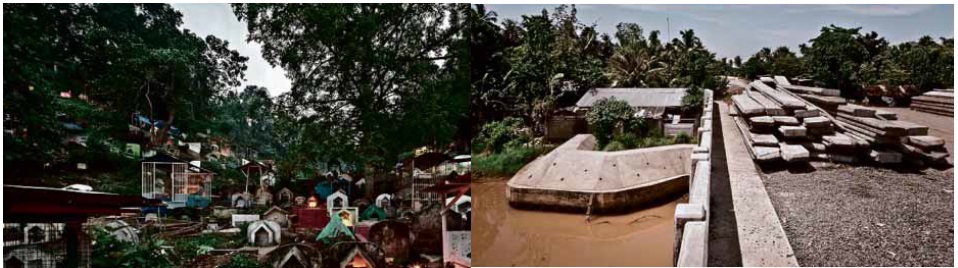
FAMILIES visiting their deceased relatives and staying overnight in Bolonsery public cemetery last Nov. 1. Right: Uncompleted bridge over Iponan River connecting Bulua with Opol.Once completed the bridge should be part of a new coastal artery crossing Cagayan de Oro.

Complementing the logistics infrastructure of Cagayan de Oro is the rapid modernization of the city’s telecommunications infrastructure, transforming the city into a business center and international logistics and telecommunications hub of the south.
 
Educational center
Beyond infrastructure, CDO is the center of education in Mindanao. Xavier University-Ateneo de Cagayan is Mindanao’s first university—and, in fact, is the first Jesuit university in the Philippines.
 
Capitol University and Liceo de Cagayan University are cited by the National Association of Colleges and Universities as among the country’s top 10 higher education institutions with the largest number of accredited programs.
With 15 universities and schools, CDO accommodates 82,000 students and 22,000 graduates every school year.
 
Custom-designed skills training and apprenticeship programs are readily available to serve human resource requirements. For example, Xavier University has partnered with Asian Carmakers Corp., the country’s official BMW distributor, to bring German automotive expertise to technical education students.
 
CDO’s strategic location and rich agricultural resources have made it the preferred site of major agribusiness companies such as Del Monte Philippines (which set up the world’s largest integrated pineapple processing plant here), NestlĆ© Philippines, Pilipinas Kao and other small and medium agri-based industries.
 
As a gateway to Southern Philippines, CDO provides direct access to rich agricultural areas in Mindanao—the source of 40 percent of the country’s food and livestock. CDO is a significant producer of oleochemical and other coconut products.
 
Higher-value products through agro-processing offer investment opportunities. Presently, Northern Mindanao is the top producer of cattle and is the third largest producer of poultry in the country.
 
CDO is also a key destination of meetings, incentives, conventions and exhibitions (MICE) in Southern Philippines. It has 4,806 rooms from various accommodation facilities that can handle conventions with 3,000 participants. It is trying to improve these rather limited numbers.
 
White water rafting capital

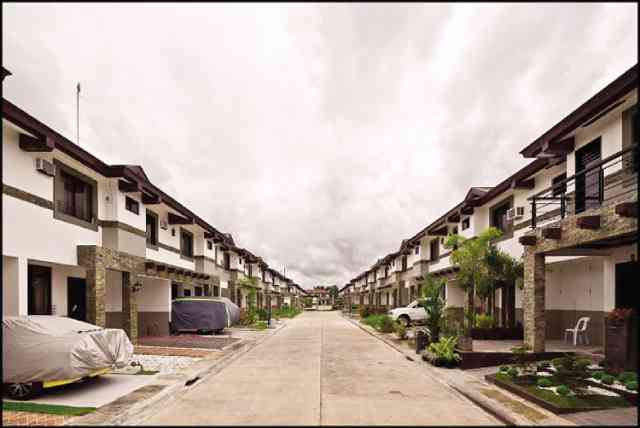
COURTYARDS in Carmen Barangay, developed by Pueblo deOro

CDO is the white water rafting capital of the Philippines, attracting ecotourism adventure seekers who also delight in experiencing ziplines and spelunking and diving, among other outdoor activities.
 
CDO is linked to Camiguin, which is renowned for its luxurious beaches, hot springs, waterfalls and historic landmarks; to the mountain ranges of Bukidnon, home to seven indigenous communities; to the Caraga region capitals of Butuan and Surigao with boast eco-tourism thrills; and to the Lanao del Norte nexus of Iligan City and Marawi City, home of the
colorful Maranao people.
Over the years, the Cagayan River has renewed its claim over CDO—the primordial gateway through which flowed the transactions and transformations of people and progress, commerce and culture, ideas and values.
Hit by Tropical Storm “Sendong” in 2011, CDO is a portrait of resilience, said Fr. Roberto C. Yap, SJ, president of Xavier University-Ateneo de Cagayan.


“Usually,” he said, “the word reminds us of the bamboo because of the way it dances with the wind in times of typhoons and then snaps back in place afterwards. But I would like to propose that resilience should mean not just overcoming challenges but prevailing over them to become better, stronger much more than we have been."

Thursday, May 1, 2014

...the most attractive cities for investment

'Young' Manila among most coveted cities for investors


05/01/2014
 
 
MANILA, Philippines – Manila is among the most coveted cities for emerging market investors, according to real estate website Lamudi.

In its list of most sought-after emerging market cities for investors, Lamudi ranked Manila second to Jakarta, Indonesia.


Manila, Philippines


Lamudi said more investors have turned their attention to the Philippines’ capital as the country’s economy gains speed, citing the young demographic and a workforce culture comparable to the west.

“Manila is considered favorable to investors because it has a young demographic, as well as a similar workforce culture to the west,” the website said.

“Its residential, retail and office sectors all present strong investment prospects,” it added.

Manila is also “increasingly attracting multinational companies for outsourced services,” according to the site.

Lamudi also highlighted the growth of the real estate industry in Southeast Asia, particularly cities in the Philippines and Indonesia, which have strong prospects, thus “cementing Southeast Asia’s place as one of the world’s emerging property hotspots.”

“Investors searching for new opportunities in emerging markets should look to one of these cities. Countries right across the regions where Lamudi operates are experiencing a boom in real estate, fuelled by a growing middle class and strong economic performance,” said Lamudi co-founder and managing director Kian Moini.

Apart from Manila and Jakarta, also making the list are Mexico City, Mexico; Marrakech, Morocco; and Dhaka, Bangladesh.

Lamudi, which operates exclusively in 22 countries in Asia, Africa, Latin America and the Middle East, has picked the top investment opportunities in these regions based on market trends for the past six months.


Wednesday, April 16, 2014

...the emerging cities of the future

Manila ranks 2nd in 'emerging cities of future' list


 04/16/2014
 
 
MANILA, Philippines – Manila is among the world's emerging cities likely to progress in the next two decades, according to a study by US-based consulting firm A.T. Kearney Inc.

The Philippine capital placed second in the ranking, lagging behind Indonesian capital Jakarta.


Jakarta, Indonesia

"Two Southeast Asian cities, Jakarta and Manila, head up the list of emerging cities most likely to progress. Although both cities are currently in the lower half of the GCI on the dimension of business activity, their rapid improvement on the ECO's leading indicators would allow them to reach the business leaders faster than any other low- or middle-income city in the world except SĆ£o Paulo," the report said.

 
Manila, Philippines

A.T. Kearney said Manila “is bolstered by a relatively sharp increase in human capital indicators, with an especially notable improvement in healthcare quality and availability.”

The Philippines has seen rapid economic growth recently, with gross domestic product (GDP) growing 7.2 percent in 2013, surpassing the government’s target of 6-7 percent and one of the fastest in Asia.

A.T. Kearney’s Emerging Cities Outlook measured the likelihood that cities in low- and middle-income countries will improve their global standing over the next 10 to 20 years.

The study cited business activity, human capital and innovation in the emerging cities as indicators.

"Cities that wish to improve or maintain their global positioning must focus especially on strengthening business activity and human capital. As physical distances become less relevant and global competition intensifies, cities in emerging economies will increasingly jockey for position with one another and with cities in higher-income countries,” A.T. Kearney said in its report.


Addis Ababa, Ethiopia

Addis Ababa, the capital of Ethiopia, ranked third while Sao Paulo in Brazil and New Delhi in India ranked fourth and fifth, respectively.


Sao Paulo, Brazil

New Delhi, India

Rounding up the top 10 emerging cities likely to rise are

Rio de Janeiro,

Rio de Janeiro, Brazil

Bogota,


Bogota, Colombia
Mumbai,


Mumbai, India

Nairobi,


Nairobi, Kenya

and Kuala Lumpur.

Kuala Lumpur, Malaysia