Showing posts with label Colombia. Show all posts

Saturday, December 19, 2020

The PH world rank in financial promo

Philippines ranks 2nd in Asia, 8th worldwide for financial inclusion promotion

By TED CORDERO
GMA News
December 18, 2020

The Philippines remains among the top leaders in financial inclusion, according to the 2020 Global Microscope on Financial Inclusion of the Economist Intelligence Unit (EIU), the research arm of The Economist Group.

The country ranks second in Asia, next to India; and eight worldwide, tied with Brazil, in the EIU study, which assessed the financial inclusion environment in 55 countries.

The EIU study rated countries across five dimensions, namely Government and Policy; Stability and Integrity; Products and Outlets; Consumer Protection; and Infrastructure.

Together with Thailand and Russia, the Philippines posted the highest improvement in Asia and Eastern Europe, in view of the government’s push to promote digital channels as part of its responses to the COVID-19 pandemic, according to the study.

The Philippines got a perfect score of 100 points in Products and Outlets dimension, which covers Bangko Sentral ng Pilipinas (BSP) regulations on e-money, simplified accounts like the Basic Deposit Account (BDA), and financial outlets such as cash agents.

Focusing on the role of financial inclusion in the COVID-19 response, the EIU study recognized the initiatives of the Philippines to mitigate the adverse economic impact of the pandemic.

The report cited the regulatory relief measures of the BSP to ease liquidity constraints in the financial system, restore business confidence, and sustain the flow of credit amid the unprecedented health crisis.

These include the temporary relaxation of compliance to reporting requirements, easier access to rediscounting facility, and waiver of licensing fees and charges for financial institutions setting up their electronic payment and financial services.

It also cited the initiative of financial service providers to suspend fees for electronic fund transfers during the community quarantine period.

In addition, the EIU report highlighted measures to promote MSME financing such as allowing banks to include loans granted to MSMEs as alternative compliance with reserve requirements, reducing the credit risk weight of MSME loans that are current in status to 50% from 75%, and reducing the minimum liquidity ratio (MLR) for stand-alone thrift banks, rural banks and cooperative banks to 16% from 20% until end-December 2020.

While the Philippines scored lowest in the Infrastructure dimension with 69 points, there is noted improvement from last year’s level owing to ongoing initiatives on digital connectivity, digital identification, and digital payments infrastructure.

The report emphasized the importance of digital infrastructure that includes access to identification, mobile phones, and financial accounts to facilitate efficient delivery of cash assistance to vulnerable segments.

It also noted that better data integration is needed for proper targeting of cash aid program beneficiaries.

The Global Microscope is an annual cross-country assessment of the enabling environment for financial inclusion. Since 2009, the Philippines consistently belongs to the top-ranked countries in terms of having a supportive framework for inclusive finance.

Latin American countries namely Colombia, Peru, Uruguay, Argentina, and Mexico dominated the top five spots of 2020 Global Microscope. —KBK, GMA News


Tuesday, November 19, 2019

...the PH improved world talent ranking

Philippines up 6 notches in world talent ranking


Louella Desiderio
Philippine Star 
19 November 2019


MANILA, Philippines — The Philippines was among 63 countries that posted the biggest climb in the latest World Talent Ranking (WTR) report of the International Institute for Management Development (IMD), as it rose six places to 49th place from 51st last year.


The country remained the laggard however, among Southeast countries.

Released in partnership with the Asian Institute of Management Rizalino S. Navarro Policy Center for Competitiveness in the Philippines, the WTR looks at countries’ ability to attract, develop and retain an employable talent pool.

The other countries which posted the biggest improvements are Taiwan, which went up seven places to 20th; Lithuania, which rose eight notches to 28th; and Colombia which advanced six places to 54th.

While the Philippines’ ranking improved in this year’s report, it was still behind its peers in the region.
All other Southeast Asian countries included in the report had better rankings than the Philippines such as Singapore (10th), Malaysia (22nd), Indonesia (41st), and Thailand (43rd).

In ranking countries, the WTR looked at three factors such as investment and development, appeal and readiness, and took into account responses to IMD’s executive opinion survey.

In the investment and development factor which measures funds poured in, as well as development of domestic human resources, the Philippines ranked 61st, up from the 62nd spot last year.

“This represents a one-place improvement from 2018, but this factor has consistently ranked in the 60s. Its low rank was mostly driven by pupil-teacher ratio in primary and secondary education and public expenditure on education per student,” IMD said.

As for the appeal factor, which looks at the ability to attract and retain high-quality talent from abroad, the Philippines rose to 31st place from 38th a year ago.

IMD said the highest ranked indicators for the Philippines under the appeal factor were cost of living and effective personal income tax rate, while the lower ranked ones were quality of life, justice, and brain drain.

When it comes to the readiness factor which assessed the quality and growth of the existing talent pool, the country placed 26th, 11 places higher than the previous year’s 37th.

“The relatively higher rank of the readiness factor was mostly driven by indicators on skilled labor, language skills, and share of science graduates among college degree holders,” IMD said.

Switzerland continued to top the WTR, strengthening its position as a global talent hub.

This was followed by Denmark in second place, and Sweden on the third spot. Mongolia, on the other hand, was at the bottom of the list or 63rd place.

Tuesday, August 27, 2019

...the top social media bugs


Filipinos spend more hours on social media than the rest of the world—report

Aileen Cerrudu
UNTV News & Rescue
27 August 2019


Filipinos spend more time on social media compared with the rest of the world, according to a recent report of Global Web Index.


The Philippines tops the list with an average of 4 hours a day spent on social media. Brazil ranked second with 3:45 hours spent while Nigeria and Colombia tied in the third spot with 3:36 hours spent.
The hours spent on social media in the Philippines increased from 2:49 hours in 2012 to 4:01 hours in 2019. The country also has remained the top country that spends the most hours on social media for seven years.
Meanwhile, the top motivations of internet users to use social media is to be up-to-date with the latest news and current events (40%), staying in touch with friends (39%) and finding funny or entertaining content (38%).
However, 47% of the 16-24 year old  age group said that finding funny or entertaining content is their top motivation for using social media. 46% answered “to fill up spare time” while 43% answered “to stay in touch with friends.”—AAC
Share

Thursday, June 19, 2014

...the world's sexiest

Filipinas among world's 'sexiest' in dating poll


06/19/2014
 
 
MANILA -- With the country's recent dominance in beauty pageants, it is no wonder that Filipinas have been voted as one of world's most "sexiest" dating partners.

The survey, conducted by travel dating website MissTravel, listed Filipinas among the top five preferred nationalities to travel with ahead of the Spaniards and the Australians.

Topping the list are the Brazilians, followed by women from Russia, Colombia and the United Kingdom, while the Bulgarians, South Africans and the Canadians took the last three spots.

Male Filipinos, however, did not make the list ranking the opposite sex. Men from Australia are considered the sexiest travel partners, while the Italians and the British came in second and third, respectively.

Here is the full rankings published on Huffington Post:

The sexiest nationalities (women):


1. Brazilian
2. Russian
3. Colombian
4. British
5. Filipina
6. Spanish
7. Australian
8. Bulgarian
9. South African
10. Canadian

The sexiest nationalities (men):
1. Australian
2. Italian
3. British
4. Scottish
5. Spanish
6. American
7. Irish
8. Brazilian
9. Canadian
10. Dutch


Sunday, May 18, 2014

...the emerging city of tomorrow

Why UN Habitat named CDO an ‘emerging city of tomorrow’


By Mozart Pastrano, Ninfa U. Along-Albania
Philippine Daily Inquirer


Cagayan de Oro City (CDO) has been named an “emerging city of tomorrow” in this year’s World Urban Forum in Colombia organized by the United Nations Human Settlements Programme (UN Habitat).
 
CDO is the only Philippine city on the list, which includes Hunchun, China; Johor Bahru, Malaysia; Malmo, Sweden; Nampula, Mozambique; Onitsha, Nigeria; Santa Marta, Colombia; Tetouan, Morocco; and Uberlandia, Brazil.
 
CDO is ranked by the National Competitiveness Council as the Philippines’ most competitive city.
 
The mayor of CDO is former Misamis Oriental 1st District Rep. Oscar S. Moreno.
 
The city government has pioneered in the computerization of business permits and licensing, as well as the assessment and payment of real property tax.
 
“Getting a business permit takes up less than an hour,” said Eileen Canoy Escobar-San Juan, the city’s local economic and investment promotions officer.
 
She also noted that a key driver in the city’s remarkable growth was the “very strong private sector support and initiative.”
CDO is the growth driver of Northern Mindanao (Region 10), whose economic growth continues to exceed those of the other regions in Mindanao.
 
CDO’s gross regional domestic product (GRDP) was P240 billion in 2012, up by 7.4 percent compared to its 5.8 percent growth in 2011. This was largely due to the acceleration of the industry and services sectors, which rose by 9.2 percent and 9.0 percent, respectively.
 
Although agriculture stepped up by only 2.4 percent, contributing 28 percent to the region’s economy.
 
Nationwide, Northern Mindanao (Region 10), which includes CDO, ranked third in per capita GRDP.
 
Dynamism
 
Fueling the region’s growth is CDO’s economic dynamism, government efficiency and appropriate infrastructure. New industries utilizing information technology are being established in the city.
This fast-growing city of over 600,000 people provides easy access to an enormous concentration of markets in Northern Mindanao.
 
The Mindanao Container Terminal (MCT) facilitates direct and cost-efficient movement of containerized cargoes to Manila, Cebu and international shipping hubs.
 
The multi-berth Cagayan de Oro Baseport handles inter-island passenger travel with connectivity to the country’s nautical highway and the logistics corridors of Mindanao.
 
Laguindingan Airport services air logistics requirements, while an extensive road network leads to and from the major production areas and markets of Mindanao.
 
The expansion of the MCT and Filinvest Development Corporation (FDC) Power Plant will consolidate CDO’s position as the largest logistics center in Southern Philippines.
 
While the rest of Mindanao has been experiencing severe power shortages for many months now (with up to 16-hour outages daily in one Mindanao city), CDO has been hit by brownouts only at the tail end of this summer.
 
That’s because it is approaching self-reliance in power: with Minergy’s 27.4-MW and 18.9-MW diesel power plants, STEAG State Power’s 210-MW coal-fired power plant—plus Bubunawan Power Company’s 7-MW run-off river hydro project in tandem with Cepalco’s 1-MW photovoltaic solar power plant—the only grid-connected PV power plant in the Philippines.

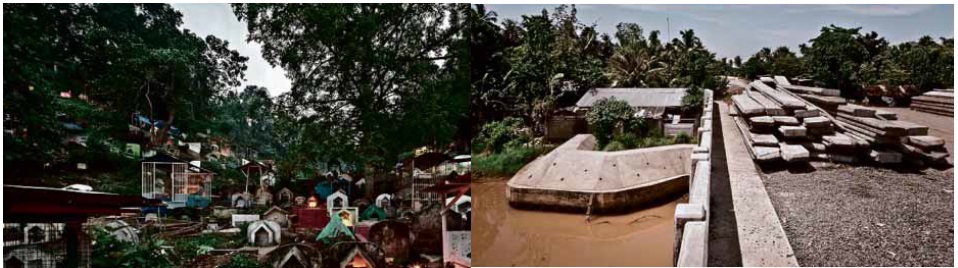
FAMILIES visiting their deceased relatives and staying overnight in Bolonsery public cemetery last Nov. 1. Right: Uncompleted bridge over Iponan River connecting Bulua with Opol.Once completed the bridge should be part of a new coastal artery crossing Cagayan de Oro.

Complementing the logistics infrastructure of Cagayan de Oro is the rapid modernization of the city’s telecommunications infrastructure, transforming the city into a business center and international logistics and telecommunications hub of the south.
 
Educational center
Beyond infrastructure, CDO is the center of education in Mindanao. Xavier University-Ateneo de Cagayan is Mindanao’s first university—and, in fact, is the first Jesuit university in the Philippines.
 
Capitol University and Liceo de Cagayan University are cited by the National Association of Colleges and Universities as among the country’s top 10 higher education institutions with the largest number of accredited programs.
With 15 universities and schools, CDO accommodates 82,000 students and 22,000 graduates every school year.
 
Custom-designed skills training and apprenticeship programs are readily available to serve human resource requirements. For example, Xavier University has partnered with Asian Carmakers Corp., the country’s official BMW distributor, to bring German automotive expertise to technical education students.
 
CDO’s strategic location and rich agricultural resources have made it the preferred site of major agribusiness companies such as Del Monte Philippines (which set up the world’s largest integrated pineapple processing plant here), Nestlé Philippines, Pilipinas Kao and other small and medium agri-based industries.
 
As a gateway to Southern Philippines, CDO provides direct access to rich agricultural areas in Mindanao—the source of 40 percent of the country’s food and livestock. CDO is a significant producer of oleochemical and other coconut products.
 
Higher-value products through agro-processing offer investment opportunities. Presently, Northern Mindanao is the top producer of cattle and is the third largest producer of poultry in the country.
 
CDO is also a key destination of meetings, incentives, conventions and exhibitions (MICE) in Southern Philippines. It has 4,806 rooms from various accommodation facilities that can handle conventions with 3,000 participants. It is trying to improve these rather limited numbers.
 
White water rafting capital

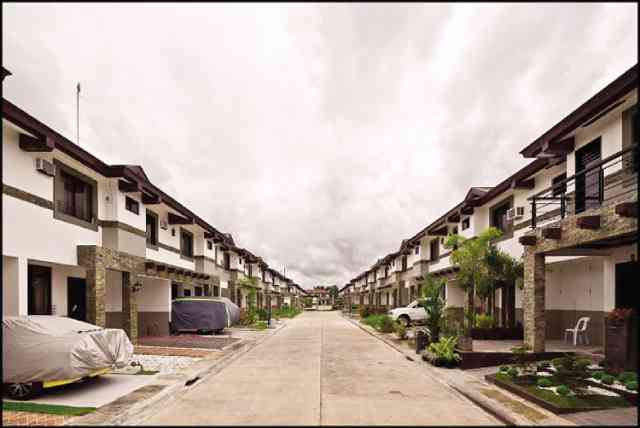
COURTYARDS in Carmen Barangay, developed by Pueblo deOro

CDO is the white water rafting capital of the Philippines, attracting ecotourism adventure seekers who also delight in experiencing ziplines and spelunking and diving, among other outdoor activities.
 
CDO is linked to Camiguin, which is renowned for its luxurious beaches, hot springs, waterfalls and historic landmarks; to the mountain ranges of Bukidnon, home to seven indigenous communities; to the Caraga region capitals of Butuan and Surigao with boast eco-tourism thrills; and to the Lanao del Norte nexus of Iligan City and Marawi City, home of the
colorful Maranao people.
Over the years, the Cagayan River has renewed its claim over CDO—the primordial gateway through which flowed the transactions and transformations of people and progress, commerce and culture, ideas and values.
Hit by Tropical Storm “Sendong” in 2011, CDO is a portrait of resilience, said Fr. Roberto C. Yap, SJ, president of Xavier University-Ateneo de Cagayan.


“Usually,” he said, “the word reminds us of the bamboo because of the way it dances with the wind in times of typhoons and then snaps back in place afterwards. But I would like to propose that resilience should mean not just overcoming challenges but prevailing over them to become better, stronger much more than we have been."

Friday, March 28, 2014

...the top emerging economy

Philippines is top emerging economy—French firm


By Nestor Corrales
INQUIRER.net


MANILA, Philippines—The Philippines is among the top countries with “emerging economies,” a French credit body said in its latest economic publication.

Compagnie Française d’Assurance pour le Commerce Extérieur (COFACE) cited the Philippines as a country with high growth potential and the most favorable prospect of increasing production capacity in the years to come.

COFACE said the Philippines is also considered to have the most favorable business climate.
Other countries recognized as top emerging economies include Peru, Indonesia, Colombia and Sri Lanka replacing Brazil, Russia, India, China and South Africa.

The criteria used by COFACE to determine the new emerging economies include intermediate level of per capita income (above that of less advanced economies but below that of advanced economies); higher GDP growth rate than most advanced economies; and major institutional transformations.

“This piece of economic good news comes at the heels of the report that the International Monetary Fund (IMF) had raised its 2014 economic growth forecast for the Philippines to 6.5%, up from its January projection of 6.3%. Standard and Poor’s (S&P) also raised its growth projection for the Philippines to 6.6% for 2014,” DFA said in a statement Friday.

The IMF and S&P are leading providers of global credit benchmarks, policy advice and research to foster economic development and growth around the world, while the COFACE is the French credit rating agency which publishes quarterly risk assessments for 160 countries.
 

Tuesday, December 17, 2013

...the Miss International 2013

Miss Philippines wins Miss International 2013


Rappler.com
12/17/2013


MANILA, Philippines – Miss Philippines Bea Rose Santiago was crowned Miss International 2013 on Tuesday, December 17, at the Shinagawa Prince Hotel Hall in Tokyo.

This is the 5th Miss International title for the Philippines and the 3rd major crown by a Filipina this year, following wins by Megan Young at Miss World and Mutya Datul at Miss Supranational.

Minutes before her crowning, Santiago delivered her final statement using the opportunity to thank the world for standing with the Philippines during the onslaught of Typhoon Haiyan. Calling for unity among nations, she said, "If I win the crown, I will help promote camaraderie among countries."

Santiago dedicated her win to her countrymen. "This is for the Philippines. I love you, Philippines.”
Miss Netherlands was crowned first runner up and Miss New Zealand was second runner up. Other members of the Top 5 were Colombia and Hungary.

The Top 15 were Gibraltar, Brazil, Puerto Rico, Ecuador, Hungary, Netherlands, United States, Philippines, New Zealand, Lithuania, Iceland, Colombia, Russia, Thailand, and Spain.


Special Awards:
Miss National Costume: Miss Aruba Erialda Croes
Miss Friendship: Miss New Zealand Casey Radley
Miss Internet: Miss Macau Adela Ka-Wai Sou
Miss Photogenic: Miss Lithuania Elma Segzdaviciute


Over 60 candidates from all over the world competed in the pageant held to "promote people-to-people and cultural exchanges as international contributions."

Since 1960, the pageant has been strengthening ties among nations through international exchanges and social programs geared toward "world peace and mutual understanding."

The Philippines has a rich history in the Miss International pageant beginning with Gemma Teresa Cruz (Araneta) who was the first Filipino and first Asian to win the pageant in 1964. Other winners include Aurora Pijuan in 1970, Melanie Marquez in 1979, and Precious Lara Quigaman in 2005. – Rappler.com


Sunday, December 15, 2013

...the Miss Intercontinental 2013 runner-up

Philippines is Miss Intercontinental 2013 3rd runner-up


SunStar
Sunday, December 15, 2013


MANILA -- Philippines pride Koreen Medina landed third runner-up in Saturday's Miss Intercontinental 2013 held in Maritim Hotel Magdeburg, Germany.

Miss Russia Ekaterina Plekhova bested the other contestants as she bagged the top crown, followed by Miss Puerto Rico Aleyda E. Ortiz Rodriguez, 1st runner-up; Miss Colombia Margarita Maria Peralta Tovar, 2nd runner-up; and Miss South Africa Kayla Nel; 4th runner-up.

Miss Philippines
Photo courtesy: Koreen Medina's official Facebook fan page

Other intercontinental beauties who also took home special awards were Miss Portugal, Miss Photogenic; Miss Turkey, Miss Press; Miss Germany, Miss Congeniality; Miss Argentina, Best in Evening Gown; Miss Puerto rico, Best in Swimsuit and Best in Smile; and Miss Panama, Best in National Costume.

Medina represented the country after winning Mutya ng Pilipinas - Asia Pacific International 2013.

She also won several beauty and talent search competitions like ABS-CBN's My Girl 2012 and Coca Cola Music 2011. (NMP/Sunnex)


Sunday, April 28, 2013

...the world's best performing currencies

Peso is 3rd best-performing currency globally


MANILA, Philippines - The peso remains one of the world’s best performing currencies, debt watcher Standard & Poor’s Ratings Services (S&P) said Friday.

The local currency ranked third globally, appreciating 25 percent in real terms from March 2007 to March 2013, according to the S&P report.

Only the Chinese renminbi and Singapore dollar outperformed the peso. The two currencies have strengthened 29 percent and 26 percent, respectively, from their levels six years ago.

The performance was calculated using the real effective exchange rate (REER), which measures the inflation-adjusted value of currencies versus a basket of other units from trading partners.

“No single member of the 27-member European Union and only one of the 34-member Organization for Economic Cooperation and Development is among the top 10 most appreciated currencies,” S&P noted.

Behind the peso, the Australian dollar ranked fourth, rising 23 percent from its 2007 level. It was followed by the Brazilian real, Colombian peso and Peruvian nuevo sol, which rose 22 percent, 21 percent and 19 percent, respectively.

Rounding up the list was the Russian rubble, which firmed up 18 percent, and Saudi riyal and Venezuelan bolivar, which both appreciated 15 percent, the report stated.

According to the Bangko Sentral ng Pilipinas (BSP), the peso has strengthened 6.8 percent versus the greenback last year. It closed at 41.22 to a dollar last Friday, up four centavos from the previous day.
In real terms, the peso increased its value by 6.5 percent versus currencies of trading partners, according to the BSP. “The peso lost external competitiveness in 2012,” it said.

Concerns have been raised against the continued appreciation of the peso, especially on how it trims the value of dollar export earnings and remittances from overseas Filipinos.

The BSP, for its part, has implemented various macro-prudential measures to temper capital inflows causing the peso’s strong performance.

Among others, foreign funds were banned in parking at special deposit accounts (SDA) last July. Interest paid on SDA - money of banks and trust departments with the BSP - were also slashed by 150 basis points this year.

Foreign exchange rules were also further liberalized this month to encourage more outflows and balance the inflows to prevent pressure for the peso to rise.


Sunday, April 21, 2013

...the pilot countries for WB green accounting project

PH picked for WB ‘green accounting’ project

By DJ Yap
Philippine Daily Inquirer

 
  "...the Philippines was selected (by the World bank) as a pilot country for the WAVES program because it was one of the very few nations that had been conducting an accounting of natural resources since the 1990s." - Environment Secretary Ramon Paje  


Environment Secretary Ramon Paje
 

MANILA, Philippines—The Philippines has been chosen along with four other countries for the pilot implementation of a World Bank-led project to develop “green accounting,” or the inclusion of the value of natural resources in measuring a nation’s economic progress.

Environment Secretary Ramon Paje made the announcement on Saturday from Washington D.C., where he represented the country at a high-level ministerial meeting on “natural capital accounting (NCA)” or “green accounting” organized by the WB on April 18.

Paje said the Philippines, along with Botswana, Colombia, Costa Rica and Madagascar, were selected as the implementing partners of the Wealth Accounting and Valuation of Ecosystem Services (WAVES) project of the World Bank.

WAVES is a global partnership that aims to promote sustainable development by ensuring that the national accounts used to measure and plan for economic growth include the value of natural resources.

In a statement, Paje said the Philippines was selected as a pilot country for the WAVES program because it was one of the very few nations that had been conducting an accounting of natural resources since the 1990s.


Accurate information

“The country was noted for accounting for our natural resources such as minerals and forests to provide policy makers with accurate information that could help them make better decisions regarding development priorities and investments that are feasible and sustainable,” he said.

Paje said his participation at the meeting underscored the Aquino administration’s focus on preserving the environment while pursuing sustainable, inclusive and resilient growth.

“It is very important for us to account for our natural wealth, to uphold the principle of intergenerational equity wherein we protect the interest of future generations by protecting our natural resources, especially those that are finite such as minerals,” he said.


Classic example

Paje cited Executive Order No. 79, which institutionalizes and reforms the mining industry, as a “classic example of accounting for natural wealth for future development.”

“While increasing excise taxes from mining companies makes sure that the state gets its rightful share from mineral resources … there is a need to account for the resulting increase in government revenues by investing them in certain long-term infrastructure and programs, such as education and research,” he said.

“This way, even though the nonrenewable resources are extracted, future generations can still, though indirectly, enjoy them through improved goods and services and additional infrastructure,” he said.

The four-year project costs $1.45 million and will begin implementation in the second half of this year, with the National Economic and Development Authority, National Statistical Coordination Board and the Laguna Lake Development Authority as collaborating agencies.


Program of action

WAVES was launched in October 2010 during the Conference of Parties to the Convention on Biological Diversity in Nagoya, Japan. The partnership was able to formulate and propose a program of international action on ecosystems accounting at the Earth Summit held in June 2012.

Advocates argue that “green accounting” is more accurate in determining economic growth and its sustainability, rather than relying on traditional economic indicators such as gross domestic product.

With the GDP, for example, while income from mining or timber harvesting is recorded in national accounts, the simultaneous depletion of natural forest assets and mineral reserves is not accounted for.

The GDP also fails to explicitly identify critical ecosystem services such as tourism, regulating water cycles, preventing erosion and flooding, and carbon sequestration, resulting in misleading economic signals about economic growth and development.


...the National Artist in NY art exhibit

PHL National Artist BenCab featured in New York exhibit

April 20, 2013
GMA News
Philippine National Artist Benedicto Reyes Cabrera, better known for his moniker "BenCab," is among featured artists in an exhibit currently running in New York City in the US.


According to a Department of Foreign Affairs (DFA) statement on Monday, BenCab is part of a special exhibit called "Visions of Iberoamerican Art: bi/Coa: 200 Years of Identity."

"The exhibit is an international presentation focusing on understanding Hispanic cultures and allowing art to connect Hispanics with other communities and former Spanish/Hispanic colonies such as the Philippines," the DFA said.

Joining BenCab are other artists such as Rodolfo Abularach of Guatemala and Fanny Sanín of Colombia in the exhibit.

The exhibit started on April 4 and is scheduled to end on April 26. The DFA noted that the exhibit in the coming months will be featured in other Instituto Cervantes branches in the US, such as in Chicago and Los Angeles.

According to the profile on his website, the multi-awarded BenCab is "hailed as a master of contemporary Philippine art."

Born in Manila on April 10, 1942, BenCab studied Fine Arts at the University of the Philippines and graduated in 1963.

A painter and printmaker, his works have been exhibited in the Philippines and in Asia, Europe, and the United States.

In the past 40 years, BenCab has received several honors such as:
  • the Gawad CCP Para sa Sining (Cultural Center of the Philippines Award for the Arts) in 1992, the ASEAN Achievement Award for Visual & Performing Arts in the 5th ASEAN Achievement Awards in 1997, and
  • the Order of National Artist for Visual Arts by President Gloria Macapagal-Arroyo in Malacanan Palace in 2006.

BenCab lives and works in Baguio City, where the BenCab Museum is located. The museum houses BenCab’s own works as well as those of other known and upcoming contemporary Filipino artists.

The BenCab museum is on Km. 6 Asin Road, around 15 minutes from the center of Baguio City. - Gian C. Geronimo, VVP, GMA News


Tuesday, January 8, 2013

...the Country of the Year 2012


The Grandslam Ranking
globalbeauties.com


The United States is the Country of the Year 2012

Miss Universe Olivia Culpo put the U.S. on top in 2012

When Misses USA and Philippines were holding hands waiting for the Miss Universe 2012 winner’s announcement, they did not know that that was the decisive moment also for the Country of the Year 2012 award. In a fierce dispute, the Miss Universe victory gave the US and extra edge to crown it as the most successful nation in Grand Slam pageants in the year which recently ended. Although the Philippines was the only country to have placed in all 4 held Grand Slam contests in 2012, the US had a G2 victory, which made the difference in the end.

usaflag
The United States is the Country of the Year 2012

The Top 3 of the year was completed by Brazil in 3rd place, with a very strong showing as well.

After 5 consecutive years on the Top, Venezuela finished 2012 in a very a disappointing 9th place.

The United States was also named Country of the Year in the Americas. Other continental winners were: Philippines (Asia‘s Country of Year), Australia (Oceania‘s Country of the Year), Wales (Europe‘s Country of the Year), Dominican Republic (Caribbean‘s Country of the Year), and South Sudan (Africa‘s Country of the Year).

2012′s Top 20 Ranking – Country of the Year

RANK Country / Territory              Int’l               Supra        Universe             World       TOTAL
1 USA 43,295 0,000 261,360 90,480 395,135
2Philippines 43,295 60,021 193,842 92,800 389,958
3 Brazil 43,295 0,000 121,968 129,920 295,183
4 Australia 0,000 0,000 124,146 157,760 281,906
5 China 0,000 0,000 2,178 278,400 280,578
6 Mexico 43,295 0,000 89,298 99,760 232,353
7 India 43,295 0,000 54,450 125,280 223,025
8 Wales 0,000 0,000 0,000 206,480 206,480
9 Venezuela 43,295 0,000 148,104 0,000 191,399
10 UK / England 43,295 33,696 0,000 97,440 174,431
11 Dominican Republic 60,933 42,120 0,000 41,760 144,813
12 France 0,000 40,014 95,832 0,000 135,846
13 South Sudan 0,000 0,000 0,000 132,240 132,240
14 Japan 129,349 0,000 0,000 0,000 129,349
15 Spain 0,000 32,643 0,000 95,120 127,763
16 Jamaica 0,000 0,000 0,000 127,600 127,600
17 South Africa 0,000 35,802 91,476 0,000 127,278
18 Belarus 0,000 126,360 0,000 0,000 126,360
19 Russia 1,069 0,000 98,010 0,000 99,079
20 Poland 0,000 37,908 60,984 0,000 98,892


In the Male category, Philippines is the Country of the Year 2012

June Macasaet, Manhunt Int'l 2012. No one came close to the Philippines in the Men's Country of the Year dispute!
June Macasaet, Manhunt Int’l 2012. No one came close to the Philippines in the Men’s Country of the Year dispute!

With the winner of Manhunt International and a 2nd place in Mister World 2012, the Philippines is the undisputed Country of the Year 2012 in the Men’s Grand Slam. Colombia, with Mr World’s winner and a Manhunt semi-finalist, and Lebanon, with the Mr International winner and a semi-finalist position in Mr World, came in 2nd and 3rd places, respectively. The Top 20 countries of 2012 were:

phi

1Philippines 127,413 93,272 0,000 220,685
2 Colombia 47,385 125,760 0,000 173,145
3 Lebanon 0,000 45,064 125,598 170,662
4 Singapore 60,021 0,000 92,382 152,403
5 Sweden 93,717 0,000 0,000 93,717
6 Thailand 47,385 0,000 28,026 75,411
7 Macau 72,657 0,000 0,000 72,657
8 Venezuela 44,226 0,000 28,026 72,252
9 Ireland 0,000 71,264 0,000 71,264
10 Slovenia 0,000 0,000 70,584 70,584
11 Puerto Rico 61,074 0,000 0,000 61,074
12 Belgium 0,000 59,212 0,000 59,212
13 Canada 0,000 59,212 0,000 59,212
14 Brazil 0,000 0,000 59,166 59,166
15 Slovakia 0,000 0,000 58,128 58,128
16 France 0,000 0,000 46,710 46,710
17 Vietnam 0,000 45,064 1,038 46,102
18 Malaysia 0,000 0,000 45,672 45,672
19 Dominican Republic 45,279 0,000 0,000 45,279
20 Croatia 0,000 45,064 0,000 45,064
20 England 0,000 45,064 0,000 45,064
20 Peru 0,000 45,064 0,000 45,064

Country of the Year 2012 in Asia: PHILIPPINES

Country of the Year 2012 in the Americas: COLOMBIA

Country of the Year 2012 in Europe: SWEDEN

Country of the Year 2012 in the Caribbean: PUERTO RICO

Countries from Africa and Oceania did not place and did not win any special awards in any Grand Slam pageant in 2012.


And the country of the year is...
     
Written by .org
Friday, 21 December 2012 
 

Last year, Venezuela took the country of the year title having won the Miss World crown, a Top 15 finish in Miss Universe, a first runner-up finish at Miss International and winning as Miss Fire at the Miss Earth contest. This year, the Philippines took the top spot.

Philippines made early strides this year with their Miss World campaign. Competing in a very hostile environment (China's aggression in the West Philippine Sea earned the chagrin of the Philippines, Vietnam and even Japan), Queenierich Rehman showed a very strong performance landing her to the Top 15. Months later, Nicole Schmitz achieved the same fate this time at the Miss International pageant held in Okinawa, Japan.

Philippines seems to be hungry for more. At the Miss Earth 2012 pageant Stephany Stefanowitz went on to win Miss Air missing the Miss Earth title to Miss Czech Republic. It seems the Philippines is cementing its status as a beauty superpower that was long asleep and now roaring back to life. After last year it landed in the semis of all Big4 Pageants even finishing as first runner-up at Miss World pageant.

And thus, the clamor for the title and glory grew louder. The pressure was on the country's last Big4 competitor - Janine Tugunon. Alas, the crown was not for her but she was adjudged as second best placing as first runner-up. With such a stellar performance, the Philippines regained its long lost status as beauty superpower. In the 1960s and in 1970s, the country was highly respected in the world of pageantry. The country's status however lost its luster in the late 1980s and continued to slide in the 1990s.


Here is the tabulation of the scores using Missosology.Org's Big4 ranking formulated by Stephen Diaz. The Big4 Ranking is now considered as the most reliable and consistent system designed to rank the performance of nations and territories at Big4 pageants.


1. PHILIPPINES - 560 POINTS
(MW-100; MI-100; ME-180; MU-180)

2. U.S.A. - 530 POINTS
(MW-100; MI-100; ME-130; MU-200)

3. BRAZIL - 480 POINTS
(MW-120; MI-100; ME-140; MU-120)

4. VENEZUELA - 436 POINTS
(MW-10; MI-100; ME-166; MU-160)

5. MEXICO - 400 POINTS
(MW-100; MI-100; ME-100; MU-100)

6. JAPAN - 330 POINTS
7. AUSTRALIA - 320 POINTS
8. INDIA - 281 POINTS
9. RUSSIA - 250 POINTS
10. CHINA PR - 240 POINTS

11. SOUTH AFRICA - 240 POINTS
12. CZECH REPUBLIC - 220 POINTS
13. FINLAND - 210 POINTS
14. DOMINICAN REPUBLIC - 210 POINTS
15. WALES - 200 POINTS

16. SRI LANKA - 190 POINTS
17. NEPAL - 190 POINTS
18. COLOMBIA - 176 POINTS
19. SOUTH SUDAN - 170 POINTS
20. POLAND - 170 POINTS

Monday, November 26, 2012

...the Gusi peace prize awardee

Filipino peace prize awardee

By Manila Standard Today
Nov. 26, 2012

Dr. James G. Dy, the Gusi Peace Prize winner for Social Services and Philanthropy, was the only Filipino among 20 Laureates out of 128 candidates from Canada, Sri Lanka, Colombia, Iraq, Kuwait, Serbia, Uganda, Mauritius, Argentina, USA, China, United Kingdom, Mexico, Slovenia, Finland, Ukraine, Malaysia, Peru, and Russia.


Recognition rites will be held on November 28 at the Philippine International Convention Center for the philanthropist, who has been involved in social, civic and charitable work for more than 30 years.

Dr. Dy is the President of the Philippine Chinese Charitable Association Inc., which operates the Chinese General Hospital and Medical Center that served as his vehicle in supporting various charitable causes, including fund-raising and livelihood projects, medical and dental missions to far flung areas, and relief operations to devastated communities in times of calamities and disasters.

In 2002, he was elected Governor of the Philippine Red Cross and Governor of the Philippine Constitution Association, positions which he holds up to this day.

He earned four honorary doctorate degrees: Doctor of Humanities, University of Pangasinan in 1999; Doctor of Business Administration, Lyceum-Northwestern University, Pangasinan, in March 2004; Doctor of Humanities, Central Luzon State University, Nueva Ecija, November 2006; and Doctor of Philosophy in Technology Management, Technological University of the Philippines, March 2007.

Dr. Dy was named Outstanding Filipino Awardee for Humanitarian Service by the Philippine Jaycee Senate and Insular Life Insurance Ltd. He also received the Outstanding Manilans Award for having distinguished himself in business and industry, hospital administration and humanitarian advocacy during the 428th Founding Anniversary of Manila, and was the outstanding Chinese-Filipino to receive the Lifetime Achievement Award in the Dr. Jose P. Rizal Awards for Excellence. His qualities as a civic leader and as a father were recognized by the Ulirang Ama Award along with the conferment of the title Ambassador for Medical Tourism in 2001.

...the new PH cardinal


Pope names six new non-European cardinals


Pope Benedict XVI on Saturday consecrated six non-European prelates as new members of the College of Cardinals in a development welcomed by critics concerned that the body which will elect the future pope is too Euro-centric.

The elite body "presents a variety of faces, because it expresses the face of the universal Church," the 85-year-old pontiff said during the ceremony -- called a consistory -- in St Peter's Basilica.

"In this consistory, I want to highlight ... that the Church is the Church of all peoples," he said.

The solemn ceremony saw the new "princes of the Church" receive gold rings and birettas -- their scarlet colour signifying the blood of martyrs, or those willing to die for their faith -- while kneeling before the pontiff.

The pope drew criticism in February, at the height of the "Vatileaks" scandal, when he created 22 new cardinals of whom 16 hailed from Europe.

Benedict, who was elected pope in 2005, is a respected theologian often seen as hewing closely to a traditionalist line who has championed Christianity's European roots on countless occasions.

Saturday's new cardinals come from Colombia, India, Lebanon, Nigeria, the Philippines and the United States and join the elite body that advises the pope and elects his successor upon his death.

They are American James Michael Harvey, Lebanon's Bechara Boutros al-Rahi, India's Baselios Cleemis Thottunkal, John Onaiyekan of Nigeria, Colombian Ruben Salazar Gomez and Luis Antonio Tagle of the Philippines.

Announcing the names of the new cardinals last month, Benedict told bishops that he wanted to show that "the Church belongs to all peoples, speaks all languages."

Saturday's consistory, Benedict's fifth, follows the death of several cardinals in recent months and will bring the number of those eligible to vote back up to the maximum of 120.

Cardinals must be under 80 years old to take part in a papal election although they can stay on as non-voting cardinals after they reach that threshold.

There are now 62 European cardinals eligible to vote compared with 67 in February, as well as 14 North Americans, 21 South Americans, 11 Africans and 11 Asians.


Cardinal James Michael Harvey, USA

Harvey, 63, who hails from Milwaukee, Wisconsin, has been the prefect of the pontifical household since 1998. The best known of the new cardinals has been made the archpriest of the Basilica of St Paul's Outside the Walls, one of Rome's most prominent basilicas.


Cardinal Luis Antonio Tagle, Philippines

Another of the new cardinals, Manila Archbishop Tagle, at age 55 is viewed as a possible candidate to succeed Benedict.

The last to receive his biretta on Saturday, Tagle was visibly moved, wiping away tears after a long tete-a-tete with the pope, to applause from the congregants.

Bechara Boutros al-Rahi, Lebanon

Rahi, 72, became the second Maronite cardinal alongside Monsignor Nasrallah Sfeir, also of Lebanon. Rahi has frequently warned over the rise of Islamism, and his elevation is seen as a gesture towards a multi-faith Lebanon at a time when the country is threatened by the conflict in neighbouring Syria.

Cardinal Baselios Cleemis Thottunkal, India

Trivandrum Archbishop Thottunkal of India became the youngest member of the College of Cardinals at age 53. His elevation was seen as a bid to encourage India's old but dynamic Church, little known in the West.

Cardinal John Onaiyekan, Nigeria

As for the 68-year-old Onaiyekan of Nigeria, archbishop of Abuja, he is another "papabile", or potential pope, who has shown courage in the face of inter-faith hatred at a time when his country faces attacks against Christians by the Islamist sect Boko Haram.


Cardinal Ruben Salazar Gomez, Colombia


Another man of peace is 70-year-old Gomez of Bogota, who has fought tirelessly for national reconciliation with Colombia's FARC rebels.

Sunday, November 25, 2012

...the Mr. World 2012


Andrew Wolff places second in Mr. World 2012


The Philippines’ Andrew Wolff placed first runner-up to grand winner Francisco Javier Escobar Parra of Columbia in the recently-concluded Mr. World 2012 held on Saturday, November 24 in Kent, England.


Wolff , an athlete and former actor, also won the Multi-Media Special Award during the pageant’s fast track competitions.

Leo Dalaney of Ireland was declared second runner-up.

On the official Mr. World-Philippines Facebook account, the 27-year-old Wolff apologized for winning only second place.

“2nd place guys. Sorry :'( Salamat sa inyong lahat diyan! Mahal ko kayo!” he posted.

‘Mas matalino tayo’

Wolff shared his sentiments about the competition through his Twitter account.

“Salamat sa lahat ng support nyo. Pasensya na sa 2nd. Akala ko manalo na ang Pilipinas, pero hindi. Mabuhay Pilipinas! Mas matalino tayo! :)”

Filipinos online are ecstatic over the news of Wolff’s first runner-up finish in Mr. World.


“Andrew Wolff suddenly became the most desirable pinoy,” one Twitter user said.

In an interview with Yahoo! OMG! Philippines prior to the competition, Wolff said he’s prepared for anything.

“It's not just about winning. It's about taking part. Being one of the candidates is already a privilege. I feel lucky and I want to thank everyone involved."

Wolff also said, “The only one who can judge me is God. Everyone deserves a chance to do the best they can in life. Everyone has his issues. No one's perfect. But I'll do the best for the Philippines."

Forty eight candidates from all over the world competed for the Mr. World title.

Saturday, November 10, 2012

...the PH diplomat to WTO board

PHL envoy appointed to WTO management board


November 10, 2012
GMA News
 
 
A Philippine diplomat has been appointed to the Management Board of the Advisory Center on World Trade Organization Law (ACWL), the Department of Foreign Affairs said Friday.


The DFA said Philippine permanent representative to the WTO Esteban Conejos Jr. will have a two-year term and may be reappointed for another two years.

"Conejos succeeded Ambassador Bozkurt Aran of Turkey. His term will be for two years, and he will be eligible for reappointment for a further two years," the DFA said.

ACWL aims to provide developing countries and Least Developed Countries (LDCs) with the legal capability necessary to enable them to take full advantage of the opportunities offered by the WTO.

Conejos was unanimously nominated by the ACWL's Category B member countries to be their representative to the board, the DFA said.

These countries include Colombia, Egypt, India, Indonesia, Mauritius, Oman, Pakistan, Philippines, Thailand, Turkey, Uruguay, Venezuela and Vietnam.

The Philippines has been a member of ACWL since its establishment in 2001.

It has benefited from services such as legal assistance in dispute settlement cases, legal opinions, training courses, and a secondment program for government trade lawyers.

During the past 10 years, ACWL had been involved in 21 percent of all new WTO dispute settlement proceedings.

WTO Director-General Pascal Lamy earlier said the ACWL helps make sure the legal benefits of the WTO are shared among all members.

Lamy added the ACWL contributes to the effectiveness of the WTO's dispute settlement procedures, and to the realization of the WTO's development objectives.

Management board

The Management Board makes decisions to ensure the efficient and effective operation of the ACWL and reports to the General Assembly.

It has six persons serving in their personal capacities who have been selected on the basis of their professional qualifications in the field of WTO law or international trade relations and development.

Three Board members are nominated by the developing country members, two by the developed country members and one by the LDCs. The Executive Director serves ex officio on the Board.

The DFA said Conejos attended his first Management Board meeting on Nov. 7, and was welcomed by other board members, including ACWL Executive Director Niall Meagher.

At the meeting, they discussed the operational and financial standing of ACWL, as well as the accession of Cuba.

G-33 meet

On behalf of Indonesia, the Philippines through Conejos chaired the G-33 Heads of Delegation meeting on November 7 – a tradition being observed every time the coordinator of the group is not available.

The G-33, previously known as the Alliance for Special Products and Special Safeguard Mechanism, is a coalition of 46 developing countries pressing for S&DT flexibility for developing countries in the agriculture Doha Round of talks for ensuring food security, livelihood security and rural development.

Its key members include Barbados, China, Dominican Republic, India, Indonesia, Nigeria, Pakistan, Kenya, Korea, the Philippines, Turkey and Zimbabwe.

The G-33 discussed the Indian proposal entitled "Some Elements... for Early Agreement to Address Food Security Issues," which India and the Philippines are seeking for G-33 sponsorship.

The proposal under "Green Box" of the WTO Agreement of Agriculture aims to exempt developing countries from factoring in government support payments for public stock-holding for food security purposes.

It particularly focuses on the procurement from "low-income or resource poor producers" and provision of subsidized food prices for urban and rural poor in their AMS ("trade-distorting subsidy") monetary limits.

The proposal is part of the considered "80 percent agreed and stabilized areas" in the 2008 Chair's agriculture modalities text which India and the Philippines hope to be harvested early during the 9th WTO Ministerial Conference in Bali in December 2012, in advance of the full conclusion of the Doha Round.

The proposal may be submitted to the COA-SS Chair John Adank and circulated to all WTO members before the agriculture talks resume on 16 November 2012 in Geneva. — LBG, GMA News