Showing posts with label Uzbekistan. Show all posts

Wednesday, October 16, 2019

...the improved PH FIFA Ranking

FIFA Rankings 2019: Thailand, Philippines set for rise, Indonesia to fall after poor display


Fox Sports Asia
16 October 2019


Thailand and Philippines are set to rise up the FIFA Rankings table after their latest exploits in the 2022 FIFA World Cup Qualifiers while Indonesia, Cambodia and Singapore are set to fall down.

Thailand registered a massive 2-1 win over the United Arab Emirates while Philippines produced a fine defensive display to hold the mighty Chinese side for a goalless draw. Indonesia, on the other hand, lost 3-1 to Vietnam, Cambodia suffered a 4-0 defeat to Iraq and Singapore went down 3-1 against Uzbekistan.


With their win over UAE, Thailand are expected to move up six spots to 109, while Philippines will gain one spot and will move up to 126. Indonesia will lose one spot and go down to 171 while Singapore will lose two spots and will go down to 159. Cambodia, who were hammered 14-0 by Iran last week, will go down to the 172nd spot after the loss against Iraq.

Wednesday, October 9, 2019

...the Ju Jitsu next big hub

The Philippines could be the next big hub for Jiu-Jitsu superstars


With height and physical strength not much of a factor, and our longstanding heritage in combat sports, the grappling martial art can be the next big thing for Pinoy athletes. And, with its debut in the Southeast Asian Games next month, our fighters can showcase what they've got to the rest of the world.


Nissi Icasiano
ABS-CBN Sports
09 October 2019


Grappling is one of the oldest forms of combat in the world. Cave drawings in France from over 15,000 years ago appear to depict people engaged in acts of grappling. Babylonian and Egyptian artifacts show people employing most of the maneuvers known today. In Greece, wrestling served as the main attraction in the ancient Olympic Games. 


Various grappling disciplines evolved across the globe, including Sumo in Japan, Turkish oil wrestling, and Uzbekistan’s Kurash among others. In the Philippines, traditional indigenous martial arts are practiced in different regions like Bultong in the Cordilleras, Dumog in Western Visayas, and Layug in Central Visayas and Mindanao.

Due to American colonization, modern-style wrestling made its way into the country and has remained up to the present time. Many Filipinos have etched marks in this field, notably in the 1954 Asian Games, where Nicolas Arcales and Mansueto Napilay brought home silver medals, and Basilio Fabila captured bronze. It was the only year in Asian Games history that the Philippines claimed medals in wrestling. Filipino wrestlers were privileged to compete at the Summer Olympics from 1936 to 1988. Since the implementation of continental qualifiers the year after, not a single grappler has had the opportunity to set foot on an Olympic mat.

Next big thing

Through lifelong Filipino martial artist Alvin Aguilar in the mid-90s, Brazilian Jiu-Jitsu was formally introduced in the Philippines. The grappling art was formed from the Kodokan Judo fundamentals that were taught by a number of individuals, including pioneers Takeo Yano, Mitsuyo Maeda, Soshihiro Satake, and Isao Okano.

Brazilian Jiu-Jitsu eventually came to be its own discipline through the experiments, practices, and adaptation of Judo through Carlos and Helio Gracie in the 1900s. Though our nation is heavily engrossed with basketball, boxing, billiards, and currently volleyball, one Filipino practitioner believes that Brazilian Jiu-Jitsu could find a foothold in the Parthenon of Philippine sports.

Franco Rulloda, who earned his black belt in Brazilian Jiu-Jitsu under the tutelage of Aguilar last May, sees a bright future for Filipinos in the sport because, unlike basketball, it does not require height. It is built on the concept that a smaller person can successfully defend against a bigger and heavier assailant. This you can do by using proper technique, leverage, and taking the fight to the ground before applying joint-locks and chokeholds to subdue the opponent.

“The fighting spirit and passion for combat sports makes Brazilian Jiu-jitsu perfect for Filipinos,” Rulloda explains. “It is honing one’s physical attributes and using acquired knowledge to his or her advantage. It does not require too much strength, height, and athleticism.”

Rulloda points out that a lot of our prominent and successful athletes come from combat sports.

 “Manny Pacquiao, Nonito Donaire, Eduard Folayang, and the list goes on. Fighting has been ingrained in every Pinoy’s DNA,” he says. “Martial arts have deep roots in Filipino culture. History has proven that Filipinos have that warrior spirit.”

There are already a handful of Filipino competitors who have made a name for themselves internationally, including Meggie Ochoa and May Masuda. Ochoa captured three-straight gold medals from 2014 to 2016 at the World Jiu-Jitsu Championship or the Mundials. On the other hand, Masuda became the first Filipina to snare a gold medal at the Mundials in 2009.

Eros Baluyot, meanwhile, had his career-defining moment in 2010 by bagging a gold medal at the age of 17. Joey Lepiten, Gian Dee, Kaila Napolis, Annie Ramirez, Kim Custodio, Vince Ortiz, and Marc Lim have likewise made it to the podium in different overseas tourneys.

“Filipinos learn fast. We somehow have this gene attributed to absorbing techniques quickly and applying them right away. We are dedicated athletes. We put our heart and soul into whatever it is we are doing. We invest so much in our endeavors, and we are passionate about what we believe in,” Rulloda says.

Making a mark

The Philippines now houses the most number of Brazilian Jiu-Jitsu black belts in Southeast Asia: Aguilar, Rulloda, Masuda, John Baylon, Fritz Rodriguez, Pichon Garcia, Allan Co, Toffy Ilagan, Froilan Sarenas, among others.

Currently, there are 10 clubs in the country that have been recognized by the International Brazilian Jiu-Jitsu Federation including DEFTAC-Ribeiro, Atos Philippines, KMA-Fabricio, John Baylon BJJ, and Cobrinha BJJ Manila.

Aguilar, who holds the distinction as the first homegrown black belt here, says the sport has come a long way since he first piloted a small class in his garage. “Back then, Jiu-Jitsu was only comprised of four or five people. Right now, we have at least more than a thousand competitors,” he shares. “I am very happy with the level and the standard that we’ve already established here in the Philippines because we’ve produced a lot of champions.”

The pioneering fighter says that we are definitely number one in Southeast Asia, and top three in Asia. “These are the things we should take advantage of. We have so many good grapplers. Everybody here is so good, not just from my team,” he adds. “You put them in any gym around the world, and they will always be able to produce.”

Brazilian Jiu-Jitsu in the Philippines made significant strides last year when both Philippine Olympic Committee and Philippine Sports Commission declared the Jiu-Jitsu Federation of the Philippines as the sport's national governing body. The sport will also make its much-awaited debut at the Southeast Asian Games, which our country will host from November 30 to December 11.

Ochoa is more than excited to participate in the regional biennial meet, as she doesn’t get a lot of opportunities to compete in her country. “It is a big deal because we’re the host, and I’m definitely going to prepare for that,” she says, “Not just me but every Filipino athlete is going to prepare for that. We want to show what we are really capable of.”

 Spreading the gospel

Despite the success of a few homegrown talents in Brazilian Jiu-Jitsu, Rulloda admitted that it still has a lot of work to do to adapt to Filipino taste. “The growth has been steady through the years. However, the biggest hindrance to the growth of the art is the lack of awareness of what really happens in an actual self-defense situation and how Jiu-Jitsu can be an effective tool for it,” he stresses. “The sporting aspect has a slow progress because the low awareness level leads to low exposure and that results in difficulty of getting sponsorships for deserving athletes.”

To help in this cause, Rulloda stages a yearly tournament called Arte Suave Manila. It started in 2015, and aims to excite at a grassroots level. “Whatever noise this event will create is going to help the future of these athletes. I want them to get exposed, I want them to be discovered, and I want them to get sponsors,” he reveals.

The two-day competition originally focused on white and blue belters, but it opened its doors to purple belts in 2016. One of its main attractions is the submission-only super-fights, where combatants will contend in a ten-minute match. If there is no submission by the end of the given time, a draw will be declared.

Arte Suave Manila is set to hold its fifth annual event from October 19 to 20 at the Commercenter Alabang in Muntinlupa, and Rulloda is expecting a promising turnout. “It is a league by fighters, for fighters. The sport is growing in the country, and so we’re expecting to see high-level Jiu-Jitsu displayed on the mats again this year,” he promises.

Rulloda reiterates that Filipinos have the potential to do great things in the sport. “We can take Jiu-Jitsu to the next level, not only here in our country, but to the Asian level, and even worldwide,” he declares.

Monday, March 18, 2013

...the Asian Youth Boxing Champions

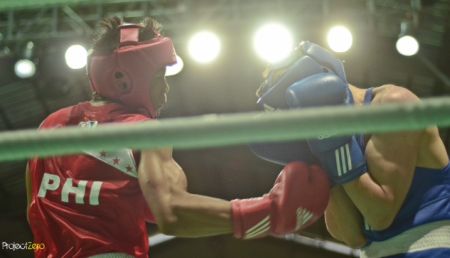
FOUR FILIPINO BOXERS WIN GOLD IN ASIAN YOUTH BOXING CHAMPIONSHIPS


PhilBoxing.com


Four talented and courageous young Filipinos won gold medals in the Asian Confederation Youth Boxing Championships at the Subic Freeport on Saturday providing a boost to the grassroots development program initiated by the Amateur Boxing Association of the Philippines headed by its president Ricky Vargas and the eminent businessman-sportsman Manny Pangilinan as chairman.


Light flyweight Jade Bornea, light welterweight Eumir Felix Marcial, flyweight Ian Clark Bautista and lightweight James Palicte fulfilled the expectations of the ABAP leaders and executive director Ed Picson with the finest showing of the country in years.

The support from hometown fans certainly lifted the spirits of the young fighters and gave them an advantage especially in close fights.

A bronze medalist in the World Youth Championship in Armenia last December light flyweight Bornea defeated Shatlykmyrat Myradov of Tukmenistan, 17-10, in their 49-kilogram semifinal bout but had a much tougher time against Japan’s Kosei Tanaka before taking the country’s first gold 15-13.

The score was tied at 8-8 going into the final round before Bornea with a solid left followed by a right which jolted Tanaka emerged winner 7-5 to edge the game Japanese.

Ian Clark Bautista won the flyweight gold with a 19-10 win over Uzbekistan’s tough Mirazizbek Murzahalilov after coasting to a 6-3 lead in the opening round marked by a cracking left hook and a right straight. A counter left by Bautista in the second round staggered the Uzbek fighter who was unable to penetrate the solid defense of the Filipino.

Lightweight James Palicte took the first round by a close 5-4 margin against China’s Liu Xiaoshuaichn and held on to that lead 10-9 at the end of the second due mainly to a terrific uppercut that stunned the Chinese boxer who kept pressing the action. Another solid uppercut by Palicte sealed a 17-13 win although the final score was no indication of the closeness of the bout.

The fourth and final gold medal of the Philippines was won by Eumir Felix Marcial who put on the most impressive performance by the Filipinos beating Mongolia’s Batzorig Otgonjorgal by a runaway 29-12 margin.

The switch-hitting Marcial, the reigning World Junior Champion who is a power puncher battered his opponent from the opening bell to take a 11-5 lead at the end of round one nailing the Mongolian with a vicious left straight and a solid combination.

Marcial kept up the pressure in a second round slugfest with some big shots to move ahead 22-11 before coasting in the final round for the big win that won the hearts of fight fans.

Amateur Boxing Association president and former Philippine Boxing Association chairman Ricky Vargas was ecstatic over the performance of the youth squad as he said “while we cheer for every boxer we reserved even louder cheers for the ABAP team that has been working hard for an efficient and properly run tournament.”

ABAP chairman Manny Pangilinan was overjoyed over the boxers showing and texted the Manila Standard saying “Congrats to ABAP. Mabuhay ang Pinoy boxers. Go ABAP!”


Tuesday, January 29, 2013

...the GM Korea's CFO

GM Korea's first female CFO is Filipina


01/29/2013
Minerva Matibag

MANILA, Philippines - GM Korea, the South Korean unit of General Motors Co., has appointed Filipina Minerva Matibag as vice president and its first female chief financial officer.

Matibag will replace Carlos Zarlenga effective Feb. 1.

The Korea Times last week reported Matibag will also serve as vice president and CFO for GM Vietnam and GM Uzbekistan. She currently holds the position of CFO at GM Brazil.

"As GM Korea's first female CFO, she brings a wealth of experience in finance in Asia Pacific and North and South America to her important new position," GM Korea President and CEO Sergio Rocha has said.

Matibag has been with General Motors since 1997 and has held finance leadership positions for the firm's units in Singapore, Japan and Thailand.

Zarlenga, meanwhile, will start serving as CFO for GM Brazil and GM South America effective Feb. 1.

Wednesday, September 19, 2012

...the hopeful FIBA Asia host

Phl looms best bet to host FIBA Asia


By Nelson Beltran
The Philippine Star
September 19, 2012


TOKYO – The Philippines has emerged as having the best chance to host the 2013 FIBA Asia Championship.


Talks making the rounds on the eve of the FIBA Asia executive board meeting Wednesday were favorable for the Philippines which is bidding to host the biennial regional event for the first time in four decades.

For one, Iran, another serious bidder, has conceded the Philippines would earn the rights to host the Asian meet with the Tehran Times already reporting on Tuesday that the event will be held in Manila.

China hinted at making a bid in the last minute, but it is unlikely to get the nod of the FIBA Asia board, having hosted the last two editions (in Tianjin in 2009 and in Wuhan in 2011) of the event.

Qatar has reportedly dropped its plan to join the bidding presentation set during the FIBA Asia executive board meeting at the International Convention Center of Grand Prince New Takanawa Hotel at 4 p.m. Wednesday.

At the start of the knock out stage Thursday, the Philippines plays Chinese Taipei which placed third in Group B following a 75-73 squeaker over Qatar.

Samahang Basketbol ng Pilipinas is determined to make good impression that it is sending a high-powered cast of Filipino cage officials in the meeting.

SBP executive director Sonny Barrios will make a presentation on behalf of the Philippine federation which intends to bring the event at the brand-new SM MOA Arena as the main venue and the Ninoy Aquino Stadium as the second venue.

 
SBP president Manny V. Pangilinan will also attend the meeting with PBA officials, led by commissioner Chito Salud and board chairman Robert Non, lending their presence on the sideline to show full backing on the Philippine bid.

The Philippines has never played host to this event since the 1973 meet which the country ruled with a team including Robert Jaworski, Mon Fernandez and Bogs Adornado among others. The event was still then called ABC (Asian Basketball Confederation) Championship.

The other only huge FIBA event the country hosted since then was the 1978 World Championship at the Araneta Coliseum.

In 2010, the SBP showcased the Philsports Arena in hosting the FIBA Asia Champions Cup.

The latest significant move done by the SBP was inviting FIBA Asia secretary general Hagop Khajirian to inspect the SM MOA Arena a few weeks back.

Khajirian told SBP officials then that, for him, SM MOA Arena “is more than acceptable as primary venue of the FIBA Asia Championship.”

The FIBA Asia leadership includes president Sheikh Saud Bin Ali Al-Thani from Qatar, chairman Xin Lancheng from China, first vice president Adel Al Assomi from Bahrain, second vice president Yushi Samuro from Japan, treasurer Quek Hiang Chiang from Singapore, assistant sec-gen Mahmoud Mashhoun from Iran and women’s representative Noviantika Nasution from Indonesia.

Meanwhile, defending champion Lebanon and reigning FIBA Asia titlist China rolled past Uzbekistan and Macau, respectively, to catch up with Smart Gilas Pilipinas at 3-1 at the close of the fourth FIBA Asia Cup group plays at the Ota Gymnasium.

The Lebanese blasted the Uzbeks, 84-49, while the Chinese ripped their Macau neighbors, 84-49.

Lebanon, the Philippines and China finished on that order following the application of the quotient tiebreak system. Uzbekistan was the fourth quarters qualifier from Group A.


UPDATE: Lebanon beats Philippines as FIBA hosts
http://www.philstar.com/sportsarticle.aspx?publicationsubcategoryid=69&articleid=850815&keyword=sp_pba

Tuesday, October 4, 2011

...the Muay Thai gold, silver medalists

Pinoy wins gold in Muay Thai World tilt

 10/04/2011
 
2 other fighters get silver medals

MANILA, Philippines – The Philippine Muay Thai team brought home 1 gold and 2 silver medals from the prestigious Muay Thai World Championships in Uzbekistan.

Ilonggo Robin Catalan, brother of bemedalled Wushu artist Rene Catalan, won the gold medal in the 48-kilogram category.

Jojo Suello Pol (63.5 kg) and Preciosa Ocaya (51 kg) each nabbed silver medals in their respective divisions.
The three muay thai artists are part of an 8-man contingent sent to Uzbekistan for the competition which ran from September 22 to 27.

Small but terrible

Catalan is the smallest fighter in the 8-man muay thai team.

The 20-year-old defeated a taller Afghan fighter in the finals of the 48-kg division.

“Matangkad kasi yung kalaban ko eh… ako yung pinakamaliit, bumawi na lang po ako,” said Catalan.
Catalan said he is happy to win the gold on his first try of the competition. – With a report from Dyan Castillejo, ABS-CBN News

Tuesday, May 31, 2011

...the resolution

PHL resolutions adopted at UN meet

At least two key resolutions of the Philippines were adopted at the 67th Session of the United Nations Economic and Social Commission for Asia and the Pacific (UN ESCAP), the Department of Foreign Affairs (DFA) reported on Tuesday.

The UN ESCAP adopted the resolutions on:
  • the improvement of civil registration and vital statistics in the Asia-Pacific region, and

  • enhancing accessibility for persons with disabilities.

    "The resolutions were part of a set of 15 resolutions adopted in the meeting on issues from bridging wide development and infrastructure gaps within the region, to cooperation for energy security and disaster preparedness," the DFA said in a news release posted on its website.

    The Philippine resolution on civil registration and vital statistics was co-sponsored by Australia, Bangladesh, and Thailand.

    The resolution emphasized the importance of these systems in designing social protection schemes and improving development outcomes.

    It also called for the commitment of Asia-Pacific countries in convening a regional meeting of decision makers to strengthen civil registration and vital statistics systems.

    "The Philippines is only one of two countries in the region with an integrated civil registration and vital statistics system," the DFA said.

    ESCAP meeting

    The DFA said the ESCAP's meeting was held in Bangkok from May 19 to 25.

    The next session of ESCAP, to be held in Bangkok in April or May 2012, will focus on enhancing regional economic integration in Asia and the Pacific region.

    A comprehensive social and economic agenda for sustainable and inclusive development in the region was drawn up during the week-long annual UN forum.

    The central theme of this year's session emphasized the urgency of social protection and development amidst crises that worsened poverty in Asia-Pacific region.

    The 67th session of UN ESCAP was participated in by more than 45 countries and 30 UN bodies, international organizations (IOs) and observer non-governmental organizations (NGOs) in the region.

    Governing council member

    During the ESCAP meeting, the Philippines was elected member of the new Governing Council of the Asian and Pacific Centre for Transfer of Technology (APCTT) 2011-2014.

    The other countries elected to the Governing Council were Bangladesh, China, Fiji, Indonesia, Iran, Malaysia, Nepal, Pakistan, Samoa, Sri Lanka, Thailand and Uzbekistan.

    The Department of Science and Technology's (DOST) Engineer Edgar Garcia will represent the Philippines in the Governing Council.

    During the meeting, Asia-Pacific member states achieved consensus on a wide-range of policy recommendations aimed at sustaining the region's economic growth while minimizing its social and environmental costs.

    "The Philippine delegation was active in discussions on information and communications technology, social development and statistics," the DFA said.

    "It also shared its experience on the implementation of its Conditional Cash Transfer Program, resulting in greater access to primary schooling, improved maternal mortality and lowered infant mortality among the poor," the DFA added.

    A key outcome of the session was an agreement by Asia-Pacific countries to invest in building a "social protection floor" offering a minimum level of access to essential services and income security to all.

    The Philippine delegation to 67th UN ESCAP session was headed by Social Welfare and Development Undersecretary Mateo Montano and composed of representatives from the DFA, the National Economic and Development Authority (NEDA), the Department of Social Welfare and Devleopment (DSWD), the National Statistics Office (NSO) and the Commission on Information and Communications Technology (CICT).

    The Philippines also successfully presided as Vice Chairperson of the meeting, with Montano elected Vice Chairperson of the Bureau for the Ministerial Segment held from May 23 to 25.

    NSO Administrator Carmelita Ericta was elected First Vice Chairperson of the Committee of the Whole II of the Senior Officials Segment held on May 19 to 21. - VVP, GMA News