Showing posts with label Russia. Show all posts

Saturday, December 19, 2020

The PH world rank in financial promo

Philippines ranks 2nd in Asia, 8th worldwide for financial inclusion promotion

By TED CORDERO
GMA News
December 18, 2020

The Philippines remains among the top leaders in financial inclusion, according to the 2020 Global Microscope on Financial Inclusion of the Economist Intelligence Unit (EIU), the research arm of The Economist Group.

The country ranks second in Asia, next to India; and eight worldwide, tied with Brazil, in the EIU study, which assessed the financial inclusion environment in 55 countries.

The EIU study rated countries across five dimensions, namely Government and Policy; Stability and Integrity; Products and Outlets; Consumer Protection; and Infrastructure.

Together with Thailand and Russia, the Philippines posted the highest improvement in Asia and Eastern Europe, in view of the government’s push to promote digital channels as part of its responses to the COVID-19 pandemic, according to the study.

The Philippines got a perfect score of 100 points in Products and Outlets dimension, which covers Bangko Sentral ng Pilipinas (BSP) regulations on e-money, simplified accounts like the Basic Deposit Account (BDA), and financial outlets such as cash agents.

Focusing on the role of financial inclusion in the COVID-19 response, the EIU study recognized the initiatives of the Philippines to mitigate the adverse economic impact of the pandemic.

The report cited the regulatory relief measures of the BSP to ease liquidity constraints in the financial system, restore business confidence, and sustain the flow of credit amid the unprecedented health crisis.

These include the temporary relaxation of compliance to reporting requirements, easier access to rediscounting facility, and waiver of licensing fees and charges for financial institutions setting up their electronic payment and financial services.

It also cited the initiative of financial service providers to suspend fees for electronic fund transfers during the community quarantine period.

In addition, the EIU report highlighted measures to promote MSME financing such as allowing banks to include loans granted to MSMEs as alternative compliance with reserve requirements, reducing the credit risk weight of MSME loans that are current in status to 50% from 75%, and reducing the minimum liquidity ratio (MLR) for stand-alone thrift banks, rural banks and cooperative banks to 16% from 20% until end-December 2020.

While the Philippines scored lowest in the Infrastructure dimension with 69 points, there is noted improvement from last year’s level owing to ongoing initiatives on digital connectivity, digital identification, and digital payments infrastructure.

The report emphasized the importance of digital infrastructure that includes access to identification, mobile phones, and financial accounts to facilitate efficient delivery of cash assistance to vulnerable segments.

It also noted that better data integration is needed for proper targeting of cash aid program beneficiaries.

The Global Microscope is an annual cross-country assessment of the enabling environment for financial inclusion. Since 2009, the Philippines consistently belongs to the top-ranked countries in terms of having a supportive framework for inclusive finance.

Latin American countries namely Colombia, Peru, Uruguay, Argentina, and Mexico dominated the top five spots of 2020 Global Microscope. —KBK, GMA News

Wednesday, October 16, 2019

...the PH golden day in sports

Two golds in one day


Inquirer.net  Editorial
16 October 2019

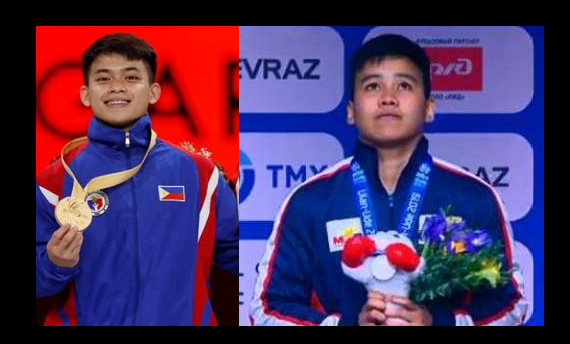
There’s a lot to celebrate about the triumphs of Carlos Yulo and Nesthy Petecio in the world stage very recently.

Image result for carlos yulo boxing gold russia


Yulo scored the more celebrated victory, becoming the first Filipino world champion in gymnastics, after ruling the floor exercise in the sport’s world championships in Germany.

But not to be overlooked is Petecio, who ruled her division in the women’s competition of the boxing world championships in Ulan-Ude, Russia, beating local bet Liudmila Vorontsove in a sport notorious for hometown bias.

Their gold medal feats, achieved barely 24 hours of each other, not only polished the country’s image in the international scene, they also helped shatter sports’ stubborn sex stereotypes.

Yulo, after all, triumphed in a sport generally seen as feminine, whose women champions are more often heralded as iconic than their male counterparts. Meanwhile, it is not a stretch to say that you’d be in the hundreds when counting down the most influential boxers in history before coming up with a woman’s name.

Yulo and Petecio got their just due from the government, with the Philippine Sports Commission (PSC) shelling out a cool million for each athlete as reward.

There is, however, the need to go beyond the cheering and the toasting when looking at the feats of Yulo and Petecio. Their victories in the world stage usher in new hope for the country as it hosts the Southeast Asian Games later this year and, more importantly, navigates its way to next year’s Summer Olympics in Tokyo.


Yulo and Petecio reinforce the change needed in our country’s national sports program, highlighting the need to funnel limited resources to focus sports.

PSC commissioner Ramon Fernandez is a staunch advocate of focus sports, disciplines where the Filipino athlete isn’t hamstrung by physical limitations like height and heft and can flourish on talent and hard work. Upon his appointment in 2016, Fernandez crafted a blueprint called “Change the Game,” which seeks to resuscitate Philippine sports.

 Among his plans was to focus on less popular sports where he believes the country has potential to succeed, such as open water swimming — for the Olympic event, known as marathon swimming —
given the country’s vast water bodies.

Sen. Manny Pacquiao also supports the idea of shifting focus to “weight-classed sports and other sports that does not give undue advantage to bigger and taller athletes.” Examples of weight-classed sports are boxing, taekwondo, judo, wrestling and weightlifting.

Filipino athletes can also excel in gymnastics, marathon, synchronized swimming, diving, cycling, shooting, archery, chess and other similar sports that require intelligence, balance, strength, flexibility, agility, coordination and endurance.


Friday, October 4, 2019

...the Russia's very important partner

Philippines a 'very important partner,'  Russia's Putin says

Franco Luna
Philstar.com
04 October 2019 


MANILA, Philippines – President Rodrigo Duterte and Russian President Vladimir Putin had an "amiable and fruitful" bilateral meeting on Thursday night, with the Russian leader calling the Philippines a "very important partner" in the region.
Duterte specifically mentioned last year's Navy visit which the statement touted as "an unprecedented goodwill visit never been done in previous governments."
ROBINSON NIÑAL JR./PRESIDENTIAL PHOTO

 Accordingt to a post on the Office of the Presidential Spokesperson's Facebook page, the meeting touched on what Duterte called the "remarkable progress" of the two countries' relations. 
BRP Tarlac (LD-601) arrived in Vladivostok on October 2 for a five-day goodwill visit to mark the country's first port call to Russia after two of the Russian Navy's own port calls to Manila last year.

“This [goodwill visit] is crucial to our friendly relations. (I am) glad that you are all here in our land and we are looking forward (to) future military exchanges and other activities,” commander of the Russian Pacific Fleet, Vice Admiral Sergie Avaleyants said of the arriving Philippine delegation.

“I would like to highlight that the Philippines is a very important partner of Russia in Asia," Putin said of their bilaterial relationship, calling their cooperation "constructive and mutually beneficial."

BRP Davao del Sur (LD-602) along with its 300-member contingent also sailed to Vladivostok on July 15 to participate in the naval parade celebration during the country's Navy Day as a follow-up to last year's visit.

"The Palace considers this meeting as one of the significant highlights of PRRD's official trip to Russia, and we look forward to the president's participation in the subsequent events that will be held both here in Sochi and in Moscow," presidential spokesperson Salvador Panelo said on the Facebook post. 

'Us against the world'


Both countries are members of the Asia-Pacific Economic Cooperation and have notably made strides in economic, security and space-research relations. 

“We are prepared [to develop] our partnership when it comes to countering terrorists,” Putin said, recalling how Duterte had to cut short his first trip to the country in 2017 amid the siege of Marawi City.

Further cooperation with Russian space agency Roscosmos is also slated for the future as Manila recently secured into law a consolidated Philippine Space Agency (PhilSA).

Panelo's statement noted that the progress in Philippines-Russia relations came "after [Duterte] sought the rebalancing of traditional partnerships and the deepening of relations with non-traditional partners at the onset of his Administration."

"[T]here are three of us against the world - China, Philippines and Russia. It's the only way," Duterte was quoted as saying in 2016 in China, marking a complete reversal in foreign policy since he took office. 

Similarly, the Philippine Navy sent its largest warship to China's Shandong province in April to participate in the Chinese Navy's 70th anniversary festivities. 

...the expanding PH ties

Duterte seeks deeper ties with latin America, Africa, Central Asia


GMA NEWS
04 October 2019


President Rodrigo Duterte on Thursday said he would seek deeper ties with countries in Latin America, Africa, and Central Asia in the last three years of his term.

Russia's President Vladimir Putin shakes hands with Philippine counterpart Rodrigo Duterte during their meeting in Sochi, Russia on October 3, 2019. Sputnik/Mikhail Klimentyev/Kremlin via Reuters

Duterte made the pledge in a speech at the forum of the Valdai Discussion Club in Sochi, Russia.
“In the remaining three years of my term, we will likewise expand the horizon of Philippine diplomacy by deepening our engagement in Latin America, Africa and Central Asia,” Duterte said.
“We will strengthen our economic ties with these regions, opening new markets and with it the free exchange of ideas, technology, and innovation.”
Duterte added: “For I want the Filipino people to broaden their worldwide view, to be enriched by the cultures and intellectual traditions of the old civilizations of the Americas, Africa, Central Asia, and the Middle East.”
Duterte has yet to embark on an official or state visit to a country in Latin America, Africa, and Central Asia. The President, however, went to Peru, a Latin American nation, to attend the Asia Pacific Economic Cooperation (APEC) Summit in 2016.
This year’s APEC Summit will be held in Chile, a neighboring country of Peru, in November.
The President also said that it was “high time that the Philippines look at the Middle East with fresh eyes going beyond oil and overseas Filipino workers.”
“As one of the fastest growing economies in the world, the Philippines will assume our twin responsibility of sustaining the growth of our people, while helping other developing countries in their own [journey] to progress,” he said.
He mentioned that for years, the foreign policy of the Philippines was tailored to that of the United States.
Duterte added that while he was not against the US or the Western world, he opted to embark on an independent foreign policy by reaching out to all nations that extend their hand of friendship to the Philippines with mutual respect and without preconditions.
“The principles of respect for state sovereignty, non-intervention, and peaceful resolution of disputes must be upheld at all times, otherwise the order unravels,” he said.
Duterte is set to leave Malacañang in June 2022. His foreign policy has so far been marked with increased engagements with Russia and China, two nations with economic and military rivalries with the Philippines’ treaty ally, the US.
He had also made historic visits to Israel and Jordan.
US President Donald Trump has a standing invitation for Duterte to visit Washington but the Filipino leader said in July last year that his packed schedule and dislike for long flights were the ones preventing him from accepting the invite. — MDM, GMA News

Friday, September 20, 2019

...the Russian filmfest awardees

Filipino films score trophies abroad


By: Regina Mae Parungao


There’s no stopping Filipino films from conquering big festivals abroad.

Louie Ignacio’s short feature “Ngiti Ni Nazareno” bagged the Jury Award at the 2019 Innuendo International Film Festival in Milan, Italy.

Starring child actor Kenken Nuyad, the synopsis of the 15-minute film reads: “Nazareno’s birthday falls on a very special day, as thousands of people move through the streets of Manila. When he comes back to his mother after the festival, with a piece of aluminum foil as a gift, of all things, it is touching and shaking at once.”

SCENES FROM ‘Ngiti Ni Nazareno’ ; ‘Musmos Na Sumibol Sa Gitna Ng Digma’

“Ngiti” was an entry to the 5th Sinag Maynila Film Festival, where it won 3rd place in the short film category. Iar Arondaing’s “Musmos Na Sumibol Sa Gubat ng Digma” took home the Best Cinematography Award for Mac Cosico at the Internacional de Cinema da Figueira da Foz-Film Art 2019 in Portugal.

It was originally released as part of the 2018 Cinemalaya Independent Film Festival, where it won the award for Best Sound in the full-length feature film category.

The movie is about an old man who recounts the coming-of-age tale of a young Muslim girl named Eshal (Junyka Sigrid Santarin). She is forced to hide in the forest with her infant brother Affan to escape the violence of the inter-familial dispute (locally called “Rido”) that has plagued her family. In the forest, he meets a boy named Farhan (JM Salvado) with whom she develops a friendship as they wait for adults to find them and bring them back to their families.

The film will be screened at the Baikal International Film Festival in Russia this month.

Thursday, September 19, 2019

...the winning lensman in Russia

Filipino lensman bags second place in int’l photo contest


Gabriela Baron
Manila Bulletin
17 September 2019


A Filipino photojournalist bagged second place in the Andrei Stenin International Press Photo Contest in the Top News, Singles category in Moscow, Russia recently. 

Basilio Sepe's "Baywatch". (Photo courtesy of Photojournalists' Center of the Philippines, Inc. / MANILA BULLETIN)
Basilio Sepe's "Baywatch" (Photo courtesy of Photojournalists' center of the Philippines, inc./Manila Bulletin

Basilio Sepe, a member of the Photojournalists’ Center of the Philippines (PCP), won the award with his photo capturing informal settlers scavenging recyclable materials in Navotas after Typhoon Karding hit in August 2018.

The photo contest was launched by Rossiya Segodnya under Russia Commission for the United Nations Educational, Scientific and Cultural Organization (UNESCO) to support young photographers and to popularize the challenges of modern photojournalism.

Photographers from 80 countries on five continents participated in the photo contest with over 6,000 works submitted.

The 24-year old photojournalist has previously won the IPA (International Photography Awards) Filipino “Photographer of the Year” last year for his work on the Philippines war on drugs.

Sepe was the former chief photographer of the Varsitarian, the official student publication of University of Santo Tomas (UST), and an alumnus of the Angkor Photo Workshop 2016.

He is currently an independent photographer based in Manila and has done multimedia works for local and international news agency.

Monday, August 26, 2019

...the Filipino artists at Katara show

Works by Filipino artist on show at Katara


Raynald C. Rivera
The Peninsula
26 August 2019

A diverse array of works by renowned international Filipino visual artist Frederick Epistola is on show at his solo exhibition titled Hugis at Kulay (Shapes and Hues) which launched at Katara Cultural Village yesterday.


Officially inaugurating the exhibition, Dr. Khalid bin Ibrahim Al Sulaiti, General Manager of Katara, lauded the level of cooperation between Katara and the Philippine Embassy in Doha which has resulted to a variety of artistic and cultural activities, including this exhibition which shows visitors the stunning features of the Philippines and its rich culture.
Al Sulaiti stressed Katara’s keenness to diversify its exhibitions and host various artistic experiences that would open different cultural windows.
In his remarks, Alan L Timbayan, Ambassador of the Philippines, underlined the importance of the exhibition showcasing its several paintings, collages and sculptures depicting the historical, social and cultural changes experienced by the Filipino society to expose many customs and traditions.
Timbayan also praised the great efforts made by Katara in building bridges of cooperation and convergence between cultures and peoples.
The ambassadors of Morocco, Canada, Thailand, Vietnam, Iraq and Russia were among those who attended the launch of the exhibition.
The centerpiece of the exhibition is a mixed media on wood piece, one of the artist’s latest works, dedicated to hardworking overseas Filipino workers around the world.
An abstract expressionist painter, collagist, sculptor and photography enthusiast, Epistola has produced wide ranging art pieces in different mediums from mixed media to clay to metal sculpture some of which are now part of permanent collections of museums and cultural institutions in various countries such as the US, Switzerland and Italy.
With a degree in Fine Arts Major in Visual Communications from the University of the Philippines, Epistola has been featured extensively in numerous solo and group exhibitions abroad such as Malaysia, Italy, Sweden and the US.
Apart from his art, Epistola is also known for his advocacies and innovation including initiating the Solar Power Initiative (SPIN) project which provides homes in depressed areas in the Philippines access to affordable and clean power through the use of solar energy.
The exhibition is open for public viewing from 10am to 10pm until August 30 at Gallery 2 of Katara Building 22.

Tuesday, December 2, 2014

...the Miss Earth 2014

Miss Philippines is Miss Earth 2014


An owner of a dance company in Cebu won 2014 Miss Earth during grand coronation night held at the University of the Philippines in Diliman, Quezon City Saturday night.


MissVenezuela Maira Alexandra Rodriguez; Miss Earth Water; Miss Earth 2014 Miss Philippines Jamie Herrel. Miss Russia Anastacia Westropp, Miss Earth Fire.Miss USA Andrea Neu, who won Miss Earth Air


Jamie Herrel, 20, owner of Mactan Dynamics Dance Company, bested 83 candidates from around the world to capture the Miss Earth crown. This is the second time that the Philippines won in the environment-driven beauty contest.


In 2008, the 14th Miss World Beauty Pageant saw Karla Henry, to the first Filipina to be crowned Miss Earth.

Other winners in this year’s contest were Miss USA Andrea Neu, who won Miss Earth Air; Miss
Venezuela Maira Alexandra Rodriguez; Miss Earth Water; and Miss Russia Anastacia Westropp, Miss Earth Fire.

Other candidates who finished in the Top 18 semi-finalists were representatives from Tahiti, Korea, Colombia, Scotland, Mongolia, Zambia, Brazil, Slovak Republic, Thailand, Egypt, Mexico and Spain.

Herrel, who stands 170 centimeters and measures 32-25-28 belongs to the Kagandahang Flores beauty camp, describes herself as hyper and adventurous.

She said “the Philippines is absolutely beautiful with their high mountains, blue beaches, their amazing sunsets, big waterfalls, the delicious food, the exotic animals, the hospitable people and so much more. It’s hard to promote one eco-tourism spot because the country itself is absolutely breath-taking and you can never get enough of the Philippines.”


Thursday, June 19, 2014

...the world's sexiest

Filipinas among world's 'sexiest' in dating poll


06/19/2014
 
 
MANILA -- With the country's recent dominance in beauty pageants, it is no wonder that Filipinas have been voted as one of world's most "sexiest" dating partners.

The survey, conducted by travel dating website MissTravel, listed Filipinas among the top five preferred nationalities to travel with ahead of the Spaniards and the Australians.

Topping the list are the Brazilians, followed by women from Russia, Colombia and the United Kingdom, while the Bulgarians, South Africans and the Canadians took the last three spots.

Male Filipinos, however, did not make the list ranking the opposite sex. Men from Australia are considered the sexiest travel partners, while the Italians and the British came in second and third, respectively.

Here is the full rankings published on Huffington Post:

The sexiest nationalities (women):


1. Brazilian
2. Russian
3. Colombian
4. British
5. Filipina
6. Spanish
7. Australian
8. Bulgarian
9. South African
10. Canadian

The sexiest nationalities (men):
1. Australian
2. Italian
3. British
4. Scottish
5. Spanish
6. American
7. Irish
8. Brazilian
9. Canadian
10. Dutch


Sunday, June 15, 2014

...the foreigners' new home

Why foreigners love calling Philippines home


06/13/2014
 
 
MANILA - It only took one random act of goodwill, a smile, and the positivity that Filipinos have to convince some foreigners that they have found a new home in the Philippines.

In a video uploaded online on Monday, a popular local fastfood chain sought to find out the answer to the question: "Bakit ang sarap maging Pilipino?"


Marcus Davis, an American singer, lauded Filipinos' spirit of volunteerism and reaching out "even if no one asked for it."

"When I arrived in the airport, I was a bit lost. Someone saw me and walked up to me and offered me to use their cellphone. While I was calling, he actually went and got me a drink," Davis said.

"I think that was one of my fondest memories because I've never showed up in a country and someone just walked up and offered to help you like that," he added.

Anna Rabstun-Baylosis, a Russian singer who now lives in the Philippines, said she finds her Filipino husband Erick very sweet, loving and caring.

"It's so personal here in the Philippines. There's no handshake, there's kissing and hugging. You really feel taken care of," she shared.

Bryan Gallinger, who volunteers for a local child welfare organization, said that he only had one thing in mind when he first arrived in the country -- business.

However, after "falling in love" with the positivity of the Filipinos, he decided to stay. "I can honestly say that I'm a better person by living here in the Philippines," he said.

As of writing, the video has already reached over 40,000 views on YouTube.

Most netizens who commented were touched by the glowing words the foreigners had for the Filipinos, but also took a chance to take a swipe at the current state of the country's government.


Thursday, May 1, 2014

...the PH climb in World Bank economic ranking

PH is 28th largest economy


05/01/2014
 
 
MANILA - The Philippines emerged as the world’s 28th largest economy in the International Comparison Program (ICP) 2011 study, results of which were released by Washington-based lender World Bank on Wednesday.

Taguig City, Metro Manila  Skyline
 
The ICP 2011 is a project undertaken through the authority of the United Nations Statistical Commission. It covered 199 economies and compared their shares to the global economy and expenditures. It also used the so-called purchasing-power parities (PPPs) in comparing the size and price levels of economies around the world.

The PPPs make it possible to compare gross domestic products (GDPs) of economies in real terms by removing the price-level differences among them.

“Six of the world’s 12 largest economies were in the middle-income category [based on the World Bank’s definition]. When combined, the 12 largest economies account for two-thirds of the world economy, and 59 percent of the world population,” the World Bank said.

The World Bank said the PPP-based world GDP amounted to $90.65 trillion in 2011, higher than the $70.29-trillion GDP measured in terms of exchange rates.

Data showed that the Philippines’s share in terms of global GDP was at 0.6 percent in PPP terms and 0.3 percent in terms of exchange rates. The 30 largest economies accounted for 84.1 percent of the global GDP in PPP terms.

The Philippines is one of the four Southeast Asia countries that made it to the 30 largest economies worldwide. Indonesia ranked 10th, followed by Thailand at 21st and Malaysia at 27th.

Globally, the world’s largest economy is the United States, with a share of 17.1 percent of global GDP. But China was a close second, with a share of 14.9 percent; with India a far third, with a share of 6.4 percent.

“The six largest middle-income economies—China, India, Russia, Brazil, Indonesia and Mexico—account for 32.3 percent of world GDP, whereas the six largest high-income economies—the United States, Japan, Germany, France, the United Kingdom and Italy—account for 32.9 percent,” the World Bank said.

“Asia and the Pacific, including China and India, accounts for 30 percent of world GDP; Eurostat-OECD 54 percent, Latin America 5.5 percent [excluding Mexico, which participates in the OECD; and Argentina, which did not participate in the ICP 2011]; and Africa and Western Asia about 4.5 percent each,” it added.

The Philippines also had a price-level index (PLI) of 53.2, which indicates it is not an expensive country but not the cheapest, either. The PLI is the ratio of a PPP to a corresponding exchange rate.

The World Bank said an index of over 100 means prices are higher than the world average; and 1 less than 100 means prices are relatively lower.

The most expensive economies in GDP terms are Switzerland, Norway, Bermuda, Australia and Denmark, with indices ranging from 210 to 185. The United States ranked 25th in the world, lower than most other high-income economies, including France, Germany, Japan and the United Kingdom.

But only 23 economies showed a PLI of 50 or below. The cheapest economies are Egypt, Pakistan, Myanmar, Ethiopia and Lao People’s Democratic Republic, with indices ranging from 35 to 40.

Meanwhile, even if the Philippines is one of the largest economies in the world and one of the “not so expensive” places to live globally, it is still not the richest in terms of GDP per capita.

The Philippines’s GDP per capita in 2011 in PPP terms was only at $5,772 and $2,379 in terms of exchange rates. These are below the average GDP per capita in Asia and the Pacific, at around $7,621 in PPP terms and $3,527 in terms of exchange rates.

The five economies with the highest GDP per capita are Qatar, with a GDP per capita in PPP terms at $146,521, followed by Macao with $115,441; Luxembourg, $88,670; Kuwait, $84,058; and Brunei Darussalam, $74,397.

In contrast, around eight economies have a GDP per capita of less than $1,000. These are Malawi with $973, followed by Mozambique, $951; Central African Republic, $897; Niger, $852; Burundi, $712; Congo, $655; Comoros, $610; and Liberia, $537.

“Eleven economies have more than $50,000 per capita, while they collectively account for less than 0.6 percent of the world’s population. The United States has the 12th-highest GDP per capita,” the World Bank said.

The ICP implementation was led and coordinated by the ICP Global Office, hosted by the World Bank, in partnership with regional agencies overseeing activities in eight geographic regions.

These are Africa, Asia and the Pacific, Commonwealth of Independent States, Latin America, the Caribbean, Western Asia, Pacific Islands, and the countries of the regular PPP program managed by the Statistical Office of the European Communities and the Organization for Economic Cooperation and Development.

Further, the World Bank explained that two “singleton” economies, Georgia and Iran, participated in bilateral exercises with partner economies, without being part of any regional comparisons.


Tuesday, April 22, 2014

...the PH might

Philippines ranks 37th in military power Index


Philippine Marines fire an M101 105 mm howitzer during artillery live-fire training April 12 at Crow Valley, Philippines. Cpl. Courtney G. White/U.S. Marine Corps
 
 
MANILA, Philippines — The Philippines ranked 37th of 106 countries listed in Global Firepower's 2014 Power Index, which measures each nation's military strength.

In a statement released this month, the data-collecting site ranked countries based on 50 factors, which determine the militaries' "potential conventional war-making capabilities across land, sea and air."

"The final ranking also incorporates values related to resources, finances and geography," Global Firepower explained. Sources are publicly available including the CIA factbook, online listings and media reports.

Nuclear capability and current political and military leadership, meanwhile, are not taken into account, purportedly to allow smaller, technologically-advanced, nations to compete with larger, lesser-developed ones.

The baseline or perfect value of the index is set at 0.0000, with the United States topping the list with a military power index of 0.2208. America is followed by Russia with 0.2355 and China with 0.2594.

The Philippines has a power index of 1.3042, higher by a notch than Malaysia's 1.3143 but lower than Asian neighbors such as Vietnam wilith 0.8962 and Taiwan with 0.7564.

The Philippines' relatively large population base contributed to the ranking, having 41 million fit for military service out of its total population of over 105 million.
 
About 220,000 Filipinos are active frontline personnel, while 430,000 are active reservists.

The country's tank value was among the factors included in the data, which notes the Philippines 531 Armored Fighting Vehicles and 270 Towed-Artillery. It does not, however, have any tanks, self-propelled guns or mutli-launch rocket systems.

Components of its air and naval power similarly figured in the index. Global Firepower said the Philippines has 145 aircrafts and 124 helicopters in service. It also has a naval strength of 120 with three frigates, 11 corvettes and 38 coastal defense crafts.

The researchers also considered the country's logistics including its labor force, merchant marine strength, major ports and terminals, roadways and railways, and serviceable airports.

"War is much a battle of logistics--moving man and machine from points all over--as is direct combat. Labor force reflects possible wartime strength," it said.

Oil resources were also taken into account as it is deemed the lifeblood of any fighting force. The Philippines itself produces only 12,000 oil barrels per day day, and consumes 315,000 oil barrels.

The country, however, has proven oil reserves of 138,500,000 oil barrels per day, a bulk of which is underutilized.

Defense budget, debt, foreign exchange and gold reserves as well as purchasing power parity were included.

Finally, the Philippines' geographical values were estimated as they figure into a "defensive-minded war," the researchers said. The country boasts a long coastline of 36,289 kilometers and waterways of 3,219 kilometers with no shared border.

The top 10 strongest global powers in the list are:

Screenshot from Global Firepower


Tuesday, April 1, 2014

...the Singaporean food experience

Singaporean writes book on Filipino food


By Tonette Orejas
Inquirer Central Luzon


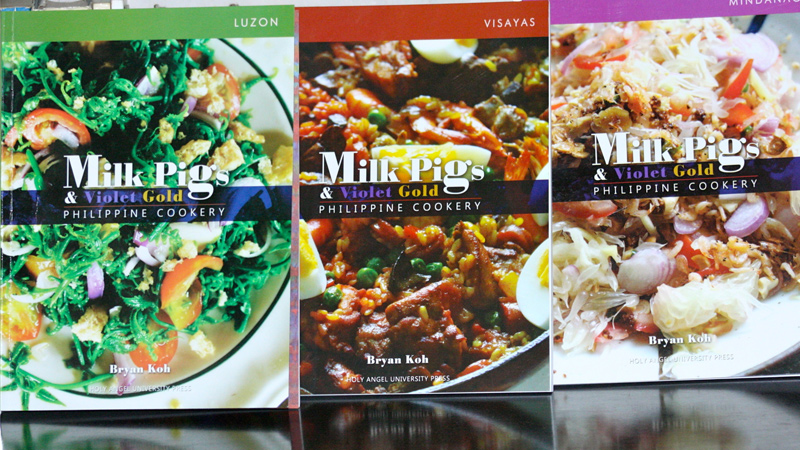
PHILIPPINE CUISINE AUTHOR. Singaporean Bryan Koh , 30, has written a three-volume book, “Milk Pig and Violet Gold (Philippine Cookery),” that is arranged according to the three main island groups Luzon, the Visayas and Mindanao. His inspiration in compiling recipes from Aparri town to Zamboanga City were his Filipino nannies who cooked “pinakbet,” “adobo,” “sinigang” and other Philippine dishes for his family when he was a young boy. PHOTOS BY E.I. REYMOND T. OREJAS/INQUIRER CENTRAL LUZON


ANGELES CITY, Philippines—On Saturday night when Singaporean Bryan Koh launched his book, “Milk Pigs and Violet Gold (Philippine Cookery),” Filipinos, including heritage-food chef Lilian Borromeo, were profuse with thanks.

Their gratitude to the 30-year-old Singaporean was well placed.

Koh must have been the first foreigner to produce a wide compilation of recipes painstakingly gathered from local cooks through meals in public markets, restaurants, carinderia (eateries), cafés and private kitchens from Aparri town in the northern tip of Luzon mainland to Zamboanga City in Mindanao.

Accompanying the recipes were good photographs, light accounts and a helpful glossary and index.

“It’s an authentic snapshot of Filipino cuisine,” Koh told the Inquirer, speaking of his three-volume book that is arranged according to the three main islands of Luzon, the Visayas and Mindanao.

It was copublished by Holy Angel University’s Center for Kapampangan Studies (CKS).

Koh remains humble even as his output of four years helps the world’s culinary community understand Filipino food.

“I did not want to come across as an authority. I’m on a journey. I’m just a scribe,” said Koh, a mathematics major from National University of Singapore, the same university where the idea for a Southeast Asian cookbook cropped up before he took up Master of Management in Hospitality at Cornell-Nanyang Institute.

The book’s title comes from what he calls two icons: the lechon de leche (roasted suckling pig) and ube (purple yam).

Inspired by nannies

Koh’s curiosity, later passion, for Filipino food was ignited by his Filipino nannies, Lydia Baltazar of La Union province and Evelyn Mendoza of Laguna province.

“This goes way back, from my yayas (nannies),” he said.

He was 2 years old when Baltazar worked for the Koh household beginning in 1986. She made adobo, sinigang and pinakbet weekly fares, he remembered.

Koh said Baltazar left in 1997 when she reached her 50s and moved to her relatives in Canada.

Mendoza cooked the same meals and introduced more fish dishes as she worked from 1997 until she left for Russia in 2009.

“They were two of the best cooks in the household. It’s a different experience when the cooking comes with care and love. I was fortunate to be exposed to such food,” Koh said.

He said he was grateful to his nannies because they allowed him to cook with them. “They gave me the foundations,” he said.

He honored them by relating how they cooked the family’s favorite meals.

It was when he took an assignment, as a freelance journalist, that he encountered The Farm, a place for wellness in San Benito in Lipa City in Batangas province, in 2008.


“After eating their raw food, I was completely riveted,” Koh said.

That was when he decided that he would write a Southeast Asian cookbook by starting with the Philippines “by learning more, going into the unexplored [cuisine] that few cookbooks pursued and understanding why Philippine food is misunderstood.”

Koh is a patient researcher, said retired advertising creative director Alex Castro.
‘Dinuguan’

“Two years ago, I got an e-mail signed ‘K. Bryan’ who asked for my mom’s recipe for tidtad (dinuguan or blood stew), which had two kinds of blood. He found this out from Ajinomoto’s book, ‘Pinoy Umami on Mekeni’s Meals,’” Castro said.

This, he said, began their friendship.

“[Koh] got around from the kindness of total strangers,” Castro said, pointing out that many Filipinos helped Koh complete his adventure.
 

Robby Tantingco, CKS executive director, said Koh documented the way the late Doreen Fernandez, Ana Besa and Claude Tayag did.

“Thanks for celebrating our cuisine,” Tantingco told Koh.

“He’s no more a stranger to the culinary delights of our country,” Castro said.