Showing posts with label Camarines Sur. Show all posts

Friday, November 30, 2012

...the world's biggest fashion show

Philippines holds world's biggest fashion show


11/30/2012
 

MANILA, Philippines -- A fashion show held Thursday night in Makati City became the Philippines' 8th Guinness world record this year.

Coinciding with the launch of "a new Glorietta," the popular Makati mall set out to beat the current world record for "Most People Modeling on a Catwalk" through a fashion show dubbed "Move to the Vibe of Glorietta."

"The current record is 1,967 people modeling on the catwalk, and that is now held in Turkey, and that was just broken in May this year," Kirsty Bennett, adjudicator of the Guinness Book of World Records, told ABS-CBN News moments before the Glorietta fashion show broke the world record.

More than 2,000 professional and amateur models gathered at the event held at the new Glorietta Palm Drive. They showcased brands such as Bench, Penshoppe, Stores Specialists Inc., Mango, Folded & Hung and Lacoste.

Models waiting for their turn (rappler.com)

 
Models lined up backstage (rappler.com)

While waiting for Bennett's announcement (rappler.com)

 A screen on stage showed the count of the individual models who walked the five ramps. By the end of the show, the participating models numbered 2,255, beating a record earlier set by Turkey.

OFFICIALLY AMAZING. The Philippines now holds the Guinness World Record for the most number of people walking on a catwalk. All photos by Edric Chen (rappler.com)

The event turned festive -- confetti showered those in attendance -- as Bennett officially conferred the record.

Victoty toast (rappler.com)

9 world records in 2012

Nine Guinness world records have been set in the Philippines in 2012 alone.

In March, Camarines Sur scored the world record for most number of mangroves planted in one hour. The world record for the most number of consecutive haircuts by a team was set in Valenzuela City in May.

The saltwater crocodile named Lolong, meanwhile, was named by Guinness as the largest of its kind in captivity in the world in July. In the same month, the religious organization Iglesia ni Cristo scored three Guinness records for the country -- the largest dental health check, the most number of blood pressure readings taken in eight hours, and the biggest number of blood glucose level tests conducted in eight hours.

Early this month, Filipino Herbert Chavez made his way to the 2013 edition of the Guinness Book of World Records for having the largest collection of Superman memorabilia.

On Thursday, another world record -- the Philippines' ninth this year -- was announced to have been set by Gina Gil Lacuna of Tagaytay City.

Her collection of 1,028 different puzzles was recognized by Guinness as being the world's largest.

Wednesday, June 27, 2012

...the new ant species

40 new ant species found in the Philippines

06/27/2012
One of the new ant species discovered on Mt. Isarog by researchers from Palawan State University and Harvard University. ZooKeys photo


Deforestation threatens unique ant species


MANILA, Philippines - Researchers have discovered 40 new ant species in the Philippines.

However, the discovery could be short-lived as deforestation and the destruction of the insect's natural habitat threaten ant species in the Philippines that are found nowhere else in the world, David General and his colleagues at the Palawan State University and Harvard University said in their paper published in ZooKeys science journal.

General told the OurAmazingPlanet website that the 40 new species of ants belong to 11 various genera (plural of genus), bringing the total number of genera to 92, which is twice the number of genera found in biodiversity-rich Madagascar.

One of the new species has a unique mouth and mandibles, which may have evolved for the ants to manipulate their environment, he added.

General and Harvard University's Gary Alpert said in their paper that there are 474 ant species and subspecies known from the Philippines and at least 100 other unidentified species based on museum specimens and recent collections.

"The total size of the ant fauna is no doubt much larger, almost certainly more than 1,000 species are present," they said.

The new ant species were discovered on Mt. Isarog, a dormant volcano in Camarines Sur province.

Guardian blogger GrrlScientist, an evolutionary biologist and ornithologist, told ABS-CBNNews.com on Wednesday about the discovery of the new ant species.

Biodiversity hotspot

In their paper, General and Alpert described the Philippines as a biodiversity hotspot.

"The Philippines is so ecologically diverse that it is very difficult to characterize the country in a single paragraph," they said, citing the different climate and weather systems in the country that change because of the country's varying topography.

"This complex blend of climatic diversity and opportunity for geographic isolation has likely led to high levels of endemism, a phenomenon that deserves much further exploration," they said.

In their paper, the scientists raised the specter of unique animal species being wiped out because of human activities.

"The Philippines is considered one of the hottest of the biodiversity hotspots because of the severe human pressure on its highly endemic native flora and fauna," they said.

"Time is running out for the the remaining primary forests. Despite decades of regulation and reforestation, forests continue to dwindle," they added.

The paper said all the privately reforested narra trees in their study site in 2003 and 2004 were poached by 2009, "wiping out 27 years of stewardship of the area."

"Even the stumps were removed. Forest destruction seems to go on unabated, exacerbated by new large-scale mining projects that seem to target the mineral resources under primary forests," it added.

Invasive species also threaten native ants, the researchers said.

They added that much is yet to be discovered by scientists undertaking ant research in the Philippines.

"The Philippine ant fauna is very poorly explored and records are few and spotty at best. A researcher can essentially choose a mountain among several hundred mountains, get the necessary permits and be the first one to study the ants on that mountain. However, that mountain may also be very disturbed or degraded, leaving only the tramp species that abound in disturbed habitats," the said.

"In addition to environmental damage, there is also an active communist insurgency and other serious security threats to researchers in the field. Other areas may harbor malaria mosquitoes and other serious health threats. Hence, local collaboration is quite necessary to minimize the risks of field work in the Philippines," they added.

Sunday, May 6, 2012

...the Certamen International de Juvenile grand winner

PHL children's choir wins grand prize in Spain tilt

May 6, 2012
GMA News
 
 
A Filipino children's choir brought honor to the country by winning the grand prize at the 18th Certamen Internacional de Juvenil de Habaneras 2012 in Spain.


The Department of Foreign Affairs (DFA) on Sunday said the Baao Children's Choir bested seven other finalists at the contest from April 27 to 29 in Torrevieja, Spain.

"Baao Children´s Choir is the first Asian choir to join the said competition. For 2012 alone, more than 40 choirs from around the world auditioned but only eight made it to the finals," it said.

During the competition, the choir, directed by Virgilio Briones, received a standing ovation for singing several songs, including:
- El Negro (obligatory Habanera competition song interpretation)
- Qué bonita es Cuba
- Dicen que se muere el mar (arranged by J. Madurga Oteiza)
- Scenes from the North (arranged by Fidel Calalang Jr.).

The Baao Children's Choir, established in 2003, is a community and church-based choir composed of children aged 11 to 18.

It holds annual auditions and training programs in different public and private schools in Baao town in Camarines Sur province. — LBG, GMA News

Tuesday, May 1, 2012

...the best beaches

The Philippines' best beaches and islands


If white sands aren't your thing, this isn't the country for you. Otherwise, bust out your flip-flops and follow us


With more than 7,000 islands edged by white sand buffering turquoise waters filled with some of the world's most diverse marine life, not everyone will agree on which one is best.

Disagree with our picks? Share your favorite Filipino island or beach in the comments box below.


1. El Nido, Palawan


Hollywood loves El Nido. Scenes for the upcoming final installment of the "Bourne" series were shot here. The island was also the setting of a pit stop on "The Amazing Race."


If Palawan is indeed "the last frontier" of the Philippines, as it's been dubbed, the coastal town of El Nido is the gateway to wild adventure.

Sure, it's got powder-fine beaches and gin-clear waters. But the views are what really sell the place.

Off the coast of El Nido are majestic karst limestone formations, empty lagoons, marble cliffs, prehistoric caves and waterfalls. All are easily explored.

Wet your fins: El Nido is a popular base for divers. Surrounding waters contain more than 50 species of coral, and attract whales, whale sharks, sea cows, manta rays, dolphins and endangered turtles.


2. Boracay, Aklan


Boracay
Sundowners, anyone? Just another perfect day in Boracay.


White Beach is the place most frequently associated with Boracay, the most popular holiday destination in the Philippines.

Its four-kilometer stretch welcomes everyone from beach bums to adventurers. At night, the beach comes alive with candle-lit sand castles, cozy restaurants and bars that stay open til dawn.

Away from White Beach are calmer resorts. There is a less boisterous side of Boracay and it still offers secluded strips of sand, coves, caves and cliffs.

Come with the wind: During the early months of the year, Boracay attracts hundreds of kite-boarders and windsurfers who compete in the International Funboard Cup. The rough waves and strong winds make Boracay an ideal destination for water sports fanatics.


3. Palaui Island, Cagayan Valley


Getting to Paluai's best beach is a challenge, but the rewards make the hassle worthwhile.


This isolated island is a natural secret -- only the brave and persevering bother to visit.

Glorious white sands surrounded by volcanic rocks on one side kiss blue-green waters on the other.

Snorkeling and diving brings you face to face with coral gardens and a rich marine reserve.

Palaui is all about raw beauty. But it takes some work to get there.

Treks should be blessed with clear blue skies, patient companions and trusted local guides.

Getting to the island's most prized stretch of beach requires battling thorny grass, muddy ground and a mangrove forest.

Uncharted Philippines offers a three-day Palaui Island Photography Tour for US$240 that includes transportation, accomodation, food and guides. Visit Unchartedphilippines.com

Sleep with stars: With no resorts or hotels, Palaui has only one real option -- camping under the stars. Otherwise, visitors are left to explore homestay options.


4. Panglao, Bohol


Just your average Panglao beach. Tired of looking at white sands yet? We're not even halfway through.


Once a sleepy island, Panglao is being roused by travelers in search of gorgeous beaches.

It’s a refuge for those who appreciate a diverse menu of aquatic attractions.

Options include dolphin watching, whale spotting, diving with barracudas, jackfish, sea snakes and brilliant coral formations.

Natural charms: In addition to its beaches, the island of Bohol is famous for its Chocolate Hills, an unusual rolling terrain of more than 1,000 dome-shaped hills. The hills are named for their brown color during dry season, when grass dries up.

The “world’s smallest primate” -- the endangered Philippine tarsier -- also inhabits the island.

Multi-language edge: Years ago, a number of foreigners came to Panglao on holiday and never bothered to leave. Locals picked up their languages to better converse with the tourists. In addition to English, in Panglao you have a good chance of meeting a local with a handy grasp of German, Swiss or Japanese.


5. Bantayan Island, Cebu


If the crowds of Boracay turn you off, Bantayan Island has luxury comforts minus the action.


Bantayan has remained relatively untouched by modern life, save for a smattering of foreigners who have taken up residence, sucked in by the island's white sands, aqua-colored waters and red-gold sunsets.

Beers are cold and cheap, townsfolk are hospitable and the dreary troubles of the outside world are easily forgotten.

Holy crowds: If you're after peace and quiet, don't plan a stay during the Holy Week before Easter. The island is crowded with Filipino travelers during this period, with rooms and services booked months in advance.

Simplicity is key: Action-packed it ain't. There are no five-star hotels, no malls, no fashion-forward shopping centers.


6. Caramoan, Camarines Sur


Krabi who? The Philippines might not bring in the tourist numbers of Thailand, but its beaches can easily go toe-to-toe with the kingdom's best.


Named after the local sea turtle, Caramoan is as scenic as it is secluded.

Stretches of white sand run between huge boulders and rock formations. Scuba divers, island hoppers and beach bums all converge here.

Complementing the beaches are caves, waterfalls, freshwater pools, underground streams and lagoons.

Adventure site: The "Survivor" reality show series and similar international programs have used Caramoan as a shooting location.

Despite the locale's popularity with TV production companies, there are enough beaches to go around for everyone.

Top view: Mountain climbers can trek to Mount Caglago’s summit and take in a terrific view of the Caramoan islands and islets. The mountain is a pilgrimage site for some, thanks to its gigantic statue of Our Lady of the Holy Rosary.


7. Samal, Davao


Off the coast of Samal lies Buena Vista Island, with its blindingly white beaches. Pretty lady sunbathing not guaranteed.


A burgeoning tourist destination, Samal is on a mission to get the word out on its 118-kilometer coastline of white sandy beaches.

You know the highlights: pristine waters, lush greens, rock formations, mangrove and coconut palms. Numerous resorts provide a range of choices for visitors, from luxurious resorts to backpacker options.

The vanishing island: This curious moniker is the nickname of Shanipaan Shoal, a tiny island that literally disappears from sight during high tide. The only thing visible at high water is a single, elevated cottage poking out of the sea.

Underwater garden: The vast Coral Garden Marine Park, a fish sanctuary filled with diverse marine life, makes Sambal a favorite among divers and snorkelers.


8. Siargao Islands, Surigao del Norte


Beyond this pier is Cloud 9, one of Siargao's most famous surf breaks.

Known as the top surfing island in the Philippines, Siargao is often overlooked as a beachcomber’s paradise.

There are breaks for beginner surfers, moderate ones and even pros looking for three-meter-high waves. For those with zero surf skills -- and no desire to acquire any -- there are also pristine beaches with milder waves, perfect for sunning and swimming.

Surf’s up: Ideal days for surfing are between mid-August and mid-December, when the swell is most consistent. Beginners should visit when waves are smaller, around April or May.


9. Great Santa Cruz Island, Zamboanga


Great Santa Cruz Island is famous for its pink corralline sand, the only beach of its kind in the Philippines.


On Great Santa Cruz Island, pulverized red coral washed up from the sea floor mixes with white sand to produce a pink-hued beach.

It’s a different version of perfection: the powdery beach competes with the blue and green shades of the sea. Some parts of the beach are lovely in their undeveloped state. There are signs of civilization -- souvenirs, nipa huts and restrooms.

Beach visits are limited to day trips, so you have to squeeze everything into a few hours: swim, sunbathe, snorkel, dive, even fish for your lunch. Just don’t mistake serenity for safety -- there’s a deep drop in the sea just meters from shore.

Armed guards: The island is just a boat ride away from the city proper, but getting there requires extra precautions, due to local threats.

Only those with a tourist permit from the Department of Tourism in Zamboanga City can visit. The permit fee includes armed security escorts.

Why the need for security? According to the Department of Tourism’s regional office, it's a preventative measure: “On the security situation in Zamboanga City, there are no militant or terroristic activities recently.

Although there were reported shooting incidents, these were intended to specific victims due to personal grudges. The city is very vibrant and relatively peaceful.”

As a precaution, check with your embassy for security threats before traveling.


10. Pagudpud, Ilocos Norte


Nothing says "I'm on vacation" like an Instagram of yourself sunning next to a giant windmill.

Along the northern tip of the island of Luzon sits the coastal town of Pagudpud. It’s a quiet, sleepy and rural community, with little overt commercialism.

Perhaps because it takes time and effort to reach Pagudpud, the wide and inviting beaches are usually empty, making them ideal for those who enjoy mixing solitude with sun, sand and surf.

A row of windmills down the coast from Pagudpud makes for a picturesque if not unusual backdrop for a Filipino beach.

Wind and waves: Parts of Pagudpud are exposed to winds that blow in from both the South China Sea and Pacific Ocean, making the waves ideal for surfers, especially from July to October.  Windsurfers and kiteboarders are starting to take notice of this northern getaway.

Tuesday, March 27, 2012

...the Island of 'Survivor'

‘Survivor’ USA shoots in Camarines Sur

03/27/2012 12:04
 
MANILA, Philippines - Camarines Sur Governor L-Ray Villafuerte confirmed that the U.S. version of the hit reality TV show "Survivor" is now being shot in Caramoan Islands in Camarines Sur.
 
"Actually may 'Survivor' doon. It's a really big production but I cannot (give more details) because I signed a confidentiality agreement. It's is being filmed right now and it's going to air in September," Villafuerte told abs-cbnNEWS.com on Tuesday.

He added that the shooting only started last week and will wrap up in August.

Contestants perform a challenge for a European version of "Survivor" shot in Caramoan, Camarines Sur. Photo from the Facebook page of Caramoan Paradise


According to speculations on the show's fan sites, the American version of "Survivor" with host Jeff Probst is shooting two seasons in the Philippines -- Seasons 25 and 26 -- back to back.

"Survivor" Season 24 is currently airing worldwide. The next season is expected to air in the fall.

Tourism boost

Villafuerte said the filming of the show will help local businesses in Caramoan.

"They are hiring 400 people. They pay them daily wage, they are hiring sasakyan, bangka at lahat ng local supplies doon ay binibili nila so grabe ang business in the locality," he said.

Tourism establishments are also using "Survivor" to market their products.

CK-Inn, in fact, mentioned the shoot on its website.

"The whole Matukad island will be closed during March as production team of USA is now in Caramoan preparing for the Survivor show," it announced on its website.

Tour operator Caramoan Paradise even offers packages that would give tourists a glimpse of the "Survivor" experience.

"Survivor USA is setting up now at Caramoan, shooting will start by March... get the chance to have a glimpse of it.... for only P1,300 2D1N (flat rate)... experience being a castaway," it said on its Facebook page.

Hollywood movie shoot

This is not the first time that Caramoan was chosen as shooting location for "Survivor."

Villafuerte said the French and Swedish versions of the reality TV show were also shot in Camarines Sur.

"Survivors France, Sweden, Belgium, India, Turkey, Serbia, Israel have filmed there as early as four years ago," he said.

But since the American version of "Survivor" attracts a global audience, countries are eager to host the show.

In Asia, the U.S. series has already shot in Australia, Thailand, Malaysia and China.

Aside from "Survivor," Villafuerte also bared that a Hollywood movie will also be shot in the province.

"Magkakaroon ng Hollywood film sa amin this year, I can not say again (what it is)," he said.

Friday, February 24, 2012

...the tree planters

Camarines Sur eyes new world record


Philippine Daily Inquirer
 
 
The province of Camarines Sur is aiming for another Guinness World Record by planting a million mangroves next month as it celebrates tomorrow a previous record of planting 500,000 trees in one hour.
 
The province, according to a statement from the office of Governor Luis Raymund Villafuerte, will celebrate the first Guinness Record tomorrow in rites coinciding with the first People Power Revolution on Edsa.

The massive tree planting program, called El Verde, was launched on February 23 last year with an objective to plant at least 12 million trees throughout the province by the end of 2012.

The effort paid off as a total of 585,566 trees were planted in multiple sites in an hour.

In the statement, Villafuerte said the province decided to celebrate El Verde’s first anniversary on the same day as the historic event on Edsa because El Verde is a form of people power.

“In the same way that the Filipino people gathered together in 1986 to restore democracy in our country, the people of Camarines Sur have banded together to work for the restoration of the ecological balance of our province,” the governor said.

Sunday, January 22, 2012

...the best Asian location (for movies)

Take Five : ‘Philippines best Asian location for movies’


By: Ramon Nocom - Contributor
Philippine Daily Inquirer


BRICCIO Santos, FDCP chair (file photo)


Not since “Apocalypse Now,” “Platoon” and “Born on the 4th of July” has the Philippines played host to a major Hollywood film production. So the current buzz surrounding the ongoing shoot of “The Bourne Legacy” in our country, along with the massive support being extended to the production company by the government, is understandable.

Taking the lead in orchestrating this landmark undertaking is the Film Development Council of the Philippines (FDCP), the foremost government agency for film that is tasked with, among other responsibilities, promoting our country as a location for foreign film productions.

FDCP chairman Briccio G. Santos, himself a filmmaker, fervently believes that the Philippines is the best and most competitive venue in Asia to shoot films.

Why do you think the Philippines was chosen as the shooting location for “Bourne Legacy”?
I would like to believe that the improving sociopolitical conditions in the country was a key factor. Our President is pushing for a more vigorous promotion of our country as a film location. Another factor is our ability to speak English. I must also note that Asia has, of late, become a big market for Hollywood films. In the future, we shall see a real convergence between market and content where more Western-based productions choose Asia not only as a location but also for its unique culture. This is happening now, with Asian characters being integrated more and more into storylines.

What incentives are being offered to foreign producers who wish to shoot here?
The financial incentives are minimal. However, an inter-government group has been convened to assist filmmakers and producers in getting permits, in bringing equipment and personnel in and out of the country, in the proper coordination of location shoots and other logistical requirements. The main advantage is our country itself and our people. Not only are we friendly and hospitable, but we can also be a reliable local partner for any film or TV production coming into the country, what with our pool of creative talents such as actors, technical staff and post-production facilities that are at par with international standards. The variety of scenery and the many locales they can choose from is also a plus.

What really makes our country an ideal filming location?
Because we are in the tropics, the scenery is very attractive for film locations. We are also a melting pot for diverse cultures where locations can be depicted as Asian, Hispanic, Western or even pre-war American. There is also now a growing willingness among local government units—such as in Camarines, Ilocos, Iloilo, Davao, and Cebu—to participate in our efforts by infusing subsidies and incentives like cheaper rates for hotels, transportation, and other amenities a production would require.

Are we expecting more foreign film projects coming to the Philippines in the near future?
The FDCP has received several inquiries from small European productions slated for this year. But we are optimistic that after “Bourne Legacy,” other productions will follow.
The project will definitely put us back on the map and we intend to put leverage into this great opportunity to actively promote our country as an ideal location for big film productions. We will do this through FDCP’s participation in major film marketing events in cities like Berlin, Tokyo, Cannes, Los Angeles, Pusan and Toronto. We will also coordinate with the Department of Tourism and Department of Foreign Affairs to see how we can work together to best promote the country as a film haven, which their respective offices abroad can help advertise. “Bourne Legacy,” once completed, will be seen potentially by hundreds of millions of viewers worldwide. This, in effect, will be the best advertising platform the country can ever hope to have, and we see in this a convergence of film and tourism, or even trade.
At present, we are still building the necessary institutions that would ultimately provide tangible assistance and incentives to these big productions. Our end goal is to professionalize this industry which would ultimately benefit our nation as a whole in job creation, tourism and in furthering the skills of our local filmmaking talents.

So the prospects are bright for the future of filming here in the Philippines?
I believe so, but we have to do more. One option we are currently studying is a rebate system from 10 to 15 percent of a foreign film company’s production cost. We also have to improve in areas such as more efficient equipment handling and excellent coordination with all agencies. Such measures are necessary, if we are to be highly successful in competing with other Asian countries.

Sunday, November 6, 2011

...the Canadian scholar

Canada awards premier scholarship to Filipina Researcher


Campus Beat
November 7, 2011
Manila Bulletin
 
 
MANILA, Philippines — Ledda Docot is the first ever Filipino to be awarded the prestigious Vanier Canada Graduate Scholarship (Vanier CGS).

Docot, one of the 42 international students who got the scholarship, was chosen for her research project on migration in her hometown Nabua,Camarines Sur, and its shifting trends and its impact on local culture.

The scholarship provides funding for Docot to pursue her doctoral studies in anthropology at the University of British Columbia (UBC) in Vancouver.

International students are nominated by Canadian institutions for a Vanier scholarship valued at Cad$ 50,000 per year for up to three years of study. The program supports 500 Canadian and international doctoral students annually at its full capacity.

Launched in 2009, the Vanier CGS Program aims to strengthen Canada’s ability to attract and retain the world’s top-tier doctoral students by providing successful candidates with significant freedom to pursue and complete doctoral studies.

Vanier scholars demonstrate leadership skills and a high standard of scholarly achievement in graduate studies in the fields of social sciences and humanities, natural sciences and engineering, and health.

The deadline for the 2012 Vanier Scholarship competition is on Nov. 9. Prospective students must course their applications through the Canadian university where they intend to study. For details, visit the Vanier Canada CGS website www.vanier.gc.ca

Sunday, October 30, 2011

...the Island of Survivors

How Caramoan wowed "Survivor India"


By ANSELMO V. TALAGTAG,JR
October 30,2011
Manila Bulletin


Matukad Island (Photo by TEDDY L. PELAEZ)


No other country can boast of that many returning productions. Such is the appeal of the islands of Caramoan.


MANILA, Philippines -- India is the latest country with the “Survivor” franchise to be dazzled by the beauty of the Caramoan islands.

Coming after France, Israel, Bulgaria, Serbia and the Strix group (made up of Norway, Holland, Belgium and Sweden), the Miditech group, the contracted entity of showbiz giant Star Plus India that owns the “Survivor” franchise, is already thinking of returning to Caramoan for its next series.

“We all fell in love with the place when we visited last March,” said Niret Alva, who together with brother, Nikhil, are the executive producers of Miditech. Nikhil is also a member of India’s National Tourism Promotions Board and is keen on promoting the Philippines to the Indian market, especially after being impressed with Caramoan.


How it all began

Caramoan’s popularity with the “Survivor” franchises in Europe started with the first French production in Palawan.

According to Nikolo Juvan of the Philippine Film Studios Incorporated (PFSI), the event handling company, the French wanted to film again in the Philippines but on a more secluded group of islands because El Nido, Palawan is crawling with tourists.

PFSI was then introduced to Caramoan by the son of Governor Lray Villafuerte; and after seeing the islands’ great potential, the French were informed and then it was their turn to be awed.

“There was, however, a condition by the French that housing facilities should be built on the main island to accommodate all its crew, contestants and VIPs. The French producers promised Gov. Villafuerte that they will do the series if there will be facilities built on the main island that was still bare at the time,” Juvan said.

The rest, of course, is history for Caramoan tourism. Facilities were built in what was to be called Gota Village. The French filmed the series, which was shown all over Europe, and the other franchise holders followed suit.

“The French series is the second largest franchise after the United States; so even if we didn’t make any marketing programs to follow it up, the inquiries came,” Juvan revealed.

The latest, of course, is India, whose producers, just midway in the competition, have already signified their intention of returning for their second season, expecting a big slice of the Indian viewers. The first season was a celebrity edition, with 10 celebrities competing against 10 other contestants from corporate to man-on-the-street.


An Economic Opportunity

The “Survivor” series provides jobs, not just for local labor, but also for Manila based personnel. Juvan revealed that every production brings with them a large international crew with various needs from technical expertise to manual labor. It has also provided an opportunity to showcase Filipino talent, skills and friendly disposition that leave a positive mark with each visiting country.

Juvan related that on the first edition of the Israeli series, the producers brought their own carpenters and labor force; but when they saw the ability of the Filipino counterparts, they didn’t bring any of their labor force the next time.

For their part, Miditech Indian managers are pleased with how the Filipino crew handle pressure. “ We usually shout and feel pressured, but the Filipinos just smile and tell us not to worry because things will be done on time.”


Win some, lose some

Juvan and some of his staff have been living in Gota Village for the last four years to handle all the various “Survivor” productions that have returned, time and again, to do their series in Caramoan.

“One thing that stands out is because the islands, numbering around 20 ( only seven are being used regularly because of proximity to Gota) have so much variety. They come in different shapes and sizes, different characters and topography. Some are forested, there’s one with a sandbar, some with rice fields that add a dramatic appeal,” he said.

Definitely an inviting description that will appeal to tourists, domestic and foreign; but, for now, Caramoan may be losing some tourism revenue because it is an exclusive playground of the “Survivor” franchise with Gota village and its nearby islands being opened to the public just two months in a year at least (November and December). But, it more than makes up for it by showing our country’s beautiful islands to the rest of the world.

No other country can boast of that many returning productions. Such is the appeal of the islands of Caramoan.

Monday, September 5, 2011

...the haven for endangered specie

Philippines creates haven for endangered duck

09/06/2011
 
MANILA, Philippines - The Philippines has created a protected area to save a species of endangered wild duck, with just 5,000 of the birds remaining, government documents released on Monday said.
 
The 27-hectare (67 acre) "wetland critical habitat" was set up for the Philippine duck, a species found only in the Philippines whose numbers have been falling due to hunting and habitat destruction, the documents said.

The environment department order created the protected area in the largely-agricultural Cabusao district in Camarines Sur.

"Ensure that existing ecosystems in the critical habitat are preserved and are kept in a condition that will support the perpetual existence of the Philippine duck," the department order instructed local authorities.

The Philippine duck, whose scientific name is "Anas luzonica," is rated as "vulnerable" by the conservation group BirdLife International, which estimated in 2005 that as few as 5,000 of them may be left.

On its website, BirdLife said the main threats to the species were excessive hunting and the use of its habitats for drainage and aquaculture -- the farming of aquatic organisms -- and excessive use of pesticides in rice farms.

The duck is described as having a blue-grey bill, a "rusty cinnamon" head and neck, and brown and grey feathers. It feeds on fish, shrimps, insects, rice and other plants.

Tuesday, August 16, 2011

...the farmer's son

Pinoy farmer's son qualifies for Ironman Hawaii

08/16/2011
 
MANILA, Philippines – Camarines Sur Gov. LRay Villafuerte said on Tuesday that the province will be sponsoring a 24-year-old farmer’s son in the prestigious Ironman Kona Hawaii, the “holy grail” event of triathlon.
 
Villafuerte said Camarines Sur’s very own, Benjamin Raña, was able to qualify for Ironman Kona after competing in Philippine Ironman 70.3 held in the province.

The Philippine Ironman 70.3, which was topped by Aussie triathlete Pete Jacobs, got 30 slots in Ironman Kona.

"Ito na ang pinakamarami at [ang] maganda this year ay nagkaroon tayo ng 30 slots for Kona," he said.
Villafuerte said most athletes aspire to join the Kona event. Participants can only join the competition by invitation or by qualifying.

“Isa na doon sa nag-qualify ang taga Camarines Sur na anak ng farmer. Si Benjamin Raña… makakarating siya ng Hawaii, iisponsoran natin,” he told Anthony Taberna in dzMM's Dos por Dos program.

A total 1,150 people from 38 countries joined Philippine Ironman 70.3. Villafuerte said even senior citizens, including a 67-year-old Japanese, joined the event.


Tuesday, June 28, 2011

...the new species explosion

Shark that inflates with water discovered in PHL deep


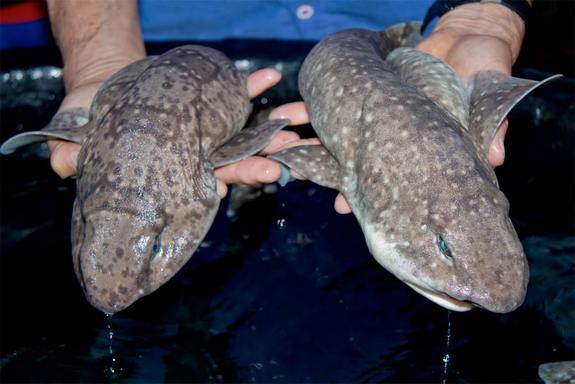
In the extreme deep of Philippine seas, a newly discovered shark species scares off its enemies with the sudden bulk created by filling its stomach with water.

This "inflatable" swell shark was only one of an estimated 300 new animal and plant species discovered by a historic scientific expedition in the Philippines organized by the California Academy of Sciences (CAS).

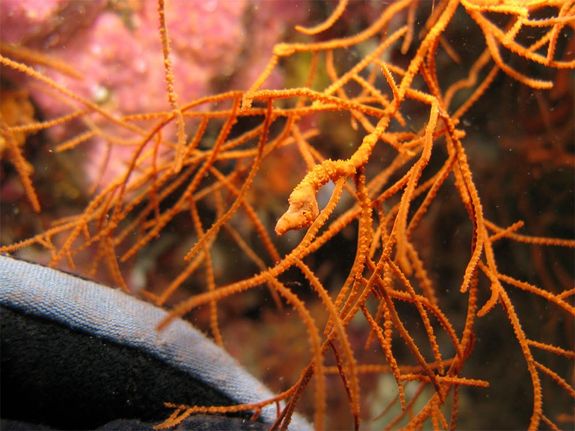
The other discoveries include a cicada with a “distinctive ‘laughing’ call," a starfish that only eats sunken driftwood, three lobster species that don’t carry shells on their backs and instead hide in sea crevices, a crab with needle-lined pincers and a worm-line pipefish that lives in colonies of soft coral.


This newly discovered shark species has a special technique for intimidating its enemies. Stephanie Stone, California Academy of Sciences
According to a statement released by the CAS Friday (Saturday in the Philippines), the deep-sea swell shark “inflates its stomach with water to bulk up and scare off other predators."

The 42-day 2011 Philippine Biodiversity Expedition took place from April to June.

Early this month, they announced the discovery of 75 possible new species endemic to the country.

The collected specimens will be subject to DNA sequencing in the next few months before they can be confirmed and described, according to the CAS website.


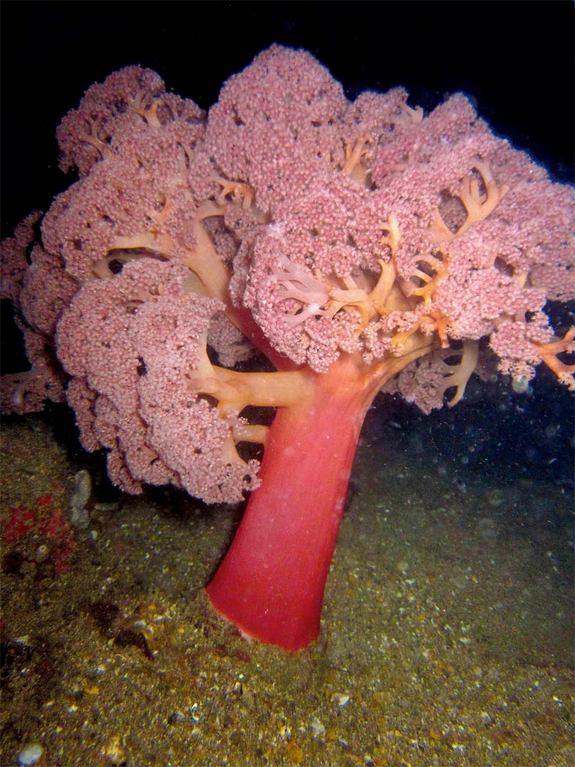
This tree-like soft coral is likely to be a new species of Umbeliulifera. Photo courtesy of California Academy of Sciences
Regardless of the results, Dr. Terrence Gosliner, Dean of Science and Research at the California Academy of Sciences and leader of the expedition, called the Philippines “the hottest of the hotspots for diverse and threatened life on Earth."

“We found new species during nearly every dive and hike as we surveyed the country’s reefs, rainforests, and the ocean floor," he added. The expedition is the biggest the CAS has conducted thus far, and is the most extensive in the Philippines.

“All of the new species add weight to the idea that the Philippines is a critically important haven for biodiversity, and that its waters likely house more species than any other marine environment on Earth," the statement read.

The expedition, which included scientists from the University of the Philippines, surveyed different areas in Luzon. While creating species lists and distribution maps for different plants, insects, reptiles, amphibians, fish and marine invertebrates, the team discovered over 300 species that were previously unknown to man.

Some of the species, the report noted, may have been undiscovered in the past because of their small size and the remoteness of their habitats.

The goblin spiders, sea slugs and barnacles the scientists found were only a few millimeters long, said the report. The scientists also braved ocean depths to find a species of snake eel and the steep upper slopes of Mt. Isarog in Camarines Sur to find a species of spikemoss, a primitive plant.


Possible new species from family Oxynaspididae. Photo courtesy of California Academy of Sciences
An estimated 90 percent of the planet’s species have yet to be discovered, the report noted, and those unknown species might just be found in places like the Philippines.

“In order to make smart decisions about how to conserve what is left of our planet’s biodiversity, we must make a concerted effort to rapidly increase our knowledge about these life forms and their distribution," said the report.

Unlike most expeditions, the 2011 Philippine Biodiversity Expedition team unveiled every possible new discovery as they made it.

A likely new species of Petalomera crab from the deep sea, discovered during a 2011 expedition to the Philippines.

Toxic MolluskCredit: Terry Gosliner, California Academy of Sciences. A new species of Phyllidia nudibranch (also known as a sea slug) that was discovered during the California Academy of Sciences' 2011 Philippine Biodiversity Expedition. These brightly colored mollusks don't need shells for protection — instead they produce powerful toxins to keep potential predators at bay.

A new species of Nembrotha nudibranch (also known as a sea slug) that was discovered during the California Academy of Sciences' 2011 Philippine Biodiversity Expedition

A new species of deep-water sea star in the family Caymanostellidae that digests wood.

This colorful worm is likely a new species of the genus Myrianida, which was found in coral rubble in the Philippines.
  
A potential new species of the urchin Echinothrix, with a distinctive red color that differentiates it from the more brownish, white-banded Echinothrix calamaris.


The team will also be presenting the results of their expedition to the San Francisco public on Thursday, June 30 during the Academy’s NightLife event (Friday morning in the Philippines). - HS, GMA News

Tuesday, May 31, 2011

..the local tourism

DOT eyes 32.1 mil Filipino travelers, 3 mil new jobs by 2016


Voltaire Domingo/NPPA Images

The Department of Tourism is optimistic that by 2016, there will be 32.1 million Filipino travelers, which is projected to generate 3 million new jobs in the tourism industry.

"Domestic tourism redistributes income to the countryside where there is higher incidence of poverty," said DOT secretary Alberto Lim, adding, "It is picking up not only because of low airfares but because the destinations are getting the interests of (younger travelers)."

In 2009, the National Statistics Office recorded 22.8 million Filipino travelers, with an average of two trips a year per person.  Out of the 22.8 million Filipinos, 7.8 million traveled for leisure trips and vacations.

The top destinations were Manila, Camarines Sur, Cebu, Davao City, Cagayan Valley, Baguio, Boracay, Zambales, Puerto Princesa, Bohol, Negros Oriental, Camiguin, and Ilocos Norte.

Early this year, the DOT launched the campaign, "Pilipinas, Tara Na!" to encourage Filipinos to explore the country.  Lim said that the campaign's focus areas were on culture, history, eco-tourism, nature and adventure.

In line with this, Smart Communications, DOT's partner in the campaign, identified destinations which attract the youth market such as Boracay, Baler, Batanes, Anawangin, Donsol, Camarines Sur, Mt. Pinatubo, Palawan, and Mt.Pulag.

Lim related that as part of the promotional campaign, Smart would provide information on the tourist destinations via short messaging service.