Showing posts with label Hawaii. Show all posts

Friday, October 11, 2019

...the Pinoy world surfing champ

Surfing: PH’s John Mark Tokong tops world competition in hometown Siargao


Kleeseter Macasero
ABS-CBN News
11 October 2019

GENERAL LUNA, Surigao del Norte—Local surfer John Mark Tokong on Wednesday afternoon won the 25th Siargao Cloud 9 International Surfing Cup in this town's world-renowned Cloud 9 surf break with only 45 seconds remaining in the heat.
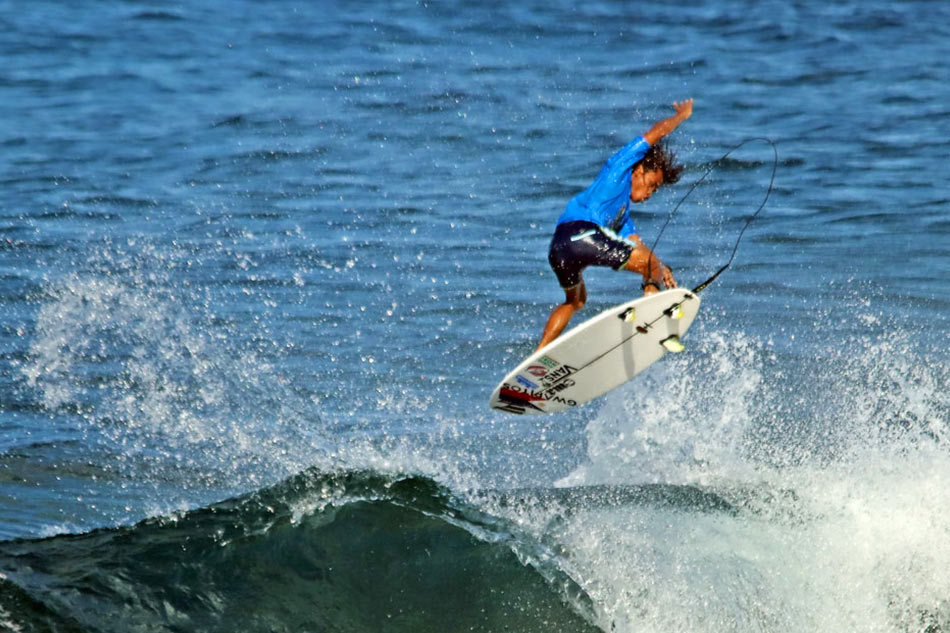
John Mark Tokong of the Philippines nails a 360 air reverse after a successful barrel over the renowned Cloud 9 break, keying his win during the finals of the 25th Siargao Cloud 9 International Surfing Cup in General Luna town, Surigao del Norte, on Wednesday. Kleester Macasero, ABS-CBN News
The Siargao competition is part of the World Surfing League (WSL) qualifying series.

Tokong's win is his second after the WSL-Asian Surfing Championship QS 1,500 Siargao International Surfing Cup in 2015, and it enabled him to redeem himself of a 2018 loss.

Tokong, 23, locally known as Marama, thrilled fans in a late comeback during the final heat of the competition, edging out a few points 16.80 to 16.75 against island surfer Noah Beschen from Hawaii, and besting 64 competitors from 13 countries to win. 

“I just had to stay calm and cool amid the pressure, I did not push or rushed, but of course I gave it my best,” Tokong said.

The victory came as a sweet redemption for Tokong after a loss to Skip McCullough of the US in the 2018 finals of the WSL Siargao Cloud 9 International Surfing Cup.

McCullough returned to Siargao, but he and Koby Oberholzer of South Africa were eliminated in Round 3 of the competition sending Tokong and Australian Thomas Cervi to the quarterfinals. 

In the quarterfinals, Tokong beat Indonesia’s Oney Anwar 18.75 to 9.50 points to give the Filipino surfer a lead toward the semifinals.

In the semifinals, Tokong gave his best run with a 9.50, 9.55, 8.60 and capping off with a 8.75 to top Tomas King of Costa Rica 19.05 to 15.30. 
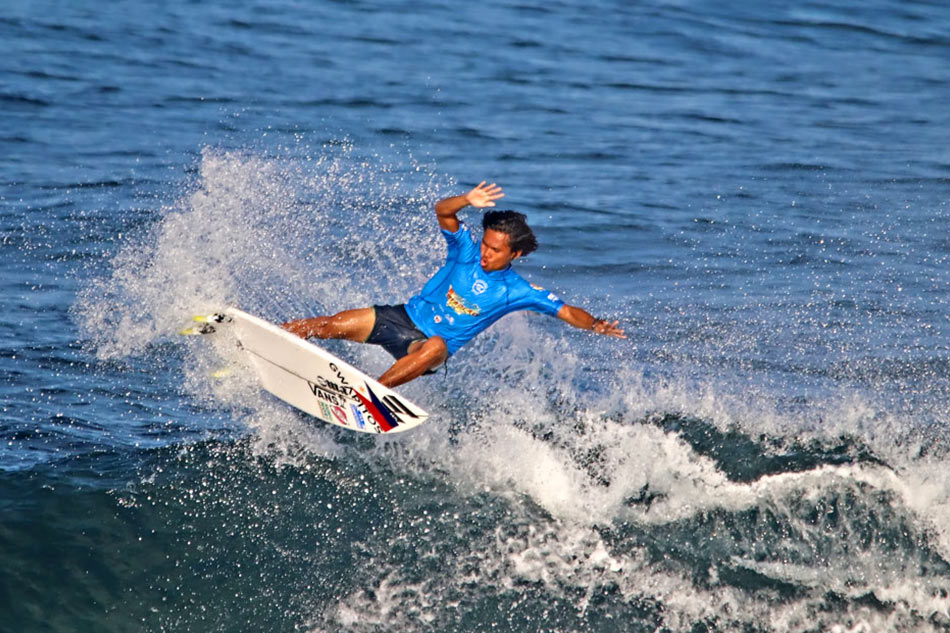
John Mark Tokong of the Philippines nails a 360 air reverse after a successful barrel over the renowned Cloud 9 break, keying his win during the finals of the 25th Siargao Cloud 9 International Surfing Cup in General Luna town, Surigao del Norte, on Wednesday. Kleester Macasero, ABS-CBN News
Spectacular finals

In the finals, even with a few good barrels, Tokong and Beschen began to look more to the air for scores as the classic Cloud 9 tubes became harder to find. The two went toe to toe, with Tokong holding the upper hand a majority of the 40-minute matchup.

Tokong's first two waves initially gave him the lead, 9.00 and 5.75 respectively, but Beschen made a series of quick rides on the wave giving him 8.15 and 6.25 and several more waves than what Tokong was giving.

With only two minutes left, Beschen took off on a set and lined up for a tube that never eventuated, forcing him to launch a massive straight air slob grab. Beschen landed the air smoothly and posted an 8.60 to take the lead and what looked to be his first qualifying series victory.

Then Tokong swung on a set wave with 45 seconds and pulled into a deep tube as the 20-second countdown started, came out and bashed the lip, posting a 7.80 and taking the final by just 0.05 of a point.

"In the end, I almost gave up because there was no time left and then when that wave came I knew exactly what I had to do,” Tokong said.

"Noah is such a crazy surfer, he does so many airs and is so good in these kinds of waves so it was sick to have a final with him. Being from Hawaii he's so good in the barrel and at hitting big sections so I loved surfing with him at Cloud 9.”

On its 25th year, the Cloud 9 competition is part of the WSL Asia sanctioned men’s qualifying series. This year, the WSL Asia has given the event a QS-1,500 category, giving surfers on the circuit a chance to gain additional QS points with a total $15,000 in prize money up for grabs.

“With the QS ranking, surfers are expecting more WQS points, giving competitors a chance to gain higher overall WQS ranking points. Everyone wants a slice of the points, the prize money is more of an added icing on the cake,” event director Gerry Degan said.

The winning surfer will bring home $5,000, while the second spot $3,000 and third spot $1,500.

In the first round kick-off on October 4, surfers from the Philippines, Australia, Argentina, Costa Rica, Ecuador, Hawaii, Japan, Indonesia, South Africa, Spain, Sweden, the US, and Venezuela advanced to Round 2 of the competition. By the third round, only Tokong was left of the 21 Filipino surfers who competed. 

The WSL plans to make the event bigger next year, as the Philippine Sports Commission promised to help organize and raise funds for the event in 2020. 

Tuesday, February 26, 2013

...the World's best beach hotels

World's best beach hotels

How to explain the difference a beachfront hotel makes? “More than unobstructed views, it’s about the freedom of not having to look both ways to cross the street before feeling sand between your toes,” says Matt Thomson, founder of Wavecation.com, a surfing-focused vacation rental company.
That’s the thrilling sense of liberation that comes with a stay at beachfront hotel properties like Lizard Island Resort in Australia, where your suite’s private terrace overlooks the Great Barrier Reef.

Travel + Leisure readers were so taken that they voted Lizard Island Resort the No. 3 best beach hotel in the world, as part of our annual World’s Best survey. The top-scoring hotels and resorts all offer a captivating beach setting, and their interiors range from minimalist to cozy and traditional.


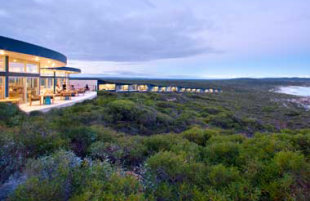
No. 1 Southern Ocean Lodge,


(Photo: Courtesy of Southern Ocean Lodge)

Contemporary in design and green in attitude, this lodge sits on a wildlife-rich island 30 minutes from Adelaide. Each of the 21 suites offers limestone floors, an outdoor terrace, and works by local artisans. (Air conditioning is unnecessary; the property was constructed to take advantage of natural weather patterns.) For a spectacular ocean view from a hand-carved granite bath, book the glass-walled Osprey Pavilion suite, which also features a private plunge spa and sunken lounge.


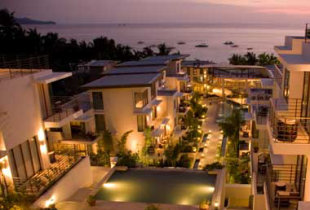
No. 2 Discovery Shores Boracay,


(Photo: Courtesy of Discovery Shores)


The 2 1/2-mile stretch known as White Beach is often singled out for having the softest sand in the world—and it’s the setting for this resort and its 88 suites (some with private Jacuzzis). The water’s fine, whether you want to take a dip in the infinity pool or Jet Ski on the Sibuyan Sea. For people-watching, head to the Sandbar, where bartenders stir up lychee- and mango-infused mojitos.


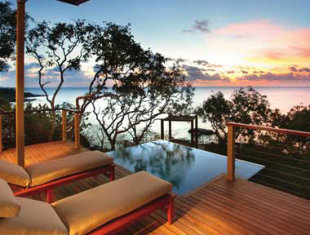
No. 3 Lizard Island Resort,
Great Barrier Reef, Australia


(Photo: Courtesy of Lizard Island Resort)


With 24 beaches fringing the Great Barrier Reef and accommodations for just 40 couples, Lizard Island is in a category all its own. Open-plan suites are done in royal blue, turquoise, and stark white to mimic the Coral Sea below, with hammocks and decks discreetly hidden from view. Count on sunset cruises, torchlit beach dinners, and complimentary gourmet picnic baskets. Book an Anchor Bay Suite for a direct pathway to the beach and daybed sunbathing from a personal veranda.


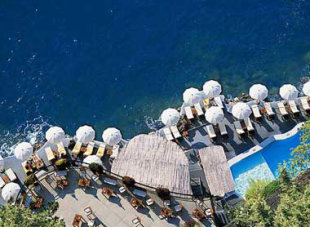
No. 4 Hotel Santa Caterina,
Amalfi, Italy


(Photo: Courtesy of Hotel Santa Caterina)


Now in its fourth generation of Gambardella family management, this 1904 looker still reigns in Belle Époque splendor. Rooms are spread across the main building, two villas, and a triplet of honeymoon cottages and decorated with local antiques. An elevator descends to a private beach, saltwater pool, fitness center, and thatched-roof pizzeria and fish grill. As you stroll through the secluded terraced gardens and citrus orchards, it’s obvious why Liz Taylor and Richard Burton chose to hide out here.


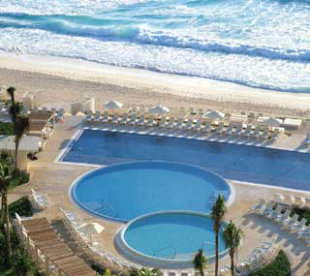
No. 5 Live Aqua,


(Photo: Courtesy of Live Aqua Cancun)


For those seeking a calmer Cancún all-inclusive experience, Live Aqua delivers. An outdoor contemplation area uses eucalyptus and lavender aromatherapy to help you de-stress during the day, while mini-Japanese sand garden boxes are left in the room at turndown. All 371 rooms are done in neutral tones and natural materials, so your eyes are drawn straight to the hotel’s eight varying-temperature swimming pools. Book a corner suite for your own private Jacuzzi.
 
 
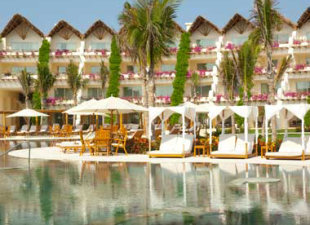
No. 6 Grand Velas All Suites & Spa Resort,


(Photo: Courtesy of Grand Velas)


Located inside an 80-acre mangrove and jungle reserve, this all-inclusive resort spreads across a white-sand beach and has an exotic, faraway feel even though it’s within an easy drive of Playa del Carmen. The resort features both adult-only and family areas, and the 89,000-square-foot spa is one of Mexico’s largest, with 40 treatment rooms, some with hydromassage tubs. After a day of pampering, dine at one of eight restaurants, including Sen Lin for Asian fusion and Cocina de Autor for molecular Mexican Caribbean cuisine.


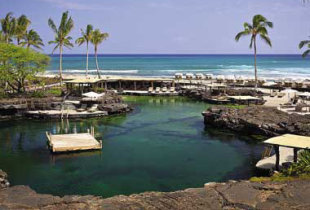
No. 7 Four Seasons Resort,
Hualalai, Big Island, Hawaii


,(Photo: Don Riddle / Courtesy of Four Seasons)


All 228 rooms at this gorgeous, isolated resort are situated in low-rise bungalows with ocean views. The grounds border the dramatic volcanic rock coast with seawater and freshwater swimming pools; an open-air spa teems with tropical vegetation; and yoga, personal training, and a full menu of fitness classes are offered daily. The private 7,100-square-foot oceanfront Jack Nicklaus signature golf course is carved into the underlying black lava, which serves as a occasional bunker.


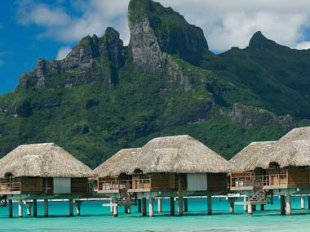
No. 8 Four Seasons Resort Bora Bora,
Bora-Bora, French Polynesia

,(Photo: John Sinal / Courtesy of Four Seasons)


Although overwater bungalows are the most enticing lodgings at the Four Seasons, the hotel has 107 different rooms scattered along the beachside and lagoon of its private motu (small islet). Walls are made of volcanic stone, and thatched-roofed spaces are decorated with teak and merbau-timber furnishings. All have extraordinary views over the turquoise-blue, coral-filled South Pacific, and some offer a glimpse of the majestic black-rock peaks of Mount Otemanu and Mount Pahia.


No. 9 Palazzo Avino,
Ravello, Italy


(Photo: Genivs Loci)


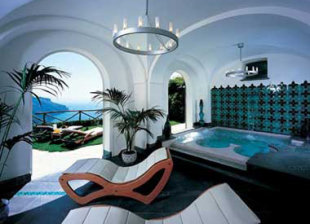
From the gym to the underwater window in the heated pool, sea views abound at this ornate 12th-century palazzo along the Amalfi Coast (formerly known as Palazzo Sasso). For the finest panoramas, head to the rooftop solarium with its twin Jacuzzis. The rooms are layered in 17th- through 19th-century antiques, Vietri tile floors, and Frette and Bulgari appointments. Chef Pino Lavarra’s eclectic/nouvelle-Italian cuisine has garnered two Michelin stars for Rossellinis Restaurant (open April-October).


 No. 10 Lodge at Doonbeg,
County Clare, Ireland


(Photo: Patrick O'Brien, Kiawah Partners)


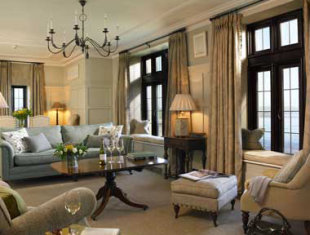
This grand manor is hidden along the Emerald Isle’s remote and rugged Atlantic shores. Inside, a peat-log fireplace illuminates the wood-beamed lobby; goose-feather duvets adorn guest beds; and teapots of piping Irish Breakfast tea are served each morning. Staff will arrange outings to County Clare attractions, from the Cliffs of Moher to St. Tola Goat Cheese farm and the world-renowned Burren Smokehouse. Fancy something more restful? Go for a seaweed scrub at the Clodagh-designed White Horse Spa.


Thursday, January 31, 2013

...the US Top Chef contender

Chef Sheldon Simeon On Top Chef - Bringing Filipino Dishes to the Mainstream

Sheldon Simeon. Photo from BravoTV.comIt was a Filipino foodie’s dream come true: watching Top Chef host Padma Lakshmi, judges Tom Colicchio, Gail Simmons and Emeril Lagasse with guest judge, famous New York restaurateur Danny Meyer slurping the tangy, tasty sinigang of Chef Sheldon Simeon and declaring it one of the two winners that week.

“It makes you sit up straight, in a good way,” remarked Meyer. Lakshmi praised Sheldon’s plating (in what many netizens consider as a backhanded compliment) and said, “This is traditionally not a pretty dish.” But they all agreed, the sinigang was one of the best two dishes they had that evening.

This paved the way for the show’s much-awaited Restaurant Wars episode, the one where the remaining chefs are divided into two teams to come up with a restaurant concept and open it within 48 hours.

This season in Seattle, they made a twist. They asked the cheftestants to cook one dish that would encapsulate the concept of the restaurant they want to open. The remaining eight competitors scurried away to plan and put their best dishes forward. Out of the eight, the judges would choose the two competing chefs based on their dishes, and the winning concepts would be transformed into working restaurants in just two days.

Hawaii-based chef Sheldon Simeon, a third-generation Filipino-American knew what he wanted. He wanted to honor his heritage. He had a name ready, URBANo, in honor of his grandfather who moved to Hawaii from Ilocos Sur in the Philippines when he was barely 17 years old.

Sheldon took a risk and cooked sinigang, a dish that is not as famous as the quintessential adobo. “I took the flavors of sinigang and applied techniques I learned in culinary school and through years of being a chef. I made a thin broth, and kept my vegetables crisp and retain their vibrant colors. I had a playful eye on the plate, treating it as a canvas,” he told the Asian Journal in an interview.

His gamble paid off.

The following week, Filipino dishes were front and center of the episode.

Sheldon’s team prepared five dishes in all - Kilawin, Balut, Miki noodles, Pork adobo and Halo halo. In two days, he was able to teach his two team-mates to cook these dishes, a mean feat in itself.

Despite having fewer members than the other team and despite the terrible service the judges received, Sheldon’s team was chosen as the winner. The judges showered him with compliments.

“The concept was good. You don’t get too much new Filipino restaurant concepts like that. Maybe we are waiting for a chef like you to do that,” Colicchio told him.

“So much intensity and flavor,” Food and Wine editor Gail Simmons remarked.

Meyer on the pork adobo exclaimed, “I couldn’t stop eating it, I just want to eat more.” Emeril agreed. Colicchio on the other hand preferred the miki noodles and said, “I love the texture of the tapioca pasta, it is the best tasting dish I’ve had tonight.”

And perhaps the best compliment of the evening: “You made your grandfather proud.”

Up Close with Chef Sheldon

In an exclusive interview with the Asian Journal, Chef Sheldon shared his journey to Top Chef and his thoughts on where Filipino cuisine is in America and where it is (and should be) going.

A big Top Chef fan, Sheldon has always wondered what it felt like to be on the show. Last year, he decided to find out. He went through the process and applied. Eventually, he got a call back and he went in for audition and a series of interviews. Weeks later, he got the call. He was in.

“It freaks me out when I see myself on television, for sure. It was an exciting experience,” he said laughing.

A father of three girls - Chloe, 6; Peyton, 3 and Quinn, 17 months (“I don’t have the recipe to make a boy,” he quipped) - Sheldon said the toughest part of being in the show was being away from his family and his daughters.

He was able to speak with the kids occasionally, lessening the impact of missing them.

“When they fall down, you want to be there to pick them up, or when they come home from school, you want to be there too,” he said. “They’re my life. Every single decision that I do is for them, for them to have a brighter future. I will continue to provide for them and let them have a better life.”

The sacrifice of being away from the kids was made slightly less painful by the wins he amassed during the show, from winning with his sinigang dish and taking it all away during Restaurant Wars (where he also won a brand new car).

Asked about winning Restaurant Wars with his URBANo concept, Sheldon paused, and remarked, “It was awesome. It was time for me to honor my grandfather who was an amazing man, pay homage to my culture and put Filipino food out there on national television.”

“I wanted to keep true to myself. Cooking is basically whatever had influenced me through my life. When they asked us to come up with a concept, I knew I’d come up with something very dear to my heart. Why not show my Filipino roots?” he added.

In essence, his efforts in the past have all led to this.

Sheldon grew up around a family that cooks a lot. His parents’ house was a gathering spot and whenever they were together, his dad or his grandfather would be cooking.

He didn’t think he’d develop a particular fondness for cooking.

“Throughout high school, I thought I was going to be an architect. I was into mechanical drawings, higher math classes. But in my senior year, I went to culinary school,” he said. “I enjoyed culinary school a lot, turned it into a passion and I’ve been cooking ever.” since.

Sheldon grew up in a traditionally big Filipino family in Hawaii. His mom has 11 brothers and sisters and his dad has nine siblings. “That’s a lot of cousins, a lot of aunts and uncles, a lot of family parties,” he added.

Currently, if there’s one thing he wants to do, it would have to be ‘go to the Philippines’. For the first time.

“I’ve never gone to the Philippines! I want to do that. That’s a goal of mine. I have tons of relatives there,” he exclaimed.

Sheldon also slightly regrets the fact that he doesn’t speak Filipino.

“Unfortunately, I don’t speak the language. My way of connecting to my roots is through food, that’s why I try to do it with all my heart,” he explained.

And he more than makes up for it.

Sheldon’s knowledge of Filipino cuisine was passed on to him by his grandfather, then his father, and their numerous relatives.

“Filipino cuisine via my parents, aunts and uncles, grandfather. That’s why I want to see where they come from,” he added. “My Dad’s side is from Ilocos Sur and mom’s side is from Ilocos Norte. My dad was born in Hawaii. My grandparents came to Hawaii when they were 17, 18 years old and they were among the first immigrants to work as plantation workers in the state.”

If you weren’t a chef, what would you be doing now?

Sheldon repeated the question, processing it thoroughly and came up with an exasperated answer.

“Shoot, I can’t even answer that,” he said, grappling for words. “This is what I do, I’ve always wanted to be a chef. I don’t know.”

Life After Top Chef

Many Top Chef alumni have found success after their stint in the show. Some of them have even opened their own restaurants, like Dale Talde, whose two restaurants in Brooklyn (Talde and Pork Slope) are both doing good. Last year’s winner, Fil-Am Paul Qui is also planning to open his own place in Austin.

For Sheldon, the opportunity to be a part of the show’s tenth season has given him new opportunities.
“The show has brought a lot of exposure so far and it is bringing some opportunities right now. I want to make the best decision for my family, I have three girls. Maybe I can open my own place in the future with my name on it,” he said. “I want to continue with Star Noodle for a while because I see a lot of potential there and I want for them to have a great opportunity as well.”

Asked about what it would take for URBANo to become a reality, Sheldon paused a bit and laughed, “An investor? If a great opportunity comes along and we get the right spot and the timing is correct for myself and my career, I can definitely see URBANo becoming a reality.”

For now, Chef Sheldon is enjoying juggling his time with his wife and three daughters in Hawaii and his work as executive chef at Star Noodle, undoubtedly the top two things in this world he is deeply passionate about: food and family.

Wednesday, January 16, 2013

...the first Pinay Senate Prez in Hawaii

Donna Kim makes history as first Filipina-American Hawaii Senate President


January 16, 2013


Hawaii Senate Vice President Donna Mercado Kim will make history on Thursday as she is installed as the first Filipina-American State Senate President.


Kim will be replacing Senator Shan Tsutsui who became the Lieutenant Governor of Hawaii.

“It is truly humbling and an honor to be chosen by my fellow Senate colleagues,” Kim told GMA News Online in an email.

Kim hopes to be a role model for Fil-Ams and to show “them that anything is possible if you put your heart and mind to it.”

As the Hawaii Senate President, Kim wants to focus on job creation and encouraging sustainability, especially because of Hawaii's location, being 2,390 miles from California.

She hopes to achieve food resiliency by "increasing food production and consumption of locally grown food."

She is also aiming for a more transparent government.

“One of the key things for me would be retooling government — how we make government smarter and more efficient,” she said, adding that she will continue to pursue accountability and transparency."

Political career

Kim started her political career when she was elected to the Hawaii State House of Representatives in 1982.

She won a special election in 1985 for the Honolulu City Council and served for five years.

Since then she has been chairing the Zoning Committee for 12 years and has been a strong voice for Hawaii for over 30 years.

Filipino heritage

Although not born in the Philippines, Kim thinks that the Fil-Am community is a strong, hard-working community.

“They value the importance of family, hard-work, and a sense of camaraderie. They are proud of both their Filipino and American heritages, and they continue to have strong ties to the Philippines,” she said.

She believes that Filipinos' strong work ethics significantly contributed to the nation’s flourishing economy.

Kim was raised in Kalihi, Hawaii. Her father is Korean while her mother is Spanish-Filipino-Portuguese.

She has visited the Philippines thrice and hopes to come to the country again.

She is also a fan of Filipino food and was taught by her mom recipes which were passed on from her grandfather.

“I enjoy many kinds of Filipino foods. I grew up eating all types of Filipino dishes – from pancit to adobo,” she said.

Philippine politics

As for the rise of American politicians with Filipino heritage, she says this is a testament that Filipinos could assimilate well with the American culture while maintaining their Filipino values.

“They are cognizant and grateful for the many opportunities America has to offer, and it is through those opportunities coupled with their incessant drive to attain the American Dream that cultivates this generation of Filipino-Americans,” she said.

If she had the chance to become a politician in the Philippines, Kim said she would address closing the economic gap between social classes.

“A discrepancy exists between the economic classes in which the gap between the wealthy and the poor is large,” she noted.

Kim also revealed her big plans to represent not just Hawaii in the near future.

“I do aspire to someday expand that representation in Washington D.C., and will consider seeking the US Senate Seat in 2014,” she said.

To aspiring politicians, Kim said they should join their local communities, volunteer for causes, and take a stand on issues they feel strongly about.

“Government is only as good as its people. So get involved in any way possible,” she said adding, “No matter what area in politics you wish to enter, keep a strong work ethic, cultivate a good and honest character, and never let your bad days cloud the sunny ones ahead.” - VVP, GMA News

Sunday, June 19, 2011

...the social network

34 Zamboanga kids go to school thanks to Facebook

06/19/2011

MANILA, Philippines - Thirty-four poor Christian and Muslim kids in Zamboanga City are now enrolled in school--thanks to Facebook and concerned netizens.

Aside from these kids, thousands more will be able to read books, use free computers and study in a private library.

Kris Library Scholar Sitti Marra Azib (standing), a 2nd year student at the Manicahan High School, teaches a friend computer basics at the Kristiyano-Islam Peace Library.

All these were made possible when Armand Dean Nocum, a former journalist and founder of the Kristiyano-Islam Peace Library (Kris), a non-government literacy advocacy group, made known his advocacy on the Internet through his Facebook page and the website of Kris Library [http://www.krislibrary.com] over a year ago.

As a result, friends and relatives from the US, Ireland, Canada, Hawaii and all over the country poured in $1,500 in donations.

The fund helped complete the Kris Peace Library serving 10 far-flung barangays and sitios in Zamboanga City since 2008.

It also helped build 3 restrooms and a computer and livelihood room in the library.

“It’s ironical that what Mark Elliot Zuckerberg intended to be a dating site has turned into a socially beneficial engine now powering the education of very poor children who would have dropped out of school had their sad plight not be known to kind-hearted individuals in Manila and far corners of the world – courtesy of Facebook and the Internet,” said Nocum.

“I realized the Internet has done more good than harm to our advocacy to bring education to poor kids in Mindanao. Recently, a donor I met through Facebook a donated P50,000 to enable us to put to school our first 5 college scholars and 29 high school and elementary school students in Zamboanga City," Nocum added.

According to Nocum, the weekly blow-by-blow photos of the construction work, the pictures of kids and their scanned writings of their appeal for help, and even photos of the kids as graduates with honors convinced donors that the group meant well.

Kris Library scholars Joan Pangan (left) and Kathleen Resola of Manicahan, Zamboanga City graduated with top honors, thanks to the help of netizens.

“Most of our donors gave books, chocolates, toys, printers and used computers for free use by the students because through the Internet, they believe they have already gotten high degree of closeness with our scholars,” said Nocum.

The Kris Library has expanded to Quezon City, thanks to the growing support of netizens.

It also committed to establish Kris Peace Libraries, or to donate books to victims of Typhoon Ondoy and fire victims in Montalban, the kids in Layag-Layag, Zamboanga City who swim to get to school, and poor kids in Tungawan, Zamboanga del Sur served by the Claretian Missionary Order.

“Amid all the computer hacking, robbery and other crimes done through the World Wide Web, there is love and caring in Facebook and in the Net,” added Nocum.