Showing posts with label Makati. Show all posts

Friday, October 25, 2019

...the World Smart Cities Awards finalist

Makati finalist in World Smart Cities Awards


Jan Arcilla 
Manila Times
25 October 2019


MAKATI City is the lone Philippine city that has been selected as a finalist for the World Smart Cities Awards, according to Mayor Mar-len Abigail Binay.
The award will be presented during the Smart City Expo World Congress to be held in Barcelona, Spain from November 19 to 21.
“Makati City is proud to have the opportunity to represent our country at a global event that features the best practices of smart cities around the world to promote the sustainable development of cities,” Binay said.
The city was selected as a finalist in the Innovative Idea category.
We have gladly accepted the invitation, and we look forward to having a meaningful exchange of ideas and experiences with fellow advocates of sustainability and inclusivity from other parts of the globe. We are also eager to explore avenues for international collaboration, particularly with cities, academic institutions and corporate leaders that share the vision of thriving, future-proof cities worldwide,” the mayor said.
Makati has been invited to present its project entry titled, “Use of technology to improve city disaster preparedness and communication to and from city citizens” during the awarding ceremony on November 20 at the Fira de Barcelona Gran Via, one of the largest fair venues in Europe.
The annual SmartCity Expo World Congress, which started in 2011, is the meeting point for companies, public sector, startups, academia and citizens working together for the sustainable development of cities.
With the theme, “Cities Made of Dreams,” this year’s congress will focus on five tracks — Digital Transformation, Urban Environment, Mobility, Governance and Finance, and Inclusive and Sharing Cities.
Last month, Binay presented the city’s disaster management plans and strategies at the International Urban Resilience Forum held in Seoul, South Korea.

Sunday, June 15, 2014

...the capital of fun

Manila depicted as ‘capital of fun’


Manila, the second largest city and capital of the Philippines, is the subject of the newest “It’s more Fun in the Philippines” campaign.


The thirty-three second video clip released by the Department of Tourism (DOT) defined Manila as the capital of fun. The video showcased several remarkable places in Manila such as the historical Luneta Park, Intramuros as a UNESCO World Heritage Site, and Makati which is the financial capital of the Philippines.

In its website, DOT said Makati is the perfect place to indulge in world-class cuisine while Intramuros is the best place for a cultural escapade.

The DOT said the new advertisement “shows Manila as the city that has everything under the sun.”

The country's tourism slogan “It’s more fun in the Philippines” was launched in 2012 to attract visitors to the country. The campaign hopes to enjoin the whole country in creating positive buzz around this tagline. The campaign has earlier featured Davao City and Boracay. (Mary Rose A. Hogaza)

Thursday, April 10, 2014

...the Asia's top models 2014

Filipina is 'Asia's Next Top Model' runner-up


04/10/2014
 
 
Jodilly PendrePhoto from the official website of 'Asia's Next Top Model'


MANILA - A Filipina finished runner-up in the second cycle of "Asia's Next Top Model," the Asia-Pacific edition of the hit reality show for aspiring models created by Tyra Banks.

Twenty-year-old Jodilly Pendre, who hails from Mandaluyong, placed second to Malaysia's Sheena Liam, who won a modeling contract with London-based Storm Model Management, among others, as "Asia's Next Top Model."

Another Filipina, 21-year-old Katarina Rodriguez from Makati, placed third among 16 contestants from 12 countries in Asia, including Singapore, Japan, China, and South Korea.

For their final challenge, the top three contenders had a photo shoot inspired by "kampong" or village life in Malaysia, where the entire season was held. They also took the runway in designs by Jonathan Liang, Ghea Panggabean, and Albert Andrada.


Sheena Liam. Photo from the official website of 'Asia's Next Top Model'


For the finale, the regular judges -- host Nadya Hutagalung, model Joey Mead King, photographer Mike Rosenthal, and movement coach Adam Williams -- were joined by Harber's Bazaar creative director Kenneth Goh and Asian supermodel Ling Tan.

Pendre, who broke down in tears after Liam was announced winner, dedicated her stint in "Asia's Next Top Model" to her mother.

"If I win this competition, my mom will be so proud of me," Pendre said in the earlier part of the show's 13th and final episode. "She actually doesn't know that this is for, because everything I do is for her."

"I want to give her a better future. I want to show her that she still has a daughter [who] is willing to give everything for her, because I really want to fulfill her dreams. I am not here for fame. I am here because I have a purpose to be here. I have a reason."


Katarina Rodriguez. Photo from the official website of 'Asia's Next Top Model'


While also emotional, Rodriguez considered her top-three finish an accomplishment, saying she never thought she would reach the end of the competition.

Get Flash Player
"I did reach the top three. I feel very accomplished," she said. "I didn't think I could ever make it this far. This is definitely farther than I ever could've dreamed of making."

Last year, the Philippines' Stephanie Retuya similarly placed second in the first-ever edition of "Asia's Next Top Model."

Apart from her modeling contract, 22-year-old Liam also took home a Subaru car, a contract as the 2014 endorser of haircare brand TRESemme, a chance to appear on the covers of Harper's Bazaar Singapore and Malaysia, and SGD 50,000.


Tuesday, March 11, 2014

...the Selfie Capital of the World

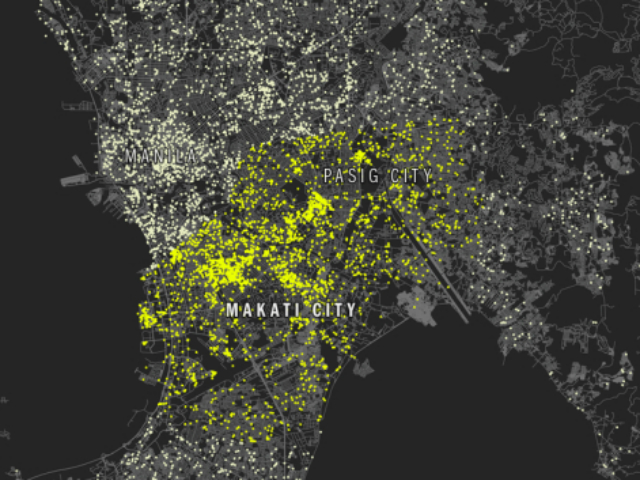
Makati, Pasig are 'Selfie Capital of the World' according to TIME study


March 11, 2014
 
 
TIME Magazine on March 11 (PHL time) released the results of an in-depth study of thousands of Instagram photos from around the world, showing that Makati City and Pasig City combined have the most people who take selfies per capita —the Selfie Capital of the World:


Source: TIME Magazine
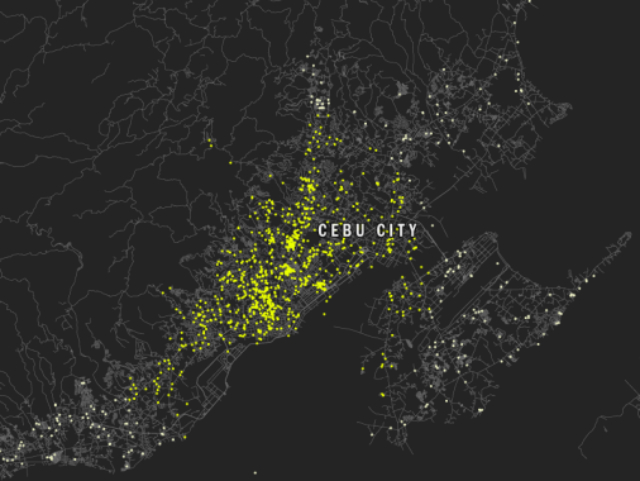
Cebu City also made the cut, ranking 9th in TIME's global rankings:

Source: TIME Magazine
TIME's Chris Wilson said that the researchers used Instagram's API to download data on five separate 24-hour periods, scouring the globe for all photos tagged "selfie" with geographic coordinates.
"For every city in the world of at least 250,000 residents, we then counted the number of selfies taken within 5 miles and divided by the population of that city," Wilson explained.
According to the study, the top ten 'selfie' cities worldwide are:
 
1. Makati City and Pasig City, Philippines: 258 selfie-takers per 100,000 people

2. Manhattan, NY, USA: 202 selfie-takers per 100,000 people

3. Miami, Fla., USA: 155 selfie-takers per 100,000 people

4. Anaheim and Santa Ana, Calif., USA: 147 selfie-takers per 100,000 people

5. Petaling Jaya, Malaysia: 141 selfie-takers per 100,000 people

6. Tel Aviv, Israel: 139 selfie-takers per 100,000 people

7. Manchester, England: 114 selfie-takers per 100,000 people

8. Milan, Italy: 108 selfie-takers per 100,000 people

9. Cebu City, Philippines: 99 selfie-takers per 100,000 people

10. George Town, Malaysia: 95 selfie-takers per 100,000 people

Wilson was cautious to outline the limitations of the study, and the researchers' careful attempts to address these limits. He pointed out that not all photos are unique selfies, and some supposed "selfies" aren't selfies at all.
 
 
"Not all photos tagged as 'selfie' are in fact selfies. Informal tests found that the vast majority of the photos were of a single person. We also made several attempts to find international versions of the word 'selfie,' but none of the suggested translations showed up in any appreciable volume," Wilson said.
 
"While the metric of 'people who take selfies per capita' is far from a perfect measure, it was far and away the most comprehensive means of comparing the 459 world cities that turned up at least 25 individual users in the database," he concluded. — GMA News


Wednesday, February 19, 2014

...the first US gold service Asian hotel

Filipino hotel brand is first in Asia to receive US ‘gold service’ certification
 
 
Sunstar.com
Wednesday, February 19, 2014

SEDA, AyalaLand Hotels and Resorts’ wholly-Filipino hotel brand, has been named a Certified “Gold Service” Property (CGSP) by the American Hotel and Lodging Educational Institute (AHLEI).

It is the first hotel brand in Asia to receive this honor. The institute is a globally respected name in the hospitality industry with 15,000 hotel members worldwide.

Ed Kastli, AHLEI vice president, disclosed that being named a CGSP is an affirmation that an establishment’s front-liners meet the highest international standard of service. “It recognizes an establishment’s commitment to quality, service and hospitality.”

Seda is the first hotel brand in Asia which trained its staff in the customer “Gold Service” program. Hotel front-liners in the chain’s three properties – namely Seda BGC, Seda Abreeza in Davao City and Seda Centrio in Cagayan de Oro city – passed the individual certification.

Wilma Estaura, Seda’s group director for human resources and accredited trainor of the AHLEI’s Customer Gold Service program identified the goal: “We want our front-liners to anticipate the needs of guests and respond by offering service that is over and above their duty. This is what it takes to delight a guest.” She cites the case of front desk officers going out of their way to requisition for towels to offer guests who had been drenched by a typhoon, delighting those affected when they entered the hotel.

Seda’s group general manager Andrea Mastellone explained that the hotels monitor the comments of their guests online as well as in their daily interactions with Seda employees.

Management recognizes guest commendations as key indicators of delightful service. In December 2013, for instance, a guest traveling with family remarked: “The number one thing I like about this place is the service. You feel special because everyone remembers your name.” A guest from Riverside, California said in a post the same month: “Everyone was amazing. They made massage appointments, opened doors, did my laundry and room service – all with a smile.”

Kastli stated: “To create a lasting impression on guests, we encourage the staff to provide ‘wow experiences.’” Estaura relates that staff are trained to intuitively read a guest’s needs while remaining authentic and sincere and to respond promptly and selflessly. This special training ensures that each Seda destination will be offering the guest a distinctive and unique experience – “not a cookie-cutter approach,” said Estaura.

“To put it another way, we want guests to remember the staff who made their stay special… Mario, the hotel car driver, who gave his passenger a quick overview of the Philippines on the way from the airport to the hotel; Ivy, who serves during breakfast and remains pleasant even when the restaurant is packed; and so on. After all, it’s people who make all the difference.”


Friday, January 10, 2014

...the Philippines, from an Indian author

It's time to visit Philippines
 

Vir Sanghvi,
Hindustan Times
January 10, 2014


"From our point of view, this is India’s loss. Because the Philippines is really the great secret Asian destination. "


Columnist Vir Sanghvi
Think about it: when there isn’t a typhoon or some natural calamity do we, in India, ever hear of the Philippines? Does it even cross our minds that it is a beautiful Asian destination that we could pick for our holidays?

The honest answer is: no. The Philippines is simply not part of the
Indian consciousness even though there is a prosperous and flourishing expatriate Indian community. When we do talk about the country it is in the context of Typhoon Yolanda, the Asian Development Bank, which is headquartered in Manila, and – if you are part of a certain generation – Imelda Marcos’ shoe collection.

At first I thought that the reason for our mental block when it came to the Philippines was the lack of direct flights. But that makes no sense: there are no direct flights to Bali from India either and that does not stop thousands of Indians from wanting to go there. Nor can distance be the issue. It takes less time to get to Manila from Delhi than it does to get to say, Hong Kong.

http://www.hindustantimes.com/Images/popup/2014/1/RudeFoodAsianHolidays.jpg

The only explanation I can find is that the Philippines has never looked like a part of South East Asia. In many ways, it is a quasi-European society with strong Spanish roots and it tends to look to America for most of its reference points. The Asian tourists it does get tend to be wealthy Japanese and newly rich Chinese.

From our point of view, this is India’s loss. Because the Philippines is really the great secret Asian destination. There are many, many reasons to go there. Firstly, it is nothing like Singapore, Thailand, Malaysia, Hong Kong and Bali. Because of the years of Spanish colonisation, the temperament of the Filipinos is more Latin and less East Asian. They are a happy, laid-back people who like to live it up with grand weddings that rival Punjabi weddings in their exuberance and music runs through their veins.Everybody seems to sing in the Philippines.

Then, there’s the English factor. The story goes that when the Americans moved into the Philippines, they sent teachers to every village to make sure that the people learned English and forgot their Spanish. Today, Filipinos laugh at the futility of this American endeavour. Americans may have stamped out Spanish from a faraway part of Asia but there are at least a dozen states in the US where much of the population speaks more Spanish than English.


Just like home: in the Philippines, big cities are not plush and glamorous, like say, Singapore or Shanghai. In many ways, it is just like India.
 

For Indians, the advantage is that language is never an issue. Shop assistants will speak English as well as we do and if you ever get lost, you can ask anybody on the street for directions and conduct a complex conversation in it.

And there’s a third advantage: price. Ever since the rupee became, basically, worthless, Indians have felt even poorer everywhere in the world. Forget about Europe where bell boys now expect tips of Rs. 800 to Rs. 1,000, even such Asian destinations as Singapore and Hong Kong now seem prohibitively expensive.

In the Philippines, however your money goes a long way. The peso is around 42 or so to the dollar (roughly where the rupee was in the last decade) and each peso buys far more, in terms of food, taxis, shopping or hotels than the rupee does in India.

Those are the arguments for going to the Philippines. The argument against going is that the big cities are not plush and glamorous like say, Shanghai or Singapore. You will see poverty and beggars will come up to your car. In many ways, it is just like India and each time I’ve gone to Manila, it has reminded me of Bombay. This is fine by me because I love Bombay. But if you want glitz and glamour, go to New York instead.

Just like India, there are enclaves within Manila that seem modern and First World. On my first trip to the city, I was at the grand old Manila Hotel where General Douglas MacArthur stayed in the last century and which has neither been cleaned nor renovated since he left. (Okay, that’s a bit harsh. But think of the old Great Eastern in Calcutta before the Lalit group took it over. It has that kind of dubious charm.)


Makati is a new, modern part of Manila (it's Gurgaon or Bandra-Kurla Complex, if you want Indian parallel). It is full of tall office buildings, malls and top hotels

Makati is a new, modern part of Manila (it’s Gurgaon or Bandra-Kurla Complex if you want an Indian parallel). It is full of tall office buildings, malls and top hotels (the Mandarin Oriental, the Dusit Thani, the Fairmont etc). So it is vaguely reminiscent of Singapore. I stayed at the Shangri-La, usually regarded as the best hotel in Manila, and thought that the food and service were exceptional.

But Manila was a transit halt. I was on my way to Boracay which you’ve probably never heard of, but is, in fact, the top resort destination in the Philippines. It is a 50-minutes flight from Manila and then you take a speedboat to your hotel. Mine was the Shangri-La Boracay Resort which is managed by Amit Oberoi, who many Delhiwallas will remember fondly from his stint at the Imperial during its glory days. I knew very little about Boracay before I got there but the island is a sort of cleaner, more upmarket version of Goa: same lazy Latin feel but no drug-dealers or sleaze. The Shangri-La has two beaches, one of which is entirely private, and many of the villas open directly on to the sea. The sand is unusual, a soft white powder that crinkles gently beneath your feet as you walk to the sea.

The hotel itself is large (over 200 rooms) and caters to all tastes with huge standard rooms on a cliff, giant suites and 36 villas, some on the beach and some high above the ground, touching the trees. (They call them treetop villas, naturally).

Unlike most Far Eastern resorts I’ve been to, at least half the guests were wealthy Filipinos, many of whom had come here again and again, hosted weddings here and had their favourite villas. It is the sort of relationship that many Indians have with Goa except that this resort is much nicer than any Goa hotel I can think of.

There are many, many restaurants and bars on Boracay, all serving good food. There are lots of hotel options as well. But I liked the Shangri-La resort because it had an air of peace and quiet about it. Most days, I stayed in my villa or sat in the garden, relaxing and unwinding. In many ways I had the best of all worlds: a hotel where everybody speaks perfect English and yet, there is no chance of running into anyone who knows you. (There were no Indian guests at the resort.)

You can, if you like, engage in water-based activities like diving, snorkelling, jet-skiing etc, and because the landscape is so beautiful, it is advisable to rent a boat and cruise the sea around the island. But as you may have guessed, I chose to do none of these things and just enjoyed the solitude.

I asked Amit if they got many Indian guests. He said around two or three couples a season was the norm. Most Indians regard Boracay as being too far. You need to change planes to get to Manila and then there’s another short plane ride. On the other hand, you can bypass Manila completely and fly to Boracay directly from Singapore (a three-hour flight), which makes the resort as accessible as your average Bali hotel. But I don’t think enough Indians have worked out that this is even possible. And most don’t think of the Philippines as an option anyway.

The Shangri-La is the top resort in the country so it costs around Rs. 18,000 per night which puts it in the same range as top Bali hotels or even the better properties in Goa. Amit concedes that some Thai beach resorts can be cheaper but his position is that Boracay is not for everyone. It is the sort of place you go to once you’ve done Phuket, Koh Samui or Nusa Dua. It is targeted at the experienced traveller not the novice.


The Shangri-La Resort had an air of peace and quiet about it. Most days, I stayed in my villa or sat in the garden, relaxing and unwinding.


I don’t know how many Indians will head for Boracay (though I imagine that it would be a great location for a rich Indian wedding now that the usual places have been done) but I do think that you should include the Philippines in any future holiday plans you may make. You don’t have to stay at top-end hotels like the Shangri-La, as wonderful as they are: there’s a fair range of mid-priced accommodation.

But once you’ve got your hotel out of the way, there’s nothing else that’s very expensive, not the food, not the bars, not the shopping and as for the music, well you always get that for free in the Philippines.

Wednesday, September 4, 2013

...the world's first Forbes Tower

Philippines chosen site of Forbes property move


September 4, 2013


THE PUBLISHER of Forbes magazine and forbes.com has chosen the Philippines as the site for its foray into property development, underscoring growing interest in the country often tagged as Asia’s newest “bright spot.”


Forbes Media LLC has partnered with locally listed developer Century Properties Group, Inc. to build the first Forbes Media Tower in Makati City, both companies said in joint statement yesterday.

The first Forbes-branded tower, which will rise in a mixed-use development called “Century City,” is expected to be part of “a network of Forbes Media Towers around the world,” the statement read.

Construction could begin next year and finish in 2017, according to Century Properties’ corporate communications department.

Forbes Media Tower will have approximately 60,000 square meters of premium office space, featuring event space, restaurants, fitness center and exhibition facilities. Project details were not immediately available.

The statement quoted Mike Perlis, president and chief executive officer (CEO) of Forbes Media, as describing the Philippines as a “perfect location” for this foray.

“We’re very pleased to be collaborating with Century Properties for the first Forbes Media Tower as we extend our brand into the global real estate development market,” Mr. Perlis said.

“The Philippines, with its rapidly growing market and strong relations with the US, is the perfect location to launch this effort.”

Another Forbes official said the tower kick-starts Forbes Media’s expansion into the real estate space.

“This is a historic and groundbreaking moment for us. It is just the start of our plan for an expansion into Forbes real estate development projects around the world,” said Miguel Forbes, president of Worldwide Development of Forbes Media, who is spearheading this initiative.

“We will continue to explore new Forbes Media Tower opportunities globally and couldn’t be more excited to pursue this new and potentially transformative initiative.”

The same statement quoted Century Properties CEO Jose E. B. Antonio as saying: “It is also an honor for us that Forbes has recognized the Philippines as one of Asia’s bright spots and showed its confidence by choosing Makati, Metro Manila as the first site of its landmark business tower.”

Century Properties is known for its partnership with international brands and icons.

The company is building a 56-storey Trump Tower Manila in Century City, which is scheduled for turnover in 2016.

It had also tapped socialite Paris Hilton to “design” the beach club component of the nine-building Azure Urban Resorts Residences in Parañaque City, for which turnover will start before yearend.

Century Properties’ net income grew 6.57% to P1.06 billion in the first half from P944.5 million in the same six months last year. Revenues climbed 7.09% to P5.29 billion from P4.94 billion, while cost and expenses increased by 4.11% to P3.80 billion from P3.65 billion.

Its shares gained 12 centavos or 9.76% to close P1.35 apiece yesterday from a finish of P1.23 each last Tuesday. -- Cliff Harvey C. Venzon/Business World Online


Friday, June 21, 2013

...the preferred BPO site

'PH still among preferred sites for BPOs'


06/21/2013
 
 
MANILA -- The Philippines remains among the preferred sites for business process outsourcing (BPO), according to a leading US-based BPO and information technology (IT) company.
 
Shore Solutions Inc., one of the bigger players in the BPO business, said revenues from the BPO industry in the Philippines is expected to hit $16 billion this year, or almost 20 percent higher than the $13.4 billion last year.

It noted that with increasing demand from prospective investors and subscribers, the industry would need at least 1.3 million direct hires by 2016 from 720,000 last year.

“That should require 516,000 additional seats, and some 2.5 million square meters of additional office space,” Darcey Lalonde, Asia chief executive officer of Shore Solutions said in a forum yesterday.

The industry employed over 720,000 in 2012, with another 1.6 million indirectly.

Expansion has already been noted in the key urban centers outside Metro Manila such as Cebu and Davao.

In Metro Manila, the major BPO centers are in Makati, Quezon City, Manila, Taguig and Mandaluyong.

Lalonde said that the next or third wave of BPOs is targeting key cities in Laguna, Batangas and Bacolod.

However, he said government should consider anew opening up to a limited extent or to select sectors, ownership of land to foreign entities.

Sunday, April 21, 2013

...the place of action

Expats: PH is where the action is

By Alena Mae S. Flores
Apr. 21, 2013


”There’s nowhere else in this industry like anywhere else in the world, not China, India, US. This is where the action is. This is the forefront of all innovation, and change and growth and excitement if this is your chosen industry,” - Jason Lock, Transcom Senior Vice President for North America and Asia


Jason Lock
Jason Lock
 
 
Two foreign executives of Transcom, a leading global outsourcing service provider, are bullish about the growth of the business process outsourcing industry in the Philippines, which has created a new middle class.

New Zealand native and Transcom executive Jason Lock has been in the Philippines for five years and says he has grown to love the country like his own. Lock, who holds the position of senior vice president for Transcom’s client delivery for North America and Asia, says his intention was to work for only two years in the country, but ended up staying much longer, which he enjoys to this day.

His decision, according to Lock, was influenced by both professional and personal reasons.”There’s nowhere else in this industry like anywhere else in the world, not China, India, US. This is where the action is. This is the forefront of all innovation, and change and growth and excitement if this is your chosen industry,” he says.

Lock has been with Transcom since July 2009. Prior to that, he worked with a different business process outsourcing firms in the Philippines. Lock says he decided to transfer to Transcom because of the company’s potential for growth at the time.

“This company Transcom had all the hallmarks of an organization that had lots of key things in place and look like they will expand and grow. I was excited to come here and build something,” he says.

Lock believes the Philippine BPO industry will continue to grow. “The Philippines is unique in the world. Nowhere else in the world have you got such a large, English speaking, well educated, service-oriented, labor force, community, culture that can, because of the exchange rate, provide service to the rest of the world,” he says.

Lock considers the Philippines as his second home, especially as his daughter, his “little Filipina”, was born at the Makati Medical Center in 2010. “I love living in the Philippines, as a country that has so much to offer to the world,” he says.

Lock says his wife who works at the New Zealand embassy and his two boys also love their stay in the country.

He says he feels the responsibility, being in a privileged position, “to give back to the country that has welcomed us.” He and his wife are involved in numerous charitable organizations and promotes rugby as a sport in the country. Lock in fact coaches a team of 75 Filipino young kids from ages 4 to 16 called the Makati Young Mavericks.

“Rugby is one of my personal passions. It’s almost like a religion in New Zealand. We’ve gotten involved in the youth development of rugby in the Philippines and I coach a team comprised of 95 percent of Filipinos,” he says.

Lock handles the operations at Transcom Center Building in Frontera Verde, Pasig City, which houses around 4,000 employees.” He believes in Transcom’s mission of putting the needs of people first to propel the growth of the company. “The organization has always had a philosophy of putting its people first and the view that if the people are happy, our company will be successful. We invest heavily in facilities, in different programs, charities, community outreach programs,” he says.

“We focus on family. I love it when we have members of the same family or friendship groups working in the organization. Transcom feels that it’s the way to go. If you’re working with people that you care about then it becomes an extension of home. If you can create big friendship groups, you’ve gone a long way to create an environment that feels like home,” he says.

Transcom organizes family day events, when it opens the company and its facilities to the family members of its employees. Transcom also sponsors events for the kids, hires rock bands and holds other fun-filled activities that make the day memorable.

Lock also recently led the donation of 50 “trisikads” or pedicabs to the city government of Bacolod where Transcom has a facility.

Meanwhile, Neil Rae, who joined Transcom in 2004, as a key account manager and has since accumulated significant experience in the organization, sees “something special” in the Philippines.

“Part of the reason is not just tech, not just process, it’s truly our people, and our commitment is to be here in the Philippines,” he says.

He says Transcom’s investment in the Philippines “represents a passion and commitment and dedication” to this industry that ultimately is the reason it has grown. The executive says the Philippines is among the top five countries with the highest level of customer experience among English-speaking countries. “It’s the excellence in customer experience that you can get [in the Philippines],” he says.

Rae is now the regional general manager and executive vice president for North America and Asia.

He says Transcom goes beyond compensation to look at its employees’ personal and professional development.”You optimize it by respecting and understanding the people by empowering the people locally to become our future leaders. It’s not bringing expats into the organization. This is about building something, future leaders. Filipinos leading Filipinos to show the true success,” Rae says.

Rae says Transcom’s strength lies in its employees where the company has put premium in caring for its employees.”To me, there is a direct correlation between our staff and our people and the level of customer experience we deliver. I firmly believe, and the organization believes that we need to focus in first on our people,” he says.

“How we care for them, that’s the most important thing. And this is something that I view as our number one priority in differentiating our organization in the Philippines from other organizations,” he says.

Rae says the BPO industry has created the new middle class in the Philippines. “It’s more than just a job. If you compare the Philippines to North America, it’s a career here. It’s created the middle class.

It has created something so powerful, I have not seen it globally. There’s a lot of factors, social, economic but if you strip that, it’s truly the people,” he says.


Thursday, April 18, 2013

...the world's rising stars

Boracay among 'rising star' destinations

 
04/18/2013


Boracay island

MANILA, Philippines – The Philippines’ Boracay island can add another feather to its cap as it has been recognized as one of the world’s “rising star” destinations by a travel recommendation site.

Gogobot recently announced the winners of its 2013 Travelers’ Favorite Awards, which is based on survey responses and nominations from its community of around 2.5 million registered users.

While the Philippines did not made it to Gogobot’s “Top Destinations” list, Boracay was included in the “Top 15 Rising Star Destinations,” ranking seventh.

Gogobot described the places included in this category as "destinations poised to take off or ripe for rediscovery."

“Boracay island, in the center of the Philippine archipelago, is a white-sanded island that rivals the best Pacific beaches. White Beach offers all the Caribbean delights from lounging on a beach chair to diving and snorkeling, and Bulabog beach is closer to wind and kite-surfing opportunities. With plenty of bakeries and international restaurants, Boracay deserves a more prominent place on the list of island paradises,” the website read.

Topping the “Top 15 Rising Star Destinations” list is Moscow in Russia, followed by San Antonio in Texas and Edinburgh in the United Kingdom.

San Francisco, California topped Gogobot’s “Top Destinations” list this year, followed by London, United Kingdom; and Paris, France.

Several travel magazines and websites have praised Boracay for being one of the best beach destinations in the world today. But an article recently published in the Wall Street Journal lamented how the island has suffered from overdevelopment.

Makati Shang in ‘Top Hotels Worldwide’ list

Meanwhile, the Philippines’ Makati Shangri-La hotel ranked 13th in Gogobot’s “Top Hotels Worldwide” list for 2013, which was topped by The Cosmopolitan in Las Vegas. It is the only Philippine-based hotel in the list.

In Asia, Makati Shangri-La ranked third, with The Peninsula Hong Kong and Taj Mahal Palace and Tower in India in first and second place, respectively.

Wednesday, April 10, 2013

...the Chinese invasion


Chinese investors eyeing Philippines

Low development costs and novel designs lure property seekers amid tight domestic market

 
Wednesday, 10 April, 2013
Jun Concepcion


Disheartened by tight government controls in their domestic housing markets, investors from China, including Hong Kong, are looking overseas for alternatives.

Among their targets is the Philippines, which posted one of Asia's highest economic growth rates last year.

With development costs in the country much lower than on the mainland and in Hong Kong, the offshore investors are even being treated to rare and innovative choices.

For instance, a Hong Kong investor is now building a luxury 10,000 square foot, two-storey mansion on an elevated site in a 538,000 sq ft estate that will provide him with a panoramic view of the Pacific Ocean.

"Costs are high in Hong Kong and China so I've given up hope of setting up my dream retirement home in either location. I never imagined finding it recently in the Philippines on Guimaras Island," said Albert Wong Kam-hong.

Wong, who is chairman of Traffic Light Management Consultancy, which provides strategic advisory services to Hong Kong-listed firms, said his Philippine home would allow him to treat investors, clients and friends in Hong Kong and mainland China to a wonderful overseas holiday experience.

"Life has been good to me and being a Christian, I'd like to share some of my blessings with my fellow men, such as Hong Kong's Boy Scouts and other non-governmental organisations here," said Wong, who once served as deputy chairman of one of Hong Kong's largest real estate agencies.

Mainland and Hong Kong investors favour some of the most luxurious condominium projects in Manila's primary business district, Makati, specifically the Raffles Residences Makati and The Suites, said Julius Guevarra, associate director at Colliers International Philippines.

Another favourite is Raffles Residences, developed by Ayala Land, the property arm of one of the Philippines' largest conglomerates. The apartments occupy the 11th to the 30th floors of a complex that also houses the 278-room, five-star Fairmont Hotel and an exclusive 30-suite Raffles Hotel on the 9th and 10th floors.

"It is said that scores of Chinese investors have bought luxury units at Raffles Residences for as much as 40 million pesos (HK$7.5 million) each, which is at the very top end here compared to average prices of only about 7 million pesos," said Guevarra.

"Why are they buying here? Tight housing controls in China and Hong Kong are apparently driving scores of investors in both places to come to the Philippines, which provides stable investment yield growth amid a booming economy," he said.

The average rental yield of luxury condominiums in Manila is 6 to 8 per cent per year, while prices are on a steady uptrend of under 10 per cent a year due mainly to inflation, not speculation, he said.

"Demand by Chinese investors for luxury apartments is also being fuelled by senior executives of Chinese firms in the Philippines who need suitable accommodation," said Guevarra.

Last year, the Philippines posted gross domestic product (GDP) growth of 6.6 per cent, surpassing the government's target of 5 to 6 per cent growth and prompting a state planning agency to set this year's GDP growth target at 6-7 per cent.

With the economy on an uptrend, the country's stock market valuation has been posting record highs and is forecast to rise further. This has convinced some listed firms to consider raising fresh funds.

Melco Crown (Philippines) Resorts Corp, the Philippine unit of Macau gaming firm Melco Crown Entertainment, last week announced plans to raise up to US$400 million for a joint venture US$1 billion entertainment- casino complex in Manila.

Meanwhile, scores of investors from Hong Kong are eyeing apartments in Aqua Boracay by yoo, an upmarket resort project on the luxury central Philippine resort island of Boracay, widely seen as one of the world's best holiday destinations with its pristine-white beaches.

"More than half of the units in the first phase have been sold to Hong Kong investors. We are selling them for about US$3,500 per square metre for branded apartments that are completely furnished," said Marco Biggiogero, chairman of Aqua Boracay, which is guaranteeing a minimum 6 per cent annual return for the first two years.

Various fundamentals were driving the growing interest in the Philippine property market by investors from Hong Kong and China, said Biggiogero.

"Hong Kong has become a key transit point for international entry into the Philippines and investors are aware that the Philippines has Asia's highest economic growth rate after China.

"Prices in the Hong Kong market have risen dramatically in the past few years and investors are looking for opportunities in other markets where prices are yet to boom.

"The Philippines is currently priced significantly below Thailand and Indonesia so there is considerable scope for capital growth. This represents great value," he said.

While the Chinese are just at the initial stage of their penetration of the Philippine real estate market, they may also be looking at related investment opportunities.

"The Chinese are just beginning to seriously look at the Philippines and they perceive it as undervalued," said Biggiogero.

"They are not only looking to invest in property but also in the tourism sector to capitalise on the growing number of Chinese who travel abroad."


Saturday, March 2, 2013

...the Earth Hour hero country


Philippines aims to be Earth Hour Hero Country for 5th straight year!


Nikko Tuazon
Philippine Entertainment Portal
02 March 2013


Earth Hour Ambassadors Marc Nelson, Mikee Cojuangco-Jaworski and Rovilson Fernandez with World Wide Fund for Nature mascot "Chichi the Panda."
Photo: Courtesy of WWF-Philippines


World Wide Fund (WWF) for Nature Philippines, the local organizer of Earth Hour, is gunning for the country’s fifth straight win for the title Earth Hour Hero Country.

Earth Hour, which started in Sydney, Australia last 2007, aims to motivate people in reducing their energy consumption by switching off their lights for an hour. The Philippines joined this advocacy on March 28, 2008, at the CCP Open Grounds.
 
This year's nationwide "switch-off" is slated for March 23, at exactly 8:30 p.m. Many of the nation’s landmarks including Cebu and Davao are expected to participate in this event. Cities from Argentina to Zimbabwe are also expected to join in this worldwide call for action on climate change.

In a press conference held last February 27 in Makati City, WWF-Philippines Vice-chair and CEO Jose Ma. Lorenzo Tan expressed his ambition for more Filipinos to join this stand against climate change.

“We’ve reached a point where the Philippines has not only come across as a leader in Earth Hour but a leader in many technologies and in many ways.

“When we are ahead, let’s stay ahead and when we make a difference let’s make that difference.”
“And we are allowed to make a difference but mainly because we are a democracy, like very few countries in Asia.

“Democracy is not merely freedom, it is participation and that’s the key behind Earth Hour.”

Earth Hour Philippines National director Atty. Gia Ibay also noted that they are now going to use the digital media to motivate Filipinos to participate in the event.

“[For] four straight years, we’ve actually been doing this and now we’re going digital. We are living in such a digital age that we want to capitalize [on] it.

“If Gangnam Style can galvanize other people, why not Earth Hour galvanize people in actually doing something for their planet.”

Atty. Ibay further explained the objectives of their "I Will If You Will" campaign: “We really want the people to not just think about what the challenge is in terms of the handle of ‘I Will If You Will’ but really dare yourself what can you do on a day to day basis?”
 
BEYOND 60+. Meanwhile, Filipina equestrienne and actress Mikee Cojuangco-Jaworski joins Marc Nelson and Rovilson Fernandez as the newest ambassador of WWF-Philippines for Earth Hour.

In an interview, Mikee emphasized how a small contribution by every person can make a difference.

She also challenged everyone to go beyond the 60-minute Earth Hour switch off by starting on their own environment-friendly activities.

“Every small contribution is a big deal not just when we add all up because when we put it all together, you know, it all adds up but for ourselves, I think [it’s] the fact that we try to challenge ourselves and no one’s telling us what to do and how we do it.

“It’s how we know ourselves... our strengths, our limitations, our weaknesses and what we think our effort is worth.


Wednesday, January 30, 2013

...the Doctor Doom's PH perspective

US economist Roubini sees PH investment grade this year


01/30/2013
 
 
Nouriel Roubini, chairman of Roubini Global Economics and an economics professor at New York University's Stern School of Business speaks at a Thomson Reuters Newsmaker event in New York January 14, 2013. Photo by Keith Bedford, Reuters


MANILA, Philippines - The country may very well get its coveted investment grade rating from credit rating agencies in the next few months, renowned economist Nouriel Roubini said on Wednesday.

"I have come to the conclusion that the rating to investment grade is certainly warranted and decision should be formally taken this year," Roubini said during the Philippine Investment Summit 2013 in Makati City.

"I hope that rating agencies will understand that sooner rather than later... and an upgrade will occur in the next few months," he continued.

Getting an investment grade from credit rating agencies encourage more investments to the country, and in turn, supports economic growth.

Roubini praised the country for having achieved "remarkable success" in the last few years, owing this to an increase in private investments and stronger political institutions.

The Philippines is rated one notch below investment grade by Standard & Poor's and Fitch Ratings.

S&P rates the country a BB+ with a positive outlook, while Fitch grades it BB+ with a stable outlook.
Moody's Investors Service, meanwhile, currently rates the country Ba2, two notches below investment grade, with a positive outlook.

The Philippines may have been constrained by high public debt, not-enough government revenues and a "seriously low" per capita GDP in achieving investment grade, Roubini said.

But the declining public debt and improving revenues due to additional policies despite still low per capita GDP may allow the country's credit rating to be upgraded, he noted.

The economist, dubbed as Doctor Doom as he predicted the 2008 US recession, stressed the country may very well have breached its 5% to 6% gross domestic product (GDP) target last year, and may potentially reach 7% this year.

"Potential growth of the country could be 7% certainly if that demographic dividend is exploited rightly," Roubini said.

Seven percent is the higher end of the government's 2013 GDP target.

Roubini stressed the Philippines' young population is a significant driver of the economy so investments should be made in the education sector.

This is because despite having a large labor force that can provide a boost to the economy, they have to be equipped with the right skills and education.

The economist has also noted the increase in investments to the country, despite being a laggard among the region with regard to fixed and portfolio inflows.

"Certainly, the country now has achieved an economic model of slightly less based on consumption and slightly more based on investments," Roubini pointed out.

But consumption will still remain as the country's largest economic driver, as remittances Filipinos living and working abroad continue to be robust, he said.

New reforms in the government and the new leadership have also drove the country to its recent economic success, the economist said.

"Institutions and governance matter. That has been ... a source of improvement in country. The president has been fighting corruption, improving institutions of the country," Roubini said.

Despite the country's success story, challenges that could drag economic growth remain.

These constraints to growth are the the appreciating currency that could hamper competitiveness, natural disasters, low interest rates that could lead to asset bubbles and need for more investments, Roubini noted.

Businessmen react
Erramon Aboitiz, president and CEO of Aboitiz Equity Ventures, said the country needs to increase competition in various sectors to spur more consumption to support the economy.
"Higher competition will lead to lower cost for consumers," Aboitiz, acting as a reactor to Roubini's speech, said.
Manuel V. Pangilinan, managing director and CEO of First Pacific Company Ltd., meanwhile noted the need for more power investments in the country.
Pangilinan said the Philippines, especially Mindanao, needs to have more investments in the power sector to make sure businesses are supplied with needed electricity.

Monday, December 10, 2012

...the Pau International Filmfest Best Actress

Eugene Domingo is best actress


By Bayani San Diego Jr.
Philippine Daily Inquirer
 

Filipino actress Eugene Domingo wins best actress at the 3rd Pau International Film Festival held in France, for her work in Marlon Rivera’s “Ang Babae sa Septic Tank.”


MANILA, Philippines—Comedienne Eugene Domingo won best actress honors at the 3rd Pau International Film Festival held in France over the weekend for her work in Marlon Rivera’s “Ang Babae sa Septic Tank.”


Domingo attended the festival with producer Joji Alonso, who announced her achievement on Facebook.

Domingo received the trophy created by sculptor Chahab.

“Septic Tank” competed with films from Romania (“Best Intentions”), Russia (“Chapiteau-Show”), Japan (“Himizu”), Ukraine (“House with a Turret”) and Sweden-Denmark-France (“Play”).

According to an online report, the Pau fest’s goal is to “introduce politically engaged films” to the French audience.

Earlier this year, Domingo topped an online poll and won the best actress award (People’s Choice) at the 6th Asian Film Awards held in Hong Kong—also for “Septic Tank.”

She is one of the honorees in “Indie Bravo: 3rd Inquirer Indie Tribute” to be held Monday night at the paper’s Makati office.

Friday, November 30, 2012

...the PH consumers' purchasing power

Consumers lead the way as Philippine economy surges


11/30/2012
 
 
MANILA, Philippines - At the Abenson Appliance Store in central Manila, orders for flat-panel televisions are coming in fast.
 
"People have money to spend," says Jeremiah Santos, a salesman for Sony products at the store in Manila's Makati business district. "Sales are picking up."

Data this week showed why. The economy grew 7.1 percent in the three months to September from a year earlier, nearly the same breakneck pace as China and the best in Southeast Asia. Government spending was a big driver, accelerating to 12 percent year-on-year, nearly double the rate a year earlier.

But consumers are also a potent force in the economic renaissance of a country once derided as the "sick man of Asia".

Household spending, which accelerated to 6.2 percent year-on-year from 5.9 percent in the prior year, contributed 430 basis points to growth, more than three times as much as government spending, official data showed.

Part of that boils down to a youthful population. Half of the Philippines' 96 million people are less than 20 years old, many speak English -- a legacy of its past as an American colony that helps attract foreign direct investment - and the population is projected to double to 190 million by 2040.

Remittances from more than 10 million overseas workers are an increasing source of growth, pumping an average $1.7 billion every month into the $200 billion economy. Many are skilled engineers and nurses.

Philippine stocks scaled a record high this week, while the peso has appreciated more than 7 percent so far this year, making it the best performing emerging Asian currency. Economists say the buoyant growth outlook should give the currency room to climb further.

CREDIT BOOM

An unprecedented credit boom, which some worry could be close to a bubble, is also driving spending. Consumer loans grew by 17 percent in June from a year ago, based on latest available data from the central bank. Mortgage loans jumped 23 percent in that period to hit a four-year high.

"We are growing at a very satisfactory pace," says Leonardo Dayao, president of Puregold Price Club Inc., a grocer popular among the low- to middle-income classes. "While we have projected revenue growth of 25 percent this year, as of the third quarter we're already hitting 29 percent."
"We are confident that things will improve further."

Retailers are scrambling to open new stores to keep pace with the spending, said Stephen Cua of the Philippine Amalgamated Supermarkets Association.

"Stores are doing pretty much okay but not fantastically because the number of stores rose. There is more competition," he said, estimating that the major retail operators - Puregold, Robinsons, SM and Rustans -- added a total 60 to 70 new stores nationwide this year.

"People are starting to feel that there's a more continuous trickle of income. Unlike before when it was intermittent."

HAND-OUTS

Economists at Barclays expect consumer spending to remain strong into the first half of next year due to mid-term elections in May and associated "hand-outs." That means the central bank will likely keep interest rates unchanged at 3.5 percent in the December policy meeting and into 2013, they said.

Strong consumer spending has held up the services sector, which accounts for half of gross domestic product and expanded 7.0 percent from a year earlier. Construction and manufacturing growth pushed up the industry sector 8.1 percent. Agriculture, which accounts for a fifth of GDP, rose 4.1 percent.

Several construction projects that were stalled in 2011 are being revived, helping fuel a 24 percent rise in public construction year on year. Reconstruction work after floods in the capital and nearby provinces in August also played a part.

The robust economy, say economists, gives President Benigno Aquino III more flexibility to go beyond usual half-hearted attempts to crack down on corruption, fix a stifling bureaucracy and find new streams of revenue in a country whose earnings typically end up in the hands of a narrow, moneyed elite.

It is also stoking optimism among retailers such as Jollibee Foods Corp., the Philippines' largest fast food chain which outsells global heavyweights McDonalds and Yum Brands Inc. on its home turf.

Jollibee's annual gross profit margin of nearly 18 percent in the July-September period was its highest in the last six quarters.

SM Prime Holdings Inc., the country's largest mall operator, grew both its net income and revenues by 15 percent in the first nine months from a year ago. Shares of SM Prime are up around 36 percent this year, outpacing the main index's 28 percent gain -- among the strongest globally.

Annie Garcia, president of SM Supermalls, a unit of SM Prime Holdings, is seeing a rise in remittance money flowing into shopping malls. "We're seeing a rise in consumer spending in part because of these remittances," she said.

Puregold Price Club said its net sales in the third quarter jumped 45 percent from a year ago after it opened 38 new stores this year and acquired a rival supermarket chain. Its shares have soared more than 81 percent this year.

As Filipinos' wealth grows, their preference for pricey but high-quality electronics products is also rising.

"Obviously there is preference for LED TVs," said Santos, the Sony salesman at the Abenson Appliance Store. "We are ready for the peak season."

...the world's biggest fashion show

Philippines holds world's biggest fashion show


11/30/2012
 

MANILA, Philippines -- A fashion show held Thursday night in Makati City became the Philippines' 8th Guinness world record this year.

Coinciding with the launch of "a new Glorietta," the popular Makati mall set out to beat the current world record for "Most People Modeling on a Catwalk" through a fashion show dubbed "Move to the Vibe of Glorietta."

"The current record is 1,967 people modeling on the catwalk, and that is now held in Turkey, and that was just broken in May this year," Kirsty Bennett, adjudicator of the Guinness Book of World Records, told ABS-CBN News moments before the Glorietta fashion show broke the world record.

More than 2,000 professional and amateur models gathered at the event held at the new Glorietta Palm Drive. They showcased brands such as Bench, Penshoppe, Stores Specialists Inc., Mango, Folded & Hung and Lacoste.

Models waiting for their turn (rappler.com)

 
Models lined up backstage (rappler.com)

While waiting for Bennett's announcement (rappler.com)

 A screen on stage showed the count of the individual models who walked the five ramps. By the end of the show, the participating models numbered 2,255, beating a record earlier set by Turkey.

OFFICIALLY AMAZING. The Philippines now holds the Guinness World Record for the most number of people walking on a catwalk. All photos by Edric Chen (rappler.com)

The event turned festive -- confetti showered those in attendance -- as Bennett officially conferred the record.

Victoty toast (rappler.com)

9 world records in 2012

Nine Guinness world records have been set in the Philippines in 2012 alone.

In March, Camarines Sur scored the world record for most number of mangroves planted in one hour. The world record for the most number of consecutive haircuts by a team was set in Valenzuela City in May.

The saltwater crocodile named Lolong, meanwhile, was named by Guinness as the largest of its kind in captivity in the world in July. In the same month, the religious organization Iglesia ni Cristo scored three Guinness records for the country -- the largest dental health check, the most number of blood pressure readings taken in eight hours, and the biggest number of blood glucose level tests conducted in eight hours.

Early this month, Filipino Herbert Chavez made his way to the 2013 edition of the Guinness Book of World Records for having the largest collection of Superman memorabilia.

On Thursday, another world record -- the Philippines' ninth this year -- was announced to have been set by Gina Gil Lacuna of Tagaytay City.

Her collection of 1,028 different puzzles was recognized by Guinness as being the world's largest.

Tuesday, November 27, 2012

...the changing Manila skyline


Manila rising, so are rents as confidence in Philippines grows


MANILA (Reuters) - Manila's changing skyline demonstrates a city coming up in the world.


A general view is seen of Bonifacio Global City central business district in Taguig City Metro Manila November 15, 2012. The capital of the Philippines is in the throes of a property boom described as the best in two decades, reflecting the increasing confidence in an economy that only recently began shedding its image as one of the region's basket cases.
Picture taken November 15, 2012. REUTERS/Cheryl Ravelo

The capital of the Philippines is in the throes of a property boom described as the best in two decades, reflecting the increasing confidence in an economy that only recently began shedding its image as one of the region's basket cases.

Nowhere is it more obvious than at Bonifacio Global City, a commercial and residential property development on a portion of land carved out from Manila's biggest army base.

Originally sold by a cash-strapped government in the mid-1990s, building only got underway in earnest during the last six years after Ayala Land Inc took ownership. Under the Spanish-Filipino business clan that runs Ayala, construction is now going at full tilt.

"Work here is 24 hours," said Renel Reyes, an engineer and property manager overseeing a 30-storey tower due to be completed by the year-end.

Soon to be home for Nickel Asia Corp and local conglomerate Aboitiz Equity Ventures Inc , NAC Tower is just one of several tower blocks under construction. As his own workers carried in sleek aluminum rails, Reyes said the state of the market was obvious to anyone who looked up.

"There are so many tower cranes, a good indicator of the construction boom right now."

Located near Makati, the main business district that grew up in the 1970s, Bonifacio is a project in progress, but rents at 800 peso per square meter ($19.5) are already catching up with its older, established, but saturated rival.

Though rents paid in Makati have recovered almost 30 percent in the last three years, they are still way below the peak of 1200 pesos/sqm ($29) paid before the global financial crisis hit in 2008, data from property manager and consultancy Jones Lang La Salle Leechiu (JLL) shows.

That makes renting in Manila's business districts far cheaper than Hong Kong, Shanghai or Singapore. But then infrastructure remains a drawback, as anyone arriving at Manila's tired, old airport quickly realises.

VROOM

Still, as Bonifacio lures companies tired of Makati's cramped spaces with its sprawling parks, luxury hotel chains and Italian supercar makers have followed the money.

Lamborghini opened its first Philippine showroom, side by side with Ferrari, in Bonifacio, while Hyatt and Shangri La hotels are opening there soon.

Office space in most new buildings are snapped long before completion. At the NAC Tower, for example, only six floors remain un-let, but Reyes said they have potential takers.

Take up of new office space this year is set to hit a record 400,000 to 450,000 sqm, up as much as 25 percent from last year, according to Jones Lang and CBRE Philippines, another of the country's biggest property manager and advisers.

"Pre-leasing is back," said Rick Santos, chairman of CBRE. "We are now experiencing the best real estate market in the Philippines in the last 20 years."

The primary driver of demand for office space comes from business process outsourcing (BPO) firms catering for European and American multinationals that want to cut costs.

With one of the region's fastest growth rates, GDP grew 6.1 percent in the first half, the Philippines has shown resilience in the face of falling demand in the West and China, that other more export driven economies must envy.

Analysts say the Philippines could achieve its first investment grade sovereign debt credit rating in the next 12 months, about seven years after ending its debtor-nation status with the International Monetary Fund.

Strong private and public consumption has underpinned growth, while inflows of foreign capital have driven the stock market to new peaks and the peso to near five-year highs.

An anti-corruption drive launched soon after President Benigno Aquino came to power in 2010 has help the Philippines' image in the eyes of foreign investors.

Low inflation, low interest rates, and a ready supply of reliable, English-proficient labor are strong draws for foreign businesses seeking to reduce costs by expanding in Southeast Asia.

MANILA CALLING

The vibrancy is evident in Bonifacio, where shops are open until midnight and fast-food chains and coffee shops cater round the clock, mainly for call centre employees.

The BPO sector accounts for 80 to 90 percent of office space take up in the country, and is a major source of employment for the country's nearly half a million new college graduates annually.

The industry is forecast to double its current employee base of more than 600,000 by 2016 as western companies send more accounting, legal, data processing and other back-office jobs to the Philippines, fuelling sustained growth in demand for office space.

But steady growth in demand from the traditional front office market such as banks, insurance firms, and representative offices is also fuelling the property boom.

CBRE's Santos saw the Philippines, known as the world's call center capital, fast becoming Asia's back office banking hub.

JP Morgan Chase, HSBC , Bank of America , Citibank , ANZ , and Deutsche Bank have all transferred critical back office processes to Manila in the last five years, while Wells Fargo is among the more recent newcomers.

Rents are expected to stabilize in coming years as new office space totaling at least 1.3 million sqm become available in 2013 to 2015, according to Jones Lang, with little danger of property bubbles as supply is just keeping up with demand.

Outside Manila, a similar transformation is unfolding, with industrial parks, especially those close to the capital and devoted to manufacturing, drawing more foreign firms than ever before, despite cribs about the high price paid for power.

At least the increase in suppliers has meant the power outages that the Philippines was notorious for in the 1990s are now no more than a bad memory.

"What we are seeing now is the re-emergence of manufacturing, which is really good for the economy because manufacturing employs people that the BPO industry won't employ," Lindsay Orr, Jones Lang chief operating officer, said.

Two hours to the south, at First Philippine Industrial Park (FPIP), in Batangas province, land prices have jumped up to 60 percent from two years ago, while lease and rent rates have climbed a modest 10-15 percent.

B/E Aerospace Iinc , the world's top supplier of aircraft cabin interiors, opened its first Asian manufacturing plant there last month. Japanese firms led by Canon's <7751.T> Philippine unit also moved in this year, and FPIP president Hector Dimacali expects revenue to double this year.

"We are seeing big growth that we have never seen in the past," Dimacali said.