Showing posts with label Surigao. Show all posts

Saturday, November 23, 2013

...the PH best Islands

The Philippines: a guide to the best islands


Six of the country's 7,000-plus islands were devastated by Typhoon Haiyan; many of the others badly need tourists to return. Local writer Aya Lowe picks the best places to go.
 
 
Aya Lowe
theguardian.com (United Kingdom)              


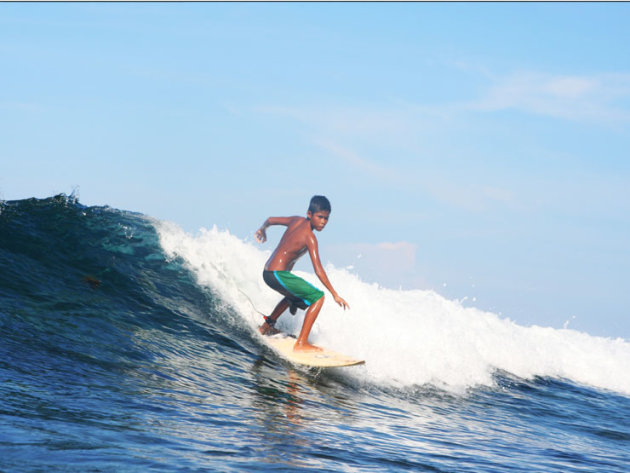
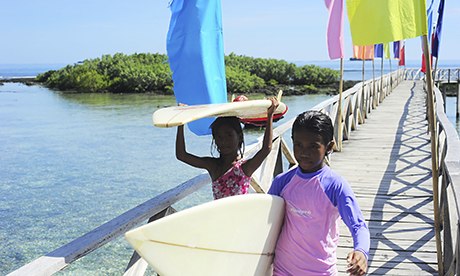
Young surfers at Cloud Nine surf point, Siargao, Philippines
Two young surfers carrying boards at Cloud Nine surf point, Siargao. Photograph: Alamy
 
For a country with thousands of idyllic islands, plus world-class surfing and diving, the Philippines is a relatively undiscovered travel destination. Tourism is crucial to the country's economy, accounting for eight per cent of its GDP, but compare the UK visitor numbers – 120,000 in 2012 – to those of Thailand (800,000 per year) and you get some idea of just how off the radar this vast archipelago is.

This month, of course, the country is firmly on the world's radar – for all the wrong reasons. Typhoon Haiyan caused wide spread destruction across the provinces of Leyte and eastern Samar on the mid-eastern side of the Philippines and some parts of Palawan and Cebu on the mid-western side. But while the areas in the path of the typhoon were devastated, much of the country was not damaged.

The storm caused havoc on six of the country's 7,107 islands, so most resorts and tourists activities are open and fully functional, and those that were hit are quickly getting back on their feet in the run up to December and January, two of their busiest months of the year.

The tourist board and tour operators are reassuring visitors that the country is not only safe, but in desperate need of visitors to bring a vital boost to the economy. Those who go will receive a very warm welcome. So, how do you choose which of those 7,000-plus islands to visit? Here's our guide to 10 islands, each offering something different.

1. Chill out in El Nido, Palawan
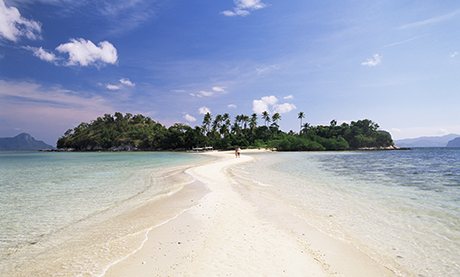
Bacuit Bay, Palawan, Philippines Bacuit Bay, Palawan, Philippines. Photograph: Alamy
 
This jungle beach town on the northern tip of Palawan hasn't changed much since before Spanish colonisation and has been cited as Alex Garland's The Beach. Explore the many islets of the nearby Bacuit archipelago on a boat-hopping tour, where the water so clear you can see the fish darting in between coral at 15 metres deep. Prices range from around £17-£20 per day for a tour and that usually includes lunch. There is grilled seafood is in abundance across the island.

Palawan was one of the islands in the path of Typhoon Haiyan, however it was only the city of Coron and the nearby island communities that were hit. El Nido has not suffered any damage and the surrounding coral reefs are intact, with only very shallow ones sustaining damage.

Where to stay: For beachfront living, Rainforest Beach Hotel offers rooms from £31 per night in high season. For a high-quality budget option, try Residencia Katrina , five minutes from the beach (from £21 per night).

How to get there: Local airlines fly directly to Palawan's capital, Puerto Princesa. From the city's main bus terminal, you can take a seven-hour Roll-On Roll-Off (RORO) bus to El Nido for £7, one way.

2. Shake your tail feather in Boracay
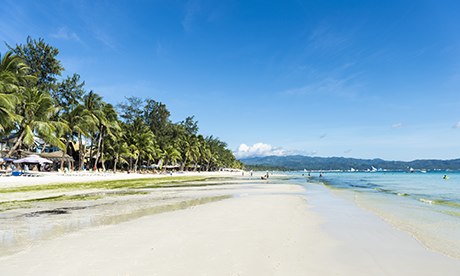
White Beach, Boracay, Philippines White Beach, Boracay Island, is often voted the best beach in Asia. Photograph: John Harper/Corbis


With endless beaches of powdery-white sand, long happy hours, abundance of restaurants and hotels to suit all budgets, and plenty of watersports, Boracay is the party island.

It has 12 beaches, the most popular being White beach and Bulabog. The island is divided up into "boat stations", which are used a reference points. Station One in the north is known for its high-end resorts and tranquillity; station two is the liveliest part, and station three is where all the budget accommodation can be found. While many locals look back longingly at good old days in the 70s before the hotels and restaurants started springing up, Boracay is still a Phuket in its infancy.

There was some storm damage to the island. Electricity still remains a problem for many parts of the island, but most hotels are up and running with generators.

Where to stay: Frendz Resort Boracay has one of the best beach locations out of all the midrange options (£50 for a beachside bungalow, sleeping four). Nigi Nigi Nu Noos has Balinese-style bamboo cottages furnished with handicrafts and wooden sculptures. Rooms are £70 per night.

How to get there: You can fly via Kalibo and then take a two-hour bus ride for £4, then a 15-minute ferry.

3. See a UNESCO World Heritage sight in Banaue, North Luzon
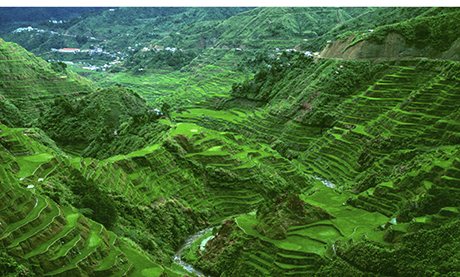
Rice terraces, northern Luzon, Philippines Amazing two thousand year old rice terraces, Banaue, northern Luzon. Photograph: Alamy
 
North Luzon, the biggest island of the Philippines, is a land of misty mountains, where pines replace palm trees. Head to Banaue and Batad to admire the 2,000-year-old rice terraces etched along plunging ravines. The 20,000km UNESCO-listed terraces still provide a livelihood for the various tribal groups that continue to live in relative isolation in the mountains. Treks along the rice terraces to various villages and waterfalls can be organised through the Banaue Tourist Information Center. Expect to pay around £10 for a guide for a whole day.

Where to stay: If you want to wake up to a view of the famous rice terraces, head to Batad, where a number of low-cost, basic guest houses line the mountains. Try Ramon's Homestay, where the owners are a great source of information about the local culture. It's £2.80 for a regular room or £3.50 to stay in a traditional Ifugao (local tribe) hut.

How to get there: North Luzon is best reached by bus, but be prepared for a long journey. Buses leave regularly from Manila and take nine hours to get to Banaue, costing £7.

4. See the curious in Bohol
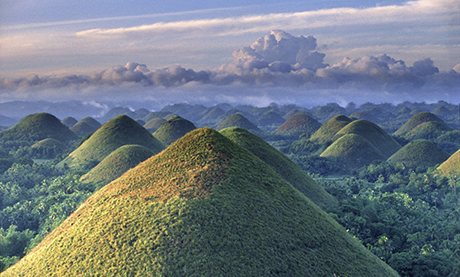
Chocolate Hills Natural, Bohol, Philippines
Asia
Chocolate Hills, Bohol Island. Photograph: Per-Andre Hoffman/Alamy
 
Located just off Cebu, Bohol's most famous attraction is the surreal Chocolate Hills: over 1,500 mounds formed by coral deposits sculpted by a millennia of erosion. Depending on the season, they will either be green or brown. The island's famous resident is the camera-shy tarsier, the world's smallest monkey. Visit them in their protected enclosure at the Philippines Tarsier Foundation. Don't visit them in the cages kept along the river; they are mistreated and don't live long there. Either hire a motorbike or book a tour from a local company, such as Bohol Travel Tours, for around £35 with car, guide and lunch.

In October this year, the island suffered from a 7.2-magnitude earthquake, destroying many houses. Two weeks afterwards, Bohol was back on its feet, bringing in tourists as normal. The island was also hit by Typhoon Haiyan, but sustained little damage to its infrastructure. Tour operators and hotels remain fully open. The main issue being tackled by the island's authority is limited power supply, which is slowly but surely getting fixed.

Where to stay:Alumbung Bohol is a comfortable resort of beachside bungalows on popular Panglao island (from £20 per night). For something different head to Bohol Bee Farm , an organic vegetable and bee farm with rooms on Panglao, from £28 to £70 per person.

How to get there: Local airlines, including Cebu Pacific, fly to Tagbilaran airport from Manila, or you can catch a two-hour ferry from Cebu to Bohol (£7, one way).

5. Go surfing in Siargao

Facing the Pacific Ocean, just north of the island of Mindanao, is Siargao, one of the Philippines' surf centres. The town sees a steady stream of dedicated surfers who arrive to challenge themselves on the island's famous Cloud 9 reef break. The small beachside town hosts a number of international surfing competition, which make it a busy during surf season, but completely dead when the waves are down.

Novices can hire trainers, who you can find on the beach, for around £7 per hour, or you can book a package from a surf hotel, such as Kermit Surf Resort , which has a package for £394 per person per week, including accommodation, transfers and one-to-one surf lessons.

Where to stay: The no-frills, £5-a-night Bamboo Garden is popular among backpackers. Surfers tend to stay in Kermit Surf Resort (bungalows are £11 per night).

How to get there: There are direct flights to Siargao Island. Siargao airport is 45 minutes away from General Luna, the location of the popular Cloud 9 beach.

6. Get off the beaten track in Camiguin Island
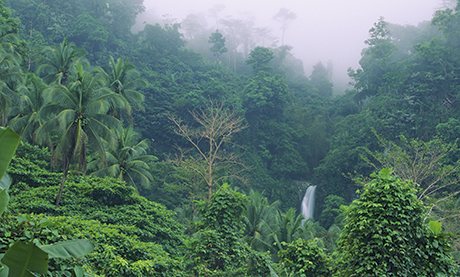
Camiguin Island, Philippines Camiguin Island, Philippines. Photograph: Stuart Dee/Getty Images
 
This pear-shaped volcanic island, just off the northern tip of Mindanao, is often bypassed because of various Islamist uprisings that have been reported on Mindanoa. However, Camiguin itself has never had any incidents and those who make the effort to travel there are rewarded with an island barely touched by tourism. For such a small landmass, this tiny island packs quite a punch, its 29,187 hectares including seven volcanoes. It also offers good diving through an eerie sunken cemetery, waterfalls, a lagoon, and hot and cold springs. All of these can be reached easily by foot, or hire a motorbike (£11 a day with a driver,£7 without).

Where to stay: If you want to splurge, go to Bahay Bakasyunan sa Camiguin for £50 per night. If you are on a budget, try the Enigmata Tree House homestay at £15 per night (minimum of two people).

How to get there: The easiest way is to book a flight from Cebu, via Cebu Pacific Air, then take an 11-hour ferry to the island for (£2.30).

7. Go witch hunting in Siguijor
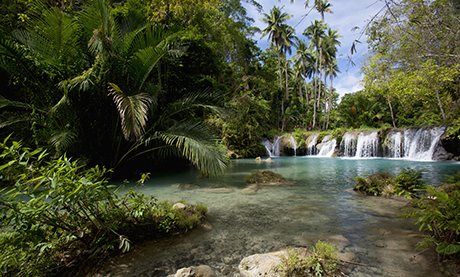
Cambugahay Falls, Siquijor, Philippines Cambugahay Falls, Siquijor. Photograph: Deddeda/Design Pics/Corbis

The magical Siquijor is both feared and revered by locals. It's the place to go, if you're looking for a boroboro, or witch doctor. The Provincial Tourism Department has a list of "official healers", or just ask any local and they'll be able to point you in the right direction. You'll need to rent a tricycle (a local motor taxi) for around £14 for half a day, as most of the healers live high in the mountains.

These witch doctors or healers welcome paying visitors – but be polite and respectful as it is an age-old tradition that is widely believed by locals. Away from all the magic, it's also a beautiful island for relaxing, snorkelling and diving.

Where to stay: Beachside bungalows at Coco Grove Beach Resort cost £19 per person.
How to get there: There are no direct flights. Fly to Dumaguete city, then take an hour-long ferry to Siquijor (£1.60).

8. Explore the misty mountains of Batanes
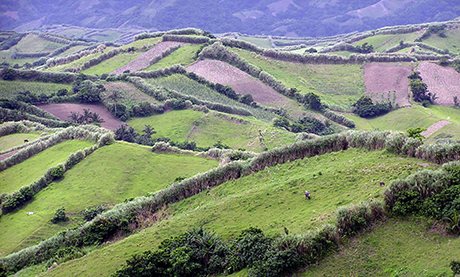
Batanes hills, Philippines Batanes, Philippines. Photograph: Ferdz Decena/Getty Images/Flickr RF

The Batanes Islands are found on the very northern tip of the Philippines archipelago, a land of gently sloping hills, thatched roof houses and locals who wear traditional straw hats. With weather reminiscent of drizzly British summers, locals visit the islands for some respite from the tropical heat, while tourists travel here for a completely different island experience from the rest of the Philippines. To get around, rent a bicycle or book a tour with a company, such as Batanes Travel and Tours , which charges £211 for a three-day trip including accommodation, transport and guide.

Where to stay: Batanes Resort offers comfortable, air-conditioned cottages for £25 per night.
How to get there: There are direct flights from Manila to Batanes, but being at the very tip of the country it's one of the more expensive islands to reach. Flights are often cancelled during bad weather.

9. Go diving in Mindoro
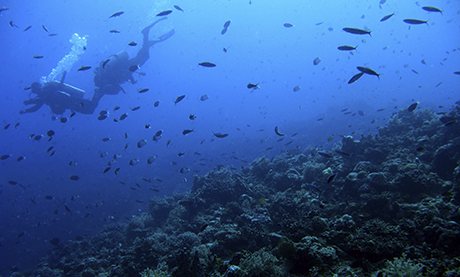
Apo Reef, Philippines Filipino divers swimming at the Apo Reef. Photograph: Dennis M Sabangan/EPA

Good dives spots are a dime a dozen in the Philippines, but the best scuba spots can be a bit harder to reach. Apo Reef is one of them. A mostly sunken atoll, two hours off the west coast of Mindoro, the 40 sq km reef is famous among the diving community for its abundance of larger creatures, such as sharks, rays and sea turtles. Most divers stay on Pandan Island (a 20-minute boat ride from Mindoro) and, from there, access the reef via a three-hour boat ride. Apo Reef Club is one of the closest dive operators to the reef. A package of five dives, including two night's accommodation and transfers, is £212.

Where to stay: As well as dive trips, Apo Reef Club offers clean, simple accommodation . Prices range from £10 to £46 per room.

How to get there: Domestic flights go from Manila to San Jose in Mindoro. Once you get on the island, head to Sablayan port (near the town market) and get a 30-minute boat ride to Pandan island (£7, one way).

10. Go hiking in Davao, Mindanao
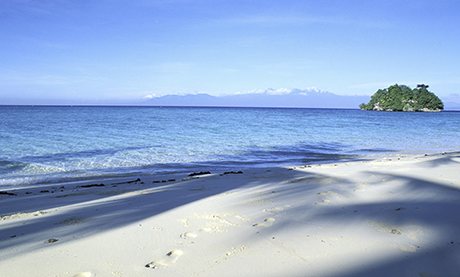
Mindanao island, Philippines Mindanao island, with Mount Apo in the background. Photograph: Alamy

Davao is the biggest city on the island of Mindanao, an area that is scarce of tourists due to the aforementioned Islamist insurgencies. Davao City is widely regarded as a safe haven on the island and has been ranked as one best places to live in the country. This is where the world's smelliest fruit, the Durian, originates from. It is also home to the rare Philippine eagle (pay a visit to the Philippine Eagle Centre for an educational tour).

But the island's crown jewel is the country's tallest peak and semi-active volcano, Mount Apo. A 2,956-metre climb to the top will take you through the full spectrum of Filipino biodiversity, from steamy jungle to pine forests, and belching sulphuric vents. Join a group tour with Climb Mt Apo for £56 per person. If you go independently you will need a permit from the city hall in Santa Cruz, an hour south of Davao (contact Julius Paner, +63 2 441 1467). The permit costs £4 per person. You can then hire a freelance guide and/or porter at a rate of £4 per day for the porter and £7 per day for the guide. The permit office will be able to put you in touch with a certified porter and guide.

Where to stay: Green Windows hostel in the city centre offers clean and spacious dorm beds for £2.60 per night. A smarter option is Casa Leticia, £40 per night.

How to get there: Davao is a 1.5hr flight from Manila and there are at least six flights servicing the city on a daily basis.

Getting to the Philippines: Philippine Airlines flies to Manila five times a week from Heathrow. Once in Manila, the cost of domestic flights to get to the different islands can vary depending on what time of year you are flying and where. Local airlines such as Cebu Pacific, Air Asia and Tiger Airways offer seat sales throughout the year, where you can often bag return flights for around £50. Outside of the sales, expect to payaround £100 return.


Thursday, May 30, 2013

...the most photogenic places in PH

The most photogenic places in the Philippines


By Karla Rey for Yahoo! Southeast Asia
All photos by Angel Juarez


Travelling the Philippines with your point-and-shoot camera? Fret not. Angel Juarez, the traveller behind the award-winning blog, www.lakwatsero.com, names his top spots for capturing amazing photos. No high-end DSLRs and powerful lenses nor Photoshop necessary!

Batad's Amphitheatre Rice Terraces
The elegant amphitheatre-like Rice Terraces of Batad in Banaue, Ifugao produces awe-inspiring shots in every angle. A UNESCO World Heritage Site, it is considered as the most beautiful of all the rice terraces in Banaue. The best time to see it is during summer, from March to early May, when the rice terraces are at its greenest.
Calaguas' Powdery Sand BeachKnown as "Mahabang Buhangin" (Long Sand) in the Calaguas Group of Islands off the coast of Camarines Norte, the wide stretch of fine white sand that gently slopes into the crystal clear water is a sight to behold. Generally unspoiled and deserted, Mahabang Buhangin is a picture of a perfect beach. Juarez says, “Going there may be an adventure, but a truly worthy one.”

Cordillera's Sea of CloudsOne of Cordillera's prides, the famous sea of clouds is one that guarantees a postcard perfect image of the highlands. Juarez shares, “Be in the summit of Mt. Pulag or in Sagada's Kiltepan's View Deck before sunrise to capture the sun as it slowly rise in the horizon of clouds and you'll end up having amazing photos that others will surely envy"
 
Boracay's Seascape at SundownThe idyllic scene of the silhouettes of the local sailing boats called " paraws" in the foreground of the golden sunset in the horizon of the world famous Boracay Island is always a stunner. “Make sure to be in the Stations 1 or 2 before sundown, and wait patiently for the golden hour to capture a thought evoking composition of Boracay sunset,” advises Juarez. While you are at it, you can also enjoy the happy hour that begins right about the same time.
 
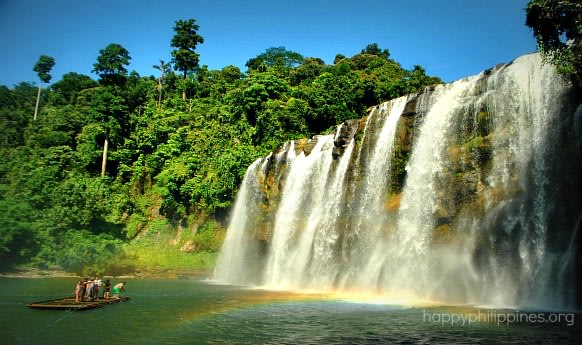
Bislig's Tinuy-an FallsThis massive waterfall of Tinuy-an in Bislig, Surigao del Norte is dubbed as the "Niagara Falls of the Philippines." It may not be as massive as Niagara Falls but Tinuy-an Falls is among the widest waterfalls in the country. The striking beauty and grandeur you see in person registers well into stills. “What you see, is what you get,” says Juarez.
 
Coron's Kayangan Cove
Perhaps the most photographed spot in Coron—calm turquoise waters with a limestone island in the centre guarantees an amazing output whatever camera (or smartphone) you use. Just be careful when you need to go down to the lake below as the rocks and the trail can be slippery. But the trek reveals a beautiful freshwater lake cocooned by the limestones from the sea.
 
El Nido's Karst Limestone Cliffs
The karst limestone cliffs and islets that dot Bacuit Bay create the most fascinating, picture-perfect features of El Nido in Northern Palawan. Juarez says, “During dry months, from February to May, the place turns into a surreal scenery of natural beauty with the limestone cliffs, turquoise waters, blue skies and pearl white cotton clouds that paint an enchanting image of paradise. Truly beyond compare!”
 
Camiguin's SandbarNo shot can ever go wrong with the white sandbar of Camiguin and Mt. Hibok-Hibok in the backdrop. “The dramatic blend of the disappearing sandbar and a mighty volcano always produces a captivating image of Camiguin like those we always see in postcards.”
 
Century-old Churches of Ilocos
Ilocos Province is one of the places in the Philippines that has successfully preserved its heritage including the century-old churches and bell towers. Some of the popular churches in the area are that of Sta. Maria, Bantay, Vigan, Bacarra and Laoag. But the most striking of all is the St. Augustine Church of Paoay, one of the Baroque Churches of the Philippines inscribed in UNESCO’s World Heritage Site list. “Every image of Paoay Church becomes special because of its imposing beauty and charm.”
 

Manila at twilight
The image of Manila at twilight is a picture that may sound cliché but will surely gather “likes.” Where’s a good spot to get the lovely Manila Bay sunset? By the Manila Yacht Club area, where sailboats provide a foreground to the setting sun. You can also catch a classic image of the city along Roxas Boulevard at sundown
 

Monday, January 14, 2013

...the 2013 Hottest Destination

Major int’l publications agree Philippines is ‘hottest’ destination


Philippine Daily Inquirer


MANILA, Philippines—The Philippines is at it again.

After the successful “It’s More Fun in the Philippines” tourism campaign, which observes its first anniversary on Saturday, two more respected international publications have included the country on their list of the top destinations in the world for 2013.

New York-based Travel+Leisure Magazine, the rival of Condé Nast Traveler, named the Philippines as one of the 13 “Hottest Travel Destinations of 2013” in its January issue.

On Friday, The New York Times also placed the country at number 17 on its list of “46 Places to Go in 2013,” ahead of Bangkok, Paris and Casablanca.

“A surfing and beach destination goes luxe … Idyllic white sand beaches, secluded, little-known surf towns and pristine reefs are among the natural draws of this country made up of over 7,000 tropical islands,” The New York Times said.

“Now in addition to the more upscale choices cropping up in former backpacking enclaves like Boracay, there is a new generation of luxury hotels opening even further afield,” it added.

The paper noted the new Dedon Island resort on Siargao, adding that it was “close to one of the world’s best surf breaks, Cloud 9, (of which famous American surfer Kelly Slater is a fan), and has an outdoor cinema along with spa and paddle board classes.”

“And the private island resort of El Nido Pangulasian opens this month in the Unesco biosphere of Palawan, right by some of the world’s most pristine diving spots,” it added.

The New York Times said that while the Philippines has been subject to travel advisories in the past, “they mostly focus on Mindanao in the south.”

“For extra security, outfitters like Asian expert Remote Lands organize private transfers and local guides,” the paper said.

Travel+Leisure Magazine, which has 4.8 million readers, noted that while there were safety concerns before about the Philippines, it was now “safe to visit once again.”

“Two countries written off in recent years—Zambia and the Philippines—are safe to visit once again, and thriving with new safari camps and island thatched-roof villas,” Travel+Leisure said.

“The archipelago of Palawan, a Unesco biosphere reserve in the Philippines, just added a resort with a scuba center; hop a two-hour flight from Hong Kong, and you’ll soon be diving with the sea turtles,” it added.

The magazine particularly mentioned El Nido Pangulasian Island and the 125-acre private island of Ariara in Palawan, and the Eskaya Beach Resort and Spa in Panglao, Bohol.

“Boracay hogs the spotlight, but there are thousands of other islands to lure beach lovers,” Travel+Leisure added.

Serious player

Tourism Assistant Secretary Benito Bengzon Jr. said endorsement from these top publications showed that the Philippines was now “a serious player” in global tourism.

“This is a very good development for our country. It is a very concrete proof that foreigners now have a high awareness and appreciation of the great travel potentials of the Philippines,” Bengzon said.

“It shows that we are now a serious player,” he added.

Bengzon said the awareness of foreigners about the country was heightened by the launching of the “It’s More Fun in the Philippines” campaign in January last year.

“We’ve advertised and conducted our marketing campaign in all our major markets like Asia-Pacific, North America, Europe, India, Korea and China. And in 2013, we will be even more aggressive,” he said.

Bengzon said the Department of Tourism (DOT) expected the number of tourist arrivals for 2012 to reach 4.2 million to 4.3 million.

This is higher than the 3.9 million registered in 2011 but is lower than the 4.5-million target that the DOT set in 2012.

“There was a slowdown from our Chinese market but this is against picking. For 2013, we are targeting 5.5 million and we are very positive that we can reach that,” Bengzon said.

Very positive

“The feedback to [the “It’s More Fun in the Philippines”] campaign has been very positive not just in terms of tourist arrivals but also in the response of the private sector, from the airlines, travel agents, the hotels and resorts. More hotels are opening this year,” he added.

The other places that made it to Travel+Leisure’s list were Bahia Ballena in Costa Rica, Basilicata in Italy, Puerto Rico, Minneapolis in the United States, Reunion, Nepal, Charlevoix in Quebec, Uco Valley in Argentina, Zambia, Amsterdam, Australia’s Gold Coast, and Marseilles.

The magazine said it initially considered “40-odd places” for its list of top destinations this year.

“To determine which destinations … are coming up on the radar, T+L asked safari experts and art dealers, cutting-edge chefs and even branding agencies where they’re seeing a new neighborhood emerge or wineries getting more acclaim,” Travel+Leisure said.

“What started with 40-odd places we distilled down to a baker’s dozen: the hottest travel destinations of 2013,” it added.

World’s 5th Best Hotel

In the same issue, the magazine also named the Discovery Shores Hotel in Boracay as the 5th Best Hotel in the World.

“Barefoot elegance is undoubtedly the vibe on this tiny island, where the 2 1/2-mile stretch known as White Beach is often singled out for being the softest in the world,” the magazine said.

It said that Discovery Shores’ 88 spacious suites all have large glass walls that look toward a scenic rock garden, “but chances are you’ll spend more time by the water.”

“Take a dip in the infinity pool, or jet-ski on the crystalline sea. For people-watching, head to The Sandbar, where they stir up delicious mojitos, infused with local flavors like lychee and mango,” Travel+Leisure said.

“Once you’re sufficiently refueled, karaoke your heart out, with over 1,000 songs (mostly in English) to choose from at the resort’s recreation lounge,” it added.

The endorsement from Travel+Leisure came as the UK edition of its competitor, Condé Nast Traveller Magazine, also named the Philippines as one of the top 10 hottest new travel destinations for 2013.

“For travelers willing to go the extra thousand miles for a deserted beach, the Philippines has around 7,000 of the most heavenly islands in the world. It’s still not the most obvious beach-holiday destination, but it soon will be,” Condé Nast Traveller said.

Sorry, Maldives

“Sorry, Maldives… We love you, but we’ve got a new flame,” it added.

The magazine said the Philippines was becoming particularly popular among serious divers, who visit for “the incredible underwater life, unspoilt coral gardens with rainbow-bright fish, green sea turtles and dugongs.”

“In Bicol you can swim with the biggest fish in the world, the whale shark. While fish-fans of a different nature can go deep-sea fishing in one of the deepest trenches in the oceans, not far from the little-known island of Siargao,” the magazine said.

“The archipelago of Palawan ticks all the boxes: palm-fringed white-powder beaches, crystal-clear turquoise waters, natural lagoons for wild swimming on Miniloc Island—all of it protected by Unesco,” it added.

Condé Nast said Bacuit Bay in Palawan was something like Halong Bay in Vietnam, “only without all the tourists—for the time being, at least.”

“There are just a handful of resorts, which are tasteful and deliberately low-key. Two of the newest are Ariara Island and El Nido Pangulasian Island, a private-island resort with palm-thatched villas, a spa, its own dive center and sea views to melt the heart,” the magazine said.

Palawan in top 10

“Another super-stylish new opening is Dedon Island, on Siargao; it’s owned and designed by contemporary furniture brand Dedon. And a perennial favorite is Amanpulo, yet another high-design private-island hotel on Pamalican Island,” it added.

In October, Lonely Planet, reputedly the largest travel guidebook and digital media publisher in the world, also named Palawan among the top 10 best regions to visit in the world for 2013.

Lonely Planet said Palawan was “the ultimate archipelago for adventurers” and best for being “off the beaten track,” adventure and culture.

“Palawan incorporates thousands of sparkling, rugged islands and is fringed by 2000 km of pristine coastline. So far, Palawan’s natural marvels have only been sampled by plucky backpackers. Not for much longer,” Lonely Planet said.

“The trail these pioneers have blazed is set to explode, with regional airlines waking up to Palawan’s potential and clambering to schedule direct flights to the capital,” it said.

“Throw in the mushrooming growth of style-conscious boutique hotels normally found in places like Ko Samui or Bali, and you can feel that Palawan is ready to hit the big-time in 2013,” Lonely Planet added.

Saturday, January 12, 2013

...the NYT's Places to Go in 2013

PH listed in NY Times’ ‘Places to Go in 2013’


01/12/2013
 
 
MANILA – Its white sand beaches and pristine reefs have made the Philippines one of the top tourist destinations for 2013.
 
In an article in the New York Times, the Philippines is ranked No. 17 among the “46 Places to Go in 2013.”
El Nido, Palawan

“Idyllic white sand beaches, secluded, little-known surf towns, and pristine reefs are among the natural draws of this country made up of over 7,000 tropical islands,” New York Times travel writer Ondine Cohane said.

Cohane said the Philippines has much more to offer aside from Boracay.

Among the must see destinations, she said, are the Dedon Island resort on Siargao and the private island resort of El Nido in Palawan.

“Although the Philippines has been subject to travel advisories in the past, they mostly focus on Mindanao in the south. For extra security, outfitters like Asian expert Remote Lands organize private transfers and local guides,” said Cohane.

At the top of New York Times’ ‘Places to Go in 2013’ list is Brazil's Rio de Janeiro, followed by France's Marseille and Nicaragua.

...the Southeast Asia's tropical wonderlands


Siargao Isle Making Waves Worldwide


DAPA, Siargao Island, Surigao del Norte - The famous ''Paradise Island'' of Siargao, the Philippines' surfing capital, was recently cited as one of Southeast Asia's top tropical wonderlands by Travel + Leisure Southeast Asia.

The prestigious magazine with its corporate headquarters in Hong Kong has included Siargao in its list of ''8 Ultimate Islands.''

Similarly, Siargao has been named as the eighth best surf spot in the world by CNNGo, the travel website of the Cable News Network.

The global media network based its ranking from the list of the world's 50 best surf spots compiled by Jade Bremmer, an avid surfer who has surfed many surfing locations in the world.

Siargao is also included in the ''Destinations to watch in 2013'' by Condè Nast Traveller, a well known travel magazine based in the United Kingdom. Particularly mentioned is Dedon Island in Siargao, a high-end resort operated and owned by contemporary world-class furniture brand Dedon.

All these recognitions have further encouraged officials of this northeastern-tip province of Mindanao to boost their effort in putting more state-of-the-art infrastructure to be able to meet the needs of tourists, both foreign and domestic.


Siargao Island, faces the Pacific Ocean and the Philippine Deep, the second deepest water in the world


Surigao del Norte Rep. Francisco T. Matugas (1st District), Rep. Guillermo A. Romarate, Jr., Gov. Sol F. Matugas, and the island's nine municipal mayors with their respective legislators and village officials have agreed to unify their approaches in developing the province's tourism destinations.

Mayor Peter ''Boy'' Ruaya of Dapa, the jumping-board town leading to the different destinations in the island, has taken moves to boost tourism infrastructure and transport.

As a result, the Department of Tourism (DOT-13) is expecting more than the usual increase in foreign tourist arrivals on Siargao Island and the rest of Caraga Region in the months and years to come.

''We have really noted the increase in arrivals of tourists from all corners of the globe, and that's why we are also increasing our tourist structures and other needs including tourist guides,'' said Region XIII DTI Regional Director Leticia DC. Tan.

Thursday, July 19, 2012

...the wealth of Surigao

Local Focus:

The treasures of Surigao del Sur


Surigao del Sur, a quite difficult to reach province in Mindanao is blessed with natural attractions that beckons tourists. The butt-numbing ride is worth enduring knowing that once you reach your destination, a splendid place awaits you.


Tinuy-an Falls in the town of Bislig


One such attraction that has gained a fair share of attention is Tinuy-an Falls in the town of Bislig. Reachable by habal-habal (motorcycle) that can be hired from Mangagoy, the commercial center of Bislig; this three-tiered water falls though not as tall as it appears in pictures, is indeed wide.  The smaller cascades above the main falls are a perfect spot for swimming.  Tinuy-an Falls has been developed already, stores and cottages  for rent are now available which makes it ideal for family picnics.


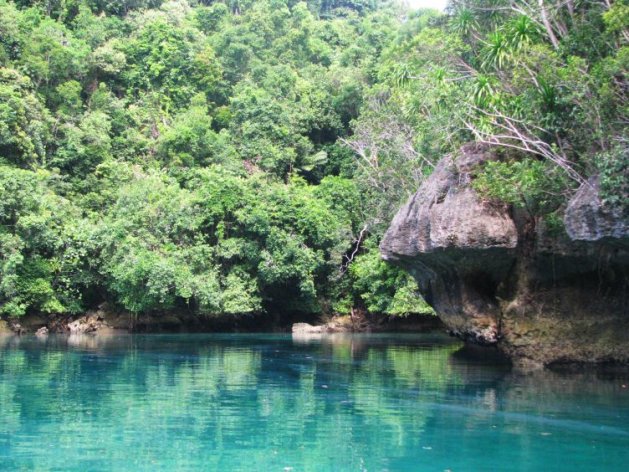
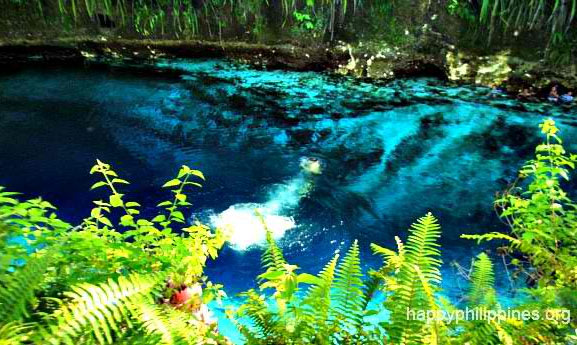
A neighboring town Hinatuan has also risen to fame because of the Enchanted River.  And like Tinuy-an Falls, the area has been developed; picnic tables and cottages have been built and the once pristine river is now akin to a pool. Despite these changes, the deep blue basin remains majestic.  The deeper part of the water is a mixture of cobalt and turquoise and the water turns green at the shallow area that opens to the endless sea. 

When we arrived there early morning, we saw charming fishes swimming in the river.  According to our habal-habal driver, what remains a mystery is that those elusive fishes are never caught by anyone who attempts to catch them.  Since the Enchanted River is now flocked by tourists, to better appreciate it, it is advisable to go there early in the morning to avoid the crowd especially during weekends and holiday.

Swimming in its refreshingly cool water is a must.  For non-swimmers, lifejackets are for rent at Php 15 per hour.


Hinatuan's delicious seafood

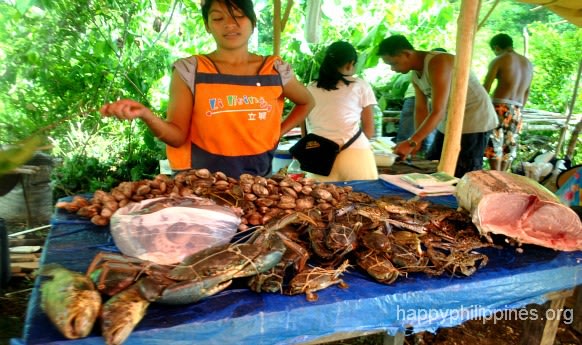
Hinatuan is known for its delicious seafood, in fact, a few meters away from the entrance of the Enchanted River; you can find locals selling affordable fresh crabs, lobsters, shrimps, fish and shells. You can even have it cooked and delivered to your picnic tables.

At the mouth of the river, boats for island hopping (good for 4 people) are available for rent. For only Php 160 per hour these boats can take you to neighboring islands with golden sand beaches. Beach bumming is ideal in Pangasinan Beach,and Margaret Island but if you have been to many good beaches in the country, you may find them ordinary. A sandbar is visible during low tide beside the Sibadan Fish Cage.  The viewing deck at Margaret Island Peak Resort is worth checking as it offers a panoramic view of the Pacific Ocean.

Enchanted River

Tuesday, May 22, 2012

...the surfing destination

PH makes waves in world surfing map


Elaine Abonal on surfboard


By Norman Sison,
VERA Files


With over 7,100 islands to choose from, the Philippines is known for its postcard-lovely beaches. Of late, it has been making waves on the world map of surfing.

One Internet site, Wanna Surf (http://www.wannasurf.com/), describes the Philippines as "one of the last surfing frontiers". It lists 35 spots in the country. Fourteen of those are in Siargao Island alone, in the south.

San Juan town in La Union province is the northern Philippines' surfing capital. It is blessed with two surfing seasons — July to October and November to March — when waves spawned by the north swell crest from five to 12 feet.

Singapore-based Anne-Marie Bakker is often in San Juan with her white fiberglass board when she visits her parents' home in San Fernando City, less than half an hour south of San Juan. "Rain or shine, all the time I'm out there," says Bakker, whose cigar company, JB Global, champions Philippine-made cigars abroad and makes custom blends.

If she's not in San Juan, she is out in the water at her beachfront home. "It's hard not to be in the water and the elements when all is so near and tangible," says Bakker, who is half-Filipina and half-Dutch. Her love for surfing gave her an idea to put up a water company, Alon ("wave" in Filipino), also in Singapore.

At Urbiztondo Beach, resorts sport walls decorated with framed photos of big-name surfers and visitors. San Juan Surf Resort, which boasts of several trophies from past international surfing competitions, is home to Filipino-Australian surfer Luke Landrigan, who has flown the Philippine flag in competitions overseas.

"La Union became known abroad because of surfing," says local resident Joy Agustin-Oropesa, who hails from neighboring Bacnotan town, also a surfing spot. "Before surfing became popular, people just went to the beach during the summer. The beach is the province's only tourism attraction."

A Japanese started the surfing trend in La Union in the 1980s. Kazuo Akinaga, who was then working for a surfboard company, read about the Philippines in a magazine. He came, he surfed, he stayed. Today, he lives near the beach in San Juan. His dream: to produce surfboards "made in the Philippines" as most boards are imported and expensive.

Surfing was only what Elaine Abonal calls an "underground sport" when she took up the board 10 years ago. There were hardly any surfing schools and resorts back then, she recalls.

But things have changed. "More surf brands are coming to the Philippines because they know that there is a market here. There are more events and sponsors," says Abonal, who runs Surfista Travels
(http://www.surfistatravels.com/).

Local tourism in La Union is mostly dead during the rainy season. The province is often in the path of typhoons rampaging usually from the Pacific. But typhoons don't scare off everybody. "Surfing addicts are still at it even after a typhoon," says Oropesa. "Most of them are foreigners. The bigger the waves, the better."

This time of the year is for beginners aside from the usual beachgoers escaping the heat, when waves roll in much more gently, just enough to lift swimmers off their feet. But the sea still pounds the off white sand with a crash.

At the north end of Urbiztondo Beach, to avoid ramming swimmers, local tourists — including children — are on surfboards, lined up in the water, taking pointers from local instructors. They wait for that perfect wave and they get a helpful nudge from their instructors. Most wipe out after three seconds. Girls scream in delight as they go down with a big splash.

Aside from targeting surfers abroad, introducing surfing as a fun ride to locals has become a niche market for tour operators. "Surfing takes going to the beach to a whole new and meaningful level because you actually play with the sea or the ocean," says Abonal.

But surfing is not for everybody. It needs a certain skill set, time for travel and money. "Here in the Philippines, surfing is mostly marketed towards the 18-35 age bracket, associating the sport with the easygoing, beach lifestyle so many of us young professionals yearn for," says Cedric Valera, a managing partner at Travel Factor.

Travel Factor (http://www.travelfactor.org/) offers budget weekend tour packages, bringing visitors from Manila for a day of surfing in San Juan. Surfboards and lessons are included. You leave Manila on a Friday midnight in a van. It is a six-hour ride north. You have stopovers in Tarlac and Pangasinan provinces along the way for bathroom breaks and breakfast. You arrive in San Juan between 6 and 7 a.m., and you are on a surfboard by 9 a.m.

There are factors that come into play when selling surfing to local tourists. "A typical Filipino's idea of a beach is one that is safe, calm and suitable for swimming and frolicking around," says Valera. "Filipinos, in general, are scared of the water!"

Also, Filipinos don't like to travel during the monsoon season. However, that is when peak surfing conditions arrive.

As for selling the Philippines to experienced surfers abroad, the main consideration is the inconsistent quality of the waves. Philippine waters are fickle unlike those in Australia, Bali or Hawaii. So, the trick is to know when to visit.

There are things that make up for it, however, such as that world-renowned warm Filipino touch. "Some of our foreigner participants are so delighted with their one-on-one surfing lessons because their instructor is so kind, welcoming and caring compared to the instructors they enlisted in Bali or Australia," says Valera. "The Philippines has world-class surf spots. Couple that with our trademark Filipino hospitality and we've got ourselves something to offer to the world."


surf board sign

Sunday, May 13, 2012

...the ace barbers

PH sets world record in haircutting

05/13/2012


Photo courtesy of Reyes Haircutters

MANILA, Philippines – The Philippines made it again to the Guinness Book of World Records on Sunday this time for the most consecutive haircuts by a team.

Organizers of the Gupitang Bayan Para sa Kabuhayan announced in a statement that the project was able to give haircuts to 388 men in Valenzuela City.

The previous world record was set by a team of eight hairstylists from the Gatsby Salon in Green Brook, New Jersey, who gave 246 haircuts in eight hours on March 7, 2001.

To demolish the record by the Americans, 10 hairstylists from Newsbarbers and Reyes Haircutters agreed to team up and give consecutive haircuts for three hours – from 9:30 a.m. to 12:30 p.m. -- to customers ranging from a 2-year-old boy to senior citizens.

The project was organized by former Surigao governor Robert “Ace” Barbers.Barbers stressed that the Gupitan Bayan project was not just to set a world record but to provide free hair-cutting training to Valenzuela residents.

Tuesday, May 1, 2012

...the best beaches

The Philippines' best beaches and islands


If white sands aren't your thing, this isn't the country for you. Otherwise, bust out your flip-flops and follow us


With more than 7,000 islands edged by white sand buffering turquoise waters filled with some of the world's most diverse marine life, not everyone will agree on which one is best.

Disagree with our picks? Share your favorite Filipino island or beach in the comments box below.


1. El Nido, Palawan


Hollywood loves El Nido. Scenes for the upcoming final installment of the "Bourne" series were shot here. The island was also the setting of a pit stop on "The Amazing Race."


If Palawan is indeed "the last frontier" of the Philippines, as it's been dubbed, the coastal town of El Nido is the gateway to wild adventure.

Sure, it's got powder-fine beaches and gin-clear waters. But the views are what really sell the place.

Off the coast of El Nido are majestic karst limestone formations, empty lagoons, marble cliffs, prehistoric caves and waterfalls. All are easily explored.

Wet your fins: El Nido is a popular base for divers. Surrounding waters contain more than 50 species of coral, and attract whales, whale sharks, sea cows, manta rays, dolphins and endangered turtles.


2. Boracay, Aklan


Boracay
Sundowners, anyone? Just another perfect day in Boracay.


White Beach is the place most frequently associated with Boracay, the most popular holiday destination in the Philippines.

Its four-kilometer stretch welcomes everyone from beach bums to adventurers. At night, the beach comes alive with candle-lit sand castles, cozy restaurants and bars that stay open til dawn.

Away from White Beach are calmer resorts. There is a less boisterous side of Boracay and it still offers secluded strips of sand, coves, caves and cliffs.

Come with the wind: During the early months of the year, Boracay attracts hundreds of kite-boarders and windsurfers who compete in the International Funboard Cup. The rough waves and strong winds make Boracay an ideal destination for water sports fanatics.


3. Palaui Island, Cagayan Valley


Getting to Paluai's best beach is a challenge, but the rewards make the hassle worthwhile.


This isolated island is a natural secret -- only the brave and persevering bother to visit.

Glorious white sands surrounded by volcanic rocks on one side kiss blue-green waters on the other.

Snorkeling and diving brings you face to face with coral gardens and a rich marine reserve.

Palaui is all about raw beauty. But it takes some work to get there.

Treks should be blessed with clear blue skies, patient companions and trusted local guides.

Getting to the island's most prized stretch of beach requires battling thorny grass, muddy ground and a mangrove forest.

Uncharted Philippines offers a three-day Palaui Island Photography Tour for US$240 that includes transportation, accomodation, food and guides. Visit Unchartedphilippines.com

Sleep with stars: With no resorts or hotels, Palaui has only one real option -- camping under the stars. Otherwise, visitors are left to explore homestay options.


4. Panglao, Bohol


Just your average Panglao beach. Tired of looking at white sands yet? We're not even halfway through.


Once a sleepy island, Panglao is being roused by travelers in search of gorgeous beaches.

It’s a refuge for those who appreciate a diverse menu of aquatic attractions.

Options include dolphin watching, whale spotting, diving with barracudas, jackfish, sea snakes and brilliant coral formations.

Natural charms: In addition to its beaches, the island of Bohol is famous for its Chocolate Hills, an unusual rolling terrain of more than 1,000 dome-shaped hills. The hills are named for their brown color during dry season, when grass dries up.

The “world’s smallest primate” -- the endangered Philippine tarsier -- also inhabits the island.

Multi-language edge: Years ago, a number of foreigners came to Panglao on holiday and never bothered to leave. Locals picked up their languages to better converse with the tourists. In addition to English, in Panglao you have a good chance of meeting a local with a handy grasp of German, Swiss or Japanese.


5. Bantayan Island, Cebu


If the crowds of Boracay turn you off, Bantayan Island has luxury comforts minus the action.


Bantayan has remained relatively untouched by modern life, save for a smattering of foreigners who have taken up residence, sucked in by the island's white sands, aqua-colored waters and red-gold sunsets.

Beers are cold and cheap, townsfolk are hospitable and the dreary troubles of the outside world are easily forgotten.

Holy crowds: If you're after peace and quiet, don't plan a stay during the Holy Week before Easter. The island is crowded with Filipino travelers during this period, with rooms and services booked months in advance.

Simplicity is key: Action-packed it ain't. There are no five-star hotels, no malls, no fashion-forward shopping centers.


6. Caramoan, Camarines Sur


Krabi who? The Philippines might not bring in the tourist numbers of Thailand, but its beaches can easily go toe-to-toe with the kingdom's best.


Named after the local sea turtle, Caramoan is as scenic as it is secluded.

Stretches of white sand run between huge boulders and rock formations. Scuba divers, island hoppers and beach bums all converge here.

Complementing the beaches are caves, waterfalls, freshwater pools, underground streams and lagoons.

Adventure site: The "Survivor" reality show series and similar international programs have used Caramoan as a shooting location.

Despite the locale's popularity with TV production companies, there are enough beaches to go around for everyone.

Top view: Mountain climbers can trek to Mount Caglago’s summit and take in a terrific view of the Caramoan islands and islets. The mountain is a pilgrimage site for some, thanks to its gigantic statue of Our Lady of the Holy Rosary.


7. Samal, Davao


Off the coast of Samal lies Buena Vista Island, with its blindingly white beaches. Pretty lady sunbathing not guaranteed.


A burgeoning tourist destination, Samal is on a mission to get the word out on its 118-kilometer coastline of white sandy beaches.

You know the highlights: pristine waters, lush greens, rock formations, mangrove and coconut palms. Numerous resorts provide a range of choices for visitors, from luxurious resorts to backpacker options.

The vanishing island: This curious moniker is the nickname of Shanipaan Shoal, a tiny island that literally disappears from sight during high tide. The only thing visible at high water is a single, elevated cottage poking out of the sea.

Underwater garden: The vast Coral Garden Marine Park, a fish sanctuary filled with diverse marine life, makes Sambal a favorite among divers and snorkelers.


8. Siargao Islands, Surigao del Norte


Beyond this pier is Cloud 9, one of Siargao's most famous surf breaks.

Known as the top surfing island in the Philippines, Siargao is often overlooked as a beachcomber’s paradise.

There are breaks for beginner surfers, moderate ones and even pros looking for three-meter-high waves. For those with zero surf skills -- and no desire to acquire any -- there are also pristine beaches with milder waves, perfect for sunning and swimming.

Surf’s up: Ideal days for surfing are between mid-August and mid-December, when the swell is most consistent. Beginners should visit when waves are smaller, around April or May.


9. Great Santa Cruz Island, Zamboanga


Great Santa Cruz Island is famous for its pink corralline sand, the only beach of its kind in the Philippines.


On Great Santa Cruz Island, pulverized red coral washed up from the sea floor mixes with white sand to produce a pink-hued beach.

It’s a different version of perfection: the powdery beach competes with the blue and green shades of the sea. Some parts of the beach are lovely in their undeveloped state. There are signs of civilization -- souvenirs, nipa huts and restrooms.

Beach visits are limited to day trips, so you have to squeeze everything into a few hours: swim, sunbathe, snorkel, dive, even fish for your lunch. Just don’t mistake serenity for safety -- there’s a deep drop in the sea just meters from shore.

Armed guards: The island is just a boat ride away from the city proper, but getting there requires extra precautions, due to local threats.

Only those with a tourist permit from the Department of Tourism in Zamboanga City can visit. The permit fee includes armed security escorts.

Why the need for security? According to the Department of Tourism’s regional office, it's a preventative measure: “On the security situation in Zamboanga City, there are no militant or terroristic activities recently.

Although there were reported shooting incidents, these were intended to specific victims due to personal grudges. The city is very vibrant and relatively peaceful.”

As a precaution, check with your embassy for security threats before traveling.


10. Pagudpud, Ilocos Norte


Nothing says "I'm on vacation" like an Instagram of yourself sunning next to a giant windmill.

Along the northern tip of the island of Luzon sits the coastal town of Pagudpud. It’s a quiet, sleepy and rural community, with little overt commercialism.

Perhaps because it takes time and effort to reach Pagudpud, the wide and inviting beaches are usually empty, making them ideal for those who enjoy mixing solitude with sun, sand and surf.

A row of windmills down the coast from Pagudpud makes for a picturesque if not unusual backdrop for a Filipino beach.

Wind and waves: Parts of Pagudpud are exposed to winds that blow in from both the South China Sea and Pacific Ocean, making the waves ideal for surfers, especially from July to October.  Windsurfers and kiteboarders are starting to take notice of this northern getaway.

Sunday, April 15, 2012

...the World's best dive sites


2 Phl dive sites listed as among world's best


By Aurea Calica
The Philippine Star
April 15, 2012


MANILA, Philippines - Malacañang expressed gratefulness yesterday that the beauty of the Philippines was being cited in international travel websites, especially as the country is striving to attract more tourists.

Two diving destinations in the Philippines are among the best in the world, according to the travel news website CNNGo of Cable News Network (CNN).

The Tubbataha Reef, located southeast of Palawan, ranked eighth on CNNGo’s list of best dive sites in the world.

“Super-size your dive experience at Tubbataha, where everything comes in giant form. The main advantage to diving at Tubbataha is that the water is exceptionally clean, so the marine life lives much longer, making it grow to silly proportions,” the website said.

“Expect kaleidoscopic colors combined with guitar sharks, black tip reef sharks, nurse sharks, gliding blue-spotted lagoon rays, unicorns, boxfish, scorpion fish and more,” it added.

Tubbataha is located 181 kilometers southeast of Puerto Princesa City in Palawan. The reef is made up of two coral atolls divided by an eight-kilometer wide channel. Its diving area has a depth of five to 60 meters.

It is part of the Tubbataha National Marine Park, which was established on Aug. 11, 1988 and was declared a World Heritage Site by the United Nations Educational, Scientific and Cultural Organization (UNESCO) in December 1993.

Another dive site in the Philippines that made it to CNNGo’s list is The Canyons in Puerto Galera, Oriental Mindoro, which ranked 45th. “Schools of spotted and ribbon sweetlips, shiny trevallies and weird-looking batfish make up the scene at this first-rate dive site. There’s also an explosion of coral and plant life including beautiful delicate gorgonian sea fans and hollow barrel sponges; look inside for critters lurking within,” the website described The Canyons.

The Canyons is located northeast of Escarceo Point, some five minutes away by boat from Barangay Sabang in Puerto Galera.

With a depth of up to 30 meters or about 95 feet to a maximum of 200 feet, The Canyons was designated as a “Man and Biosphere Reserve” by UNESCO in 1973.

Earlier this year, CNNGo recognized Siargao, a teardrop-shaped island in Surigao del Norte, as the eighth best surfing spot in the world.

Manila, meanwhile, was hailed by the website as one of Asia’s greatest food cities.

Online voters, who visit the Skyscanner site to buy tickets or choose their holiday destination, also rated the Philippines as among the three countries with the least rude locals.

“We are hoping that (these recognitions) will boost our campaign that ‘It’s more fun in the Philippines,’” deputy presidential spokesperson Abigail Valte said.

Even reports of clean comfort rooms in airports and other facilities would be most welcome, she said.

“We encourage the public to report their experiences, either good or bad, so we can do something about them and also for them to hear the efforts being done by our agencies,” Valte said.

Valte said it was also good that the “hospitality” of Filipinos as well as their pleasantness and politeness were receiving worldwide attention, aside from the beautiful tourist spots.

In earlier reports, Dow Griffiths, location manager of the Hollywood film “The Bourne Legacy,” declared Filipino hospitality as the best thing about their month-long stay in the country.

In an interview with The New York Times published last March 22, Griffiths spoke of his and his crew’s stay in Manila for the movie shoot.

“The ‘Bourne’ movies are known as a more urban and gritty kind of product, and that was certainly true of Manila. It is congested, with the highest population density in the world. But the people are the best thing about it. Don’t be fooled by the signs everywhere that say ‘Check Your Firearms at the Door.’ Many citizens are packing, but you couldn’t meet more hospitable people,” he said.

In a TV interview last January, the film’s Philippine producer, Jun Juban, said the producers picked Manila over Jakarta in Indonesia and Ho Chi Minh in Vietnam for the shoot for the reason Griffiths cited.

According to his official website, Griffiths is a film industry veteran who has been working as a supervising motion picture location manager since the mid-1970s, specializing in “remote, foreign locations.”

His most recent projects were “Contagion,” “Avatar: The Last Airbender,” “Merchant of Shanghai,” “Indiana Jones 4: The Kingdom of The Crystal Skull,” and “The Bourne Supremacy.”

Griffiths also raved about the service given to them while billeted at a hotel in Makati City.

“Sometimes, when you are traveling, no matter how much you spend, you can’t buy good service,” he said. “We enjoyed personalized service at very affordable prices.”

Asked if he would go back to Manila for a vacation, Griffiths said, “For the casual traveler, it’s a good place to go to get somewhere else.”

“The real reason to go to the Philippines is to explore its more than 7,000 islands, from the heights of the rice terraces of Banaue to dives with the whale sharks in Donsol – and that’s just on one island, Luzon. El Nido, on Palawan Island, is paradise, and for a family trip, you are very well looked after at any of the resorts,” Griffiths was quoted as saying.

Griffiths, along with the cast and crew of “The Bourne Legacy,” were in the country from January to February this year.

Their filming locations included parts of Manila, Navotas, Marikina and Palawan. – With Juancho Mahusay

Tuesday, January 24, 2012

...the best surf spots

Siargao is world's 8th best surf spot: CNNGo

01/24/2012

MANILA, Philippines - Siargao, a teardrop-shaped island in Surigao del Norte, is the eighth best surf spot in the world, according to the travel news website of the Cable News Network (CNN).


The list of the World's Top 50 Best Surf Spots was compiled by CNNGo writer and "avid surfer" Jade Bremmer. It also used contributions from other professional surfers.

"This dramatic and powerful reef break, which crashes onto shallow razor-sharp coral, offers right and left death rides to those who dare. Those who do will experience a slice of paradise, or magic mushroom-like hallucinations, as the wave wraps over them like a Cornish pasty-shaped cocoon of water. Don't slip, or your skin and bones will be ripped to shreds by the ocean bed," Bremmer wrote about Siargao's famous "Cloud Nine" in the article.

Topping CNNGo's list of top surf spots in the world is Pipeline in Oahu, Hawaii, which was described as "the daddy of all waves."

"It's the site most surfers will never be good enough to surf, but dream of riding its perfect crest," Bremmer wrote.

Below is the full list posted on CNNGo:
  1. Pipeline, Oahu, Hawaii, United States
  2. Supertubes, Jeffry's Bay, South Africa
  3. Uluwatu and Kuta, Bali, Indonesia
  4. Superbanks, Gold Coast, Australia
  5. Mavericks, California, United States
  6. Lima, Peru
  7. Hossegor, France
  8. Cloud Nine, Siargao Island, Philippines
  9. Sultans, North Male, Maldives
  10. Honolua Bay, Hawaii, United States
  11. Montanita Beach, Montanita, Ecuador
  12. Manu Bay, Raglan, New Zealand
  13. Riyuewan, Sanya, Hainan, China
  14. Surfrider Beach, Malibu, United States
  15. Mentawai Islands, Indonesia
  16. Cloudbreak, Tavarua Island, Fiji
  17. Joe's Point, Sur, Oman
  18. Watergate Bay, Cornwall, England
  19. Backdoor, Hawaii, United States
  20. Pasta Point, Maldives
  21. Tamarindo Beach, Tamarindo, Costa Rica
  22. Bundoran Beach, County Donegal, Ireland
  23. Gold Coast, Australia
  24. Fistral Beach, Newquay, England
  25. Hanalei Bay, Hawaii, United States
  26. Carrapateira, Taghzout, Portugal
  27. Rincon, Puerto Rico
  28. Sao Francisco do Sul, Brazil
  29. Pedra Branca Ericeira, Portugal
  30. Killer Point, Taghazoute, Morocco
  31. White Beach, Okinawa, Japan
  32. Les Cavaliers, Anglet, France
  33. Byron Bay, Gold Coast, Australia
  34. Tofino, Vancouver Island, Canada
  35. Ponta Preta, Maio, Cape Verde
  36. Special K, Samoa
  37. Biarritz, France
  38. Coconuts, Samoa
  39. Cape Hatteras Lighthouse, Buxton, United States
  40. Bondi Beach, Sydney
  41. Black's Beach, San Diego, California, United States
  42. The Bubble, Fuerteventura, Canary Islands
  43. Surfer's Point, Barbados
  44. Arugam Bay, Sri Lanka
  45. Open Beach Umm Sequim, Dubai, UAE
  46. Surin Beach, Phuket, Thailand
  47. Fulong Beach, Taiwan
  48. Baja Malibu, Baja Norte, Mexico
  49. Eisbach, Munich, Germany
  50. Big Wave Bay, Hong Kong Island, Hong Kong