‘Like spaghetti’: Worm-slurping, hopping rats discovered in the Philippines
Nandita Chandraprakash Mongabay.com 26 August 2019
The highly biodiverse island of Luzon in the Philippines has yielded up two species of rats new to science.
Both are found high up on Luzon’s mountains, where they’ve evolved to feed on the earthworms that abound in the lush, wet habitat.
Researchers say they hope the new discoveries, the latest of dozens made here since 2000, will help shine a spotlight on the importance of conserving Luzon’s unique habitats and wildlife.
As you explore the high altitudes of Luzon Island in the Philippines, you’ll encounter plenty of earthworms. There’s an abundance of them. So the ecosystem did exactly what nature does to bring balance: it evolved predators. And the most common earthworm predators here are rats. Two of them, in fact, are new to science, having only just been described in a paper published in July.
“They’re quite bizarre,” says lead author Eric Rickart, a curator at the Natural History Museum of Utah, University of Utah. “They hop around on their sturdy hind legs and large hind feet, almost like little kangaroos. They have long, delicate snouts, and almost no chewing teeth.”
The scientists caught one of these new “tweezer-beaked hopping rats” when they set traps with a regularly employed bait: peanut butter. The first capture, however, happened quite by chance as the rat wasn’t interested in the peanut butter. However, it did slurp up an earthworm when the scientists offered it one as an experiment. Subsequently, when the team, led by the late Danilo Balete of Chicago’s Field Museum of Natural History, set traps with live, wriggling earthworms as bait, they came across the two new earthworm-loving rat species.
Scientists named the new species Rhynchomys mingan and Rhynchomys labo after the mountains they’re respectively found on, Mount Mingan and Mount Labo. Their genus name comes from the ancient Greek rhyncos for “snout,” due to the rats’ long pointed noses, and mys for “mouse.”
The rats catch earthworms by quietly hop-stalking little trails they make among the mud and humus of the forest. Once they detect an earthworm, they quickly pounce. They then brush the dirt off and swallow the worm whole, “like a long spaghetti,” according to the scientists.
“One of the things that’s striking to see was their reflexes — they’re lightning quick,” says Lawrence Heaney, a curator at the Field Museum and co-author of the study. “It later became obvious why they’re that fast. They’re trying to catch a nimble earthworm that's partly in a hole.
The research team and porters at the beginning of the hike to Mount Labo, where one of the two new species was discovered. Heaney, Balete and Alviola are in the front, center. Image by TKTK.
Island evolution
Luzon is the largest Philippine island and, at 27 million years old, one of the oldest oceanic islands in the world with never any direct dry-land connection to continental Asia. With volcanoes and mountain ranges, life in Luzon has rich resources and undisturbed geographical diversity to evolve uniquely. Today, all native animals and plants of Luzon are descendants of ancient species that colonized the island by crossing formidable water barriers. The tweezer-beaked hopping rats of the Rhynchomys genus evolved from a single ancient colonization event 7 million to 9 million years ago. They are found nowhere else on Earth.
These “earthworm rats” had to adapt to the prey available: earthworms. They quietly hop trails, dig deep in the soil, work through leaf litter, or go up the trees among orchids and other epiphytes, all in search of the best sustenance available. The worms are common in Luzon’s high, wet altitudes, with a forest floor covered in fallen plant material that takes a long time to decompose.
An example of the mossy forest habitat where species of Rhynchomys live in northern Luzon. Image by L.R. Heaney.
Scientists find Luzon particularly fascinating because it’s a natural laboratory for studying evolution.
“These interwoven processes occur everywhere, but they can be studied most readily on islands because of the effects of isolation,” Rickart says. As for the rats, they have adapted uniquely to take advantage of the rainforest’s abundance in earthworms and provide a great example of how evolution works as generations of a species are isolated in confined pockets.
Scientists have described 30 new species of mammals in Luzon since 2000 and expect to find more. In that same period, just one new mammal species was discovered in all of Europe, a land mass 92 times larger than Luzon. Rickart and his team say they believe Luzon has the world’s greatest concentration of endemic mammals on the planet.
“There are sky islands within the big island [of Luzon],” Heaney adds.
Conservation of the rats and biodiversity in Luzon
Only 6 percent of the tropical old-growth forests that blanketed the Philippines 500 years ago survive today. The country is losing its rainforests to oil palm plantations and other agricultural interests.
But the two new species are lucky; they live in high-elevation forests — wet, cold and steep — and are not currently threatened by agriculture or logging. Still, experts say geothermal energy development and mining could pose threats down the road. And it may not take much to endanger the new species.
“As far as we know, the two species are geographically restricted to small areas on isolated mountains, so any broad-scale disturbance to their habitat could be a great threat,” Rickart says.
The good news is that scientists have seen a steady rise in the growth of secondary forests, albeit a slow one, over the last 25 years. The earthworm rats don’t necessarily require old-growth forests but do need high-altitude habitats at elevations above 1,500 meters (about 5,000 feet).
“What we see is that as the forest regenerates, the native mammals move back in,” Heaney says.
Cloud field atop Mount Mingan. Cloud forests are believed to contain the maximum mammalian diversity. Image by L.R. Heaney/Field Museum of Natural History.
Locals understand the importance of the forests, especially old-growth ones, against the pummeling of typhoons, according to the researchers. Without forests in higher lands, and the absorbent, mulch-carpeted mossy floors that act as intact watersheds, typhoons can cause extensive damage, including loss of life, due to erosion, landslides, mudslides and floods.
“The local populations and governments want to protect the land on which they depend for water and indirect resources,” Heaney says, adding that the researchers got a lot of support from the Philippines Department of Environment and Natural Resources.
The scientists say they hope the discovery of the tweezer-beaked hopping rats, and of all the other creatures here in recent decades, will put additional focus on conservation in Luzon. When a new species is discovered, it provides publicity and spark, Heaney says: “It often helps a lot to promote the establishment of new protected areas and national parks.” The docile earthworm-slurping rats, it turns out, may inadvertently promote conservation in their home range.
There are a few gorgeous island countries in the world that are definitely worth vising. Summer is fast approaching and that means it’s time to start planning your vacation. While there are many fascinating countries in the world to visit, I think there is something more adventurous, exotic and romantic about visiting an island country. Take a look at the list of 7 breathtakingly beautiful island countries in the world, which everyone should certainly visit at least once in lifetime.
1. Malta
Malta is a beautiful southern European country in the Mediterranean Sea, which has a rich history and culture. There are amazing sky-high cliffs to climb, fabulous temples to explore, mysterious hidden coves, and lots of wonderful places to go scuba diving. In fact, there are plenty of interesting things to see and to do in Malta and this island country has something for everyone. The historic part of Malta has incredible architecture, great walled cities, and many underground tunnels to explore.
2. The Philippines
One of the most beautiful and best island countries in the world is the Philippines. It’s actually a geographically gorgeous place worth vising any time of the year. The Philippines contain over 7,000 islands, and all of them are beautiful and unique in their own way. There are many wonderful tourist attractions including the Tubbataha Reef, Mayon Volcano, Banaue Rice Terraces, Puerto Galera, Donsol, the Chocolate Hills and many more. The country also offers plenty of interesting activities for you to experience, such as diving, climbing, camping, hiking, bird watching and many others.
3. Australia
Australia is an amazing island country, which everyone should visit at least once in life. It’s often identified as mega diverse country as it boasts a rich culture, fantastic wildlife, nice people, and a plethora of fun and interesting things to see and to do. Australia has literally everything, from the spectacular beaches, canyons, to breathtaking green forests to explore.
4. The Maldives
Not only is the Maldives one of the most beautiful island countries, it is also one of the most popular honeymoon destinations. Situated in the middle of the Indian Ocean, the Maldives is made up of an entire series of incredible ancient coral reefs that grew up along the sides of ancient volcanoes. There is a magnificent ocean, with fascinating beaches and luxury resorts. If you are looking for the best honeymoon destination, the Maldives will be perfect for you.
5. Cuba
Unfortunately, many people don’t even think of visiting Cuba these days. However, Cuba is a charming island country that boasts the clear blue waters, the white sandy beaches, the best coral reefs in the world, the small shops and numerous attractions. This country has a rich culture and history to explore. And if you like to scuba dive or snorkel, Cuba should be number one on your travel bucket list. Cuba is the closest island to North America, so why not visit it this year?
6. Fiji
Fiji is a fabulous island that has plenty of surprises for any adventurous traveler. There is one of the world’s best surf scenes, and many surfing enthusiasts travel to Fiji yearly to ride the great waves. Well, if surfing is not for you and you love sitting on the beach and relaxing or hiking, seeing breathtaking waterfalls, Fiji is certainly the best island country to visit.
7. Japan
I’m sure there’s no other place on the planet like Japan. It’s an island country where East meets West, the cultures do not clash, and where you will never feel bored. You will fill up on ramen, sushi, experience different culture, go hiking in the spectacular hills, and don’t forget to visit Tokyo.
Tokyo’s bars, restaurants, pubs, and clubs are busy each night of the week. If you are a true
shopaholic, Japan is a must visit place for you.
These island countries are not to be missed, and we can’t just describe them. You really do have to visit them in person. I know these countries seem to be luxury, but I strongly believe that every person can visit at least one of these beautiful island countries. The difference is that some people can afford to do it now while others have to save money the whole year or two. Do you want to visit any of the countries mentioned above?
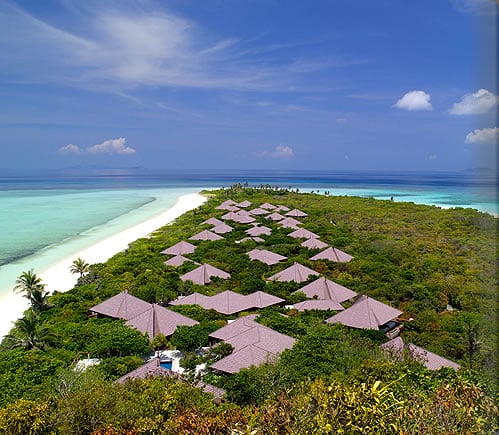
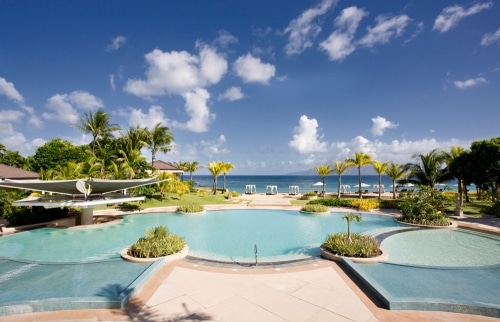
Philippines is made up of over 7,100 islands and here you can find hundreds of fine beautiful beaches and luxury resorts that will surely make your vacation grand. Here are the top 20 luxury resorts in the Philippines (in alphabetical order)
Aman Resort Amanpulo is the most luxurious resort in the Philippines with sky-rocketing rates that can go over $1,000 per person. For elites who want only the best destination especially for their honeymoon then there’s no better place than Aman Resorts. It’s exclusive and private first-class resort that only the most famous and wealthy can indulge.You can reached this resort through private flights. Rates range from $850 to $4,725.
Misibis Bay Resort is in Cagraray Island of Bacacay, Albay. It’s 5-hectare wide and has a tropical landscape where you can see the jungle, volcanoes and their beautiful white sand beach. This is the place of luxury where you’re just a few steps away from a great adventure. Rates start at $470 to as high as $1489.
Misibis Bay
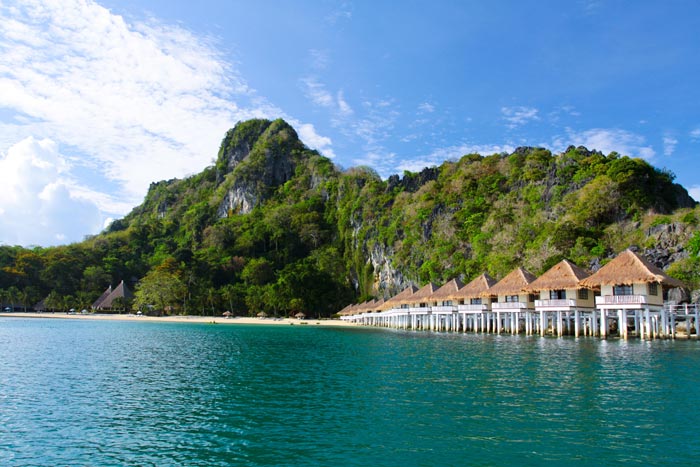
Apulit Island Resort is a luxurious resort in El Nido, Palawan. It used to be named as Club Noah Isabelle Resort. It has 50 water cottages with Filipino style of architecture and each cottage gives you an amazing view of the azure beach of El Nido. Prices range from P18,000+ to over P22,000+.
Apulit Island Resort
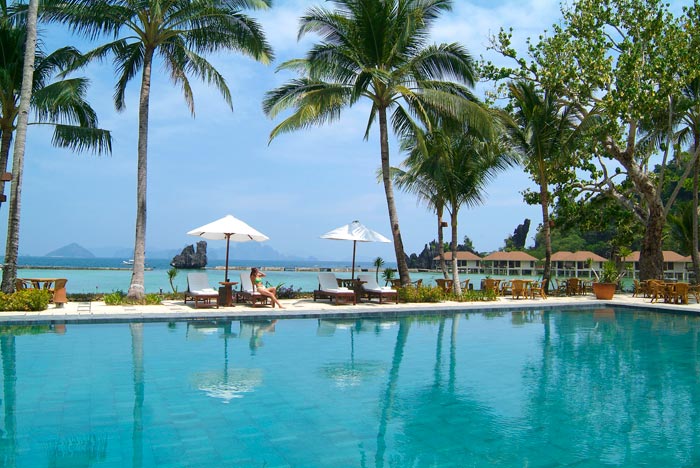
Lagen Island Resort is another luxury resort in El Nido, Palawan. It’s a resort situated in lushious forest and it’s perfect for couples who want to go in their tropical honeymoon. They have Forest rooms that are priced at P19,576 a night, Water or Beachfront cottages at P23,655 a night and the Forest Suite at P26,102 a night.
Lagen Island Resort
Shangri-la Resort & Spa can be found in Boracay and Cebu. Both are known best beaches blessed with distinct dining options and most luxurious spa villages in the Philippines. They offer rooms and villas with price ranging from P19, 100 for deluxe room to P70, 500 for villa Balani per night.
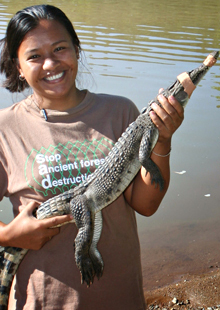
For Marites Gatan Balbas, saving the world's rarest crocodile has been as much about overcoming its image problem as more traditional conservation efforts.
Traditional stories depicted the Philippine crocodile as a large man-eater, farmers saw them as pests and the animal is frequently used as a symbol to represent corrupt politicians. But in reality, she explains, the species is relatively small, shy and friendly and does not attacked unless provoked.
It is her work to change this image through community initiatives that has seen Gatan Balbas recognised with a Whitley Fund for Nature award and helped to bring the Philippine crocodile (Crocodylus mindorensis) back from the brink of extinction.
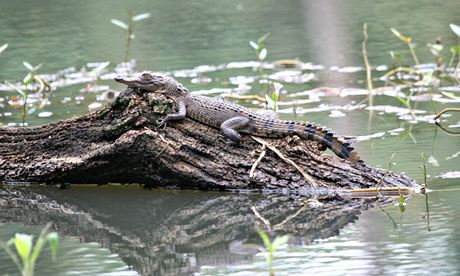
A juvenile Philippine crocodile in Dunoy Lake. The species is the world's rarest crocodile. Photograph: courtesy 2014 Whitley Awards
The 40-year-old will share the £280,000 prize money with seven other winners of the "green oscar" awards, which recognise individuals working in grassroots nature conservation in developing countries. This year's prizes range from schemes to encourage farmers to conserve the grassland hunting grounds of the imperial eagle in Bulgaria to a project to promote coexistence between local people and lions in northern Kenya.
Listed as critically endangered by the IUCN and found only in the Philippines, there are only 100 mature Philippine crocodiles estimated to be living in the wild. Little is known about the species, for example, how long an individual lives for, and Gatan Balbas's Mabuwaya Foundation is one of the only organisations to study it.
From world war two to the 1960s, crocodiles in the Philippines were heavily exploited for leather and the pet trade. Today the threats come from the loss of the crocodile's freshwater habitat of marshes, swamps and creeks that are converted for agriculture and the killing of the animals outside protected areas. Hatchling survival is also very low as the species is so sensitive and there are not enough unspoilt water bodies where juvenile crocodiles can mature safely.
Once widely distributed throughout the Philippines, the species is now restricted to northern Luzon Island and south-west Mindanao in the north-east of the archipelago.
"In our country there are organisations that are working to conserve endangered species like the Philippine eagle, the Philippine cockatoo, the green sea turtle and the Isabela oriole. But these are very beautiful species and do not have an image problem – nobody cared about the crocodile and that's why we set up our foundation, because we care. We don't want to crocodile to be extinct, we want to enjoy it," Gatan Balbas says.
Gatan Balbas is the deputy director and field project manager of the Mabuwaya Foundation(meaning "long live the crocodile"), set up in 2003, and also a member of the IUCN crocodile specialist group.
The staff of nine plus volunteers have managed to increase the wild population from 12 individuals in 2001 to 109 today, and reduced crocodile killings by humans from 13 in 1998 to just one in 2013.
"That's the power of involving the local communities in the protection programme – it's very effective because they see the ownership and the pride of being involved in the conservation of the species. They say: 'this is our crocodile and we are very proud of it'."
Gatan Balbas explains that a central part of the foundation's work is communication and education campaigns for local communities and government involving lectures, puppet shows, school field trips to crocodile sanctuaries and community consultations. "We believe that communication is the key to gain the respect or the people for the crocodiles. And we believe that campaigns should start from a young age."
Far from the scary monster depicted by the older generation, young children now have a friendly crocodile mascot, fun crocodile puppets and story books to help them understand that crocodiles are not a threat.
Such is the success of the image overhaul in some areas that the slogan in the municipality of San Mariano where the foundation works is now: "Philippine crocodile: something to be proud of."
Gatan Balbas says her work has been helped by a healthy attitude to conservation in the Philippines, where a national act protects all critically endangered species including the crocodile with a penalty of 100,000-1m pesos or a 6 to 12-year jail sentence. The species is also protected by local sanctuaries that prohibit catching, harming or killing the species. "People respect it because they are involved in the development of that law," she says.
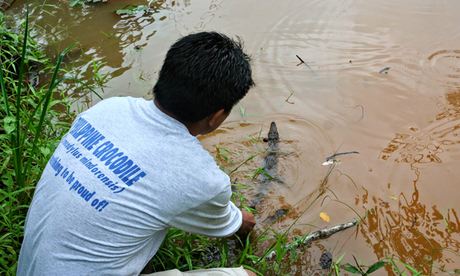
Releasing a Philippine crocodile back into the wild. Photograph: Courtesy 2014 Whitley awards
As well as creating four locally managed crocodile sanctuaries, with plans for two more, the foundation also runs a "headstart" programme that involves nest-searching and 24-hour guard, collecting the hatchlings and bringing them to the rearing station for 18-24 months, then releasing them back into the wild.
"Winning the Whitley award will help us increase the population of the Philippine crocodile through head-starting and releasing crocodiles and nest-guarding. It will also to strengthen the community-based conservation effort that was initiated years ago so that we can have more nests in the future and more crocodiles in 10 years. Winning this award is a great, great opportunity for us," Gatan Balbas said.
She says Mabuwaya's target is to get the crocodile delisted from its critically endangered status and see a 10% increase in its population each year.
"If we can save the Philippine crocodile when people viewed them as very scary and something to be feared then I believe we can save all other critically endangered species in our country from extinction."
2014 Whitley award winners
All nine winners are being honoured at an award ceremony at the Royal Geographical Society in London on Thursday night that will be attended by the fund's patron, Princess Anne.
Gold award
• Jean Wiener – Haiti
"Lifetime achievement" award for 25 years conserving Haiti's coastal ecosystems and securing its first marine protected areas
Whitley Fund for Nature awards
• Shivani Bhalla – Kenya
Warrior Watch: enabling the coexistence of people and lions in northern Kenya
• Luis Torres – Cuba
Building a national movement to save Cuba's amazing plant life
• Fitryi Pakiding – Indonesia
Uniting coastal communities to secure the Pacific's last stronghold for nesting leatherback turtles
• Marites Gatan-Balbas – Philippines
Taking local action to save the world's rarest crocodile
• Melvin Gumal – Malaysia
Protecting Borneo's iconic great apes: conservation of orangutans in Sarawak
• Stoycho Stoychev – Bulgaria
The imperial eagle as a flagship for conserving the wild grasslands of south-eastern Bulgaria
• Paula Kahumbu – Kenya
Hands off our elephants: delivering African leadership to address Kenya's poaching crisis
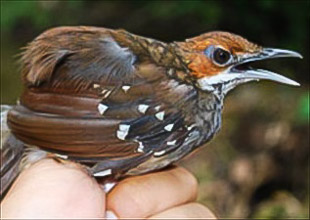
Researchers have discovered a new ground-dwelling forest bird species that lives on Luzon Island of the Philippine archipelago.
Asian Scientist (Sep. 11, 2013) – Researchers have discovered a new ground-dwelling forest bird species that lives on Luzon Island of the Philippine archipelago.
The new species, dubbed the Sierra Madre Ground-Warbler, is described in a paper published in The Condor, a scientific journal of the Cooper Ornithological Society.
“The ground-warblers are very unique birds,” said Pete Hosner, who co-authored the study.
“They’re only known from the northern Philippines, and they have no close relatives. As the name suggests, they’re ground-walking songbirds—rotund, with strong legs and weak wings—and it appears that they can barely fly.”
“They tend to inhabit dense forest understory, where they feed on insects. Their song is extremely high in pitch, and ventriloquial—it’s almost impossible to locate the source of the sound in the forest—they always sound like they are far away, even when they are almost at your feet.”
Hosner said the new species of ground-warbler looks similar to the other two species of ground-warblers in the Philippines, so it wasn’t recognized as an independent species at first.
“The three species of ground-warblers now recognized are essentially identical in size, shape and juvenile plumage coloration held in their first year of life, but they differ from one another in adult plumage coloration,” he said.
According to Hosner, the reason that this new species remained undescribed for so long was that the adult plumage of the very first ground-warbler to be described was unknown.
That species, Cordilleran Ground-Warbler, was documented only from a single juvenile until our recent fieldwork.
As a result, the ‘discovery moment’ was when the researchers saw an adult individual of the known species.
Examination of its DNA was key to differentiating the new ground-warbler once it was spotted in the field.
“When we noted the different plumage coloration between adult birds in the Cordillera and the Sierra Madre in northern Luzon, we sequenced DNA to determine if the plumage differences were individual variation within a species, or if the two plumage forms were also genetically diagnosable,” Hosner said.
Through this analysis, the researchers found that Cordillera and Sierra Madre birds were highly divergent in their DNA, almost as different as the distinctive Bicol Ground-Warbler in southern Luzon.
——
Source: Kansas University. Disclaimer: This article does not necessarily reflect the views of AsianScientist or its staff.
The Lonely Planet Adventure: There's no need for a cage when you share the
water with these giant creatures
The Independent (UK)
Saturday 19 January 2013
Suddenly an onlooker spots a dark shadow and the shout goes up: "Shark!
Everybody get in the water!" At Donsol, the whale-shark capital of the
Philippines, the aim is getting close to sharks, not getting away.
Fishermen have known about the butanding that gather in the
watery depths off the coast of Bicol for centuries, but the transformation of
Donsol from sleeping fishing village to whale-shark spotting centre is a more
recent phenomenon. In 1998, a Filipino dive team spotted startling numbers of
whale sharks and alerted the World Wildlife Fund, and it set the wheels in
motion for one of the most successful community tourism projects in Asia.
Historically, butanding were viewed with fear by local
fishermen, who noted their resemblance to deadlier denizens of the deep.
However, the involvement of marine experts led to an official ban on fishing for
whale sharks, and a new-found respect for them among Donsol residents. With
money coming in from managed shark dives, butanding suddenly had a greater value
alive than dead, providing a powerful incentive for conservation.
From the outset, diving at Donsol was promoted with the welfare
of the whale sharks in mind. Scuba diving was banned – sharks are spooked by the
noise of bubbles from diving equipment – and swimmers were allowed to enter the
water only with a mask and snorkel, in small, managed groups.
Without tanks and
regulators, the encounter is more intimate; you are a visitor in their
world.
While Donsol is firmly on the international diving map, this is
not your average diving hub. It remains a sleepy fishing village – aside from
the visitor centre, a scattering of Filipino-style resorts and the occasional
jeepney, there is little to disturb the peace. In the evening, nightlife takes
the form of beers on the balcony and firefly-spotting cruises on the local
creek.
The adventure unfolds
There's a tangible excitement in the air as the pump boat chugs
out from Donsol. For one thing, there's the knowledge that you have to be ready
to leap into the water at a moment's notice when the attending butanding
interaction officer (BIO) spots a cruising whale shark. Then there's the thrill
that comes from knowing you'll be sharing the water with the world's biggest
fish.
As the boat skips across the waves, everyone is on tenterhooks,
scanning the surface of the water for telltale eddies or fins … then the call
goes up: "Jump!" You grab your mask and leap into the water. First there's the
jolt that comes from sudden immersion, then your heart skips a second beat as a
fish as long as a bus glides beneath you. You maintain a respectful distance,
but the shark seems unperturbed by the strange flapping creatures from the
surface.
Whale sharks may be filter feeders, but they're unmistakably
sharks. Fears evaporate as the graceful ballet unfolds, however. The opening and
closing of the giant mouth. The rippling of the gills. The steady sweep of the
gigantic tail. Then the shark turns, drops out of view, and melts back into the
deep, dense blue.
The focus at Donsol is not on spotting whale sharks, but on
"interactions". On a good day, swimmers can encounter a dozen. To put that into
context, the great marine explorer Jacques Cousteau saw just two in his
lifetime. It's a wild encounter, and there's an element of chance, but in peak
season, when sharks gather to feed and breed, sightings are almost
guaranteed.
Making it happen
Jeepneys and air-con mini vans run to Donsol from Legaspi,
which is served by regular flights and buses from Manila. Peak season for whale
sharks is February to May when plankton provide ample food. No dive
certification is needed; you just must be able to swim. There are resorts
(Giddy's Place is the pick) and centres in Donsol for dives elsewhere along the
coast.
Essential Experiences
* Feeling the spray on your face as the pump boat skims across
the waves.
* Glimpsing your first butanding gliding through the silent
depths.
* Getting up close and with manta rays off Ticao Island.
* Scouting for fireflies on the Ogod River.
* Admiring the symmetry of Mount Mayon, the world's most
perfect volcano, in nearby Legaspi.
Location: Donsol, Sorsogon, Bicol, the
Philippines.
Ideal time commitment: Three days.
Best time of year: February to May.
Top tip: Bring your own mask and snorkel for
a watertight fit.
An Australian company will soon begin drilling for oil on the Philippine island of Cebu, hoping to tap what may be a huge source of undiscovered wealth for the archipelago, the Department of Energy said Monday.
Sydney-based Gas2Grid Ltd. will drill two wells in Carcar City and one in the coastal town of Aloguinsan within three months, Energy Undersecretary Jose Layug said.
The company is "bullish" about the prospect of success which could eventually yield as much as 69 million barrels of oil and 50 billion cubic feet (1.5 billion cubic meters) of gas, he added.
All of the Philippines successful oil operations so far have been in deep waters.
"If oil will be discovered, it will be a game-changer, especially for Cebu," Layug added.
He said it would earn Cebu huge amounts of revenue while helping to lower the country's large oil imports.
However, he declined to give details until any oil deposits are confirmed.
The development of onshore oil wells is much cheaper and faster than the offshore wells that require drilling in deep water, Layug said.
"But it can be more challenging because there are local communities who can complain," he said, adding that the government and oil company would have to explain the benefits while minimizing the effects of oil production.
Cebu is known for its tourism industry, built around its many beaches, its export industries and as a trading center for the central Philippines rather than for any mineral resources.
The Philippines produces 6,000 barrels of oil per day from its offshore oil wells but consumes 300,000 barrels per day, he said.
Layug said the country was "underexplored" as far as oil prospects were concerned and could yield more discoveries. — Agence France-Presse
Admin Comment: I hope China will not declare territorial sovereignty over Cebu province.
(Top left) Cebu Hawk owl and (bottom right) the Camiguin Hawk owl. Photo courtesy of Oriental Bird Club: original painting by John Gale
MANILA, Philippines -- Two new species of owls have been discovered in the Philippines, according to the Michigan State University (MSU), whose researcher played a key role in confirming the birds' existence.
The news is featured in the current issue of Forktail, the Journal of Asian Ornithology.
According to the paper's lead author Pam Rasmussen, an assistant professor of zoology at the Msu and assistant curator of mammalogy and ornithology at the MSU Museum, the discovery took years to confirm but was well worth the effort.
"More than 15 years ago, we realized that new subspecies of Ninox hawk-owls existed in the Philippines," she said. "But it wasn't until last year that we obtained enough recordings that we could confirm that they were not just subspecies, but two new species of owls."
"Announcing the finding of a single bird is rare enough. But the discovery of two new bird species in a single paper is so rare that Rasmussen and the other researchers couldn't recall the last time it happened," the MSU said in a statement.
The first owl, the Camiguin Hawk-owl, is said to be found only in Camiguin Sur.
"At night, it gives a long solo song that builds in intensity, with a distinctive low growling tone. Pairs of owls give short barking duets that start with a growl. They also are the only owls to have blue-gray eyes," the MSU said.
The second new discovery was the Cebu Hawk-owl, which was thought to be extinct due to deforestation.
"The owls don't learn their songs, which are genetically programmed in their DNA and are used to attract mates or defend their territory; so if they're very different, they must be new species," Rasmussen said.
"When we first heard the songs of both owls, we were amazed because they were so distinctly different that we realized they were new species."
The owls have avoided recognition as distinct species for so long "because the group shows complex variation in appearance that had been poorly studied, and their songs were unknown," the MSU saod, adding that both islands are "off the beaten path" for ornithologists and birders, who usually visit the larger islands that host more bird species.
Sound recordings of both new owl species and those from other islands are available free on AVoCet, the university said.
The MSU said a team of scientists and contributors to confirm the owls' existence, which included individuals from BirdLife International, the Oriental Bird Club, Philippines Biodiversity Conservation Foundation Inc. and Birdtour Asia.
Additional support was also provided by National Geographic.
Underground river declared ‘wetland of int’l importance’
Philippine Daily Inquirer
Saturday, July 21st, 2012
Photo courtesy of the New7Wonders of Nature
MANILA, Philippines—When it rains, it pours for the Puerto Princesa Underground River (PPUR).
Barely four months after having been officially installed as one of the world’s New 7 Wonders of Nature in April, the underground river was declared “Wetland of International Importance” during the Ramsar Convention held on July 6-13 in Bucharest, Romania.
The PPUR is the longest navigable under river in the world, flowing 8.2 kilometers through a cathedral-like cave of limestone formations, stalactites and stalagmites. A natural World Heritage site and Puerto Princesa City’s premier eco-tourism destination, it was also recorded in the Unesco World Heritage site list for its outstanding value and ecological significance.
“Once again, it has been proven that caring for the environment is the right way to go. It shows that we were on the right track to commit our leadership to the policy environmental protection and sustainable development,” Puerto Princesa Mayor Edward S. Hagedorn said in a press statement.
Wetlands are areas saturated by water. They support various types of vegetation with the ability to survive in saturated soil conditions. The ecological benefits that can be gained from wetlands spring from its basic function which is to conserve and preserve water.
Environment Secretary Ramon Paje enjoined all Filipinos to “take pride for taking the lead in the global effort to protect wetland areas not only for the economic benefits they provide but also for the ecological service we are now enjoying.”
It was Paje who pushed for PPUR’s nomination to the list of Ramsar Convention of Wetlands, for its importance as a biodiversity conservation covering the entire mountain-to-sea ecosystem and its forests.
Governments worldwide recognized the importance of wetlands in the environment, Hagedorn said. On Feb. 2, 1971, 18 nations adopted the Ramsar Convention on Wetlands of International Importance in the city of Ramsar in Iran, due to the alarming rate of destruction of wetlands. Today, there are currently 160 contracting parties who form the nucleus of Ramsar convention, including the Philippines, who regularly meet every three years for a conference of parties.
The Ramsar Convention provides the framework for national action and international cooperation for the conservation and wise use of wetlands and their resources among member parties. Parties are obliged to designate and nominate one wetland site for inclusion in the “List of Wetlands of International Importance,” following certain criteria.
Surigao del Sur, a quite difficult to reach province in Mindanao is blessed with natural attractions that beckons tourists. The butt-numbing ride is worth enduring knowing that once you reach your destination, a splendid place awaits you.
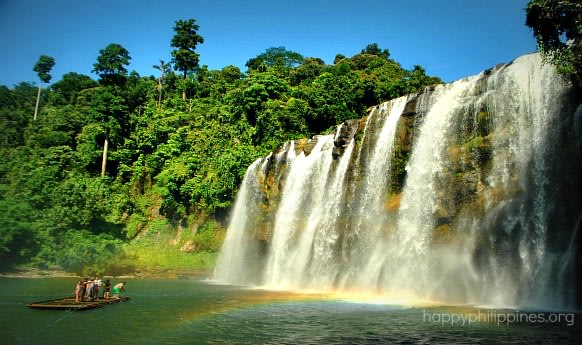
Tinuy-an Falls in the town of Bislig
One such attraction that has gained a fair share of attention is Tinuy-an Falls in the town of Bislig. Reachable by habal-habal (motorcycle) that can be hired from Mangagoy, the commercial center of Bislig; this three-tiered water falls though not as tall as it appears in pictures, is indeed wide. The smaller cascades above the main falls are a perfect spot for swimming. Tinuy-an Falls has been developed already, stores and cottages for rent are now available which makes it ideal for family picnics.
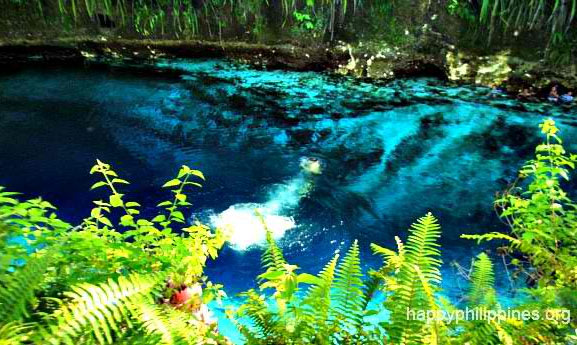
A neighboring town Hinatuan has also risen to fame because of the Enchanted River. And like Tinuy-an Falls, the area has been developed; picnic tables and cottages have been built and the once pristine river is now akin to a pool. Despite these changes, the deep blue basin remains majestic. The deeper part of the water is a mixture of cobalt and turquoise and the water turns green at the shallow area that opens to the endless sea.
When we arrived there early morning, we saw charming fishes swimming in the river. According to our habal-habal driver, what remains a mystery is that those elusive fishes are never caught by anyone who attempts to catch them. Since the Enchanted River is now flocked by tourists, to better appreciate it, it is advisable to go there early in the morning to avoid the crowd especially during weekends and holiday.
Swimming in its refreshingly cool water is a must. For non-swimmers, lifejackets are for rent at Php 15 per hour.
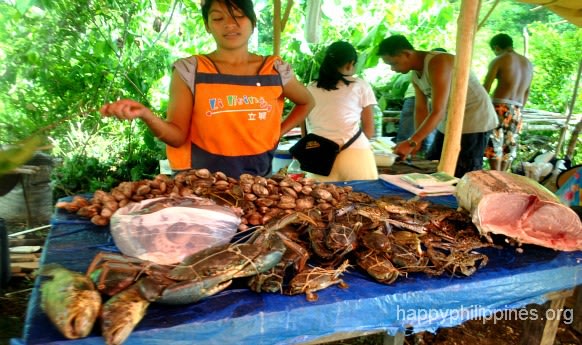
Hinatuan's delicious seafood
Hinatuan is known for its delicious seafood, in fact, a few meters away from the entrance of the Enchanted River; you can find locals selling affordable fresh crabs, lobsters, shrimps, fish and shells. You can even have it cooked and delivered to your picnic tables.
At the mouth of the river, boats for island hopping (good for 4 people) are available for rent. For only Php 160 per hour these boats can take you to neighboring islands with golden sand beaches. Beach bumming is ideal in Pangasinan Beach,and Margaret Island but if you have been to many good beaches in the country, you may find them ordinary. A sandbar is visible during low tide beside the Sibadan Fish Cage. The viewing deck at Margaret Island Peak Resort is worth checking as it offers a panoramic view of the Pacific Ocean.
Tubbataha Reef hailed by experts as marine conservation model
YASMIN ARQUIZA
GMA News
July 12, 2012
CAIRNS, Australia – In what is regarded as the center of coral diversity in the world, the Tubbataha Reef in the Philippines is emerging as a model for conservation in the face of grave threats to the region’s coral reefs.
The Philippines is one of the six countries in a region dubbed the Coral Triangle, which contains nearly 30 percent of the world’s coral reefs and more than 3,000 species of fish — twice the number found anywhere else in the world.
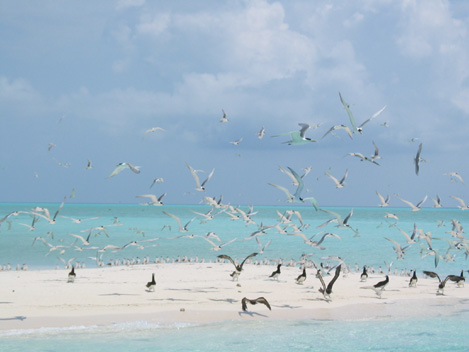
Seabirds on the north islet of Tubbataha. Photo: Michael D. Marasigan
A new report from the World Resources Institute released at a weeklong symposium here said more than 85 percent of reefs in the Coral Triangle —the global average is 60 percent— are directly threatened by human activities such as overfishing, pollution from watersheds, and coastal development.
“Across the Coral Triangle region, coastal communities depend on coral reefs for food, livelihoods, and protection from waves during storms, but the threats to reefs in this region are incredibly high,” said Lauretta Burke, senior associate at WRI and a lead author of the report.
More than 130 million people living in Indonesia, Malaysia, Papua New Guinea, the Philippines, Solomon Islands, and Timor-Leste depend on coral reefs for food, employment, and tourism revenues, the report said.
“Much of the threat is anthropogenic, which is something we have control of,” observed Alan White, senior scientist of The Nature Conservancy and one of the report’s contributing authors.
Protection measures are lacking, however, with only three per cent of coral reefs in the Philippines designated as no-take zones inside marine protected areas (MPA), he said. In comparison, 29 per cent of reefs in Indonesia and 11 per cent in Malaysia are inside MPAs.
Amid the gloomy statistics, the Tubbataha Reef is one of the “excellent sites” among the measly one per cent of MPAs in the Coral Triangle that are considered to be effectively managed, White said. The Solomon Islands also has some good sites, he added.
“The Tubbataha is really a success story,” said White, who has done long-term monitoring of the reef’s resources for two decades.
Shift in marine diversity
Located within the municipality of Cagayancillo in Palawan, the Tubbataha Reef was declared the Philippines’ first national marine park in 1988 by then-President Corazon Aquino and subsequently proclaimed a World Heritage Site five years later.
Since the mid-1990s, when then-President Fidel Ramos stationed Philippine Navy and Coast Guard in the uninhabited coral atolls, Tubbataha has benefited from continuous protection against poachers that brave the difficult crossing in the Sulu Sea to reach the reefs.
A park manager and civilian staff have augmented the armed personnel while a multi-sectoral board sets management policies in the park, which has been voted as one of the world’s ten best dive sites.
Theresa Mundita Lim, director of the Protected Areas and Wildlife Bureau (PAWB), said a study conducted in 2010 showed that the center of marine diversity in the Philippines had shifted to Tubbataha Reef instead of the central Philippine Sea, as an earlier study had indicated.
Fishing pressure in the Visayas due to increasing population and disturbance from tourism could be some of the possible reasons for the trend, she said.
Moreover, “we protected Tubbataha,” Lim told reporters on the sidelines of the symposium, which is held every four years to share new research results.
Secretary Ramon Paje of the Department of Environment and Natural Resources, which administers PAWB, has given instructions to her agency to come up with guidelines for scuba divers so that the country’s coral reefs can be protected from further degradation, Lim said.
Two-thirds of PHL reefs highly threatened
Overfishing and destructive practices such as blast or poison fishing are the greatest threats to the country’s reefs, affecting 98 percent or nearly the entire reef area, according to the WRI report.
The only exceptions are reefs in well-managed MPAs, the report added. These include the Tubbataha Reefs, along with Apo Island in the Visayas, and 23 smaller MPAs managed by local government and community organizations.
Two-thirds of the reefs are rated in the high or very high threat categories, going up to nearly 80 per cent when global warming and coral bleaching are included in the analysis.
Infrastructure development and crowding of coastlines, along with pollution mainly from farms and erosion of deforested mountains, threaten nearly 60 percent of reefs, the report said. — TJD/VS/HS, GMA News