Showing posts with label Cambodia. Show all posts

Saturday, November 30, 2019

...The Southeast Asian Game host (opening)

Philippines showcases cultural heritage to kick off 30th Sea Games

New Straits Times
30 November 2019


MANILA: The Philippines staged a spectacular opening ceremony for the 30th SEA Games at the world’s biggest indoor arena, the Philippine Arena, in Bulacan, near here, tonight.


In a departure from tradition, the opening ceremony was held in an indoor arena rather than a stadium.

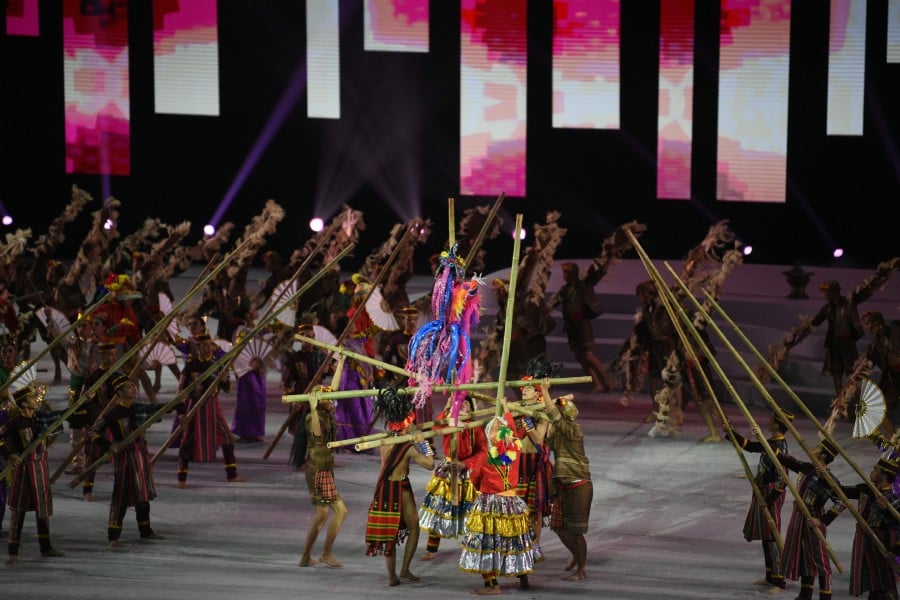
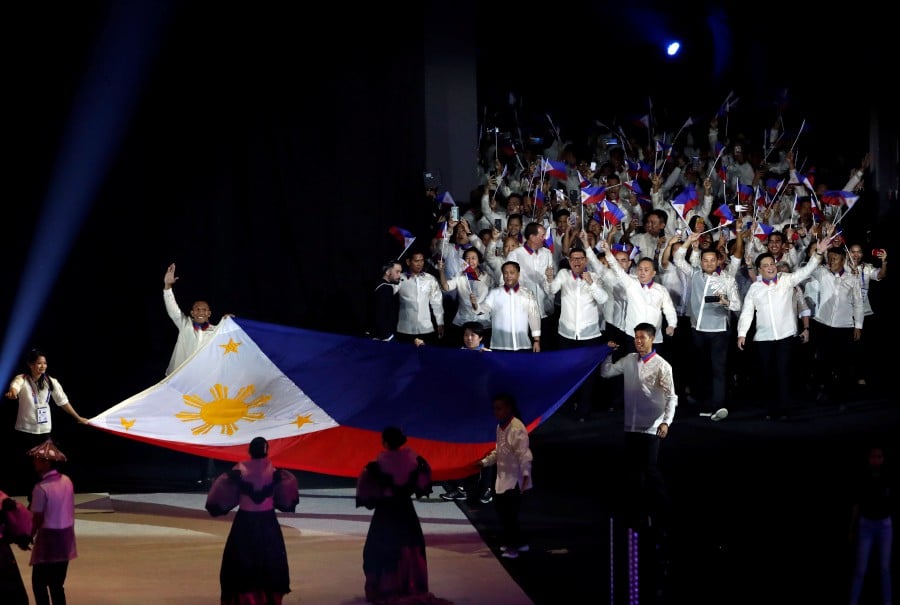
Also, for the first time in the biennial Games’ 60-year history, the games cauldron was placed at a different location, at the New Clark City Athletics Stadium, some 90km from Bulacan, and the lighting of the cauldron was shown on screen at the 55,000 capacity arena.

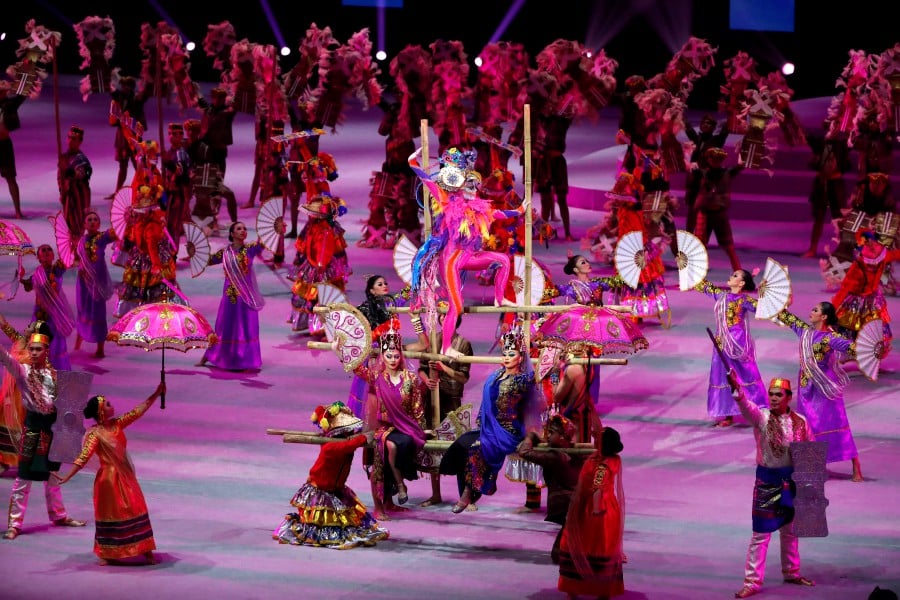
The extravaganza started after Filipino singer Lani Misalucha sang the republic’s national anthem, which was followed by an extraordinary performance themed “The Roots of our Strength”, showcasing the culture and heritage of the nation.
The spectators were treated to a series of warrior dances from the Bagobo, the Kalinga, the Maguindanao, Islamic and the pre-Hispanic Visayans.

The later part of the ceremony was powered by modern and hip-hop performances led by local artistes Inigo Pascual, Robert Sena, Apl.de.Ap and KZ Tandingan, among others.
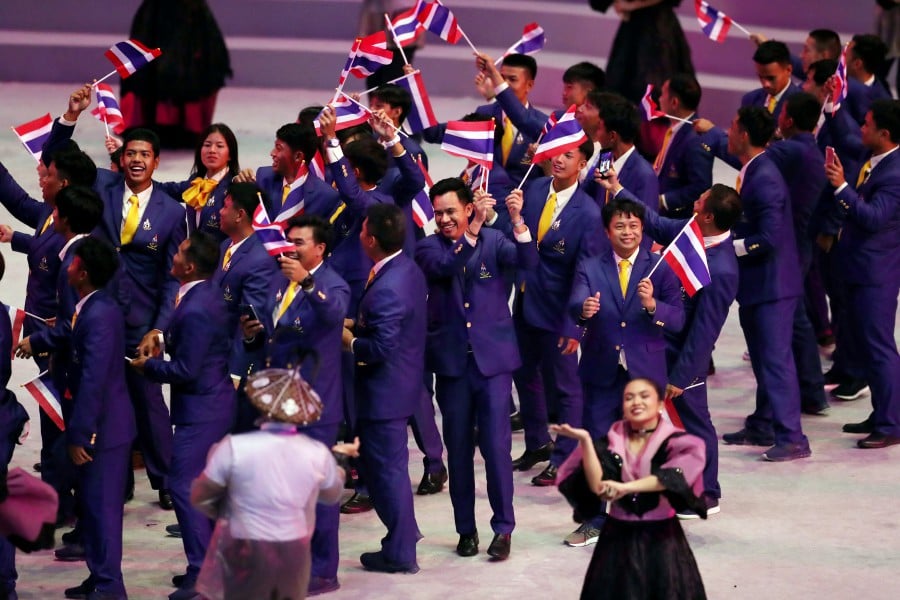
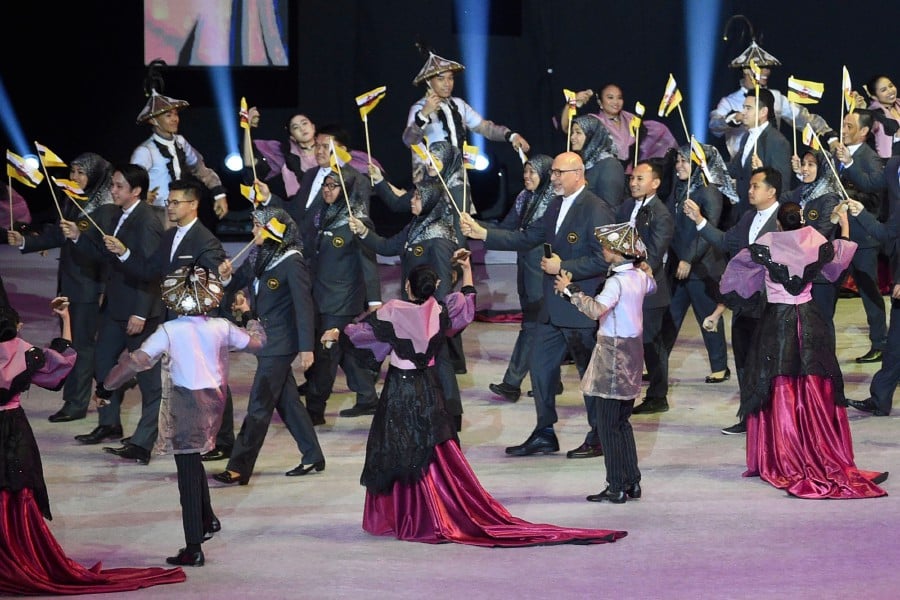
The contingents received loud cheers from the audience as they paraded into the arena in alphabetical order, starting with Brunei, Cambodia, Indonesia, Laos, Malaysia, Myanmar, Singapore, Thailand, Timor Leste and Vietnam, before host nation the Philippines ended the march.

Led by flag-bearer and 2018 bowling world champion Rafiq Ismail, the Malaysian contingent were represented by a delegation of about 100, including chef de mission Datuk Megat Zulkarnain Omardin and his two deputies, Nurul Huda Abdullah and Ahmad Faedzal Md Ramli.
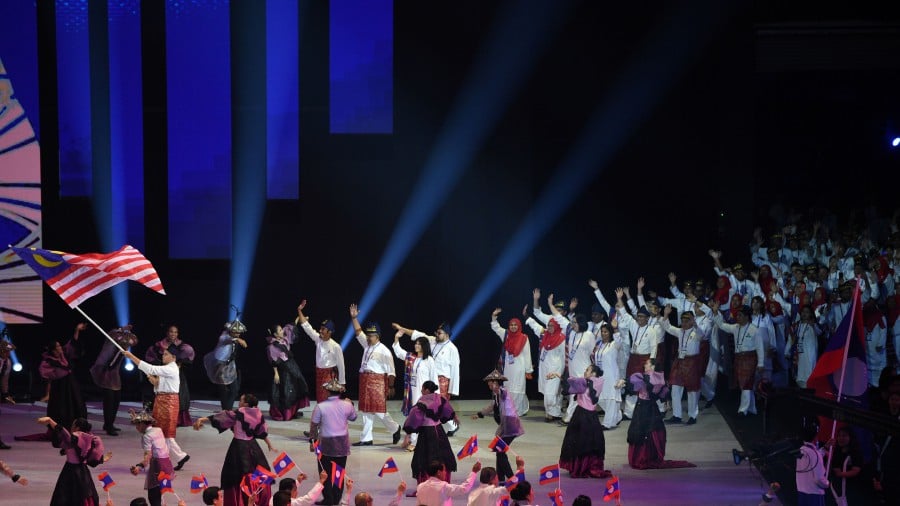

With the men dressed in white baju melayu and red samping with tengkolok, and the women in white baju kurung and selendang with Jalur Gemilang motif, and black shoes, the multi-racial Malaysian contingent, the hosts of the previous games, walked past the crowd proudly, symbolising the multiculturalism of the country.
World renowned Filipino boxers Manny Pacquiao and Nesthy Petecio were given the honour as the torchbearers before they jointly lit the cauldron to officially mark the beginning of the 30th SEA Games, after Philippine President Rodrigo Duterte had declared open the Games.

Themed ‘We Win As One’, the Games will run for 12 days until the closing ceremony at the New Clark City Athletics Stadium on Dec 11.
More than 8,000 athletes from the 10 ASEAN countries and Timor Leste will compete in 530 events in 56 sports at the three main clusters, namely Manila, Clark and Subic.


The Philippines have hosted the SEA Games three times before – in 1981, 1991 and 2005.
This year’s Games see the introduction of a few new sports such as arnis, jujitsu, kickboxing, underwater hockey and esports.

Defending champions Malaysia have sent a strong contingent of 773 athletes and 339 officials to participate in 52 sports, targeting 70 gold, 51 silver and 105 bronze medals, which is expected to place them fourth overall.– BERNAMA

Wednesday, October 16, 2019

...the improved PH FIFA Ranking

FIFA Rankings 2019: Thailand, Philippines set for rise, Indonesia to fall after poor display


Fox Sports Asia
16 October 2019


Thailand and Philippines are set to rise up the FIFA Rankings table after their latest exploits in the 2022 FIFA World Cup Qualifiers while Indonesia, Cambodia and Singapore are set to fall down.

Thailand registered a massive 2-1 win over the United Arab Emirates while Philippines produced a fine defensive display to hold the mighty Chinese side for a goalless draw. Indonesia, on the other hand, lost 3-1 to Vietnam, Cambodia suffered a 4-0 defeat to Iraq and Singapore went down 3-1 against Uzbekistan.


With their win over UAE, Thailand are expected to move up six spots to 109, while Philippines will gain one spot and will move up to 126. Indonesia will lose one spot and go down to 171 while Singapore will lose two spots and will go down to 159. Cambodia, who were hammered 14-0 by Iran last week, will go down to the 172nd spot after the loss against Iraq.

...the Filipino Princess

Filipino princess champions humanitarian efforts in Cambodia


Anith Adilah Othman
Khmer Times
16 October 2019


Glamorous yet graceful - these are the best words to describe Princess Dr. Maria Amor Torres, a member of the Philippines 'Royal House of Baloi who is recognized globally for her philanthropy work.


Image result for maria amor torres


As a Mindanao royalty, Princess Dr Maria is aware of the ‘voice she commands’, therefore she chose to make it count by advocating sustainable social developments and promoting universal humanitarianism.
“As one of the Sultans of my region, I have bigger responsibilities as far as social developments and peace-building are concerned,” she told Khmer Times in a recent interview. “These are the duties given to me by the royal authorities who enthroned me.”
“I accept these duties wholeheartedly as it aligns to my aspirations as a humanitarian. There is nothing that will make me happier than to serve humanity, especially our own people,” she added.
Despite having had a life full of glitz and glam as a celebrity formerly, the princess admitted that there is nothing more rewarding than bringing about positive change to the lives of others. She added that her determination to serve humanity remains her biggest motivation.
“Life has never been better and sweeter as I am living the dream now. Living a selfless life with a purpose, building a bright future for our children, fighting for human rights, promoting equality, empowering women and the youth, promoting health and wellness and protecting our environment. This is the best kind of life to live,” she quipped.
Regardless, Princess Dr Maria is showing no signs of stopping. She is now leading a non-profit group that she founded in 2011, ‘We Care For Humanity’, to continue to make changes for the betterment of the world.
“We are an internationally-recognised organisation focusing mainly on the seven United Nations Sustainable Development Goals. They are: zero poverty, good health and well-being, quality education, gender equality, reduced inequalities, climate action and peace and justice,” she said.
Thanks to her active participation in the field of philanthropy, Cambodia can now hopefully benefit from the latest collaboration between ‘We Care For Humanity’ and ‘Save Nature Cambodia’, a local group aimed at raising awareness on eco-friendly initiatives among citizens.
“Cambodia is a fast progressing country with very strong culture and passion for the environment. Its people are equally beautiful, resilient and faithful to their motherland.
“Cambodia is also a big advocate of climate change, that is why we are very happy to collaborate with ‘Save Nature Cambodia’. As the Royal Advisor of the latter, I can extend the mission and vision of our organisation concerning matters related to climate change,” she added.

Tuesday, September 24, 2019

...the PH ranking in global trade facilitation

Philippines boosts global ranking in trade facilitation


Louella Desiderio
Philippine Star
24 September 2019


MANILA, Philippines — The Philippines saw its trade facilitation score go up in this year’s United Nations (UN) Global Survey on Digital and Sustainable Trade Facilitation amid improvements in four out of five categories tracked by the report.

This year’s report showed the Philippines got a trade facilitation score of 80.65 percent, up from 69.89 percent in 2017.

Covering 128 economies, the UN report looks at trade facilitation measures being implemented in relation to the World Trade Organization Trade Facilitation Agreement, digital trade, small and medium enterprises, agriculture and women, and trade finance.

The measures are grouped into five categories which are cross-border paperless trade, paperless trade, institutional arrangement and cooperation, formalities, and transparency.

In Southeast Asia, the Philippines had a better trade facilitation score than neighbors Indonesia (80 percent), Brunei Darussalam (77 percent), Cambodia (71 percent), Vietnam (61 percent), Myanmar (60 percent) and Lao People’s Democratic Republic (59 percent).

The Philippines, however, was behind Malaysia and Thailand which both got 83 percent, and Singapore which had a score of 94 percent.

Results of the survey showed the Philippines had higher scores in all the categories except in institutional arrangement and cooperation, where its rating was unchanged at 55.56 percent.

In the cross-border paperless trade category, the Philippines got a score of 55.56 percent this year from just 33.33 percent in 2017.

The Philippines’ score also rose to 77.78 percent this year from 70.37 percent in 2017 in the paperless trade category.

In terms of the formalities category, the Philippines had a rating of 100 percent this year from 87.50 percent last year.

The Philippines also had a 100 percent score in the transparency category this year, up from 93.33 percent in 2017.

In conducting the survey, the UN aims to help countries benchmark and reduce the time and cost of trading across borders.

It likewise seeks to provide information for policy makers to take advantage of trade in the implementation of the 2030 Agenda for Sustainable Development which aims to put an end to poverty.

Tuesday, September 10, 2019

...the Asean leader in gender-equality

PHL cited as gender-equality leader in government hiring - ADB, OECD


Business World | September 10, 2019

THE Philippines is a regional leader in terms of gender equality in job hiring, specifically in the public sector, the Asian Development Bank (ADB) and the Organization for Economic Co-operation and Development (OECD).
Asian Development Bank (ADB)
Speaking to reporters at the launch of the Government at a Glance Southeast Asia 2019 report issued by the ADB and OECD, Chiara Bronchi, an ADB Chief Thematic Officer from the bank’s Thematic Advisory Service Cluster, said the study found that 53.7% of public sector jobs in the Philippines were occupied by women in 2016, up from 50.7% in 2009.
The Philippines outperformed the the Southeast Asian average of 47% in 2016, while also employing larger proportions of women than Japan or South Korea, where less than 50% of public sector employees were women,
“That makes actually Philippines a leader… in terms of hiring [with] a gender balance if you are in the public sector,” Ms. Bronchi said.
Edwin Lau, Head of the Reform of the Public Sector division at the OECD’s, Public Governance Directorate, said the findings reflect “meritocratic” hiring in government service.
“You also see that the types of recruitment systems that are used are very meritocratic, so they’re really built to ensure top-quality people are rising in the public service,” Mr. Lau said.
He said the Philippines is “far above” the Southeast Asian average in terms of performance management systems.
“It’s [Philippines] even using more performance management systems than OECD countries… (In) public employment… the systems are fairly well developed,” he added.
The study also found that women are underrepresented in parliamentary bodies, with only 20% of these seats across the region held by women in 2018, just 1.7 percentage point higher from a decade earlier.
The report is the first of its kind that looked into the latest available data on public administration in Brunei, Cambodia, Indonesia, Laos, Malaysia, Myanmar, the Philippines, Singapore and Vietnam. — Luz Wendy T. Noble

Thursday, September 5, 2019

...the Pinoy English teacher in Cambodian Senate

Pinoy teaches English to Cambodian Senate staff 


Pia Lee-Brago
Philippine Star 
04 September 2019


MANILA, Philippines — A Filipino educator trained another batch of staff members of the Cambodian Senate in using the English language.

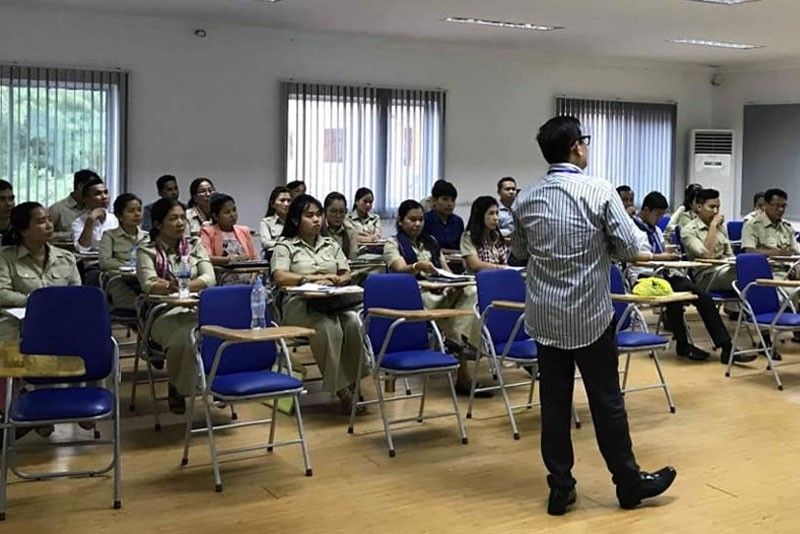
Teodoro Ariel Publico conducted an English language training program for more than 40 staff members of the Secretariat-General of the Cambodian Senate at the Pannsãstra University of Cambodia’s Institute of Foreign Languages.

Teodoro Ariel Publico conducted an English language training program for more than 40 staff members of the Secretariat-General of the Cambodian Senate at the Pannsãstra University of Cambodia’s Institute of Foreign Languages.
dfa.gov.ph

The three-month training was organized by the Philippine embassy in Phnom Penh upon request of the Cambodian Senate.

Embassy chargé d’affaires Myca Fischer said the Philippine government has provided various capacity-building programs to Cambodians.

“The English language training is a manifestation of our continuing commitment to an ASEAN community that is socially cohesive and people-oriented,” Fischer said, referring to the Association of Southeast Asian Nations.

English is the working language of the ASEAN.

The embassy tapped the services of Publico, who committed to deliver quality English education for professionals and promote the tatak gurong Pinoy (mark of a world-class Filipino teacher).
Publico, who hails from Cavite, arrived in Phnom Penh in 2014.

This is the third English language class arranged by the embassy for the Secretariat-General.

The initial three-month course was held in May 2015 and benefited 18 participants.

The second three-month module was offered in January 2016 to 20 Senate staffers.

As of June this year, there are 1,023 education professionals among the 6,773 Filipinos in Cambodia registered with the embassy.

The Filipino teachers are working in universities, international schools, language training centers and kindergartens.

Some of them teach music, physical education, mathematics, science and English.

Fischer said the embassy has received feedback from students and their parents that they appreciate the nurturing and hardworking nature of Filipino teachers in Cambodia.


Saturday, April 5, 2014

...the WEF PH jump

PH jumps 8 notches in WEF global trade index

 
The index measures how well countries facilitate the flow of goods and services over borders to their jurisdictions
 Rappler.com                      
Apr 03, 2014
UP 8 NOTCHES. The Philippines improves its ranking in the World Economic Forum's Enabling Trade Index 2014 report
MANILA, Philippines – The Philippines advanced 8 places in the World Economic Forum's (WEF) annual survey measuring how open countries are to international trade.

The Philippines ranked 64th out of 138 economies in WEF's 2014 Enabling Trade Index, up from 72nd in 2012. The country has risen 28 places since 2010, when it landed on 92nd spot.

In ASEAN, the Philippines was 5th, following Singapore, Malaysia, Thailand and Indonesia.

Following the Philippines were Vietnam, Cambodia, Lao PDR and Myanmar.

The Enabling Trade index "assesses the extent to which economies have in place institutions, policies, infrastructures and services facilitating the free flow of goods over borders and to their destination." These trade-enabling factors are classified under 4 categories: market access, border administration, infrastructure, and operating environment.

WEF said the Philippines did well on market access, but there was room for improvement with respect to the other categories. It said border administration was mired by corruption and red tape – two things that also weakened general operating environment in the country.

WEF added, "Like many countries in the region, the Philippines’ biggest weakness is the lack of adequate transport infrastructure." It cited shortcomings in airport and port infrastructure, and insufficient associated logistics services.

Despite persistent challenges, the Philippines enjoyed competitive advantages in several areas, according to Peter Perfecto, executive director of the Makati Business Club, which has been a partner institute of WEF in the Philippines for its trade and competitiveness surveys.

These areas included "specific tariffs, tariffs faced, cost to export, cost to import, tariff dispersion, ease and affordability of shipment, available international airline seats in kilometers per week, customs services index, access to finance, share of duty-free imports, number of distinct tariffs, efficiency of clearance process, tariff rate, number of days to import, and ICT use for business-to-business transactions.”

When it comes to exporting in the Philippines, the top 5 problematic factors were "high cost or delays caused by domestic transportation, access to imported inputs at competitive prices, technical requirements and standards abroad, identifying potential markets and buyers, and difficulties in meeting quality/quantity requirements of buyers."

When it comes to importing, the problematic factors were "burdensome import procedures, corruption at the border, tariffs, high cost or delays caused by domestic transportation, and high cost or delays caused by international transportation." – Rappler.com


Saturday, September 21, 2013

...the Pinoy architect in Bangkok

Pinoy architect bags 3rd place in Bangkok exhibition

GMA News
September 21, 2013


A Filipino architect brought recognition to the Philippines after bagging the third place in an Asia-Pacific exhibition in Thailand, the Department of Foreign Affairs said over the weekend.
 
The DFA said Allan Jay Quesada won third place at the launching of the “Learning to Live Together” Asia-Pacific Exhibition last Sept. 17.
 
 
"Quesada hails from La Union and finished BS Architecture at the Pamantasan ng Lungsod ng Maynila. He is currently working as an architect for DSFN Architects, an architectural design firm based in Makati," it said.
 
The "Learning to Live Together" exhibition was organized by UNESCO Bangkok and Haier Group China Global Business Organization at Bangkok Art and Culture Center.
 
 
Other winners included Alland Dharmawan and Masyudi Firmasyah of Indonesia, who placed first and fourth respectively.
 
 
Siddhant Mohanty from India won second place but was not present during the launching, the DFA said.
Winners were chosen from among 200 entries from Bangladesh, Cambodia. India, Indonesia, Malaysia, Myanmar, Nepal, Pakistan and the Philippines.
 
 
The tilt was organized within the framework of UNESCO’s program on “learning to live together.”
 
 
It featured the top 30 submission of photos, drawings and other images to a regional competition, reflecting the perspective of youth in the Asia-Pacific region on learning to live together.
 
 
The event, which runs from September until Sept. 22, will coincide with the International Peace Day on September 21, the theme of which is education and peace. — ELR, GMA News


Wednesday, March 27, 2013

...the Azkals goes to AFC Challenge Cup

AFC Challenge Cup Qualifiers: Philippines top Group E as rivalry with Turkmenistan grows


March 27, 2013


On to Maldives - the Philippines topped Group E to advance to the next phase of the 2014 AFC Challenge Cup. Roehl Niño Bautista, GMA News Online

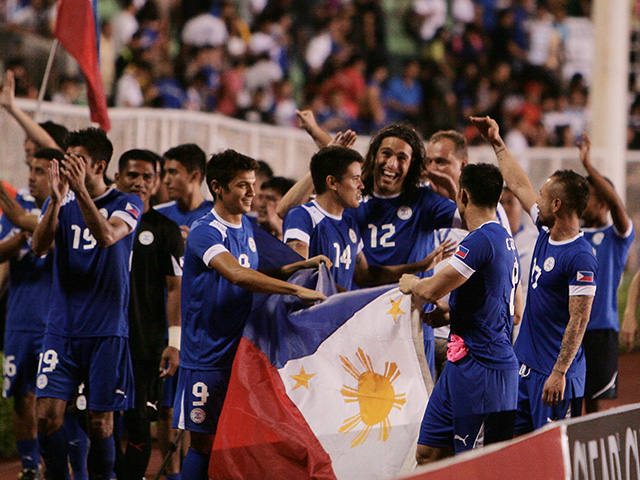
With a 3-0 default win from Brunei, an 8-0 thrashing of Cambodia, and 1-0 victory over Turkmenistan, the Philippines won nine points with the highest goal difference of the competition to top their group and the qualification period as a whole. Defeating Turkmenistan for the very first time, the Philippines is now the team to beat come 2014 on the main stage of the Challenge Cup in the Maldive Islands.

With these performances, the Philippines is set to jump to their highest FIFA Ranking ever, possibly within the 130s, when they are released next time. So with a growing rivalry with Turkmenistan, Phil Younghusband back to his scoring ways, seven clean sheets in nine games, but more controversy off the pitch, we dissect the Philippines’ route to the 2014 Challenge Cup main stage.

‘Like a Final’

In the post-match press conference, the Turkmenistan coach, Hojageldiyev Yazguly, said, “It was a very interesting game…I think this match was like a final.” Similar sentiments followed from Coach Weiss who added, “For me, Turkmenistan will be the team to beat again and on neutral soil it will be different.”

Ladies and gentlemen, what we have is a rivalry.

There wasn’t much in this game, and the Turkmenistan coach pointed out, “The last two games against the Philippines, the luck was on our side but this time the luck was with [the Philippines].”

However, this is the advancement the Philippines has made. Turkmenistan was rated 121st in the world in the previous FIFA Rankings, dropping 19 places that month due to a lack of games and the natural cycle, rather than any statement of their quality. Turkmenistan was considered by many to be the best team in the Challenge Cup Qualifiers, as runners-up to North Korea in the previous two editions, and the Philippines went and beat them.

Whatever you think of the style of play, who should or shouldn’t start, how Neil Etheridge wasn’t even among the subs, or the lack of substitutions from those who were on the bench, valid concerns, there is no doubting the progress of this team. Turkmenistan has now been defeated in a continually growing list of countries the Philippines have beaten for the very first time under manager Dan Palami and coach Michael Weiss.

This list includes India, Bangladesh, Nepal, Mongolia, Tajikistan, Myanmar, Palestine, Singapore, and a couple more if you don’t include the Olympic Games forty years ago as full international matches. That list, that progress, and this line-up, is the best the Philippines has ever had. The biggest challenge now is keeping them together.

Phil rediscovers where he put his Golden Boot

Phil Younghusband finished as the leading scorer of the 2012 Challenge Cup, with two more than anyone else, totaling six in that competition. Here, the top scorer of the Philippines scored five goals, again two ahead of everyone else, to take his tally to 33 for his country. It seems he really enjoys playing in the Challenge Cup, and for the rest of the teams left in the competition, their challenge will be to keep him quiet.

In the Suzuki Cup, he hit a dry spell as teams had scouted the Philippines, identified him as the major threat, and bullied him out of the game. It was effective and his only goal came against Myanmar at the start of the second half, in a tournament where he was pushed and elbowed into anonymity.

While this tactic may prove effective again for the other teams in the Challenge Cup, it will be too much of a price for other teams to pay now. Committing two defenders to bully Younghusband would leave space for Javier Patiño, who has proven himself worthy of a place in the starting line-up with a brace in his debut and an enterprising performance against Turkmenistan. That means the Philippines are top dog and can go out playing to win every single game come March 2014.

The only caveat for Younghusband is he got sent off versus Turkmenistan. A yellow card in the first half for deliberately handling the ball was followed by a second for holding onto his man and dragging him back in the 85th minute. He will therefore be unavailable for the first group game in the 2014 Challenge Cup.

Stalwart defense and team spirit

The unsung heroes of the Azkals was their defense. If the defense goes unnoticed, they’ve done their job well and Rob Gier in particularly never put a foot wrong. After the game the veteran Azkal said, “I think today the game was all about the defenders… I think we’ve proved we have all the right ingredients to show we can be a very good team”.

Of the squad as a whole, he said, “When people keep asking about what’s special about the team I keep coming back to it; it’s the team spirit.” And with Rob Gier and Juani Guirado solid in defense, the Philippines have kept seven clean sheets in their last nine games (not including the default win against Brunei).

This has been part of an overall defensive unit where Dennis Cagara and Carli De Murga have thwarted the wing play, offering offensive options too, and seen fourteen clean sheets in the twenty games since the last Challenge Cup. During the Suzuki Cup, the defensive strength came at the expense of the attack, but now the Philippines look much more balanced with, as Weiss said, “the best still yet to come.”

Stadium half-full or half-empty?

On the pitch, the Philippines was superb and has been constantly improving. But off the pitch there is so much more that needs to be done – and a lot of it is just common sense.

The most prestigious tournament in South East Asia, the Suzuki Cup, sold their most expensive tickets for the Final at around P700. Yet somehow the organizers of these qualifiers thought that charging almost four times that amount for some seats was appropriate.

Group D hosts Nepal had an average of 16,000 for their group matches, more than twice the Philippine attendance. The Philippines has the potential to average similar figures quite easily and this would build a sustainable financial picture for Philippine football, something essential for the continued growth of the sport. But if ever decisions like ticket prices here are repeated, it will not only choke the National team, but the UFL and grassroots football too.

Who makes it to the Maldives?

As Group E winners, the Philippines will join the other four group winners for the final stage of the Challenge Cup, namely Myanmar, Kyrgyzstan, Afghanistan, and Palestine.

Turkmenistan made it as the best runners-up while Bangladesh are the second best runners-up and these seven nations will join host country Maldives in March 2014, for the group stage.

Of interest in the qualification stage, 2006 winners Tajikistan and 2008 winners India, who the Philippines beat in the group stage last year to qualify for the semifinals, will not be in the final stage for the first time since the competition began as both finished as runners-up in their groups. With weaker goal differences than Turkmenistan and Bangladesh, it was simply the luck of the draw as those who qualified could rack up the goal difference against Cambodia and the Northern Mariana Islands, respectively.

The Challenge Cup has certainly had its share of challenges so far, and we can probably expect a new and hopefully fairer system of qualification next time around. But for 2014, the Philippines have just put themselves in top contention to win their first ever internationally sanctioned trophy. Come March, 2014, everyone will be looking out for the Philippines. - AMD, GMA News


Tuesday, March 26, 2013

...the PHL vision

Gov't aims to make PHL a major hub in SE Asia


Philippine Star
March 26, 2013


MANILA, Philippines - Finance Secretary Cesar V. Purisima reiterated the Aquino administration’s goal to turn the Philippines into a major hub in Southeast Asia.

During Standard Chartered’s 2013 Singapore Forum, Purisima highlighted the Philippines’ commitment to integrate with Asean members and enhance its business environment to become a major hub in the region.

“We in the Philippines look forward to Asean Integration in 2015. Our hope is that the Philippines will be the Northern and Pacific Gateway to Asean. The Aquino Administration is committed to ensuring that we continue to invest in infrastructure, our people, and address the constraints to growth to ensure that our people are ready to take full advantage and be part of an integrated Asean,” Purisima said.

The Southeast Asian region, with a population of over 600 million people, is seen to become a major economic growth force in Asia when the planned regional common market of Asean countries is established by 2015.

This will significantly reduce the cost of production for the businesses and economic growth of member-countries.

“The ASEAN demographic places the region in a very strong position for growth. It is important that ASEAN integrates because our collective strengths are more formidable than our individual competencies,” Purisima said.

The region, comprising the Philippines, Singapore, Malaysia, Indonesia, Cambodia, Brunei, Laos, Thailand, Vietnam, and Myanmar, collectively makes up the world’s third largest population behind only China and India. Its population is also one of the youngest in the world, with an average age of 27, which Purisima said puts the region at an advantage versus the rest of the world.
 
Purisima likewise underscored the importance of Asean’s initiatives in connectivity, “we have to be connected with each other, not just through infrastructure, but also connectivity through common standards for trade and investments.”

Wednesday, March 20, 2013

...the Clark airport

Clark airport wins international award


03/19/2013
 
 
MANILA, Philippines - The Clark International Airport on Monday won an international award, beating 6 other airports in Asia.
 
The Clark airport (IATA Code: CRK), won the 2013 Routes Airport Marketing Awards in the Asia Heats, under 20 million passengers category.

The award was given during an annual gathering of the region's airline and airport operators in Mumbai, India.

The Philippine Department of Tourism (DoT) also received the Highly Commended-Destination Marketing Award, narrowly missing top honors in the category won by Tourism Australia.

Routes Asia, organized by UBM Aviation Routes Ltd based in Manchester in the UK, is the largest route development event for the entire Asia region.

This year, over 700 aviation professionals travelled to Mumbai to participate in the global airline and airport networking event.

Clark International Airport Corporation president Victor Jose Luciano, in a press statement Tuesday, said the awards are a major boost for Philippine aviation and tourism.

“The real winner here is not only Clark Airport nor the Department of Tourism but the entire aviation and tourism industry in the country. Slowly but surely, we are putting the Philippines back on the global stage and the major players in these industries are taking notice and positive interest in our country,” Luciano said.

“Also, what we have shown here is that under the good governance thrust of President Aquino, the Philippines can at last be at par with our more developed and prosperous neighbors in the region,” he added.

According to UBM Aviation Routes, the “Routes Airport Marketing Awards recognize and reward the highest standards of marketing activities undertaken by airports. This year the awards were split into two categories based on the size of the airport, and also a new tourism award for best destination marketing campaign by a tourism authority.”

In the under 20 million passengers category, CRK edged out 6other major airports in Asia, namely, Aukland International Airport in Mangere, New Zealand; Bengaluru International Airport in Devanahalli, Kamataka, India; Rajiv Gandhi International Airport in Shamshabad, Hyderabad, Andrha Pradesh, India; Juanda-Surabaya International Airport in Sidoarjo, Indonesia; Kansai International Airport in Osaka, Japan; and Siem Reap International Airport in Siem Reap, Cambodia.
Short-listed for the Destination Marketing Awards were the Okinawa Convention & Visitors Bureau, the Philippine Department of Tourism, the Singapore Tourism Board, Tourism Australia, and Tourism New Zealand.

Changi International Airport in Singapore won the award for the over 20 million passengers category.
Susan Willis, Marketing and Analysis Manager at UBM Aviation Routes, said CRK got the nod of awards judges due to its "effective growth" in 2012.

"Your airport was voted for by the airline community together with a panel of industry experts drawn from the airline networking planning community where they considered your marketing services and effective growth over the last 12 months," Willis told Clark airport official.

Luciano cited CRK's "phenomenal performance" in terms of growth in its passenger traffic and aircraft movement last year.

"Clark Airport had yet another banner year in 2012 posting an unprecedented 72% growth in passenger traffic, 69% increase in air traffic movements, and 44% increase in airport revenues.

Despite another challenging year for the global aviation industry, Clark Airport continued its march as one of the region’s fastest growing airports during the past four years," Luciano said.

At the end of 2012, CRK drew a total of 1,315,757 domestic and international passengers surpassing the 767,109 figure from the previous year. Meanwhile, airport revenue grew by 44% from P355 million in 2011 to P511 million in 2012 even though expenses in running the airport increased by only 7% or from P303 million in 2011 to P324 million in 2012.

Luciano said "2013 promises to be an even bigger year for Clark airport."

"The start of the new year brought with it new optimism and higher expectations. After signing an agreement with CIAC during the second week of February this year, Emirates announced that it has selected CRK as its second Philippine destination with daily direct flights from Dubai to Clark starting on October 1, 2013," he said.


Thursday, February 14, 2013

...the lovers' paradise

Pinoys top global 'love ranking' - report


02/14/2013 
 
 
 MANILA, Philippines - Pinoys have been identified as the most emotional in the world, and now another survey said they are the ones who get the most love.
 
In keeping up with Valentine's Day, Bloomberg.com said the Philippines topped a Gallup survey of 136 countries which asked: "Did you experience love for a lot of the day yesterday?"

The following are where most of the respondents felt most loved:

1. Philippines - 93%
2. Rwanda - 92%
3. Puerto Rico - 90%
4. Hungary - 89%
5. Cyprus - 88%
6. Trinidad and Tobago - 88%
7. Paraguay - 87%
8. Lebanon - 86%
9. Costa Rica - 85%
10. Cambodia - 85%

Meanwhile, these are the countries that occupied the bottom of the list:

136. Armenia - 29%
135. Uzbekistan - 32%
134. Mongolia - 32%
133. Kyrgyzstan - 34%
132. Georgia - 43%
131. Belarus - 43%
130. Morocco - 43%
129. Kazakhstan - 45%
128. Moldova - 46%
127. Tajikistan - 47%

The Gallup survey was conducted in 2006 and 2007.

Monday, February 11, 2013

...the world's best island resorts

Amanpulo among travel website's best island resorts


02/11/2013
 
 
LONDON, United Kingdom - Owning your own idyllic island may be out of reach financially, but online boutique hotel experts Mr & Mrs Smith have come up with 10 exotic locales where you can feel as though you're the king of your own small world.
 
Reuters has not endorsed this list:

1. Romantic retreats

Matangi Private Island Resort, Fiji Islands, Fiji

Go all Robinson Crusoe with a hint of romance at Matangi Private Island Resort in Fiji where some of the 12 villas nestle in the tops of the trees (others hug the golden beach). Add a serene seaside spa and some dreamy diving and you have all the elements for a chic castaway stay. You definitely won't need to fend for yourself though: the kitchen crew can pack a picnic basket for the two of you to enjoy on heavenly Horseshoe Bay.


2. Eco indulgence

Song Saa Private Island, Koh Rong Islands, Cambodia

Australians Rory and Melita Hunter built Song Saa Private Island in Cambodia both to sustain the local community and provide important reef restoration and education programmes. So far, so green. If you then imagine rustic bures with minimal luxury, you would be so, so wrong. Thatch and stone villas, all with private pools, are scattered over the water and in the jungle. And with just 27 on twin private isles, discretion is assured. Snorkel on the reef, have a seafood feast under the stars or let expert hands soothe you at Ila Spa Sanctuary.


3. Underwater adventure

Amanpulo, Pamalican Island, Philippines

Finding a secluded patch of pure white sand isn't hard at Amanpulo boutique hotel on private Pamalican Island. Of the 40 rooms and 11 villas, 29 are Beach Casitas just steps from the water where reefs harbour jewel-bright coral and flitting fish. Inspired? The on-site PADI dive centre offers introductory dives, certification courses and trips to nearby dive sites where you can spy stingrays, splash with sea turtles and even find Nemo. For those who like to combine water with other liquids, the Kawayan Bar is a pontoon where you can lounge with a cocktail between bouts of duck-diving.


4. Ultimate escape

Tikehau Pearl Beach Resort, Tuamotus, French Polynesia

Barefoot luxury doesn't come much better than this sun-kissed coral atoll, especially for those whose partners are obsessed with keeping in touch with work/friends/the rest of the world. At just-remote-enough, 37-room Tikehau Pearl Beach Resort in the Tuamotus the internet connection is sketchy. There'll be no excuses for not sprawling on the rose-pink sand, lounging by the lagoon at Tianoa Bar with a piña colada or gliding down the stairs of your Premium Overwater Bungalow into the warm, clear water. This being French Polynesia, the open-air Poreho Restaurant has a menu infused with Gallic classics and local specialties.


5. A-list antics

Parrot Cay by Como, Turks & Caicos, Caribbean

Maybe you'll spot Demi Moore downward dogging at the Shambala spa or Paul McCartney reading by the pool because celebrities love Parrot Cay by Como hotel in the Caribbean, the only property on a sprawling thousand-acre island. Even if you don't, you'll feel star struck at this elegant 70-room sanctuary where whitewashed villas have draped four-posters and the infinity pool's sunloungers overlook the beach. The ultimate in luxury though are the six Parrot Cay Estates, ranging from three to 11 bedrooms, situated away from the main resort and owned by the likes of Bruce Willis and Donna Karan.


6. Hiding out

Cayo Espanto, San Pedro, Belize

A tiny speck of land in the Caribbean Ocean off San Pedro is home to seven uber-private villas at Cayo Espanto retreat in Belize. Each is hidden within palm trees with a private pool (except Casa Ventana, which is set out at sea on its own pontoon), hammock for day-long siestas and a 'houseman' who can chase up just about anything your castaway heart desires. Chef Patrick Houghton is a genius with a culinary wish-list and meals can be served anywhere on the island, including secluded stretches of sand where you won't see a single soul.


7. Serenity-meets-sociability

Naladhu, South Malé Atoll, Maldives

One moment you want seclusion, the next to be entertained people-watching by the pool; if so, Naladhu hotel in the Maldives is for you, with just 19 villas with either a lagoon view or one of the ocean. All have a breezy Hamptons vibe, with semi-alfresco baths and private pools for solo splashing. Outside, relax in a shady beach cabana or dine à deux on the sand. Naladhu is one of several small islands owned by Anantara and, should you want to mingle, boat transfers head to nearby Anantara Dhigu and Veli, where a spa and eight restaurants beckon.


8. Nature lovers

Frégate Island Private, Seychelles

While all private isles boast sand and lapping tides, many are too small to give you a taste of the wild life. Not if you venture to Frégate Island Private in the Seychelles. This chunk of granite languishing in the Indian Ocean is craggy, covered in tropical vegetation and home to fabulous flora and fauna. When you tear yourself away from your private pool deck (there are just 17 villas), wander the island's seven sublime beaches or hike trails looking for ultra-rare magpie robins and the Aldabra giant tortoise. There's jaw-dropping diving, too, and Frégate has a PADI centre.


9. Civilised wilderness

Lizard Island, Great Barrier Reef, Australia

Leave your wallet and credit card in your room at Lizaru.s.d Island boutique hotel on the Great Barrier Reef. Here, almost everything from daiquiris on the deck at Osprey's to snorkelling gear for underwater safaris is included in room rates. Forty villas are dotted around the huge island which has 27 romantic beaches, offshore reefs and swaying eucalypts. Splodge by your private pool or ask the staff to pack a picnic basket, borrow a motorised dinghy and mask and snorkel, and head for a deserted beach for all sorts of cavorting. The spa and diving here are world-class, too.


10. Glamping it up

Amanwana, Moyo Island, Indonesia

Idyllic Amanwana hotel on Moyo Island is just a short flight from Bali but remote enough to feel as though you've travelled far, far away. Twenty glam safari-style tents - some nestled in the jungle, others by the shore for quick bed-to-beach dashes - have dark wood flooring, romantically netted beds and yards of white divans for the idle hours. Take time out to be handled with care at waterside Jungle Cove Spa. You can also get close to nature since Moyo is a reserve. Spot shy Rusa deer darting in the forest or mask up to snorkel with sea turtles.