Showing posts with label Cagayan de Oro. Show all posts

Sunday, May 18, 2014

...the emerging city of tomorrow

Why UN Habitat named CDO an ‘emerging city of tomorrow’


By Mozart Pastrano, Ninfa U. Along-Albania
Philippine Daily Inquirer


Cagayan de Oro City (CDO) has been named an “emerging city of tomorrow” in this year’s World Urban Forum in Colombia organized by the United Nations Human Settlements Programme (UN Habitat).
 
CDO is the only Philippine city on the list, which includes Hunchun, China; Johor Bahru, Malaysia; Malmo, Sweden; Nampula, Mozambique; Onitsha, Nigeria; Santa Marta, Colombia; Tetouan, Morocco; and Uberlandia, Brazil.
 
CDO is ranked by the National Competitiveness Council as the Philippines’ most competitive city.
 
The mayor of CDO is former Misamis Oriental 1st District Rep. Oscar S. Moreno.
 
The city government has pioneered in the computerization of business permits and licensing, as well as the assessment and payment of real property tax.
 
“Getting a business permit takes up less than an hour,” said Eileen Canoy Escobar-San Juan, the city’s local economic and investment promotions officer.
 
She also noted that a key driver in the city’s remarkable growth was the “very strong private sector support and initiative.”
CDO is the growth driver of Northern Mindanao (Region 10), whose economic growth continues to exceed those of the other regions in Mindanao.
 
CDO’s gross regional domestic product (GRDP) was P240 billion in 2012, up by 7.4 percent compared to its 5.8 percent growth in 2011. This was largely due to the acceleration of the industry and services sectors, which rose by 9.2 percent and 9.0 percent, respectively.
 
Although agriculture stepped up by only 2.4 percent, contributing 28 percent to the region’s economy.
 
Nationwide, Northern Mindanao (Region 10), which includes CDO, ranked third in per capita GRDP.
 
Dynamism
 
Fueling the region’s growth is CDO’s economic dynamism, government efficiency and appropriate infrastructure. New industries utilizing information technology are being established in the city.
This fast-growing city of over 600,000 people provides easy access to an enormous concentration of markets in Northern Mindanao.
 
The Mindanao Container Terminal (MCT) facilitates direct and cost-efficient movement of containerized cargoes to Manila, Cebu and international shipping hubs.
 
The multi-berth Cagayan de Oro Baseport handles inter-island passenger travel with connectivity to the country’s nautical highway and the logistics corridors of Mindanao.
 
Laguindingan Airport services air logistics requirements, while an extensive road network leads to and from the major production areas and markets of Mindanao.
 
The expansion of the MCT and Filinvest Development Corporation (FDC) Power Plant will consolidate CDO’s position as the largest logistics center in Southern Philippines.
 
While the rest of Mindanao has been experiencing severe power shortages for many months now (with up to 16-hour outages daily in one Mindanao city), CDO has been hit by brownouts only at the tail end of this summer.
 
That’s because it is approaching self-reliance in power: with Minergy’s 27.4-MW and 18.9-MW diesel power plants, STEAG State Power’s 210-MW coal-fired power plant—plus Bubunawan Power Company’s 7-MW run-off river hydro project in tandem with Cepalco’s 1-MW photovoltaic solar power plant—the only grid-connected PV power plant in the Philippines.
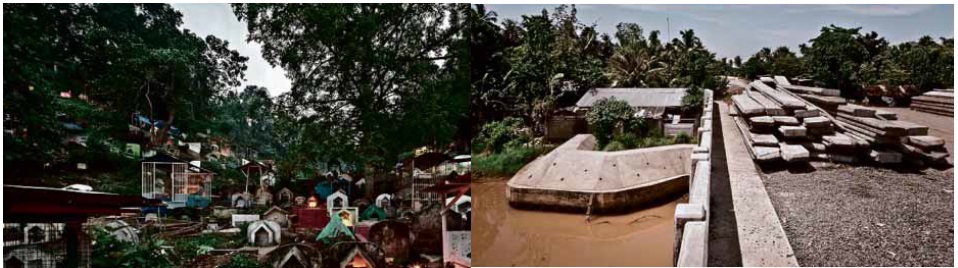
FAMILIES visiting their deceased relatives and staying overnight in Bolonsery public cemetery last Nov. 1. Right: Uncompleted bridge over Iponan River connecting Bulua with Opol.Once completed the bridge should be part of a new coastal artery crossing Cagayan de Oro.

Complementing the logistics infrastructure of Cagayan de Oro is the rapid modernization of the city’s telecommunications infrastructure, transforming the city into a business center and international logistics and telecommunications hub of the south.
 
Educational center
Beyond infrastructure, CDO is the center of education in Mindanao. Xavier University-Ateneo de Cagayan is Mindanao’s first university—and, in fact, is the first Jesuit university in the Philippines.
 
Capitol University and Liceo de Cagayan University are cited by the National Association of Colleges and Universities as among the country’s top 10 higher education institutions with the largest number of accredited programs.
With 15 universities and schools, CDO accommodates 82,000 students and 22,000 graduates every school year.
 
Custom-designed skills training and apprenticeship programs are readily available to serve human resource requirements. For example, Xavier University has partnered with Asian Carmakers Corp., the country’s official BMW distributor, to bring German automotive expertise to technical education students.
 
CDO’s strategic location and rich agricultural resources have made it the preferred site of major agribusiness companies such as Del Monte Philippines (which set up the world’s largest integrated pineapple processing plant here), Nestlé Philippines, Pilipinas Kao and other small and medium agri-based industries.
 
As a gateway to Southern Philippines, CDO provides direct access to rich agricultural areas in Mindanao—the source of 40 percent of the country’s food and livestock. CDO is a significant producer of oleochemical and other coconut products.
 
Higher-value products through agro-processing offer investment opportunities. Presently, Northern Mindanao is the top producer of cattle and is the third largest producer of poultry in the country.
 
CDO is also a key destination of meetings, incentives, conventions and exhibitions (MICE) in Southern Philippines. It has 4,806 rooms from various accommodation facilities that can handle conventions with 3,000 participants. It is trying to improve these rather limited numbers.
 
White water rafting capital
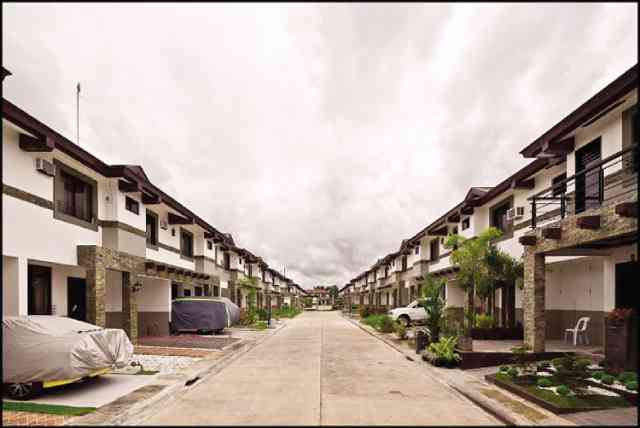
COURTYARDS in Carmen Barangay, developed by Pueblo deOro

CDO is the white water rafting capital of the Philippines, attracting ecotourism adventure seekers who also delight in experiencing ziplines and spelunking and diving, among other outdoor activities.
 
CDO is linked to Camiguin, which is renowned for its luxurious beaches, hot springs, waterfalls and historic landmarks; to the mountain ranges of Bukidnon, home to seven indigenous communities; to the Caraga region capitals of Butuan and Surigao with boast eco-tourism thrills; and to the Lanao del Norte nexus of Iligan City and Marawi City, home of the
colorful Maranao people.
Over the years, the Cagayan River has renewed its claim over CDO—the primordial gateway through which flowed the transactions and transformations of people and progress, commerce and culture, ideas and values.
Hit by Tropical Storm “Sendong” in 2011, CDO is a portrait of resilience, said Fr. Roberto C. Yap, SJ, president of Xavier University-Ateneo de Cagayan.


“Usually,” he said, “the word reminds us of the bamboo because of the way it dances with the wind in times of typhoons and then snaps back in place afterwards. But I would like to propose that resilience should mean not just overcoming challenges but prevailing over them to become better, stronger much more than we have been."

Wednesday, February 19, 2014

...the first US gold service Asian hotel

Filipino hotel brand is first in Asia to receive US ‘gold service’ certification
 
 
Sunstar.com
Wednesday, February 19, 2014

SEDA, AyalaLand Hotels and Resorts’ wholly-Filipino hotel brand, has been named a Certified “Gold Service” Property (CGSP) by the American Hotel and Lodging Educational Institute (AHLEI).

It is the first hotel brand in Asia to receive this honor. The institute is a globally respected name in the hospitality industry with 15,000 hotel members worldwide.

Ed Kastli, AHLEI vice president, disclosed that being named a CGSP is an affirmation that an establishment’s front-liners meet the highest international standard of service. “It recognizes an establishment’s commitment to quality, service and hospitality.”

Seda is the first hotel brand in Asia which trained its staff in the customer “Gold Service” program. Hotel front-liners in the chain’s three properties – namely Seda BGC, Seda Abreeza in Davao City and Seda Centrio in Cagayan de Oro city – passed the individual certification.

Wilma Estaura, Seda’s group director for human resources and accredited trainor of the AHLEI’s Customer Gold Service program identified the goal: “We want our front-liners to anticipate the needs of guests and respond by offering service that is over and above their duty. This is what it takes to delight a guest.” She cites the case of front desk officers going out of their way to requisition for towels to offer guests who had been drenched by a typhoon, delighting those affected when they entered the hotel.

Seda’s group general manager Andrea Mastellone explained that the hotels monitor the comments of their guests online as well as in their daily interactions with Seda employees.

Management recognizes guest commendations as key indicators of delightful service. In December 2013, for instance, a guest traveling with family remarked: “The number one thing I like about this place is the service. You feel special because everyone remembers your name.” A guest from Riverside, California said in a post the same month: “Everyone was amazing. They made massage appointments, opened doors, did my laundry and room service – all with a smile.”

Kastli stated: “To create a lasting impression on guests, we encourage the staff to provide ‘wow experiences.’” Estaura relates that staff are trained to intuitively read a guest’s needs while remaining authentic and sincere and to respond promptly and selflessly. This special training ensures that each Seda destination will be offering the guest a distinctive and unique experience – “not a cookie-cutter approach,” said Estaura.

“To put it another way, we want guests to remember the staff who made their stay special… Mario, the hotel car driver, who gave his passenger a quick overview of the Philippines on the way from the airport to the hotel; Ivy, who serves during breakfast and remains pleasant even when the restaurant is packed; and so on. After all, it’s people who make all the difference.”


Monday, February 18, 2013

...the Asia's energy efficient countries

PH among 5 most energy efficient countries:ADB


Written by RICHMOND MERCURIO
Malaya Business News Online
17 February 2013
 
 
The Philippines is now ranked among the top five most energy efficient countries in Asia.

Unfortunately, energy cost here is also one of the highest in the region.

The Asian Development Bank principal energy specialist Sohail Hasnie, said that the Philippines is one of the leaders in terms of energy efficiency among its Asian neighbors.

“In Southeast Asia, the Philippines is very, very ahead,” Hasnie told Malaya Business Insight.

DOE undersecretary Loreta Ayson said that the country’s energy efficiency initiatives are close to, and in some case even at par, with energy-efficient Asian countries like China, Japan, Singapore, and Korea.

“I think we’re a leading country as far as energy efficiency is concerned,” Ayson said.

Ayson, however, noted that there is still a lot of room to grow for the country, saying that “we can do more things to promote and implement energy efficiency.”

Hasnie reported that the Philippines have one of the largest number of energy efficiency projects that ADB is financing at present. He said that the biggest is in China.

The ADB has funded $31 million via loan the government’s Philippine Energy Efficiency Project (PEEP). The Philippine government, for its part, contributed P625 million.

According to Hasnie, government initiatives in electric vehicles and massive usage of CFL lights have elevated the country’s energy efficiency status.

Hasnie said that the Philippines is the first Asian country to phase out incandescent bulbs to aggressively promote CFLs for households.

“I think the engagement we’ve seen in the Philippine government is quite significant,” he noted.
Hasnie has also aired his optimism in the country’s chance in maintaining its leadership status in energy efficiency for years to come.

“Once you start, once you are in the forefront, you continue to be there,” he noted.

The DOE’s PEEP which was launched in 2009 has continually highlighted the need to vigorously implement energy saving measures to help the country curb its growing energy demand.

It hopes to result to total savings of 243 megawatts a year equivalent to P3.2 billion.

To date, the PEEP has accomplished the distribution of 8.6 million CFLs in households nationwide, the retrofitting of lighting systems in 150 government buildings and the retrofitting of traffic lights in 265 intersections in Metro Manila and Cagayan de Oro City.

“I would put it (energy efficiency) as something as doing more for less and pursuing efforts on saving electricity and fuel,” Ayson said.

With a Philippine Energy Roadmap set until 2030, Ayson hopes to see the country further elevating its status in energy efficiency.

“I think 2030 should make a difference. It’s a dream (to be the number one energy efficient country in Asia), but we can work for it,” Ayson noted.


Monday, March 26, 2012

..the leader cities

PHL leads in New7Wonders Cities campaign

 
March 26, 2012
 
 
After the Puerto Princesa Underground River (PPUR) was named one of the  New7Wonders of Nature, Filipinos are eager to win another of the NewOpenWorld Corporation's (NOWC) competitions.
 
Since the New7Wonders Cities global voting campaign was launched in November 2011, no less than seven Philippine cities are in the top spots in the South East Asia and Oceania category.
 
The picturesque Vigan is ranked first, followed by Cebu, Davao, Iloilo, Cagayan de Oro, and Bacolod City. Paranaque City comes in seventh, and is the only one from Metro Manila on the list
 
The global vote for New7Wonders Cities began in January with over 1,200 nominees from more than 220 countries. 
 
From March 7 to November 23, the choices are narrowed down to around 300 cities, with one per country, plus the top 77 voted.
 
The finalist phase will begin on Dec. 7, 2012, during which 28 official finalist candidates will be selected by a panel of experts. Voting will continue across the three phases until 2013, when the Official New7Wonders Cities will be revealed on December 7, 2013.
 
The New7Wonders Cities is the third campaign in the New7Wonders movement. Previous campaigns elected the man-made New 7 Wonders of the World and the New7Wonders of Nature.
 
Controversy arose last year when Maldives and Indonesia withdrew their respective entries from the New7Wonders of Nature contest and accused organizers of forcing them to pay “surprise" fees of up to $500,000 or P21.6 million, according to a report from The Guardian.

But Malacañang said the confirmation of PPUR was welcome news.

“Throughout the competition, Filipinos from all walks of life have given time, energy, and resources to this campaign. This effort has raised awareness not only overseas, but nationally as well: visits to the PPUR have increased tremendously. This is proof positive of how effective a national effort of this sort can be: to build awareness, express pride, and achieve results,” the Palace statement said. — RSJ, GMA News

Saturday, March 17, 2012

...the transformation

'The Best Is Yet To Come'


Aquino Parades Government Gains
By JC BELLO RUIZ
March 17, 2012
Manila Bulletin

“...we are on the threshold of transforming this country, our society, and the lives of our people." - Pres. Benigno Aquino III

MANILA, Philippines — Citing the big gains in the Philippine economy, particularly the record jump in the stock market, President Benigno S. Aquino III proclaimed that “we are on the threshold of transforming this country, our society, and the lives of our people."


Speaking during the 20th anniversary of the Anvil Business Club at a hotel in Makati City last Friday, the President confidently predicted that the best is yet to come for the country.

Earlier in the day the Philippine Stock Exchange index hit 5,145.89 points, a new high.

"Who could have imagined, two years ago, that our stock market would set record highs 21 times in as many months in office by this administration? Just Saturday, it closed at 5,145.89. I would like it to grow bigger, with more record highs than my months in service. And I think that is very possible," Aquino said.

With greater cooperation between government and the private sector, Aquino expressed belief that the best is yet to come for the country.

"We are on the road to becoming one of the world’s more successful economies: HSBC (Hong Kong and Shanghai Banking Corporation) recently predicted that by the year 2050 we will be the 16th largest economy in the world. Of course this is still a long way off, but two years ago, how many people imagined that we would be receiving such distinctions?," he said.

"How many people thought that when agencies like the Japanese JETRO agency surveyed Japanese firms in Asia and Oceania, that their conclusions would say that we have significant advantages, as far as cost of doing business, the supply and quality of labor, and employee salaries, compared to other countries in the region? Making us, in fact, the number one business destination in Asia, whether in the manufacturing or service sectors," the President stressed.

At the same time, the President also asked for greater cooperation between management and labor.

"This is just the start. Management has the vision and the resources; workers have the wherewithal to use those resources and make that vision a reality. Imagine what heights we can soar to, if management and labor can propel each other upward by truly working together," Aquino said.

"We can, and we have already been doing it. The challenge before us is to accelerate this transformation further. Together, it will be done," Aquino said.

The President also said he hopes to attract 10 million tourists to the Philippines annually by 2016 as he revealed a proposal to reserve 78 new ecotourism sites.

“There are about 14 million tourists who visit Thailand, about 22-24 million visit Malaysia. In comparison when we got it to office there was only three million that visit the Philippines, so therefore this is an experience that has yet to be experienced by a lot more of the citizens of the world," he said during the forum following his speech.

Aquino underscored the importance of upgrading the country's airports.

"Once the upgrades in the airports, in particular, have been achieved, and we have approved upgrades to Kalibo, Caticlan, Puerto Princesa, Laguindingan in Cagayan de Oro, and others, and of course, Clark will not be left behind. Then this will make travel easier," he said.

Aquino, who is barely two years in office, said he feels he is already on his fourth year. The President's term will end at noon of June 30, 2016.

His consolation is that at least his administration is "a little quieter" than that of his late mother, former President Corazon Aquino, who had to fend several coup d'etats.

"Well, for one thing I had not to content with nine coup d’etats so it’s a little quieter. The other thing is of course, I think, I did say in my speech that I’m standing on the shoulders of those that came before us. So I was not thrust into it and expected---you know, it’s like being thrust into deep end of the pool. At least I was wading in the shallow end of the pool during my mother’s term that gave me some ideas of what to expect when I got here," Aquino said.

He said there are a lot of "good news" about the Philippines' economic gains though they are hardly reported in the local media.

Thursday, March 15, 2012

...the Cebu aspiration

Cebu to vie for top spot in 7 Wonders Cities of the World


CEBU – Cebu City may become even more popular among local and foreign tourists and may just land in the list of the New 7 Wonders Cities next year.

That is, if it can get enough votes to compete with big cities like New York, Paris and Tokyo.

As of Wednesday, Cebu City ranks second among 44 cities in Southeast Asia and Oceania in the search involving some 1,200 cities from 220 countries.

The search and online voting is being facilitated by the New7Wonders, the same group behind the man-made New 7 Wonders of the World and the New 7 Wonders of Nature.

Although it was the first time they heard about the search, officials of the Department of Tourism (DOT) Central Visayas, Cebu City Government and the Cebu Investment and Promotions Center (CIPC) welcomed the nomination.

“Just to be nominated, it would already help promote Cebu City as a tourist destination. Cebu City is different from other cities because for one, it is the seat of Christianity of the Philippines and despite being a highly urbanized city, Cebu City is able to preserve its past, its culture and heritage,” DOT Regional Director Rowena Montecillo said.

The CIPC and Cebu City Tourism Commission (CCTC) chairperson and Councilor Margarita Osmena also count the South Road Properties and the construction boom as contributors to Cebu City’s “wonders”.

The list of Wonders Cities in Southeast Asia is dominated by Philippine cities, with Vigan in Ilocos Sur topping the list, followed by the cities of Cebu, Davao, Iloilo, Cagayan de Oro, Bacolod and Paranaque.
On the eighth spot is Sydney, followed by Singapore and Bangkok.

Montecillo said the DOT-Central Visayas will support the campaign to help make Cebu City one of the finalists.

The global online voting started last January with some 1,200 nominees from 220 countries. More than 300 cities will be chosen for the qualification phase (one from each country and the top 77 cities with the most number of votes).

From the top 77 voted during the qualification phase, the New7Wonders Cities panel of experts advises on the selection of the 28 official finalists. Voting for the finalists continues across three phases until 2013. The Official New7Wonders Cities will be announced on December 7, 2013.

No specific criteria were used for the search.

In their official website, Bernard Weber, founder and president of New7Wonders, said the world is experiencing a mass urbanization and for the first time in history, a majority of the global population now lives in cities.

“Given these dramatic developments, New7Wonders Cities will become a catalyst for discussing everything from urban planning to metropolitan governance, from tourism to architecture,” he said in a statement posted in cities.n7w.com, the website that hosts the voting.

For Mayor Michael Rama and Councilor Osmeña, Cebu City’s rich history and cultural heritage and its proximity to world-class beach resorts are just some of Cebu City’s wonders, but its main asset are its people.

“There’s no other place where you will find people who are as warm and hospitable as the Cebuanos, always ready to greet you with a smile. Cebuanos always make you feel welcome,” the mayor said.

“Cebuanos are hospitable and creative and they’re very proud to be Cebuanos… We respect and preserve what we consider old, our heritage, but we also easily adapt to anything new. We adjust to the rest of the world,” Osmeña said.

CCTC officials are excited about the benefits the city can reap from the nomination, just like the boost in tourism that Puerto Princesa City in Palawan reported when it was named one of the New 7 Wonders of Nature earlier this year.

“I just hope we’re ready for it… In terms of infrastructure, we could go faster, we need to catch up,” Osmeña said.

Like the councilor, CIPC managing director Joel Mari Yu said he is banking on the Cebuanos’ penchant for joining text or online voting in winning the search.

While Cebu City has been named by Tholons as one of the 10 best destinations for outsourcing business, and while it enjoys a distinction of “being a city embedded in a resort environment,” it needs to improve some of its systems, like drainage, traffic, garbage collection and public transport.

“Cebu City is a beautiful place but we shouldn’t compare it with other cities like Singapore because everything in Singapore is efficient… But since many of us are fond of online or text voting, I think we have an excellent chance of making it in the final list,” Yu said. (LCR of Sun.Star Cebu)

Sunday, July 3, 2011

...the gifted child

Gifted child Dio Saraza wows CDO in violin concert

07/03/2011

MANILA, Philippines – A world class young Filipino violinist wowed his kababayans during his recent solo concert held in Cagayan de Oro City.

Cagayanons were impressed by 21-year-old Diomedes “Dio” Saraza Jr. when he played the violin.  

Saraza is a full scholar at the prestigious Juilliard School in New York. In 1998, he won in the National Music Competitions for Young Artists and is now considered a world class violinist.

Saraza was drawn to music at an early age since he was raised in a family full of musicians. He was only 3 years old when he showed interest in violin.

“Ang daddy ko talaga ang sobrang nag-inspire sa akin. Since I was a baby, nakikita ko siyang tumugtog ng violin, and my brothers too. My oldest brother plays the piano and my second brother plays the violin. So ever since, I was exposed to the world of music. And violin, I chose it because of its sound. Talagang nagustuhan ko,” he said. 

He said he and his family would jam and play together, especially in church.

“I’m very grateful kay God for giving me this wonderful talent. All I do is practice and the acknowledgement is bonus. I’m happy maraming natuwa sa akin. I’m glad to share my talent to them, to show them what God has given me,” Saraza, who plays mostly classical music, said.

The Liceo de Cagayan University (LDCU) brought Saraza to Cagayan de Oro to share “the beauty of art” with the Cagayanons.

“They say that art is life and you know art mirrors life and art is the icing of life. So, here at Rodelsa Hall we would like to showcase all the talents not just here in the Philippines but all over the world. And as much as we can, we would like to share this beauty, the beauty of art, to a lot of people and make it reachable to even students and even ordinary people because we believe that art is for everyone,” said Owen Jaen, program coordinator of LDCU’s Office of Cultural Affairs.

“Work, dedication, passion are needed in order to do something excellent and great,” added Rudolf Caesar Golez, LDCU’s vice president for External, Cultural and Alumni Affairs. -Report from Trini Velasco, ABS-CBN News Northern Mindanao

Wednesday, June 1, 2011

...the must experience place

DoT: PH to become Asia’s ‘must-experience’ destination


Photo by Izah Morales, Yahoo! Southeast Asia

Even without a clear international branding for the Philippines, the Department of Tourism (DoT) has laid out its vision to be the "must-experience" destination in Asia.
 
"Wala pang bagong branding (There's no new branding). We're still working on that," said DOT secretary Alberto Lim in a press conference held Monday.

To achieve the vision, the DoT worked to improve market access and connectivity. "We'll be improving our airports with the help of the Department of Public Works and Highways," explained Lim.

In line with this goal are the construction of new airports such as the Bicol International Airport in Daraga, Albay and Panglao International Airport in Bohol, as well as the rehabilitation of the Puerto Princesa Airport and Cagayan de Oro Airport.

Lim said that the bidding for the said projects have started and are expected to be finished within the next three years.

"We're developing new international gateways to address the congested NAIA terminals," said Lim.

When asked about the negative feedback of tourists on the Ninoy Aquino International Airport Terminal 1, Lim told Yahoo! Southeast Asia that the Manila International Airport Authority is working on the plumbing problems of the terminal.

"We will also have improvements on the look and feel of Terminal 1. The interiors will be renovated to have a brighter atmosphere and modern look," said Lim.

He also disclosed that a new greeting area at the parking area of Terminal 1 would be constructed and finished by 2012. The project costs P 200 to 300 million, revealed Lim. "We want to present a good image when we welcome our tourists here in our country," he added.

Out of the seven tourism markets in the ASEAN region, the Philippines posted 3.5 million international visitors in 2010 and ranked sixth, lagging behind Vietnam and just ahead of Cambodia.

Nonetheless, the DoT said the international market continues to grow by 13.33% year on year with 1.3 million visitors recorded during the first quarter of the year (January to April 2011).

The DoT hopes for 3.75 million international tourist arrivals by the end of the year.

Saturday, March 26, 2011

...the green cell

Eco-friendly jail uses biogas to cook, bake

By Allison Lopez
Philippine Daily Inquirer
03/26/2011

MANILA, Philippines—Even if they are in prison, inmates of the Cagayan de Oro (CDO) city jail are very much involved in the climate change campaign as the country’s detention facilities are exploring alternative energy sources of cooking fuel.

For over a year now, CDO inmates have been operating a small bakery that is fueled by environment-friendly biogas. The bakers, who are the inmates themselves, prepare an assortment of bread with cheese, pineapple or peanut butter fillings so that visitors to the city jail are now greeted by the smell of freshly baked bread.

“Our sales are really good. Oftentimes, the bread is sold out,” said 28-year-old Nick as he switched on two oven valves, one of which was connected to a biogas tank, quite unheard of even in jails outside the Philippines.

“With biogas we save money and it’s environment-friendly. The bread also comes out well because the fire is consistent,” said Nick, who has been baking bread for six months.

Elimination of firewood

The use of biogas or methane began in the CDO jail in 2009 when the Bureau of Jail Management and Penology (BJMP) ordered the elimination of firewood in its detention facilities.

The CDO was one of five jails chosen by the International Committee of the Red Cross (ICRC) to implement the biogas project, and it remains to be a model of the innovative program to reduce financial and environmental costs.

In CDO jail’s kitchen, biogas is utilized to cook viands while liquefied petroleum gas (LPG) is used in cooking huge pots of rice for more than 1,000 inmates.

Julius, the head cook, expressed relief that he no longer has to inhale the smoke from firewood.

“Before the kitchen used to be filled with smoke, and we used to sweat so much. The fire was difficult to control, and it took a long time to cook anything,” he said.

Better sanitation

While a substantial amount of money is spent for LPG, none is spent for a renewable fuel like biogas.

“Biogas has a natural source of energy, which in this case is human waste. From the toilet, the waste goes to an inlet box where it breaks down and gives off methane. From the production chamber, the gas goes to an outlet box and flows into the pipes used for cooking,” said Gavin Macmillan, the ICRC’s water and habitat engineer.

Going for alternative sources of energy is a good choice nowadays when the prices of crude oil and other non-renewables are rising, Macmillan said.

“It saves BJMP money because a huge part of BJMP money goes to feeding inmates,” he said.

Apart from minimizing cooking costs, the biogas project also improves the jail’s sewage system because it has replaced the less-effective septic tank.

The organic waste has yet another use. It is turned into fertilizer for the jail’s vegetable garden.

“The government has limited resources so the biogas project is a big help to us. We thank the ICRC because they are not only helping the inmates but the environment as well,” said the CDO jail warden, J/Supt. Russel Tangeres.

Hot water from solar power

In the country’s south, another eco-friendly innovation is helping a Bukidnon jail cope with expenses, which has inspired other sustainable projects.

Water for cooking in the Valencia City Jail is heated by solar panels installed on the kitchen’s roof. Only a month after the system was installed, there has been substantial improvement in terms of cooking time and reduced firewood use, according to J/Sr. Insp. Francis Acelo, the jail warden since 2001.

“Before we only used tap water and heated it over firewood. It usually took three sets of firewood to get it boiling. Now we prepare food faster and the supply of firewood lasts for a longer period,” said Acelo.

Valencia used to be one of the country’s most overcrowded jails until its recent transfer to a spacious three-hectare property leased by the local government.

“The old 200 sq m jail was intended to house only 48 inmates. When the number of inmates grew to more than 100, the jail became too cramped. Many detainees got sick, the heat and smell were too much,” Acelo said.

Less troubles

With the new facility and the setting up of the solar water heating system, the warden said many things have changed for the better.

“We have less troubles now unlike before when we had to go to the forests to get the firewood. But we have not gone back since there’s still a lot of firewood left,” he said.

Savings from the use of the solar water heater will go to improving the jail infrastructure.

“When the necessary facilities are in place, the money could then be used for improving the inmates’ food,” Acelo said.

Working together

Among the planned projects are a vegetable garden and piggery, projects that will help the jail to become more self-sufficient. There are also plans to construct a school building that will offer alternative learning for inmates.

“The coordination efforts of the LGU, BJMP and other organizations like the ICRC have a huge impact. It showed that problems are easily solved when people work together. It’s seldom that we have something as fortunate as this, when all the projects come together,” Acelo said.

(The author, a former Inquirer reporter, is the communications officer for the International Committee of the Red Cross Manila office.)