Showing posts with label World Bank. Show all posts

Thursday, October 24, 2019

...the PH ranking in Ease of Doing Business

Philippines climbs to 95th spot in World Bank’s ‘Doing Business’ rankings

Ian Nicolas Cigaral
Philippine Star
24 October 2019

MANILA, Philippines — Ease of doing business in the Philippines improved over the past year, with the Southeast Asian country climbing 29 notches in World Bank’s “Doing Business 2020” report released Thursday.
Philippine economy
Out of 190 economies, the Philippines advanced to the 95th spot from 124th place in 2019. The country’s score improved to 62.8 from 60.9 previously.

Compared to its peers in the East Asia Pacific, the Philippines ranked below Singapore (2nd), Hong Kong (3rd), Malaysia (12th), Taiwan (15th), Thailand (21st), China (31st), Brunei (66th), Vietnam (70th), Indonesia (73rd) and Mongolia (81st).

The Washington-based multilateral lender’s annual report looks into the regulations that enhance business activity and those that constrain it.

Quezon City was used as a benchmark for the Philippines.
According to World Bank, starting a business in the Philippines became easier following the abolition of the minimum capital requirement for domestic companies.

The country also made dealing with construction permits easier by improving coordination and streamlining the process for obtaining an occupancy certificate.

“The Philippines strengthened minority investor protections by requiring greater disclosure of transactions with interested parties and enhancing director liability for transactions with interested parties,” World Bank added.

Worldwide, 115 economies made it easier to do business, World Bank said, with New Zealand remaining the most business-friendly country in the world.

Somalia was the worst with a score of 20.

Meanwhile, the economies with the most notable improvement in Doing Business 2020 are Saudi Arabia, Jordan, Togo, Bahrain, Tajikistan, Pakistan, Kuwait, China, India and Nigeria.

“The Doing Business 2020 study shows that developing economies are catching up with developed economies in ease of doing business,” World Bank President David Malpass said.

“Still, the gap remains wide,” he added.

Wednesday, October 16, 2019

...the falling poverty in PH

PH poverty rate seen falling below 20% starting 2020

Ben O. De Vera
Inquirer.net
16 October 2019

Amid easing inflation and rising incomes, the World Bank expects poverty rate in the Philippines to fall below 20 percent starting next year.

In its Macro Poverty Outlook for East Asia and the Pacific report, the World Bank projected poverty incidence in the Philippines at 20.8 percent by the end of 2019, down from 26 percent in 2015, the latest comparable full-year date from the Philippine government.


The report was released this week on the sidelines of the Washington-based lender’s annual meeting.

The World Bank had estimated poverty incidence in the Philippines at 24.5 percent for 2016, 23.1 percent for 2017 and 21.9 percent for 2018.

Its medium-term poverty projections were based on the lower middle-income poverty line of $3.20 per day.

At that threshold, the World Bank sees the Philippines’ poverty rate further declining to 19.8 percent next year and 18.7 percent in 2021.


“Despite a temporary growth slowdown in the first half of 2019, progress on shared prosperity is likely to continue,” it said.

Partial estimates of the 2018 Family Income and Expenditure Survey showed that incomes of households in lower-income deciles grew at a much faster pace than the average, the World Bank report read.

“Meanwhile, cash transfer schemes from the government will continue to help cushion the impact of negative shocks. Given the continuous expansion of nonagriculture wage employment, rising real wage, continuation of social programs, and stabilizing inflation, the declining trend in poverty is likely to continue,” it added.

In a report last month, the World Bank said the 12-year-old conditional cash transfer scheme called Pantawid Pamilyang Pilipino Program (4Ps) slashed the nationwide poverty rate by 1.2-1.5 percentage points (ppt) between 2012 and 2015.

4Ps also reduced income inequality by 0.5-0.6 ppt in the same period, it said.

Friday, September 19, 2014

...the PH ranking in 2016

PHL seen in world's top 30% in competitiveness by 2016 – DTI's Domingo


September 19, 2013
GMA News
 
The Philippines is on track to being ranked within the top 30 percent economies in various competitiveness surveys by 2016, a Cabinet official said Thursday.

“We will be in the top 30 percent in most if not all competitiveness surveys... by 2016,” Department of Trade and Industry Secretary and National Competitiveness Council (NCC) public sector chair Gregory Domingo told a press briefing.

For example, Domingo said the Philippines competitiveness ranking in the World Bank's Doing Business report is seen increasing to the 62nd spot “or better” in 2016.

Based on the World Bank's Doing Business report, the Philippines ranks 138th out of 185 countrie

The World Economic Forum, on the other hand, recently moved the Philippines six places up to 59th in its Global Competitiveness Report of 148 countries.

Domingo said that government reforms creating a conducive environment “will be in place” by 2015.

“Once we achieve these reforms, doing business in the Philippines will be easier and that should improve our rankings,” he said.

At the same briefing, NCC private sector co-chair Guillermo Luz said the country is likely to improve its ranking by 20 to 25 places in the next Doing Business report next month.

“We have not been doing well in this report so we spent a lot of time reviewing this report,” he said, adding that the NCC's report sent to the World Bank shows improvement in eight out of the ten indicators being tracked.

Reforms cited include cutting down steps and days in starting a business, dealing with construction permits, getting electricity, registering property, getting credit, protecting investors, paying taxes and trading across borders.

Officials maintained that reforms are being undertaken not to improve the country's competitiveness ranking, but to attract more businesses and investments to the country.

“We are putting in reforms for entrepreneurs. If our ranking does not improve but more want to invest here, then we are competitive,” Luz said.

The government wants to seize the Philippines' favorable economic conditions – robust growth as well as healthy payments and fiscal position – by providing a more conducive environment for businesses and investments.

“Our relative competitiveness in Asia and ASEAN [Association of Southeast Asian Nations] is the best it has ever been and will continue to improve,” Domingo said. – SOA/BM, GMA News


Thursday, May 1, 2014

...the PH climb in World Bank economic ranking

PH is 28th largest economy


05/01/2014
 
 
MANILA - The Philippines emerged as the world’s 28th largest economy in the International Comparison Program (ICP) 2011 study, results of which were released by Washington-based lender World Bank on Wednesday.

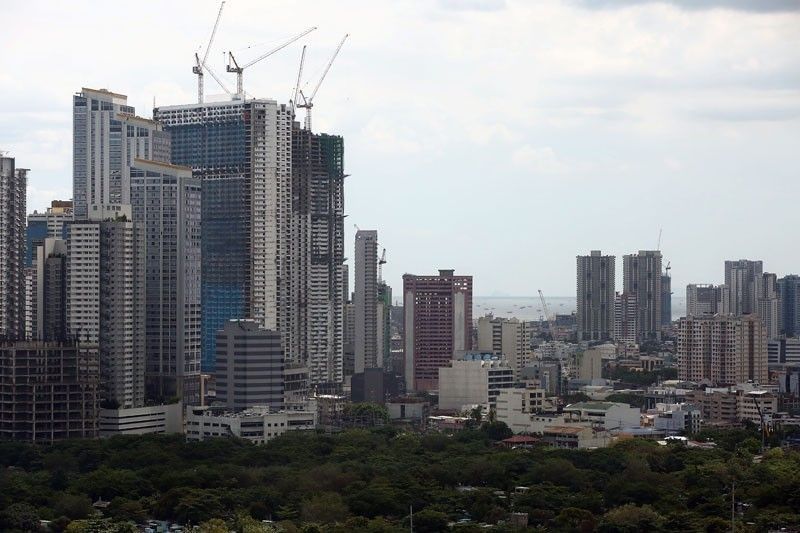
Taguig City, Metro Manila  Skyline
 
The ICP 2011 is a project undertaken through the authority of the United Nations Statistical Commission. It covered 199 economies and compared their shares to the global economy and expenditures. It also used the so-called purchasing-power parities (PPPs) in comparing the size and price levels of economies around the world.

The PPPs make it possible to compare gross domestic products (GDPs) of economies in real terms by removing the price-level differences among them.

“Six of the world’s 12 largest economies were in the middle-income category [based on the World Bank’s definition]. When combined, the 12 largest economies account for two-thirds of the world economy, and 59 percent of the world population,” the World Bank said.

The World Bank said the PPP-based world GDP amounted to $90.65 trillion in 2011, higher than the $70.29-trillion GDP measured in terms of exchange rates.

Data showed that the Philippines’s share in terms of global GDP was at 0.6 percent in PPP terms and 0.3 percent in terms of exchange rates. The 30 largest economies accounted for 84.1 percent of the global GDP in PPP terms.

The Philippines is one of the four Southeast Asia countries that made it to the 30 largest economies worldwide. Indonesia ranked 10th, followed by Thailand at 21st and Malaysia at 27th.

Globally, the world’s largest economy is the United States, with a share of 17.1 percent of global GDP. But China was a close second, with a share of 14.9 percent; with India a far third, with a share of 6.4 percent.

“The six largest middle-income economies—China, India, Russia, Brazil, Indonesia and Mexico—account for 32.3 percent of world GDP, whereas the six largest high-income economies—the United States, Japan, Germany, France, the United Kingdom and Italy—account for 32.9 percent,” the World Bank said.

“Asia and the Pacific, including China and India, accounts for 30 percent of world GDP; Eurostat-OECD 54 percent, Latin America 5.5 percent [excluding Mexico, which participates in the OECD; and Argentina, which did not participate in the ICP 2011]; and Africa and Western Asia about 4.5 percent each,” it added.

The Philippines also had a price-level index (PLI) of 53.2, which indicates it is not an expensive country but not the cheapest, either. The PLI is the ratio of a PPP to a corresponding exchange rate.

The World Bank said an index of over 100 means prices are higher than the world average; and 1 less than 100 means prices are relatively lower.

The most expensive economies in GDP terms are Switzerland, Norway, Bermuda, Australia and Denmark, with indices ranging from 210 to 185. The United States ranked 25th in the world, lower than most other high-income economies, including France, Germany, Japan and the United Kingdom.

But only 23 economies showed a PLI of 50 or below. The cheapest economies are Egypt, Pakistan, Myanmar, Ethiopia and Lao People’s Democratic Republic, with indices ranging from 35 to 40.

Meanwhile, even if the Philippines is one of the largest economies in the world and one of the “not so expensive” places to live globally, it is still not the richest in terms of GDP per capita.

The Philippines’s GDP per capita in 2011 in PPP terms was only at $5,772 and $2,379 in terms of exchange rates. These are below the average GDP per capita in Asia and the Pacific, at around $7,621 in PPP terms and $3,527 in terms of exchange rates.

The five economies with the highest GDP per capita are Qatar, with a GDP per capita in PPP terms at $146,521, followed by Macao with $115,441; Luxembourg, $88,670; Kuwait, $84,058; and Brunei Darussalam, $74,397.

In contrast, around eight economies have a GDP per capita of less than $1,000. These are Malawi with $973, followed by Mozambique, $951; Central African Republic, $897; Niger, $852; Burundi, $712; Congo, $655; Comoros, $610; and Liberia, $537.

“Eleven economies have more than $50,000 per capita, while they collectively account for less than 0.6 percent of the world’s population. The United States has the 12th-highest GDP per capita,” the World Bank said.

The ICP implementation was led and coordinated by the ICP Global Office, hosted by the World Bank, in partnership with regional agencies overseeing activities in eight geographic regions.

These are Africa, Asia and the Pacific, Commonwealth of Independent States, Latin America, the Caribbean, Western Asia, Pacific Islands, and the countries of the regular PPP program managed by the Statistical Office of the European Communities and the Organization for Economic Cooperation and Development.

Further, the World Bank explained that two “singleton” economies, Georgia and Iran, participated in bilateral exercises with partner economies, without being part of any regional comparisons.


Friday, January 31, 2014

...the PH 2013 GDP growth

Philippines’ GDP growth at 7.2% in 2013


...the Philippines as one of the best performing economies in the Asian region in the said period, second to China...
 
 
The Philippines’ full year Gross Domestic Product (GDP) in 2013 grew by 7.2 percent, higher than the government’s expectations of 6 percent to 7 percent and despite several challenges that strained the economy last year.

Socioeconomic Planning Secretary Arsenio Balisacan on Thursday announced that the increase was fueled by the industry and service sectors, service exports, and other services in education, health and social work.

Makati, economic growth, Manila Bulletin, GDP
Photo shows part of the skyline of Makati, the country’s major financial district which is home to top companies that help pull the economy forward. The Philippine economy grew by 6.5 percent in the fourth quarter of 2013, which makes the Philippines as one of the best performing economies in the Asian region in the said period, second to China with 7.7 percent growth. (Photo by Jacqueline Hernandez)


In a televised press conference at the Philippine Statistics Authority in Makati City, Balisacan said the economy grew by 6.5 percent in the fourth quarter of 2013, which makes the Philippines as one of the best performing economies in the Asian region in the said period, second to China with 7.7 percent growth.

Balisacan, who is also director-general of the National Economic and Development Authority (NEDA), admitted that the man-made and natural calamities that successively struck the country last year have affected the full year growth, but stressed that economy remains strong throughout the year.

“Indeed, growth could have been better, had we not been perturbed by various disasters that hit the country such as the Bohol earthquake, the Zamboanga siege and super typhoon Yolanda,” he said.
Yolanda caused multi-billion-peso damage to infrastructure and agriculture in the Visayas, effectively paralyzing the region’s economic activity.

Balicasan reported that agriculture only represents 0.1 percentage point in the real GDP. This could be due to the effects of the destructive typhoons last year which have severely affected the agricultural supply in Visayas.

The typhoons are also seen as the main reason for the lower growth in household spending at 5.6 percent during the fourth quarter last year as the natural calamities caused “supply shocks” that resulted in higher consumer prices.

Balicasan expects the agriculture and industry sectors to be “vibrant” this year if the two work closer.
Meanwhile, services sector has contributed to 3.6 percent of the real GDP growth in the last quarter of 2013, followed by the industry sector with 2.8 percent. The sectors of manufacturing, trade, finance, and real estate have also helped drive the supply side of the economy, Balisacan added.

The strong demand for communications, land and air transportation, drove a 6.5 percent growth in services sector. The need for storage and services incidental to transport also contributed to the growth.

“Increased air traffic in Q4 2013 was due to the additional flights and destinations of the country’s leading airlines, and number of passengers and cargo for tourism and for relief operations after super typhoon Yolanda,” he said.

Balisacan noted that construction sector had the biggest setback in the fourth quarter, with only 0.8 percent growth due to stricter rules imposed on real estate lending.

“Overall, however, the fourth quarter and full-year 2013 real GDP growth has surpassed the expectations of both the public and private sectors,” he said.

Balisacan said the government is optimistic that the Philippine economy will remain strong in 2014 especially that the outlook on the global economy is becoming more favorable and as the domestic economy remains robust.

He said the the International Monetary Fund and the World Bank have higher growth expectations for the global economy in the coming year, with IMF seeing global activity growing by 3.7 percent in 2014 and 3.9 percent in 2015.

Moreover, the World Bank projects the growth at 3.2 percent in 2014 and 3.4 percent in 2015.


Monday, October 7, 2013

...the PH growth forecast 2013 (World Bank)

World Bank raises PH growth forecast, lowers most of Asia


The World Bank on Monday raised its Philippine growth forecast, making the country a standout as the bank cuts its projections for most of the rest of Asia.

The World Bank predicted a 7% growth for the country this year form an original forecast of 6.2%.

According to the World Bank, increased infrastructure spending would add to the boost provided by consumer spending, remittances and business process outsourcing.

The Philippine economy grew 7.6% in the first half of the year, well above the 7% World Bank projection.

In a phone interview with ANC's News Now @ 3PM, Jun Neri, an economist from Bank of the Philippine Islands (BPI) said the country remains a standout in the region because unlike countries reliant on exports, our economic growth is not dependent on the performance of the biggest economies.

"It's not dependent on how the biggest economies in the world perform in the next quarters. Our own engine is pushing us forward," Neri said.

The rest of Asia are projected to have slower than expected growth as the United States slowed down its economic stimulus.

Earlier, the US government began a shutdown as Congress failed to agree on a new budget.

Last week, the Asian Development Bank (ADB) also raised its growth forecast for the Philippines while cutting its projections for most other Asian economies.

Like the ADB, the World Bank also noted that job creation remains the biggest challenge in the Philippines.

Investors cheered the World Bank's upgraded economic growth for the country as a total 1,390,903,228 shares traded hands on Monday.

Philippine shares closed up 0.83% or 52.73 points to 6,443.21.


Thursday, September 19, 2013

...the PHL track to competitiveness

PHL seen in world's top 30% in competitiveness by 2016 – DTI's Domingo

GMA News
September 19, 2013
 
 
The Philippines is on track to being ranked within the top 30 percent economies in various competitiveness surveys by 2016, a Cabinet official said Thursday.

“We will be in the top 30 percent in most if not all competitiveness surveys... by 2016,” Department of Trade and Industry Secretary and National Competitiveness Council (NCC) public sector chair Gregory Domingo told a press briefing.

For example, Domingo said the Philippines competitiveness ranking in the World Bank's Doing Business report is seen increasing to the 62nd spot “or better” in 2016.

Based on the World Bank's Doing Business report, the Philippines ranks 138th out of 185 countrie

The World Economic Forum, on the other hand, recently moved the Philippines six places up to 59th in its Global Competitiveness Report of 148 countries.

Domingo said that government reforms creating a conducive environment “will be in place” by 2015.

“Once we achieve these reforms, doing business in the Philippines will be easier and that should improve our rankings,” he said.

At the same briefing, NCC private sector co-chair Guillermo Luz said the country is likely to improve its ranking by 20 to 25 places in the next Doing Business report next month.

“We have not been doing well in this report so we spent a lot of time reviewing this report,” he said, adding that the NCC's report sent to the World Bank shows improvement in eight out of the ten indicators being tracked.

Reforms cited include cutting down steps and days in starting a business, dealing with construction permits, getting electricity, registering property, getting credit, protecting investors, paying taxes and trading across borders.

Officials maintained that reforms are being undertaken not to improve the country's competitiveness ranking, but to attract more businesses and investments to the country.

“We are putting in reforms for entrepreneurs. If our ranking does not improve but more want to invest here, then we are competitive,” Luz said.

The government wants to seize the Philippines' favorable economic conditions – robust growth as well as healthy payments and fiscal position – by providing a more conducive environment for businesses and investments.

“Our relative competitiveness in Asia and ASEAN [Association of Southeast Asian Nations] is the best it has ever been and will continue to improve,” Domingo said. – SOA/BM, GMA News


Friday, July 12, 2013

...the World Bank perspective

World Bank exec praises Philippines' macroeconomic policies


07/12/2013
 
 
MANILA - A regional official of the World Bank on Friday described the Philippines' macroeconomic policies as "sound," commending in particular the government plan to expand its poverty intervention program that directly gives cash assistance to poor families.

Axel van Trotsenburg, World Bank vice president for East Asia and Pacific, said proof of the government's successful implementation of its macroeconomic policies, "including keeping good control of public indebtedness," is the market's positive reaction and the investment grade ratings the country received from two credit ratings agencies.

"If you look at the growth numbers like last year, it was 6.8 percent, and this year's first quarter of 7.8 percent, these are very respectable growth rates in an international environment that is complicated...this is a positive number that with a strong growth, you have a chance to create a lot more employment," van Trotsenburg said in a press conference that ended his six-day Philippine visit.

The Philippine government has attributed its impressive economic performance to good governance, sound spending, particularly on infrastructure, and strong domestic consumption.

Van Trotsenburg, who arrived in the country Monday and will leave Saturday, traveled to Mindanao, met with Muslim rebel leader Murad Ebrahim, inspected an informal settlers' community in Manila and meet with President Benigno Aquino.

He said, however, that despite the country's good economic performance, the Philippines needs to work harder to reduce poverty, create good-paying jobs and provide adequate housing.

The World Bank, he said, remains committed to support the Philippines towards these objectives, and proof of this was the transfer Friday of a $300 million-loan.

The Philippines' poverty rate was 27.9 percent last year and the unemployment rate was 7.5 percent in April this year.

"Poverty alleviation is a long-term effort. Poverty reduction is tough, and poverty reduction requires long-term commitment," van Trotsenburg said, adding the World Bank approves of the Philippines' intention to expand its conditional cash transfer program that covers more than three million poor families.

On ongoing peace talks between the government and the Moro Islamic Liberation Front, he said, "We at the bank think very firmly that peace is the future and long-term development will bring long-term benefits to the population," as well as a "real chance of good education, good health to children in Mindanao and subsequently the option to have jobs."


Sunday, April 21, 2013

...the pilot countries for WB green accounting project

PH picked for WB ‘green accounting’ project

By DJ Yap
Philippine Daily Inquirer

 
  "...the Philippines was selected (by the World bank) as a pilot country for the WAVES program because it was one of the very few nations that had been conducting an accounting of natural resources since the 1990s." - Environment Secretary Ramon Paje  


Environment Secretary Ramon Paje
 

MANILA, Philippines—The Philippines has been chosen along with four other countries for the pilot implementation of a World Bank-led project to develop “green accounting,” or the inclusion of the value of natural resources in measuring a nation’s economic progress.

Environment Secretary Ramon Paje made the announcement on Saturday from Washington D.C., where he represented the country at a high-level ministerial meeting on “natural capital accounting (NCA)” or “green accounting” organized by the WB on April 18.

Paje said the Philippines, along with Botswana, Colombia, Costa Rica and Madagascar, were selected as the implementing partners of the Wealth Accounting and Valuation of Ecosystem Services (WAVES) project of the World Bank.

WAVES is a global partnership that aims to promote sustainable development by ensuring that the national accounts used to measure and plan for economic growth include the value of natural resources.

In a statement, Paje said the Philippines was selected as a pilot country for the WAVES program because it was one of the very few nations that had been conducting an accounting of natural resources since the 1990s.


Accurate information

“The country was noted for accounting for our natural resources such as minerals and forests to provide policy makers with accurate information that could help them make better decisions regarding development priorities and investments that are feasible and sustainable,” he said.

Paje said his participation at the meeting underscored the Aquino administration’s focus on preserving the environment while pursuing sustainable, inclusive and resilient growth.

“It is very important for us to account for our natural wealth, to uphold the principle of intergenerational equity wherein we protect the interest of future generations by protecting our natural resources, especially those that are finite such as minerals,” he said.


Classic example

Paje cited Executive Order No. 79, which institutionalizes and reforms the mining industry, as a “classic example of accounting for natural wealth for future development.”

“While increasing excise taxes from mining companies makes sure that the state gets its rightful share from mineral resources … there is a need to account for the resulting increase in government revenues by investing them in certain long-term infrastructure and programs, such as education and research,” he said.

“This way, even though the nonrenewable resources are extracted, future generations can still, though indirectly, enjoy them through improved goods and services and additional infrastructure,” he said.

The four-year project costs $1.45 million and will begin implementation in the second half of this year, with the National Economic and Development Authority, National Statistical Coordination Board and the Laguna Lake Development Authority as collaborating agencies.


Program of action

WAVES was launched in October 2010 during the Conference of Parties to the Convention on Biological Diversity in Nagoya, Japan. The partnership was able to formulate and propose a program of international action on ecosystems accounting at the Earth Summit held in June 2012.

Advocates argue that “green accounting” is more accurate in determining economic growth and its sustainability, rather than relying on traditional economic indicators such as gross domestic product.

With the GDP, for example, while income from mining or timber harvesting is recorded in national accounts, the simultaneous depletion of natural forest assets and mineral reserves is not accounted for.

The GDP also fails to explicitly identify critical ecosystem services such as tourism, regulating water cycles, preventing erosion and flooding, and carbon sequestration, resulting in misleading economic signals about economic growth and development.


...the Philippines' top diving destination goal

Philippines wants to become the top diving destination in the world


The Department of Tourism (DOT) is planning to make diving as one of the major drivers in promoting the Philippines.

“If you come to the Philippines and you don’t like what you see on land, just stick your head under water and you will be okay,” said Tourism Secretary Ramon Jimenez Jr. during yesterday’s World Deep (Diving Expo and Exhibition Philippines) in Shangri-La Mactan Resort and Spa in Mactan Island.

Jimenez said the tourism department would now be banking on the Philippines being the centre of biodiversity in their marketing strategy.

“We will make diving in the Philippines, a major force for tourists to come,” he said.

The dive expo organised by Philippine Commission on Sports and Scuba Diving (PCSSD) and Philippine Association on Underwater Activities (PAUA) and the DOT were attended by at least 130 representatives from different dive organisations from all over the world.

The three-day event is a venue for cultural exchanges and bilateral talks between members of World Confederation of Underwater Activities (CMAS) about diving and underwater policies.

The Philippines is considered as the global centre of marine biodiversity based on the study of an American biologist entitled Centre of the Marine Shore Fish Diversity: the Philippine Islands published by the World Bank in 2007.

The revenue in diving makes up a quarter of the total tourism revenue.

Divers, according to Jimenez, accounts to not less than five per cent of the country’s tourists.
Karen Chan, executive director of PCSSD, an attached agency of the DOT said 15 per cent of foreign tourists come here for diving.

“Divers tend to stay longer and have a lot of activities included in their regular tourism,” Jimenez said.

Aside from its monetary contribution the economy, promoting the Philippines as a world-class diving destination puts environmental protection an advantage.

“The biggest benefit in propagating diving in this country is that it forces us to preserve our ocean,” Jimenez said.

DOT Central Visayas Regional Director Rowena Montecillo said protecting the environment from being exploited is very important.

The secretary said he would meet with Department of Interior and Local Government, Department of Environment, Department of Agriculture among other government agencies to discuss the DOT’s direction to make diving a subset of tourism.

According to Montecillo, diving is the top tourist activity in the region.

In Cebu, dive tourists are concentrated in the dive resorts in Malapascua island in the north and Moalboal in the south.

“We are the centre of biodiversity in this part of the world. It is important that we raise awareness in protecting the environment,” Jimenez said.

For Cebu to become a successful tourist destination in the world, the people must love diving.
Benedict Reyes, president of PAUA said it is also important to engage the youth in underwater activities such as aquathlon, underwater hockey, underwater rugby, fin swimming, underwater photography among others.

The three-day expo includes at least 50 exhibitors of different dive attractions in the country including the showcase of the Department of Science and Technology’s coral rehabilitation programmes in the country which started last year.


Friday, April 19, 2013

...the most gender equal nations

Women on top: Phl among most gender equal nations


File photo from the World Bank Photo Collection.
 
 
MANILA, Philippines - The World Bank identified the Philippines as a world leader in gender equality, particularly in the fields of legislation, management and government.

In its World Development Indicators report released on Thursday, the international organization cited latest data showing that 55 percent of Filipino lawmakers, senior officials and managers are female.

The number, taken from 2007 to 2011 statistics, is the highest in the World Bank report with data from 88 countries.

The Philippines is among the two only countries in the world with more women than men in the said professions, using the International Labour Organization's standard classification of occupations.

Although the report said that gender inequality is most prevalent in developing countries, the Philippines, a lower middle income nation, is one exception.

"The share of women in high-skilled occupations ... indicates women's status and role in the labor force and society at large," the report explained.

Following the Philippines' lead is The Bahamas, a chain of island in the Caribbean, with 52 percent of leaders who are female.

Barbados, another island country in the Caribbean, is in relatively far third with 47 percent.

Ranking fourth is Latvia with women landing in 45 percent of top occupations, while the Cayman Islands are fifth with 44 percent.

The United States, the largest economy in the world, is tied with Latin American country Puerto Rico with 43 percent.

Indonesia, one of the Philippines' peer in Southeast Asis for one, only records 22 percent of high government and business positions given to women.

The world's most gender unequal nations in the world include those that have a dominant Muslim population, the lowest being Pakistan with women occupying only 3 percent of seats in legislation, governance and management.

Also at the bottom of the scale are Azerbaijan (7 percent), Lebanon (8 percent) and Saudi Arabia (8 percent).

"These patterns of inequality begin at an early age, with boys routinely receiving a larger share of education and health spending than girls, for example," World Bank said in the report.

The study, World Bank said, is a compilation of "relevant, high-quality and internationally comparable statistics about global development."

Other indicators cited in the report under people development are prevalence of malnutrition, HIV, unemployment and underemployment, as well as maternal mortality, adolescent fertility and under-five mortality.


Tuesday, April 16, 2013

...the 2013 PHL growth forecast (WB)

WB sees 6.2% growth, nearly same as ADB

Malaya Business Insight
Written by JOCELYN MONTEMAYOR
Tuesday, 16 April 2013


The World Bank expects the Philippine economy to expand by 6.2 percent this year and 6.4 percent in 2014, with the growth to be supported by the country’s strong economic fundamentals.

The WB estimate is higher than the ADB forecast of 6 percent for this year and 5.9 percent for next year.

In its “East Asia and Pacific Economic Update” report released yesterday, World Bank cited the Philippines as one of the middle-income countries in the East Asia and Pacific region that outperformed expectations last year.

“The Philippines led the ASEAN-4, accelerating from 3.9 percent GDP growth in 2011 to 6.6 percent in 2012, spurred by robust private consumption, a recovery in government spending, strong performance of the construction sector and of exports,” World Bank said.

With the country’s robust performance last year, World Bank maintained its outlook for the Philippines, unchanged from the forecasts it made in December 2012.

The World Bank’s 6.2 percent forecast for this year is within the national government’s 6 to 7 percent growth target for this period.

“In the Philippines, the fundamentals remain strong, policy responses have been appropriate so far, and reform efforts by the government appear sustainable,” the report said.

The Asian Development Bank earlier revised upwards its forecast for the Philippines to 6 percent for 2013 from its previous outlook of 5 percent.

For 2014, ADB expects the Philippine economy to expand at a slower pace of 5.9 percent.
ADB said that strong consumption and rising investments are expected to boost the Philippine economic performance this year.

It added that the upbeat business and consumer sentiment will support growth. Fiscal spending will remain robust, along with construction activity, driven by the strong demand for housing and office space.

Both the World Bank and ADB also cited the first investment grade credit rating recently given by Fitch Ratings for the Philippines, which is expected to improve the investment climate.

However, World Bank said that to sustain and increase inclusive growth in the developing East Asia and Pacific region over the medium-term, investments in both infrastructure and in skills must be increased.

The agency said that raising the levels of investment would raise growth prospects in the region.
“In the Philippines, lagging infrastructure development is a long-standing impediment to private investment,” the report said.

“Catching up on government infrastructure spending will provide the fiscal spark that is still missing in the country’s growth path, although infrastructure spending is gearing up recently. In 2012 it was equivalent to 2.4 percent of GDP, up from 1.6 percent of GDP in 2011,” World Bank said.

Presidential Spokesman Edwin Lacierda yesterday said while the World Bank’s growth forecast of 6.2 percent for the Philippines is at the lower end of the country’s own growth forecast of six to seven percent, it still recognizes that correct measures are being done by the Aquino government to continue to improve and grow the economy.

Lacierda said Malacanang still welcomes the growth forecast of the World Bank but the Aquino government will continue to hope and strive to reach its target of six to seven percent growth this year.

“Certainly, we welcome that. I think that’s a lowside of our forecast. Our forecast is around six to seven percent. But, certainly, it’s a welcome recognition on the part of World Bank that the Philippines has been taking the correct steps in improving the economy and also in having equitable progress for the—for our countrymen,” he said.

The World Bank has maintained its GDP forecasts of 6.2 percent for the Philippines citing that the country continues to show signs of sustained growth.

It also forecasted growth of 6.4 percent and 6.3 percent for the Philippines in 2014 and 2015 respectively.

World Bank also projected that regional growth would rise moderately to 7.8 percent in 2013 and ease to 7.6 percent in 2014.


Tuesday, February 5, 2013

...the rising tiger

Philippines now a 'rising tiger' - World Bank official


02/05/2013


"Philippines is no longer the sick man of East Asia but the rising tiger” - Motoo Konishi, World Bank country director


DAVAO CITY — President Aquino cited the gains that his administration has achieved, recognizing the need to ensure that these gains are felt by as many people as possible.
 
In a speech at the Philippines Development Forum, Aquino mentioned the country's 6.6 percent GDP growth in 2012 exceeded targets.

He described this period as a “critical juncture” in his administration, a time to look back at the “progress” that the country has made and strategize for further improvement.

“The improved consumption capacity of Filipinos means that our growth has benefited households as well. Moving forward, the challenge will always be how to ensure that our gains are inclusive, or more inclusive,” Aquino said.

The PDF is a venue for government to engage various stakeholders in a dialogue to generate commitments and recommendations for the government’s reform agenda.

There is a generally positive tone in the meeting as World Bank country director Motoo Konishi summed up the discussions.


He said there is a consensus that the Philippines is no longer the “sick man of Asia” but a “rising tiger,” citing the government’s macroeconomic stability, the government’s “sound and improving” fiscal situation, its improved transparency and fight against corruption.

“A striking story emerges out of these discussions: It is remarkably similar across a wide range of stakeholders and this is how it goes. First, [the] Philippines is no longer the sick man of East Asia but the rising tiger,” Konishi said.

Mr. Konishi enumerated the recommendations of stakeholders in five areas: economic development, human development and poverty reduction, justice and peace, climate change adaptation and mitigation, and governance and anti-corruption.

In economic development, the stakeholders stressed the need to ensure the creation of quality jobs especially in the area of agriculture and tourism; simplify business regulations; reduce barriers to entry in shipping; improve infrastructure and power especially in Mindanao; and pass measures such as the fiscal incentives bill.

In human development and poverty reduction, the stakeholders recommended the expansion and improvement of access to government programs in health, education, livelihood, and social protection, with added focus on special disadvantaged groups such as the out-of-school youth, indigenous peoples, and persons with disabilities.

In justice and peace, the forum cited the need to restore trust in the justice system reduce case backlogs, addressing corruption in the judiciary, and supporting community-based traditional systems of justice such as the Shari’a.

The participants called for the fast-tracking of the vulnerability and risk assessment to mitigate the effects of climate change and disasters.

In governance and anti-corruption, participants recommended that the monitoring and evaluation of government performance be strengthened and give added focus on governance reform in Mindanao.


Thursday, January 31, 2013

...the 2012 PH economic growth (official)

PH economy grows 6.6% in 2012, exceeds forecast


"With the robust growth of the services sector led by trade, and real estate, renting and business activities, accentuated by the sturdy performances of manufacturing and construction, the country's gross domestic product grew by 6.8% in the fourth quarter of 2012, paving the way for the annual GDP to post a broad-based growth of 6.6%," NSCB Secretary General Jose Ramon G. Albert said.

The 2012 economic growth exceeded market expectations and even breached the 5% to 6% target earlier set by the government.

Socioeconomic Planning Secretary Arsenio Balisacan earlier has said last year's growth may hover around 6.5%, while President Benigno Aquino III earlier this week noted "all of us will be impressed" with the 2012 growth figures.

The International Monetary Fund and the World Bank both forecast the Philippine economy to have grown by 6% last year.

A Bloomberg survey of analysts pegged the Philippines' 2012 growth at 6.3%, while a Reuters poll put it at 6.4%.


Stellar economic growth at 6.6%


Palace: Good governance means good economics

By Riza T. Olchondra, TJ Burgonio
Philippine Daily Inquirer


ECONOMIC TEAM President Aquino (right) predicts an impressive Philippine economic growth of more than 6 percent in a speech during the 40th anniversary of Neda on  Tuesday. He is shown with (from left) former Neda Director General Cayetano Paderanga, Neda Deputy Director General Rolando Tungpalan and current Neda chief Arsenio Balisacan. Lyn Rillon


Living up to President Aquino’s advance information that the numbers would impress, the Philippine economy expanded 6.8 percent in the fourth quarter of 2012, lifting full-year growth to 6.6 percent.

The figures that government economists and statisticians announced Thursday beat their targets and analysts’ expectations.

Socioeconomic Planning Secretary Arsenio M. Balisacan said that on hindsight, the government’s 5- to 6-percent growth target for the past year seemed conservative.

Median forecasts from the World Bank and other institutions were 5.9 percent for the fourth quarter and 6.4 percent for the full year.

Compared with the latest available data from other Asean countries, the Philippines’ fourth quarter growth in gross domestic product (GDP), the value of goods produced and services rendered in a given period, was higher than Vietnam’s 5.4 percent and Singapore’s 1.1 percent.

China’s economy expanded by 7.8 percent in the last quarter. Other countries still do not have available data for the full year.

Unsurprisingly, the GDP announcement by the National Economic and Development Authority (Neda) and the National Statistical Coordination Board (NSCB) was trending on Twitter, earning kudos from industry groups, such as the Makati Business Club.

Private economists, however, were not as impressed, noting that the lingering question was whether such figures could be sustained and translated into better incomes for many Filipinos.

Expectedly, Malacañang cheered the “exceptional” growth rate, trumpeting it as proof of the country’s ability to move toward “equitable progress” on a policy of good governance.

“It is a resounding affirmation of the Aquino administration’s fiscal strategy, backed as it is by our robust macroeconomic fundamentals and more importantly, the principles of good governance,” Budget Secretary Florencio Abad said in a statement.

Presidential spokesperson Edwin Lacierda attributed the economic growth to private sector activity goaded by the administration’s policy reforms.

While it was initially driven by government stimulus, the economic growth was now increasingly being driven by private sector activity, including investments, which grew by 8.7 percent in 2012, Lacierda said in a briefing.

“This means growth is becoming more sustainable from a fiscal and macroeconomic perspective. Private sector activity has been enabled by the Aquino administration’s dedication to positive reform. Without doubt, good governance means good economics,” he said.

Not quite impressed

Benjamin E. Diokno of the University of the Philippines School of Economics, however, was not impressed.

Diokno said that under President Corazon Aquino, the economy grew by 6.8 percent in 1988 after a weak growth in 1987, while under President Gloria Macapagal-Arroyo, the economy grew 6.7 percent in 2004 after a weak growth in 2003, and again by 7.6 percent in 2010, after a near recession in 2009.

“I agree it’s a strong growth. Considering its long-term growth potential and growth higher than 6 percent might be considered strong. Is it sustainable? That remains to be seen. We’ve seen this kind of growth before and they were not sustained. Is it inclusive? I’m afraid not,” he said.

Diokno said the contribution of agriculture to GDP continued to shrink, posting the lowest growth among the three major sectors.

“Based on the October labor statistics, the recent growth may be characterized as labor-shredding growth. Close to 1 million jobs were lost,” Diokno said. Most Filipinos still depend on agriculture and related sectors for a living.

NSCB Secretary General Jose Ramon G. Albert said industry and services led economic growth on the supply side (sources of goods and services).

On the demand side (where goods and services are used), growth was still largely driven by household consumption and external trade.

Industry grew 6.5 percent, more than twice the 2.3-percent growth in 2011.

The Neda said the expansion in public and private construction, and the electricity, gas and water sector led the growth.

In the first two quarters of last year, it was public construction that took up the slack in construction, but the private sector took over beginning the third quarter.

“This is what we mean by the private sector upping its stakes in the economy,” said Balisacan, who is also the Neda director general.

“Equally remarkable was the growth in the electricity, gas and water sector, growing by 5.1 percent, a far cry from its growth of 0.6 percent in 2011. No doubt this was in support of the increased economic activity in 2012,” he said.

The service sector also beat expectations with a 7.4-percent growth from trade, transport and communications, real estate, renting and business activities and other services.

Trade grew by 7.5 percent in 2012, more than twice the figure in 2011. Growth in transport and communications accelerated at 9.1 percent compared with 4.3 the previous year.

“We had expected a slower growth for the real estate, renting and business activities, which includes the IT-BPO, owing to the continued slowdown in the global economy. And yet the sector still managed to grow faster than expected at close to 8 percent,” Balisacan said.

There were also notable gains in other services, particularly, tourism-related subsectors, such as hotels and restaurants, and recreational, cultural and sporting activities. These subsectors grew 13.3 percent, compared with only 7.1 percent in 2011.

Balisacan said he was also pleasantly surprised with the growth in agriculture (2.7 percent).

“We only expected a 2.2-percent growth from the sector owing to weather disturbances forecast for the year,” he said.

In the first two quarters of 2012, it looked like the sector would underperform with a contraction in the fisheries sector. However, the turnaround happened beginning the third quarter and especially in the fourth quarter when the sector grew by 4.7 percent.

“We are also pleased to note that the output in the fishery sector had gone up by 3.3 percent, from eight consecutive quarters of contraction if not stagnant growth,” Balisacan said.

Household consumption

On the demand side, household consumption remained the largest contributor to growth in 2012, growing by 6.1 percent. Although the growth was slower than the 6.3 percent in 2011.

Balisacan noted that the growth had been on the increase coming from 5.1 percent in the first quarter up to 6.9 percent in the fourth.

Growth was supported by the higher level of economic activity, low and stable inflation, inflows of overseas Filipinos’ remittances and government subsidy mainly through the conditional cash transfers.

“Note, however, that remittances of overseas Filipinos increased by 8 percent in dollar terms, but only by 2.8 percent in peso terms in October and November 2012,” Balisacan said.

Exports of goods recovered with a growth of 8.7 percent for the year from a contraction of 4.2 percent in 2011. Exports of services grew by 9.8 percent, more than twice the growth the previous year.

“However, this growth was actually slower than expected. Perhaps the sector is already feeling the pinch from the combined impact of the global economic slowdown and the appreciating peso,” Balisacan said.

Fixed capital formation also improved to 8.7 percent in 2012 as growth in investments for public and private construction and durable equipment registered significant increases.

In spite of the country’s achievements in 2012, Balisacan said the government would not be “lulled” into complacency.

“It is our immediate task to put in place policies and implement programs that will sustain our economy’s growth over the medium term. We shall continue planting the seeds of a structural transformation in our economy to make it more investment and industry-led. This, in turn, will mean more jobs and employment opportunities of high quality for Filipinos, thus ensuring that growth is inclusive and benefits all sectors of society,” he said.

Raise productivity

Cid L. Terosa of the University of Asia and the Pacific said the growth level of at least 6 percent could be maintained as long as the Philippines kept building up productivity.

So far, Terosa said, the fourth quarter and full year 2012 growth rates were impressive but the question remained whether those numbers could translate into better income for many.

“Employment and continuous structural changes are keys to economic growth over the medium-term,” he said.