Showing posts with label ADB. Show all posts

Thursday, September 26, 2019

...the emerging trade war winners

Asia's emerging economies are winning US-China trade war

Robin Harding
Financial Times
25 September 2019


Asia’s emerging economies have been the big winners from the US-China trade war and they will gain even more if it escalates, according to the latest outlook from the Manila-based Asian Development Bank.
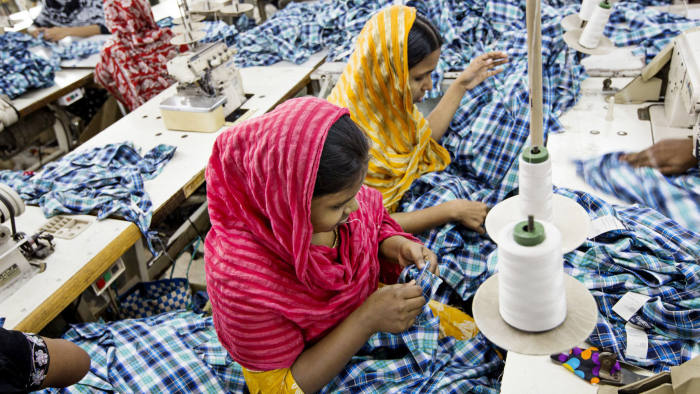

Workers sew plaid shirts on the production line of the Fashion Enterprise garment factory in Dhaka, Bangladesh, on Tuesday, April 30, 2013. Bangladesh authorities said they were accelerating rescue efforts at the factory complex that collapsed last week as hopes fade for more survivors after the nation’s biggest industrial disaster. Bangladesh’s labor law requires safety measures such as fire extinguishers and easily accessible exits at factories. Jeff Holt/Bloomberg
Bangladesh has seized market share in textiles © Bloomberg

Exports from developing Asian countries to the US rose by 10 per cent over the previous year in the first half of 2019, even as exports from China fell by 12 per cent. Exports from Vietnam to the US jumped by 33 per cent and from Bangladesh by 13 per cent.

The report shows how the huge trade diversion effects caused by the US-China tariff war are creating winners and losers as they reshape global supply chains, with Bangladesh seizing market share in textiles and Vietnam in electronics.

“Chinese products are encountering tariff measures so exports and production are slowing down.

Naturally, suppliers connected to these Chinese exports are also slowing down,” said Yasuyuki Sawada, chief economist at the ADB, which lends to developing countries in the region.“But at the same time we see this rather positive channel through trade redirection,” he said, at the launch of an update to the bank’s flagship Asian Development Outlook.The more serious trade tensions get, the bigger the trade redirection effect will become.

In a worst-case scenario, with 30 per cent tariffs on all US-China trade plus an extension of the trade war to automobiles, the ADB expects a drag on overall growth in developing Asia of 0.7 per cent over the next few years. Within that, however, Vietnam’s economy would grow by an additional 2.3 per cent, with Malaysia, Thailand, Bangladesh and the Philippines all coming out as winners too.

 The analysis does not include the impact of uncertainty over trade hurting investment, which could lead to a worse outcome in reality, Mr Sawada noted.For the region as a whole, the ADB trimmed its growth outlook for 2019 from 5.7 per cent to 5.4 per cent, reflecting the global slowdown, trade tensions and a “sharp contraction” in the global electronics cycle — especially for semiconductors.


The ADB cut its growth forecast for Hong Kong from 2.5 per cent to 0.3 per cent, reflecting the slowdown in global trade as well as political turmoil, and lowered its growth forecast for semiconductor-dependent South Korea from 2.5 per cent to 2.1 per cent.

On the other hand, it raised its growth forecast for Bangladesh from 8 per cent to 8.1 per cent, predicting it will be the fastest-growing economy in the region this year and next.

Mr Sawada said that risks to the region included the US-China trade conflict, the deepening growth malaise in advanced economies as well as a build-up of private debt in some emerging Asian economies. “The corporate sector in China and the household sector in Korea, Thailand and Malaysia have had a rising debt-GDP ratio. I think this is another risk,” he said.

Tuesday, September 10, 2019

...the Asean leader in gender-equality

PHL cited as gender-equality leader in government hiring - ADB, OECD


Business World | September 10, 2019

THE Philippines is a regional leader in terms of gender equality in job hiring, specifically in the public sector, the Asian Development Bank (ADB) and the Organization for Economic Co-operation and Development (OECD).
Asian Development Bank (ADB)
Speaking to reporters at the launch of the Government at a Glance Southeast Asia 2019 report issued by the ADB and OECD, Chiara Bronchi, an ADB Chief Thematic Officer from the bank’s Thematic Advisory Service Cluster, said the study found that 53.7% of public sector jobs in the Philippines were occupied by women in 2016, up from 50.7% in 2009.
The Philippines outperformed the the Southeast Asian average of 47% in 2016, while also employing larger proportions of women than Japan or South Korea, where less than 50% of public sector employees were women,
“That makes actually Philippines a leader… in terms of hiring [with] a gender balance if you are in the public sector,” Ms. Bronchi said.
Edwin Lau, Head of the Reform of the Public Sector division at the OECD’s, Public Governance Directorate, said the findings reflect “meritocratic” hiring in government service.
“You also see that the types of recruitment systems that are used are very meritocratic, so they’re really built to ensure top-quality people are rising in the public service,” Mr. Lau said.
He said the Philippines is “far above” the Southeast Asian average in terms of performance management systems.
“It’s [Philippines] even using more performance management systems than OECD countries… (In) public employment… the systems are fairly well developed,” he added.
The study also found that women are underrepresented in parliamentary bodies, with only 20% of these seats across the region held by women in 2018, just 1.7 percentage point higher from a decade earlier.
The report is the first of its kind that looked into the latest available data on public administration in Brunei, Cambodia, Indonesia, Laos, Malaysia, Myanmar, the Philippines, Singapore and Vietnam. — Luz Wendy T. Noble

Friday, September 6, 2019

...the role of NGO in Philippine infrastructure development

How NGOs are Improving Infrastructure in the Philippines


Sean Galli
Borgen Magazine
06 September 2019


SEATTLE, Washington — The Southeast Asian nation of the Philippines, an archipelago of approximately 108 million people, has recently become quite economically viable. From 2017 to 2018, its global competitiveness score jumped from rank 68 to 56 out of 140 nations indexed by the World Economic Forum. However, the country’s infrastructure lacks the vitality of its overall economy, ranking at 92 out of 140 in the same report.
Infrastructure in the Philippines
Improvements in infrastructure would lift the Philippines’ average global competitiveness score. With the U.S. Trade Representative reporting $29.6 billion in 2017 U.S.-Philippines trade, there are also lucrative American opportunities if infrastructure capable of supporting businesses were to grow. Fortunately, infrastructure in the Philippines is a focus of President Rodrigo Duterte’s administration. Unfortunately, financial difficulties accompany this initiative, which is why more NGOs are shifting their focus to infrastructure aid for long-term growth.

Build, Build, Build

President Duterte plans to make his mark on Filipino history with his “Build, Build, Build” campaign, an aggressive infrastructure development plan that includes 75 projects and costs $180 billion. It is part of a larger platform of economic development that President Duterte hopes will reduce poverty to 17 percent by 2022.
The effort mobilized a large part of the Filipino economy, and even prominent Filipino billionaires are pitching in. Forbes described a 7 percent GDP growth in 2017. Ramon Ang, one of the aforementioned tycoons and the largest shareholder of the San Miguel Corporation, offered to build the $13.8 billion Manila Bay Airport in a proposal approved by the government in late 2018.

Minor Development Issues

Despite the economic reinvigoration, billionaires cannot fund everything, and massive government investments spawn fiscal difficulties. Specifically, the Philippines suffers from a growing deficit, growing inflation and difficulty starting and operating businesses. The Asian Development Bank noted that the Philippines’ deficit jumped from 0.7 percent of GDP in 2017 to 2.4 percent in 2018. Growth in spending on infrastructure in the Philippines also contributed to inflation, which rose to 5.2 percent in 2018. However, it is expected to drop down to 3.5 percent by 2020.
All of this affects business development, which has suffered amid rising costs. Out of 190 nations, the World Bank ranked the Philippines at 124 on its 2018 Ease of Doing Business score. It is particularly difficult to start a business in the Philippines because of building permits, registering property and rising taxes. In the effort to enhance business development with infrastructure, progress has actually stalled. Fortunately, there are NGOs working to amend the problem at the local and national level.

The Local Road

The Asia Foundation is one NGO currently improving infrastructure in the Philippines outside of the major cities. Established in 1954, its initial program, Books for Asia, ensured that Filipino college students received textbook donations. The organization has concentrated on education throughout Asia for most of its history. However, today, it is concerning itself with creating more democratic societies by means of fair elections and infrastructure.
The Asia Foundation with the Australian Embassy created Coalitions for Change (CfC) in 2012. Is the centerpiece of the NGO’s Philippines program. It addresses road connectivity issues under the advice of local businesses and provincial governments to allow ease of access and increased economic activity. By February 2018, it had partnered with 15 provinces and used $1.9 billion for 298 new roads.
Provincial governments also saved money on planning new roads after CfC orchestrated a memorandum signing between the Philippines’ national mapping service and the interior ministry. According to a CfC report, this memorandum opened opportunities for provincial governments to use GPS technology to construct maps. Without the cost of 6,000 Philippine Pesos (roughly $117) per map sheet for an accurate 11,000 sheet map, local governments have more economic freedom when it comes to infrastructure in the Philippines.

The National Stage

The Asian Development Bank (ADB) uses a nationally based financing strategy to help its home country of the Philippines. Starting in 1966, it worked to implement its agenda of infrastructure and human development throughout the Philippines. ADB has completed 682 lending and assistance projects worth a total of $19.3 billion to date. Similar to The Asia Foundation, transportation comprises a significant chunk of their assistance. They devoted $2.05 billion and 79 projects to transportation alone.
Transportation infrastructure is a priority going forward as well. The ADB’s May 2019 announcement of a $2.75 billion loan for the Malolos-Clark Railway Line that will connect Clark in the Central Luzon region to Manila in order to reduce immense congestion on the roads into the capital. This type of assistance can drop rapid government spending on large projects. The ADB already predicts a 0.1 percent drop in the deficit in 2019 and 2020.
Despite the financing issues, the future of infrastructure in the Philippines looks bright. The work of The Asia Foundation and the ADB promises more sustainable solutions for infrastructure development. Cost-effective methods ensure that the Philippines does not make business more difficult while it simultaneously attempts to improve it. With more fiscally wise future aid, the Philippines’ roads and railways can propel more Filipinos to success.


Friday, November 29, 2013

...the brotherhood of man

This Time We Must All Be Filipino 


Stephen P. Groff
The Huffington Post

11/29/2013 
 

Just three weeks ago, millions of Filipinos felt the catastrophic strength of Super Typhoon Haiyan. What can I write in its aftermath that could help ease their agony? What can I possibly say that might lighten their load? Following my visit to Tacloban and surrounding areas, I know that there are no words that will alleviate their suffering; no literary unction that will sooth their pain. I can't pretend to understand the emptiness felt by someone who has lost a child, a parent or a loved one to this disaster by making false comparisons to disappointments I have experienced. Dime-store analogies will never do justice to the enormity of this loss. The only thing I can say is that I know the Philippines can overcome this tragedy and will be stronger for the experience.

My life is inextricably entwined with this country. In many ways, I owe my family and my career to the Philippines. I first came here over twenty-five years ago as a Peace Corps volunteer. Newly graduated from college, I was ready to impart all of my "wisdom" to a community of artisanal fishermen, only to find that I had much more to learn from them than they from me. This was my first introduction to the Filipino spirit and to the notion of "bayanihan". People who had very little didn't think twice about sharing it. The community always came together to help someone with a sick family member, to support someone else whose boat was destroyed by a storm or to repair communal dikes in the rice fields.

The Philippines has been my home for much of the time since. My wife and our two amazing children are Filipino. While aware of the challenges faced by a burgeoning middle-income country, we marvel at the beauty of this place and still spend many weekends in the village where I first lived as a volunteer. I may not look it but, deep inside, my heart is here -- Pilipino ang puso ko.

We have all seen how resilient this country is. Through war, typhoons, volcanoes, and earthquakes, the Filipino perseveres with a smile on his face and wonders if you'd like to eat, ready to share whatever she has. This is what will allow the country to overcome this tragedy -- the optimism and generosity of its people. This time though, we must all be Filipino. We must all share in that optimism and generosity.

In responding to this tragedy, the Philippines, paraphrasing Abraham Lincoln, must allow itself to be influenced by the better angels of its nature -- bayanihan, pakikipagtulungan, mapagpatawad and kaloob.

The rest of the world must accept the lessons from previous tragedies that we too often have stubbornly resisted. In a recent Washington Post piece, Vijaya Ramachandran and Owen Barder urge the world to "Let's help the Philippines -- but not like we helped Haiti".

 They acknowledge that the immediate aftermath of such disasters can bring out the best in the global community. But much remains to be learned from our response to disasters such as the 2004 Indian Ocean tsunami and the 2010 earthquake in Haiti, particularly around transparency and accountability. The Government of the Philippines has made a strong push in this direction with the launch of FAiTH (the Foreign Aid Transparency Hub), an online portal of information on aid received in response to Yolanda.

Past experience shows that while responding to initial needs is often chaotic, study after study demonstrates that failing to support a strong national presence on the ground undermines the government's ability to lead the reconstruction effort, long after emergency responders have departed. This begins with the relief phase being anchored by strong national coordination of both domestic and international efforts. In short, the entire international community -- public, private and civil society -- must support the government's efforts to coordinate all phases of the response.

And what about concerned citizens? In an excellent piece in Slate, humanitarian worker Jessica Alexander urges the civically minded to "donate money -- not teddy bears, not old shoes, not breast milk." Her basic premise is that we need to curb our instinct to donate things, and instead donate money to those organizations that can best determine what things are necessary on the ground. Not only does money travel faster and cost less to move, there is less chance that it will end up unused.

Lastly, we should use the momentum created by this crisis to inject momentum into the fight against climate change. Naderev Saño, the chief representative of the Philippines at the Warsaw Climate Change Conference, pled with delegates at COP 19 on November 11 to "stop this madness". There is significant scientific evidence that the worst storms are getting stronger and that storm surges are compounded by sea level rise. The global community should use this event as an impetus for concrete, immediate action to address climate change.

For its part, my institution -- the Asian Development Bank -- is committed to supporting the country in response, recovery and reconstruction. We have already released a $3 million grant and will soon be releasing another $20 million grant and a $500 million loan to support reconstruction. While these funds will help, they represent only a fraction of our commitment to the Philippines. Two-thirds of our staff -- nearly 2,000 people -- are Filipino, many with a direct connection to this tragedy. The remainder are expatriates who have chosen Manila as a second home. Alongside our neighbors, thousands of us are contributing in a personal capacity to the ongoing efforts in the Visayas. We will do whatever is necessary to help get these communities back on their feet.

Now is not the time to point fingers or assess blame. Now is the time to work together -- to encourage global bayanihan -- to get assistance to those that really need it, and to do that in the context of understanding past failures and successes. Like my Filipino friends, I am an optimist at heart, and it is hard not to see a better future in the smiles I saw on the children of Leyte and Samar, children who have experienced more tragedy in their young lives than most of us do in a lifetime. The Filipino spirit is stronger than this event -- not only is it "waterproof", it is pessimist-proof as well.

Stephen P. Groff is the Asian Development Bank's Vice-President for East Asia, Southeast Asia and the Pacific. This article first appeared in the Philippine Daily Inquirer and in Embassy Magazine.

Wednesday, October 2, 2013

...the PH growth forecast (ADB)

ADB hikes Philippine growth forecast

            
MANILA, Philippines - The Asian Development Bank (ADB) on Wednesday upgraded its growth forecast for the Philippines, citing booming investment and consumption as key factors to the country's economic renaissance.

The multilateral financial institution revised its 2013 gross domestic product forecast for the Philippines from 6 percent in April to 7 percent. For 2014, growth was revised to 6.1 percent from the previous projection of 5.9 percent.

The Philippine economy grew by 6.8 percent last year and 7.6 percent in the first half of 2013, on the back of election spending, strong investment in construction and expansion in the services sector, ADB said.

"The economy is riding high on the back of hefty domestic demand and investment, low inflation and interest rates, buoyant remittance flows, and upbeat business sentiment,” ADB Country Director for the Philippines Neeraj Jain said.

He added, however, that the economic boom in the country is not translating to more jobs, as 3 million people are unemployed and 7.3 million are underemployed.

The bank said job generation in the past two years has fallen short of the official goal of adding 1 million new jobs a year.
"Services cannot absorb all job seekers, and with employment in manufacturing declining over the past two decades, there is pressure to reinvigorate the sector so more work can be created for semi- or unskilled workers," ADB said.

It added that the government needs to upgrade its infrastructure and improve governance, as well as create plans with the private sector to develop niche market industries in manufacturing and agribusiness.

"Looking ahead, the same drivers will continue to fuel economic activity, supported by the benign inflation and interest rate environment, ample liquidity and a rise in government spending. At the same time the authorities will need to keep a close eye on credit conditions with the possibility of a central bank tightening of monetary policy next year. Strong domestic demand and a weaker peso may put some upward pressure on inflation in 2014," ADB said.

It added that the Philippines is poised to weather the possible effects of the United States Federal Reserve's tapering of its quantitative easing policy, which will see an exodus of capital from emerging markets.

"The Philippines is well placed to withstand any volatility with its current account firmly in surplus and high foreign exchange reserves. Its external debt as a share of GDP is also on a downtrend and the banking sector is healthy, with strong capital adequacy ratios and low levels of non-performing loans," it said.


Tuesday, April 16, 2013

...the 2013 PHL growth forecast (WB)

WB sees 6.2% growth, nearly same as ADB

Malaya Business Insight
Written by JOCELYN MONTEMAYOR
Tuesday, 16 April 2013


The World Bank expects the Philippine economy to expand by 6.2 percent this year and 6.4 percent in 2014, with the growth to be supported by the country’s strong economic fundamentals.

The WB estimate is higher than the ADB forecast of 6 percent for this year and 5.9 percent for next year.

In its “East Asia and Pacific Economic Update” report released yesterday, World Bank cited the Philippines as one of the middle-income countries in the East Asia and Pacific region that outperformed expectations last year.

“The Philippines led the ASEAN-4, accelerating from 3.9 percent GDP growth in 2011 to 6.6 percent in 2012, spurred by robust private consumption, a recovery in government spending, strong performance of the construction sector and of exports,” World Bank said.

With the country’s robust performance last year, World Bank maintained its outlook for the Philippines, unchanged from the forecasts it made in December 2012.

The World Bank’s 6.2 percent forecast for this year is within the national government’s 6 to 7 percent growth target for this period.

“In the Philippines, the fundamentals remain strong, policy responses have been appropriate so far, and reform efforts by the government appear sustainable,” the report said.

The Asian Development Bank earlier revised upwards its forecast for the Philippines to 6 percent for 2013 from its previous outlook of 5 percent.

For 2014, ADB expects the Philippine economy to expand at a slower pace of 5.9 percent.
ADB said that strong consumption and rising investments are expected to boost the Philippine economic performance this year.

It added that the upbeat business and consumer sentiment will support growth. Fiscal spending will remain robust, along with construction activity, driven by the strong demand for housing and office space.

Both the World Bank and ADB also cited the first investment grade credit rating recently given by Fitch Ratings for the Philippines, which is expected to improve the investment climate.

However, World Bank said that to sustain and increase inclusive growth in the developing East Asia and Pacific region over the medium-term, investments in both infrastructure and in skills must be increased.

The agency said that raising the levels of investment would raise growth prospects in the region.
“In the Philippines, lagging infrastructure development is a long-standing impediment to private investment,” the report said.

“Catching up on government infrastructure spending will provide the fiscal spark that is still missing in the country’s growth path, although infrastructure spending is gearing up recently. In 2012 it was equivalent to 2.4 percent of GDP, up from 1.6 percent of GDP in 2011,” World Bank said.

Presidential Spokesman Edwin Lacierda yesterday said while the World Bank’s growth forecast of 6.2 percent for the Philippines is at the lower end of the country’s own growth forecast of six to seven percent, it still recognizes that correct measures are being done by the Aquino government to continue to improve and grow the economy.

Lacierda said Malacanang still welcomes the growth forecast of the World Bank but the Aquino government will continue to hope and strive to reach its target of six to seven percent growth this year.

“Certainly, we welcome that. I think that’s a lowside of our forecast. Our forecast is around six to seven percent. But, certainly, it’s a welcome recognition on the part of World Bank that the Philippines has been taking the correct steps in improving the economy and also in having equitable progress for the—for our countrymen,” he said.

The World Bank has maintained its GDP forecasts of 6.2 percent for the Philippines citing that the country continues to show signs of sustained growth.

It also forecasted growth of 6.4 percent and 6.3 percent for the Philippines in 2014 and 2015 respectively.

World Bank also projected that regional growth would rise moderately to 7.8 percent in 2013 and ease to 7.6 percent in 2014.


Wednesday, April 10, 2013

...the 2013 PH growth forecast (ADB)

ADB raises 2013 PH growth forecast to 6%


By Michelle V. Remo
Philippine Daily Inquirer
 
 
The Asian Development Bank has raised its growth forecast for the Philippines for this year to 6 percent from 5 percent in the belief that its first-ever investment grade could prompt more investors to consider the country as a top business destination.

For 2014, the ADB said the country was expected to remain strong and grow 5.9 percent.

However, the ADB stressed the need for the Philippines to work doubly hard in resolving constraints to the entry of more foreign direct investments (FDIs). It warned that without sufficient absorptive capacity, the country could face threats of asset price bubbles resulting from the influx of foreign funds.

Norio Usui, chief economist of the ADB for the Philippines, explained that foreign-exchange inflows to the Philippines would be used mostly for purchasing portfolio instruments and real properties if existing bottlenecks to the establishment of enterprises would remain.

“The Philippines is presented with golden opportunities of higher investments, especially with the investment grade. The outlook for the economy over the medium term is quite optimistic,” Usui said Tuesday in a press conference on the release of the “2013 Asian Development Outlook” report.

“But if there is lack of investment opportunities in the country, money could go to the financial markets and real estate, posing threats of a bubble in [these] markets,” Usiui added.

Some of the key constraints cited by the ADB for hindering the establishment of job-generating businesses were the tedious process of getting licenses and setting up enterprises in the country, lack of technical skilled workers and inadequate infrastructure.

Neeraj Jain, country director of the ADB for the Philippines, said the country needed to fully develop its manufacturing sector so that foreign-exchange inflows to the country could be used to establish businesses that have big labor requirements.

The ADB suggested that the government increase its investments in technical-skills education and focus on specific products where the Philippines have a comparative advantage.

“A stronger industrial base is vital for increasing jobs and will help make growth more inclusive and sustainable,” Jain said, adding that the government needed to invest more in infrastructure, inadequacy of which has often been cited as a major hindrance to FDIs.

Jain said government spending for infrastructure should increase to an amount equivalent to 6 to 7 percent of the country’s gross domestic product. Current public infrastructure spending is below 3 percent of GDP.


Tuesday, March 19, 2013

...the PHL bond market

Phl bond market second fastest-growing in East Asia


MANILA, Philippines - The Philippine bond market was the second fastest-growing among emerging economies in East Asia last year, rising by 20.5 percent as the unresolved budget deadlock in the US and the debt crisis in Europe prompted investors to turn to safe-haven and higher yielding investments.

According to the Asian Development Bank’s latest Asia Bond Monitor, the bond market in the Philippines was one of the most preferred sites for portfolio investments given the country’s robust economy supported by strong domestic consumption and investment growth. It came second to Vietnam, whose bond market grew 42.7 percent.

Outstanding fixed-income instruments issued by the government and government-controlled companies reached P3.6 trillion as of end-December last year.

Treasury bonds registered the most rapid pace, rising by 24.5 percent to P3.2 trillion last year from a year ago.

Outstanding treasury bills represented a 6.8-percent growth to P275 billion while that of corporate bonds posted an annual growth rate of 20.7 percent at P526 billion.

For the entire region, the outstanding amount of bonds stood at $6.5 trillion or an increase of 12 percent in local currency terms. The corporate markets, though smaller than the government bond markets, drove the increase, growing 18.6 percent to $2.3 trillion last year.
In the past 10 years, emerging East Asia’s bond markets have grown by over 16 percent annually and now account for nearly 10 percent of total global bonds outstanding.

According to the ADB, the region’s growing bond markets have reduced the need to borrow in foreign currency, allowing government and companies to borrow more in and at longer maturities.

A heavy reliance on foreign borrowing in the past has caused exchange rates to depreciate, forcing governments to either reduce spending or raise taxes.

Finance Secretary Cesar V. Purisima said the bond market is an important pillar of economic growth if the Philippines is to build sustainable infrastructure.

Purisima said the government is confident the country’s bond market will continue to grow at a faster pace given President Aquino’s good governance program.

He said the market has significant room for growth, noting that only a few corporations have been tapping the debt market, of which 60 percent comprises banks.

The government has programmed P120 billion in borrowings in the first quarter this year through its regular auctions,This will consist P45 billion of Treasury bills with 91,182 and 364-day tenors and the remainder in the form of treasury bonds with maturities of 7, 10 and 25 years.

Thiam Hee Ng, senior economist in ADB’s Office of Regional Economic integration, however, cautioned that the surge in capital inflows could raise the risk of asset price bubbles in the region.

“Emerging East Asia is much more resilient than it used to be but governments still need to be careful that the surge in capital inflows doesn’t fuel excessive rises in asset prices and that they are prepared for a possible reversal in the flows when the economies of the US and Europe pick up again,” Ng said.


Monday, March 18, 2013

...the PH economic status 2013 (ADB)

ADB sees investment grade for PH in 2013

Cai Ordinario
Rappler.com
Posted on 03/18/2013
INVESTMENT GRADE. The Asian Development Bank says the Philippines will likely get a credit rating upgrade soonINVESTMENT GRADE. The Asian Development Bank says the Philippines will likely get a credit rating upgrade soon

MANILA, Philippines – The Asian Development Bank (ADB) believes the Philippines will attain investment grade in 2013.

“The Philippines' strong economic performance has led to positive actions from several ratings agencies. In October, Moody’s raised the Philippines’ sovereign debt rating to Ba1, one notch below investment grade. In December, Standard & Poor’s kept its Philippine debut rating unchanged at BB+, but raised its outlook to positive from stable, making it likely that the Philippines will be upgraded in 2013,” ADB said in its Asia Bond Monitor report.

Released on Monday, March 18, ADB’s report said the Philippines was the third best-performing bond market in 2012.

The Philippine local currency bond market posted a growth of 20.5%, just behind Vietnam’s 42.7% growth, and India’s 24.3%.

In terms of value, the Manila-based multilateral development bank said Japan was still the region’s largest market, with $11.7 trillion, followed by China, with $3.8 trillion.

By end-2012, ADB said emerging East Asia had $6.5 trillion in outstanding local currency bonds versus $5.7 trillion in 2011. This marked a quarterly increase of 3% and an annual increase of 12%. The corporate bond markets, though smaller than the government bond markets, drove the increase, growing 6.2% on quarter and 18.6% on year to $2.3 trillion. – Rappler.com


Monday, February 18, 2013

...the Asia's energy efficient countries

PH among 5 most energy efficient countries:ADB


Written by RICHMOND MERCURIO
Malaya Business News Online
17 February 2013
 
 
The Philippines is now ranked among the top five most energy efficient countries in Asia.

Unfortunately, energy cost here is also one of the highest in the region.

The Asian Development Bank principal energy specialist Sohail Hasnie, said that the Philippines is one of the leaders in terms of energy efficiency among its Asian neighbors.

“In Southeast Asia, the Philippines is very, very ahead,” Hasnie told Malaya Business Insight.

DOE undersecretary Loreta Ayson said that the country’s energy efficiency initiatives are close to, and in some case even at par, with energy-efficient Asian countries like China, Japan, Singapore, and Korea.

“I think we’re a leading country as far as energy efficiency is concerned,” Ayson said.

Ayson, however, noted that there is still a lot of room to grow for the country, saying that “we can do more things to promote and implement energy efficiency.”

Hasnie reported that the Philippines have one of the largest number of energy efficiency projects that ADB is financing at present. He said that the biggest is in China.

The ADB has funded $31 million via loan the government’s Philippine Energy Efficiency Project (PEEP). The Philippine government, for its part, contributed P625 million.

According to Hasnie, government initiatives in electric vehicles and massive usage of CFL lights have elevated the country’s energy efficiency status.

Hasnie said that the Philippines is the first Asian country to phase out incandescent bulbs to aggressively promote CFLs for households.

“I think the engagement we’ve seen in the Philippine government is quite significant,” he noted.
Hasnie has also aired his optimism in the country’s chance in maintaining its leadership status in energy efficiency for years to come.

“Once you start, once you are in the forefront, you continue to be there,” he noted.

The DOE’s PEEP which was launched in 2009 has continually highlighted the need to vigorously implement energy saving measures to help the country curb its growing energy demand.

It hopes to result to total savings of 243 megawatts a year equivalent to P3.2 billion.

To date, the PEEP has accomplished the distribution of 8.6 million CFLs in households nationwide, the retrofitting of lighting systems in 150 government buildings and the retrofitting of traffic lights in 265 intersections in Metro Manila and Cagayan de Oro City.

“I would put it (energy efficiency) as something as doing more for less and pursuing efforts on saving electricity and fuel,” Ayson said.

With a Philippine Energy Roadmap set until 2030, Ayson hopes to see the country further elevating its status in energy efficiency.

“I think 2030 should make a difference. It’s a dream (to be the number one energy efficient country in Asia), but we can work for it,” Ayson noted.


Tuesday, November 27, 2012

...the cost-efficient program

ADB cites PHL conditional cash transfer program as cost-efficent

 
November 27, 2012
GMA News
 
 
A new study by the Asian Development Bank’s (ADB) Independent Evaluation department cited the Philippines’ conditional cash transfer program as an exemption to most social protection systems in Asia which “fall far short of meeting the needs of the poor and vulnerable even though better safety nets can be affordable for poorer countries.”
 
 
According to the bank’s Social Protection Strategy study, “In the Philippines… the government’s conditional cash transfer program to uproot extreme poverty costs less than 0.5 percent of the country’s gross domestic product, yet reaches 15 million people.”
 
 
It described the Philippine process as “regular cash payments to mothers conditional on their children attending school and public health clinics.
 
“After just three years of implementation, evaluation findings show positive results on elementary education school enrollment and beneficiary households spending more on the health and education of their children,” the Manila-based multilateral lender noted in a statement Tuesday.
 
“Governments around the world tend to scramble to adopt social protection programs in times of crisis,” said Independent Evaluation director general Vinod Thomas. “But comprehensive systems built in stable years are much more effective in coping with the human impact of future economic or political crises or natural disasters,” Thomas added.
 
The banks said that “despite high economic growth in much of the region, public spending on social protection in Asia and the Pacific is lower than in any part of the world except for sub-Saharan Africa.”
 
 
This was because of “recent economic and financial crises, food and fuel emergencies, and the rapidly increasing frequency of natural disasters [which] have starkly exposed the inadequacy of the region’s national social protection systems to guarantee a minimum level of subsistence and meet people’s basic needs.”
 
 
The ADB study found convincing evidence that social protection programs, especially well designed safety nets that transfer resources to the poor, can reduce the depth and severity of poverty and inequality.
 
 
Widening wealth gaps are also drawing attention to the need for greater social protection in Asia, where income disparities over the past two decades have widened in 11 countries that account for more than four-fifths of the region’s population, the bank said.
 
 
However, in India, the government distributes food, fuel, and fertilizer instead of cash, and these subsidies are vulnerable to misuse and leakage, the bank noted. In addition, such subsidies generally cost more, benefit the better off than the poor, and are politically difficult to unwind.
 
 
Rapid social and demographic changes are highlighting the need for affordable pensions, health insurance, and childcare. As such, social protection needs to be higher on their development agenda, according to the study.
 
 
Its main author Joanne Asquith said that “social protection systems are not best built by providing a one-off response to a crisis, but that’s when political support for social protection is usually highest.
 
 
“Development partners need to step up their engagement with governments to sustain political support for social protection in stable years,” she added. — EST/VS, GMA News

Friday, November 23, 2012

...the fastest growing bond markets

PH 2nd-fastest growing bond market in East Asia as of Q3, says ADB


By Michelle V. Remo
Philippine Daily Inquirer
 
 
"The Philippines was one of the most preferred sites for portfolio investments given a favorable outlook on its economy. " - ADB


The bond market in the Philippines was the second-fastest growing among emerging economies in East Asia as of the third quarter, as the country’s buoyant economy boosted appetite for peso-denominated instruments.

The Asian Development Bank said in a recent report that outstanding bonds in the local bond market registered one of the fastest growth rates in the region as of end-September, as economic problems in Europe and the United States prompted investors to seek higher yields in Asia.

The Philippines was one of the most preferred sites for portfolio investments given a favorable outlook on its economy, the ADB said.

According to the ADB report, the outstanding amount of local currency-denominated bonds from the Philippines reached a dollar equivalent of $91 billion as of the end of September, up by 21.8 percent from that in the same period last year.

Only Singapore posted a faster growth rate of 25.8 percent.

In absolute terms, however, the amount of outstanding bonds in the Philippine market was lower than that for most countries in the region.

Industry players admit that the country’s capital market remains small compared with its regional counterparts.

Growth rates and outstanding amounts of bond markets in the region are as follows: Vietnam, 21.1-percent growth to $21 billion; Malaysia, 20.7-percent growth to $318 billion; South Korea, 16.2-percent growth to $1.37 trillion; China, 12.5-percent growth to $3.65 trillion; and Hong Kong, 3.7-percent growth to $176 billion.

Contradicting the trend in the region, the bond market of Indonesia fell by 0.6 percent to $110 billion.

For the entire region, the outstanding amount of bonds thus stood at $6.24 trillion, rising year on year by 13.9 percent.

“Volatility spillover was directly transmitted to Asian local bond markets during the US and eurozone crises,” said the ADB as it noted the shift in investor appetite to instruments issued from emerging Asian markets.

It said the appetite for portfolio instruments from emerging Asian economies was also reflected in the increase in demand for equities, currencies and money market instruments in the region.

Data on the Philippines also showed that of the P3.8 trillion (or $91 billion) in outstanding bonds by the end of September, about P3.3 trillion was accounted for by government securities while corporate bonds accounted for the balance of P500 billion.

The outstanding amount of Philippine government securities represented a year-on-year growth of 14.7 percent, while that of corporate bonds marked an annual growth rate of 26.1 percent, the ADB said.

Although the increase in foreign portfolio investments is a welcome development, monetary officials said excessive amounts and steep increase could be destabilizing to an economy.

They said these can cause sharp and sudden appreciation of the local currency against the US dollar, adversely affecting exporters.

This is why the Bangko Sentral ng Pilipinas has implemented several measures against excessive inflows.

Sunday, October 21, 2012

...the e-vehicles in PH

E-vehicle usage in Philippines slowly growing

10/21/2012
 
 
MANILA - The usage of electric vehicles in the Philippines has been growing since they were introduced in 2007, albeit slowly due to cost and the unavailability of key parts in the local market.
 
Yvonne Castro of the Electric Vehicle Association of the Philippines is optimistic, however, there will be a boom in the industry because of support from the government and the growing consciousness about clean energy and climate change.

After the introduction of e-jeepneys five years ago, e-tricycles began plying some streets of the capital Manila and some other cities.

The country's first e-bus was launched a few months ago and early this month traffic constables in Manila were equipped with e-scooters.

According to Castro, the Philippines is leading among other Southeast Asian countries when it comes to actual usage of e-vehicles.

"The government is now more open and supportive," Castro told Kyodo News in a recent interview.

"Hopefully, more business will come in so that the whole industry will be developed."

The use of e-vehicles in the Philippines is strongly encouraged by government to help reduce gasoline consumption and carbon dioxide emissions.

The latest government records show there are more than 250,000 gasoline-powered public transport vehicles in the country, particularly buses and jeepneys, of which around 30 percent operate in Metro Manila.

Castro said that 150 e-jeepneys have been sold in the country since 2008 by one manufacturer, some of which are being used for hotel and resort services and other private establishments.

They are most visible though in the financial Makati district, ferrying shoppers and commuters.

E-tricycles that are currently operational, meanwhile, are estimated to be only a few dozen in number, most of them going around the Manila suburb Mandaluyong City for public transport, courtesy of the Asian Development Bank.

The ADB is providing a $300 million loan to the Philippine government for the delivery of 100,000 e-tricycles by 2016, aimed at reducing greenhouse gases, boosting drivers' income and stimulating the manufacture of e-vehicle motors locally.

According to the Philippine Energy department, gasoline consumption will be reduced by 561,000 barrels per year, avoiding 260,000 tons of carbon dioxide emissions annually if 100,000 diesel tricycle units are replaced with e-tricycles.

The around 3.5 million motorcycles and tricycles in the country, according to government, emit close to 10 million tons of harmful gases and use more than $2 billion worth of imported oil each year.

The ADB said last year that its study revealed 80 percent of air pollution in Metro Manila comes from the transport sector.

Rex Rejano, a 27-year-old driver in Mandaluyong City who was assigned one of the 20 e-tricycles from the ADB last year for pilot testing, said not only does he enjoy a smoke- and noise-free ride now he also takes home a bigger income than when he was driving a regular tricycle.

The 30 percent rise in his income is due to the increased passenger capacity by at least 50 percent and the cheaper by 65 percent electric charging cost compared to fuel rates.

"This is a very good project. The e-tricycle is better because the passengers are safer and more comfortable, and they are twice in number compared to my former tricycle," Rejano said.

The energy department has tried to allay fears that e-vehicles will put additional burden on the electricity supply by saying that charging is done "during low peak hours or in the evenings, which contributes to higher utilization of available generation capacities."

It also plans to establish solar-powered charging stations, hoping to make carbon footprint of e-vehicles close to zero.

While she views the e-vehicle project as "a solution, in principle," Greenpeace Philippines' Anna Abad is wary that it will not "provide the transformational change" it aims to achieve "if it is plugged to conventional power source like coal."

"For a sustainable transport to be truly sustainable, it should be powered with renewable energy. The project would be better off if married with renewable energy," Abad said.

If the ADB-assisted project succeeds, the Philippines is expected to generate around 10,000 new jobs by 2015 since local manufacturing of the e-tricycles will begin.

It will even allow the country to export the product to its neighbors in the region at a cost of $4,000 to $5,000 each, generating foreign currency, the bank said.

Last month, Japanese e-vehicle manufacturer Terra Motors Corp. announced its plan to open a Philippine factory by 2015 as it also expressed interest in joining in the country's e-tricycle project.

Castro said that aside from the cost of e-vehicles, the absence of appropriate government regulations for their manufacture and operation is preventing the industry from flourishing.

An e-tricycle currently costs more than 200,000 pesos ($4,762), two or three times more than conventional tricycles.

An e-jeepney is worth more than $16,000, around 35 percent more expensive than a traditional jeepney.

And the e-bus is reportedly around $286,000.

"Our lawmakers should craft laws to make it easier to manufacture e-vehicles here, particularly e-jeepneys and e-tricycles. We are not looking at e-buses because we have no capacity for that," Castro said. "One encouragement is zero-tax for parts that will have to be imported. And the government should start working on franchise license regulations for these."

Castro said most of the parts for e-vehicles, especially the controller and the lithium battery, are now sourced from China.

She urged the government to initiate efforts for the training of local technical experts and recommended proper education for drivers because "these are high-tech vehicles."

Without proper training, Castro fears drivers might cause e-vehicles to malfunction sooner than projected.

She also acknowledged the need to include in the development plan the proper disposal of lithium batteries once they reach their end-life, noting there is no recycling facility for lithium batteries in the Philippines, unlike other countries that have a "second-life program and recycling facilities."

"(Still) with the government now giving attention to this industry, hopefully, it will keep us ahead in the region," Castro said.
==Kyodo

Thursday, October 18, 2012

...the Next Tiger Economy

Is the Philippines the Next Tiger Economy?

The Huffington Post
10/18/2012 


As emerging economic giants of Brazil, Russia, China, and India whimper, global investors are increasingly enthralled by the bang of more compact, democratic and dynamic economies. A combination of robust domestic spending, macroeconomic buoyancy, and labor-market flexibility has more than compensated for their smaller size. The new darlings of international finance include countries such as Turkey, Indonesia, and the Philippines. While the two Muslim nations are well on their way to join the elite group of trillion-dollar economies, the Philippines is relishing a strong economic momentum.

Amid global fears of a double-dip recession, the Philippines represents a countercyclical story of growth and resilience. It is expected to expand by 5.5-6 percent this year. The currency has been relatively strong, while the stock market has been among the most bullish in Asia. The first quarter was most encouraging: the economy grew above 6 percent, while exports expanded by 7.7 percent. The country is also enjoying an 'era of moderation': interest rates are at around 4 percent, inflation is barely above 3 percent, and the debt-to-GDP ratio is at a historic low -- allowing considerable space for borrowing and monetary easing.

This sound economic environment explains why even "Dr. Doom" Nouriel Roubini has identified the Philippines as among the most resilient of key Asian economies in terms of responding to a major global shock. According to the Roubini Global Economics report, the country has considerable monetary-fiscal wiggle room to respond to growing volatility in the center-economies (i.e., euro zone, U.S., Japan, and China) and geopolitical uncertainties in the Persian Gulf.

As a result, all major credit agencies have upgraded Philippines ratings, currently just a notch below the 'investment grade' level.

So why is East Asia's 'sick man' suddenly booming? Well, similar to its peers in Ankara and Jakarta, the secret to Manila' economic upswing lies in improved governance and political stability. After a decade of democratic reversals, anemic economic performance, and widespread public dissatisfaction, the new Aquino administration is laying down the foundation of perhaps the next tiger economy in Asia.

Since taking office in 2010, President Aquino -- intent on rooting out corruption -- has successfully managed to impeach leading magistrates accused of corruption and administrative misconduct, paving the way for the prosecution of the former President Gloria Arroyo. To enhance transparency, he has aggressively lobbied for the passage of a Freedom of Information (FOI) bill in the legislature.

Meanwhile, he astutely navigated through the country's intricate state-church relations by helping his legislative allies to pass the controversial Reproductive Health (RH) bill, giving the state potential control over the country's explosive population growth.

In terms of conflict-resolution, the President has successfully concluded a 'framework agreement' with the country's main rebel group, the Moro Islamic Liberation Front (MILF). This could be the beginning of a long but fulfilling process of reconciliation, reconstruction, and sustained development in the country's southern island of Mindanao.

Recognizing the depth of his country's poverty and inequality, Aquino has engaged in a massive 'conditional cash transfer' program, targeting the most vulnerable sectors. There are also some signs of economic trickle-down: the second-quarter of 2012 has reported notable declines in adult unemployment (from 28.6 to 34.4 percent) and hunger (from 23.8 to 18.4 percent) compared to the first quarter, according to the Social Weather Station (SWS).

The government has also heavily relied on Public-Private Partnership (PPP) Projects to boost Philippines' flailing infrastructure and enhance investment-attractiveness. In less than 16 months it finalized a major PPP project.

It is these efforts that partly explain the Philippines' impressive performance in this year's economic competitiveness survey, with the country jumping by 10 notches in global rankings compared to last year. No wonder, an inspired Aquino recently declared, "We are now reaping economic benefits of good governance."

However, the true test of the new administration's mettle lies in achieving 'inclusive and sustainable' growth. By any measure, the Philippines is a land of extremes and mind-bugling contradictions. A third of the country's capital, Metro-Manila, is filled with 'shanty towns,' but it also boasts one of the world's biggest shopping malls, namely Mall of Asia and SM North Edsa, while benefiting from an impressive real estate boom, showcasing lush structures such as the Resorts World casino complex, a $4 billion Entertainment City complex, and a Versace-designed residential Tower (first of its kind in Asia). Global celebrities such as Paris Hilton and Donald Trump have lent their name to major residential projects in the country, namely the Azuri Urban resorts residences (showcasing a jaw-dropping man-made beach) and the $150 million Trump Tower.

It takes a cocktail of unyielding leadership and sustained implementation of right policies to address the country's structural imbalances. According to a recent authoritative study by the Asian Development Bank (ADB), entitled "Taking the Right Road to Inclusive Growth," the country's economic growth has not only failed to make dramatic and much-needed improvements in terms of poverty-alleviation and employment-generation, but it is ultimately 'unsustainable' -- unless there is significant diversification of an essentially service -- and remittance-dependent economy. This means the country needs to build a strong manufacturing base.

Party to a whole host of international trade regimes that have liberalized the Philippines' manufacturing markets, atop an appreciating currency, the country has been suffering from marked de-industrialization in recent decades. As a result, real wages have practically stagnated in the last three decades, with much of the population denied access to stable and well-paying jobs -- relying instead on remittances, insecure and low-paying jobs in the service sectors, or/and totally enmeshed in the informal economy. Moreover, the Philippines still struggles to attract investments. According to the IFC's 2012 Doing Business Survey, which looks at the overall investment environment, the Philippines ranks 136th out of 183 countries.

Clearly, reviving industries and improving the country's overall investment climate will require a much more structural and strategic economic approach, something which is glaringly absent in the current administration's agenda. But at least, there is finally a semblance of badly-needed macroeconomic and political stability.

Wednesday, October 3, 2012

...the growth forecast 2012 (ADB)

ADB raises growth forecast for Philippines


10/03/2012
 
 
MANILA, Philippines - The Asian Development Bank (ADB) raised the gross domestic product (GDP) growth forecast for the Philippines to 5.5% in 2012, while it cut forecasts for most Asian countries.
 
In its update of the Asian Development Outlook 2012, the ADB said the Philippine economy is expected to grow even faster at 5.5% this year. This is higher than its original forecast of 4.8% last April. This takes into account the higher-than-expected growth in the first half and more moderate growth seen in the second half.

"Robust private consumption and a rebound in government spending drove economic growth higher than expected in the first half of 2012, prompting an upward revision of the forecast for the full year," the ADB report said.

The GDP growth target for 2013 remains the same at 5%. "The impact of the 2012 rebound in government spending will fade in 2013 (though capital spending will increase) and net exports will likely weigh on GDP growth, as growth in imports is projected to outpace that for exports," the report said.

The ADB noted that upgrades in indicators of competitiveness and sovereign ratings show improvements in the investment environment in the Philippines.

ADB forecasts inflation at 3.5% in 2012, and 4.1% in 2013, on higher global food prices and pressures from sustained strength in domestic demand.

More jobs needed


The ADB said the uncertainty in the global economy may hurt the Philippines' economic forecasts.

"Weaker-than-expected growth in industrial countries and the PRC (China) would hurt prospects for exports, investment, and remittances. Further delays affecting public–private partnership projects would dent investor sentiments," it said.

Jobs creation and poverty rdeuction remain challenges for the Philippines.
 
"Increased business confidence bodes well for investment and future jobs. But the Philippines must guard against weaknesses outside its own economy that could have a knock-on effect," ADB chief economist Changyong Rhee said, in a statement.

While the government reports the number of new jobs have grown by a million from a year ago, the ADB noted this only slightly exceeds the overall growth in labor force and a rise in part-time employment. The number of full-time jobs dropped by 500,000 last year.

"The key challenge is to link economic growth to poverty reduction. Despite solid economic growth, job generation remains inadequate, reflected in rates of unemployment and underemployment. The incidence of poverty remains high at 26.5% in 2009, compared to 26.4% in 2006 and 24.9% in 2003," said Neeraj Jain, ADB country director for the Philippines.

Robust private consumption and investment will continue to help boost the service sector. The business process outsourcing industry is expected to continue to grow, with revenues growing by 20% annually through 2016.

Thursday, September 20, 2012

...the CCT (4P's)

Editorial

Philippine Program Reaping Good Results

September 20, 2012
Manila Bulletin
 
MANILA, Philippines — An Impact Evaluation by the World Bank (WB) showed that the Philippine Conditional Cash Transfer (CCT) program is “strong and consistent” in improving the quality of lives of poor Filipino families, and that it is on track in achieving its objectives, primarily in human development, by investing in health and education of poor children aged 0-14 years old, and rural women.

The WB Impact Evaluation, done in cooperation with Asian Development Bank and Australian Agency for International Development, as well as research group Social Weather Stations, was the result of over a year of data collection and analysis.

The WB said the Philippines, through the CCT or the Pantawid Pamilyang Pilipino Program,” is in a better position to attain in three years the Millennium Development Goals. Under this program, poor families receive cash, provided their children go to public schools, visit health centers for checkup and treatment, and pregnant mothers undergo checkup.

The government has set target of 4.3 million poor households by 2016. As of July 1, 2012, the program had 3,041,152 household-beneficiaries in 1,400 cities and municipalities in 79 provinces nationwide. It is lengthening the five-year period that beneficiaries receive aid. By December 31, 2013, some 321,000 beneficiaries will have graduated from the 4Ps, but the families would continue to be assisted by government through sustainable livelihood programs to keep them self-reliant when they leave the program.

We wish the Department of Social Welfare and Development Secretary Corazon J. Soliman, Social Weather Stations President Dr. Mahar Mangahas, World Bank Country Director Motoo Konishi, Asian Development Bank President Haruhiko Kuroda, and Australian Agency for International Development Director-General Peter Baxter, all the best and success in their coordinated approach to reduce poverty and upgrade the lives of Filipinos. CONGRATULATIONS AND MABUHAY!

Monday, July 23, 2012

...the Sona's response


Aquino's SONA gains positive response from economists


(philstar.com)
July 24, 2012


"We are now entering into a virtuous cycle of governance reforms and increasing business confidence translating into increases in investments and economic activities. This in turn will create more jobs and reduce poverty." - Fernando T. Aldaba, Former Philippine Economic Society (PES) President


MANILA, Philippines (Xinhua) - After President Benigno Aquino III bared the current track of the economy in his hour and a half-long State of the Nation Address (SONA), some local economists believe that the Southeast Asian country may already be entering a virtuous cycle of governance reform and economic growth.

Former Philippine Economic Society (PES) President Fernando T. Aldaba said this may be possible given determination of the administration to institute governance reforms. This, he said, is also giving the economy some boost in terms of creating jobs and putting a dent on poverty.

Aldaba said that if the economy continues its current track and "barring any great disaster," it is possible that the country may reach an average economic growth of 6.5 to 7 percent in the next four years.

"The President has clearly shown how good governance benefits the economy in terms of the government being able to afford better and bigger investments in human capital and in infrastructure and in terms of leveling the playing field," Aldaba said. "We are now entering into a virtuous cycle of governance reforms and increasing business confidence translating into increases in investments and economic activities. This in turn will create more jobs and reduce poverty."

The President highlighted the country's strong macroeconomic fundamentals, most notably the 6.4 percent Gross Domestic Product (GDP) growth in the first quarter. He said this is the highest in Southeast Asia and second only to China in Asia.

Aquino has also stressed that the administration was able to create 3.1 million jobs since it assumed office in 2010. This, he said, has caused the country's unemployment rate slowed to 6.9 percent in April 2012.

"The stars are aligned for the rising tiger: reforms to widen our fiscal base, conditional cash transfers to protect the bottom poor, strong OFW (Overseas Filipino Workers) inflows, a surging BPO sector, bullish investor confidence, and a real estate boom," Social Weather Stations (SWS) Director Dennis M. Arroyo said.

However, to attain growth and to provide jobs for Filipinos, some issues need to be addressed. For one, Arroyo mentioned that he hoped the government can deliver on the Public Private Partnerships (PPPs) as well as the country's territorial dispute with China.

Former Asian Development Bank (ADB) Lead Economist Ernesto Pernia said that while he does not yet see the Philippines leapfrogging to an Asian Tiger status, he said that to attain this status, more needs to be done on the country's infrastructure constraints.

Pernia added that there is also a need to minimize red tape in government and push for reforms on taxes, particularly on the sin taxes and the Reproductive Health Bill that are currently pending in Congress.

"(The SONA was) generally fair. Next tiger? (That will be a) long and steep climb!" Pernia said.

Aldaba also said the labor market must also experience some reforms particularly on hiring and firing as well as the security of tenure of workers.

In 2011, the Department of Labor and Employment (DOLE) issued Department Order 18-A which aims to end the 5-5-5 employment scheme where workers are hired for just five months and then, after the end of their five-month contract, they are rehired for another five months.

"Yes, labor market reforms related to hiring, firing, security of tenure and social protection. But government must be adept in crafting these through social dialogue with business and labor," Aldaba said.