The most photogenic places in the Philippines
By Karla Rey for Yahoo! Southeast Asia
All photos by Angel Juarez
Travelling the Philippines with your point-and-shoot camera? Fret not. Angel Juarez, the traveller behind the award-winning blog, www.lakwatsero.com, names his top spots for capturing amazing photos. No high-end DSLRs and powerful lenses nor Photoshop necessary!
By Karla Rey for Yahoo! Southeast Asia
All photos by Angel Juarez
Travelling the Philippines with your point-and-shoot camera? Fret not. Angel Juarez, the traveller behind the award-winning blog, www.lakwatsero.com, names his top spots for capturing amazing photos. No high-end DSLRs and powerful lenses nor Photoshop necessary!
 |
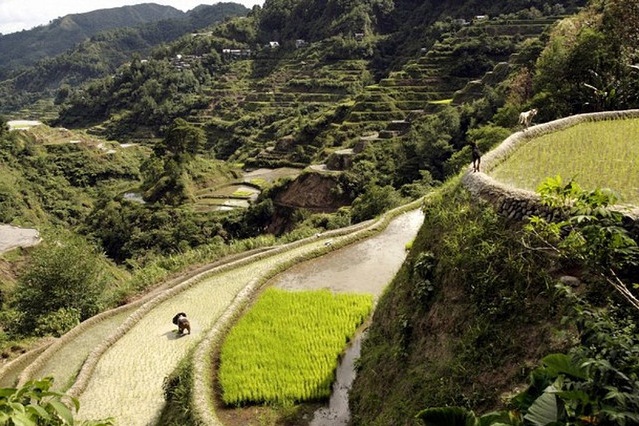
| Batad's Amphitheatre Rice Terraces The elegant amphitheatre-like Rice Terraces of Batad in Banaue, Ifugao produces awe-inspiring shots in every angle. A UNESCO World Heritage Site, it is considered as the most beautiful of all the rice terraces in Banaue. The best time to see it is during summer, from March to early May, when the rice terraces are at its greenest. |
 |
| Calaguas' Powdery Sand BeachKnown as "Mahabang Buhangin" (Long Sand) in the Calaguas Group of Islands off the coast of Camarines Norte, the wide stretch of fine white sand that gently slopes into the crystal clear water is a sight to behold. Generally unspoiled and deserted, Mahabang Buhangin is a picture of a perfect beach. Juarez says, “Going there may be an adventure, but a truly worthy one.” |
 |
| Cordillera's Sea of CloudsOne of Cordillera's prides, the famous sea
of clouds is one that guarantees a postcard perfect image of the highlands.
Juarez shares, “Be in the summit of Mt. Pulag or in Sagada's Kiltepan's View
Deck before sunrise to capture the sun as it slowly rise in the horizon of
clouds and you'll end up having amazing photos that others will surely envy" |
 |
| Boracay's Seascape at SundownThe idyllic scene of the silhouettes of the local sailing boats called " paraws" in the foreground of the golden sunset in the horizon of the world famous Boracay Island is always a stunner. “Make sure to be in the Stations 1 or 2 before sundown, and wait patiently for the golden hour to capture a thought evoking composition of Boracay sunset,” advises Juarez. While you are at it, you can also enjoy the happy hour that begins right about the same time. |
 |
| Bislig's Tinuy-an FallsThis massive waterfall of Tinuy-an in Bislig, Surigao del Norte is dubbed as the "Niagara Falls of the Philippines." It may not be as massive as Niagara Falls but Tinuy-an Falls is among the widest waterfalls in the country. The striking beauty and grandeur you see in person registers well into stills. “What you see, is what you get,” says Juarez. |
 |
| Coron's Kayangan Cove Perhaps the most photographed spot in Coron—calm turquoise waters with a limestone island in the centre guarantees an amazing output whatever camera (or smartphone) you use. Just be careful when you need to go down to the lake below as the rocks and the trail can be slippery. But the trek reveals a beautiful freshwater lake cocooned by the limestones from the sea. |
 |
| El Nido's Karst Limestone Cliffs The karst limestone cliffs and islets that dot Bacuit Bay create the most fascinating, picture-perfect features of El Nido in Northern Palawan. Juarez says, “During dry months, from February to May, the place turns into a surreal scenery of natural beauty with the limestone cliffs, turquoise waters, blue skies and pearl white cotton clouds that paint an enchanting image of paradise. Truly beyond compare!” |
 |
| Camiguin's SandbarNo shot can ever go wrong with the white sandbar of Camiguin and Mt. Hibok-Hibok in the backdrop. “The dramatic blend of the disappearing sandbar and a mighty volcano always produces a captivating image of Camiguin like those we always see in postcards.” |
 |
| Century-old Churches of Ilocos Ilocos Province is one of the places in the Philippines that has successfully preserved its heritage including the century-old churches and bell towers. Some of the popular churches in the area are that of Sta. Maria, Bantay, Vigan, Bacarra and Laoag. But the most striking of all is the St. Augustine Church of Paoay, one of the Baroque Churches of the Philippines inscribed in UNESCO’s World Heritage Site list. “Every image of Paoay Church becomes special because of its imposing beauty and charm.” |
 |
| Manila at twilight The image of Manila at twilight is a picture that may sound cliché but will surely gather “likes.” Where’s a good spot to get the lovely Manila Bay sunset? By the Manila Yacht Club area, where sailboats provide a foreground to the setting sun. You can also catch a classic image of the city along Roxas Boulevard at sundown |

 "Everyone is a seed with much potential for greatness in it. Still, that potential, like a seed, needs elements to trigger its sprout and coax it to mature and bloom to its fullest. My sculpture may reflect such growth. It may inspire or communicate, or touch one's life," said Gilbert in explaining his works to the public.