Showing posts with label ratings. Show all posts

Thursday, August 22, 2019

...the mighty PH economy

Philippines 'not particularly vulnerable' to China slowdown: Fitch

ABS-CBN NEWS
22 August 2019


MANILA – The Philippines is "not particularly vulnerable" to the fallout from a slowing in Chinese economy, unlike its neighbors, a Fitch Rating credit officer said Thursday.
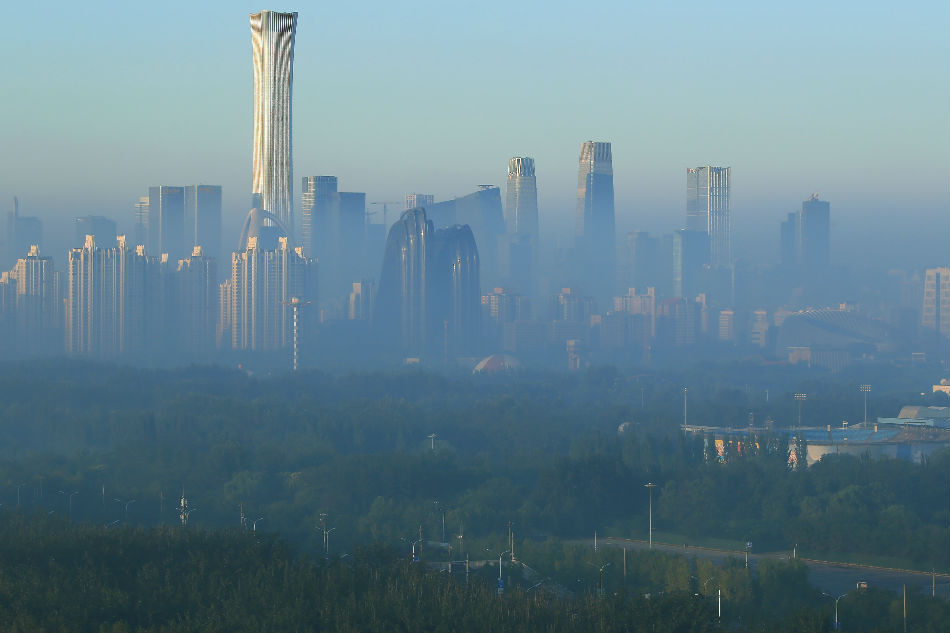
The skyline of the central business district is seen in the morning in Beijing, China August 21, 2019. Reuters/Stringer
Singapore, Hong Kong, Taiwan and South Korea might see "ripple effects" due to their debt exposure to China, said Dan Martin, regional credit officer at Fitch Ratings' Credit Policy Group.

The Philippine economy "doesn’t come out as a model that is particularly vulnerable to China’s slowdown. And on the market side, they’re not reliant on capital inflows and they don’t do as much lending and foreign currency," Martin told ANC.

Sri Lanka and Indonesia might be affected due to their foreign currency denominated borrowings, he said.


Friday, May 9, 2014

...the PH credit upgrade 2014

S&P gives Phl another credit rating upgrade


MANILA, Philippines - The Philippines has received a one-notch credit upgrade to BBB “with a stable outlook” from Standard & Poor’s Ratings Services – the highest the country has received so far from any credit ratings firm.

“We raised the ratings because we now believe the ongoing reforms to address shortcomings in structural, administrative, institutional and governance areas will endure beyond the current administration,” S&P said in a statement yesterday. Its previous rating for the Philippines was BBB-.

“In turn, we believe the resulting gains in government revenue generation, spending efficiency and the improvements in public debt profile and investment environment will at least be preserved in the medium term under the next administration,” S&P added.

MalacaƱang said it felt “gratified” by S&P’s upgrade and expressed hope it would “translate into increased investments and accelerated jobs generation.”

“The Aquino administration is committed to strengthen public institutions and build increased capacity among citizens and communities. This is the path that leads to sustained economic growth and the raising of the Filipino people’s quality of life,” Secretary Herminio Coloma Jr. of the Presidential Communications Operations Office said.

S&P gave the Philippines an investment grade rating in May last year, citing in particular the country’s stellar 7.2 percent growth as well as the reforms being instituted by the Aquino administration.

In its statement yesterday, S&P said that while a possible change of administration after the presidential elections in 2016 “represents some uncertainty for reforms,” the risks have shifted toward “maintaining the impetus and direction of the process, away from a potential reversal or abandonment of advances achieved to date.”

The debt watcher also said the latest upgrade reflects the country’s “strong external liquidity and international investment position” matched by an effective monetary policy framework.

S&P also cited the country’s manageable inflation, with interest rates remaining at low levels.

“The Philippines’ strong external profile is an important credit support. With a long track record of balance-of-payments surpluses, the Philippines has accumulated a substantial foreign exchange reserve buffer,” S&P said.

“That buffer affords an import coverage ratio above prudential norms and low refinancing risk,” the debt watcher added.

The country posted a BOP surplus of $5.085 billion in end-2013, a little more than half of the $9.236-billion surplus recorded in 2012.

At the same time, S&P said it sees foreign exchange-denominated earnings further improving on rising remittances and the bustling business process outsourcing sector.

“An improved monetary policy environment is another rating support. Philippines’ inflation has been low and fairly stable in the face of repeated external shocks, even as lingering structural and institutional shortcomings curb the effectiveness of its monetary policy,” S&P said.

“As a result, inflation expectations are well anchored, enabling a low interest rate environment to take hold,” it added.

But the debt watcher pointed out that the economy’s low income level remains to be a “key rating constraint.” Moreover, the ratings are hampered by a “moderate revenue-generating capacity” because of the narrow tax base and non-compliance. – With Aurea Calica


Wednesday, March 26, 2014

...thr PH growth forecast 2014 (S & P, IMF)

S&P, IMF raise PH growth forecast


03/26/2014
 
 
MANILA, Philippines – Ratings company Standard and Poor's (S&P) upgraded its full-year growth forecast for the Philippines on the back of rebuilding efforts in areas affected by typhoon "Yolanda" last year.

S&P now expects the country's economy to expand 6.6 percent this year, slightly up from its forecast last December of 6.4 percent.

The ratings agency’s forecast is within the government's target, but still slower than last year's growth of 7.2 percent.

"In the Philippines, growth could normalize from its rapid pace in 2013, although post-disaster rebuilding efforts could provide an offset in the short-term," S&P said in its report.

Typhoon Yolanda devastated the Visayas region in November and caused more than 6,000 deaths. More than P36 billion worth of infrastructure and agriculture was damaged.

S&P cited several risks facing the country this year, including slowing growth in China, which is the second biggest buyer of our local exports.

S&P was the second of the big three ratings companies that upgraded the Philippines from junk to investment grade status last year.

S&P rates the country with a 'BBB-' with a stable outlook.

The International Monetary Fund (IMF), meanwhile, said the Philippine economy is expected to grow 6.5 percent this year, faster than its earlier estimate of 6.3 percent.

The upgrade was also driven by spending related to Yolanda reconstruction efforts.

"While this envisaged growth path is faster than what was achieved during the previous decades, realizing the Philippines' full potential for rapid, sustained and inclusive growth calls for further reducing bottlenecks to investment and formal sector employment that may be discouraging broader-based business activities," said Rachel van Elkan, IMF's mission chief to the Philippines.

"The challenge therefore is to continue implementing policies that deliver high quality, sustainable growth," she added.

Van Elkan also said monetary policymakers need to watch out for potential risks as advanced economies start tightening monetary policy.

"Further reforms are needed to create a more enabling business environment and to generate additional employment," she said.

"Successfully executing PPPs (public-private partnership projects) and public capital spending projects would relieve infrastructure bottlenecks and help catalyze private investment," she added.

The IMF, concluding a regular consultation with the country's economic managers, also slightly lowered its 2015 GDP forecast to 6.5 percent from a 6.6 percent estimate in January.

It said in a statement the need for accommodative policies in the country had waned with the stronger global outlook.

The IMF also said it expects average inflation this year to be slower at 4 percent against its projection of 4.4 percent in January.

The latest forecast is higher than actual 3.0 percent inflation in 2013, though it is at the midpoint of the 3 to 5 percent government target this year. -- With Reuters


Wednesday, March 12, 2014

...the PH new upgrade

Phl due for new upgrade – BSP


MANILA, Philippines - The Philippines may get a further credit rating upgrade as early as this year on the back of the economy’s rosy prospects, Bangko Sentral ng Pilipinas (BSP) Deputy Governor Diwa Guinigundo said yesterday.

“Given that one of the credit rating agencies has given us a positive credit outlook and given that Fitch (Ratings) will also provide some positive review after they came here, it’s possible that we can have another upgrade,” Guinigundo said.

The Philippines enjoys investment grade ratings from the world’s three major credit rating agencies which all cited the strong growth achieved by the economy, improved governance, and structural reforms being put in place by the current administration.

Guinigundo said Fitch has already concluded its annual visit and assessment of the country last month. The other two rating agencies are expected to conduct their reviews within the first half of the year.

Fitch in March last year upgraded the country’s credit rating to ‘BBB-’ with a stable outlook from junk, while Standard & Poor’s in May gave the Philippines a ‘BBB-’, also with a stable outlook.
Moody’s Investors, delivered its Baa3 in October with a positive outlook.

The positive outlook means another upgrade may be on the horizon for the country in the next 12 to 18 months, Guinigundo said.

Guinigundo said that the Philippines is deemed “better” than other similarly-rated or higher-rated countries in the region.

“In fact there are many higher-rated jurisdictions in Asia but we enjoy a lower debt spread and lower CDS (credit default swap) spread which means the market already priced in a possible upgrade,” Guinigundo said.

“It can also be a recognition that risks are much lower in the Philippines because of the good macroeconomic fundamentals,” he added.

The economy expanded by 7.2 percent last year, while inflation averaged three percent. The country also boasts of a balance of payments surplus and a sound banking system.

“Our external to GDP (gross domestic product) ratio has also been coming down significantly in the last 10 years not only because the economy has expanded in the last 10 years but also because the national government has been prepaying its debts,” Guinigundo explained.

“Remember that in the past, this was the issue, the challenge of the Philippine economy – reducing the debt to GDP ratio,” he added.


Monday, February 10, 2014

...the PHL growth in the next decade

Phl seen growing 6.5-7.5% in next decade


UK firm warns of major setback in 2016 leadership change


MANILA, Philippines - The Philippine economy is expected to continue expanding between 6.5 and seven percent in the next decade but London-based Capital Economics warned that the change in leadership in 2016 could be a major setback for the country.

“Overall, we remain fairly upbeat on the Philippines and believe growth will average around 6.5 to seven percent over the next decade,” Gareth Leather, economist at Capital Economics, said in the latest Emerging Asia Economics Weekly.

“However, a note of caution is probably in order amid uncertainty over who will replace President (Benigno) Aquino whose term in office comes to an end in 2016,” he said.

Leather said that the current “reform-minded” government has opened doors for the economy to shore up investments and improve the business environment.

“Among the most important reforms have been a crackdown on corruption; new legislation to control population growth; public-private finance initiatives aimed at improving the country’s infrastructure; and a peace agreement with Islamic insurgent groups,” Leather said.

These reforms have allowed the country to move up rankings on the World Economic Forum and the Heritage Foundation’s surveys with regard to business environments and progress on implementing changes in the government, he added.
 
“The election of another reform-minded president would provide a major boost to the country’s prospects. However, there are clearly no guarantees this will be the case,” Leather said.

“Indeed, there is a danger that Mr. Aquino will be followed by a weak incompetent or corrupt leader who fails to build on, or even reverses, the progress that Aquino has made in his first few years as president,” he said.

The Philippine economy expanded by 7.2 percent last year, surpassing market and government expectations.

The country also boasts of its investment grade ratings received from global debt watchers Standard & Poor’s, Fitch Ratings, and Moody’s Investors Service last year.

Aside from the uncertainty of whether winners of the 2016 presidential elections would sustain reforms, Leather said the country still enjoys a “reduced risk of an external crisis.”

The country’s balance of payments surplus amounted to $5.085 billion last year. While gross international reserves amounted to $78.939 billion in January.

“The large current account surplus and the resulting lack of dependence on foreign financing limits the country’s vulnerability to sudden capital outflows,” Leather said.

“It has been notable that the Philippines has been relatively unscathed by market turbulence of the last year. That has allowed the central bank to keep interest rates low to support growth, which stands in stark contrast to India and Indonesia, where central banks have been forced into raising rates,” he said.

Another positive factor for the Philippine economy is its improving fiscal position, the economist said.

The government debt to gross domestic product ratio has now gone down to less than 40 percent from a peak of under 70 percent in 2003, an indicator that the possibility of a sovereign debt crisis is very small, Leather said.

He added “with less money now being spent on debt repayment, the government has more resources to spend on infrastructure, education and healthcare, which can raise productivity and drive long-run growth.”

The country’s healthy demographics can also provide a boost to long-term growth, a stark contrast to other economies with ageing population.

“Provided jobs can be found for this people, a rapid increase in the working age population can boost growth by increasing the productive potential of the economy,” Leather said.


Wednesday, December 4, 2013

...the Aquinomics

Philippines’ Aquino Races the World’s Fastest Economies

 
Bloomberg Markets Magazine
 
Manila is the capital of a country blessed by an economic resurgence -- and yet afflicted still by misery. Photograph: Virgile Simon Bertrand/Bloomberg Markets
 
 
Just after midnight one sultry Friday in August 1987, Manila became a battleground as rebel troops attempted a coup against Philippine President Corazon Aquino. Two blocks from the besieged presidential palace, insurgents opened fire on a car carrying Aquino’s only son, a bespectacled and soft-spoken 27-year-old junior insurance executive nicknamed Noynoy.


Dec. 2 (Bloomberg) -- Timothy Riddell, the Singapore-based head of Asian global markets research at Australia & New Zealand Banking Group Ltd., talks about the region's economies and markets. He speaks with Mia Saini on Bloomberg Television's "First Up." (Source: Bloomberg)

President Benigno S. Aquino III

President Benigno S. Aquino III

The leader of the Philippines, President Benigno S. Aquino III, has a strong economy to build on as he faces a new challenge: reconstructing a nation battered by Super Typhoon Haiyan. Photograph: Steve Tirona
 

In the Storm's Wake

In the Storm's Wake

A resident sells fruits and vegetables next to a public market destroyed by Typhoon Haiyan. Photograph: Ted Aljibe/AFP/Getty Images
 

Bonifacio Global City

Bonifacio Global City

Bonifacio Global City, a major new building development, rises on the edge of Manila. Photograph: Virgile Simon Bertrand/Bloomberg Markets
 
 
By the time soldiers still loyal to the president fought their way to the scene, three of Noynoy’s four bodyguards lay dead. Shot five times, the intended target improbably survived, albeit with a bullet in the neck that he still carries today, Bloomberg Markets magazine will report in its January issue.

“I’m living a second life,” says Noynoy Aquino, now himself the president of this Southeast Asian nation of almost 100 million people. “I was saved for a certain purpose and will not squander that opportunity.”

So far, Benigno S. Aquino III -- his full name -- has largely proved true to his word and given the Philippines a second life of its own in the process. Since moving into an official residence known as the House of Dreams, following his election victory in June 2010, Aquino, 53, has overseen a national resurgence beyond the reveries of most investors.

Bankrupted in the 1980s by dictator Ferdinand Marcos, the Philippines lagged far behind rival Asian economies, averaging just 3 percent annual growth from 1984 to 2009, according to data compiled by Bloomberg. Under Aquino, that figure has more than doubled. And in the first half of 2013, output surged at a 7.65 percent annual pace, surpassing that of China, the world’s fastest-growing major economy, before easing back to 7 percent in the third quarter.

Super Typhoon

In the aftermath of Super Typhoon Haiyan, Aquino must now try to sustain that growth while rebuilding whole swaths of his country and reinforcing its defenses against future, similar disasters. The tropical storm, which struck on Nov. 8, may have caused losses of as much as between $10 and $15 billion, according to early estimates.

Still, reconstruction is within Aquino’s reach, JPMorgan said in a November 22 report. The bank forecast that while the typhoon may cut full-year 2013 GDP growth to 6.9 percent from its earlier estimate of 7.1 percent, the nationwide impact won’t be long-lasting and the 2014 estimates should rise to 6 percent from 5.6 percent due to the boost from rebuilding.

The history of comparable catastrophes shows that reconstruction can be a boost for developing nations.

In 2012, Thailand’s economy rebounded 7.1 percent, following floods that swamped thousands of factories and a vast strip of agricultural land the previous year. In 2005, the Indonesian economy grew to 5.6 percent from 5 percent the year before, when a tsunami claimed about 200,000 lives and devastated Aceh province.

Best Performer

Investors in the Philippines weren’t unduly scared off by Haiyan, with the Philippines Stock Exchange Index falling 2.8 percent since Nov. 8 when Haiyan hit the Philippines.

From the time Aquino took office, the index has soared 86 percent, becoming the world’s best performer out of 45 emerging and developed markets tracked by MSCI indexes. The nation’s debt, meanwhile, has been raised to investment grade by Fitch Ratings, Moody’s Investors Service and Standard & Poor’s.

Now, investors are awaiting full-year GDP figures to see by how much the typhoon dented the country’s China-challenging growth rate.

Aquino has achieved this transformation by pruning a record $7 billion budget deficit in 2010 to $2.3 billion in the first nine months of 2013, declaring war on rampant corruption, announcing plans to more than double state spending on public works to $19 billion -- or about 5 percent of GDP -- by 2016, and exploiting Filipinos’ English-language skills to promote industries as diverse as casinos and call centers.

Filipinos Overseas

Foreign income from those call centers, together with remittances from 10.5 million Filipinos who work overseas, even helped Aquino defy the 2013 rout in other emerging markets -- especially those such as India with current-account deficits -- as investors anticipate an end to U.S. monetary easing.

The Philippines, by contrast, boasts a current-account surplus of more than 4 percent of GDP and should remain well placed to deal with the U.S. Federal Reserve’s eventual tapering, according to the International Monetary Fund.

That surplus has helped prop up the currency, the peso. Its 6.5 percent decline against the dollar in the 12 months ended on Dec. 3 is only a little more than half that of the Indian rupee. And although the stock market has fallen back from its May 15 record high, it was still up 9 percent during the same one-year period compared with less than 1 percent in the MSCI Emerging Markets Index.

Rolls-Royce

During that time frame, Philippine bonds have returned 8.7 percent, the best performance among 10 local-currency Asian bond markets tracked by HSBC Holdings Plc.

Such is the wealth being generated in at least the upper echelons of Philippine society that Bayerische Motoren Werke AG in September opened its first Rolls-Royce showroom in Manila.

“The Philippines for decades was a lost country,” says Ruchir Sharma, New York–based head of emerging markets at Morgan Stanley Investment Management who oversees $25 billion, including Philippine shares. “Now, it could end up being among the fastest growing in the world in 2013. It comes from having the right leader at the right time.”

Maintaining such investor enthusiasm is more problematic. The stock market surge since Aquino took office now makes the Philippines the world’s second most expensive emerging market after Mexico, with a 12-month forward price-earnings ratio of 16.9 compared with 7.8 for Chinese stocks listed in Hong Kong, according to data compiled by Bloomberg.

‘Too Expensive’

Investor Mark Mobius says he’s not buying at those prices.

“It’s just too expensive,” says Singapore-based Mobius, who oversees $53 billion at San Mateo, California–based Templeton Emerging Markets Group. “There’s a shortage of good companies. They need more IPOs.”

That isn’t the only challenge facing the Philippines. The nation is locked in a territorial dispute with its giant neighbor, China, over the potentially oil-rich Spratly Islands in the South China Sea, while at home it is struggling to pacify a four-decade-old Muslim insurgency in southern Mindanao.

Even as the economy soars, almost 20 percent of the population continues to live on less than $1.20 a day -- the poorest in squalid slums or sometimes in cemeteries, where they squat in the family tombs of the wealthy.

Calamitous Storm

More than 10 million people were affected by November’s typhoon. An unemployment rate of 7.3 percent is Asia’s second highest, after India. Foreign direct investment is the lowest in Southeast Asia -- just $2.8 billion in 2012 compared with $8.6 billion for Thailand. The $250 billion economy remains dependent on the $21 billion sent home annually by Filipinos working overseas.

While Haiyan was an exceptionally calamitous storm, natural disasters are far from rare in the Philippines, costing the nation an average of $1.6 billion a year, according to the Asian Development Bank.

Aquino’s battle against graft perhaps best reflects the enormity of his task. During his 2010 election campaign, he argued that it was impossible to beat poverty without first eradicating corruption.

Soon after being elected, he set about doing that by sacking Chief Justice Renato Corona for failing to disclose his assets. Aquino also arrested Gloria Macapagal-Arroyo, his immediate predecessor, on corruption charges that have yet to come to court. Both Corona and Macapagal-Arroyo deny wrongdoing.

Crusading Commissioner

Aquino also hired a crusading female tax commissioner, Kim Henares, 53, who has so incensed some of her targets that she has taken to carrying a pistol for self-defense.

Aquino’s efforts appear to have borne some fruit. His country’s ranking in Transparency International’s 2013 Corruption Perceptions Index, announced on Dec. 3, improved 11 places to 94th out of 177 countries.

Still, in recent months, these victories have been clouded by the disclosure that pork-barreling politicians have been misusing a $568 million poverty-reduction fund that they have been allowed to access at their own discretion. The scandal has wounded Aquino: His net satisfaction rating fell 15 points to plus-49 in September, according to polling firm Social Weather Stations.

For Aquino himself, time is running short. He is constitutionally barred from running for a second six-year term, and June will mark his fourth anniversary in office.

“You will quickly see him moving toward lame-duck status,” says Frederic Neumann, Hong Kong–based co-head of Asian economics at HSBC. “That means the reforms in which he is taking on vested interests could fall by the wayside.”

Defying Expectations

Looking relaxed in a traditional barong tagalog -- a translucent lightweight formal shirt -- Aquino said in a May interview in the presidential compound that he can emerge victorious. He has defied expectations before. A bachelor with a weakness for cigarettes and computer games, he spent much of his life in the shadow of his parents, the two most-revered figures in the nation’s struggle for democracy.

His father, Benigno Aquino Jr. -- nicknamed Ninoy -- was a charismatic opposition leader and senator jailed for eight years by Marcos before being allowed to travel to the U.S. for heart surgery in 1980. On his return to Manila in 1983, Ninoy Aquino was led off the plane by Marcos’s troops and shot dead by soldiers on the tarmac of the airport that now bears his name.

Marcos’s widow, Imelda, said in an interview with Bloomberg Markets in June that neither she nor her husband ordered the assassination.

People Power

However, the killing was the catalyst for a fragmented opposition to unite behind the widowed Corazon, who challenged Marcos and was swept into the presidency in a 1986 People Power uprising. The devoutly Catholic former housewife then withstood at least six coup plots to complete her full term and hand over power to an elected successor, Fidel Ramos.

By contrast, Noynoy had an uninspiring track record in business and politics. After graduating with a bachelor’s degree in economics from Ateneo de Manila University in 1981, he worked in various management positions in the family insurance company, Intra-Strata Assurance Corp., and on the Aquinos’ 6,400-hectare (15,800-acre) sugar plantation, Hacienda Luisita.

In 1998, standing for the centrist Liberal Party, he was elected to the House of Representatives and served there for nine years before voters sent him to the Senate in 2007.

Aquino wasn’t even originally supposed to be the Liberal candidate in the last presidential election. The chosen contender was Mar Roxas, a graduate of the Wharton School at the University of Pennsylvania and a former investment banker at New York–based Allen & Co.

‘Definitely Surprised’

Then, in August 2009, nine months before the poll, the revered Corazon Aquino died, sparking a wave of emotion among Filipinos, 300,000 of whom turned out for her funeral. Petitions circulated urging her son to run for president, and a month later Roxas stood down in favor of Aquino, who won the presidency by more than 5 million votes.

Filipinos were lucky that Aquino rose to the challenge, says Edwin Gutierrez, a London-based Filipino-American portfolio manager with Aberdeen Asset Management Plc.

“He’s definitely surprised on the upside,” says Gutierrez, who helps manage $10 billion in emerging-markets debt.

Filipinos may not be so fortunate with their next president, given their preference for personality rather than party-driven politics, Gutierrez says.

The Marcos family, for instance, still wields clout. Ferdinand Marcos Jr., 56, the dictator’s son, won a Senate seat in May and confirmed in an interview that he is considering a bid for the presidency.

Aquino brushes aside fears about who will succeed him.

“I didn’t have any ambition to be president,” he says. “It was fate. The people found me. I am sure they will be able to find another one out of 95 million.”

Leaving the choice to fate sounds risky in a country that has been so let down by leaders in the past. If Aquino is to make the most of his second life, he may have to play an active role in persuading Filipinos to elect someone who can build on his legacy.


Friday, November 15, 2013

...the PH fundamentals

Moody’s says PH fundamentals intact

Impact of ‘Yolanda’ on country’s economy said to be limited

By Paolo G. Montecillo
Philippine Daily Inquirer
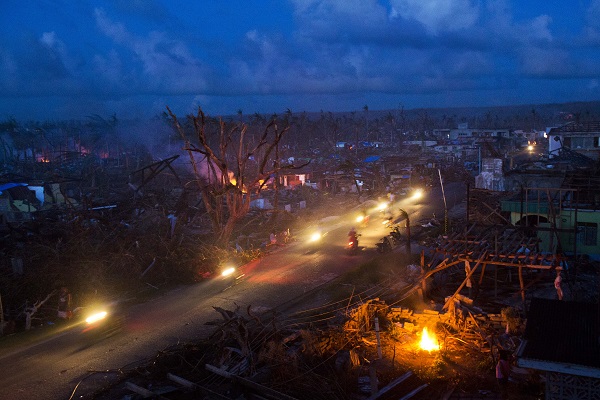
Supertyphoon “Yolanda” (Haiyan) survivors ride motorbikes through the ruins of the destroyed town of Guiuan, Philippine, on Thursday, Nov. 14, 2013. Yolanda killed thousands and caused billions of pesos in damage, but international rating agency Moody’s Investor Service said the Philippines’ economic fundamentals remained intact. AP Photo/David Guttenfelder, File)

Supertyphoon “Yolanda” killed thousands and caused billions of pesos in damage, but a major international rating agency said the Philippines’ economic fundamentals remained intact.

Moody’s Investor Service in a report this week said Supertyphoon Yolanda may be the worst calamity to hit Southeast Asia in nearly a decade, rivaled in scale only by the 2004 Indian Ocean tsunami that struck Indonesia.

However, while the loss in human lives was overwhelming, the overall effect on the real economy was likely to be muted.

“The 2004 Indian Ocean tsunami that struck Indonesia could be most similar to Typhoon Yolanda (international name: Haiyan) in terms of the scale of devastation, but it, too, had a limited effect on overall economic conditions,” Moody’s said.

Moody’s said the local economies of Leyte and other provinces in the Visayas hit hard by Yolanda last week would take the brunt of the impact.

The damage to road infrastructure, power lines, communications systems, and farmlands would likely lead to a steep drop in output.

Moody’s noted that, as of Wednesday morning, the National Disaster Risk Reduction and Management Council’s running count of casualties showed 1,833 deaths.

The rating firm, which upgraded the Philippines to “investment grade” last October, cited the government’s own initial estimate that the damage brought by Yolanda would shave just half a percentage point off the country’s estimated growth for 2013.

“The relatively small hit to growth reflects the small contribution of Region VIII to the country’s economic output,” Moody’s said.

In 2012, Region VIII accounted for only 2.2 percent of the Philippines’ gross domestic product (GDP), down from 2.7 percent in 2009.

In the same year, Region VIII’s real gross regional domestic product (GRDP) contracted by 6.2 percent and subtracted 0.2 percentage points from the country’s 6.8 percent growth rate.

The most important regions in terms of their contribution to Philippine GDP, Moody’s said, were Metro Manila and the Southern Tagalog region, which together constituted 53 percent of GDP in 2012.

Fortunately, these areas were unaffected by Yolanda.

Moody’s expects the Philippine economy to grow by 7 percent this year, matching the top end of the government’s official forecast.

The asset quality of rated Philippine banks will also be minimally affected.

As of the end of 2012, loans to Region VIII constituted only 0.4 percent of total system loans.

Moody’s also expressed confidence that the Philippine government would be able to adequately finance out of its own coffers the reconstruction in typhoon-affected areas.

The government registered a primary surplus of P156.9 billion through the first three quarters of this year, 12.7 percent more than the balance in the same period in 2012.

In its annual budget, the government had provisioned P7.5 billion in a calamity fund, as well as embedded P3.9 billion in quick response funds in budgets for different line agencies, “although some of these funds had already been spent to address earlier disasters,” Moody’s said.

“President Aquino also has discretionary funds available at his disposal. In addition, assistance from the international community will mitigate stresses on the government’s fiscal position.”


Thursday, October 3, 2013

...the PH third major credit rating

Moody's gives Phl 3rd major investment grade rating

            
MANILA, Philippines - Moody's Investor's Service on Thursday upgraded the Philippines' credit rating to Baa3, becoming the last major credit rater to give the country an investment grade rating.

Moody's cited the sustainability of the country's robust economic performance, ongoing fiscal and debt consolidation, and political stability and improved governance as reasons for the upgrade. The rating comes with a positive outlook for the Philippines.

"In addition, the stability of the Philippines' funding conditions- during the recent bout of market volatility in emerging markets- points to the country's relative lack of vulnerability to external financial shocks, such as those arising from anticipated tapering by the (United States) Federal Reserve of its quantitative easing policy," the credit rater added.

Moody's likewise upgraded the government's foreign currency shelf rating to (P)Baa3 and the Bangko Sentral ng Pilipinas' liabilities have also been assigned a Baa3 rating and a positive outlook.

According to Moody's, "obligations rated Baa are judged to be medium-grade and subject to moderate credit risk and as such may possess certain speculative characteristics."

The Philippines was previously rated Ba1, the highest mark in the junk grade status.
Fitch Ratings and Standard & Poor's Ratings Services, two major credit raters, have already given the country an investment grade rating.

“This is the 17th positive ratings action since President Aquino took office. We are now investment grade in all three major ratings agencies. Despite this, we are still among the most underrated countries since the market rates us at least two notches above investment grade. We will continue to work on strengthening and institutionalizing the reforms so we can sustain this beyond President Aquino's term," Finance Secretary Cesar Purisima said.

Purisima added that in line with good governance initiatives, the government has instituted reforms at the Bureau of Customs that President Aquino described as a 'reset button' for the agency.

"We have appointed five new Deputy Commissioners for the Bureau who will be able to work from clean slates and build trust in an agency that has long been saddled by corruption.This and our other good governance reforms have been acknowledged not just by credit rating agencies, but by organizations such as the World Economic Forum, who ranked us 59th in the latest edition of the Global Competitiveness Report, a jump from 87th place in 2009," he said.
 
An investment grade status translates to lower debt interest payments, opening up more credit avenues and luring more foreign investments to the Philippines.


Tuesday, August 20, 2013

...the PH historic moments

Historic moments in Philippine basketball and stocks
            

Last Aug. 10, 2013, the Philippine national basketball team, Gilas Pilipinas, won against South Korea. It was a momentous game in Philippine basketball history, one that is considered a once-in-a-generation achievement. With the win, the team assured itself of at least a silver medal finish in the 2013 FIBA Asia Championship. More importantly, the win allowed the team to qualify for the World Championships after a 35-year absence. It also marked the 1st time that the Philippines defeated South Korea in a high-level basketball game since 1985.

Beating the perennial tormentor
Before this game, South Korea had been a perennial tormentor of the Philippines in basketball. South Korea defeated the Philippines in the 1986 Asian Games, 1987 Asian Basketball Confederation Championship, 1998 Asian Games, 2002 Asian Games, 2009 FIBA Asia Championship, 2010 Asian Games and 2011 FIBA Asia Championship.

This time around, the Koreans, with their size, seamless execution and smooth outside shooting, were poised to deal the Philippine squad another heartbreaking loss. The outlook got particularly bleak when the Philippine team’s naturalized center, Marcus Douthit, went down with a calf injury and sat down the game’s entire 2nd half. With the odds stacked against it, Gilas miraculously found a way to fight back and fight strong. The team rallied behind the strength of its 6th man – the hometown crowd.
The strength of a nation
The 20,000-strong crowd in the MOA Arena supported their team through and through. They cheered every time Gilas had possession and jeered every time Korea had the ball. The raucous crowd cheered with a purpose, repeatedly chanting the words “puso” and “laban.” The crowd’s support was so strong that the Korean coach later on admitted that the pressure affected their ability to focus and execute in the last quarter. As Gilas team captain Jimmy Alapag said, “We had the strength of a

All heart
Korea proved to be a formidable opponent. Even as it was playing against the hometown crowd, the Korean team continued its flawless execution and cold-blooded shooting down the stretch. But this time around, the heart of the Filipinos would not be denied. Gilas was spurred by the daredevil drives of guard Jayson Castro, the savvy plays of forward Ranidel de Ocampo, the clutch triples of guard Jimmy Alapag and the never-say-die attitude of injured forward Marc Pingris. The Filipinos more than matched the Koreans – basket for basket and hustle for hustle – in order to win the game. In the end, Marc Pingris summarized what drove the team’s efforts: “We did this for our country. We made a lot of sacrifices. In the PBA, we play for pay. But here, we’ll die to win for our country.”

Writing your own history
The Philippine team’s win against South Korea put Philippine basketball back on the world map. Below, we summarize some of the more memorable quotes from the players and coach of Gilas as they weighed in on this historic achievement.

Gilas team captain Jimmy Alapag: It’s the most precious moment in my career. This means more than a PBA championship. This is so much deeper. This is for our country.

Gilas forward Japeth Aguilar: It wasn’t only our dream that was fulfilled but the dream of every Filipino.

Gilas center Marcus Douthit: Everybody on this team and the organization are now part of history – that’s the most amazing feeling.

Gilas coach Chot Reyes: There’s no greater opportunity in life than to write your own history. This team just wrote it tonight.

Historic moments for the economy
Just like the Philippine team’s achievement in basketball, our country was able to deliver a number of historic feats in the financial and economic fronts. We are fortunate to have witnessed these in our lifetime. We enumerate these below.

1. Fastest growing country in Asia. In 1Q2013, the Philippines became the fastest growing country in Asia. Our country’s 7.8-percent 1Q2013 GDP growth edged China’s 7.7 percent. With problems hounding most emerging markets, our country’s high growth rate stands out as something exceptional.

2. Investment grade. In 1H2013, our country received its 1st and 2nd investment grade rating upgrades from Fitch Ratings and Standard & Poors. These credit rating upgrades are affirmations of the magnificent economic turnaround that our country has undergone.

3. Peso tops out. We saw the bottom of the peso vs. the US dollar at 56.50 in October 2005. We wrote about it and we cited the reasons why the peso will continue to strengthen for years to come (Peso, the Strongest Currency in Asia, Oct. 24, 2005). After eight long years of strengthening, we may have witnessed history again as the peso may have topped-out at 40.45 last March 2013 (The Peso Tops Out, May 27, 2013).

4. Worldwide recognition for finance leaders. Two of the country’s important finance leaders have recently received international acclaim. Department of Finance Secretary Cesar Purisima was named Finance Minister of the Year 2012 by Euromoney. Also, Bangko Sentral ng Pilipinas Governor Amando Tetangco Jr. was named Central Banker of the Year for Asia Pacific by the Banker, while being consistently rated as one of the world’s top central bankers by Global Finance.

Historic moments in the stock market
The resurgence of the Philippine economy has fueled the strong performance of our stock market. Below, we enumerate some of the important milestones that our stock market has achieved.
1. Opportunity of a generation. Amidst the carnage of the 2008 Global Financial Crisis, we said that the bear market would present a once-in-a-lifetime opportunity to make huge amounts of money in the stock market (Opportunity of a Generation, Nov. 3, 2008). The important and ominous bottom of the S&P500, which we correctly called in 2009 (666 on 3-6-9, April 13, 2009), marked the start of the very powerful bull market that we are witnessing now.

2. 111 new all-time highs. The PSE Index rebounded strongly from the 2008 global bear market and eventually topped its October 2007 high of 3,897. Past that previous record high, the PSE Index established 111 new record highs as it reached the new all-time high of 7,404. The current all-time high is 90 percent higher than the 2007 high and 339 percent higher than the last bear market bottom.

3. Silver medal in the stock market. Even as most global indices moved higher in 2012, the Philippine stock market still managed to stand out. Last year, the PSE Index delivered a return of 33 percent, 2nd best in the world.

4. Largest trading volume. The local stock market’s year-to-date value traded for 2013 has already exceeded P890 billion. Even though we are not yet done with the year, 2013 value traded has already surpassed the full-year trading volume of any of the previous years.

5. Largest IPO/re-IPO. Last April 2013, LT Group (LTG) set the record for the largest IPO or re-IPO in the Philippines. Its P37.7-billion equity offering was many times oversubscribed and was well-received by global investors. This showed the growing awareness and interest of foreign investors in the Philippines and the local stock market.

Selfless leaders write history

The monumental achievement of Gilas Pilipinas would not have been possible if not for the efforts, dedication and resources of Manny Pangilinan (MVP). His dream was to bring Philippine basketball back in the world map. More importantly, he had the long-term vision to stick with this dream through thick and thin. We are fortunate to have MVP because he is someone who has a deep love for country and is willing to work for something beyond himself. It was MVP that put the national team in the position to achieve beyond expectations and write history anew.

This is the same type of vision, dedication and love of country that has driven our country to turn. From the late President Cory Aquino to current President Noynoy Aquino, we benefited from the efforts of dedicated and selfless leaders who dreamed of a better Philippines. This is why our economy and our stock market can perform strongly and continue to defy expectations.

Learning from history
As we witness history unfold for Philippine basketball, it is important for us to appreciate the national team’s achievements and understand why these milestones were attained. This appreciation may similarly be applied to better understand the reasons behind the historic events that take place in the local stock market, the Philippine peso and our economy. A deeper understanding of history and the causes of the lows, highs and turns of the stock market and the Philippine peso, as we have explained in our previous Philequity Corner articles, can give one the rationale for one’s investment decisions.