Showing posts with label product excellence. Show all posts

Monday, November 4, 2019

...the Philippine coffee

Philippine coffee wins big in 5th int'l coffee contest in Milan

ABS-CBN News
04 November 2019

MANILA - Two Philippine coffee firms won top prizes at the 5th International Contest of Locally Roasted Coffees in Milan, Italy last month, the trade department said.


Mirabueno Coffee, harvested in Bukidnon, and SGD Bodega Coffee, grown in Sagada, bested 700 other producers from 25 countries for the Gourmet and Bronze prizes in separate categories. 

The competition aims to "recognize the excellence of some producers, too often forgotten in the midst of mass marketing," the Coffee Heritage Project (CHP) said in a statement.

"We hope that with this recognition, we are able to highlight Philippines coffee and the great work of Filipino coffee farmers like those behind Mirabueno Coffee and SGD Coffee, growing one of the finest coffees in the world to be the true artisans of the Philippines' coffee industry," CHP official Richard Watanabe said.

This marks the second time that the Philippines prevailed in the competition following the victory of the collaboration of Bana's Coffee from Sagada and the CHP in 2017.

Mirabueno Coffee and SGD Coffee are part of the CHP, a non-profit private initiative which takes "quality-focused approaches in coffee production," according to the Department of Trade and Industry.

“The coffee competition helps us showcase the broader work we do to reforest land with sustainable and ecological integration of coffee, the high returns and quality of life offered to coffee growers, and our endless pursuit of the next frontiers in coffee roasting and taste," CHP official Butch Acop said.

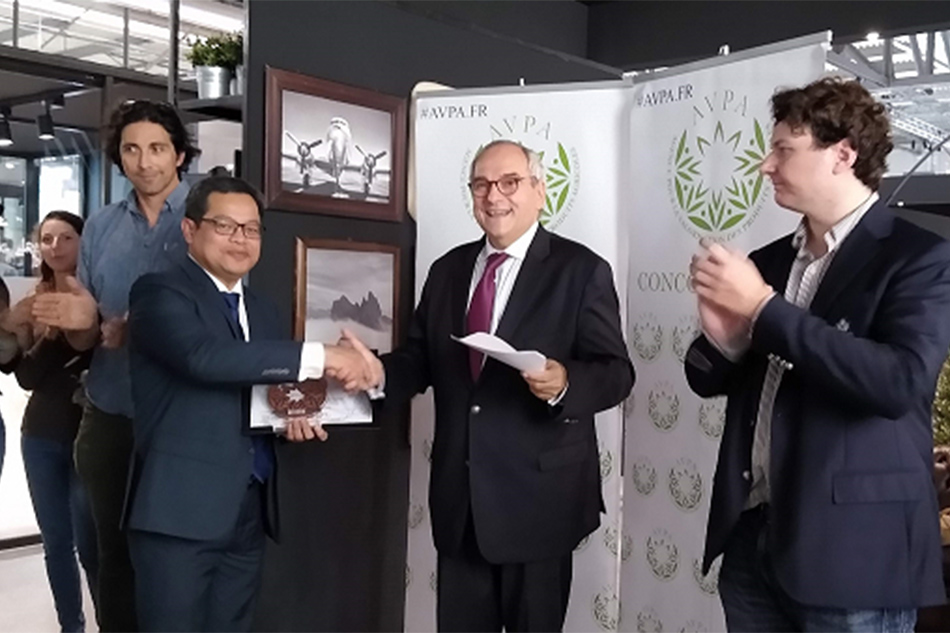
The Philippine Consul General's Office in Milan received the prizes on Oct. 21 on behalf of Acop, Watanabe, Raymund Mirabueno, Andrew and Mary Tomeg, Felipa Villicana, and Zo Lim.

Sunday, November 3, 2019

...the Pinay farmer turned UN Nutrition Ambassador

This Pinay farmer Is Now A UN Nutrition 

Ambassador


Cheeky Albay
Cosmopolitan Philippines
03 November 2019


We first featured Cherrie D. Atilano earlier this year for her mission of “Making Farming Sexy”—encouraging young Filipinos, women especially, to go into farming like she has. But it wasn’t just that catchy slogan that got us hooked.


Cherrie’s inspiring story makes her life peg material: She grew up working on a sugarcane farm in Negros Occidental, graduated magna cum laude with a degree in agriculture from the Visayas State University, gave up a Fulbright scholarship in the US so she could stay in the Philippines and help local farmers, and founded AGREA, an award-winning Marinduque-based social enterprise which aims to help eradicate poverty for farming and fishing families, alleviate the effects of climate change, and help establish food security in the Philippines.
Impressed yet? There’s more. The 33-year-old Pinay has just been appointed by United Nations (UN) Secretary-General António Guterres as a Lead Group member of the UN’s Scaling Up Nutrition (SUN) Movement, the goal of which is to ensure a world free from malnutrition by 2030.
As a SUN Lead Group member - one of only 27 from around the world and only Southeast Asian on the list! - Cherrie is now a high-level ambassador for the UN , a role she will hold until 2021.

Below, Cherrie tells us how her trip to the UN Headquarters in New York went, how she'll serve as a newly-minted UN Nutrition ambassador, and how YOU can make your own mark like she has.


What she’s been up to since her last Cosmo interview:

"We launched AGREA programs in Siargao—both More Love for Women Farmers, which makes the island the first women-led agriculture island in the Philippines; and The Garden Classroom Program for public elementary schools, which will allow pupils to learn how to grow their own food, harvest organic vegetables for their feeding program, and love nature at the same time. We will be replicating the AGREA Farm School and Farm Business in the island by next year. 
I grew much wisdom, I must say. So many beautiful things have happened and most of them had me overcoming challenges and waking up every morning with so much hope."

How she and AGREA got the attention of the UN:

"AGREA received the UN Global Compact Agriculture Business Excellence Award in 2017. I also met some people in the UN when I spoke at the World Economic Forum’s New Vision for Agriculture event in Switzerland in 2014. I’ve also been invited several times to UN events in New York and Rome, and also to sustainability conferences around the world.
However, the main reason they chose me is my 21-year advocacy in agriculture, one I’ve had since I was young. As the SUN secretariat said to me, my movement of “Making Farming Sexy” should reach every corner of the world.
I also embody what it’s like to be a female leader in a male-dominated industry, I’m young, and I’m from the ASEAN, which has been called the next frontier."

About the SUN Movement:

"The principle of the SUN Movement is that everyone has the right to food and nutrition, and these two should go hand in hand. The movement addresses the problem of 149 million children who are suffering from malnutrition—which has devastating consequences for health, learning, future earning potential, economic development, resilience, and security. The mission is to work towards a world
free from malnutrition, in all forms, by 2030, nourishing people and planet together."

Her responsibilities as a SUN Movement Lead Group member:

"I support the 60 member countries and five Indian States as they pursue their goals to scale up nutrition. I will also provide strategic oversight on the movement, encouraging coherence and collective accountability for results. With this, I can influence in strengthening both policy and action in terms of solving malnutrition across the globe, while focusing and giving emphasis on our policy and efforts here in the Philippines and the ASEAN region."

What she’s excited to contribute to the SUN Movement:

"I made my commitment to secure nutrition by securing food sufficiency and security. I always make farming sexy by mentoring a lot of young people to venture into agriculture, empower women in agriculture to make sure proper nutrition starts from home, work on multi-stakeholder partnerships in making sure nutrition will be a serious business to lower stunted growth and boost our human capital productivity, and invest in impactful agri-foods."

How it feels to be one of 27 global leaders in the SUN Movement:

"It’s humbling. At the same time, I am so grateful for the privilege to be among them as they are amazing leaders whom I look up to. They created bold changes in their sphere of influence and inspired the world by their great accomplishments. They bring a wealth of experiences that I can learn from, and I am so fortunate to have that network of people I can collaborate with to expand my advocacy and work in the future. It is so good to brainstorm in a room full of intellectuals who are humble enough to solicit your ideas and open-minded enough to collaborate."

How her time at the UN Headquarters in New York went:

"It was the experience of a lifetime. For me, it was not about the special treatment, which was a bonus, but more of recognizing the fact that you are with a group of people who are so hardworking and passionate about creating positive changes in the world. New York during the UN General Assembly was a bustle of brains, hearts, and hands working together to make the world a better place to live in. You come out exhausted from all the events, but with a heart full of inspiration and a lot of concrete steps for taking action."

What she wishes more young Filipinos knew about nutrition and agriculture:

"Every day, 95 children in the Philippines die from malnutrition. 27 out of 1,000 Filipino children do not get past their fifth birthday. A third of Filipino children are stunted, or short for their age. Stunting after two years of age can be permanent, irreversible, and even fatal, according to UNICEF.
Additionally, the right food is not easily accessible, especially to our poor fellow men. We have 12 million hectares of underproductive lands, farmers are getting old, there is a declining interest among young people to go into agriculture, and our population is exponentially growing.
With all these, I think we have enough reasons to knock on the hearts of our young Filipinos and encourage them to help in boosting our agriculture sector. It will greatly help in establishing food sufficiency and security in the country, which could help in solving our malnutrition problem."

Her advice for other women who want to make a mark in their advocacies:

"Focus! I have been in this advocacy for 21 years, never disturbed by all other great opportunities. I was lucky to find my passion and purpose in agriculture.
Practice excellence and be authentic in what you choose to advocate. Immerse yourself in the community and have the humility to realize that at the end of the day, we are not superheroes who can solve all their problems; we are mere facilitators who can open opportunities for them or guide them in unleashing their potential so they can be the solutions to their own problems.
And at the end of every good job, the sweetest thing to do is pamper yourself. Self-love is a necessity."

Tuesday, October 29, 2019

...the paper from pineapple

Pinoy-made paper "Pinyapel" is produced from discarded pineapple leaves and it just won an int'l award


GMA NEWS
29 October 2019

"Pinyapel" is a Pinoy paper product made from discarded pineapple leaves and it just won the D&AD Future Impact Awards for Environment and Sustainability in New York City.
With the help of Department of Trade and Industry (DTI) and Design Center of the Philippines (DCP), Lolita "Luchi" Cabanlet of Cagayan De Oro Handmade Paper was able to develop "Pinyapel" a "locally-manufactured specialty paper" produced from discarded pineapple leaves from plantations in Bukidnon.
DCP helped coin the term "Pinyapel" from the Filipino words pinya (pineapple) and papel (paper).
A press statement from DTI Misamis Oriental describes Pinyapel as "the future of packaging." It's water-resistant making it a good material to be developed into paper cups, paper bags and other food container options.
DTI-DCP partnered with CDO Handmade Paper "to launch a sustainable innovation to transform waste into new and useful material, a forward-thinking approach to combat the growing problem on non- biodegradable plastic."


They collaborated with Nature's Fresh, a pineapple exporter from Bukidnon, to use their discarded pineapple leaves to be developed into pineapple paper sheets using a technology developed by the DCP.
The paper sheets was then supplied to Ideatechs Packaging Corporation, a company producing food container products.
The award will be given in New York City, USA on November 6, the event is an "annual activity recognizing those who put their creative ideas into world-changing projects, products and campaigns."
Check out some of the products developed from Pinyapel sheets in the gallery below.


Saturday, October 26, 2019

...the Banana Ketchup Inventor

She Invented Banana Ketchup & Saved Thousands of Lives. Why Have we Never heard of Her?

Amelia Rampe
Food52
26 October 2019

I’ve seen the look on my friends’ faces when the words banana ketchup are uttered. Confusion, maybe even disgust. How can two things with such different flavor profiles exist in one product? Despite its seeming incongruity, banana ketchup is a pantry staple that rings nostalgic to many Filipinos all over the world.
a vintage photo of a person wearing a costume
Magdalo V. Francisco, Sr. is credited with mass-producing banana ketchup in 1942, thus making it a fixture in the Filipino household. To this day it’s used as a condiment that accompanies many popular dishes such as tortang talong (an eggplant omelet), fried chicken, Filipino spaghetti (pasta with banana ketchup and sliced hot dogs), as well as a sauce for hamburgers.
You can even find some refined versions of banana ketchup in modern Filipino cuisine. At Toyo Eatery in Manila, Jordy Navarra makes a “Banana Catsup” using fermented bananas, banana peel vinegar, banana blossom, tomatoes, and spices. True to tradition, he also serves his alongside tortang talong.
But to truly understand the roots of banana ketchup, it’s important to understand the person behind the innovation, as well as the environment in which it was produced.
Her name? Maria Orosa.
a close up of a white background
As Chef Navarra says, “Growing up in Manila, we always knew the name of Maria Orosa as a pretty famous and busy street. After getting into food and learning about the history of banana catsup, we stumbled upon her story.”
A food chemist and innovator, Maria saw that the Philippines was heavily reliant on imports like tomatoes. At the same time, she understood and envisioned the vast potential of a great many products endemic to the island nation that, when used properly, could make the country more self-sufficient. She was passionate about a self-sustaining Philippines and made it her life’s work to study native food, and the use of fermentation and various preserving techniques to educate and uplift people in need. She would eventually become a war heroine through her food innovations. Most notably: banana ketchup.
One day, she created a banana sauce with mashed bananas, vinegars, and spices. The brownish-yellow color was not very appetizing, so a little red dye was added, turning it to what is today known as banana ketchup.
But her story is far vaster than her most popular invention.
Maria moved to the United States at the age of 23 (some accounts say she was a stowaway). She was a government-sponsored scholar at the University of Washington in Seattle. There, she earned a bachelors and a masters degree in pharmaceutical chemistry, as well as one in food chemistry. During her education, Maria would spend her summer breaks working in the Alaskan canneries.
In the end, she earned a position as an assistant chemist for the state of Washington, but instead chose to return to the Philippines in 1922. Upon her return, she taught home economics at Centro Escolar University and would later transfer to the Bureau of Science organizing the food preservation division.
A humanitarian at heart, Orosa had a vision of empowering the Filipino family. She launched Health, Heart, Head and Hand (4-H) Clubs. This organization brought herself and other educators into rural areas and barrios to teach women how to raise poultry and preserve food, as well as how to prepare and plan meals. By 1924, the organization had over 22,000 members. Part of her initiative was to introduce one of her inventions, the palayok oven—a clay oven intended for people who did not have access to electrical appliances.
She used her background in food chemistry to run experiments in fermenting, dehydrating, and preserving native plants and animals. The innovations that emerged are said to still be used in laboratories today. The ultimate goal? Make the Philippines more self-sufficient and sustaining.
Local fruits like tamarind, santol, and calamansi provided her with foundations to make wine, jams, and jellies. Cassava and green banana flour would replace the need for wheat. Coconuts would yield vinegars; she was the first to preserve macapuno, a jelly-like product of coconut that is used in Southeast Asia to this day. She was also the first to freeze mangos, enabling distributors to send the famous Filipino fruit throughout the world.
The Bureau of Science recognized her efforts and promoted Maria to head of the Home Economics Division and the Division of Food Preservation. Her work with the bureau would send her all over the world to research canning and preserving technologies.
She was passionate about a self-sustaining Philippines and made it her life’s work to study native food, and the use of fermentation and various preserving techniques to educate and uplift people in need.
Some of Maria’s most known contributions to the food world came during World War II. She was beloved within Filipino households for her banana ketchup, but she would become a war hero for her food inventions: Soyalac and Darak. Soyalac is a protein-rich, highly nutritious powdered soybean product. Darak is a rice by-product that is high in B vitamins, thiamine, and vitamins A, D, and E (intended to fight the vitamin B deficiency disease, beriberi).
During World War II, Orosa was a captain in Marking’s Guerrillas, a group of Filipinx soldiers who would fight alongside the United States against the Japanese during the war. Legend says that she devised a system for smuggling Soyalac and Darak in bamboo into Japanese-run concentration camps. These internment camps, which housed mostly Guerrillero and American prisoners of war, were known for poor sanitation and lack of food. Many would perish as a result of malnutrition. Freedom fighters disguised as carpenters would deliver Maria’s “magic food,” saving countless POWs and civilians.
Despite pleas from her family and colleagues to leave Manila during the war, she stayed until she was killed by shrapnel from fratricide in 1945.
Maria Orosa was a scientist, an activist, a humanitarian, and a war hero who loved her country and dedicated her life to uplifting the Philippines through food innovation. Many of her recipes and experiments were compiled by her niece, Helen Orosa del Rosario, in a posthumous book called Maria Orosa: Her life and Work. The book contains over 700 recipes, some of them unedited since Maria wrote them.
Banana ketchup, while probably the most beloved of Maria’s creations, is just a small part of her great and many contributions to food history. Her creations were intended to bring forth self-sufficiency and empowerment for her nation—and yet, in this day and age, it’s hard not to see that Maria symbolizes so much more.
As Chef Navarra says, “It’s amazing that she basically is the Filipina food hero. Ingenuity in a time of need which I think captures the Filipino spirit.”
Wednesday, October 2, 2019

...the Burger Flipper turned Franchiser

From burger flipper to franchiser


BusinessWorld
02 October 2019


The Entrepreneur Of The Year Philippines 2019 has concluded its search for the country’s most successful and inspiring entrepreneurs. Entrepreneur Of The Year Philippines is a program of the SGV Foundation, Inc. with the participation of co-presenters Department of Trade and Industry, the Philippine Business for Social Progress, and the Philippine Stock Exchange. In the next few weeks, Businessworld will feature each of the finalists for the Entrepreneur Of The Year Philippines 2019.


BILLIE JEAN KING once said, “Champions keep playing until they get it right.” In sports and in business, those who work hard and persevere are rewarded.

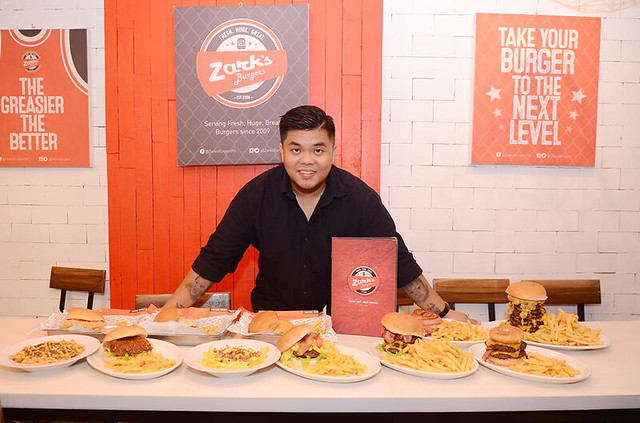
Rolandrei “Zark” Varona, 34, entered the game in unfavorable conditions with a failed franchise venture and dwindling capital.


Nevertheless, he paired his natural business acumen with an unwavering tenacity and grew from a humble stall owner to a food franchise powerhouse.
Although he lost his father at the age of two, he recalls many fond childhood memories with his mother and sister — especially their family meals after Sunday mass. The restaurants they frequented left a deep impression on him and by high school, he had his heart set on becoming a chef.
“I knew that I wanted my own restaurant someday,” he said.
It was natural that he went on to study Hotel and Restaurant Management in the Philippine Women’s University.
Even before graduating, Mr. Varona started with capital from his allowance and his salary as a paid intern for a famous steakhouse. He later had the opportunity to join a cruise ship as a cook, saving up most of his earnings for his future business.
Mr. Varona shared that he battled homesickness, but his determination to put up his own restaurant and the continuing support of his family pulled him through.
After two years at sea, he was 23 and had enough savings to start his own business. Wanting to learn the ins and outs of running a business, Mr. Varona decided to purchase a noodle house franchise. He personally filed the papers and got the necessary permits to open his stall in Divisoria.
He quickly realized that running a business was not easy. After a few months of operation, his stall was earning barely enough to break even and he was slowly using up his capital. He decided to close it down.
But Mr. Varona never faltered, he continued scouting for potential business locations. He found a small space along Taft Avenue, but thought that a food cart would not match the market.
However, something about the location kept drawing him back until he finally decided to create his own concept. He studied what kind of food would sell in the predominantly student market in the area. He realized that there wasn’t any burger joint with student-friendly prices. As a burger lover himself, Mr. Varona often felt frustrated that there were few options between fast food and gourmet burgers. With his experiences from travelling and his skill in cooking, he developed a concept that would address the market gap.
With a portion of his savings gone, Mr. Varona borrowed P200,000 from his mother to complete his P600,000 initial investment to make Zark’s Burgers a reality. Mr. Varona was in charge of almost everything — from filing permits, menu development, construction and interior design.
In 2009, Zark’s Burgers was finally unveiled to the public with a promise to deliver burgers that are fresh, huge and great.
Named after himself, Zark’s Burgers sports theme reflected Mr. Varona’s like for sports, big food and value for money.
“I don’t serve typical cheeseburgers,” Mr. Varona said of his culinary creations.
Customers have over 20 burgers to choose from — most of which are under P250 — with interesting variations such as the bacon wrapped burger and glazed donut burger.
Inspired by TV show Man vs. Food, Mr. Varona developed his own burger challenges — Tombstone and Jawbreaker — that captured his young market. The highly popular Jawbreaker challenge, where the winner wins a free shirt and has his picture included in a hall of fame, has become a standard dare for barkadas — inadvertently becoming part of youth culture.
In just seven months of operation, Zark’s Burgers was able to earn back Mr. Varona’s initial investment. Mr. Varona admits he did not expect the warm welcome he received from students. With this initial success, he was able to expand the original 16-seater space to 120 seats.
Soon enough, he started opening branches across Metro Manila and eventually entered the Visayas and Mindanao markets.
As he expanded, he started to struggle managing the company alone and realized that he couldn’t develop a sustainable business by himself.
“I was learning but it wasn’t at the same pace with the company’s growth,” Mr. Varona said.
Seeing his own limitation, he professionalized his team.
As a young entrepreneur, Mr. Varona knows he has much to learn and looks to seasoned professionals to gain insights on how to run the business. When he found out that his food cost was high, compared to industry standards, he approached one of his former mentors and worked with him to slowly improve efficiency at Zark’s Burgers.
While Mr. Varona was initially apprehensive about the possibility of franchising, he recognized the difficulty and cost of managing branches outside of Metro Manila — especially in the Visayas and Mindanao. He realized that in order to grow the business and eventually expand outside the Philippines, he had to franchise. He hired an expert on franchising and created a system for franchising. He would also partner with his long-time supplier to put up commissaries for burger patties and seasonings.
Now on its 10th year, Zark’s Burgers boasts of 60 branches nationwide and employs over 800 people across all facets of its operations.
For Mr. Varona, however, success is being able to do what you love and having the ability to give back. “Cheesy as it sounds, I want the economy itself to grow,” Mr. Varona said.
Apart from his regular outreach programs, he wants to transform lives by imparting to aspiring entrepreneurs the skills and knowledge needed to start their own business. He provides mentorship through Endeavor Philippines, Resto Coach, Go Negosyo and giving talks in universities.
Like many others, Mr. Varona embarked on his entrepreneurial journey armed with a dream. Unlike many, he never lost sight of his goal and persisted through every challenge. He tells aspiring entrepreneurs, “Look into yourself and find your purpose. From there,