Showing posts with label Nigeria. Show all posts

Tuesday, August 27, 2019

...the top social media bugs


Filipinos spend more hours on social media than the rest of the world—report

Aileen Cerrudu
UNTV News & Rescue
27 August 2019


Filipinos spend more time on social media compared with the rest of the world, according to a recent report of Global Web Index.


The Philippines tops the list with an average of 4 hours a day spent on social media. Brazil ranked second with 3:45 hours spent while Nigeria and Colombia tied in the third spot with 3:36 hours spent.
The hours spent on social media in the Philippines increased from 2:49 hours in 2012 to 4:01 hours in 2019. The country also has remained the top country that spends the most hours on social media for seven years.
Meanwhile, the top motivations of internet users to use social media is to be up-to-date with the latest news and current events (40%), staying in touch with friends (39%) and finding funny or entertaining content (38%).
However, 47% of the 16-24 year old  age group said that finding funny or entertaining content is their top motivation for using social media. 46% answered “to fill up spare time” while 43% answered “to stay in touch with friends.”—AAC
Share

Sunday, May 18, 2014

...the emerging city of tomorrow

Why UN Habitat named CDO an ‘emerging city of tomorrow’


By Mozart Pastrano, Ninfa U. Along-Albania
Philippine Daily Inquirer


Cagayan de Oro City (CDO) has been named an “emerging city of tomorrow” in this year’s World Urban Forum in Colombia organized by the United Nations Human Settlements Programme (UN Habitat).
 
CDO is the only Philippine city on the list, which includes Hunchun, China; Johor Bahru, Malaysia; Malmo, Sweden; Nampula, Mozambique; Onitsha, Nigeria; Santa Marta, Colombia; Tetouan, Morocco; and Uberlandia, Brazil.
 
CDO is ranked by the National Competitiveness Council as the Philippines’ most competitive city.
 
The mayor of CDO is former Misamis Oriental 1st District Rep. Oscar S. Moreno.
 
The city government has pioneered in the computerization of business permits and licensing, as well as the assessment and payment of real property tax.
 
“Getting a business permit takes up less than an hour,” said Eileen Canoy Escobar-San Juan, the city’s local economic and investment promotions officer.
 
She also noted that a key driver in the city’s remarkable growth was the “very strong private sector support and initiative.”
CDO is the growth driver of Northern Mindanao (Region 10), whose economic growth continues to exceed those of the other regions in Mindanao.
 
CDO’s gross regional domestic product (GRDP) was P240 billion in 2012, up by 7.4 percent compared to its 5.8 percent growth in 2011. This was largely due to the acceleration of the industry and services sectors, which rose by 9.2 percent and 9.0 percent, respectively.
 
Although agriculture stepped up by only 2.4 percent, contributing 28 percent to the region’s economy.
 
Nationwide, Northern Mindanao (Region 10), which includes CDO, ranked third in per capita GRDP.
 
Dynamism
 
Fueling the region’s growth is CDO’s economic dynamism, government efficiency and appropriate infrastructure. New industries utilizing information technology are being established in the city.
This fast-growing city of over 600,000 people provides easy access to an enormous concentration of markets in Northern Mindanao.
 
The Mindanao Container Terminal (MCT) facilitates direct and cost-efficient movement of containerized cargoes to Manila, Cebu and international shipping hubs.
 
The multi-berth Cagayan de Oro Baseport handles inter-island passenger travel with connectivity to the country’s nautical highway and the logistics corridors of Mindanao.
 
Laguindingan Airport services air logistics requirements, while an extensive road network leads to and from the major production areas and markets of Mindanao.
 
The expansion of the MCT and Filinvest Development Corporation (FDC) Power Plant will consolidate CDO’s position as the largest logistics center in Southern Philippines.
 
While the rest of Mindanao has been experiencing severe power shortages for many months now (with up to 16-hour outages daily in one Mindanao city), CDO has been hit by brownouts only at the tail end of this summer.
 
That’s because it is approaching self-reliance in power: with Minergy’s 27.4-MW and 18.9-MW diesel power plants, STEAG State Power’s 210-MW coal-fired power plant—plus Bubunawan Power Company’s 7-MW run-off river hydro project in tandem with Cepalco’s 1-MW photovoltaic solar power plant—the only grid-connected PV power plant in the Philippines.

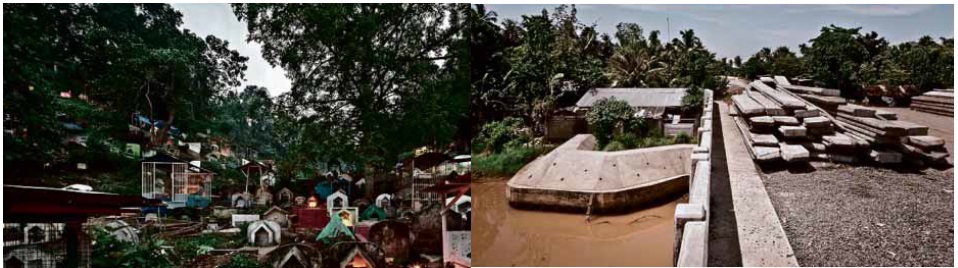
FAMILIES visiting their deceased relatives and staying overnight in Bolonsery public cemetery last Nov. 1. Right: Uncompleted bridge over Iponan River connecting Bulua with Opol.Once completed the bridge should be part of a new coastal artery crossing Cagayan de Oro.

Complementing the logistics infrastructure of Cagayan de Oro is the rapid modernization of the city’s telecommunications infrastructure, transforming the city into a business center and international logistics and telecommunications hub of the south.
 
Educational center
Beyond infrastructure, CDO is the center of education in Mindanao. Xavier University-Ateneo de Cagayan is Mindanao’s first university—and, in fact, is the first Jesuit university in the Philippines.
 
Capitol University and Liceo de Cagayan University are cited by the National Association of Colleges and Universities as among the country’s top 10 higher education institutions with the largest number of accredited programs.
With 15 universities and schools, CDO accommodates 82,000 students and 22,000 graduates every school year.
 
Custom-designed skills training and apprenticeship programs are readily available to serve human resource requirements. For example, Xavier University has partnered with Asian Carmakers Corp., the country’s official BMW distributor, to bring German automotive expertise to technical education students.
 
CDO’s strategic location and rich agricultural resources have made it the preferred site of major agribusiness companies such as Del Monte Philippines (which set up the world’s largest integrated pineapple processing plant here), NestlĂ© Philippines, Pilipinas Kao and other small and medium agri-based industries.
 
As a gateway to Southern Philippines, CDO provides direct access to rich agricultural areas in Mindanao—the source of 40 percent of the country’s food and livestock. CDO is a significant producer of oleochemical and other coconut products.
 
Higher-value products through agro-processing offer investment opportunities. Presently, Northern Mindanao is the top producer of cattle and is the third largest producer of poultry in the country.
 
CDO is also a key destination of meetings, incentives, conventions and exhibitions (MICE) in Southern Philippines. It has 4,806 rooms from various accommodation facilities that can handle conventions with 3,000 participants. It is trying to improve these rather limited numbers.
 
White water rafting capital

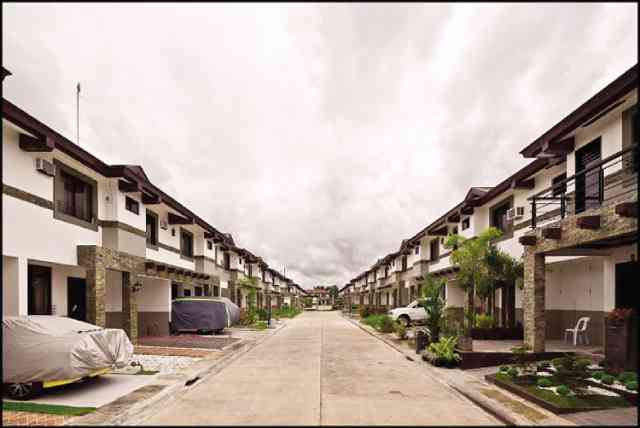
COURTYARDS in Carmen Barangay, developed by Pueblo deOro

CDO is the white water rafting capital of the Philippines, attracting ecotourism adventure seekers who also delight in experiencing ziplines and spelunking and diving, among other outdoor activities.
 
CDO is linked to Camiguin, which is renowned for its luxurious beaches, hot springs, waterfalls and historic landmarks; to the mountain ranges of Bukidnon, home to seven indigenous communities; to the Caraga region capitals of Butuan and Surigao with boast eco-tourism thrills; and to the Lanao del Norte nexus of Iligan City and Marawi City, home of the
colorful Maranao people.
Over the years, the Cagayan River has renewed its claim over CDO—the primordial gateway through which flowed the transactions and transformations of people and progress, commerce and culture, ideas and values.
Hit by Tropical Storm “Sendong” in 2011, CDO is a portrait of resilience, said Fr. Roberto C. Yap, SJ, president of Xavier University-Ateneo de Cagayan.


“Usually,” he said, “the word reminds us of the bamboo because of the way it dances with the wind in times of typhoons and then snaps back in place afterwards. But I would like to propose that resilience should mean not just overcoming challenges but prevailing over them to become better, stronger much more than we have been."

Monday, November 26, 2012

...the new PH cardinal


Pope names six new non-European cardinals


Pope Benedict XVI on Saturday consecrated six non-European prelates as new members of the College of Cardinals in a development welcomed by critics concerned that the body which will elect the future pope is too Euro-centric.

The elite body "presents a variety of faces, because it expresses the face of the universal Church," the 85-year-old pontiff said during the ceremony -- called a consistory -- in St Peter's Basilica.

"In this consistory, I want to highlight ... that the Church is the Church of all peoples," he said.

The solemn ceremony saw the new "princes of the Church" receive gold rings and birettas -- their scarlet colour signifying the blood of martyrs, or those willing to die for their faith -- while kneeling before the pontiff.

The pope drew criticism in February, at the height of the "Vatileaks" scandal, when he created 22 new cardinals of whom 16 hailed from Europe.

Benedict, who was elected pope in 2005, is a respected theologian often seen as hewing closely to a traditionalist line who has championed Christianity's European roots on countless occasions.

Saturday's new cardinals come from Colombia, India, Lebanon, Nigeria, the Philippines and the United States and join the elite body that advises the pope and elects his successor upon his death.

They are American James Michael Harvey, Lebanon's Bechara Boutros al-Rahi, India's Baselios Cleemis Thottunkal, John Onaiyekan of Nigeria, Colombian Ruben Salazar Gomez and Luis Antonio Tagle of the Philippines.

Announcing the names of the new cardinals last month, Benedict told bishops that he wanted to show that "the Church belongs to all peoples, speaks all languages."

Saturday's consistory, Benedict's fifth, follows the death of several cardinals in recent months and will bring the number of those eligible to vote back up to the maximum of 120.

Cardinals must be under 80 years old to take part in a papal election although they can stay on as non-voting cardinals after they reach that threshold.

There are now 62 European cardinals eligible to vote compared with 67 in February, as well as 14 North Americans, 21 South Americans, 11 Africans and 11 Asians.


Cardinal James Michael Harvey, USA

Harvey, 63, who hails from Milwaukee, Wisconsin, has been the prefect of the pontifical household since 1998. The best known of the new cardinals has been made the archpriest of the Basilica of St Paul's Outside the Walls, one of Rome's most prominent basilicas.


Cardinal Luis Antonio Tagle, Philippines

Another of the new cardinals, Manila Archbishop Tagle, at age 55 is viewed as a possible candidate to succeed Benedict.

The last to receive his biretta on Saturday, Tagle was visibly moved, wiping away tears after a long tete-a-tete with the pope, to applause from the congregants.

Bechara Boutros al-Rahi, Lebanon

Rahi, 72, became the second Maronite cardinal alongside Monsignor Nasrallah Sfeir, also of Lebanon. Rahi has frequently warned over the rise of Islamism, and his elevation is seen as a gesture towards a multi-faith Lebanon at a time when the country is threatened by the conflict in neighbouring Syria.

Cardinal Baselios Cleemis Thottunkal, India

Trivandrum Archbishop Thottunkal of India became the youngest member of the College of Cardinals at age 53. His elevation was seen as a bid to encourage India's old but dynamic Church, little known in the West.

Cardinal John Onaiyekan, Nigeria

As for the 68-year-old Onaiyekan of Nigeria, archbishop of Abuja, he is another "papabile", or potential pope, who has shown courage in the face of inter-faith hatred at a time when his country faces attacks against Christians by the Islamist sect Boko Haram.


Cardinal Ruben Salazar Gomez, Colombia


Another man of peace is 70-year-old Gomez of Bogota, who has fought tirelessly for national reconciliation with Colombia's FARC rebels.

Friday, November 23, 2012

...the highest remittance recipients

PH third highest remittance recipient among developing nations


A bank employee displays 100 peso notes in Manila. The Philippine economy is facing major risks from abroad that could limit its growth prospects next year, the central bank governor said Wednesday
AFP News - A bank employee displays 100 peso notes in Manila. The Philippine economy is facing major risks from abroad that could limit its growth prospects next year, the central bank governor said Wednesday.


Despite a gloomy global economic climate, Filipinos may still count on a boost from overseas workers who will continue to send cash back home, new World Bank projections showed.

Among developing countries, The Philippines will be the third highest recipient of remittances from overseas workers this year, the World Bank said in its latest "Migration and Development Brief."

Cash inflows from Pinoys abroad are seen to reach $24.3 billion in 2012, up 5.4 percent from $23.1 billion last year.

Latest central bank data pegged OFW inflows at $15.6 billion as of the end of the third quarter, up 5.5 percent from year-ago levels.

The World Bank's forecast growth in remittances to the Philippines, however, is slower than 2011's expansion of 7.6 percent.

This may be attributed to an appreciation of the peso, which the World Bank says prods "migrants to delay sending remittances until exchange rates are more favorable."

Globally, inflows to developing countries are expected to grow by 6.5 percent to $403 billion in 2012.

"International migrants are weathering the effects of the ongoing global economic crisis..." the World Bank said.

India will be the top recipient of remittances this year, with inflows reaching $69.8 billion based on World Bank estimates, followed by China at $66.3 billion.

The Philippines is a far third, followed by Mexico ($23.5 billion), Nigeria ($20.6 billion), Egypt ($18 billion), Pakistan ($13.9 billion, Bangladesh ($13.7 billion), Vietnam ($9 billion) and Lebanon ($7.6 billion).

The World Bank also expects remittances to developing countries to spike further by 7.9 percent in 2013, 10.1 percent in 2014 and 10.7 percent in 2015, when it is seen to reach $534 billion.

"We expect growth of flows to remain robust in regions that rely on remittance flows from the US, the GCC (Gulf Cooperation Council) and Russia," the multilateral lender said.

Risks to remittances growth remain, however, with the World Bank citing "increasingly harsh rhetoric and policies hostile towards migrants in many destination countries, especially Europe."

Meanwhile, the World Bank cited the Philippines as one of the countries where innovations such as international mobile remittances effectively ease the cost of sending money.

This, as it noted that worldwide, only 20 percent of 130 mobile banking operators worldwide offered international remittance services as of early 2012.

The Philippines, as well as Kenya, "are ahead of the curve in fostering an ecosystem of mobile payment services," it added.

"They may provide fertile ground for adoption of international remittance services via mobile phones, but most other countries are much further behind at this point," the World Bank noted.

Saturday, November 3, 2012

...the Math wizzards in India

PH wins 23 medals in Math, Science Olympiad in India


11/03/2012


MANILA, Philippines - Filipino students won 23 medals during a Math and Science Olympiad in India held last week.

The students bagged one gold, 12 silver and 10 bronze medals at the 9th International Mathematics and Science Olympiad for Primary Schools, which drew in 231 contestants from 12 other countries.

"Filipino students have once again shown their excellence in math and science," said Simon Chua, president of the Mathematics Trainers Guild-Philippines.

Rechilda Villame stood in as the delegation's team leader for Math, while Ruthela Payawal was the group's team leader for Science.

The Philippines competed with China, India, Indonesia, Malaysia, Nepal, Nigeria, Singapore, South Africa, Sri Lanka, Taiwan and Thailand.

The following are the names of the students and their corresponding medals won:

MATHEMATICS

Gold medalist:
- Shaquille Wyan Que of Grace Christian College

Silver medalists:
- Tiffany Mae Ong of Immaculate Concepcion Academy-Greenhills
- Emmanuel Paulo Santos of Colegio San Agustin-Binan
- Jinger Chong of St. Jude Catholic School
- Alyana Zoie Chua of MGC New Life Christian Academy
- Vincent Angelo Suarez of De La Salle-Lipa

Bronze medalists:
- Mark Ebson Susana of Naic Elementary School-Cavite
- Theresa Manalo of Morning Star Montessori-Calamba,
- Maedell Mosuera of G. B. Lontok Memorial School-Lipa,
- Fedrick Lance Lim of Zamboanga Chong Hua High School
- Marksen Victor Lizarondo of Dasmarinas II Central School
- Nathan Arthur Banatao of UP Integrated School

SCIENCE

Silver medalists:
- John Matthew Felices of Holistic Education and Development Center,
- Kristine Bernadette Nunez of Colegio San Agustin-Binan,
- Adam Christopher Chan of Grace Christian College
- Youna Lee of Colegio San Agustin-Makati,
- Antonio Alexis Aldeguer of Colegio San Agustin-Makati,
- Ron Michael Acda of Binan Elementary School
- Hans Leighton Liu of St Jude Catholic School

Bronze medalists:
- Thomas Spencer Balete of St. Stephen’s High School
- Ronn Earnest Tullao of Early Start Learning Center-Lipa
- John Joshua Babilonia of Dasmarinas II Central School
- John Bien Angelo Uy of Montessori East of Tanauan

Also a member of the RP delegation is Kane Arcangel of Lemery Pilot Elementary School.

Tuesday, August 21, 2012

...the world's fastest growing economies

PH makes Top 10 list of 'fastest growing' economies

08/21/2012
 
MANILA, Philippines - The Philippines is predicted to be one of the top 10 fastest growing economies in the world in the next 40 years, according to Knight Frank and Citi Private Wealth's 2012 Wealth Report.
 
The Philippines is seen to be the 6th fastest growing economy in the world between 2010-2050, with gross domestic product (GDP) at 7.3%.

The Wealth Report's list of fastest growing economies is topped by Nigeria with 8.5% growth rate, followed by India with 8%, Iraq 7.7% and Bangladesh and Vietnam both with 7.5%.

On 7th spot is Mongolia with 6.9%, Indonesia with 6.8%, Sri Lanka with 6.6% and Egypt with 6.4%.

In contrast, the 10 countries that are predicted to grow the least in the next 40 years are Spain, France, Sweden, Belgium, Switzerland, Austria, Netherlands, Italy, Germany and Japan.

Citi research forecasts that developing Asia's share of world real GDP will increase to 49% in 2050 from 27% in 2010. Meanwhile, North American and Western European countries' share of global GDP will fall to 18% in 2050 from 41% in 2010.

China's economy is expected to overtake the US as the world's biggest economy by 2020. However, India is seen to overtake China by 2050.

"Citi research shows that while China and India are likely to grow rapidly over the next 40 years, there are other key countries with promising chances for growth that do not necessarily match the traditional assumptions about where future growth will emanate from," Grainne Gilmore, head of UK Residential Research at Knight Frank, said, in the report.

"For example, Russia and Brazil, which make up the so-called BRIC nations alongside China and India, do not make it on to Citi’s list of Global Growth Generators – or '3G' countries. Instead, Citi includes countries such as Bangladesh, Egypt, Indonesia, Iraq, Mongolia, Nigeria, Philippines, Sri Lanka and Vietnam on this list," she added.

The report also quoted Citi chief ecnomist Willem Buiter: "All of these (3G) countries are poor today and have decades of catch-up growth to look forward to. Some of them, including Nigeria, Mongolia, Iraq and Indonesia, also have large natural resources that we hope will be more beneficial than they so often have been in the past."

The Wealth Report noted that Asian economies, Singapore, Hong Kong, Taiwan and South Korea, are projected to be the world's richest economies on a per capita basis by 2050.

Singapore topped the list in 2010 and is expected to keep the top spot in 2050, when the city-state's gross domestic product (GDP) per capita would reach $137,710. Taiwan and South Korea were not even in the top 10 in 2010.

Gilmore said there are now around 18,000 "centa-millionaires" -- those with $100 million or more in assets -- in the region covering Southeast Asia, China and Japan, more than the 17,000 in North America and 14,000 in Western Europe.

By 2016, Southeast Asia, China and Japan are expected to have 26,000 centa-millionaires, compared with 21,000 in North America and 15,000 in Western Europe, Gilmore wrote, citing data from Ledbury Research. - With Agence France-Presse

Tuesday, July 24, 2012

...the new Metro (part 3)

Serializing: A NEW CITY, A NEW METRO MANILA, A NEW FUTURE


By ATTY. FRANCIS N. TOLENTINO
July 24, 2012

(The Manila Bulletin is serializing Metro Manila Development Authority (MMDA) Chairman Francis Tolentino's book "A New City: A New Metro Manila, A New Future.")

METRO Manila will always have a special place in our hearts and memories. That‘s one of the best reasons why we should continue the drive for urban renewal and restoration. I believe it is time to consider the construction of a new capital city where we can build a new future and a model city for the country and perhaps for Asia and the world. That new city can be a new symbol of hope, even as we face the myriad problems of rapid urbanization and blight in the present Metro Manila.


Countries That Moved Their Capitals 

Other countries have long realized that building a new city augurs well for the future of their people. Below are some of the countries that moved their respective capital cities — Japan (in 1869), Brazil (in 1956), Pakistan (in 1960), Nigeria (in 1976), Malaysia (in 1993) and Kazakhstan (in 1997).

Tokyo (formerly known as Edo) became the capital of Japan in 1869 replacing Kyoto when the Emperor took up permanent residence there. The size of Edo‘s population, which was more than double that of Paris and London at the time, was augmented by the Tokugawa‘s system of requiring all underlings to spend a portion of each year in the city. Thus, their presence gave rise to artisans, craftsmen, and other townsfolk, and promoted many of the arts. Edo became the center of commerce even before it became the capital of Japan. The city was broken up into distinct trade districts - cobbler sections, tailor sections, and even fish sections that were kept completely separate from the fruit and vegetable areas. Today, Tokyo is considered the predominant economic center of East Asia, rivaled only by Hong Kong and Singapore.

Brasilia originated in a campaign promise made by presidential candidate Juscelino Kubitschek in 1956. He appealed to the Brazilians' dream of developing the resources in the interior of their nation. He proposed to build a new capital there, a new city that would demonstrate how Brazil would develop in the future, integrating the sprawling country into a modern industrial nation.

Thus, Brasilia was built in just four years starting in 1957 in the central area of the country and has become a showcase of architectural innovation. Before its construction, the area resembled a desert — unpopulated, scarce water, few animals and plants.

Brasilia is Brazil‘s first planned city and also in effect a planned capital. President Juscelino Kubitschek, who became President in 1956, invited the best Brazilian architects to present projects for the new capital. Oscar Niemeyer, who is considered one of the world's most famous architects today, combined straight and rounded shapes to create innovative architectural masterpieces. Lucio Costa, renowned Brazilian urbanist, devised a lay-out combining beauty, simplicity and functionality.

Urban planner Lucio Costa and architect Oscar Niemeyer "intended that every element – from the layout of the residential and administrative districts (often compared to the shape of a bird in flight) to the symmetry of the buildings themselves – should be in harmony with the city‘s overall design." Brasilia is at present the only 20th century city granted a World Heritage Site status by the UNESCO.

High modernism was embodied in the architectural design of structures in Brasilia. The function of the capital was to be expressly political and administrative — aspects that were understood to be the hallmark of membership in the modern system of states.

Islamabad became the capital and administrative center of Pakistan in 1960. Pakistan needed a new capital city because the existing buildings in Karachi, a port city, were not enough or were below the standards required by a capital. The layout and structure of the existing port city did not allow it to take on the functions of a modern capital. The influx of refugees also intensified existing problems and created new ones.

In September 1959, the government established the Federal Capital Commission for the preparation of the Master Plan for the new capital. A decision was made on February 24, 1960 by the President and his Cabinet to give the new capital of Pakistan the name of Islamabad or "the City of Islam." On May 24, 1960, the preliminary Master Plan and the planning principles that would make Islamabad "A City of the Future," were presented to the Cabinet and approved by the President. The Capital Development Authority took over from the Federal-Capital Commission, and was put in charge of the overall development of the new capital.

The metropolitan area of the capital has been planned for a future population of about 2,500,000 inhabitants within a period of two generations. Its administrative functions include the following: (a) administration on a national level; (b) cultural services physically or symbolically connected with the country's administration, such as a national museum or a national library; (c) special non-governmental institutions of national importance, such as banks, welfare organizations, among others; and (d) the diplomatic representation of foreign countries.

Thursday, February 2, 2012

...the bayanihan paper

Sociological study touching on bayanihan bags int'l award

 
February 2, 2012
GMA News
 
Petilla’s paper was recognized as one the five best among the 52 papers presented at the conference, which had the theme “Social Science Perspective on Human Security”.
 
In his paper, Petilla discussed the reasons for internal migration (or the moving of people from rural to urban centers) and how it can pose a threat to home-base human security because it depletes the local community and hinders it from progressing and developing socially and economically.
 
To address this situation, Petilla suggested the development of a strategy called “indigenous volunteerism”, or bayanihan. It can be done through continuous or long-term action through various interventions, such as education and knowledge sharing, skill and competency development, leadership, good governance, and environmental literacy. These interventions empower the young and those left behind who serve as the home-base workforce that will sustain the community’s social and economic sides.
 
The 20th IFSSO conference was participated in by 269 social science professors, instructors, and government officials from Canada, China, Denmark, Germany, Ghana, Hungary, India, Indonesia, Japan, Nigeria, South Korea, Thailand, Turkey and the US. Petilla, currently the chief of NRCP’s Administrative and Finance Division, represented the Philippines, along with NRCP Social Sciences Division Chairperson Carmencita T. Aguilar and NRCP Social Science Division Regular Member Dr. Nestor T. Castro, who was elected the new President of the IFSSO during this assembly. — TJD, GMA News

Tuesday, January 17, 2012

...the global economic driver

Philippines may become key global growth driver


The Philippines has the potential to become one of the top 10 countries that can greatly contribute to global growth within the decade, Goldman Sachs said.


By: Michelle V. Remo
Philippine Daily Inquirer


The Philippines has the potential to become one of the top 10 countries that can greatly contribute to global growth within the decade, Goldman Sachs said.

According to the investment bank, the Philippines is among the N-11 [Next 11] economies that are likely to advance to the stage of “growth countries,” or nations that account for at least one percent of global gross domestic product.

The N-11 economies are Mexico, Korea, Indonesia, Turkey, Iran, Egypt, Nigeria, Bangladesh, Pakistan, Philippines and Vietnam.

Goldman Sachs said that, except for Vietnam and Bangladesh, all N-11 economies could advance to the “growth” classification.

The investment bank’s projection is anchored on the relatively low incomes observed of most N-11 economies in the past. As a result, the countries have much room for growth and may improve their economic fundamentals significantly.

The nine economies from the N-11, along with the so-called BRICs (Brazil, Russia, India and China), are expected to contribute the most to global growth from 2011 to 2020.

“Growth markets have the potential to be among the top ten contributors to global growth over the next decade,” Goldman Sachs said.

The Philippines grew by 3.6 percent in 2011. In the past decade, it posted an average growth of close to 5 percent.

Goldman Sachs said the growth rate of N-11 countries and BRICs could accelerate further in the decade to 2020, driving much of the global economy.

For 2012, the investment bank expects the global economy to grow by 3.4 percent. Over the next eight years, the growth rate may average at 4.3 percent, led by the N-11 nations and BRICs.

“Average growth rates suggest that global growth is likely to be much stronger in the current decade, at 4.3 percent, than in the past 30 years. This is due to the impetus from the BRIC economies and the other growth markets,” Goldman Sachs said.

Saturday, December 3, 2011

...the hard earned money

Migrant remittances top $350bn—World Bank


Agence France-Presse
via Phil. Daily Inquirer


The Philippines is fourth largest recipient of remittances in the world for  2011 with est. $23 billion


GENEVA—Migrant workers from developing countries will have sent home more than $350 billion in remittances by the end of this year, a World Bank report said Friday.

The figure tops $400 billion for 2011 if money sent to high-income countries is included, said the report, released during the fifth meeting of the Global Forum on Migration and Development in Geneva.

The top recipients of officially recorded remittances were India, which took in $58 billion, followed by China ($57 billion), Mexico ($24 billion) and the Philippines ($23 billion).

Other top beneficiaries were Pakistan, Bangladesh, Nigeria, Vietnam, Egypt and Lebanon.

“Despite the global economic crisis… remittance flows to developing countries have remained resilient, posting an estimated growth of 8 percent in 2011,” said Hans Timmer, director of the bank’s Development Prospects Group.

“Remittance flows to all developing regions have grown this year, for the first time since the financial crisis.”


The World Bank expects a 7.3 percent rise in such payments in 2012 and a 7.9 percent increase in 2013.

The two-day Global Forum meeting — attended by 160 nations and 30 groups — was opened Thursday by Swiss minister Simonetta Sommaruga, who called for stronger international collaboration in asylum policy.

The body was set up in 2006 by then UN secretary general Kofi Annan to strengthen cooperation between migrants’ countries of origin, transit and destination.


Thursday, September 29, 2011

...the math wizzards at Modena, Italy

4 Pinoy students win math, science medals in int'l tilts

 
By FRANCIS T. WAKEFIELD
September 29, 2011
Manila Bulletin


MANILA, Philippines — The medal haul of the Philippines in the most prestigious mathematics and science competitions in the world continued as four high school students bagged gold, silver and bronze medals in the recently-concluded 5th International Earth Science Olympiad, the Department of Science and Technology – Science Education Institute (DoST-SEI) disclosed Thursday.

Bringing honor and pride for the Philippines from Modena, Italy where the competition was held were gold medalist Williard Joshua Jose of Philippine Science High School (PSHS) Main Campus, silver medalists Christoper Jan Landicho of PSHS Bicol Region Campus and Charles Kevin Tiu of St Jude Catholic School in Manila and bronze medalist John Allan Olesco of Aquinas University Science High School. Jose earlier won a silver medal in last year’s IESO held in Nigeria.

The winning team was mentored by Prof. Miguel Cano of Bicol University and Dr. Marietta de Leon with PSHS Main Campus Director Dr. Helen Caintic acting as an observer.

IESO, held September 5-14, 2011, is the premiere international earth science competition for secondary school students, 17 years old and below. It was the first time that the competition was held in Europe and in Italy. The Philippines hosted the IESO in Bicol in 2008.

The competition covers areas such as astronomy, geology and geophysics, atmospherics and meteorology.
DoST-SEI Director Dr. Filma G. Brawner extended her congratulations to the team, urging them to venture into science careers.

“The IESO is a good starting point for students to look at the earth from a different point of view and explore it. There is still so much more to be discovered and we are hopeful that the IESO winners will take the lead in looking for new information about the world we live in,” Brawner said.

Brawner said contests, such as the IESO, is a good venue for students to be competitive and to excel in the fields they want to pursue.

“Competitions make pupils go beyond what they learn inside their classrooms. With time pressure incorporated in competitions, students are trained to work with grace under pressure. But, more importantly, exposure to international competitions should translate into entry into science careers,” she said.

Brawner said that beyond the medals, math and science competitions also raise public awareness on how science affects lives and moves the country forward.

“The IESO is intended to raise student interest in and public awareness of earth science, to enhance earth science learning of students, and to identify talented and gifted students in earth science,” she said.

Cano, meanwhile, expressed its gratitude to Philex Mining Corporation, Rapu Rapu Polymetallic Project, Geological Society of the Philippines, Hope Christian High School, Bureau of Mines and Geo-sciences, Department of Environment and Natural Resources; Vibal Publishing House; and APO Central Italy for making possible the trip of the team to the contest venue.

Monday, July 18, 2011

...the Skimboard champions

Filipinos win Penang skimboard contest


July 18, 2011
Manila Bulletin

TACLOBAN CITY, Leyte, Philippines (PIA) – Skimriders from the Philippines bagged the championship trophies in both the International Men’s Division and the International Women Division in Penang, Malaysia’s 5th International Skimboarding Competition last July 16-17, 2011.


The Filipino skimriders dominated the competition by winning the first three places in both the men and the women division of the competition, beating other skimboarders from Malaysia, Australia, Brunei, Singapore, Hong Kong, the United Kingdom, Holland, Nigeria, Thailand, Taiwan and China.

Wednesday, June 1, 2011

...the education hotspot

Top education for less in the Philippines

06/01/2011

MANILA, Philippines - Thousands of foreign university students are flocking to the Philippines, attracted by cheap yet high-quality courses conducted in English and an easy-going lifestyle outside class.

With more than 2,100 private and state-run institutions nationwide offering a wide array of courses, and an immigration policy friendly to foreign students, the former American colony is enjoying an enrolment boom.

Nearly 20,000 foreign students held special visas at the end of the school year in March, according to the immigration bureau, which said the number would rise when classes began in June.

This excludes the tens of thousands enrolled in small institutions that offer short courses in English and are particularly popular among South Korean and Chinese students.


Korean students in the Philippines

Nigerian medical student Dike Edward Ikechukwu, 22, said he learnt about studying in the Philippines at an education road show conducted by Manila schools in his country.

Then already studying pharmacology in Lagos, Ikechukwu said he was intrigued by the prospect of studying in a foreign country where he could expand his medical knowledge without depleting the family resources.

"It was cost effective for me," said Ikechukwu, who is president of the 605-member foreign students' organization at Manila's 400-year-old University of Santo Tomas.


University of Sto. Tomas


"I would have spent so much more in the United States for the same quality of education."

A 4-year degree course in the Philippines costs between $1,000 and $2,500 a year, significantly cheaper than in the United States for example where one could spend more than $30,000 annually, educators here say.

Another important factor for Ikechukwu was English. He said his father, a shipping consultant, travelled to the Philippines before he enrolled to inspect the university and liked the fact English was widely spoken.

The Philippines inherited English from the Americans, who colonized the archipelago at the end of a war with Spain in 1898.

American teachers fanned out across the country to open up schools in remote villages, teaching English grammar, diction and generally instilling a love for education in a legacy that lasts to this day.

Even though the Philippines is one of the poorest countries in Asia with one of the biggest wealth divides, the literacy rate remains one of the highest in the region at about 90%, according to government data.

The government began enticing foreign students to study in the Philippines in the 1980s, mostly in specialized fields such as medicine and agriculture.

The following decade saw an explosion of schools and institutions offering short-term courses in English language, aviation, hotel and restaurant management and maritime-related classes.

Then, in 2000, the government embarked on a strategy to promote the Philippines as a center for education in Asia, with one plank making it easier for foreign students to apply for visas.

It also established exchange programs between Philippine schools and universities in many countries, including Australia, the United States, South Korea, Canada and European nations.

Professor Evelyn Songco, assistant to the rector for student affairs at the University of Santo Tomas, credited the high number of foreigners to the government's strong push to make the Philippines an academic mecca in Asia.

"Many Philippine schools are accredited abroad, and those who graduated from here have created a good impression around the world," she said.

"Our diplomas are competitive abroad, and Philippine universities have always strived to do justice to the tuition fees these foreigners pay. We give them quality education, quality faculty members and facilities."

Beryl France Buendia, an American studying for a physical therapy degree at the University of Santo Tomas, said she believed studying in the Philippines would not disadvantage her in the US job market.

"I believe a Philippine diploma can be just as competitive in the States," the 22-year-old said, although she added cost was a big factor in deciding to study in Manila.

"My dad's quite old and my mom's going to retire soon so they had to budget the plan, so we decided to enrol here," she said.

A younger sister, Bethany, is finishing a degree in communication arts, also at Santo Tomas.
For South Korean psychology student Juhyun Kim, 18, learning English and low costs were important reasons for enrolling at the Ateneo de Manila University.


Ateneo de Manila University at night

But she said another factor in choosing to study in the Philippines was the reputation of Filipinos for being so friendly.

"Koreans are very welcome here. Filipinos sincerely care. I like staying here," she said.


Sunday, May 29, 2011

...the trend

Philippine Opportunities: BRICS, Mini-BRICS


Empowering the Filipino People
By FORMER PHILIPPINE PRESIDENT FIDEL V. RAMOS
May 28, 2011

MANILA, Philippines — “These large emerging economies (BRICS) are followed by ‘mini-BRICS’ including Indonesia, the Philippines, Egypt, Turkey, Vietnam and Nigeria...”  — China Daily (13 April)

On China President Hu Jintao’s invitation, leaders of the world’s five top emerging economies gathered in Sanya, Hainan, in mid-April to improve their policy coordination, economic partnership, and overall performance to gain a bigger clout in global growth and collective political power. This was the third formal confab of Brazil, Russia, India, and China, with South Africa included for the first time.

Aggressive leadership

Many analysts questioned the choice of SA as BRIC member, asking why not Indonesia, Mexico, and Turkey instead?  Some of us concerned “family elders” who closely follow national, regional, and global developments, also ask why not the Philippines which is already identified as a “mini-BRIC?”

Did SA President Jacob Zuma placidly wait for China’s blessings to be voted into membership?  No, Zuma (who assumed office in 2010 like P-Noy), went for it aggressively and single-mindedly.

According to expert Ron Rowland of moneyandmarkets.com (January 2011), President Zuma relentlessly moved to join the BRIC Club. He made official visits to the member-nations and told anyone who would listen how Africa, and SA in particular, was ready to take on a bigger role.

“The fact that the invitation came from President Hu is important, as he informed Zuma in writing in December 2010 of the BRIC members’ decision to invite SA into their group. In recent years, the Chinese have made big efforts toward developing Africa’s natural resources. In turn, South Africa has forged a leadership position for itself and, equally significant, has played the role of ‘representative’ of Africa in general,” Rowland reported.

The three-day BRIC Summit focused mainly on economic issues, notably reform in the international monetary system, commodity price fluctuation, climate change, and sustainable development, according to China’s Foreign Ministry. The principals present were Brazil President Dilma Rouseff, Russia President Dmitry Medvedev, India PM Manmohan Singh, SA President Zuma, and host President Hu.

Subsequently, the BRICS leaders joined the 2011 Boao Forum for Asia Annual Conference which President Hu also keynoted on 15 April.

Turmoils in the Middle East/North Africa

As they met amid MENA turbulence that has slowed down economic recovery, particularly in the EU and US, these leaders pledged to work for peace and prosperity.

“As we enter the next decade, we need to consider how human society will be able to ensure peace and shared prosperity,” Hu told BRICS leaders last 14 April. “The economic imbalance between the North and South remains prominent and the root causes of the global financial crisis have to be resolved with everyone’s cooperation,” he added.

“We share the principle that the use of force should be avoided,” the five leaders said in their joint Declaration in Sanya, while expressing serious concern over instabilities in other oil-producing countries.

Four BRICS countries abstained from the UN Security Council resolution establishing no-fly zones over Libya and authorizing “all necessary measures to protect civilians,” thus opening the door to airstrikes. South Africa was the only BRICS nation to favor the UNSC resolution and, to its credit, became the leading mediator for a Libyan cease-fire.

BRICS bargaining power

Recognizing BRICS’ increasingly important role in the world, analysts predict it would remain a major engine of global growth for years to come.

The bargaining power of emerging economies is expected to expand and also boost developed-developing countries’ cooperation. The combined GDP of BRICS nations accounted for 18 percent of the 2010 global total. But, by 2030, according to the China Center for International Economic Exchanges, this will grow to a staggering 47 percent.

In 2000, the four countries in BRIC (along with Indonesia), contributed just 18 percent of global GDP, while industrialized nations contributed 65 percent. By 2010, BRIC countries provided 27 percent of world GDP, while the rich countries’ share shrunk to 56 percent.

Experts say BRICS’ global impact lies in its being a bridge between developed and developing countries (North-South), with growing demand in the latter requiring capital and technology from the former.

“Consequently, the expanding markets in the BRICS countries will boost trade among themselves, and increase exports of Africa, Latin America, and ASEAN,” according to Zheng Xinli of China Center for International Economic Exchanges. This cooperation will also promote economic recovery in developed countries, added Zheng.

The IMF estimates China and India will grow at annual average rates of 9.0 percent between 2011 and 2015, with Russia and Brazil by 4.5 percent annually – meaning, global development will increasingly rely on emerging economies.

Growing middle class

Between 2000 and 2010, BRICS’ GDP grew by an incredible 92 percent, compared to global GDP growth of just 32 percent, with industrialized economies attaining a modest 15 percent.

Between 2011 and 2015, says the IMF, emerging economies – particularly the BRICS – will account for half of global demand. This means larger middle-class sectors with higher incomes.

“BRICS will continue to drive the world’s economic engine as they have huge potentials and middle-classes with growing appetites,” reported the China Institute of Contemporary International Relations.

But, experts also warned of challenges to the smooth development of emerging economies, particularly because of unresolved MENA internal conflicts, and surging prices of oil, food, and minerals.

BRICS is still a loosely connected economic forum, with uncoordinated positions on major world issues. To get BRICS to play a bigger and more unified role, it needs more institutionalization, say Chinese analysts.

Highlights of the Sanya Declaration

In Sanya, BRICS countries agreed to work closely to evolve strategies for the future. This would insure cooperation not only in energy, food security, natural resources, and climate change, but especially global governance and trade/investment facilitation – with these highlights:

International monetary system – The governing structure of international institutions should reflect changes in the world economy and increase the representation of emerging economies/developing countries.

Discussion of SDRs – Special Drawing Rights in the monetary system, including the SDR’s basket of currencies, should be discussed and rationalized.

Greater supervision – Further international regulatory oversight and supervision are necessary to strengthen policy coordination and promote sound development of financial markets/banking systems.

Expanding capacities – The international community should increase production capacities, strengthen producer-consumer dialogues on supply and demand, while increasing support to developing countries
Regional turbulence – The turmoils in MENA and West African regions should be resolved by avoiding the use of force.

UN reforms – Comprehensive UN reforms, including its Security Council, are needed to make it “more effective, efficient and representative.”

Missed opportunities for the Philippines

Unlike in slow-paced Philippines – which is characterized by interminable public policy debates, prolonged decision-making, and Church-State bickering – the BRICS and other future BRICS are off and running fast.

Essential to maintaining their wide-ranging cooperation is for BRICS countries to have a stake in each other’s economy – especially in increasing people-to-people linkages and technology transfer.

In a report to President Aquino III last month after returning from China where he participated in the 2011 Boao Forum and attended the BRICS closing ceremony at Sanya, FVR recommended that the Philippines advocate/organize an ASEAN-BRIC initiative, given that experts have earmarked Indonesia, Vietnam, and the Philippines as “mini-BRICS.”

When P-Noy was in Indonesia only two weeks ago, wasn’t it a sadly missed opportunity for Southeast Asia when ASEAN leaders frittered away their attention on the Thai-Cambodia border-temple conflict, instead of working to achieve a larger global role for ASEAN?  As a socio-economic community expected to be integrated by 2015 (within P-Noy’s time) with 600 million people as common market and production team, ASEAN should be a formidable competitor on the world stage.

Another opening that President Aquino III may have failed to exploit was the candid discussion of the Spratlys controversy with visiting US top-brass instead of just playing “pa-pogi” (looking good) onboard the super-carrier USS Carl Vinson ten days ago.

Philippine leverage

That the Philippines uncovered and aborted the al-Qaeda plots engineered by Osama Bin Laden and protĂ©gĂ© Ramzi Yousef to assassinate President Bill Clinton and Pope John Paul (in Manila before 9/11) would have been a good opening to start “no-holds-barred” discussions with US officials on security concerns and terrorism threats while our leaders were visiting Osama’s “last funeral carriage.”

With China, isn’t the strategic geo-political position of the Philippines astride the South China Sea and Pacific Ocean enough leverage to raise our value as an effective gateway to the vast East Asian markets, especially for services and essential food, minerals, and oil/gas??

For the Philippines and ASEAN, aren’t these advantages enough to strive for BRICS status?

Kaya ba natin ito?

Tuesday, May 24, 2011

...the top remittance recipient

WB: PHL remittances 2nd highest amid inflation


Despite its ballooning inflation rate, the Philippines posted the second highest growth of remittances among developing countries for 2010, the World Bank said in a report released to the Philippine media Tuesday.

In the WB Outlook for Remittance Flows for 2011 to 2013, economists Sanket Mohapatra, Dilip Ratha, and Ani Silwal reported that remittances to the Philippines, adjusted for inflation in local currency terms, grew by -1.4 percent in 2010. The top performer in this area was China, which grew by 1 percent.

Published under the WB Migration and Development Brief on Monday, the report places these figures in the context of the “quick" recovery of developing countries from the 2008 global financial crisis.

“Officially recorded remittance flows to developing countries recovered quickly to $325 billion in 2010 after the global financial crisis," the WB explained. “But they have not kept pace with rising prices in recipient countries."

Overall, the WB said remittances to developing countries grew 5.6 percent in US dollar terms in 2010, “but grew by a smaller 3.9 percent after accounting exchange rate changes, and fell by 2.7 percent after adjusting for inflation."

In 2010, the Philippines’ inflation rate grew to 3.8 percent from 3.2 percent in 2009, according to the National Statistics Office.

PHL among top recipients

With $21.4 billion in remittances, the Philippines took the fourth largest share of remittances among developing countries in 2010, the WB said. The largest recipient was India with $53.1 billion, followed by China with $51.3 billion, and Mexico with $22 billion.

In US dollars, the WB said remittances to the Philippines grew by 8.1 percent in 2010 — the fourth largest growth in US-dollar terms, next to Vietnam with 17 percent, Lebanon with 11.3 percent, and Pakistan with 11.1 percent. The Philippines’ growth in this area ties with that of Egypt.

In local currency terms, the Philippines fared as the 8th among the 10 largest recipient countries in 2010, the WB said. The country posted a growth of 2.3 percent in this area, trailing Vietnam, Pakistan, Lebanon, Egypt, Nigeria, China, and Bangladesh.

“The reduction in local currency value of remittances implies hardship for recipients, and increased pressure on migrants to send more to maintain the purchasing power of their remittances," the WB noted.

For the East Asia and Pacific region, which includes the Philippines, the WB projected a growth of 6.8 percent in remittance inflows last year, 8 percent for 2012, and 9.5 percent for 2013.

“Given the volume of remittances flowing to developing countries, innovative financing tools such as diaspora bonds and remittance-backed bonds are being viewed as potential sources that can finance infrastructure and development projects at lower cost and longer maturities," the WB added.

Effect of Middle East, North Africa crisis

The multilateral bank also said the effect on migration of the political turmoil in parts of North Africa and the Middle East “appears to have been largely localized within the region."

“Outside the North Africa and Middle East region, the remittance recipient region that could be affected by the crisis is South Asia," the WB said.

However, the bank noted a “lack of reliable and high-frequency data on both migration and remittances during the crisis in North Africa and the Middle East."

“Basic facts on the impacts of the crisis for migrants and recipient countries are simply not available," the WB said. “There is urgent need for rapid monitoring systems in both migrant-sending and -recipient countries through improved data collection and dissemination of high-frequency data on migration and remittances."

Earlier this month, the Bangko Sentral ng Pilipinas reported that overseas Filipino workers’ remittances rose by 5.9 percent in the first quarter of 2011 amid earlier fears of a decline due to the political unrest in Middle East and North Africa, and the disasters in Japan. — VS, GMA News