Showing posts with label foreign exchange. Show all posts

Wednesday, September 4, 2019

...the Bangsamoro charm

Philippines’ new region turns to Middle East for investment


Ellie Aben
Arab News
03 September 2019


MANILA: The interim chief minister of the Bangsamoro Autonomous Region in Muslim Mindanao (BARMM), Murad Ibrahim, told Arab News on Monday that he was encouraging the international business community to consider investing in the newly established region


Rebels turned troopers finish the basic military training. (AN photo)
It is designed to provide enhanced self-governance to the Muslim-majority provinces

The BARMM is the new regional and political entity established under a peace agreement between the Moro Islamic Liberation Front (MILF) and the Philippines government early this year.

It is designed to provide enhanced self-governance to the Muslim-majority provinces. “It is very important for investors to come, in order to create job opportunities and also for the international community to see that something is happening on the ground,” Murad said.

In an interview conducted at his office in Cotabato City, Murad told Arab News that plans were afoot to hold an investors’ forum. “We are just finalizing our development plan.”

When questioned on how they would lure foreign businesses to invest in the region, Murad said that there is now relative peace in the region. “In fact, gradually many investors are now coming here to visit. So, I think it’s because of the situation, we now have relative peace in the area and they’ve also seen the conduct and turn out of the plebiscite (last January). There was overwhelming support from the people,” he said.

Murad also cited the decommissioning of an estimated 40,000 former Bangsamoro Islamic Armed Forces (BIAF) combatants, the military wing of the MILF, which he also chaired. The process will allow the smooth transition of BIAF members to civilian life.

It is very important for investors to come, in order to create job opportunities and also for the international community to see that something is happening on the ground.
Murad Ibrahim, BARMM interim chief minister

“All of this sends the signal that the situation here is improving,” he stressed, adding that a recent meeting with an official from a Saudi delegation to the region had given him great encouragement.

“He gave his commitment that he will help convince the business community in Saudi Arabia to try to invest in the BARRM. He even asked for our development plan so he can present it to them,” Murad said.

“I could see they are really interested, especially given Saudi shortages of animal feeds. They need suppliers and they’re looking at us as a possible source. We have the potential to produce halal food, too so we can supply halal products as well.”

Last month, Murad led officials at a meeting with Malaysian representatives to discuss the possibility of strengthening development ventures between Malaysia and the BARMM.

Lawyer Wencelito Andanar, MalacaƱang’s special envoy to Malaysia, accompanied the Malaysian delegation comprising the Malaysian Embassy’s Charge D’Affaires Rizany Irwan Muhammad and Assistant Trade Councilor Irvin Francis, as well as officials of the Malaysian Chamber of Commerce and Industry headed by its president, Edward Ling in the two-day visit to Cotabato City.

Murad cited the importance of the meeting, which he said could “elevate the strategic partnership between BARMM and Malaysia from being peace partners to being development partners.”

He told reporters: “Helping BARMM as a brother and a relative is part of Malaysian Prime Minister Mahathir Mohammad’s ‘prosper-the-neighbors’ policy.”

Aside from Saudi Arabia and Malaysia, the government of Turkey has also vowed to extend assistance to the BARMM, particularly in its agricultural sector.

Sunday, April 28, 2013

...the world's best performing currencies

Peso is 3rd best-performing currency globally


MANILA, Philippines - The peso remains one of the world’s best performing currencies, debt watcher Standard & Poor’s Ratings Services (S&P) said Friday.

The local currency ranked third globally, appreciating 25 percent in real terms from March 2007 to March 2013, according to the S&P report.

Only the Chinese renminbi and Singapore dollar outperformed the peso. The two currencies have strengthened 29 percent and 26 percent, respectively, from their levels six years ago.

The performance was calculated using the real effective exchange rate (REER), which measures the inflation-adjusted value of currencies versus a basket of other units from trading partners.

“No single member of the 27-member European Union and only one of the 34-member Organization for Economic Cooperation and Development is among the top 10 most appreciated currencies,” S&P noted.

Behind the peso, the Australian dollar ranked fourth, rising 23 percent from its 2007 level. It was followed by the Brazilian real, Colombian peso and Peruvian nuevo sol, which rose 22 percent, 21 percent and 19 percent, respectively.

Rounding up the list was the Russian rubble, which firmed up 18 percent, and Saudi riyal and Venezuelan bolivar, which both appreciated 15 percent, the report stated.

According to the Bangko Sentral ng Pilipinas (BSP), the peso has strengthened 6.8 percent versus the greenback last year. It closed at 41.22 to a dollar last Friday, up four centavos from the previous day.
In real terms, the peso increased its value by 6.5 percent versus currencies of trading partners, according to the BSP. “The peso lost external competitiveness in 2012,” it said.

Concerns have been raised against the continued appreciation of the peso, especially on how it trims the value of dollar export earnings and remittances from overseas Filipinos.

The BSP, for its part, has implemented various macro-prudential measures to temper capital inflows causing the peso’s strong performance.

Among others, foreign funds were banned in parking at special deposit accounts (SDA) last July. Interest paid on SDA - money of banks and trust departments with the BSP - were also slashed by 150 basis points this year.

Foreign exchange rules were also further liberalized this month to encourage more outflows and balance the inflows to prevent pressure for the peso to rise.


Monday, February 4, 2013

...the German investor's destinations

PHL on investors’ ‘destination’ list
Written by Max V. de Leon / Reporter
Business Mirror
03 February 2013
 
 
THE Philippines continues to draw the interest of German investors, with another delegation of businessmen from Germany due to arrive this week to look for possible local partners and inquire on their planned investments in the country.
 
Aside from the Philippines’s economic development, German Ambassador to Manila Joachim Heidorn said the country is also part of one of the most dynamic regions in the world today.
 
“A lot of investors are now looking at Southeast Asia. When they set out on a business mission to Southeast Asia, they include the Philippines in their list of destinations,” according to Heidorn.
 
He told the BusinessMirror over the weekend that this is already the third business delegation from Germany this year. Last year 10 delegations of German investors visited the Philippines.
 
“They will be here on February 7 and 8 and we have already set a business-matching session for them with Filipino businessmen at the German Chamber of Commerce and Industry office,” Heidorn said.
 
The delegation, he added, tentatively consist 12 executives of medium to large German companies.
 
Their main interests, according to Heidorn, are infrastructure, information technology and software development, as well as trading of goods.
 
He said based on inquiries that they are getting, it is apparent that the interest of German investors in the Philippines is increasing. Aside from foreign direct investments, he added, Germany is a major source of official development assistance (ODA) for the Philippines.
 
In 2011 Germany disbursed €5.5 million in loans and €29.2 million in grants to the Philippines.
 
Last year Germany committed €40.1 million in fresh grants to the Philippines, which will be implemented beginning this year.

Sunday, November 4, 2012

...the PH to the world

IMF chief coming to see how PH can help


By Michelle V. Remo
Philippine Daily Inquirer


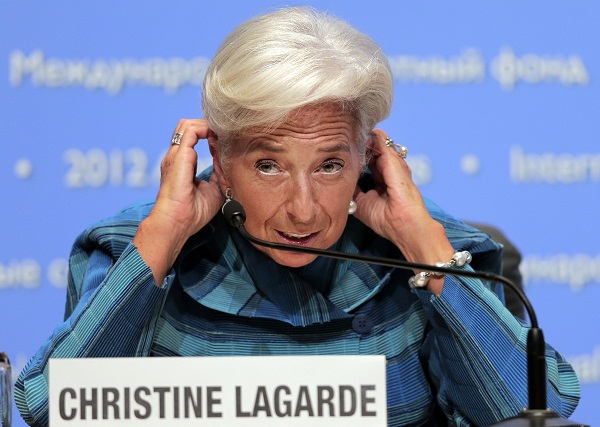
International Monetary Fund (IMF) chief Christine Lagarde reacts during a news conference at the IMF and World Bank’s annual general assembly in Tokyo, Thursday, October 11, 2012. AP/Itsuo Inouye


MANILA, Philippines—International Monetary Fund (IMF) head Christine Lagarde will visit the country this month to discuss the role of emerging economies in helping resolve global economic woes.

The IMF made the announcement as it scheduled meetings between its top official and the Philippines’ key government officials. The IMF managing director will also meet the Philippine media in a press conference.

Lagarde is also expected to reiterate IMF support for the reforms being pushed by the Philippine government to accelerate the domestic economy’s growth.

These reforms include higher taxes on cigarettes and alcohol, the lifting of unnecessary tax incentives for businesses, and administrative measures to shore up tax collection.

The IMF likewise supports calls to amend the Bangko Sentral ng Pilipinas (BSP) charter with the aim of further improving its ability to manage liquidity within the economy and to supervise the country’s banks.

In particular, the BSP wants to be able to trade its own bonds and have its examiners exempted from the Deposit Secrecy Law to better determine irregularities in bank transactions, among other things.

Unlike some countries visited by IMF officials, the Philippines is not expected to seek financial assistance from Legarde. The country, which has $82 billion in foreign exchange reserves, is now a creditor to the IMF.

In June, the BSP said the country was lending $1 billion to the IMF, which would use the money to help crisis-stricken economies in the euro zone.

Lagarde’s visit to Manila follows her trips to other Asian countries. She went to China and India in March, and Indonesia, Japan and Thailand in July.

Lagarde is the first woman managing director of the IMF. She began her five-year term as head of the IMF in July last year following the resignation of Dominique Strauss-Kahn.

Prior to her stint as IMF managing director, Lagarde held various positions in the French government.

She was the first woman finance minister for a G8 economy.

In 2009, the Financial Times named her best finance minister in the euro zone. In 2011, she was ranked by Forbes magazine as the 8th most powerful woman in the world.

Saturday, July 7, 2012

...the safe haven for investor

PH now a ‘safe haven’ for investors, says US bank

By: Doris C. Dumlao
Philippine Daily Inquirer
 
 
“If I think about the Philippines today, I think of it as a country that is probably two to three years behind Indonesia in terms of structural growth story". - Melvyn Boey, Southeast Asian equity strategist at BofA Merrill Lynch Global Research


American financial giant Bank of America Merrill Lynch has upgraded its domestic economic growth outlook for the Philippines this year but tempered its outlook for 2013 as a challenging global environment is seen to affect exports.
 
Gross domestic product forecast for this year was raised to 5.6 percent from 4.4 percent but for 2013, the outlook was trimmed to 5.7 percent from 5.9 percent. In 2012-13, a weaker export growth outlook, paired with larger import demands of a faster growing domestic economy, would tend to restrain the overall GDP growth trend, the company said in a research commentary.

Victoria Ip, chief investment officer for Asia at Merrill Lynch Global Wealth Management, said in a briefing on Friday that regardless of the progress on the European Union’s bailout of ailing banks, Europe would likely fall into a recession.

Also cited as a global concern was the United States’ heading into a “fiscal cliff.” This is a term commonly used to refer to the US dilemma on whether to sustain belt-tightening measures and tax increases at the beginning of 2013 or scrap some of the scheduled tax adjustments and spending cuts. Either way worries markets as keeping a tight fiscal policy tends to increase recession risks while doing the reverse can widen the deficit and raise the risk of the US facing the same fiscal woes as Europe.

But Ip said that not everything was gloomy in the US, noting some positive developments in the housing market and the pickup in credit demand. On the other hand, a soft landing is expected for China, Asia’s biggest economy.

Melvyn Boey, Southeast Asian equity strategist at BofA Merrill Lynch Global Research, said that amid lingering global uncertainties, a key theme for the next two to four quarters in equities would be that Southeast Asia, including the Philippines, was standing out as a “safe haven.”

The Philippines, Boey said, was one of his institution’s favored markets given its “structural growth story.” As such, he said investment opportunities would be in the domestic sector, infrastructure, property and, indirectly, the banks.

“If I think about the Philippines today, I think of it as a country that is probably two to three years behind Indonesia in terms of structural growth story,” Boey said, noting that the situation had greatly improved given its higher sovereign credit rating, benign inflation and better-than-expected economic growth.

On its upgraded growth outlook for the Philippines this year, a research released by Merrill Lynch said it believed there was sufficient surplus capacity in banking and properties to accommodate stronger demand.

Tuesday, March 13, 2012

...the economic recovery

Economic recovery owing to FDIs, foreign exchange reserves increases

(philstar.com)
March 14, 2012


MANILA, Philippines (Xinhua) - Indications have showed that the Philippines is well on its way to full economic recovery, a huge inflow of foreign direct investments (FDIs) into the country last year and a surge of foreign exchange reserves to a record high in February this year.

In a statement, the National Statistical Coordination Board ( NSCB) said that total approved FDIs in the country in 2011 reached P256.1 billion ($6.03 billion), or a growth of 30. 6 percent from the previous year's level.

The NSCB, an agency of the National Economic and Development Authority (NEDA), said this was the highest level of approved FDIs in a single year since 1996. NEDA is the highest economic planning body of the government.

According to NSCB Secretary General Romulo Virola, FDI applications last year also exceeded the P241.1 billion ($5.67 billion) recorded in 1997, before the Asian financial crisis hit.

Virola said that of the total FDIs in 2011, the Philippine Economic Zone Authority (PEZA) accounted for P193.6 billion ($4.56 billion) while the Board of Investments (BoI) recorded investment commitments worth P23.2 billion ($513.27 million).

Investments registered with PEZA grew by 36.2 percent and with BoI, by 4.1 percent.

In the first two months of this year, investment pledges registered with PEZA surged by 47 percent to P16.22 billion ($358.85 million), from P11.04 billion ($259.76 million) in the same period last year, owing to the country's improved business investment climate.

PEZA Director General Lilia de Lima said that the growth in investment commitments is expected to be sustained until the end of 2012, due to the large number of prospects in the pipeline, particularly projects of Japanese firms that are coming to the Philippines to either relocate or expand their operations.

"This is our banner year.. Our best bet is still Japan (for investments). I'm very happy with our Japanese investors, they treat our people well, so we want to invite more Japanese investors into the country,"De Lima said last week on the sidelines of the 500,000 unit production milestone of Toyota Motor Philippines Corp.

In terms of country of origin, Japan accounted for P77.4 billion ($1.82 billion) of the FDIs approved, accounting for 30.2 percent of last year's total.

Investment commitments from investors based in the United States reached P70.4 billion ($1.66 billion), or 27.5 percent of total, while P28.3 billion ($665.88 million), or 11.1 percent, came from the Netherlands.
Earlier, the Bangko Sentral ng Pilipinas (BSP), the country's central bank, also reported that the country's foreign exchange reserves in February surged further to a record high of P77.77 billion.

The BSP said that the surge in the country's gross international reserves (GIR) in February was due to foreign currency inflow like remittances and foreign portfolio investments or hot money, dollar-denominated loans secured by the national government and earnings by the BSP from its investments in foreign securities.

The latest GIR, an indicator of the country's ability to service its debts to foreign creditors, pay imports and engage in other forms of commercial transactions with the rest of the world, rose nearly 22 percent from $63.89 billion in the same period last year.

BSP Governor Amando Tetangco Jr. said that the rising foreign exchange reserves showed the country's improving ability to service its maturing obligations with foreign creditors and "thus make the country worthy of better credit ratings."

The Philippines, after getting favorable credit-rating actions last year, is hoping for another round of upgrades from various international rating agencies to finally hit investment grade.

The country's credit ratings with Moody's Investors Service and Standard & Poor's both stand at two notches below investment grade, while that with Fitch Ratings stands at a notch below.

In its latest assessment of the Philippine economy, the International Monetary Fund (IMF) said the Philippines' growing foreign exchange reserves will keep the country safe from shocks brought on by problems now gripping the global economy.

The Washington-based multilateral institution said that the Philippines' GIR of $77.77 billion by the end of February would be sufficient to allow monetary officials of the country to respond to sharp capital outflows, a risk emerging economies now face due to global economic uncertainties.

"Should volatile (capital) outflows occur, there is scope to use reserves to smoothen the effects of such outflows,"the IMF said.

According to the IMF, in times of uncertainties, foreign investors tend to withdraw their funds from emerging markets, like the Philippines, preferring to hold on to their cash or put their money in what they consider to be less risky assets.

As a result, emerging market currencies, such as the Philippine peso, is prone to sharp depreciation.

But in the case of the Philippines, the IMF said that the BSP has enough resources to intervene in the foreign exchange market, particularly by using its dollar reserves to control the peso, preventing any sharp and sudden depreciation of the local currency.

Monday, November 21, 2011

...the Peso power

Peso up over projections of decent economic growth for Philippines


By: Michelle V. Remo
Philippine Daily Inquirer


MANILA, Philippines — The peso inched up by 10 centavos on the first trading day of the week amid expectations that the Philippines would manage to post a decent growth rate in 2011 or over the short term even amid a weak global economy.

The local currency closed at 43.295 against the US dollar on Monday, up from 43.395 on Friday.

Intraday high hit 43.29:$1, while intraday low settled at 43.505:$1. Volume of trade amounted to $1.118 billion from $1.029 billion previously.

Traders said some profit-seeking portfolio investors were still keen on buying Philippine securities given the country’s growth prospects.

The Philippines grew by 4 percent in the first semester, and is projected by the government to grow between 4.5 and 5.5 percent for the full year.

The growth forecast for the year is actually a slowdown from the 7.6 percent in 2010, but this is still much better than the growth projections for industrialized countries in the West.

Fitch Ratings also said in a report released Monday that the Philippines has become one of the countries in emerging Asia likely to be the least vulnerable to liquidity problems in the international financial community that might arise should global risk aversion worsen.

The country’s resilience is attributed to its growing foreign exchange reserves, which is driven in part by steady flow of remittances.

Thursday, July 21, 2011

...the bullish stock market

Bullish stock market assures Philippines of steady economic growth


philstar.com
July 21, 2011


MANILA (Xinhua) – The bullish performance of the country's stock market and a big surge in the balance of payments (BOP) surplus would assure the Philippines of a steady economic growth this year.


As of the end of June this year, the Philippine Stock Exchange index advanced 2.14 percent, or 90.07 points, to end at 4,291.21. For the second quarter alone, the index was 5.8 percent up, making up for the slack early in the year.


By early July, the Philippine Stock Exchange (PSE) index has breached the record highs last seen in November 2010. On Wednesday, July 20, the index breached the 4,500 mark setting a new peak for the fourth consecutive sessions.

According to Hans Sicat, PSE president and chief executive, the Philippine stock market resilience has echoed the positive sentiment in Asian and U.S. shares.

"We continue to be optimistic that positive economic fundamentals and favorable corporate earnings toward the end of this year would further boost market confidence," Sicat said.

PSE Chairman Jose Pardo said that "The bullish local stock market is a good indicator of how the domestic economy should be judged." Pardo, a former trade and industry secretary, said that the stock market is the barometer of economic confidence. "There is nothing more to say because the stock market has spoken and risen beyond expectation," he said.

"The best way to grade the administration is to show proof and the stock market has shown proof," Pardo told various business groups trying to grade the Aquino's administration's performance on its first year in office.

Pardo said that their expectation is that the market will further grow this year, especially once the implementing rules and regulations of the REIT (Real Estate Investment Trust) get implemented.

"There is enthusiasm and interest in the Philippines," Pardo said, noting that he met with Goldman Sacks for the planned meeting with 20 fund managers.

Because of the bullish performance of the local stock market, the Philippine peso also strengthened. On Wednesday it was traded at 42.71 pesos to one US dollar.

Aside from the stock market, another clear indicator that the Philippine economy is in for a strong recovery was the big surge in the BOP surplus, which registered as of the first half of this year at 5.016 billion U.S. dollars, up 52 percent from the 3.284 billion dollars in the same period last year.

The Bangko Sentral ng Pilipinas (BSP), the country's central bank, said that the hike in BOP surplus was due to strong inflows from the bank's investments coupled with remittances from Filipinos working abroad.
bank
However, in June the BOP surplus fell 59 percent to 222 million dollars from last year's 544 million dollars.

But BSP Governor Amando Tetangco Jr. attributed the lower June BOP figure to outflows representing payments made by the national government and the central bank for maturing foreign currency obligations.

Tetangco said that these outflows were offset by inflows from the foreign exchange operations of the BSP, income from investments abroad, and foreign currency deposits of the Bureau of the Treasury.

According to Tetangco, the country's BOP position is expected to register a surplus of 6.7 billion dollars this year and 4.5 billion dollars in 2012. The BOP surplus would likely decrease next year because of expectations of a higher deficit in the current account.

Aside from the stock market and the BOP figures, another proof of investors' confidence is investment inflows and the increase in new projects registered with the government.

Investments registered with the Board of Investments (BOI) in the first half of 2011 increased by 20.27 percent to P204.175 billion over the same period last year.

BOI head Cristino L. Panlilio said businessmen, local and foreign, are "investing and putting their money where their mouths are."

Panlilio cited the booming construction sector, the ongoing expansions of multinational corporations such as Coca-Cola, Nestle, the robust business process outsourcing (BPO) sector and the growth of the microfinance firms.

According to Panlilio, there were 148 projects approved by the BOI for the first semester of the year, or 64 percent more than the year-ago level. The number of jobs to be created once these committed projects go on full commercial operation would also significantly increase by 128 percent to 31,899 compared to 14,021 in 2010, Panlilio said.

With the robust investment inflows, Panlilio said the BOI is now revising upward its growth target this year. "Hitting 302 billion pesos (7 billion U.S. dollars) investments this year is possible," Panlilio said.

From the trade side, the Department of Trade and Industry has aggressively implemented the country's free trade agreements (FTAs) with the ASEAN, China, Japan, Korea, Australia, New Zealand, and recently India.


Sunday, July 10, 2011

...the stronger currency

News Analysis: Philippine peso strengthens as inflow of portfolio investments rises


philstar.com
July 09, 2011


MANILA, Philippines (Xinhua) - The Philippine peso has continued to strengthen during the last few days as a result of the strong inflow of foreign portfolio investments, thus further improving the country's macroeconomic fundamentals.

According to the Bangko Sentral ng Pilipinas (BSP), the country' s central bank, foreign portfolio investments yielded a net inflow of $138.68 million as of June 17 compared to a net inflow of only $2.40 million for the same period in 2010.

The BSP said that the strong inflow of hot money could be attributed to the credit rating upgrade of the Philippines by international rating agencies such as Moodys and Fitch Ratings.

Moody's raised the country's foreign debt rating from three to two notches below investment grade while Fitch upgraded Manila' s long-term foreign currency rating to BB+ from BB, with a stable outlook.

The BSP said that the strong inflows, which went mostly to peso- denominated government securities, came from top portfolio investing countries such as the United Kingdom, Singapore and the United States.

Cumulative transactions in hot money as of June 17 resulted in a net inflow of $2.29 billion, up 228 percent from $696.52 million in the same period in 2010.

Total inflows of foreign capital into the country as of June 18 amounted to $8.57 billion, more than twice the $4.08 billion last year, the BSP said.

On Wednesday, the Philippine peso led other Asian currencies in appreciating, going back to the 42-to-a-dollar level, the currency' s strongest finish in nearly two months.

Financial analysts have credited the appreciation of currencies in the region to rising inflows of foreign portfolio investments, which in turn were being driven by expectations that interest rates in emerging economies in Asia would rise further.

Higher interest rates could cause yields of bonds and other portfolio instruments to rise, thus attracting foreign fund owners to invest in them, the analysts said. On Friday, the peso closed at P42.735 against the dollar, up by 32 centavos from Tuesday's close of P43.055 to the dollar.

On Wednesday's trading, when the peso started to move up, the volume of trade rose beyond the billion-dollar mark to hit $1.102 billion from only $754.59 million previously.

Traders said portfolio yields in the Philippines and its neighbors including China, India, South Korea, Thailand and Malaysia are expected to further rise in the months ahead as a consequence of the move of respective countries' central banks to hike key policy rates.

In the case of the Philippines, the BSP has already raised its key policy rates twice this year, the first one by 25 basis points in March and the second by a similar margin in May.

The increase in the key policy rates was meant to influence an increase in the deposit and lending rates of banks.

BSP Governor Amando Tetangco said the inflow of hot money combined with the remittances from overseas Filipino workers and income from Philippine-owned firms abroad resulted in a whooping increase in the country's gross international reserves (GIR) to $68.997 billion as of end-June, up by 42 percent from $48.704 billion posted in the same period last year.

Tetangco said that the latest GIR figure prompted the BSP to rethink its earlier forecast of $70 billion in reserves by the end of 2011. BSP officials are now saying that the GIR could exceed the target amount in the next few months.

The BSP said that because of the below-par performance of the United States and Europe, foreign portfolio investments found their way to the Philippines, pushing the country's foreign exchange reserves to record levels.

The BSP said the latest GIR figure would be enough to cover 10. 4 months' worth of the country's usual imports.

Based on international standards, a country's foreign exchange reserve can be considered comfortable if it can account for at least four months' worth of imports.

According to the BSP, the GIR figure could further boost the country's credit image because it shows that the Philippines has the ability to settle its maturing obligations.

Another significant macroeconomic indicator is the country's balance of payments (BOP) surplus, which, for the first five months of 2011, reached $4.8 billion supported by inflows from portfolio investments, exports and remittances.

The BSP has revised its estimate for BOP surplus this year from $6 billion to $8 billion. The Philippines posted a record BOP surplus of $14.4 billion in 2010, also boosted by strong portfolio inflows.

Monday, March 7, 2011

...the reserve

PH international reserves post new high of $64 billion

By Michelle Remo
Philippine Daily Inquirer
 03/07/2011

MANILA, Philippines – The country’s gross international reserves (GIR) continued to break records and post a new high of $64 billion in February, a development, central bank officials said, should raise anew the level of comfort of foreign investors and creditors with the Philippines.

The Bangko Sentral ng Pilipinas reported on Monday that the GIR, the country's total amount of foreign currencies and gold holdings managed by the BSP, reached $63.95 billion by the end of February.

The amount marked a 40-percent expansion from the $45.76 billion registered as of the same period in 2010. Moreover, the latest GIR was up by 0.6 percent from the previous historic high of $63.54 billion posted as of the end of January.

The latest GIR was enough to cover 10.5 months worth of imported goods and services, and was 6.1 times the country's foreign currency-denominated debts maturing within one year.

International standards say that a comfortable level of GIR is one that is enough to cover for at least four months worth of imports.

The BSP said the increase in the GIR in February was fueled in part by its income from foreign exchange operations and investments in foreign currency-denominated instruments, bulk of which were US treasuries.
Rising cost of gold, likewise, drove the value of the country's gold holdings, which are part of the GIR.

"Major inflows that contributed to the increase in the GIR level consisted of receipts from foreign exchange operations and income from investments abroad, as well as revaluation gains on the BSP's gold holdings arising from sustained increase in gold prices in the international market," BSP Governor Amando Tetangco Jr. said in a statement.

Inflows generated from investments, foreign exchange operations, and gold holdings are on top of the inflows from regular sources like remittances, export earnings, and foreign portfolio and direct investments.

BSP officials said the rising reserves of dollars, other foreign currencies, and gold have been building on the confidence of foreign investors and creditors in the country's ability to meet its external obligations.

Last November, credit rating firm Standard & Poor's raised the country's credit rating by a notch, citing partly the country's increasing capability to service obligations through the growing GIR.

In January, rival Moody's Investors Service cited the same thing and enhanced its outlook on the country from "stable" to "positive." The latter indicates a potential credit rating upgrade within the short term.

The country's continually expanding GIR has elicited proposals for the BSP to invest some of the GIR in higher-yielding instruments or ventures.

Currently, the BSP sticks with investing in virtually risk-free assets, such as US treasuries. The reserves are not primarily meant to generate much higher income, but to ensure availability of liquidity when the need for that arises, according to the BSP.

The central bank has projected that by the end of 2011, the GIR will have reached between $68 billion and $70 billion.

Monday, February 7, 2011

...the reserve

PHL Jan. forex reserves hit record $63.6B

The country's gross international reserves (GIR) expanded to a record $63.61 billion in January on the back of higher government borrowings, robust foreign exchange operations, and higher income from overseas investments of the Bangko Sentral ng Pilipinas (BSP).

The GIR is the sum of all foreign exchange flowing into the country.

BSP Gov. Amando Tetangco Jr. said that last month's foreign exchange reserves was about 2 percent wider than the Dec. level of $62.371 billion and 39.5 percent more than the $45.591 billion booked in January last year.

“Foreign exchange inflows coming from the foreign currency deposits by the national government of proceeds from its peso-denominated global bonds issuance maturing in 2036, as well as the foreign exchange operations and income from investments abroad of the BSP, contributed to the appreciable increase in the reserves level," Tetangco stressed.

The national government early last month successfully raised about $1.25 billion from the sale of 25-year, peso-denominated global bonds due 2036. This is the second peso-denominated global bond sale of the Aquino administration, having successfully sold $1 billion in September last year.

Data showed that the BSP’s income from investments abroad zoomed 44.5 percent to $55.1 billion in January from $38.13 billion in the same month last year and 3.1 percent higher than the end-December level of $53.44 billion.

On the other hand, the value of the its gold holdings increased by 21.8 percent to $6.58 billion in January from a year-ago level of $5.4 billion but was 6.1 percent lower than the end-December level of $7.01 billion. Likewise, its income from foreign exchange operations plunged 44.2 percent to $443.78 million from $795.1 million.

Credit rating upgrade

Tetangco pointed out that the inflows were partially offset by payments for maturing foreign exchange obligations of the national government and revaluation losses on the BSP’s gold holdings given the decrease in the international market.

Furthermore, the BSP chief added that the end-January GIR could cover 10.5 months’ worth of imports of goods and payments of services and income as well as 11.1 times the country’s short-term external debt based on original maturity and 5.5 times based on residual maturity.

This year, the BSP sees the GIR hitting a new record level of $63 billion to $64 billion as foreign capital would continue to flood emerging market economies including the Philippines. Last year, the reserves surged 41 percent to a record $62.37 billion from $44.24 billion in 2009.

The BSP also sees the country's balance of payments (BOP) posting a surplus of about $2 billion this year from a record $14.4 billion in 2009 on the back of strong overseas Filipino workers’ (OFWs’) remittances, high earnings of the business process outsourcing sector, sustained export growth as well as surging capital flows.

The country's strong external payments position, he explained, helped the Philippines get a credit rating outlook upgrade from New York-based Moody’s Investors Service the other day as well as a credit rating upgrade from Standard and Poors last Nov. 12.

Moody's upgraded the country’s credit rating outlook to positive from stable while S&P raised the credit rating for the government’s long-term, foreign currency-denominated debt issuances by a notch, or from three to two notches below investment grade.

Moody’s, S&P, and London-based Fitch Ratings are closely watching the economic and fiscal developments in the Philippines.

However, Moody’s has yet to upgrade the country’s sovereign credit rating that is currently pegged at three notches below investment grade. S&P and Fitch, on the other hand, rate Philippine debt at two notches below investment grade with a stable outlook. – MRT, GMA News Online