Showing posts with label WHO. Show all posts

Wednesday, November 14, 2012

...the Orchid Awardee

Philippines bags ‘Orchid Award’ from WHO for cutting ties to tobacco lobby


By Philip C. Tubeza
Philippine Daily Inquirer
 

MANILA, Philippines—Talk about “quitting cold turkey.”

Two years after getting the dubious “Dirty Ashtray Award,” the Philippines was recognized on Tuesday, at a World Health Organization (WHO) conference in Seoul, South Korea, for excluding representatives of the tobacco industry from its official delegation.

The country was given the “Orchid Award” for excluding the National Tobacco Administration (NTA) from its delegation to the 5th Conference of Parties (COP5) of the World Health Organization Framework Convention on Tobacco Control (WHO-FCTC), the group HealthJustice said on Tuesday.

The award was given by the Framework Convention Alliance, which groups 350 civil society organizations from 100 countries that work for the development, ratification, and implementation of the international convention against tobacco.

“This is a remarkable moment in the history of public health. We salute the President, the Department of Health and Civil Service Commission for upholding our obligations to WHO FCTC,” said lawyer Irene Reyes, HealthJustice managing director.

Reyes noted that the Philippines was bestowed the “shameful” Dirty Ashtray Award in 2010 when its delegation “mouthed pro-tobacco industry interests at the COP4 in Uruguay.”

Earlier this year, Corporate Accountability International also gave the country’s Inter-agency Committee on Tobacco (IAC-T) its infamous “Marlboro Man Award” for giving the Philippine Tobacco Institute a seat in the committee, Reyes said.

Corporate Accountability International said this compromised the committee’s “obligation” to protect the public against the harmful effects of tobacco, she added.

Reyes noted that the Conference of Parties was firm in ensuring that tobacco industry representatives “are kept at a safe distance.”

She noted that Interpol, the world’s largest police organization, was refused observer status at this year’s conference due to reports that it received US$15 million from Philip Morris International.

“These are necessary steps to ensure that the Illicit Trade Protocol which has just been adopted is safeguarded against tobacco industry interference,” Reyes said.

HealthJustice said the Bureau of Customs had also refused to renew its partnership agreement with Philip Morris in accordance with a 2010 joint memorandum circular issued by the Civil Service Commission and the Department of Health “to protect the bureaucracy from (tobacco) industry interference.”

“We are hopeful to see the Philippines making great strides towards advancing public health as a priority. This is a true win for the Filipino people and for civil society who can look to a government that now recognizes that the preservation of health far outweighs any profit that the tobacco industry could provide,” says John Stewart, Challenge Big Tobacco Campaign Director at Corporate Accountability International.

While congratulating the Philippine delegation for ensuring a tobacco industry-free team to the Seoul conference, Southeast Asia Tobacco Control Alliance director Bungon Ritthipakdee stressed that this should serve as a good practice for other Philippine officials and policymakers to emulate.

“Government officials and policymakers have the power to stop tobacco industry interference in their hands,” Ritthipakdee said.

“As long as government consistently rejects the tobacco industry in activities and events such as attendance to the COP, this sends a a very strong signal that we are serious in halting their interference and manipulative tactics,” Ritthipakdee added. With a report from Dechen Tshering

Sunday, July 29, 2012

...the elderly-friendly city

Makati named 'most retirement-friendly' city

Posted at 07/28/2012
 
 
MANILA, Philippines – Makati City has been named by the Philippine Retirement Authority (PRA) as the “most retirement and aging-friendly” city in the country based on criteria from the World Health Organization (WHO).
 
Makati has the most number of foreign retirees from China, Japan, Korea, Europe and US. Most of them are now Filipino citizens while others have acquired dual citizenship.

Under WHO’s criteria, a city is considered “age-friendly” based on the number of establishments, transportation services, social participation and health services that cater to the elderly.

WHO also recognizes the bi-annual allowances provided to Makati’s senior citizens every June and December.

Senior citizens in the city also get birthday cakes, free haircut and salon treatments, free massage, funeral benefits and free movie tickets.

PRA also awarded Makati City Mayor Jejomar Erwin “Junjun” Binay the “Best of Radar 2012” for the city’s retirement programs. -- report from Henry Atuelan, dzMM

Sunday, August 14, 2011

...the hug

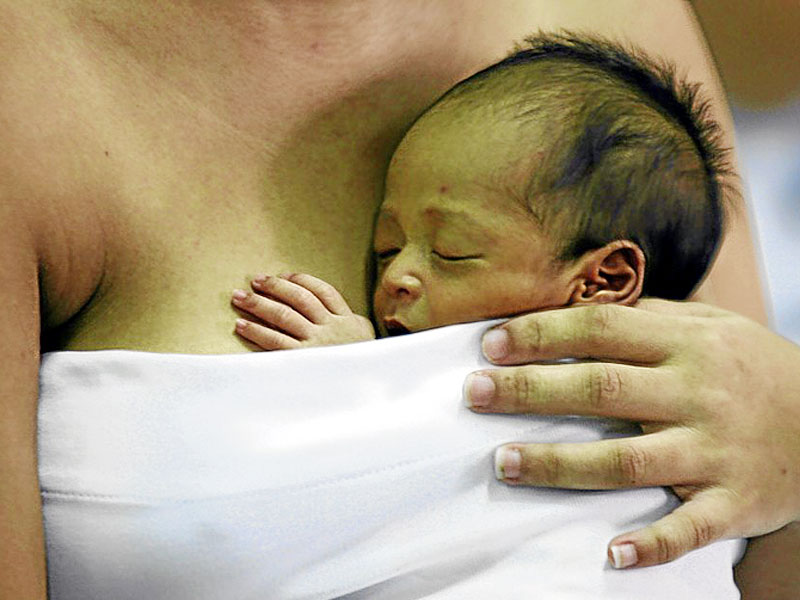
WHO gives Philippines big hug for newborns’ care

By Jocelyn R. Uy
Philippine Daily Inquirer


COLOMBO, Sri Lanka—The Philippines can teach neighboring countries a thing or two on saving newborn babies from dangerous illnesses and keeping them healthy throughout their childhood.
 
 
It was cited at the World Health Organization (WHO) Biregional Workshop on Scaling-up Nutrition for its program dubbed “Unang Yakap” (First Embrace), which has significantly curtailed deaths among Filipino infants.

During the three-day conference held in Colombo, Filipino health experts shared with their counterparts from the Southeast Asian and Western Pacific Region the three-year-old program that not only improved infant nutrition but also addressed high rates of infant mortality.

A social marketing campaign, “Unang Yakap” is a main component of the Essential Newborn Care (ENC) protocol piloted in November 2008 at the Quirino Memorial Medical Center.

The four-step protocol, derived from solid research evidence, requires the following in sequence: the immediate and thorough drying of a newborn, early skin-to-skin contact with the mother, properly timed cord clamping and nonseparation of the baby from the mother for early breast-feeding.

The protocol was actually contained in a voluminous WHO document on essential care of the newborn, but the Philippines was the first to encapsulate it into a “user-friendly” and “time-bound” guideline for health workers, said Dr. Mariella Castillo, technical officer of the WHO representative office in the Philippines for Maternal and Child Health.

The implementation of the guideline, which was developed into a policy in December 2009 by the Department of Health, is expected to bring down the number of infant deaths in the Philippines by at least 50 percent and boost exclusive breast-feeding by 90 percent, Castillo said.

PH contribution
“Unang Yakap” highlights the importance of immediate and exclusive breast-feeding, which tops the list of 23 interventions preventing childhood mortality under the age of five.

“That’s our contribution to global health because the process that we went through was scientifically rigorous,” Castillo told the Inquirer in an interview on the sidelines of the WHO biregional conference.

The “user-friendly” ENC protocol put together by the Philippines is also being considered as a “template” for newborn care, at least for the Western Pacific region, she said.

Dr. Tommaso Cavalli-Sforza, regional adviser in nutrition at the WHO Regional Office for Western Pacific in Manila, said the “Unang Yakap” program being implemented in the Philippines and which could be replicated in neighboring countries also confronted  the problems of infant mortality and malnutrition.

“That’s precisely why I mentioned it as an example of a good program, which the Philippines piloted and scaled up. And now it’s worth telling the story for other countries,” Cavalli-Sforza said in a separate interview.

During the media workshop here prior to the biregional conference, he cited Philippine practices as among the best in combating malnutrition in infants.

Newborn deaths
The Philippines is among 42 nations that account for 90 percent of global deaths of children under five years of age, according to Cavalli-Sforza.

Over 40,000 Filipino newborns die every year, with the majority of them dying in the first two days after birth. Newborn deaths account for 37 percent of the 82,000 Filipino children that die annually.

Sepsis (or blood infection) and pneumonia are usually the main cause of death among Filipino babies, accounting for 26 percent.

On August 11, Castillo, representing the Philippines, was given at least 15 minutes on stage to present its success story in nutrition interventions. The other presenters were the representatives of Vietnam, Thailand, Bhutan, Cambodia and Sri Lanka.

In her presentation, Castillo said the need to implement the ENC protocol in Philippine hospitals became urgent following an outbreak of neonatal sepsis in a public hospital in the capital in 2008.

The outbreak occurred at the Ospital ng Makati, where 34 healthy babies succumbed to blood infection in June 2008.

Two years following the implementation of the protocol at the Ospital ng Makati, where about 4,000 babies are delivered annually, the number of newborn deaths and sepsis have dropped from 6 to 2 percent.

The exclusive-breast-feeding rate among mothers and babies discharged from the hospital was at 89 percent, and those who continued breast-feeding after a month was at 69 percent, Castillo said.

Soap in Cambodia
Now, the ENC protocol has been incorporated in the policies of at least 12 state-run hospitals, and a number of private hospitals have also taken the initiative to implement the guidelines, according to Castillo.

But there is still room for improvement, she said. “The 12 hospitals implementing the guidelines are not enough to see a population effect,” she said, noting that only 44 percent of Filipino babies were being delivered in health facilities.

As for improving the rate of exclusive breast-feeding, which is still at a dismal 34 percent, Castillo said the Philippines could take a leaf from Cambodia, which launched an extensive five-year Communication for Behavioral Impact Strategy on the feeding of infant and young children.

Cambodia has achieved a high rate—73 percent—of exclusive breast-feeding.

One of the components of its strategy included a TV soap opera, “Taste of Life,” which ran twice a week from late 2005 to early 2006. Composed of about 100 episodes, the TV drama revolved around maternal and child health issues, among others.

Cavalli-Sforza said a soap opera with the same theme could also become a hit among Filipinos, many of whom, he observed, had the habit of watching telenovelas.