Showing posts with label Quezon City. Show all posts

Thursday, October 24, 2019

...the PH ranking in Ease of Doing Business

Philippines climbs to 95th spot in World Bank’s ‘Doing Business’ rankings

Ian Nicolas Cigaral
Philippine Star
24 October 2019

MANILA, Philippines — Ease of doing business in the Philippines improved over the past year, with the Southeast Asian country climbing 29 notches in World Bank’s “Doing Business 2020” report released Thursday.
Philippine economy
Out of 190 economies, the Philippines advanced to the 95th spot from 124th place in 2019. The country’s score improved to 62.8 from 60.9 previously.

Compared to its peers in the East Asia Pacific, the Philippines ranked below Singapore (2nd), Hong Kong (3rd), Malaysia (12th), Taiwan (15th), Thailand (21st), China (31st), Brunei (66th), Vietnam (70th), Indonesia (73rd) and Mongolia (81st).

The Washington-based multilateral lender’s annual report looks into the regulations that enhance business activity and those that constrain it.

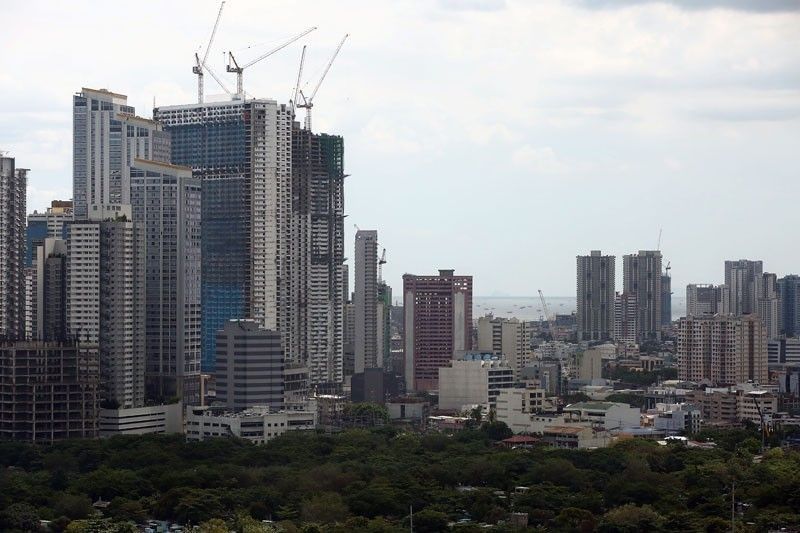
Quezon City was used as a benchmark for the Philippines.
According to World Bank, starting a business in the Philippines became easier following the abolition of the minimum capital requirement for domestic companies.

The country also made dealing with construction permits easier by improving coordination and streamlining the process for obtaining an occupancy certificate.

“The Philippines strengthened minority investor protections by requiring greater disclosure of transactions with interested parties and enhancing director liability for transactions with interested parties,” World Bank added.

Worldwide, 115 economies made it easier to do business, World Bank said, with New Zealand remaining the most business-friendly country in the world.

Somalia was the worst with a score of 20.

Meanwhile, the economies with the most notable improvement in Doing Business 2020 are Saudi Arabia, Jordan, Togo, Bahrain, Tajikistan, Pakistan, Kuwait, China, India and Nigeria.

“The Doing Business 2020 study shows that developing economies are catching up with developed economies in ease of doing business,” World Bank President David Malpass said.

“Still, the gap remains wide,” he added.

Tuesday, September 17, 2013

...the cities of the gods

QC home to world's best looking men: online mag


09/17/2013
 
 
Dingdong Dantes. File photo


MANILA – Quezon City is home to two of the country’s top universities and some of the metro’s biggest malls.

An online travel magazine, however, noted that the city also has the world’s best looking men -- probably a nod to the city's tagline as the "City of the Stars," given that the country's two largest TV networks are based in Quezon City.

Early this month, Traveler’s Digest released the 2013 edition of its “Cities with the World’s Best Looking Men” list, which placed Quezon City at No. 7.

The online magazine singled out hunk actor Dingdong Dantes as it mentioned how the city has “head-turning beach bodies.”

“Their reputed romantic side and gloriously tanned skin doesn’t hurt either. Just check out much-loved Filipino actor Dingdong Dantes,” it said of Dantes, who is listed in Wikipedia as born in Quezon City.

Dantes was included in E! Entertainment television’s 25 sexiest men in the world list in 2008, along with football superstar David Beckham and actor Gilles Marini of France.

Traveler’s Digest declared Havana, Cuba as the No. 1 city in the world with the hottest men, citing their “golden skin, dark eyes and a rich, exotic accent.”

Landing in second place is Madrid in Spain, followed by Istanbul in Turkey, Miami in the United States and San Juan in Puerto Rico.

At sixth place is Freetown in Sierra Leone, while Cannes in France ranked eighth. Seoul in South Korea made it to ninth place, while Dublin in Ireland rounded out the Top 10.

Staff members of Traveler’s Digest said they “literally scoured the globe in search of the world’s best looking men” as they compiled the 2013 list.


Friday, June 21, 2013

...the preferred BPO site

'PH still among preferred sites for BPOs'


06/21/2013
 
 
MANILA -- The Philippines remains among the preferred sites for business process outsourcing (BPO), according to a leading US-based BPO and information technology (IT) company.
 
Shore Solutions Inc., one of the bigger players in the BPO business, said revenues from the BPO industry in the Philippines is expected to hit $16 billion this year, or almost 20 percent higher than the $13.4 billion last year.

It noted that with increasing demand from prospective investors and subscribers, the industry would need at least 1.3 million direct hires by 2016 from 720,000 last year.

“That should require 516,000 additional seats, and some 2.5 million square meters of additional office space,” Darcey Lalonde, Asia chief executive officer of Shore Solutions said in a forum yesterday.

The industry employed over 720,000 in 2012, with another 1.6 million indirectly.

Expansion has already been noted in the key urban centers outside Metro Manila such as Cebu and Davao.

In Metro Manila, the major BPO centers are in Makati, Quezon City, Manila, Taguig and Mandaluyong.

Lalonde said that the next or third wave of BPOs is targeting key cities in Laguna, Batangas and Bacolod.

However, he said government should consider anew opening up to a limited extent or to select sectors, ownership of land to foreign entities.

Sunday, March 3, 2013

...the Robotic Olympiad top awardees


Written by Claudeth Mocon-Ciriaco
Business Mirror
03 March 2013
 
THE Department of Education (DepEd) welcomed with pride two teams that represented the country in the 2012 World Robotics Olympiad (WRO) where they won the gold and silver medals. DepEd officials expressed confidence that the team the country fields in this year’s edition of the Robotics Olympiad will retain the crown.
 
Education Undersecretary for Plans and Programs Yolanda Quijano personally welcomed the winning teams composed of students from the Dr. Yanga Colleges Inc. (DYCI) in Bocaue, Bulacan and the Grace Christian College (GCC) in Quezon City in a simple ceremony at the DepEd Central Office recently. The teams brought with them their innovative robotic inventions that won them the gold and silver awards held in November in Kuala Lumpur, Malaysia.
 
Quijano paid tribute to the students for besting some 405 teams from 30 countries worldwide, citing the expertise of Filipino students in science and technology.
 
“This is something that we should be proud of, especially since we bagged the first and second place in the competition. This is not the first time, though, that our team won the top awards,” Quijano said, adding that “I know that this year, we will also bag the top honors.”
 
Mylene Abiva, national organizer of the Philippine Robotics Olympiad, said the country also won the top award (gold) in 2007 and in 2010 when the country hosted the event.
 
Abiva said the team from DYCI composed of students Claire Receli Renosa, Trisha Carmela Santos and Chelsea Andrea Morales and their coach Romyr Gimeno and director Michael Yanga won the gold medal while the silver medal was awarded to the GCC team composed of students Patricia Ong, Josh Daniel Ong, Calvin Alexander Yu-Ng, their coach, Melanie Tizon and Wareen Ong Pe and supervisor Lucy Sia.
 
The DYCI team presented their winning robotic invention dubbed H.E.R.O (Humanoid for Educational Reinforcement Operation), a robot whose aim is to effectively connect with people through education.
 
The robot clad with recycled materials made from discarded aluminum and peanut-butter bottle caps can mimic facial expressions; play rock, paper and scissors game; and be used as visual aids for students. Moreover, it has a feature called Stratified Learning Evaluation Scheme, where students learn the basics of English, science and mathematics through video lessons aided by puppets.
 
The GCC team presented their I-Learn (Interactive Learning with Exciting and Advanced Robot Navigation) robot which they said offers alternative learning through interactive activities to help students develop their critical thinking and problem-solving skills.
 
Among these activities are Codebreaker which is a teasing activity for students that challenges their logical reasoning and thinking skills; and Hotshots, a lively activity youngsters can use to master counting and recognition of basic colors.
 
In a related development, both Quijano and Abiva said contrary to perception that only private institutions can afford to participate in such competitions, public schools have actively participated in the elimination round for the Philippine Robotics Olympiad.


Sunday, December 2, 2012

...the best PH hospital

St. Luke’s hospital bags int’l accreditation anew


By Niña Calleja
Philippine Daily Inquirer
 
 
MANILA, Philippines—St. Luke’s Medical Center in Quezon City (SLMC-QC) on Friday announced the renewal of its international accreditation with the Joint Commission International (JCI), the world’s most prestigious accrediting body of healthcare organizations.


In a press conference, JCI lead surveyor Dr. Enrico Baldantoni reported that St. Luke’s-Quezon City had passed the international standards assessment for patient care and safety among others, and recently received notification of its accreditation—its fourth— from the JCI central office in Chicago, Illinois.

In 2003, SLMC-QC earned the distinction of being the first hospital in the Philippines and the second in Asia to be awarded JCI accreditation. It now claims to be the first to receive the award for a fourth time.

The JCI survey is conducted every three years to ensure that every hospital organization’s policies, procedures and evaluation methods are up-to-date and compliant with worldwide standards.

The accreditation means the healthcare that the hospital offers is benchmarked with the highest standards of care and safety practiced by renowned hospitals around the world, as set by the JCI.

“Earning accreditation from JCI is another step towards excellence in patient care,” St. Luke’s president and CEO, Dr. Edgardo R. Cortez, said in an e-mailed statement.

A team of three JCI surveyors—a physician, a nurse and an administrator—visited the SLMC-QC from Nov. 19 to 23. The team scrutinized various aspects of the hospital including facility management, infection control, patient safety, documentation of patient records, staff qualifications and disaster preparedness, and compared these to over 1500 international standards in continuous healthcare improvement.

In the global healthcare community, JCI is considered the authority in patient safety and quality improvement with a presence in more than 90 countries to date.

Thursday, November 22, 2012

...the consumer electronic expo hub

Philippines eyed as consumer electronics expo hub


Yahoo! to host TechnoStorm trade event

By Paolo G. Montecillo
Philippine Daily Inquirer


MANILA, Philippines—Internet pioneer Yahoo! is pushing for the Philippines to be one of the region’s centers for consumer electronics technology given the young population’s love for gadgets, from computers and mobile phones to high-end cameras.

Yahoo! Philippines will hold its first consumer electronics exposition, called TechnoStorm, where the company plans to bring under one roof the biggest names in technology such as Nokia, Samsung and Apple to show off their latest products for the local market.

“The dream is to host an event like CES [Consumer Electronics Show],” Yahoo! Philippines country ambassador and sales director Arlene Amarante said, referring to the Las Vegas tech show known as the world’s largest exposition for the latest in consumer electronics.

Amarante said TechnoStorm would be at a much smaller scale, but it was aimed at eventually competing with Computex, an annual information technology expo hosted by Taiwan for more than a decade now.

“To get Smart, Globe, PLDT and Wi-Tribe in the same event is hard. It’s also hard to have Nokia, Samsung and other companies in the same arena. But they look at it as an industry push,” Amarante said.

“If the industry is able to do this with the help of all the parts, as a whole, it would be a lot better. Yahoo is there to be a core platform to help them out,” she said.

The TechnoStorm expo, to be held at the TriNoma mall in Quezon City from November 26 to December 2, comes just in time for the holiday season, when millions of Filipinos are expected to shop for gifts for friends and relatives.

Complementing the physical event is the launch of an interactive online site featuring cutting-edge products and services from leading global and local brands.

Aside from featuring latest gadgets, the site ph.news.yahoo.com/technostorm will also have latest news and updates on tech companies, as well as “expert” columns for consumer questions.

“Technostorm is a celebration of all things tech. Yahoo’s digital capabilities provide a unique platform for Filipinos to explore, discover and understand the world of technology, and bring them face to face with gadgets and devices that create connectivity,” Amarante said

Friday, October 26, 2012

...the Pinoys for CA assembly post

3 Pinoys running for California Assembly

10/26/2012
 
 
CALIFORNIA – US Census data show that there are about 1.3 million Filipinos living in the Golden state. But even after living in California for 400 years, Filipinos have never held any position in the state Senate or Assembly.
 
That could change this year.
 
Three Philippine-born Filipinos are vying for the California's highest positions.
 
Rob Bonta and Dr. Jennifer Ong of Alameda, and Chris Mateo of Lathrop are all running to become California's State Representatives.

Forty-one-year-old Bonta sits as the Vice Mayor of Alameda and the Deputy City Attorney for San Francisco.
 
He was born in Quezon City and moved to the US with his family when he was less than a year old.
 
Bonta's parents both worked with the United Farm Workers and were active in the civil rights movement.
 
Bonta describes himself as an advocate for public schools, public safety, job creation and equal rights for gays and lesbians.
 
“In California, we have 120 legislators, representing different districts with different interests. We need to work together to make things work for the state,” he said.


Forty-two-year-old Ong was also born in Quezon City and moved to California with her family at age 11.

Her mother sold hotdogs at the coliseum and her father worked at the grocery store.

Ong said her personal story shapes her policy interests. She wants every family in California to have good union jobs that provide health insurance. She wants to fight for public education.

An optometrist by trade, Ong campaigns against childhood obesity and Hepatitis B.

“To have the skills in state legislation --- why not run? It's the least I can do. I feel very obligated to California for all the opportunities for me and my family,” she said.

Meanwhile, 60-year-old Chris Mateo was born and raised in Baguio City to middle-class working parents.

He joined the US Navy in the 70s and was stationed in California.

For years, he worked for the San Joaquin County Public Works and currently serves as the Vice Mayor of Lathrop.

He said he wants to represent the poor, veterans, minorities, women and children by providing them access to education and career opportunities.

“I would like to instill in the next generation that Filipino Americans need representation and participation in government in order for our ethnicity to thrive,” he said.

For Bonta, Ong and Mateo, stepping up is not confined to running for public office. They all seek to make a difference in a state that has given so much for Filipinos.

Thursday, July 5, 2012

...the new Manila's CBD

ALI Investing P65B In QC CBD

10-Year Development

By JAMES A. LOYOLA
July 5, 2012
Manila Bulletin

MANILA, Philippines – Ayala Land Inc. (ALI) is investing P65 billion over the next 10 years for the development of the Metro Manila’s next central business district (CBD) in Quezon City (QC) called Vertis North beside its Trinoma mall.


In a press briefing, ALI president Antonino Aquino said half of the budget will be for office buildings while the other half is for retail spaces, residential condominiums and hotels.

He added that the integrated urban development masterplan calls for the construction of 45 towers on a 29-hectare lot owned by the National Housing Authority (NHA).

“Quezon City is fast becoming a center of gravity for economic developments as it works to be at par with international business standards,” said Aquino.


ALI will invest an initial P12 billion for the launch of Phase 1 of Vertis North which will mark the
 development of its office, retail, and hotel components within a 7-hectare land area, which is expected to be completed in the next three to four years.

This initial phase will put up a total gross floor area of 220,000 square meters, including business process outsourcing (BPO) establishments, hotel, and retail shops.

It will also generate close to 200,000 jobs during its entire development phase, 35,000 of which will be filled during the development stage of Phase 1.

Meanwhile, the national government, through NHA, also eyes to gain P11 billion worth of housing investments through its partnership with Ayala Land at Vertis North.

This will further boost the government’s efforts to reduce the national housing backlog, as it stands to benefit close to 50,000 families, said NHA general manager Chito Cruz.

Vertis North is strategically located at the northern tip of Quezon City as it is the convergence point of commuter rail lines and three major road arteries, particularly the Epifanio de los Santos Avenue (EDSA), Mindanao Avenue, and North Avenue.

It also serves as the gateway to the North given its connection to the North Luzon Expressway (NLEx). Ayala Land intends to capitalize on this huge upside by bringing an intermodal transport terminal facility at Vertis North.

Saturday, April 28, 2012

...the new (planned) Metro face


MMDA eyes radical changes in the metro


To develop Metro Manila, it may be necessary for the city to move out.

Metro Manila Development Authority chairman Francis Tolentino said Friday that to make a better Metro Manila, there must be radical changes, which might include relocating the seaport to Batangas.

The old seaport space could then house a new Ninoy Aquino International Airport.

Speaking before the Philippine Tour Operators Association, Tolentino said Singapore, Hong Kong, and Japan have airports by the sea. "It's only here where the airport is inside a subdivision," he said.

In a related development, Transportation and Communications Secretary Manuel Roxas II said over DZMM on Friday that air operations may also have to be moved to Clark in Angeles because the runways in NAIA are congested.

Clearing the seaport will also remove container vans and large trucks in the port and San Marcelino areas, Tolentino said.

However, to execute such a plan and to extend planned Roxas Boulevard all the way to Navotas, require a large-scale relocation of residents, he said.

Metro Manila will also have to expand to parts of Rizal, Bulacan, and Laguna, he said.

A six-lane Skybridge from Quezon City to Makati is also being eyed. Tolentino said the Skybridge is expected to reduce 40 percent of traffic from Epifanio Delos Santos Avenue.

A planned extension of train lines to Cavite and Antipolo is also expected to decongest Metro Manila, which has around 14 million residents.

He said these proposals are part of Metro Manila Greenprint 2030, a long-term development plan that seeks to raise the standard of living in the metropolis.

Greenprint is currently being formulated and a final development plan is expected by June next year.

"The model here is to relocate little by little our government center," he said.

He said the same was done in Malaysia, where government offices were moved to Putrajaya from Kuala Lumpur in 1999. 

Brazil also founded Brasilia in the 1960s to replace Rio De Janeiro as the capital.

"We can retain the current spaces for heritage, residential, and mixed-use purposes," he said, but Manila has to move away from the center.

Sunday, February 19, 2012

...the emerging Healthcare Force

PH As Emerging Healthcare Force

Number Don't Lie
 
 
By ANDREW JAMES MASIGAN
February 20, 2012
Manila Bulletin
 
 
MANILA, Philippines — Exciting things are afoot in the medical industry. In the heart of Quezon City will evolve a medical belt like no other in Asia. An integrated chain of medical institutions, each specializing in a specific field of discipline. From general medicine to cardiology, from Nephrology, Pediatrics and Pulmonology.

The vision that started some 30 years ago will now come to fruition, thanks to the headstrong determination of DOH Secretary Enrique Ona and his chief coordinating officer, Dr. Nestor F. Venida. The initial phase of the plan is to integrate the Philippine Heart Center, National Kidney Institute, Lung Center of the Philippines, Philippine Children’s Hospital and the East Avenue Medical Center. These institutions put together make the Philippines a regional force to be reckoned with in as far as depth and extent of medical services are concerned. No other country in the region offers medical facilities of this scale in one connected belt.

Subsequently, the plan is to fold in the Philippine Hematology Center, the National Brain and Nerve Institute (the first medical institution to be built under the PPP scheme) and the National Orthopedic Hospital. The latter is to be relocated from its current site to Quezon City’s medical belt as well. All these will make the Philippines even more competitive on a global scale.

When completed, the medical belt is said to be branded “The Philippine Center for Specialized Healthcare.” The fact that the DOH even talks about branding alludes to its direction to “sell” it as a hub for medical tourism.

This is a welcome development given that the Philippines is in desperate need of alternative sources of foreign exchange. At present, the country is dangerously dependent on the electronics and BPO industry (as sources revenues) and this leaves us defenseless against the volatilities in these sectors. Having the medical industry develop into a new source of revenue will do us good. We are, after all, known worldwide as highly skilled healthcare workers with excellent bedside manners.

Getting Integrated

The above-mentioned medical institutions were built during the Marcos era and operate under separate sets of management and operating systems. As government institutions, their respective by-laws mandate them to allocate a substantial chunk of their business to charity cases. As a result, none of them are financially self-sufficient today. Each still relies on government subsidies to cover anywhere from 20 to 40 percent of their operating expenses. Each varies in the degree of financial health, with the Lung Center in the best position, thanks to the prudent fiscal management of its executive director, Dr. Jose Luis Danguilan. Still, none of them can afford to finance equipment upgrades or facilities modernization on their own.

Secretary Ona’s plan, originally based on Dr. Venida’s thesis, calls for the eradication of expense duplicities. Duplicities can come in the form of common use equipment like x-ray machines, lab equipment, ambulances, etc., as well as backroom functions such as accounting, human resources, engineering and security. All these translate to tremendous savings that can otherwise be channeled to new equipment, new technologies, and above all, research.

As far as management is concerned, the integration envisions a single Board of Trustees to govern the entire medical belt, as opposed to the current framework where each unit operates separately. Not only will this generate savings in management fees, it also fosters more coherence, better coordination and better administration of the country’s medical program.

Sources tell us that the integration plan enjoys the full support of Malacañang and that it is being pushed for full execution before President Aquino ends his term in 2016. But as expected, certain parties are in opposition. We were told that some members of top management from affected hospitals are in strong resistance, as are many rank and file employees. Dr. Ona and his team still face a tough road ahead in gaining widespread buy-in of the plan.

While the good Secretary does his best not to displace anyone, the reality is full integration will always have its casualties. Those redundant, irrelevant and less competent will have to give up their turf in the name of greater efficiency and progress. I can only hope that the personalities involved will take the high road and support whatever is best for the country. This, after all, is the true essence of public service.

The Benefits Of Integration

The biggest beneficiary of the integration plan is us, the Filipino people. At long last, we will be given access to the best possible medical care without having to leave our shores.

As far as the poorest of the poor are concerned, they too will have access to world-class medical care, more so after integration than with the present setup. Despite being mandated to service the marginalized sector, less than 20 percent of patients in the QC medical belt are actually charity cases. This is because government subsidies only cover a fraction of their operating expense and hospitals still need to generate their own revenues to keep afloat. The integration plan aims to put our medical institutions in the pink of health (by slashing overhead expenses), and with this comes the ability to absorb more charity cases.

Cheaper medical care is yet another benefit. Economies of scale in the purchase of consumables like medical supplies and drugs are seen to drive prices down. Savings from this will be passed on to the consumer via cheaper toll charges. In addition, a centralized medical database will greatly reduce HMO and Philhealth fraud, a problem that is quite rampant today.

Finally, the financial benefits that medical tourism can bring are enormous. When fully realized, the entire medical belt will have the capacity to treat practically all kinds of maladies, save for mental illness, reconstructive and cosmetic surgery. The spectrum of care is far and wide.

The Original Vision

Imelda had a vision 30 years ago, but unfortunately her plan was not structured in a manner that made economic sense. Sec. Ona and Dr. Venida have a chance to do it over…a chance to do it right. Executed well, the Philippines can very well be the medical capital of Asia and the center of research as Imelda originally planned.

Dr. Venida dreams of a Philippines on the cutting edge of nano-technology and stem cell treatment. These fields, he asserts, are the wave of the future and nothing would make him happier than to see the Philippines in the center of it all.

With the integration now on its way, the Filipino has a chance to be famed not only for his excellent domestic care…but also as a provider of state-of-the-art health services.

Sunday, February 12, 2012

...the splendor of Palawan

'Bourne' actress awed by Palawan


“I can live in Palawan forever!”

These were the words of Hollywood actress Rachel Weisz during the shooting of “The Bourne Legacy” in El Nido, Palawan recently, the movie’s local producer said yesterday.


Jun Juban, of the Philippine Film Studios Inc., told reporters during the weekly news forum at Annabel’s restaurant in Quezon City that Weisz was amazed at Palawan’s beauty.

Juban said the El Nido scene will show the natural beauty of Palawan to millions of viewers across the globe when the movie opens in theaters sometime in August.

“The contingent, including the cast who visited the island, has been very expressive with their awe and amazement,” he said.

Juban said because of the captivating beauty of the islands in Palawan, the end part of the action-packed movie was shot in these places.

Aerial night shots of Manila and Makati will also be seen in the movie, according to Juban.

He said tourism was definitely boosted because of the movie.

“There are close to 200 staff, crew and actors involved in this film. This means 10,000 hotel room nights spread in two major hotels in Manila. This definitely exceeded initial projections,” he said.

The local producer thanked the government for its support, particularly Executive Secretary Paquito Ochoa Jr., the Metropolitan Manila Development Authority, the departments of the Interior and Local Government, Finance and Tourism and local officials of the cities of Manila, Pasay, Navotas, Quezon and Marikina where scenes of the movie were shot.

Juban said the producers of the movie are planning to have the premier showing in Manila.

“We have been part of the Filipino film industry for three decades and it’s only now that a top action franchise movie is featuring Manila as Manila. Once we see The Bourne Legacy on the wide screen worldwide, our fellow kababayans will surely be very proud,” Juban said. (Philstar News Service, www.philstar.com)

Sunday, January 1, 2012

...the young woodpushers in Singapore

Pinoy chessers win gold in Singapore tourney

 01/01/2012


MANILA, Philippines - Young Filipino woodpushers bagged 9 medals at the recent Singapore International Chess Festival at the Jurong East Sports Complex in Singapore.\


Michelle Yaon of Calamba City, Laguna, split the point with Sushmitha G of India to finish with 6.5 points in 8 games and complete a wire-to-wire win in the Girls under-17 category for the coveted gold medal.


"Alay ko po sa bayan itong gintong medalya," Yaon said after her victory.


Dennis Gutierrez III of San Fabian, Pangasinan scored a crucial victory over Jiddan Firman of Indonesia to top the Open U-8 division with 8 points.


Fide Master Paulo Bersamina of Pasay City capped the country's domination in the Open U-14 with a victory against Ooi Zhi Yang of Singapore to finish with 8 points and run away with the title with a full-point margin over compatriot Jerad Docena of Bohol.


Docena settled for silver in the Open U-14.


Meanwhile, Vince Angelo Medina, a student of Far Eastern University, halved the point with Jodi Setyaki Azarya of Indonesia to finish with 7.0 points and capture the Open U-17 title.


Marc Christian Nazario of Quezon City won the bronze medal in the Open U-17; Julius Gonzales of Marikina City won the bronze medal in the Open U-11; Fiona Geeweneth Guirhem of Iloilo won the bronze in the Girls U-11 and Mae Ann Joy Baclayon of Misamis Oriental won the bronze in the Girls U-8 category.


"Magandang senyales ito para sa mga young chess players natin. They showed na kaya nilang makipagsabayan and manalo sa international competitions," said National Chess Federation of the Philippines chairman and president Prospero Pichay Jr.


Meanwhile, Grand Master Richard Bitoon finished tied for second in the 2nd ASEAN Men Campomanes Cup along with GM Susanto Megaranto of Indonesia and International Master Nguyen Van Huy of Vietnam.


All 3 chessers finished with 6 points, just behind the champion, GM Cao Sang of Vietnam who ended up with 6.5 points.


There were disappointments elsewhere.


Woman Fide Master Marie Antoinette San Diego failed to live up to her top billing in the Girls U-14 and finished with only 5 points in the 9-round event, 2 points behind the winner, WFM Najihan Hisham Nur of Singapore.


San Diego was half a point behind compatriot Shania Mae Mendoza. - by Marlon Bernardino

Thursday, December 15, 2011

...the Cartoon pool of talents

 
By: Oliver M. Pulumbarit
Philippine Daily Inquirer


SILAS Hickey: “Has everyone been to art schools here?”


“There are lots of Filipino kids who are incredible at drawing,” enthused Silas Hickey, Hong Kong-based Cartoon Network Asia Pacific creative director.

Hickey visited the country in March to scout for animation industry talents, and recently returned to promote various Cartoon Network projects such as “Johnny Bravo Goes to Bollywood” and “Ben 10: Destroy All Aliens.”

He was a guest speaker at Animahenasyon 2011, the annual Filipino animation festival held in November. Hickey also shared updates on his talent search at a press conference in Quezon City.

“People here can really draw,” Hickey said. “It’s interesting. Has everyone been to art schools or is it just like anyone can draw? In terms of animation, Hanna-Barbera used to be here; they had a training program. But it’s not just those people. There are studios on the outskirts of Manila, little houses and stuff… it’s really incredible.”

Discoveries

His first visit yielded other “really exciting” discoveries. “There are some incredible established studios in the Philippines,” Hickey said. “[There are many] very skilled animators here. We are continuing negotiations with some of these larger studios, to perhaps work on some of our Cartoon Network properties. We need to tap into that. That’s what we’re trying to do since I came here in March. We’ve had some very successful meetings, met some really wonderful people in the industry. We have plans to work with these more established studios as well as individuals.”

Snaptoons

Hickey also talked about the Snaptoons (Short New Asia Pacific Cartoons) program, an ongoing regional project aimed at discovering new, original content. “How that works is there’ll be some sort of solicitation that goes out mainly to professionals,” Hickey said. “We’ll approach studios, animation professionals, directors and writers, and we’ll ask them to submit ideas. It’s not free; we pay them to do that. We’ll make those into ‘shorts.’ If it’s successfully received, we’ll consider making that into a telemovie or a series.”

“There’ll be a solicitation to sort a Philippine Snaptoons,” he added. “There’s something like that on the horizon. Actually, what we’re considering is to have a regional Snaptoons; we can also [include] Korea or Japan.”

Hickey observed that Filipinos have unique advantages. “The thing that’s always encouraging about the Philippines is we do get lots and lots of material [from Filipinos],” he said. “There really is a sort of understanding of western culture.”

Many successful original properties debuted in the shorts format, according to Hickey. “Johnny Bravo started as a short. It’s a great concept and there’s a lot less risk if you have that concept, rather than just launching a multimillion-dollar series.”

Hickey has advice on content-creation, specifically the parameters of irreverence: “It’s case by case; you can’t do certain things in India that’s totally fine in Australia. You have to be very sensitive, very careful that you don’t make any mistakes.”

He added that kids primarily want entertainment, so certain things must be avoided. “We don’t want to make content that comes off as sounding preachy. Kids don’t like it,” he said. “Contemporize it in some way. Really write a story and characters with export potential in mind!”

Tuesday, November 15, 2011

...the Rising Star

Pinoy gets big break in Miss World Ball

11/15/2011

LONDON – A Filipino boy drew a lot of admiration for his talent in singing during the charity ball of the recently concluded Miss World pageant.


Clark Gamul was invited to the United Kingdom for a charity performance in front of beauty queens and VIPs at the Miss World.

Everyone at the charity ball admired Gamul’s singing prowess when he sang “We Are The World” and “Paraiso”.

After the performance, Gamul allegedly received several invitations in London, South Korea, New Zealand and South Africa for him to sing.

Gamul’s singing talent is slowly propelling him closer to becoming a rising star. But this Filipino boy is not going anywhere without his family.

The Gamuls came from a simple but poor life in Cubao, Quezon City. But the family never thought that their son’s voice would take him around the word.

“Five years old po na-discover po ako ng papa ko na may boses po ako kaya tini-train niya po ako, tapos yun na nga po, kumakanta na po ako, minsan sa palengke po,” the boy said.

From the market, Gamul’s talent has been seen in Malaysia and Thailand. His talent was also the key that brought his family out of the informal settlers’ community.

His father, Ermelito Gamul, who once worked as a tricycle driver, is so proud of his son.

“Sobrang tuwa ko po sa nangyari kasi hindi po namin inasahan na darating po sa ganitong punto," said the boy’s father.

Gamul is also the Child Ambassador of the Hope for Children, the fundraising initiative of his sponsor.

“Nag-volunteer kami na tulungan siya para mabago ang kanilang buhay at ma-develop ang kanyang gift of singing," said Gamul’s sponsor, Pastor Art Medina.

He promised to further hone his talent to give joy to many people through his music. Report from Patrick Camara Ropeta, ABS-CBN Europe News Bureau


Monday, July 11, 2011

...the Nokia technohub

RP chosen Nokia's NetworkLabs hub


New R&D center is launched
By EMMIE V. ABADILLA
July 12, 2011


MANILA, Philippines — Nokia Siemens Networks (NSN), one of the world’s largest telecommunications, hardware, software and services firms, chose the Philippines as its new hub and Monday launched its research and development (R&D) center at the University of the Philippines - Ayala Land Technohub, Quezon City via subsidiary ETSI Technologies, Inc.


President Benigno Aquino III led Monday’s launching ceremonies.


NSN, which employs over 65,000 people in the more than 150 countries it operates in, is confident about the country's resource of skilled engineering students and graduates, stressed Paul Tyler, NSN Head of Asia Pacific Region. Hence, the company decided to locate its NetworkLabs in Asia in the Philippines.


The move will also strengthen the local IT and telecommunications industry, creating jobs domestically and heightening the country’s global presence while NSN develops the future of communications technology and connect the next billion people.


NetworkLabs is directly involved in research work and software development for 3G and 4G radio communication networks for NSN.


"The establishment of NetworkLabs will further enhance the presence of NSN in the Philippines and heighten the company's thrust to solve the 4G challenge," noted Ashish Chowdhary, head of Customer Operations East .


"NSN aims to provide the opportunity for the Filipino engineers to showcase their skills and knowledge on a global scale without having to leave their families yet benefit from the trainings, work exposure and globally scaled challenges NetworkLabs has to offer," Tyler added.


NetworkLabs currently employs close to 300 IT specialists and management staff and is hiring at the rate of 100 to 200 high level software developers quarterly. As the first of its kind R & D center in Asia, it is internationally recognized in telecommunications and has been supporting all R &D teams around the world.


With its Philippine Economic Zone Authority (PEZA) accreditation and its potential to become the 4G/LTE Telecommunications Radio Center-of-Excellence in the region, NetworkLabs is expecting to promote and strengthen the Philippine IT sector by taking the lead and making a significant investment in the country.


"By spearheading this effort, NetworksLabs will encourage other companies to bring their R & D more to the Philippines. The company will be the pioneer in a Silicon-Valley like environment where IT incubation start-up companies provide new and innovative software solutions. This will help strengthen the Philippine IT and telecommunications industry," according to Cesar Jacinto Castro, NSN Philippines Country Director.

Tuesday, July 5, 2011

...the gymnast hopeful

Calif. teen is PH gymnastics bet in SEA Games

07/05/2011

 
CALIFORNIA – Maria Victoria Recinto stretched and warmed up in a dark corner of the Marriot Wardman Hotel ballroom, contorting her seemingly frail frame until it looks as though she may break her bones.

This is the amount of discipline and devotion that Recinto puts into her chosen sport.

Recinto, 17, will represent the Philippines in the Southeast Asian Games in Jakarta, Indonesia this November. She was born in Quezon City but grew up in Palo Alto, California.

Recinto specializes in rhythmic gymnastics, perhaps one of the most exciting and exacting branches of the sport. It calls for individuals or teams to manipulate on or two pieces of apparatus such as balls, hoops, ropes or ribbons, and combines elements of ballet, gymnastics, dance and apparatus manipulation.

She is currently under the tutelage of US National Team coach Nataliya Lisogor, the former Ukrainian national champion.

Recinto reportedly trains 25-30 hours per week, and increases her training to 40 hours per week near competitions.

“I’m always at the gym practicing,” Recinto said.

The reigning Philippine national and California State champion, Recinto reportedly competed for the first time at age 4 in Singapore. When her father was reassigned to California in 2002, Recinto, then 8 years old, shifted from artistic to rhythmic gymnastics.

Despite the rigors of keeping competitive on the mat, Recinto has managed to maintain her grades at the Gunn High School in Palo Alto, where she is an incoming senior. She dreams of eventually joining the Ivy Leagues.

Filipino roots

The teen is proud of her Filipino roots. "It is who I am as a person. Both my parents are Filipino and I was raised the Filipino way," she said.

Together with a school chum, Erika Cagampan, Recinto has raised funds to buy school supplies for 300 Aeta school children in Zambales.

They are raising their goal this year, saying that they want to raise enough money for a feeding program.

Sunday, July 3, 2011

...the All-Asian actor

Hollywood actor Reggie Lee proud to be Pinoy

 07/03/2011
Lee has played seemingly every Asian role in Hollywood: Korean, Chinese, and even Burmese in his recent guest star part in the new hit show "White Collar.”
But he has never had the chance to play a Filipino until "Here Comes the Boom" came along.

LOS ANGELES - Hollywood's Asian everyman is proudly Pinoy. For the past 15 years, Philippine-born actor Reggie Lee is the go-to character actor for many Asian roles in Hollywood movies and TV shows.

When he started in Hollywood 15 years ago, Lee was happy to get small roles every once in a while.
These days, he's working non-stop.

In the fall, he will be appearing as one the stars of NBC’s highly anticipated supernatural TV show "Grimm."

"One of my friends texted me the other day and said, 'You know, if you go on IMDB, you have more credits than Tom Cruise.' Yes, but Tom Cruise's movies are huge," said Lee.

Lee appeared with Cruise in one of his hits, "Tropic Thunder".

The Fil-Am actor was also in not just one but two "Pirates of the Caribbean" movies.

He was also good in his multiple-episode villain role in "Prison Break" that to this day, fans of the show still come up to him to tell him what they think of his evil character.

"I've been fortunate to be able to play a whole variety of roles. I've even played roles that my name... there's no Asian to be found in it. For 'Drag Me to Hell' I was Stu Rubin," he said.

Lee has played seemingly every Asian role in Hollywood: Korean, Chinese, and even Burmese in his recent guest star part in the new hit show "White Collar.”

But he has never had the chance to play a Filipino until "Here Comes the Boom" came along.

The movie, set to come out in 2012, stars Kevin James and Salma Hayek, and in it he plays the dad of international singing sensation Charice.

"She's unbelievably lovely. She's a tough girl. I always think of her as still being young. 'Po' ng 'po'. I told her, 'You don't have to say that to me. I feel really old if you keep doing that.' But she said it's just how she grew up," he related.

From Quezon City, Lee's family immigrated to the United States when he was 6 years old.

But until now, he still speaks Tagalog. He said he misses the Philippines for one thing in particular.

"'Yong mga flash floods. Ha ha ha! Kasi when it would flood, I remember being in the front yard and I would sit there and I would fantasize that it was the ocean and I was swimming in the ocean and I was a little kid and I would stay out there. It was so much fun," said Lee.

And even if he stars in Hollywood projects, he makes time for his favorite Pinoy shows.

"I love 'TV Patrol'. I have everything. I have TFC. [I’m very updated]. I know that Regine (Velasquez) is pregnant," he boasted.

At first his parents were against his choice of career. They wanted him to be a physician like his dad.
But in time, Lee convinced them of his passion for acting.

"Certainly, with the blessing that I have in terms of things that I've been able to do here and accomplish and be happy doing and make a stable [life] doing, they're proud. I'm proud of them for coming on board and taking on this journey with me," Lee said.

Lee said he has only one secret to his success.

“One word -- enjoyment. The day that I stop enjoying what I'm doing, I'm gonna do something else that I enjoy. Life is so short. It really is," he ended

Wednesday, June 29, 2011

...the property boom

Philippine property boom seen to continue


By: Abigail L. Ho
Philippine Daily Inquirer


The local real property sector is expected to maintain its growth trajectory in the coming years, driven by huge demand for traditional office and business process outsourcing space as well as retail establishments.

Rick Santos, chairman and chief executive of real estate advisory firm CB Richard Ellis Philippines, said in a briefing Wednesday that the growth that the Philippines was seeing could not be considered a bubble as there was a lot of real demand and the sector’s fundamentals were very strong.


This up-cycle, he said, could be seen across the Asia-Pacific and not just the Philippines. The country, however, had a huge edge in terms of low lease rates as well as the presence of a strong BPO sector.

“In Hong Kong, we’re seeing record values in real estate. We’re seeing the same thing in China and Singapore. But the Philippines is more cost-effective. There’s a huge demand for office space here. Also, because of the [United States] down-cycle, the Philippines is better positioned to get more BPO business,” Santos explained.

“The local office sector has the best fundamentals, driven by BPO growth. We see office space take-up reaching more than 300,000 square meters this year. This is a huge metric for the Philippines. The country has among the lowest rental rates, the highest yields and the biggest demand. We haven’t seen this kind of demand since the time of President Ramos, pre-financial crisis,” Santos added.

Santos said growth in office space take-up, particularly for BPO operations, was expected to extend beyond Metro Manila. Even within the metropolis, there was a lot of demand for space outside the traditional locations, or the Makati and Ortigas central business districts.

CBRE vice chairman for global corporate services Joey Radovan said that even with rising lease costs, vacancy rates in most locations have plunged to low single-digit levels.

“We’re seeing sustained office demand for both BPO and traditional office space. We’re back to 2007 levels, when we saw the height of the office space take-up,” Radovan said.

In areas such as the Makati and Ortigas CBDs, where monthly rentals rates average P808 and P554.36 per square meter, respectively, Radovan said vacancy rates were down to 4.64 percent and 2.96 percent as of the second quarter, with no new developments in sight.

Quezon City and the Fort Bonifacio area in Taguig City have a huge potential to fill the supply-demand gap, he said.

In Quezon City, while the vacancy rate has gone down to just 2.79 percent at the end of the first half, an additional 105,241 square meters in new space will be completed next year.

In Fort Bonifacio, on the other hand, 198,641 square meters of leasable office space is due for completion within the year, with a number of new developments expected to be finished next year and in 2013.

“On a macroeconomic point of view, this is not a bubble. We’re seeing the start of the up-cycle. There’s real demand. There’s also a lot of potential in the retail and gaming sector,” Santos said.

Sunday, June 19, 2011

...the carbon key-player

‘PH to become key player in carbon-credit trade’

06/19/2011

MANILA, Philippines - The Philippines will be a key player in the growing carbon-credit market because its rains, topography and its geothermal resources are suited for producing renewable energy, an Australian carbon services company said.

The carbon credit market was born out of the European Union’s limits on carbon emissions. Any company that exceeds the limits has to buy credits from renewable energy companies and companies that reduce carbon emissions, such as landfills designed for that.

These companies earn these credits when they are registered under the United Nations Framework for Climate Change (UNFCC). While limits have not yet been set, some Japanese companies already buy carbon credits voluntarily.

More than 3,000 projects are registered, 32 of which are in the Philippines. The largest is the Ambuklao, Benguet hydro plant controlled by Aboitiz Power at 160,000 metric tons of carbon dioxide per year.

First Farmers Holdings Corp.’s bagasse cogeneration plant (120,000) in Negros Oriental and the biogas emission reduction project at Quezon City’s waste disposal facility (116,000) are next. The windpower plant at Bangui Ilocos Norte has 57,000, on the other hand.


Bangui Windmills, Ilocos Norte
(See UNFCC-registered projects)

“The key resource is rainfall,” Andrew Jauncey, financial controller of Perenia Carbon Pty, said in an interview in Sydney. “You need an appropriate amount of rain to be able to capture and harness and turn into hydroelectric generation capacity. The Philippines is excellently positioned on that front.”

“The topography of the Philippines: it’s not flat, which is a problem we often suffer from in Australia: we don’t have the topography to support a lot of hydro. And on the geothermal front, there’s enough capacity within the country because of where it’s situated geographically to support capturing that heat from the earth to generate electricity.”

About 30 pct of Philippine electricity comes from hydro and geothermal sources, according to Department of Energy. Another 30 pct comes from coal, about 18 pct from oil and 20 pct from natural gas.

(See DOE Power Statistics)

Perenia, which helps companies get registered, said it recently got its first Philippine contract for Energy Development Corp.’s 150 megawatt Bacon-Manito hydro power plant in Albay and Sorsogon.
EDC bought the mothballed plant from the government last year and plans to revive it. First Gen officials said Perenia is assessing the project.

Perenia is also in talks for two more Philippine projects, one in hydro and one in solar. Jauncey said declined to divulge more details.

“The Philippines will become a major player in this market,” Jauncey said. “We haven’t seen a lot of investment into the Philippines on the back of carbon but we’re going to see that in couple of years with the government looking to incentivize the people who build these projects. Once projects are built, we can play our part in getting these projects registered so that project owners and the employees and everyone can benefit from the carbon flow to the Philippines.”

Friday, June 17, 2011

...the BPO expansion

TeleTech invests $15M to expand Philippine operations


By: Abigail L. Ho
Philippine Daily Inquirer


PHILIPPINE EXPANSION. Teletech Holdings is investing in two more sites in Metro Manila and a Career Hub that will serve as recruitment and training center.


Business process outsourcing firm TeleTech Holdings Inc. has invested around $15 million to put up two new sites in Mandaluyong City and Quezon City, as well as a Career Hub that will serve as a stand-alone recruitment and training center.

In a briefing on Thursday, TeleTech executive director for corporate real estate Dexter Cuizon said that the investment for each site amounted to around $4 million, excluding the cost of IT equipment.

The Career Hub will entail an investment of another $1 million, also just for the site infrastructure.

All in all, with the cost of IT equipment thrown in, the company’s overall investment for its expansion this year will reach around $15 million.

TeleTech recently opened a site in Mandaluyong City, its 13th in the country. By the end of the year, TeleTech vice president for human capital Tim Hinds said this 900-seat facility should employ more than 1,200 individuals.

The decision to locate to Mandaluyong City was part of the company’s overall strategy of bringing jobs to where the people are, he said.

While not at the heart of either the Makati or Ortigas Central Business Districts, this site was right in the middle of these two bustling areas and was less saturated.

TeleTech would also be opening its 14th facility in the country by September, he related. With more than 800 seats, the new site located within the University of the Philippines-Ayala Land TechnoHub should provide around the same number of jobs as the new Mandaluyong site.

“We’re extremely bullish on the market. We’re growing our employee base and expanding our footprint,” he said. “We’ll continue to invest heavily in our operations here.”

All of TeleTech’s existing sites are operating at 85-90 percent capacity, prompting the need to open more facilities, he said.

Apart from the two new sites, he said TeleTech was actively studying other locations to house the additional facilities that it planned to put up in the coming months.

The new sites could still be in Metro Manila, he said, but areas in other parts of Luzon, as well as Cebu and other provinces were also being explored.

Mall-based locations were also still being considered, but only if there were available spaces that were at least 2,000 square meters in size.

The company’s decision to put up a Career Hub to serve as a recruitment office and a training center away from the operating floor was also part of its expansion strategies.

Hinds cited the first Career Hub in Makati as a “good investment, with tremendous (return on investment)” for the company, as this gave TeleTech a presence within the Makati CBD even without having an actual operating site there.