Showing posts with label Profession. Show all posts

Friday, November 8, 2019

...the UAE Architect of the Year nominee

Filipina nominated "Architect of the Year" in UAE

Manila Bulletin
08 November 2019

Filipina Christine Espinosa-Erlanda, a Dubai-based architect, was nominated for the “Architect of the Year” award in the 12th annual Middle East Architect Award.

Architect Christine Espinosa-Erlanda (Photo via MPIO / MANILA BULLETIN)

Erlanda was also nominated for the Big 5 Women in Construction Award.

In an interview with the Kabayan Weekly, a Filipino newspaper based in the United Arab Emirates (UAE), Erlanda shared how she was able to achieve her dreams.

“I am fortunate that my humble beginnings in Tondo, once I was a little girl sketching my dreams on the wall, I have culminated my creative instincts, have met mentors along my way, flew from Manila to Dubai and now I am part of building the future of the Middle East, designing and working on noteworthy award-winning projects, master plans, heritage, residential, commercial, hospitality, and heritage projects, turning visions into reality.”

Erlanda graduated from Pamantasan ng Lungsod ng Maynila (PLM) with a degree in Bachelor of Science Major in Architecture.

She spent her internship at the Manila City Planning and Development Office.

Erlanda is now an associate architect in UAE for 11 years, working for Godwin Austen Johnson.

Erlanda explained how she survived to work in a foreign country despite all the challenges that she had encountered.

“I am a Filipino. I smile a lot. Being Filipino helped me cope with the challenges of working abroad. We Filipinos are like water; versatile and can adjust to any shapes or forms and like water, they are necessary to life. Filipinos have the hunger for development and better future. We are not bounded by our race, gender nor financial situation. We Filipinos need to lift each other up, raise our flag and show the rest of the world our ingenuity, resilience and skills, all of those while radiating with the sincerest smiles,” she explained.

One of her missions as an architect was to empower women and promote gender equality: “As an architect my mission is to design and build something valuable that will last even after my own lifetime and in doing so elevate the position of women in what is, still, a male-dominated arena. Being part of the industry that creates and shapes the present and future cities keeps me close to that mission.”

The 12th annual Middle East Architect Award recognizes the great architects behind the best projects in the architecture community in the Middle East. The awarding ceremony will be on November 20.

Saturday, October 26, 2019

...the Banana Ketchup Inventor

She Invented Banana Ketchup & Saved Thousands of Lives. Why Have we Never heard of Her?

Amelia Rampe
Food52
26 October 2019

I’ve seen the look on my friends’ faces when the words banana ketchup are uttered. Confusion, maybe even disgust. How can two things with such different flavor profiles exist in one product? Despite its seeming incongruity, banana ketchup is a pantry staple that rings nostalgic to many Filipinos all over the world.
a vintage photo of a person wearing a costume
Magdalo V. Francisco, Sr. is credited with mass-producing banana ketchup in 1942, thus making it a fixture in the Filipino household. To this day it’s used as a condiment that accompanies many popular dishes such as tortang talong (an eggplant omelet), fried chicken, Filipino spaghetti (pasta with banana ketchup and sliced hot dogs), as well as a sauce for hamburgers.
You can even find some refined versions of banana ketchup in modern Filipino cuisine. At Toyo Eatery in Manila, Jordy Navarra makes a “Banana Catsup” using fermented bananas, banana peel vinegar, banana blossom, tomatoes, and spices. True to tradition, he also serves his alongside tortang talong.
But to truly understand the roots of banana ketchup, it’s important to understand the person behind the innovation, as well as the environment in which it was produced.
Her name? Maria Orosa.
a close up of a white background
As Chef Navarra says, “Growing up in Manila, we always knew the name of Maria Orosa as a pretty famous and busy street. After getting into food and learning about the history of banana catsup, we stumbled upon her story.”
A food chemist and innovator, Maria saw that the Philippines was heavily reliant on imports like tomatoes. At the same time, she understood and envisioned the vast potential of a great many products endemic to the island nation that, when used properly, could make the country more self-sufficient. She was passionate about a self-sustaining Philippines and made it her life’s work to study native food, and the use of fermentation and various preserving techniques to educate and uplift people in need. She would eventually become a war heroine through her food innovations. Most notably: banana ketchup.
One day, she created a banana sauce with mashed bananas, vinegars, and spices. The brownish-yellow color was not very appetizing, so a little red dye was added, turning it to what is today known as banana ketchup.
But her story is far vaster than her most popular invention.
Maria moved to the United States at the age of 23 (some accounts say she was a stowaway). She was a government-sponsored scholar at the University of Washington in Seattle. There, she earned a bachelors and a masters degree in pharmaceutical chemistry, as well as one in food chemistry. During her education, Maria would spend her summer breaks working in the Alaskan canneries.
In the end, she earned a position as an assistant chemist for the state of Washington, but instead chose to return to the Philippines in 1922. Upon her return, she taught home economics at Centro Escolar University and would later transfer to the Bureau of Science organizing the food preservation division.
A humanitarian at heart, Orosa had a vision of empowering the Filipino family. She launched Health, Heart, Head and Hand (4-H) Clubs. This organization brought herself and other educators into rural areas and barrios to teach women how to raise poultry and preserve food, as well as how to prepare and plan meals. By 1924, the organization had over 22,000 members. Part of her initiative was to introduce one of her inventions, the palayok oven—a clay oven intended for people who did not have access to electrical appliances.
She used her background in food chemistry to run experiments in fermenting, dehydrating, and preserving native plants and animals. The innovations that emerged are said to still be used in laboratories today. The ultimate goal? Make the Philippines more self-sufficient and sustaining.
Local fruits like tamarind, santol, and calamansi provided her with foundations to make wine, jams, and jellies. Cassava and green banana flour would replace the need for wheat. Coconuts would yield vinegars; she was the first to preserve macapuno, a jelly-like product of coconut that is used in Southeast Asia to this day. She was also the first to freeze mangos, enabling distributors to send the famous Filipino fruit throughout the world.
The Bureau of Science recognized her efforts and promoted Maria to head of the Home Economics Division and the Division of Food Preservation. Her work with the bureau would send her all over the world to research canning and preserving technologies.
She was passionate about a self-sustaining Philippines and made it her life’s work to study native food, and the use of fermentation and various preserving techniques to educate and uplift people in need.
Some of Maria’s most known contributions to the food world came during World War II. She was beloved within Filipino households for her banana ketchup, but she would become a war hero for her food inventions: Soyalac and Darak. Soyalac is a protein-rich, highly nutritious powdered soybean product. Darak is a rice by-product that is high in B vitamins, thiamine, and vitamins A, D, and E (intended to fight the vitamin B deficiency disease, beriberi).
During World War II, Orosa was a captain in Marking’s Guerrillas, a group of Filipinx soldiers who would fight alongside the United States against the Japanese during the war. Legend says that she devised a system for smuggling Soyalac and Darak in bamboo into Japanese-run concentration camps. These internment camps, which housed mostly Guerrillero and American prisoners of war, were known for poor sanitation and lack of food. Many would perish as a result of malnutrition. Freedom fighters disguised as carpenters would deliver Maria’s “magic food,” saving countless POWs and civilians.
Despite pleas from her family and colleagues to leave Manila during the war, she stayed until she was killed by shrapnel from fratricide in 1945.
Maria Orosa was a scientist, an activist, a humanitarian, and a war hero who loved her country and dedicated her life to uplifting the Philippines through food innovation. Many of her recipes and experiments were compiled by her niece, Helen Orosa del Rosario, in a posthumous book called Maria Orosa: Her life and Work. The book contains over 700 recipes, some of them unedited since Maria wrote them.
Banana ketchup, while probably the most beloved of Maria’s creations, is just a small part of her great and many contributions to food history. Her creations were intended to bring forth self-sufficiency and empowerment for her nation—and yet, in this day and age, it’s hard not to see that Maria symbolizes so much more.
As Chef Navarra says, “It’s amazing that she basically is the Filipina food hero. Ingenuity in a time of need which I think captures the Filipino spirit.”

Thursday, October 3, 2019

...the expat builders of the nation

Expat Pinoy engineers to come home to build Metro Manila Subway: DOTr

ABS-CBN  News | 3 October  2019
MANILA - Dozens of Filipino engineers who are currently working on rail projects abroad are willing to go back to the Philippines to help build railways, particularly the Metro Manila Subway, the country's transportation secretary said on Thursday.

Related image


More than 60 Filipino railway engineers and technicians currently employed in Bahrain, Qatar and Denmark agreed to work on rail projects in the Philippines, Transportation Secretary Arthur Tugade told senators. 

The engineers said that they want to help build infrastructure in the Philippines, as well as be closer to their families.

"Pumirma ho sila ng mga application form. Basta maumpisahan lang yung subway project, given a reasonable time, they are ready to come back," Tugade said during a Senate hearing on his Department's budget. 

(They signed application forms. When the subway project starts, and they are given a reasonable time, they are ready to come back.) 

The Metro Manila subway broke ground in February this year but actual drilling of the subway tunnels is not expected to begin until November or December this year.

The underground rail system, which is the country's first, is among the flagship projects under President Rodrigo Duterte's P8 trillion infrastructure program.

The 36-kilometer subway will stretch from Valenzuela on the capital's northern end to the Ninoy Aquino International Airport, promising as fast as 30 minutes of travel time from end to end.

The government earlier said it hopes to open the first 3 stations in Valenzuela, Tandang Sora, and North Avenue before Duterte's term ends in 2022.

Kyodo News, however, reported that contractors and people familiar with the project said the government's target timeline may increase the total cost, while the acquisition of land for its stations could take longer than estimated

Wednesday, October 2, 2019

...the first Asian-American Virginia judge

Filipina becomes Virginia's first Asian American female judge


inquirer.net
02 October 2019


WASHINGTON – Maha-Rebekah Abejuela, a Filipino American former prosecutor, became the first Asian American woman judge in the state of Virginia on Sept. 27.


Abejuela is the daughter of Filipino immigrants, according to the Washington Post. She pursued a law career after watching juvenile court judges at work.
“They were in a position to affect children and families at the most critical parts of their lives,” Abejuela said to the Washington Post. “I wanted to be part of that.”

A 2017 Fairfax Bar Association post ranked Abejuela as a “recommended” candidate among a list of potential candidates for judicial office.
Abejuela was an Assistant County Attorney for Fairfax County representing the Department of Family Services in abuse and neglect cases involving both children and incapacitated adults.
“She prosecuted numerous felonies and misdemeanors, and specialized in domestic violence cases for the majority of her time there,” according to the Fairfax Bar Association.

...the Burger Flipper turned Franchiser

From burger flipper to franchiser


BusinessWorld
02 October 2019


The Entrepreneur Of The Year Philippines 2019 has concluded its search for the country’s most successful and inspiring entrepreneurs. Entrepreneur Of The Year Philippines is a program of the SGV Foundation, Inc. with the participation of co-presenters Department of Trade and Industry, the Philippine Business for Social Progress, and the Philippine Stock Exchange. In the next few weeks, Businessworld will feature each of the finalists for the Entrepreneur Of The Year Philippines 2019.


BILLIE JEAN KING once said, “Champions keep playing until they get it right.” In sports and in business, those who work hard and persevere are rewarded.

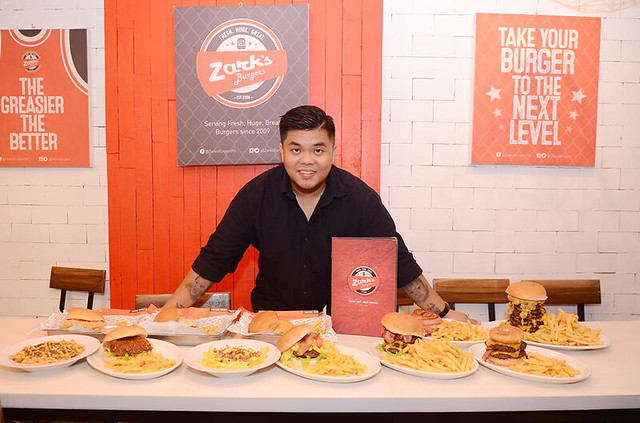
Rolandrei “Zark” Varona, 34, entered the game in unfavorable conditions with a failed franchise venture and dwindling capital.


Nevertheless, he paired his natural business acumen with an unwavering tenacity and grew from a humble stall owner to a food franchise powerhouse.
Although he lost his father at the age of two, he recalls many fond childhood memories with his mother and sister — especially their family meals after Sunday mass. The restaurants they frequented left a deep impression on him and by high school, he had his heart set on becoming a chef.
“I knew that I wanted my own restaurant someday,” he said.
It was natural that he went on to study Hotel and Restaurant Management in the Philippine Women’s University.
Even before graduating, Mr. Varona started with capital from his allowance and his salary as a paid intern for a famous steakhouse. He later had the opportunity to join a cruise ship as a cook, saving up most of his earnings for his future business.
Mr. Varona shared that he battled homesickness, but his determination to put up his own restaurant and the continuing support of his family pulled him through.
After two years at sea, he was 23 and had enough savings to start his own business. Wanting to learn the ins and outs of running a business, Mr. Varona decided to purchase a noodle house franchise. He personally filed the papers and got the necessary permits to open his stall in Divisoria.
He quickly realized that running a business was not easy. After a few months of operation, his stall was earning barely enough to break even and he was slowly using up his capital. He decided to close it down.
But Mr. Varona never faltered, he continued scouting for potential business locations. He found a small space along Taft Avenue, but thought that a food cart would not match the market.
However, something about the location kept drawing him back until he finally decided to create his own concept. He studied what kind of food would sell in the predominantly student market in the area. He realized that there wasn’t any burger joint with student-friendly prices. As a burger lover himself, Mr. Varona often felt frustrated that there were few options between fast food and gourmet burgers. With his experiences from travelling and his skill in cooking, he developed a concept that would address the market gap.
With a portion of his savings gone, Mr. Varona borrowed P200,000 from his mother to complete his P600,000 initial investment to make Zark’s Burgers a reality. Mr. Varona was in charge of almost everything — from filing permits, menu development, construction and interior design.
In 2009, Zark’s Burgers was finally unveiled to the public with a promise to deliver burgers that are fresh, huge and great.
Named after himself, Zark’s Burgers sports theme reflected Mr. Varona’s like for sports, big food and value for money.
“I don’t serve typical cheeseburgers,” Mr. Varona said of his culinary creations.
Customers have over 20 burgers to choose from — most of which are under P250 — with interesting variations such as the bacon wrapped burger and glazed donut burger.
Inspired by TV show Man vs. Food, Mr. Varona developed his own burger challenges — Tombstone and Jawbreaker — that captured his young market. The highly popular Jawbreaker challenge, where the winner wins a free shirt and has his picture included in a hall of fame, has become a standard dare for barkadas — inadvertently becoming part of youth culture.
In just seven months of operation, Zark’s Burgers was able to earn back Mr. Varona’s initial investment. Mr. Varona admits he did not expect the warm welcome he received from students. With this initial success, he was able to expand the original 16-seater space to 120 seats.
Soon enough, he started opening branches across Metro Manila and eventually entered the Visayas and Mindanao markets.
As he expanded, he started to struggle managing the company alone and realized that he couldn’t develop a sustainable business by himself.
“I was learning but it wasn’t at the same pace with the company’s growth,” Mr. Varona said.
Seeing his own limitation, he professionalized his team.
As a young entrepreneur, Mr. Varona knows he has much to learn and looks to seasoned professionals to gain insights on how to run the business. When he found out that his food cost was high, compared to industry standards, he approached one of his former mentors and worked with him to slowly improve efficiency at Zark’s Burgers.
While Mr. Varona was initially apprehensive about the possibility of franchising, he recognized the difficulty and cost of managing branches outside of Metro Manila — especially in the Visayas and Mindanao. He realized that in order to grow the business and eventually expand outside the Philippines, he had to franchise. He hired an expert on franchising and created a system for franchising. He would also partner with his long-time supplier to put up commissaries for burger patties and seasonings.
Now on its 10th year, Zark’s Burgers boasts of 60 branches nationwide and employs over 800 people across all facets of its operations.
For Mr. Varona, however, success is being able to do what you love and having the ability to give back. “Cheesy as it sounds, I want the economy itself to grow,” Mr. Varona said.
Apart from his regular outreach programs, he wants to transform lives by imparting to aspiring entrepreneurs the skills and knowledge needed to start their own business. He provides mentorship through Endeavor Philippines, Resto Coach, Go Negosyo and giving talks in universities.
Like many others, Mr. Varona embarked on his entrepreneurial journey armed with a dream. Unlike many, he never lost sight of his goal and persisted through every challenge. He tells aspiring entrepreneurs, “Look into yourself and find your purpose. From there, 

Sunday, September 15, 2019

...the Pinay Pilots

Female pilots From the Philippines Could help Asia's Travel Boom


Claire Jiao

Bloomberg
15 September 2019


The Philippines’ largest flight school is trying to bring more women into the cockpit to help meet a shortage of pilots in Asia.
Photo: Supplied
At Alpha Aviation Group’s campus in Pampanga province north of the capital, one in five of its 550 students each year are women, whereas only about 3% of the world’s pilots are female, founder Bhanu Choudhrie said in an interview.
Choudhrie said the group holds recruitment programs at universities and invites female pilots to give career talks to students to encourage more women to apply. These initiatives aim to dispel the notion in the Philippines that only men can apply to flight school, he added.

Asia’s Travel Boom in Trouble as Pilot Shortage Worsens
Boeing Co. estimates Asia will require 266,000 more pilots by 2038, a third of the global shortage, as travel booms faster in the region than anywhere else. Understaffed airlines in the region have already been forced to cut flights due to the shortage. Some local carriers are setting up their own academies to produce more pilots.

Given widespread usage of English in the Philippines, the country is well placed to cater to regional low-cost carriers, which are now required by regulators to train their pilots in the language, Choudhrie said. The school already trains pilots for local carriers, as well as VietJet Air and AirAsia India.
The rise of low-cost carriers, which mostly fly short-haul flights within the region, also makes a career as a pilot more attractive for women who don’t want to be away from home for long periods of time, Choudhrie said.
“There is huge demand and men alone can’t fill that. It’s the women who will be the ones to drive this growth,” he said.

Other Highlights

  • Choudhrie, who heads U.K. private equity firm C&C Alpha Group, could invest as much as $12 million annually over the next three years to expand the Philippine campus.
  • The school is looking to double its student intake over the same period and it has opened new facilities in La Union and Zambales provinces to meet demand.
  • Alpha Aviation is looking to open schools in two other Asian countries as airlines “fight for new pilots.”