Showing posts with label transport. Show all posts

Monday, February 10, 2020

...the 2nd ASEAN's fastest growing market for motor vehicle

Philippines 2nd fastest-growing market for motor vehicles in South East Asia


Louella Desiderio
Philippine Star
10 February 2020
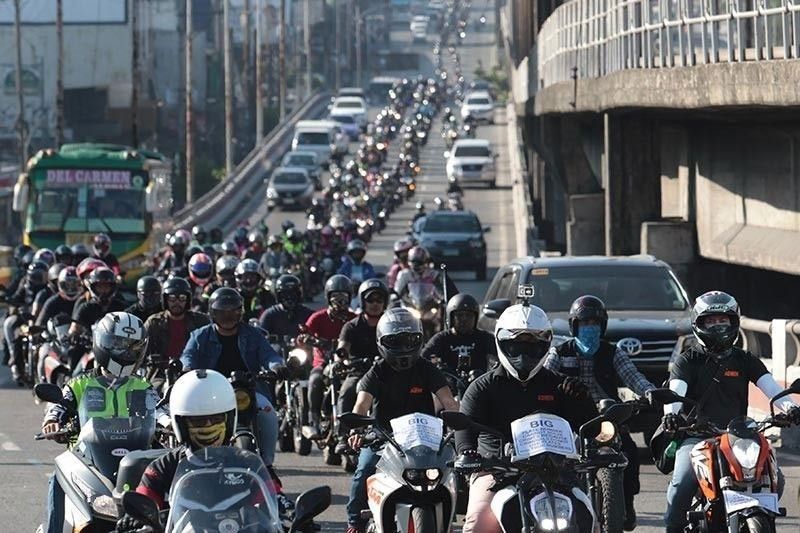

MANILA, Philippines — The Philippines was the second fastest-growing motor vehicle assembler in Southeast Asia last year, registering a 19 percent growth in output, according to the Association of Southeast Asian Nations Automotive Federation (AAF).
Data from AAF showed the Philippines assembled 95,094 motor vehicles last year, up from just 79,763 units in 2018.

Posting the fastest growth in motor vehicle output last year was Myanmar, which assembled 15,496 units, 26 percent higher than the 12,292 units in 2018.

Apart from Myanmar and the Philippines, the only country in the region with a higher motor vehicle output was Malaysia which produced 571,632 units last year, up 1.2 percent from the 564,971 units in 2018.

All other countries with motor vehicle assembly operations in the region registered declines.
Thailand, which serves as the region’s automotive hub, assembled 2.01 million units last year, seven percent lower than the 2.17 million units in 2018.

Indonesia’s motor vehicle output decreased by 4.2 percent to 1.29 million units last year from 1.34 million units in 2018, while Vietnam’s output went down by 12 percent to 176,203 units last year from 200,436 units in 2018.

Total motor vehicle output in Southeast Asia decreased by 4.8 percent to 4.16 million units last year from 4.37 million units in 2018.

In terms of motor vehicle sales, the Philippines was among those with higher sales last year.

AAF data showed the Philippines sold 369,941 units last year, 3.5 percent higher than the 357,410 units in 2018.

Other countries in the region with higher sales last year are Myanmar with a 25 percent growth in sales to 21,916 units, Vietnam with an 11.7 percent increase to 322,322 units, Brunei with a six percent uptick to 11,909 units, and Malaysia with one percent growth to 604,287 units.

Posting lower sales last year, meanwhile, are Indonesia with a 10.5 percent drop to 1.03 million units, Singapore with a five percent decrease to 90,429 units, and Thailand down 3.3 percent to 1.01 million units.

Total motor vehicle sales in the region reached 3.46 million units last year, 2.9 percent lower than the 3.56 million units sold in 2018.

Recently, the Department of Trade and Industry (DTI) launched a preliminary probe on a petition filed by workers group Philippine Metalworkers’ Alliance (PMA) to impose safeguard measure or duty on vehicles, a development which may affect both the production and sales performance of automotive firms in the country.

PMA filed the petition as increased vehicle imports are seen to pose threat to local car assembly, auto parts manufacturers, as well as employment in the sector.

A safeguard duty may be imposed by the government when a surge in imports of a certain product causes injury to local players.

Tuesday, October 8, 2019

...the PH new ports

New ports lure Asia’s biggest cruise ship to the Philippines


Bangkok Post | Bloomberg Asia
08 October 2019


MANILA: The Philippines, a country of more than 7,600 islands where you’re rarely more than a few miles from the sea, wants a bigger slice of Asia’s growing cruise-tourism industry.
Sun loungers sit on The Spectrum of the Seas cruise ship, operated by Royal Caribbean Cruises Ltd.'s cruise line brand Royal Caribbean International (RCI), as the ship sits berthed at the Marina Bay Cruise Center in Singapore, on May 21, 2019. (Bloomberg photo)
For years the Southeast Asian nation has lagged behind its neighbours in attracting cruise visitors, partly because of spotty infrastructure. That’s bound to change as more ports are built and officials look at cruise tourism as a key source of arrivals.

With the economy in danger of notching its slowest expansion since 2011, attracting tourists is a key focus of efforts to boost growth. Tourism accounted for 12.7% of the Philippines’ gross domestic product last year, already beating the government’s goal of 10% by 2022. Government officials are revising up the targets in the country’s tourism development plan.
“There is great potential in cruise tourism,” Tourism Undersecretary Benito Bengzon told Bloomberg by email. “While our Asian neighbours have the advantage of a regional land connectivity, our archipelago is ideal for cruise tourism.”

The Philippines’ cruise strategy focuses on Manila, Boracay and Puerto Princesa, as well as potential new destinations in the northern part of Luzon, the country’s main island. Salomague Port in Ilocos Sur province, scheduled to open this month, will receive Royal Caribbean Cruises Ltd’s biggest ship in Asia in December; the “Spectrum of the Seas” will return again in January and February.
In April 2021, Manila’s first cruise-dedicated port is scheduled to open at the Solaire Cruise Center.

“These cruise ports will allow more access to the Philippines and encourage more shorter itineraries from north Asian markets like China, Hong Kong, Taiwan, Korea and Japan,” Bengzon said.

Cruise tourism brings large numbers of people to concentrated areas for brief periods, multiplying and focusing the economic impact. At a recent trade show, government officials and representatives of major cruise lines discussed the possibility of adding the Philippines to Asian itineraries from 2020.

The private sector is on board for the infrastructure push.

“Cruise calls in Manila, and the Philippines in general, have been growing quite strongly,” said Enrique Razon, chairman of casino-resort operator Bloomberry Resorts Corp. “Aside from Manila, we’re looking for one cruise-ship facility in the north and possibly two in the south.”

International Container Terminal Services Inc, also owned by Razon, is looking to invest 8.7 billion pesos 5.1 billion baht) to upgrade a port in the central Philippine province of Iloilo, which the company says may eventually include a terminal for cruise-ship passengers.

Tourism has been growing steadily in the Philippines in recent years, reaching 7.2 million visitors last year and 4.85 million in the first seven months of 2019. The government’s target is about 8.2 million visitors for 2019 and 12 million by the end of 2022, but that still pales next to Thailand, which expects more than 40 million tourists this year.

Employment in tourism and related industries has been rising faster than overall job growth. Tourism accounted for 13.4% of Philippine jobs in 2018, projected to rise to 14.4% by 2022, according to the Department of Tourism.

Central bank Governor Benjamin Diokno said the amount of foreign currency tourism brings into the country should rise now that Boracay island, which was closed for six months last year for environmental rehabilitation, has reopened to tourists.

While cruise arrivals can spur development of new tourist spots, they have more environmental impact than land-based tourism, said Robert Dan Roces, chief economist at Security Bank Corp in Manila. Sometimes dubbed “floating cities,” cruise ships have a relatively large carbon footprint, dump fuel into the ocean and leave a lot of waste at their destinations.

Tourism Secretary Bernadette Romulo Puyat is urging more support for sustainable tourism to spread benefits throughout the country.

“After all, tourism is everybody’s business,” she said in a statement.

Thursday, October 3, 2019

...the expat builders of the nation

Expat Pinoy engineers to come home to build Metro Manila Subway: DOTr

ABS-CBN  News | 3 October  2019
MANILA - Dozens of Filipino engineers who are currently working on rail projects abroad are willing to go back to the Philippines to help build railways, particularly the Metro Manila Subway, the country's transportation secretary said on Thursday.

Related image


More than 60 Filipino railway engineers and technicians currently employed in Bahrain, Qatar and Denmark agreed to work on rail projects in the Philippines, Transportation Secretary Arthur Tugade told senators. 

The engineers said that they want to help build infrastructure in the Philippines, as well as be closer to their families.

"Pumirma ho sila ng mga application form. Basta maumpisahan lang yung subway project, given a reasonable time, they are ready to come back," Tugade said during a Senate hearing on his Department's budget. 

(They signed application forms. When the subway project starts, and they are given a reasonable time, they are ready to come back.) 

The Metro Manila subway broke ground in February this year but actual drilling of the subway tunnels is not expected to begin until November or December this year.

The underground rail system, which is the country's first, is among the flagship projects under President Rodrigo Duterte's P8 trillion infrastructure program.

The 36-kilometer subway will stretch from Valenzuela on the capital's northern end to the Ninoy Aquino International Airport, promising as fast as 30 minutes of travel time from end to end.

The government earlier said it hopes to open the first 3 stations in Valenzuela, Tandang Sora, and North Avenue before Duterte's term ends in 2022.

Kyodo News, however, reported that contractors and people familiar with the project said the government's target timeline may increase the total cost, while the acquisition of land for its stations could take longer than estimated

Friday, July 5, 2013

...the first Asian to race in NASCAR

Pinoy makes history anew in Euro NASCAR


07/05/2013
 
 
Filipino racing star Enzo Pastor - File Photo
Pastor is first Asian to race in oval racetrack

MANILA -- Filipino racing star Enzo Pastor, the first Filipino ever invited to compete in the Euro Racecar NASCAR circuit, is making serious progress in Europe as he now stands just eight points short of the fourth overall position in the standings.

Pastor is tied with Vincent Gonneau after two 5th-place finishes in rounds five and six at Brandshatch in England.

Pastor is now preparing to ride on an official oval track in Tours, France for the fourth leg of the series. This means faster speeds but also entails greater risk due to the elevated and angled road.

“It is yet another historical first for Enzo,” said his father, Philippine Formula Autosports Foundation, Inc. (PFAFI) president Tom Pastor. “This race in Tours makes him the first Asian to race in an oval racetrack, no small feat in the racing world to be sure.”

Pastor’s partnership with legendary Formula One visionary Ted Toleman, has consistently brought him success in the world of motor racing.

Aside from climbing the current standings, Pastor has also been invited to participate in the K&N Pro Series East by Creation Cope Racing, an honor usually reserved for only the Series Champion overall winner in Euro Racecar NASCAR.

His campaign has been fully supported by the Department of Tourism/TIEZA as part of the department’s “It’s more fun in the Philippines” campaign.

Asian V8 to take place in Clark

By February 2014, the Clark International Speedway will serve as host of the Asian V8 SpeedChallenge, an initiative of the Euro Racecar NASCAR Touringcar Development Program and will be launched by July 30, 2013 at Resorts World Manila Plaza.

The aforementioned Speedfest will be co-presented by Petron Corporation while Resorts World Manila will be a major sponsor.

“In preparation for the SpeedChallenge, Euro Racecar NASCAR Touring Car CEO Jerome Galpin expects that we upgrade our racetrack facilities and safety features which should be completed as scheduled,” notes the elder Pastor.

“The owners of the Clark International Speedway are doing their best to getting ready for the Fédération Internationale de l'Automobile (FIA) inspection.”


Wednesday, November 28, 2012

...the healthier Metro

DENR pushes for a 'healthy' Metro Manila


11/28/2012
 
 
MANILA, Philippines – The Department of Environment and Natural Resources (DENR) has urged Metro Manila residents to be more conscious in reducing air pollution for a "healthy metropolis."


Secretary Ramon Paje reminded the public to actively participate in the "car-free day" campaign, which urges motorists to use public transportation and bikes to reduce carbon emissions and conserve energy resources.

"We need the cooperation of the public and the civil society. We want to reach acceptable air quality levels so that we can really sell Metro Manila as a tourist destination, as you know, as a healthy metropolis," Paje said in a statement released Wednesday.

Paje noted that there are simple ways to help limit individual air emissions such as walking, using bikes, carpooling, conserving electricity, and consuming energy efficient products.

"Everyone needs to do his part to improve air quality. In fact, there are simple things that we can do to reduce air pollution and help clean up the air we breathe," he said.

Paje earlier said air quality in Metro Manila has improved as both the amount of total suspended particulates (TSP) and the level of particulate matter 10 microns in diameter or smaller (PM10) had decreased.

According to data, the TSP level in Metro Manila was recorded at 106ug/Ncm (micrograms per normal cubic meter) as of the third quarter of 2012, only 16ug/Ncm short of the acceptable level of 90ug/Ncm set by the World Health Organization.

"We were able to bring it down by around 36 percent because it is now at 106. It is still polluted but we are now closing to the standard," Paje said.

The environment secretary partly attributed the decline in air pollution levels to the collaboration of the DENR with other government agencies and the private sector in various air quality programs, including mandatory vehicle emissions testing.

Monday, November 12, 2012

...the Filipino fuel-saver technology

Filipino invention to help Mongolians breathe free

By Manila Standard Today 
Nov. 12, 2012
 
 
Mongolia, one of the world’s top 10 countries with the worst air quality, is adopting Filipino technology to help improve the health of people in its urban centers.

Eco-G NanoTechnology (Philippines) and Erdene & Gochioco LLC Company (Mongolia) signed an memorandum of agreement to avert the life-threatening conditions due to fuel emmisions.


Representing the Mongolian firm are Lawrence Gochioco, executive director, and Erdenechimeg Yadamdorj, general manager, who signed the agreement with their counterparts Eco-G president Alexander Cayaba and chief finance officer Celestino Palma III.

“Mongolia needs to employ innovative technologies developed by other countries. The Eco-G3000 is a novel low-cost and low-maintenance device that addresses our challenges in gas saving and cutting auto emissions significantly,” Yadamdorj said. “Field tests conducted during my visit in Metro Manila convinced me that the system works.”

Mongolia is largely dependent on imported oil and gasoline products for all its domestic energy requirements. The capital city, Ulaanbaatar, suffers from severe air pollution coming from the ger district and auto emissions.

“The Mongolian government is ready to fully support such a technology”, said Yadamdorj.

According to Cayaba, Eco-G3000 consists of a fuel vaporizer, an auxiliary tank, and a catalyst.

The fuel mixture is vaporized, heated and fed into the vehicle’s intake manifold which results in improved fuel efficiency and the significant reduction of toxic emissions such as carbon monoxide, carbon dioxide, and nitrogen oxide.

“Test results from Land Transportation Office-accredited testing centers have shown that Eco-G3000 can reduce toxic emissions up to 80 percent,” said Cayaba. The system has been installed in tricycles, motorcycles, cars, truck, and buses in Metro Manila.

Sunday, October 21, 2012

...the e-vehicles in PH

E-vehicle usage in Philippines slowly growing

10/21/2012
 
 
MANILA - The usage of electric vehicles in the Philippines has been growing since they were introduced in 2007, albeit slowly due to cost and the unavailability of key parts in the local market.
 
Yvonne Castro of the Electric Vehicle Association of the Philippines is optimistic, however, there will be a boom in the industry because of support from the government and the growing consciousness about clean energy and climate change.

After the introduction of e-jeepneys five years ago, e-tricycles began plying some streets of the capital Manila and some other cities.

The country's first e-bus was launched a few months ago and early this month traffic constables in Manila were equipped with e-scooters.

According to Castro, the Philippines is leading among other Southeast Asian countries when it comes to actual usage of e-vehicles.

"The government is now more open and supportive," Castro told Kyodo News in a recent interview.

"Hopefully, more business will come in so that the whole industry will be developed."

The use of e-vehicles in the Philippines is strongly encouraged by government to help reduce gasoline consumption and carbon dioxide emissions.

The latest government records show there are more than 250,000 gasoline-powered public transport vehicles in the country, particularly buses and jeepneys, of which around 30 percent operate in Metro Manila.

Castro said that 150 e-jeepneys have been sold in the country since 2008 by one manufacturer, some of which are being used for hotel and resort services and other private establishments.

They are most visible though in the financial Makati district, ferrying shoppers and commuters.

E-tricycles that are currently operational, meanwhile, are estimated to be only a few dozen in number, most of them going around the Manila suburb Mandaluyong City for public transport, courtesy of the Asian Development Bank.

The ADB is providing a $300 million loan to the Philippine government for the delivery of 100,000 e-tricycles by 2016, aimed at reducing greenhouse gases, boosting drivers' income and stimulating the manufacture of e-vehicle motors locally.

According to the Philippine Energy department, gasoline consumption will be reduced by 561,000 barrels per year, avoiding 260,000 tons of carbon dioxide emissions annually if 100,000 diesel tricycle units are replaced with e-tricycles.

The around 3.5 million motorcycles and tricycles in the country, according to government, emit close to 10 million tons of harmful gases and use more than $2 billion worth of imported oil each year.

The ADB said last year that its study revealed 80 percent of air pollution in Metro Manila comes from the transport sector.

Rex Rejano, a 27-year-old driver in Mandaluyong City who was assigned one of the 20 e-tricycles from the ADB last year for pilot testing, said not only does he enjoy a smoke- and noise-free ride now he also takes home a bigger income than when he was driving a regular tricycle.

The 30 percent rise in his income is due to the increased passenger capacity by at least 50 percent and the cheaper by 65 percent electric charging cost compared to fuel rates.

"This is a very good project. The e-tricycle is better because the passengers are safer and more comfortable, and they are twice in number compared to my former tricycle," Rejano said.

The energy department has tried to allay fears that e-vehicles will put additional burden on the electricity supply by saying that charging is done "during low peak hours or in the evenings, which contributes to higher utilization of available generation capacities."

It also plans to establish solar-powered charging stations, hoping to make carbon footprint of e-vehicles close to zero.

While she views the e-vehicle project as "a solution, in principle," Greenpeace Philippines' Anna Abad is wary that it will not "provide the transformational change" it aims to achieve "if it is plugged to conventional power source like coal."

"For a sustainable transport to be truly sustainable, it should be powered with renewable energy. The project would be better off if married with renewable energy," Abad said.

If the ADB-assisted project succeeds, the Philippines is expected to generate around 10,000 new jobs by 2015 since local manufacturing of the e-tricycles will begin.

It will even allow the country to export the product to its neighbors in the region at a cost of $4,000 to $5,000 each, generating foreign currency, the bank said.

Last month, Japanese e-vehicle manufacturer Terra Motors Corp. announced its plan to open a Philippine factory by 2015 as it also expressed interest in joining in the country's e-tricycle project.

Castro said that aside from the cost of e-vehicles, the absence of appropriate government regulations for their manufacture and operation is preventing the industry from flourishing.

An e-tricycle currently costs more than 200,000 pesos ($4,762), two or three times more than conventional tricycles.

An e-jeepney is worth more than $16,000, around 35 percent more expensive than a traditional jeepney.

And the e-bus is reportedly around $286,000.

"Our lawmakers should craft laws to make it easier to manufacture e-vehicles here, particularly e-jeepneys and e-tricycles. We are not looking at e-buses because we have no capacity for that," Castro said. "One encouragement is zero-tax for parts that will have to be imported. And the government should start working on franchise license regulations for these."

Castro said most of the parts for e-vehicles, especially the controller and the lithium battery, are now sourced from China.

She urged the government to initiate efforts for the training of local technical experts and recommended proper education for drivers because "these are high-tech vehicles."

Without proper training, Castro fears drivers might cause e-vehicles to malfunction sooner than projected.

She also acknowledged the need to include in the development plan the proper disposal of lithium batteries once they reach their end-life, noting there is no recycling facility for lithium batteries in the Philippines, unlike other countries that have a "second-life program and recycling facilities."

"(Still) with the government now giving attention to this industry, hopefully, it will keep us ahead in the region," Castro said.
==Kyodo

Wednesday, September 26, 2012

...the jeepney makeover

Jeepneys get a facelift, eyed to boost tourism


Filipinos should pay homage to the King of the Road, a group said, as it launched a campaign to revive the famous Philippine jeepney.

At least 50 jeepneys were recently parked at the SM Mall of Asia for the Jeepney Tours' Jeepney Arts Festival, which engaged over 150 volunteer artists to repaint the iconic vehicle.


Artists put finishing touches on a vehicle during the Jeepney painting competition at a mall in Manila September 21, 2012. The Jeepney Arts Festival pays homage to the country's most popular mode of transport, transforming ageing vehicles into icons instead of traffic nuisances. (Photo by Romeo Ranoco, REUTERS)

"This is our way of honoring the 'King of the Road'," Jeepney Arts Festival managing director Clang Garcia said.

Noting that jeepneys originally started as refurbished World War II vehicles, Garcia called the popular public utility vehicle "a symbol of Filipino ingenuity."

The festival meanwhile urged artists to use local tourist destinations as their design theme.

Riding on the government's tourism campaign theme "It's More Fun in the Philippines," Garcia said the newly painted jeepneys will hopefully be "roving tourist destinations."

"Some of the artists from Angono, Rizal said they will paint the Higantes Festival. Others said they will paint Bohol's famous tarsier, Quiapo or Divisoria," Garcia said.

Aside from aesthetically overhauling jeepneys, the campaign also aims to "improve the jeepney culture," Garcia said.

This, as she noted that the jeepney's image has recently been marred by unethical practices among drivers and operators.

"The Jeepney Arts Festival is a complete rehabilitation, culturally and artistically," Garcia said.

Jeepneys chosen for the campaign had to be in good working condition and pass smoke emission tests.

Drivers of jeepneys being overhauled also have to undergo a training program including sessions on Filipino history and values, ethical driving and passenger handling.

Saturday, September 15, 2012

...the walkable city

Making Metro Manila a 'walkable city'

 
September 14, 2012
 
 
Progress may be slow, but advocates for inclusive mobility will keep going until Metro Manila becomes a walkable city.
 
 
"We have to move people, not cars… not only does this have positive impact on the environment, but also on a personal basis, on our individual health. We have to encourage people to walk, run, and bike, rather than commuting," said Dr. Mario Villaverde, associate dean of the Ateneo School of Government, during the Inclusive Mobility Research Forum held on September 4.
 
 
In Metro Manila, private motor vehicles contribute to 53.2 percent of all traffic composition, while catering only to 21.6 percent of transport demand, Tieza Santos of the Ateneo Center for Social Entrepreneurship (ACSEnt) said during the forum.
 
 
"Because of these challenges in how we move people, goods et cetera, we're incurring losses of P140 billion annually due to wastage of fuel and loss of productivity," she said.
 
 
Wanted: sustainable innovations like e-jeepneys


The e-jeepney is among the Social Innovation Models for Inclusive Mobility. GMA News
Sustainable forms of innovations, businesses, and social enterprises are needed for inclusive mobility, Santos said. In her presentation on Social Innovation Models for Inclusive Mobility, Santos gave concrete examples such as Julie's mobile bakeshop, cashless transactions such as Gcash or Smart Money, and the e-jeepney.
 
 
"These are not implemented nationwide, but can serve as our peg for coming up with an inclusive mobility system in Metro Manila," she said.
 
 
Another problem, according to Santos, is a lack of proper implementation of policies, as well as barriers like economics, development, and culture. "We have this culture of individualized mobility. We prioritize cars, so the construction of car ownership as a form of status symbol is another barrier," she said.
 
 
Transportation economist Randolph Carreon also shared that some households resort to sacrificing food, electric and water bills, and health care in order to meet transport requirements.
 
 
This was one of the findings in the study on Mobility Characteristics, Costs, and Issues of the Poor and Vulnerable groups that was conducted among households in Old Balara, Barangay Bagong Pag-asa, and Barangay Payatas.
 
 
Carreon also shared that persons with disabilities (PWDs) said they preferred public transport modes were tricycles and taxis, which provide door-to-door service. The study also revealed that not all PWDs are aware that they are entitled to a 20 percent discount on public transport fares, as stated in R.A. 7277.
 
 
The study also showed that PWDs view pedestrian facilities as inadequate in responding to their needs. On overpasses, PWDs think "the locations are inappropriate and were selected mainly for the benefit of private establishments; the steps are too high making it difficult for them to climb; it needs cover; and the location is too distant."
 
 
Understanding transport conditions


Bryan Benitez McClelland and his bambike, which is one of the entries in the Inclusive Mobility Challenge. Monina Eugenio
Dr. Jun Castro of the UP School of Urban and Regional Planning said effective transportation planning requires a reliable database, preferably in Geographic Information System (GIS) format.
 
 
"The developed GIS database can be used to understand transport conditions, and some of the socio-economic or demographic conditions as well," he said during his presentation on Mapping of the Public Transport System of Metro Manila: Responding to the Needs of the Poor and Vulnerable Sectors.
 
 
The study showed that public transport facilities are quite "friendly" to the poor and vulnerable sectors, as public transport terminals are quite accessible, and there is a wide range of available public transport modes.
"Pagka may squatter colonies, marami ring informal public transport terminals. Very obvious naman, kasi sila ‘yung market ng terminals na ito. Sila rin ang may ari ng sasakyan," Castro said.
 
 
In her discussion of the presentation on mapping, Engineer Reina Macababad said there is a need for data sharing, and to reconcile databases from various agencies such as the Department of Transportation and Communications, and the Land Transportation Franchising and Regulatory Board (LTFRB).
 
 
Macababad noted that public transport in Metro Manila is complicated. "There is perhaps a need to simplify it... Perhaps the question that needs to be asked is whether we should tolerate tricycles and pedicabs," she said.
 
 
"It can be done. Guangzhou was like Metro Manila before, but there, you will not see a motorcycle. Bawal ang motorsiklo, bawal ang tricycle. Nakakita kami ng electric bike, sabi nila, colorum ang electric bike na ‘yan," Dr. Segundo Romero, director of Ateneo School of Government’s iBoP Asia Program, said during the forum. Romero said that housing was up to eight floors, and residents would use a Bus Rapid Transport (BRT) system.
 
"Without the BRT it would be bedlam," he said, noting that it would take a long time to untangle the transport system in Metro Manila, which, as was pointed out during the forum, is not run the way places like Guangzhou are.
 
 
"It's really difficult if not all the entities will follow and observe," shared Trina Cortez-Tolentino, who has been working with homeowners, schools and establishments along Katipunan Avenue to make the road a model area.
 
 
She said their goal is to make Katipunan pedestrian- and commuter-friendly, with covered walkways with good lighting and 24-hour security.
 
 
The research forum was one of the activities of the Inclusive Mobility Project. On September 21, there will be an Inclusive Mobility Conference.
 
 
There is also an ongoing Inclusive Mobility Challenge, which looks for social innovations that make it easier for the poor and vulnerable to move around Metro Manila. Finalists include the eJeepney, an onboard self-recharging system for electric vehicles, PEDALA bike messengers, and the UP Padyak Project. –KG, GMA News

Thursday, July 19, 2012

...the AsPAc's first Airbus safety system user

Cebu Pacific 1st in Asia Pacific to use Airbus safety system

 
July 19, 2012
GMA News
 
 
Cebu Pacific is the first airline in the Asia Pacific region to use an Airbus-developed automated system for reporting, monitoring and analyzing safety data.


Called the Safety Assessment and Management System, its software was installed at Cebu Pacific and went live June this year. 
 
Airbus safety management experts also conducted SAMS’s initial training for Cebu Pacific flight personnel.
 
“Launching SAMS as an integral part of our operations marks our commitment to achieve the highest standards of safety in everything we do," Candice Iyog, vice president for marketing and distribution, said in a statement. 
 
"Our relationship with Airbus spans over 15 years and now extends beyond aircraft design, operations and maintenance. This takes our airline safety system to a new level, and we are proud to have been chosen to be Airbus’ second customer in the world and the launch customer in Asia-Pacific,” Iyog said.
 
Airbus developed SAMS to integrate flight monitoring into one of the world’s most state-of-the-art safety tool. SAMS combines the latest risk assessment methodology and best practices for automated reporting, processing, measurement and analysis for airline operators.
 
The system has been recognized by the global aviation industry and has become an International Civil Aviation Organization standard for all air operators from January 2009.
 
CEB currently operates 10 Airbus A319, 20 Airbus A320 and eight ATR-72 500 aircraft. — VS, GMA News
Cebu Pacific 1st in Asia Pacific to use Airbus safety system
 
Cebu Pacific is the first airline in the Asia Pacific region to use an Airbus-developed automated system for reporting, monitoring and analyzing safety data.
 
Called the Safety Assessment and Management System, its software was installed at Cebu Pacific and went live June this year.
 
Airbus safety management experts also conducted SAMS’s initial training for Cebu Pacific flight personnel.
 
“Launching SAMS as an integral part of our operations marks our commitment to achieve the highest standards of safety in everything we do," Candice Iyog, vice president for marketing and distribution, said in a statement.
 
"Our relationship with Airbus spans over 15 years and now extends beyond aircraft design, operations and maintenance. This takes our airline safety system to a new level, and we are proud to have been chosen to be Airbus’ second customer in the world and the launch customer in Asia-Pacific,” Iyog said.
 
Airbus developed SAMS to integrate flight monitoring into one of the world’s most state-of-the-art safety tool. SAMS combines the latest risk assessment methodology and best practices for automated reporting, processing, measurement and analysis for airline operators.
 
The system has been recognized by the global aviation industry and has become an International Civil Aviation Organization standard for all air operators from January 2009.
 
CEB currently operates 10 Airbus A319, 20 Airbus A320 and eight ATR-72 500 aircraft. — VS, GMA News

Monday, July 16, 2012

...the sports car economy

PH can drive a ‘sports car’ rather than a ‘jeepney’ economy if…


By: Doris C. Dumlao
Philippine Daily Inquirer
 
 
The Philippines can prove that it drives a “sports car” rather than a “jeepney” economy by embarking on further interest rate cuts and a more aggressive government spending given the challenging global environment, a Bank of the Philippine Islands research said.


A paradox of economy from traditional (jeepney) to modern (sports car) , from slow growth to fast emerging economy.
With the negative backdrop of the European debt crisis, a floundering US recovery, the slowing of China and weakness in commodity prices, the Philippines might have no choice but to grow internally through government spending on infrastructure in tandem with stronger domestic private sector investment and consumption, according to a July 12 research written by the BPI financial markets group led by economist Emilio Neri Jr.

“The national government must ramp up efforts to spend on infrastructure to address backlogs in traditional growth drivers. At the same time, the BSP [Bangko Sentral ng Pilipinas] may help spur the domestic economy through some form of monetary easing in the near term to give the economy an added shot in the arm,” the research said.

The BPI research favored a fresh policy interest rate cut to a new record low of 3.75 percent or lower, which was in contrast to the mainstream view that the BSP would likely keep its overnight borrowing rate steady at 4.5 percent for the rest of the year. The BSP has slashed its key rates by 50 basis points earlier this year.

“These policies combined with efforts to increase our overall competitiveness can help the Philippines finally prove to the world that it has never been a ‘jeepney economy’ all these years but may have instead been a ‘race car’ all along—except that this time—it’s not about to run out of gas,” the research said.

The research noted that the domestic economy has managed to maintain a strong external position while growing above 6 percent. It said this meant that the Philippines was not about to overheat in the same fashion that it did in the 1980s and the 1990s when the root cause of sharp economic slowdowns and contractions were widening current account deficits and balance of payments (BOP) problems.

The BPI research said these observations also seemed to suggest that faster growth might not necessarily result in “demand pull” inflation given the large surplus of the labor force, which could lead to a slower increase in Philippine wages compared to nations with tighter labor supply.

“Demand pull” inflation occurs when consumer prices rise because demand is greater than supply or more commonly described as when there is “too much money chasing too few goods.”

The research noted that the Philippines was previously given the moniker “the jeepney economy,” in reference to its sub-par historical growth performance and extreme susceptibility to “overheating” or building inflationary pressures even at the slightest acceleration in gross domestic product (GDP).

When the 6.4-percent Philippine GDP growth rate for the first quarter was announced last May, it noted that the majority of conventional theorists concluded that the Philippines need not cut interest rates further despite headline inflation persistently ranging below the BSP’s 3-5 percent inflation target.

But aside from avoiding the usual contractions that historically followed six straight years of growth, the Philippines has broken the trend and managed to actually grow for 13 straight years since 1999.

On the other hand, it noted that Philippine economic growth prior to four contraction episodes in the past was always funded through leverage, which ultimately led to a sizeable build-up in external liabilities and the economy’s susceptibility to sudden stops in foreign capital flows.

Thursday, July 12, 2012

...the upbeat sales

Vehicle sales up on improved supply, economy

By: Riza T. Olchondra
Philippine Daily Inquirer
 
 
Vehicle sales in June grew by 25 percent year on year on improved supply and favorable economy, the Chamber of Automotive Manufacturers of the Philippines (Campi) said in a statement.
 
During the month, vehicle sales reached 13,697 units, up from the 10,935 cars sold in June 2011, it said.

The 25 percent year-on-year growth in number of units sold brought year-to-date industry sales to 72,874 units, Campi said.

In January to June 2011, sales reached 69,782 units, Campi said.

“Because of the improved supply situation and stable economy in the country, sales have improved significantly. The local automotive industry continues to exceed monthly forecasts and perform better than expected because of these favorable situations,” Campi said.

Toyota Motor Philippines maintained its lead with a market share of 40 percent. Mitsubishi followed with 23 percent and Honda with 8 percent.

“Manufacturers have recovered from their supply problem and are now able to fully serve customer demands.

We are very pleased to end the first semester of the year on a high note,” Campi president Rommel Gutierrez said.

Campi said the strong performance came just as the industry was preparing to host the 4th Philippine International Motor Show on August 16 to 19 at the World Trade Center.

“This event aims to highlight the automotive industry’s role in the economic development by providing transportation requirements. The motor show also intends to promote the automotive industry’s global environmental responsibility,” Campi said.

Tuesday, June 19, 2012

...the PH e-vehicles

By Monico D. Mekaniko
Yahoo! Loqal
18 June 2012


Electric vehicles are expected to become widely used as public utility vehicles in the coming years as the government works with private manufacturers, assemblers and developers to ensure widespread adaption and sustainability.


As a result of recent developments in electric vehicle usage for public transport, companies involved in assembly and distribution of such vehicles have recently formed an organization called the Electric Vehicle Association of the Philippines (EVAP). Its members include vehicle enthusiasts, electric vehicle assemblers and energy consultants.

Part of the group’s activities this year is holding the 2nd Electric Vehicle Summit at the Meralco Compound in Pasig City. It will be attended by e-vehicle experts from Taiwan, Korea and Japan. Car manufacturers such as Toyota and Mitsubishi, both of which have already introduced commercial e-vehicles, are also expected to be present.

According to EVAP President Rommel Juan, the event is the culmination of several years of work from different companies and government agencies that have been working to bring the e-vehicle to the Philippines.

He said that e-vehicles would thrive well in the Philippines especially for public transport as the riding public would find riding in these vehicles more comfortable as these do not emit smoke.

In addition, the cost of running an e-vehicle, especially the e-jeepney model, is getting cheaper with parts and service support becoming more available. So far, all of the cities that have launched e-vehicles, including e-jeeps and e-trikes, have so far reported success.

Among the cities that have launched e-vehicles for public transport are Makati, Taguig, Pasig, Mandaluyong, Quezon City, Los Banos in Laguna, Cebu City, Iloilo, Cagayan de Oro, Batangas, Palawan, Boracay and Ilocos.

There are an estimated 400 e-vehicles now in the Philippines, most of which are for public transport.

Citing reports from other members of EVAP, Juan also noted that private institutions have also adapted e-vehicles. For instance, Victory Liner brought the country’s first electricity-powered bus, with plans to invest around P250 million for a production plant to make more buses.

In addition, the Manila Electric Company (Meralco) is looking at the possibility of using a four-wheeled version of electric motorcycles (called quadricycles) to shuttle people to and from their Pasig City headquarters.

Juan noted that the success of e-vehicle adoption in the Philippines is pegged on the strong support of both the private sector and the government. In particular, the government must also mandate the establishment of an infrastructure network to ensure that e-vehicle usage would thrive.

Imagine that, e-vehicles instead of noisy, pollution-making jeepneys on the road!

Till next time, this is Monico D. Mekaniko, Va-va-vroom!

Sunday, March 4, 2012

...the transnetwork


Phl to hasten establishment of integrated mass transport network


(philstar.com)
March 04, 2012


MANILA, Philippines (Xinhua) -- President Benigno Aquino III has ordered the Department of Transportation and Communications (DOTC) to accelerate the establishment of an integrated mass transport network to spur its economy growth, a senior government official said on Sunday.


Aquino recently signed Executive Order No. 67, providing for the creation of an integrated and multimodal transport system under the Public-Private Partnership (PPP) as the administration's centerpiece strategy for infrastructure development, Executive Secretary Paquito Ochoa Jr. said.


"This seamless transport network system is one of the focal points of the Aquino administration's infrastructure development program under the 2011-2016 Philippine Development Plan and the Public-Private Partnership framework," he added.


Under the executive order, the project, which will be called the Integrated Transport System (ITS), will include establishing two international-standard integrated transport terminals in the north and south of Metro Manila.


The locations of the terminals are expected to provide effective interconnection between different transport modes and services for seamless travel for the commuting public. Other integrated transport terminals in other parts of the country will be established for the same purpose, according to the President's directive.


Philippine government will set up an interagency committee, which will serve as the advisory body to ensure the immediate implementation of the project; however, DOTC will be mandated to play a central role in planning, programming, coordinating, implementing and regulating the development of the mass transport network.

Tuesday, November 1, 2011

...the iBUS

Pinay's iBus invention wins in London

LONDON - After long, arduous eight years of self-funded research and project, Elma Arboleras received a reward she did not expect.


Her invention dubbed as the iBUS won a gold medal for the consumer category at the British Invention Show. The BIS is on its 11th year of bringing together inventors, innovators and designers in a platform that will enable them to promote and advance their ideas.

From hundreds of participants, the entries were narrowed down to semi-finalists, finalists and winners per category, plus special awards and citations.

Arboleras said that in her experience, being an inventor has nothing to do with being a geek or a genius. But it definitely takes a lot of research, passion and back-breaking work.

“It’s about faith. Faith in ourselves, faith in our God who can make all things possible. The reason why I participated is to inspire our kababayan. Mine started with just a dream--a dream that maybe we can help ease the traffic problem,” she said.

Arboleras, a BS in Customs Administration graduate from Iloilo, developed the iBUS concept with Rodel De Guzman, her co-inventor. They joined the invention show on their own, without the backing from government or any private companies. Arboleras pooled her own resources to be able to fly to the UK when the entry was shortlisted.

In front of 25 judges from corporate and specialist fields, she was given 3 minutes to discuss the invention.

That moment, she felt the need to shine and bring honor and pride to her country. She summed up 8 years dogmatic resilience, passion and dedication in an eloquent presentation.

“When I was given that medal, I was like ‘Oh! Finally, a recognition!’ But I didn’t really feel that it was for me. It was for the Philippines. I really felt I was there for the Philippines even when I came on my own. What made me stronger to go for it was the thought that with it is a kind of solution that might help our country,” she explained.

‘It’s my gift to Philippines’

Arboleras said the solution for the traffic problem in the Philippines is a daunting task that cannot be done by a mere introduction of technology. However, having a technology that will solve it is a good start.

She urged the government to give iBUS a chance.

While she already received offers to buy the patent of the iBUS to be implemented abroad, she turned down the offer. She wanted Philippines to be the first to benefit from it.

“What I have done or got here is my gift for the Philippines. What our government is going to do about it is the Philippines' gift to the world,” said Arboleras.

Kane Kramer, the inventor of iPod and president of The British Invention Show is impressed with the iBUS.


“Elma’s application of technology was really directing at a problem which affects the majority of society rather than just one little specialist area and that it can make a difference to people’s daily lives,” said Kramer.

He also encouraged the Philippine government to do more for young innovators and inventors for them to be able to participate in platforms like the British Invention Show and similar platforms in the world which would allow them to showcase their inventions.

“It’s important that both companies, corporate and government get behind the innovators and the inventors. I am not talking big money necessary in big business. We are talking about here the seedbed, the very seeds when they are sprouting and nurturing those seeds and giving the seeds the chance to root properly and by doing this with innovation and technology, you have the scope to completely change the outlook for an entire country by both manufacturing and exports,” he said.

He added: “A single invention has a capability to transform the wealth of a nation. And it’s common that great inventions and great innovations actually can go unnoticed. Sometimes, sitting on university desk with talented professors and these could be world changing and yet they don’t get out, they don’t escape and don’t see the light of day.”

The iBUS


iBUS or Intelligent BUS Utility System will work by using machine readable tags to digitally identify a vehicle for it to be part of a database. Its daily operation will be managed through computers.

“Our system offers a level playing field for everyone involved because we kept in mind everyone involved in our traffic problem: the bus drivers, the enforcers, the operators, the commuters,” said Arboleras.

She added: “It’s the first patented bus monitoring and management system in the Philippines so this would make the buses load and unload passengers in the proper designated areas only.”

The iBUS system can organize the buses based on the machine readable tags. It can group the buses and allocate designated stop or pick up points. It will also impose a time limit on a bus stop usage. The bus will be programmed to stop and open its doors at allocated areas only. It also prides on the Real Time Location System (RTLS) to track the buses and project the exact arrival of buses in the designated loading and unloading areas.