Showing posts with label inflation. Show all posts

Wednesday, June 12, 2013

...the PH growth forecast 2013 (UBS)

UBS hikes 2013 PH growth forecast anew to 7%


06/12/2013
 
 
MANILA -- Global financial services firm UBS has again upgraded its 2013 growth forecast for the Philippines to 7%, following the faster-than-expected first quarter economic expansion.

"Spending ahead of the May mid-term elections and a boom in construction helped push real [first quarter] GDP growth to 7.8% on the year, handily surpassing expectations of circa 6%. We revise our 2013 real GDP growth forecast higher again to 7.0% from 6.3%," UBS said in a research note.

The bank previously hiked its Philippine economic forecast to 6.3% from 4.5% in May.

UBS noted "benign inflation, a current account surplus, a bullish government and a dovish central bank suggests Philippine policy settings are among the most likely in ASEAN-5 to provide insurance against downside risks to growth."

However, it pointed out a key risk to the country's growth story may be its "overly-low" rates that may be vulnerable to a rise in global rates or a sudden fall in the country's savings surplus.

For 2014, UBS has also hiked its Philippine economic forecast to 6% from 5.5%.

The slowdown from 2013 was owed to "slower government spending post elections and because we do not think the pace of expansion in construction - which we link to low interest rates - will be sustained."

The Philippine economy expanded by a stellar 6.8% in 2012 from a lackluster 3.6% in 2011.


Thursday, March 28, 2013

...the PH first investment grade

PH gets first-ever investment grade rating


MANILA (2ND UPDATE) -- The Philippines got its first long-coveted investment-grade rating on Wednesday, as Fitch Ratings gave the country a 'BBB-' with a stable outlook.

An investment grade status opens up the country to more investments that can lead to additional jobs and funds for infrastructure, and help create sustainable economic growth.

"The Philippine economy has been resilient, expanding 6.6% in 2012 amid a weak global economic backdrop. Strong domestic demand drove this outturn," Fitch said in a statement. (For the full statement, click here.)

But the credit rater expects the economy to slow down to 5.5% this year, lower than government estimates of a 6-7% growth.

Fitch lauded the improvements in Philippines' fiscal management that began under former President Gloria Macapagal-Arroyo that made "general government debt dynamics more resilient to shocks."
These improvements, the debt watcher said, made the country's strong economic and moderate budget deficits in line with investment-grade status.

Efforts of the Bangko Sentral ng Pilipinas, meanwhile, were also not in vain as Fitch stressed the inflation management mechanism and policy-making framework of the central bank gave way to the country's current favorable macroeconomic conditions.

However, Fitch pointed out more governance reforms should be put in place as the Philippines lag behind other BBB countries in this aspect.

"Governance reform has been a centerpiece of the Aquino administration's policy efforts.

Entrenching these reforms by 2016 is a policy priority of the government," Fitch noted.

The credit rater also recounted the low fiscal revenue of the Philippines maybe below investment-grade standard, but the recent sin tax law should allow the government to rake in more tax revenues.

A further positive rating action on the Philippines is possible if the country can sustain its economic growth or broaden its fiscal revenue, Fitch said. But a downgrade is also possible if the country sees a reversal of the reforms in place, a higher fiscal debt, an unstable banking sector, or a deterioration in monetary policy management.

Reactions

The Philippine Stock Exchange index (PSEi) soared to a new high on Wednesday, lifted by the news of the Philippines' investment grade rating.

BSP Governor Amando M. Tetangco, Jr., in a statement on Wednesday said "The investment grade upgrade should inspire the entire government bureaucracy and the Filipino people to capitalize on the opportunities that will arise from the rating upgrade."

"From our end at the BSP, we will remain committed to our mandate of maintaining a stable inflation environment supportive of economic growth, and on enhancing governance standards of financial institutions in line with the national priority of good governance," he continued.

Finance Secretary Cesar V. Purisima also welcomed the rating upgrade, saying this "opens up more sources of financing for our businesses, lowers the cost of borrowing, and encourages more investments, which in turn will lead to more jobs and greater incomes for our people."

"The Aquino administration remains committed to eliminating corruption, investing in our people, and enhancing our infrastructure and overall business climate. We have already done so much in the past 3 years, with greater cooperation from our people, we can do so much more," Purisima added.

Two other credit raters, Standard & Poor's and Moody's Investors Service, rate the country a notch below investment grade. S&P awarded the Philippines a BB+ with a positive outlook, while Moody's gave it Ba1 with a stable outlook.

Economists noted there are still a lot to be done following the rating upgrade to sustain and boost economic growth.

"Fitch's rating upgrade of Philippines to investment status will certainly boost investment confidence in the country, which is seeing strong growth momentum and improved public finances," Bernard Aw, economist at Forecast PTE in Singapore, said.

"However more work needs still need to be done, particularly in terms of pushing through reforms to increase investments as well as government revenue," he added.

Jose Vistan, research head at AB Capital Securities in Manila, said for his part: "It's something that was already expected by the stock market but I think investors will welcome it and that will push the main index to 7,000 possibly next week. We're just 200 points away from that level."

"The question now is what's next after the ratings upgrade. There's a lot of concern about valuations," he pointed out.

Norio Usui, country economist at the Asian Development Bank, said the rating is "unprecedented in the Philippines and can trigger the kind of investment that will help carry the country into its next phase of development."

"Prudent measures to attract investment, improve the business climate and diversify the economy have paved the way for growth. Now it's up to the authorities to make that growth more inclusive by creating more and better jobs," Usui added.-- with Reuters

Thursday, March 14, 2013

...the Asian standout

PH seen to stand out in Asia


Economy will sustain growth momentum, says British bank

By Doris C. Dumlao
Philippine Daily Inquirer


British bank Standard Chartered expects the Philippines to outperform most other nations in Asia and enjoy another year of strong economic growth.


British bank Standard Chartered expects the Philippines to outperform most other nations in Asia and enjoy another year of strong economic growth.

In a macroeconomic report released on Wednesday, Standard Chartered said that the country’s gross domestic product could grow by 5.8 percent this year, and 6.1 percent the next. The bank noted that the Philippines’ economic growth in the coming years would exceed the country’s 10-year average performance of 5.2 percent posted from 2003 to 2012.

“The Philippines stands out within the region for its bullish on-the-ground sentiment, whereas we are cautious on momentum in Thailand as the post-flood stimulus wears off. In Korea, we expect a large supplementary budget to stimulate growth as the housing market continues to weaken,” the report said.

On monetary policy, the bank believes that inflation risks will remain moderate, while the Bangko Sentral ng Pilipinas may hike key rates only in the fourth quarter as the rate of rise in prices picks up.

Standard Chartered said inflation in the Philippines could average at 3.6 percent this year—lower than its previous forecast of 3.9 percent.

“Inflation may accelerate, particularly in fourth quarter, due to higher food and energy inflation, consumer spending, and base effects. Even so, it should remain manageable and is unlikely to breach the inflation target,” the report said.

The key upside risk to the bank’s forecast is a sudden shock in energy and food prices, which is not the bank’s core scenario, according to the report.

While domestic consumption is likely to remain the biggest growth driver, Standard Chartered expects investment growth to pick up this year. But the bank said exports could slow down growth this year.

But while the goods trade deficit is likely to widen this year due to growth in imports, the impact on the current account will be limited, the bank said.

“The growth outlook for exports of goods and services is favorable, as remittances remain the most significant contributor to the current account surplus,” it added.

Given the government’s fiscal progress, the bank expects at least two of the three major credit rating agencies to raise the Philippine sovereign to investment grade by end-2014. But the bank found it difficult to predict specific timing.

“The case for investment grade is supported by a number of factors, including a resilient economy, a current account surplus, stable fiscal policy, and the narrowing of the budget deficit. More investment is needed, however,” it explained.

The report said fiscal consolidation would continue, especially with the implementation of the “sin tax” in January. The bank expects the fiscal deficit to narrow gradually over the next few years.

The British bank pointed out that local businesses and investors are very optimistic about 2013 and beyond. There is little concern that the economic growth momentum of last year will slow down in 2013, the report said.

“Concerns are focused on infrastructure development and investment growth, though many believe that progress has been made,” it said.

Based on the bank’s survey, 77 percent of corporate respondents in the Philippines expect their businesses to do better this year than in 2012.


Saturday, December 8, 2012

...the PH Stock market

PSEi climbs to 36th record high on foreign buying


December 7, 2012
 
The PSEi on Friday hit the 36th record high, closing a few points shy of the 5,800 mark, as foreign investments continued to pour into the market.


It gained 0.53 percent or 30.56 points to close at 5,794.2 points – its 36th record high year-to- date – while the broader all-share index rose 0.35% or 12.86 points to 3,716.46.
 
 
More than P4.080 billion shares valued at P8.667 billion were traded. But there were more losers than gainers at 89 to 74, while 47 stocks were unchanged.
 
"Essentially, what's on-going on is increased inflows of portfolio investments," said James Lago, head of reasearch at PCCI Securities Brokers Group.
 
 
Investors "who have maxed-out profits" in other markets went to the local bourse in search of better yields, Lago noted.
 
 
"They're moving some money out of China, India and Indonesia," he said.
 
 
Lago added that he expects a slight correction when trading resumes on Monday.


"Inflation in November, which has reached an eight-month low reaffirms the positive outlook on interest rates which also augurs well for the stock market," PSE president and CEO Hans Sicat said in a statement.
 
 
Benign inflation, which slowed to 2.8 percent in November, provided a springboard for stocks to climb its latest all-time high on Thursday, after taking a breather a day earlier.
 
 
Investors in search of higher returns have flocked into emerging markets amid sluggish growth in advanced economies.
 
 
This, has resulted in the PSEi being mostly bullish for most of the year. — VS, GMA News

Tuesday, November 27, 2012

...the changing Manila skyline


Manila rising, so are rents as confidence in Philippines grows


MANILA (Reuters) - Manila's changing skyline demonstrates a city coming up in the world.


A general view is seen of Bonifacio Global City central business district in Taguig City Metro Manila November 15, 2012. The capital of the Philippines is in the throes of a property boom described as the best in two decades, reflecting the increasing confidence in an economy that only recently began shedding its image as one of the region's basket cases.
Picture taken November 15, 2012. REUTERS/Cheryl Ravelo

The capital of the Philippines is in the throes of a property boom described as the best in two decades, reflecting the increasing confidence in an economy that only recently began shedding its image as one of the region's basket cases.

Nowhere is it more obvious than at Bonifacio Global City, a commercial and residential property development on a portion of land carved out from Manila's biggest army base.

Originally sold by a cash-strapped government in the mid-1990s, building only got underway in earnest during the last six years after Ayala Land Inc took ownership. Under the Spanish-Filipino business clan that runs Ayala, construction is now going at full tilt.

"Work here is 24 hours," said Renel Reyes, an engineer and property manager overseeing a 30-storey tower due to be completed by the year-end.

Soon to be home for Nickel Asia Corp and local conglomerate Aboitiz Equity Ventures Inc , NAC Tower is just one of several tower blocks under construction. As his own workers carried in sleek aluminum rails, Reyes said the state of the market was obvious to anyone who looked up.

"There are so many tower cranes, a good indicator of the construction boom right now."

Located near Makati, the main business district that grew up in the 1970s, Bonifacio is a project in progress, but rents at 800 peso per square meter ($19.5) are already catching up with its older, established, but saturated rival.

Though rents paid in Makati have recovered almost 30 percent in the last three years, they are still way below the peak of 1200 pesos/sqm ($29) paid before the global financial crisis hit in 2008, data from property manager and consultancy Jones Lang La Salle Leechiu (JLL) shows.

That makes renting in Manila's business districts far cheaper than Hong Kong, Shanghai or Singapore. But then infrastructure remains a drawback, as anyone arriving at Manila's tired, old airport quickly realises.

VROOM

Still, as Bonifacio lures companies tired of Makati's cramped spaces with its sprawling parks, luxury hotel chains and Italian supercar makers have followed the money.

Lamborghini opened its first Philippine showroom, side by side with Ferrari, in Bonifacio, while Hyatt and Shangri La hotels are opening there soon.

Office space in most new buildings are snapped long before completion. At the NAC Tower, for example, only six floors remain un-let, but Reyes said they have potential takers.

Take up of new office space this year is set to hit a record 400,000 to 450,000 sqm, up as much as 25 percent from last year, according to Jones Lang and CBRE Philippines, another of the country's biggest property manager and advisers.

"Pre-leasing is back," said Rick Santos, chairman of CBRE. "We are now experiencing the best real estate market in the Philippines in the last 20 years."

The primary driver of demand for office space comes from business process outsourcing (BPO) firms catering for European and American multinationals that want to cut costs.

With one of the region's fastest growth rates, GDP grew 6.1 percent in the first half, the Philippines has shown resilience in the face of falling demand in the West and China, that other more export driven economies must envy.

Analysts say the Philippines could achieve its first investment grade sovereign debt credit rating in the next 12 months, about seven years after ending its debtor-nation status with the International Monetary Fund.

Strong private and public consumption has underpinned growth, while inflows of foreign capital have driven the stock market to new peaks and the peso to near five-year highs.

An anti-corruption drive launched soon after President Benigno Aquino came to power in 2010 has help the Philippines' image in the eyes of foreign investors.

Low inflation, low interest rates, and a ready supply of reliable, English-proficient labor are strong draws for foreign businesses seeking to reduce costs by expanding in Southeast Asia.

MANILA CALLING

The vibrancy is evident in Bonifacio, where shops are open until midnight and fast-food chains and coffee shops cater round the clock, mainly for call centre employees.

The BPO sector accounts for 80 to 90 percent of office space take up in the country, and is a major source of employment for the country's nearly half a million new college graduates annually.

The industry is forecast to double its current employee base of more than 600,000 by 2016 as western companies send more accounting, legal, data processing and other back-office jobs to the Philippines, fuelling sustained growth in demand for office space.

But steady growth in demand from the traditional front office market such as banks, insurance firms, and representative offices is also fuelling the property boom.

CBRE's Santos saw the Philippines, known as the world's call center capital, fast becoming Asia's back office banking hub.

JP Morgan Chase, HSBC , Bank of America , Citibank , ANZ , and Deutsche Bank have all transferred critical back office processes to Manila in the last five years, while Wells Fargo is among the more recent newcomers.

Rents are expected to stabilize in coming years as new office space totaling at least 1.3 million sqm become available in 2013 to 2015, according to Jones Lang, with little danger of property bubbles as supply is just keeping up with demand.

Outside Manila, a similar transformation is unfolding, with industrial parks, especially those close to the capital and devoted to manufacturing, drawing more foreign firms than ever before, despite cribs about the high price paid for power.

At least the increase in suppliers has meant the power outages that the Philippines was notorious for in the 1990s are now no more than a bad memory.

"What we are seeing now is the re-emergence of manufacturing, which is really good for the economy because manufacturing employs people that the BPO industry won't employ," Lindsay Orr, Jones Lang chief operating officer, said.

Two hours to the south, at First Philippine Industrial Park (FPIP), in Batangas province, land prices have jumped up to 60 percent from two years ago, while lease and rent rates have climbed a modest 10-15 percent.

B/E Aerospace Iinc , the world's top supplier of aircraft cabin interiors, opened its first Asian manufacturing plant there last month. Japanese firms led by Canon's <7751.T> Philippine unit also moved in this year, and FPIP president Hector Dimacali expects revenue to double this year.

"We are seeing big growth that we have never seen in the past," Dimacali said.

Tuesday, July 31, 2012

...the Sweet spot (by UBS)

Phl remains in sweet spot for investments - UBS


“The lack of excess suggests the Philippine economy is still in a sweet spot. Easy monetary policy settings and rich asset valuations can encourage excesses in domestic credit and investment activity, but these have yet to show up in a meaningful way,” UBS said in a report released last week following the 25-basis points reduction in key policy rates by the Bangko Sentral ng Pilipinas (BSP).


On Thursday, the BSP reduced the overnight borrowing rate to a low of 3.75 percent and the lending rate to 5.75 percent on concerns over global growth risks.

In its report, UBS raised the question as to whether it was necessary for monetary authorities to raise rates.
It said that easing monetary policy may spur credit but this has yet to be seen.

UBS also said the Philippine economy is not immune to the global external risks such as the crisis in the euro zone.

“At the same time, the Philippine economy is not immune to global headwinds. In the context of international risks to the Philippine economy and low inflation, a reasonable case for policy easing can and has been made by the BSP,” UBS said.

It said that earlier BSP monetary policy should be good for asset prices.

UBS said it expects the policy rate to be at 3.75 percent for the overnight borrowing rate and the peso at 42 to the dollar by yearend.

The inflation rate dipped to 2.8 percent in June from 2.9 percent in May, according to latest data from the National Statistics Office.

The June inflation brought year-to-date inflation at three percent, falling at the lower end of the central bank’s three to five percent target for 2012. - By Iris C. Gonzales (Philstar News Service, www.philstar.com)
 

Tuesday, March 6, 2012

...the growth via domestic demand

PH growth to rise on domestic demand: IMF

03/06/2012

"The challenge now is to navigate through the period of global uncertainty to maintain macroeconomic stability," the IMF said in its yearly economic health-check for the Philippines.

WASHINGTON - The Philippine economy should grow modestly this year on domestic demand, despite the risks to the broader global economy from Europe's sovereign debt crisis, the International Monetary Fund said on Monday.
In its annual review of the Philippine economy, the IMF forecast growth would rise to 4.2% this year, up from 3.7% in 2011.

Growth over the next two years could recover to around 5%, while inflation is likely to remain within the 3% to 5% official target range, it said.

"The challenge now is to navigate through the period of global uncertainty to maintain macroeconomic stability," the IMF said in its yearly economic health-check for the Philippines.

Concerns about Europe's debt crisis have increased financial market turbulence. World equity markets slipped on Monday after economic data raised expectations of a recession in Europe and China cut its annual growth forecast.

Philippine policymakers, however, are hoping that higher public spending on infrastructure projects will fuel growth of at least 5% this year after 2011's slower-than-expected pace.

The IMF report, which was completed on Jan. 18, said monetary policy in the Philippines was supportive of growth. The IMF suggested that cutting rates was not needed at the time.

The Philippine central bank cut its main policy interest rate to a record low of 4% last Thursday in line with the dovish policy stance of most central banks in Asia, which have focused on boosting growth as inflation worries wane globally.

The IMF said the Philippine financial system had only limited exposure to Europe - about 1.5% of total assets - although it cautioned that financial contagion could be felt if European banks pull back credit to the corporate sector.

The IMF said the authorities had informed IMF staff that European banks in the Philippines "were liquid, had access to a large local deposit base, and had not displayed undue signs of stress".

IMF staff estimated that the value of the Philippines' exchange rate was "broadly in line with medium-term fundamentals." 

Wednesday, February 1, 2012

...the growth projection

Philippines’ growth seen to pick up in 2012

GDP expansion forecasts range from 3.6% to 4.5%


By: Doris C. Dumlao, Michelle V. Remo
Philippine Daily Inquirer


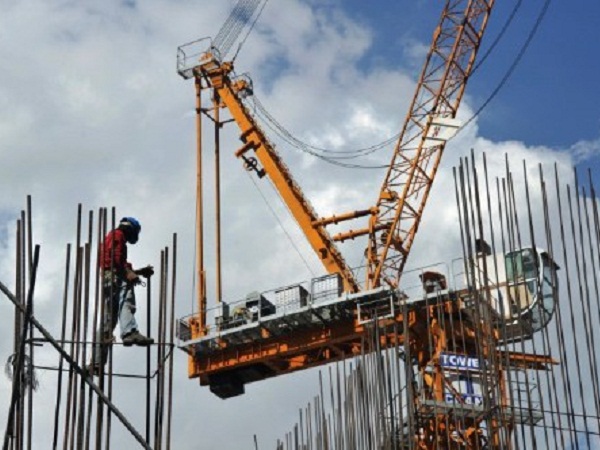
Workers check the reinforcing bars at a construction site in Makati, the financial district of Manila on Monday, January 30, 2012. The Philippine economy is expected to grow at a faster pace this year than in 2011, when it posted a "feeble" 3.7 percent growth. AFP PHOTO/NOEL CELIS


The Philippine economy will likely grow at a faster pace this 2012 from last year’s anemic performance as the government’s pump-priming could add to the momentum from private consumption and prospective export recovery, according to New York-based think tank Global Source.

In a report titled “Nowhere to Go but Up?” written by Filipino economists Romeo Bernardo and Margarita Gonzales, Global Source said a 4.5-percent gross domestic product growth for this year remained achievable, “where surprises may even be on the upside.” The commentary was issued after the government’s announcement on Monday of a 3.7-percent full-year 2011 GDP growth.

JP Morgan Chase & Co. agreed that with the help of a low interest rate environment, the Philippines would likely achieve a faster economic growth this year, possibly within the 4-percent territory.

HSBC economist Trinh Nguyen added that while the government would likely “do what it can to boost growth,” the Philippine economy would expand by only 3.6 percent this year.

All the growth forecasts fall short of the Aquino administration’s official target of between 5 and 6 percent.

The Global Source report also predicted that the Bangko Sentral ng Pilipinas might sanction another 25-basis-point policy rate cut before the year ends “while the inflation outlook remains benign and before a growth pickup is fully established.”

JP Morgan Chase also expected the BSP to cut by end-March the key policy rates by another 25 points to again hit the record lows, saying the monetary agency would likely take advantage of the low-inflation environment.

But HSBC’s Nguyen, despite her slower growth outlook, no longer expected the BSP to cut key interest rates further after the quarter-point reduction in January.

“Exports are unlikely to recover in 2012, but acceleration of government consumption growth should continue supporting growth throughout this year,” Nguyen said. “The BSP supported growth by cutting interest rates by 25 [basis points] in January 2012. However, ample liquidity and robust domestic demand conditions means further cuts are unlikely.”

Global Source said that apart from base effects, there seemed to be some momentum coming from private consumption, which still grew a robust 6.7 percent annually in the fourth quarter of 2011, likewise up 1.6 percent quarter on quarter on a seasonally adjusted basis.

The think tank added that the peso depreciation during the period likely enhanced the purchasing power of remittances, which had been growing quite robustly (by about 7 percent) while compensation of overseas workers as recorded under net primary income rose 3.6 percent after dipping annually for three consecutive quarters.

“We also anticipate some recovery in merchandise exports as firms in the electronics and semiconductor industry have started to note an increase in orders that could bring volumes back up to 2010 levels,” the Global Source research said. This would translate easily to double-digit growth which, while seemingly impressive, actually comprises one-offs – such as a rebound in production from supply disruptions tracing to Japan’s tsunami and nuclear crisis and massive Thai floods,” the think tank said.

“Because of the country’s cost advantages, we believe services exports, which grew by 18.5 percent in the fourth quarter last year, will likely remain strong despite threats of a clampdown on the outsourcing sector by the current US government,” the research said.

Wednesday, January 4, 2012

...the growth stimulator

Gov’t seen to rev ‘all engines of growth’

By: Ronnel W. Domingo
Philippine Daily Inquirer
 
AMANDO M. TETANGCO JR.: Sound advice to government


The central bank has room to lower its policy rates should the global economic growth slow down further, but Malacañang must spend wisely to maximize a “limited policy space,” according to monetary officials.

Bangko Sentral ng Pilipinas Governor Amando M. Tetangco Jr. on Tuesday said that, along with an “appropriate” monetary stance, targeted government spending and the participation of the private sector would set “all engines of growth [to] fire up.”

In the Monetary Board’s meeting on policy rates last December, it was decided that the overnight borrowing rate and overnight lending rate be maintained at 4.5 percent and 6.5 percent, respectively.

The BSP said the decision was based on the assessment that the inflation outlook would continue to be manageable.

“The global growth picture has indeed turned more negative since mid-2011,” Tetangco said. “But if policymakers and the private sector are able to harness these buffers, our country will be able to meet the challenges of 2012 head-on.”

The government will have to ensure that its spending is targeted at sectors that will lead to greater job generation, apart from infrastructure projects that will solidify the base for sustained growth, the BSP chief said.

According to Budget Secretary Florencio B. Abad, the government has already started the ball rolling by allocating P438.8 billion, or about a quarter of this year’s national budget, to five priority areas for job generation and economic development.

This is “on top of the established drivers of growth like semi-conductor and electronics, business process outsourcing,” Abad said, adding that emphasis would be placed on tourism development, agriculture and fisheries development, and general infrastructure.

He said this year’s budget for the economic sector covers P182.2 billion for the government infrastructure program, and P22.1 billion for public-private partnership (PPP) infrastructure projects.

Also, there is a total of P10.9 billion for programs related to the production of rice, corn, high-value crops, livestock and fish.

Further, P24.5 billion has been earmarked for the construction, restoration and rehabilitation of irrigation systems.

Friday, November 4, 2011

...the economic prospect


Growth prospects for PH economy


By: Dr. Bernardo M. Villegas
Philippine Daily Inquirer
 
 
Once again, the Philippine economy may be one of the few in East Asia that will post a respectable GDP growth of 5 to 6 percent in 2011, despite the double-dip recession that is threatening most of the developed countries. While its exports may come to a standstill, the Philippines has a sufficiently large domestic market—like Indonesia and Vietnam—to continue fueling its growth with domestic consumption and investment. At no other time in the last 20 years is the Philippines awash with local capital and enjoying relatively low rates of inflation and interest.

To further sweeten the pot, the Philippine government is also in the best position to lower the interest rate on its debt as the three credit rating agencies—Standard & Poor’s, Moody’s Investor Service and Fitch Ratings—have complimented the country’s economic managers for “the favorable developments in the country, like on the monetary policy side.” Representatives of the credit rating agencies in late September 2011 recognized the resilience of the banking system; the significant improvement in the fiscal position (budget deficit in the first eight months was only P34.5 billion compared to the P300-billion ceiling set for the whole year); and the very visible efforts of the government to improve governance, particularly with the passage of the Government-Owned or Controlled Corporations (GOCC) Governance Act of 2011. All these favorable developments could earn the Philippines an investment grade rating in the near future. Another feather in the cap for the Philippine economy was the recent awarding by the Emerging Markets magazine of the Euromoney group of the “Finance Minister of the Year for Asia 2011” title to Philippine Finance Secretary Cesar V. Purisima.

With all these favorable developments, Philippine GDP can still rise by 8 percent in the second semester, making a 6 percent growth for the whole year of 2011 still within reach. A close cooperation between the private sector and the government can make a strong recovery from the 3.4 percent growth in the second quarter of this year possible as investments take off in the last quarter.

The second quarter of 2010 was an abnormally bullish period for the national economy because there were three extraordinary forces that converged then: the billions of pesos spent by the candidates for the May 2010 elections, the peaking of the pump-priming that was a responsible response of the last administration to the Great Recession, and a surge in exports that were the short-term results of a 7 percent growth in the US GDP in the last quarter of 2009, a seeming recovery that was clearly a flash in the pan considering the double-dip recession that is staring the Americans in the face today. The second semester of 2010 saw things returning to normal, with political spending reduced to zero, the beginning of belt-tightening of the Aquino administration, and the rapid deceleration in the growth of export. Thus, with a lower base from which to grow, the possibility of an 8 percent growth in the second semester of 2011 is not an impossibility.

Those who have downgraded their forecasts for 2011 are basing their pessimism on the delays in the implementation of the big-ticket projects under the public-private partnership (PPP) initiative. There are, however, a good number of non-PPP projects that a revitalized Department of Public Works and Highways under the leadership of Secretary Rogelio Singson started to aggressively implement by July 2011.

Besides, there are numerous smaller infrastructure projects at the level of the local government units that are being undertaken. Through the Center for Research and Communication, I work closely with a team of economists, management specialists, urban planners and public administration professors in helping develop and implement economic programs for municipalities and provinces all over the Philippines. Everywhere I see numerous versions of PPP projects that do not attract the same attention as the big-ticket items (e.g. MRTs, LRTs, airports, power plants, etc) that are regularly monitored by the press.

The LGU heads are keenly aware that they have a short window of opportunity to implement projects like farm-to-market roads, irrigation systems, public markets, school buildings, mini-dams and innovative renewable energy projects, etc. They are in a rush to implement these projects because they know that they only have some 18 months before January 2013 when it would be too late to show to their respective constituents that they deserve reelection because of concrete accomplishments. That is why I believe that LGUs will contribute significantly to the increase in investments for the next 18 months. Therefore, I am bullish not only for the rest of the year but also for the whole of 2012 during which I see a 7 percent growth of GDP as attainable.

Dr. Bernardo M. Villegas is senior vice president of the University of Asia and the Pacific. His email address is bernardo.villegas@uap.asia

Wednesday, July 20, 2011

...the positive outlook

Philippines’ economic outlook “favorable”—IMF


Agence France-Presse


MANILA, Philippines—The International Monetary Fund on Wednesday praised the Philippine government for its handling of the economy, saying the country’s outlook was “favorable” despite the shaky global recovery.

The fund said it expected the Philippine economy to grow at five percent both this year and the next despite a minor slowdown experienced in the first half of this year.

“The near-term outlook for the Philippines is favorable, characterized by moderating but still rapid growth,” the IMF said in a statement following a staff visit to the country.

Although growth eased in the first half of 2011 in part due to the effects of the earthquake, tsunami and nuclear crisis in Japan, economic activity is expected to pick up for the rest of the year, the statement added.

The fund also lauded the government of President Benigno Aquino, who took office in June 2010, for starting “reforms to address long-standing constraints to growth.”

They include fiscal reforms aimed at raising the necessary revenues to allow for faster growth, which benefits greater numbers of the Philippine’s impoverished population, the IMF added.

The country’s financial sector had remained resilient while the central bank had acted “appropriately” by raising interest rates and banks’ reserve requirement earlier this year to deal with inflationary pressures.

The Philippine government previously announced that economic growth slowed to 4.9 percent in the three months to March.

The government has forecast growth of five to six percent this year.

Wednesday, February 23, 2011

...the competitive edge

Improved investment climate to push PHL economic growth — WB

If its investment climate would continue to improve, the Philippines will likely post a respectable economic growth of more than 5 percent this year and the next, according to a World Bank report released Wednesday.

In its latest publication, "Philippine Quarterly Update," the multilateral institution said a more competitive investment environment will possibly drive the Philippines to have a growth forecast of more than 5-5.4 percent in 2011 and 2012.

World Bank country director Bert Hofman said in a statement that last year's "strong" private investment and upbeat business confidence are "encouraging signs that the economy can attract investments needed to boost potential growth and generate more jobs."

The Philippine economy grew by 7.3 percent last year — the highest in 34 years.

The report, however, identified the mounting of international oil and food prices as "downside risks" that could drag the economic growth of the Philippines.

The bank said price increases in the domestic front are projected to remain "contained" due to recent strong domestic palay production, good planting intentions, record stock piles of rice, and domestic retail prices significantly above international prices.

National Statistics Office records showed that the country's inflation accelerated to 3.5 percent in January — the fastest acceleration since August last year — from 3 percent in December.

Inflation averaged at 3.8 percent last year, well within the forecast range of 3.5-5.5 percent. The Bangko Sentral ng Pilipinas has set the annual inflation to average from 3-5 percent this year. — JE/OMG, GMA News

Saturday, December 11, 2010

...matuwid na daan

IMF: PHL economy to grow 5% in 2011

Multilateral lender International Monetary Fund (IMF) on Friday upgraded to 5 percent its 2011 growth forecast for the country's gross domestic product (GDP) from an earlier forecast of 4.5 percent.

IMF mission chief Vivek Arora said in a press conference that the Philippines emerged well from the global financial crisis as strong financial liquidity and a sound financial sector helped cushion the economy against the worldwide economic crunch.

The IMF, however, decided to retain this year’s economic growth forecast to 7 percent.

The Cabinet-level Development Budget Coordination Committee (DBCC) sees the country’s GDP growing by 5-6 percent this year and by 7-8 percent next year.

Arora said that the Aquino administration needs to sustain the recovery and strengthen the pace and quality of sustainable growth.

The government’s focus on governance and investment has resulted in high investor confidence and improved growth prospects, he added.

“Doing so will require preserving macroeconomic stability by carefully managing the exit from crisis-related stimulus policies in an environment that is complicated by large capital inflows and fragile global economic recovery, and moving ahead with reforms," Arora said.

IMF said it already took into account the much-needed infrastructure projects under the public-private partnership initiative of the government in measuring the country’s economic growth forecast for next year.

Inflation

Meanwhile, Arora believes that the country’s inflation would remain within the target range of 3.5-5.5 percent for this year and 3-5 percent for next year as set by the Bangko Sentral ng Pilipinas (BSP).

“Inflation should remain at around 4 percent this year and the next," he said.

The IMF acknowledged the BSP’s role in keeping inflation low while fostering economic recovery.

The multilateral lender reiterated that the central bank kept its key policy rates steady at record lows but lifted its crisis-related measures to support economic growth.

Since July last year, the policy-setting Monetary Board has placed the overnight borrowing and lending rates at 4 and 6 percent, respectively.

However, there is a need for monetary authorities to tweak its key policy rates as output gap is starting to close and prices are starting to rise in Asia, according to the IMF.

“With the narrowing output gap, it may be necessary to start normalizing the policy stance in the near term in order to forestall excess liquidity and inflation pressures. If the global environment were to worsen, or other downside risks materialize, the pace of policy normalization could be adjusted," Arora pointed out.

The IMF underscored that rising capital inflows need to be carefully managed by the BSP in order to avoid asset price inflation and macroeconomic volatility.

Efforts toward fiscal consolidation

Arora is confident that the Philippines would be able to achieve its budget deficit ceiling of P325 billion or 3.9 percent of GDP this year despite the collection shortfall from the Bureau of Internal Revenue and the Bureau of Customs.

“The government’s efforts toward fiscal consolidation should help provide the budget with more space to respond effectively to future shocks. The authorities’ emphasis on strengthening tax administration is welcome and the [IMF] is committed to supporting these efforts with technical assistance," Arora said.

He also stressed the need of the government to rationalize fiscal incentives, address tax distortions, and reform excise taxes, particularly in sin products such as alcohol and tobacco products. — JE, GMANews.TV