Showing posts with label foundation. Show all posts

Monday, February 25, 2013

...the beauty queen's purpose

Dutch-Pinay beauty queen eager to help poor kids in PH


02/25/2013


AMSTERDAM - Former Ms. Netherlands 2006 Sheryl Lynn Paderes Baas believes that her crown and scepter are tools to help improve the lives of children in far-flung areas in the Philippines.

With the help of the Miss Netherlands Foundation, Baas started the Sheryl Lynn Foundation (SLF) at age 23, an organization focused on helping children through education. Her initial projects were done in the province of Leyte where her mother Susan Baas-Paderes was born.


In addition to sending school supplies and granting scholarships, SLF raised funds for construction of school facilities like toilets, stage and function areas in St. Fe Iton, Tagos, San Isidro, Tab-ang and other schools in Leyte. Their biggest project yet is a three-classroom building in Hitoog Elementary School where children used to have lessons in a small hut under a bamboo tree.


Inspired by her mother

Baas said that her mission was inspired by the story of her mother Susan, herself a product of a family where children have to help their parents earn money by peddling wood on the street, sometimes skipping school to be able to afford a meal.

“My mother told me stories about how she and her 12 siblings would only have one egg and a little bit of rice to share during a meal. A lot of people also told her that she should not go to school but work instead. But despite their poverty she persevered and finished her studies, went abroad, became successful and helped her family have a better life,” she said during an interview at her parent’s house in Capelle a/d Ijssel.

Even in the Netherlands, Baas said that her mother is also very helpful to other Filipinos, from her neighbors to the church and even to strangers who only wrote her letters. She grew up in this environment of kindness and giving.

Unfortunately her mother suffered a stroke that almost killed her and left her in a wheelchair. Baas believes that it’s her mother’s kindness and the prayers of those people she helped that aided her miraculous survival.

Children and education

The story of her mother’s rise from poverty opened Baas’ eyes to the importance of education especially to young children. During her regular trips to the Philippines since she was three, she had also been exposed to the difficulties experienced by families from poor provinces.

“I wanted to do something about that (poverty). During my reign as Miss Netherlands, I got involved in a lot of charitable projects and I had a dream for the future. I saw that this is already an opportunity and thought I can already start something meaningful now even though I was still young so I grabbed the opportunity.”

Now 27, she is currently the reigning Mrs. Holland Globe and recently represented the Netherlands in Mrs. World Pageant 2012 in California, USA where she won second place.

She also juggles a modeling career, her studies and taking care of her mother. But this did not stop her from the cause which is nearest to her heart. She holds regular charity events to raise funds for the Sheryl Lynn Foundation with the support of her fellow beauty queens in the Netherlands and contacts that she makes as part of her functions as a beauty queen.

“It may sound as a cliche but children are the future and it is true. The story of my mother only proved what education can do for a child. They are the most vulnerable people in any developing country.”

Even though her foundation is still small, Sheryl hopes that in the future, she can also extend help to other provinces in the Philippines. This is also the reason why she took up a course in Anthropology and will go to the Northern Philippines to research problems with water management and how it affects the lives of the people in these areas.


Thursday, January 26, 2012

...the Big Apl

100% Made in the Philippines


By: Eric S. Caruncho
Philippine Daily Inquirer
(First Published 07 January 2012)


You can go home again.


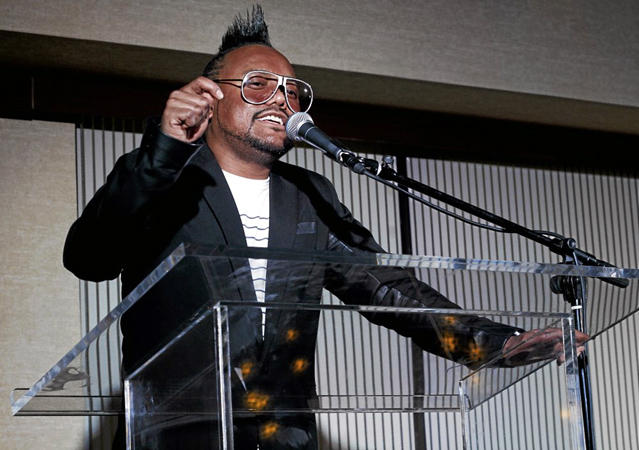
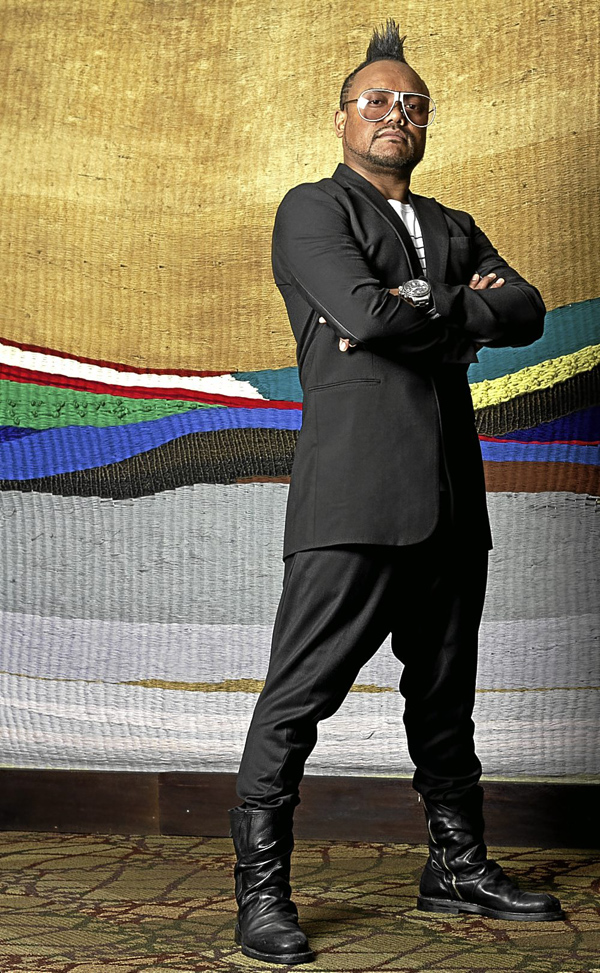
With his trademark Mohawk hairdo, and pimped out in an all black outfit and black, knee-high biker boots, Black Eyed Pea apl.de.ap a.k.a. Allan Pineda Lindo Jr. stands out in a sea of white barongs.

The cream of corporate Makati, mostly bank executives and their staff, have gathered together in a Legaspi Village penthouse ballroom to honor Apl who has been chosen one of the Bank of the Philippine Islands’ BPInoy awardees for 2011.

The annual accolade goes to Filipinos who have done their country proud in the international arena. apl has been chosen not only because of his membership in the Black Eyed Peas, a massive global pop franchise that has sold more than 56 million albums worldwide, but also because for the last few years, he has been coming home to the Philippines to give some of his blessings back to the land of his birth.

At first it was just an annual Christmas homecoming that saw apl giving out gift packages to the less fortunate residents of his hometown in Angeles City, Pampanga.


BIG APL: As BPInoy awardee (Inquirer Photo/Alanah Torralba)

The last couple of years, however, apl has made it more formal by establishing the apl.de.ap Foundation to serve as the vehicle for his humanitarian efforts.

Last August, he donated a computer lab and library to his old school, the Sapang Bato National High School in Pampanga. He also built a music studio at the Holy Angel University, also in Angeles City, where young Filipinos can hone their talents.

But apl has set his sights beyond his hometown: he plans to take his mission nationwide. In partnership with the Ninoy and Cory Aquino Foundation, which has appointed him a “special ambassador for education,” he has chosen to focus his efforts on an education advocacy campaign called “We Can Be Anything.”  It is a perfect fit for the man who once said: “dreaming big and doing something about it can get you really far.”

To help drive the message home, apl composed and recorded the single “We Can Be Anything,” complete with inspirational music video.

“I think that with an education, you can be anything,” he says.  “You could be a musician, you could be an artist, but with an education you always have a background to fall back on.  It’s really important for me to give the youth an equal opportunity. I want Filipino kids to compete around the world, with technology and computers and stuff.”


He plans to continue building more computer labs and music studios.

“I want talented kids that are into music to have an outlet, to have a place to go to and record demos, and practice,” says apl. “In the future I want to be able to discover talents from the Philippines, and that’s why it’s important for me to provide technology and music studios and library. You never know, I might find the next Black Eyed Peas.”

He has also pledged to help in building 10,000 new classrooms in the next two years, to help the Department of Education put a dent in the estimated shortfall of 68,000 classrooms throughout the country.  Among other things, he has been using his celebrity status to raise funds abroad for this purpose through various charities.

“I’ve also been talking to companies in the US like Google,” he says.  “There’s a Filipino team in Google who are planning to teach kids computer science and technology via the Internet.  Now that we’ve build these computer labs, we have to teach the teachers how to teach kids to work with these computers.”

Despite the Christmas rush, apl also took time out to visit calamity-stricken Cagayan de Oro, and to spend time in La Huerta, the underprivileged community in ParaƱaque where the video for “We Can Be Anything” was shot.

Like other celebrities who are driven to give back, he seems to be motivated by a deep sense of gratitude for the opportunities he has been given, and the realization that things could very easily have turned out differently.

Sapang Bato, where Allan Pineda Lindo Jr. was born on November 28, 1974, lies on the hilly outskirts of Angeles City, near Clark Air Base.  His biological father, a black American airman, abandoned the family right after Allan was born, leaving his mother Cristina Pineda to support him and six other siblings.


“We were poor, but my mom is like a superwoman—she’s just a great entrepreneur,” apl recalls.  “We used to have a store in front of the house, and she was great with turning money around.

Nevertheless, life was hard, and as the eldest, apl had to help feed the family from a young age.

“I remember when I was around 10 years old, I would go with my grandfather to the mountains to farm.

 Marunong akong magtanim ng mais, ng kamoteng kahoy (I know how to plant corn and cassava).  He taught me how to ride the kalabaw, and I know how to araro (to plough). And how to make charcoal.  I used to have to deliver the crops to the palengke at around 3 a.m.”

It was hard work, especially for a 10-year-old, but apl had imbibed the traditional Filipino family value that the eldest son had to share some of the responsibility for supporting the household.

“I used to like doing it,” he says.  “Being the panganay, I was just willing to help my grandpa and stuff.”

To make things even more difficult, he had been born with nystagmus, a condition that causes involuntary eye movements and which leads to impaired vision.  Although he was a good student, apl sometimes had to sit in front to be able to read the blackboard, or copy his seatmates’ notes.

“It was pretty hard, but I’ve learned how to adapt to my surroundings,” says apl, who is considered legally blind because of his affliction.  “When I was young I didn’t know how to control it, but since I’ve grown up I’ve learned to conquer it, I guess. It’s weird, sometimes I feel like I have selective sight, ’cause I’m very good at basketball, none of my friends can beat me in bowling, none of them can beat me in pool, I can break-dance, and pretty much do everything.  I just can’t drive.”

Being a “G.I. baby,” apl was eligible for assistance from the Pearl S. Buck Foundation, a US-based NGO founded by the author of “The Good Earth” and dedicated to helping Amerasian children.

Through the Pearl S. Buck Foundation, the young boy found a sponsor in Joe Ben Hudgens, a children’s rights attorney, who sent money for tuition and school supplies.  Eventually, his mother arranged for Hudgens to legally adopt her son.

apl had mixed feelings about being adopted: he was grateful for the opportunities that being in the US opened up for him, but he was also homesick and missed his family.

“When I first got adopted and brought to the US, I would write home, and sometimes I’d get my allowance and put it in the letter.  Sometimes it wouldn’t make it, so what I started doing was, every dollar I had I would write down the serial number in the letter, so at least if somebody took it, they would know that I tried to send some money back.”

Still, going from Angeles, Pampanga to Los Angeles, California was a culture shock for the 14-year-old boy.

“I remember when I first got to the US, there were a lot of gangs—Filipinos fighting other Filipinos.  It didn’t make sense to me.  I met a Filipino friend who used to dance, and he had a certain attire—long polo shirt, black pants and Vans, and I thought that was a dancer’s attire.  But when I tried to dress like him, I was chased home by other Filipinos.  I guess it was a gangster’s attire.

Music proved to be his salvation.  Back in Angeles, the year before he left for the States, he had gotten into break dancing after seeing youngsters at school doing the old school popping and locking moves.

“I didn’t come to the US to be a gangster, so I changed my whole attire and focused on break dancing and making music, and I became neutral with everybody.  I could hang out with the gangsters, I could hang out with the Fil-Ams, I could hang out with what they called the FOBs—fresh off the boat—because I was into music.  Music gave me that positive outlook instead of (me) getting caught up in gangs and fighting other Filipinos.  That wasn’t my purpose.  My purpose was to make it so I could help my family.”

apl also found a kindred spirit in future Black Eyed Pea William Adams, a.k.a. will.i.am—a nephew of his adoptive father’s roommate.

“My dad needed a babysitter for me, and Will’s uncle suggested Will’s mom Deborah.  They took me to Will’s house, and Deborah made Will stay home from school to hang out with the kid from the Philippines.

 He said, ‘So what do you guys do in the Philippines?’ and I said ‘I like to break-dance, I just learned this new move called the running man that I saw in a Pepsi commercial’ and he said ‘I dance too.’  We just started having conversations and the rest is history.  We became best friends.”

William lived in East LA, in the ghetto, and apl liked hanging out there, perhaps because it reminded him of home.  In any case, the pair got deeper and deeper into music, eventually forming a group called Tribal Nation, which later evolved into A Tribe Beyond A Nation or ATBAN.

“We would go to a lot of Filipino house parties in Glendale and West Covina and the Valley, and we would just start free-styling. From dancing we started rapping. And we wanted to learn, ‘where’s this music that we’re dancing to from,’ so we started researching that, and we got into producing and making beats and composing songs.”

Even in the eighth grade, apl already had that drive to make it.

“I made sure I surrounded myself with good friends, with the same values.  My whole purpose in being adopted and going to the US was for my family, so I never strayed from that.  I gotta make it.  I gotta pursue my dreams and be able to go back home to help my family—that was always in the back of my mind whatever I went through.”

It was a struggle, specially in the early days when hip hop was dominated by gangster rap and the whole East Coast vs. West Coast rivalry. Music business types didn’t know what to make of the multicultural stew that would become the Black Eyed Peas.

“I was influenced by groups like A Tribe Called Quest, De la Soul, the Jungle Brothers, Boogie Down Productions.  I gravitated more toward the old school and break dancing, and that’s really influenced how we wrote, because the way they made music was more for fun instead of killing and slapping girls, and ‘I got all this money.’  It was more about the art and the movement of hip hop and that’s why I think our music was positive. We didn’t have it in us to be gangsters.”

In a sea of bitch this and ‘ho that, apl’s music was actually a breath of fresh air.  But it would take time for the industry to catch up.

“It didn’t come overnight,” he recalls.  “It was hard to get signed by a record company because we weren’t gangsters and we were so different.  We had to prove ourselves—we would play at clubs, colleges, and what we would do was we would have a notebook with a mailing list, and we would call these people for the next show.  We had to actually create a following, and prove to the record companies that there is a market for that kind of music.  We would do shows for 5,000 people, and we had to prove to the record labels that there is room for eclectic and more progressive type of music.”

Finally, apl and Adams got themselves signed in 1992.  Three years later, after Jaime Gomez a.k.a. Taboo joined, they changed their name to the Black Eyed Pods, and then the Black Eyed Peas.  Their first two albums—“Behind the Front” (1998) and “Bridging the Gap” (2000) garnered critical acclaim, but after Stacy Ferguson a.k.a. Fergie joined in 2003, and the band released their third album “Elephunk,” critical mass was finally achieved, and the multi-platinum pop phenomenon that we know today as the Black Eyed Peas assumed its present form.

But apl’s elation at his band’s finally achieving success after years of struggle was tinged with personal tragedy.  Back home in Sapang Bato, his troubled brother Arnel had taken his own life.

“That was a dark period in my life,” he recalls.  “He had certain personal vices, and he suffered from depression.  I’m pretty sure he felt bad inside and couldn’t take it anymore.  I felt like if I had been there as a big brother, I could have stopped him.  Sometimes life just gets you down, and I wish he had somebody to run to.

These mixed emotions inspired apl to write what eventually became “The Apl Song” on “Elephunk.”

“I was in the studio experimenting with sampling, and I remembered that my mom used to listen to Asin all the time,” he says.  “That was the same time when my brother passed away, and I wanted to dedicate a song to him, and also tell my life story, and that chorus from [the] Asin [song ‘Balita’] just really touched how I was feeling, and I just kind of did it.  Will came over to the studio and I played it for him, and he said ‘That’s pretty dope, you should put that in the album yo.’  Really? But it’s in Tagalog—people wouldn’t understand.  But he said, it’s not about understanding it, it’s about the feeling.  You’re sharing your musical culture.”

The band’s wholehearted support strengthened apl’s inclinations to represent where he was from in his music.  While it wasn’t the worldwide hit that “Where Is The Love” was, “The Apl Song” endeared the Black Eyed Peas even more to their Filipino fans, and even gave the reunited Asin a boost for a time.

Even as the Black Eyed Peas’ star continued to rise, tragedy continued to dog apl.  In 2009, he lost another brother, Joven, this time to murder.

All of this darkness in his personal life only seemed to underscore how blessed Pineda has been, and has only strengthened his desire to share the fruits of his success with his countrymen.  Now that the Black Eyed Peas are on a hiatus, apl’s advocacy work has gone to the forefront.

“I’m going to focus on ‘We Can Be Anything,’” he reiterates.  “We’ve got two years to build 10,000 classrooms and I’m going to focus on that.  I’m also going to build my next computer lab from the apl Foundation.”

Also in the works is apl’s long-awaited solo project.

“It’s going to be more personal,” he says.  “I’m gonna try to write more Tagalog songs.   I’m Kapampangan so I wanna write a Kapampangan song in there. I like a lot of different music genres from dance music to drum and bass, so I’m going to mix it all up.

The solo project will likely reveal more of Apl’s Filipino roots

“I’m still into the classics. I love listening to Asin, Freddie Aguilar, Florante.  I like Gloc 9—big fan.  Also Bamboo, Slapshock.  Oh and I’ve just been researching Tito, Vic and Joey’s old stuff, all their dance disco stuff with VST and Co. I want to collaborate with them. I want to remix their song—I think it’s called ‘Magsayawan Tayo.’”

When he’s not performing with the Black Eyed Peas, apl is also a much-sought after DJ.

“My DJ career is getting bigger now,” he says.  “I’m apl.de.ap a.k.a. the Party Man.  I like to DJ around the world and play at festivals. I like going out to clubs and experiencing new types of music.  I think that’s how you stay fresh and how you can be current on what’s going on in the music world.”

But for all his globe-trotting, home for apl will always be here.

“I’m made in the Philippines all the way,” he says proudly.  “I grew up here until I was 14, and I could never change that.  It’s just a certain feeling.  When I’m here I feel at home.”

Saturday, December 24, 2011

...the OFW Ambassador


OFW is first UN Citizen Ambassador

NEW YORK City – Twenty-three year old Jonathan Eric Defante's 30-second-pitch on Youtube, his entry to the 2011 Citizen Ambassador's Video Contest, earned him one of the three spots to become the first Filipino Honorary United Nation's Citizen Ambassador.

Honored as best in concept, originality and execution, Defante's "One Bottle, One Life" pitch to UN Secretary General Ban Ki-moon is about using plastic bottles to build model communities around the world.

On his Youtube pitch, Defante said, "So let's create a model community in every Nation, made of used plastic bottles or eco-bricks, built by the people themselves, and are sustained by livelihood from plastic recycled bottles. The communities can be organized into cooperatives to sustain their livelihood for the years to come, changing lives, one bottle at a time."

Defante's entry bested 600 other Youtube entries from 50 countries around the world.

Defante said, "I was like literally jumping (for joy), kasi hindi ko talaga siya in-expect. Kasi after I submitted the video, marami nang pumasok, yung iba talaga may professional editing pa, kasi ako I just used iMovie 11, lahat hiniram ko lang, pati flipcam."

Defante, an OFW working at a Virgin Megastore in Dubai, in the Middle East, together with two other video contest winners from Sudan and Guatemala received round trip tickets to New York and met with the Secretary General Ban Ki-moon in person privately last Friday.

“Sinabi niya na “Jonathan, I'm impressed with your idea to build communities in each member State. So, I, myself, as an environmentalist, I would like you to continue this work of yours.” So sana daw hindi lang mag-serve yun as an idea, maging reality daw yun," he said.

The UN Secretary General's inspiring words encouraged Defante to do even more.

"Parang now, I want to do more, to be more involved in humanitarian activities especially sa mga Non-Governmental Organizations (NGOs), like My Shelter Foundation, saka sa Hug-It Forward in Guatemala," said Defante.

The UN video contest was made in observance of the World Humanitarian Day. Defante encouraged Filipino youths from all over the world to do more humanitarian work, even without getting a prize for doing so.

“Sa mga kabataan especially, this is the best time to express any idea that would benefit mankind kasi we have tools for it, di katulad dati, ngayon we have social networking, we have Youtube, Facebook, etc." he said.

Defante will hold the honorary title as UN Citizen Ambassador for two years but it may be extended by the United Nations if he continues his humanitarian work.


Wednesday, December 14, 2011

..the UNESCO essay winner

Filipino wins (Goi Peace Foundation essay contest)


By ELLSON A. QUISMORIO
December 14, 2011
Manila Bulletin

MANILA, Philippines — A 20-year-old nursing student from the Philippines won the top prize in the youth category of the Goi Peace Foundation and United Nations Educational, Scientific and Cultural Organization sponsored International Essay Contest for Young People, the Department of Foreign Affairs said on Wednesday.


Dan Erwin Cruz Bagaporo, senior Nursing student from the University of Sto. Tomas, was given the Ministry of Education award as the top prize. The awarding ceremonies took place in Tokyo last November 19.


In his winning essay titled "Pride in Profession," Bagaporo cited how his volunteer experience in a retirement home in the Philippines helped instill his pride as a nursing student, reinvigorate him in becoming more active in the Red Cross and medical missions, and kindle his interest in research and geriatrics after graduation, among other things.


Bagaporo's victory marked the second time that a Filipino won the youth category of the international essay contest. In 2007, Anna Rose ElicaƱo won with her essay titled "Amplifying Peace Across Borders."


Monday, December 12, 2011

...the 2011 CNN Hero of the Year

Fil-Am midwife is named CNN Hero of the Year

 12/12/2011

Robin Lim (L), a Filipino-American midwife, as been named 2011 CNN Hero of the Year.

MANILA, Philippines - Robin Lim, a Filipino-American midwife who helps poor women have healthy pregnancies and births in Indonesia, has been named 2011 CNN Hero of the Year.

In Sunday's star-studded ceremony at The Shrine Auditorium in Los Angeles, Lim received the CNN Hero of the Year 2011 award from Anderson Cooper.

"Today on our Earth, 981 mothers in the prime of their life will die -- and tomorrow again and yesterday. And I'm asking you to help change that. We don't even know how many babies are lost, but all of us can help change that," a tearful Lim said, as she accepted the honor.

Lim, who was born to an American soldier and a Filipino mother, decided to become a midwife after her younger sister died from pregnancy complications a few years ago.

She and her husband sold their house in Hawaii, and moved to Bali, Indonesia to "reinvent" their lives.
In Indonesia, Lim noted pregnant women are 300 times more likely to die in the next 12 months than women who are not pregnant.


Fondly called as "Ibu Robin" (Mother Robin), she has been running her free clinics Yayasan Bumi Sehat (Healthy Mother Earth) in Bali and Aceh with Indonesian midwives since 2003. The clinic provides free prenatal and birthing services for poor Indonesian women. Lim also provides training for young midwives.

Christy Turlington Burns, model and founder of Every Mother Counts, introduced Lim as one of the Top 10 CNN Heroes during the ceremony. She recalled having a life-threatening complication during her own pregnancy.

"My wish is that every mother all over the world has the same chance surviving childbirth I had. My friend Robin Lim shares that wish and she spends her days and nights making it so," Burns said.

With Lim being named CNN Hero of the Year, her non-profit Bumi Sehat Foundation will receive a $250,000 grant. This is in addition to the $50,000 already given to each of the Top 10 CNN Heroes.

The CNN Heroes awarding ceremony was attended by stars such as Jerry Seinfeld, Sofia Vergara, will.i.am., Miley Cyrus and Kid Rock.

CNN Heroes is a multi-platform campaign that "shines a spotlight on individuals who go to extraordinary lengths to serve others." This year, the campaign reportedly received over 10,000 submissions from more than 100 countries.

In 2009, Filipino Efren PeƱaflorida, who started a "pushcart classroom" to bring education to poor children as an alternative to gang membership, was named CNN Hero of the Year. He was the first Filipino to win the award.

Wednesday, December 7, 2011

...the global film winner

Pinoy student wins in global film competition

 12/07/2011


MANILA, Philippines - An 18-year-old Filipino student is one of the three winners in this year's Faith Shorts, a global film competition by the Tony Blair Faith Foundation.

Paulo Reyes' "First Steps to Recovery" won in the Family category of the competition, where budding filmmakers aged 14 to 18 years old were made to express their thoughts on the theme "Let me show you how my faith inspires me."

The short film tells the story of a journalist who was inspired by the strong faith of a boy who is suffering from cancer.

The two other winning films of Faith Shorts 2011 include "Muhammad in Accrington... Inspiring Me" by Amna Islam of the United Kingdom (Action category) and "Be the Change You Want to See" by Nadim Merrikh of Canada (Musical category).

The entries were judged by Tony Blair, Hollywood stars Hugh Jackman and Jet Li, Bollywood star Anil Kapoor and former FOX Studios president Sherry Lansing, among others.

"This new generation holds the potential to help turn the tide against rebellious tensions, building unity to counter those who see faith as a source of division and conflict," Blair said, referring to year's contestants.

Meanwhile, Education Secretary Armin Luistro said: "I and my fellow countrymen look forward to watching more of your films in the future."

"Congratulations, Paulo. The Philippines is behind you," he added.

Tuesday, August 9, 2011

...the chairwoman

Pinay chairs one of America's top 100 foundations

Tessie Guillermo is the only Filipina chair in America's top 100 foundations. Asian Journal
A multi-awarded Filipina is making waves as by far the only Filipina chair in America’s top 100 foundations.

Tessie Guillermo chairs the California Endowment, which created the California FreshWorks Fund (CAFWF) launched at a healthy food summit last July 20.

No less than First Lady Michelle Obama had announced the launch of the CAFWF, a public-private partnership that aims to increase access of healthy food in underserved communities in California.

Guillermo is the only Filipino-American who sits as chairman of the board of one of the top 100 foundations in the US today, the Asian Journal reported.

Guillermo is married to Filipino Reggie Regino from the banking industry. They have two daughters, Melanie and Veronica, and a son, Rennie.

“Although born and raised here, Tessie says she ensures that her children are aware of their culture and takes effort to teach them of their Filipino cultural heritage," the US-based news site said.

Guillermo has been a member of the California Endowment’s board of directors since April 2003 and was elected chair on April 2010.

The CAFWF was created by the California Endowment and a team of partners including grocers, major banks, healthcare organizations, and community groups to develop new and improved places to buy nutritious food.

Health and welfare

Guillermo’s expertise in the health and welfare concerns of Asian Americans and Pacific Islanders has been recognized in California and throughout the United States through numerous appointments.

She was appointed to the California Department of Health Services Task Force on Multicultural Health in 1993, and served on the US Secretary of Health and Human Services Blue Ribbon Committee on Violence Prevention in 1992.

In 1997, she was appointed to the federal office of Women’s Health Minority Women’s Panel of Experts.

Guillermo is no stranger to the White House, being appointed commissioner to the President’s Advisory Commission on Asian Americans and Pacific Islanders along with 14 others.

Her appointment was due to her involvement in Asian American and Pacific Islander communities in human services, health, economic, and community development.

Guillermo holds a Bachelor of Arts degree from the California State University Hayward and is an alumna of the University of California, Berkeley.

She is also a graduate of the Gallup Leadership Institute and was a 1997 Fellow of the Asian Pacific American Women’s Leadership Institute.

From college, her advocacy led her to work at the Asian Health Services (AHS) in Oakland, a community health center serving indigent monolingual Asian Americans, where she was involved for eight years.

After AHS, she co-founded and was the longtime president of the Asian and Pacific Islander American Health Forum from 1986 to 2002.

Under her watch, the health forum established an extraordinary record of legislative and regulatory policy successes that positively impacted Asian and Pacific Islander communities nationwide.

The advocacy achievements included the Asian and Pacific Islander Health Improvement Act of 1990, the 1997 US Department of Health and Human Services API Initiative, and Healthy People 2010 Objectives for the Nation.

Also, the health forum led in establishing the White House Initiative on Asian American and Pacific Islanders under the Clinton administration.

Included in the map

Guillermo lamented that for so many years, Asian Americans and Pacific Islanders oftentimes do not show up as a constituency.

She cited an example where the US Department of Education does not consider Asians a minority and thus does not recruit them for certain federal programs.

“For whatever reason, either because we are not on the map or because there is some myth about us not needing to participate in federal government programs, we are not designated as underserved or the minority [along with Hispanics, African Americans, American Indians] that can participate in these programs," she said.

She said she is committed to help pave the way to making Asian Americans and Pacific Islanders count in this country.

“We have to make people understand that it is to the benefit of the overall US society to do this because we are an integral part of the society. We are here to stay. We have been making contributions for decades and will continue to do that and so it is in the country’s best interest to incorporate us and to make sure that our health is preserved," she said. — JE, GMA News