Showing posts with label Metro Manila. Show all posts

Saturday, October 12, 2019

...the bird sanctuary in Megacity

Metro Manila is more than a corporate jungle: DOT

Philippine News Agency
12 Ocober 2019
MANILA-- Trying to do away with the usual image of Metro Manila as a corporate jungle, the Department of Tourism (DOT) vowed to strengthen its efforts to promote the Las Piñas-Parañaque Critical Habitat and Ecotourism Area (LPPCHEA), a wetland in the highly urbanized Parañaque City, as a prime destination for nature-loving tourists and foreign birdwatchers.
"This is a breathing space inside the metro so it's good because in a year, LPPCHEA has around 5,000 visitors and we want to increase that further," DOT-National Capital Region (NCR) Woodrow Maquiling said on Saturday.
"Our approach should be sustainable. In the midst of all these corporate jungles and all of these buildings, we have to have something like this in Metro Manila," he added.
Maquiling said the DOT will coordinate with tour operators to include the destination in their NCR itinerary.
"We have cruise tourism here in the country bringing as much as 2,500 per ship so what we want to do is to also take them here," he said.
Maquiling was among the guest speakers for the World Migratory Bird Day celebration organized by the Society for the Conservation of Philippine Wetlands at the LPPCHEA.
Highlighting the occasion, the official believes LPPCHEA has a big potential to attract foreigners specifically the growing Chinese tourists in the Philippines.
"Chinese is one good source for bird watching," he told the Philippine News Agency in an interview.
"Right now, our top source market for the bird watchers are the Europeans. The Tourism Promotions Board wants to push for the catalog of all migratory birds here because in LPPCHEA we have 84 species."
LPPCHEA, a 175-hectare wetland off Manila Bay, had been declared as critical habitat on April 22, 2007, under Presidential Proclamation No.1412.
Since then, through cooperation with the local government unit, the Department of Environment and Natural Resources-National Capital Region was able to preserve what they cannily tag as the "last natural bastion" in Metro Manila.
Soon to rise inside the park is the LPPCHEA Wetland Center which will house a museum and a spacious lounge for tourists. No entrance fee is collected in LPPCHEA but a permit from the DENR office, which can be easily obtained, is required upon the park's entry. (PNA)

Thursday, October 3, 2019

...the expat builders of the nation

Expat Pinoy engineers to come home to build Metro Manila Subway: DOTr

ABS-CBN  News | 3 October  2019
MANILA - Dozens of Filipino engineers who are currently working on rail projects abroad are willing to go back to the Philippines to help build railways, particularly the Metro Manila Subway, the country's transportation secretary said on Thursday.

Related image


More than 60 Filipino railway engineers and technicians currently employed in Bahrain, Qatar and Denmark agreed to work on rail projects in the Philippines, Transportation Secretary Arthur Tugade told senators. 

The engineers said that they want to help build infrastructure in the Philippines, as well as be closer to their families.

"Pumirma ho sila ng mga application form. Basta maumpisahan lang yung subway project, given a reasonable time, they are ready to come back," Tugade said during a Senate hearing on his Department's budget. 

(They signed application forms. When the subway project starts, and they are given a reasonable time, they are ready to come back.) 

The Metro Manila subway broke ground in February this year but actual drilling of the subway tunnels is not expected to begin until November or December this year.

The underground rail system, which is the country's first, is among the flagship projects under President Rodrigo Duterte's P8 trillion infrastructure program.

The 36-kilometer subway will stretch from Valenzuela on the capital's northern end to the Ninoy Aquino International Airport, promising as fast as 30 minutes of travel time from end to end.

The government earlier said it hopes to open the first 3 stations in Valenzuela, Tandang Sora, and North Avenue before Duterte's term ends in 2022.

Kyodo News, however, reported that contractors and people familiar with the project said the government's target timeline may increase the total cost, while the acquisition of land for its stations could take longer than estimated

Saturday, March 8, 2014

...the new Filipino

Indian by blood, Filipino at heart

Neelesh Sajnani
03/08/2014
MANILA, Philippines – It was the seventh of February 2014. A cheery morning greeted the Philippines as it was the last day of work and the warm weather was seeping into the city. While it was a routine day for most, it marked a formal and legal transition for me.
 
It had been a time-consuming process – the law required a number of legal documents, not to mention the number of offices that I was required to visit in different corners of Metro Manila. From medical tests and certification of documents in Manila, to application for various clearances in Makati, the effort was all worth it, however. 
 
 
I have been calling the Philippines home for the past 24 years. Maybe this isn't too novel for most expats, but this has nonetheless been a place where I and my family earned our daily bread and butter. We were given permanent residence visas back in the late '90s, but something just didn’t seem right. Parang may kulang.
 
Nationalism was a core discipline instilled in me at a very young age. From the classroom to the real world, I would always see the Philippine flag waving gloriously and how Filipinos would sing their national song with much glee. At times, I too would sing along with them.
 
This begs several questions: Is there something lacking in India that only the Philippines has? Would Filipinos even accept me despite the different name and background? How would my other family members based in India react?
 
JUST NATURALIZED. Neelesh Sajnani stands proudly with his family after his naturalization ceremony. JUST NATURALIZED. Neelesh Sajnani stands proudly with his family after his naturalization ceremony.
And then the one question that was worth thinking about: What can I contribute to this country? 
 
What's expected of a citizen
 
Unlike most countries, India does not allow dual citizenship but rather extends a lifelong visa for former nationals so they may visit the country for whatever purpose. And so I stayed with that arrangement.
 
As I entered college in the Philippines, the concepts of nationalism, patriotism, international relations, among others, were first introduced and further expounded by some well-rounded professors or even guest lecturers. They would sometimes end their lectures with: “Maraming salamat at mabuhay tayong lahat.”
 
Coupled with a number of factors, I started to feel distant from India though not culturally. I felt I could no longer contribute and live up to the expected standards of being a citizen. I was no longer immersed in India’s history, politics, and other socio-civil aspects.
 
Instead, my mind was filled with Filipino names and concepts, such as Dr Jose Rizal, El Filibusterismo, Sineskwela, Jollibee, Arroyo, Aquino, etc. I could express my thoughts and answers in straight Filipino.
 
It’s not that I never bothered to learn Hindi – India's national language. I was not ignorant of the different aspects of India either. I was simply more struck by and immersed in the Filipino culture.
 
It’s not every day that you'd hear a foreigner proudly declaring and getting excited over becoming a Filipino. For reasons beyond me, I also don't understand the lack of nationalism on the part of some Filipinos. One friend told me once, “Some Pinoys have lost faith in their own country and moved to different countries. It’s good you stayed.”
 
It’s a bitter pill to swallow – some may or may not agree – but it is what it is. One can argue about the better life out there, in another country with a flourishing economy, cleaner streets, and a better public transport system. But would you trade it all away so easily?
 
Hit the polls
 
Where will progress be without the bright minds and hardworking Filipino men and women? We aren’t known for giving up so easily – as shown by our reslience after Super Typhoon Yolanda.
 
Remember, our bayanihan spirit cannot and must not be easily extinguished. 
 
My heart and my beliefs are rooted in the Philippines. Nothing will ever change my mind and no other venue can replace my homeland.
 
The late Senator Benigno “Ninoy” Aquino Jr once said, “The Filipino is worth dying for.” Today, we’ve overcome a number of tribulations and we need to overcome future ones together.
 
I love the Philippines, and I’ve always called it my motherland. Pledging allegiance to the Philippine flag has always instilled pride in me and encouraged me to do more for this country – as one among equals. I believe in the Constitution of this country, in the strength of Philippine democracy, and in the bright future of the Filipino nation.
 
Come 2016, I will finally be eligible to vote – a first in my life. By that time, I would be 26 years old. For a kid who has been dealing with politics, specifically foreign policy and development studies, this will be a thirst finally quenched.
 
No other country has given me such happiness and financial stability. A lot of people complain – sometimes unjustly – about the country. Any country has its own flaws, and we must work as a nation to build and develop it. 
 
I proudly declare: I love the Philippines. You are indeed home. – Rappler.com
 
 
Neelesh Sajnani is Indian by blood, Filipino from birth and at heart, and now legally Filipino on paper. Neelesh received his consular and diplomatic affairs undergraduate degree from the College of Saint Benilde and is a political science graduate student at De La Salle University.

Saturday, March 1, 2014

...the hotel growth area

International luxury hotel operators gravitate to PH


By Tessa R. Salazar
Philippine Daily Inquirer


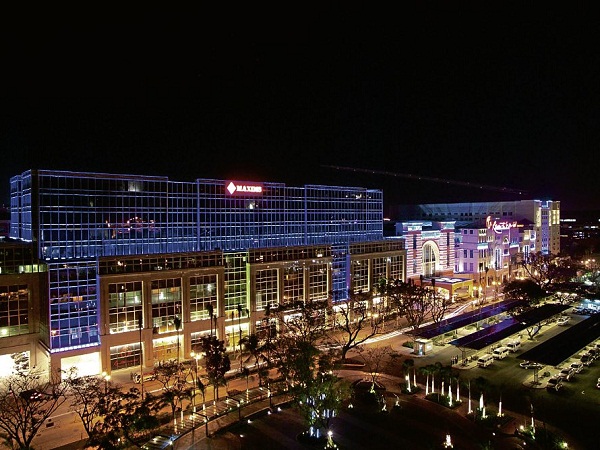
TO FURTHER accommodate the growing number of visitors, more hotels are slated to be constructed within Newport City by 2016.

Marco Polo Hotels, Ascott The Residence, Maxims Genting, City of Dreams, Solaire Resort and Casino, Hyatt, Marriot Manila, Shangrila Hotels and Resorts, Conrad Hotels and Resorts, The Westin Philippine Plaza Manila, Hilton, Sheraton Hotels and Resorts.
 
These are just some of the international luxury hotel operators that would either come into the country or experience boom times from 2014 to 2017, as forecast by CBRE Philippines during a Jan. 23 press briefing in Makati. It also reported that luxury hotel accommodations would play a major role in the hospitality sector, and that MICE (meetings, investments, conventions and exhibits) locations would pick up their businesses, and gaming establishments would draw in more foreign guests.
 
Property analyst Enrique M. Soriano III said, “Retail and hotels will likely post solid growth as employment and spending in the domestic front continue.”
 
The Colliers International market overview (for 4Q 2013) predicted that in the next three years, up to 4,300 rooms would be “delivered” annually, the highest number since 1988.
 
“Meanwhile, local real estate firms are entering the hotel and leisure sector, as SM Prime Holdings, Ayala Land and Robinsons Land introduce their new projects slated for completion in the next three years,” noted Colliers International Philippines Research. It added that last year, 1,372 new hotel rooms opened in Metro Manila, bringing the total room inventory to 17,517.
More branches expected
 
Jones Lang La Salle, in its JLL 2014 property market monitor, singled out Robinsons Land Corp. (RLC), which recently opened its seventh Go Hotel branch in Iloilo City. This one has 167 rooms
JLL forecasts more of such branches to be built over the next few years as RLC has offered the brand for franchise. In particular, Singapore-based Vanguard Hotels Pte. Ltd., in partnership with Roxaco Land Corp., is set to construct at least five new branches in the next two years.
 
JLL also cited residential property developer Vista Land & Lifescapes Inc., which plans to venture into hotel and resort development. According to the firm, the planned venture is mainly supported by the strong performance of the tourism industry. The firm has formed a new unit that would focus on the development of hotels and resorts, likely starting in 2015.
 
40% at Entertainment City
 
Colliers International Philippines’ comprehensive report indicated that of the 4,120 rooms to be completed in 2014, more than 40 percent would be concentrated within the Pagcor Entertainment City, such as Belle Grand City of Dreams (920 rooms) and the surrounding Mall of Asia Complex, such as Radisson Hotel (500 rooms) and Tune Hotel (204 rooms).
 
It also revealed a new player in the hotel and leisure market—Shanghai Jin Jiang International Hotels—one of the leading hotel groups in China, with two projects slated for turnover in 2014, the Jin Jiang Inn Ortigas (95 rooms) located beside Richmonde Hotel and the Jin Jiang Inn Greenbelt (70 rooms) located opposite New World Hotel Makati.
 
“As the government strives to reach its foreign tourist arrivals target of 10 million in 2016, local real estate firms are joining the hotel and leisure sector to augment the accommodation needs of foreign travelers,” reported Colliers.
 
It added that the Carlson Rezidor Group had partnered with the SM Hotels and Conventions Corp. (SMHCC) to launch the 150-room Park Inn by Radisson in Clark, Pampanga. This project is set for completion in 2016.
 
Colliers also observed that Ayala Land, through its hotel and resort corporation, had launched two new Seda hotels in its emerging mixed-use developments in Vertis North and Circuit Makati, both of which would be operational in the next three years.
 
RLC, for its part, aims to complete 1,200 rooms in its portfolio by 2014 by launching three Go Hotels—one in Ortigas Center, another in Butuan and one in Iloilo.
 
Decreased layovers
 
CBRE reported an 11-percent growth rate of tourist arrivals as of October 2013 (year-on-year) and possibly exceeding 4.5 million for the whole year.
 
Despite the increase, it estimates that the average hotel occupancy rate dipped from 67 percent in 2012 to 64 percent in 2013.
 
CBRE said: “This may be attributed to the increasing number of international flights to airports outside of Manila, thereby reducing the need to layover in Manila and easing the access to other major tourist destinations in the country like Boracay Island. The Mactan Cebu International Airport Authority, manager of the second largest airport in the country, reported a 15-percent increase year-on-year in the number of international flights at the airport from January to October this year from 3,972 to 4,581 flights.”
 
Hotel rates
 
Colliers also reported that growing interest in the Philippines as a tourist destination and a business investment option has been driving hotel room rates to consistently increase in Metro Manila.
 
It pointed to the trend that average five-star room rates had grown by 3.7 percent to $333 per night in the second half of 2013, versus the 1.1-percent increase in the first half of that year. Four-star room rates increased slightly by 1.1 percent in the second half to $273 per night.
 
On the other hand, three-star room rates continued to improve significantly at 9.5 percent half-on-half, 250 basis points higher than the 7-percent growth posted in the last period. This can be attributed to the increasing number of local and foreign tourists seeking quality accommodation at affordable prices. Meanwhile, corporate rates grew considerably across all classifications at an annual average of 15 percent.


Sunday, February 16, 2014

...the walk of faith

INC bags Guinness for walkathon

            
Thousands of Iglesia ni Cristo members join the ‘Worldwide Walk’ for Typhoon Yolanda victims along Roxas Boulevard in Manila yesterday. JOVEN CAGANDE


MANILA, Philippines - The Guinness World Record announced that the Iglesia ni Cristo is the new record holder of the biggest charity walk in a single venue, with 175,000 INC members pouring into Manila’s seaside avenue yesterday to join the Worldwide Walk aimed to raise funds for Typhoon Yolanda survivors.

Guinness adjudicator Kristy Bennet said INC beat Singapore’s The New Paper Big Walk 2000 that had 77,500 participants on May 21, 2000.

“INC, you are officially amazing,” Bennet said when she announced the result at the Quirino Grandstand last night.

The INC’s Worldwide Walk kicked off at the Cultural Center of the Philippines and ended at the footbridge along Roxas Boulevard near the United States embassy.

All those taking part bought special white t-shirts each costing P250 to wear during the march, with all the proceeds donated to help the typhoon victims.

“We would like to collect extra funds in order to continue helping the survivors of the super typhoon, of which the primary beneficiaries would be members of the church in the Visayas region, but that does not mean that they would be the only ones who would benefit from the funds generated… From the proceeds of the walk we would do the same even for the non-members,” said INC event spokesman Edwil Zabala.

The INC’s Worldwide Walk is also competing for the largest charity walk in a 24-hour continuous worldwide walk in multiple venues.
 
The current record holder is the one organized by the Green Communities in Canada that had 231,635 participants who walked for a minimum of one kilometer at 1,011 different locations in Canada on Oct. 2, 2007.

For the Worldwide Walk, the INC identified 140 sites including Metro Manila for the multiple sites category, of which 85 sites are in the Philippines and 55 sites are in other countries: 34 in the United States, six in Europe, 10 in Australia, and five in Asia.

Zabala said the 24-hour continuous walk started in New Zealand at 2 a.m. Philippine time yesterday and would end in Hawaii at 1 a.m. Philippine time today.

The Guinness is yet to announce the result for the largest charity walk in the multiple venues category.

About 800 policemen from the Manila Police District and the National Capital Region Police Office were deployed at the INC event. Based on MPD’s estimate, there were about 1.5 million people in the area, including the marshals.

Chief Senior Superintendent Gilbert Cruz, directorial staff of the MPD, said no untoward incident in connection with the event was monitored.

With the total closure of a stretch of Roxas Boulevard and several adjacent streets, the volume of traffic in Manila yesterday was lighter than expected. Classes in affected areas in Manila were suspended yesterday.

Chief Inspector Olivia Sagaysay, head of Manila’s traffic police, likened the flow of vehicles to that of a “regular day.”

She said although the traffic flow on Roxas Boulevard and other roads near the venue was affected, the participants cooperated with the police, making it easier for the authorities to handle the traffic situation. – With Aie Balagtas See, Eva Visperas


Saturday, September 21, 2013

...the Filipino-inspired films to Oscars

3 Philippine-themed films submitted to Oscars

Rappler.com
09/21/2013


MANILA, Philippines – The award-winning indie film Transit and two foreign films abroad with Filipino characters and settings have been submitted for nomination to the Foreign Language Film category of the 86th Academy Awards.

The Philippines selected Transit, a film about overseas Filipino workers in Israel. It won 10 awards in this year's Cinemalaya Independent Film Festival, including Best Film, Best Director (for Hannah Espia), and Best Actress (for Irma Adlawan).

According to Variety, the pick was made by the Film Academy of the Philippines and a committee led by renowned filmmaker Peque Gallaga.

'Metro Manila' and 'Ilo Ilo'

Metro Manila was picked by the United Kingdom as its nominee, while Ilo Ilo was chosen by Singapore.

Metro Manila, by Oscar-nominated British director Sean Ellis, tells the story of Oscar Ramirez, who left the province together with his family for the big city, in the hope of securing a better life. Instead, he becomes entangled in a web of deception and betrayal.

Ilo Ilo, on the other hand, is directed by Anthony Chen. The movie is about Filipina domestic worker from the province of Iloilo in the Philippines and how she sees the struggle of her employers, a Singaporean family, during the 1997 Asian financial crisis.

Films from the Philippines and Singapore have never been official nominees in the Foreign Language Film category. The last 5 Filipino films submitted for an Oscar nomination were Ploning, Ded na si Lolo, Noy, Ang Babae sa Septic Tank, and Bwakaw.

In 1993 and 1999, a UK film made it in the official nominees list for the category, but neither won.

Nomination voting by the Academy of Motion Picture Arts and Sciences (AMPAS) will begin on December 27. Announcement of official nominees will be on January 16, 2014.

The Oscars awarding ceremony will take place on March 2, 2014, at the Dolby Theater in Hollywood, California. – Rappler.com


Sunday, July 7, 2013

...the PH Math Wizzards in Bulgaria

PH elementary schools win 16 medals in Bulgaria math fest

By Jerry E. Esplanada
Philippine Daily Inquirer
 
 
MANILA, Philippines — With a 16-medal haul, the Philippine elementary mathematics team topped the primary division in the just-ended 2013 Bulgaria International Math Competition (BIMC), held June 30 to July 4 in the Black Sea city of Burgas.

The good news was relayed to the Philippine Daily Inquirer on Sunday by Dr. Simon Chua, president of the non-government Mathematics Trainers’ Guild of the Philippines (MTG) and head of the Philippine delegation to the 29-country contest.

The young Filipino math wizards, mostly students from Metro Manila private schools, bagged three gold, four silver, four bronze and five merit medals in the annual competition. The teams from Vietnam and Thailand placed second and third overall.

In an e-mail, Chua also said that the Philippine high school team bagged a total of 14 medals, but failed to land in the Top 3, where the teams from Japan, Hong Kong and China emerged as champions.

The Filipino medalists in the elementary level were: (Gold) Jinger Chong from St. Jude Catholic School; Shaquille Wyan Que from Grace Christian College; and Vicente Raphael Chan from Zamboanga Chong Hua High School. (Silver) Stefan Marcus Ang from St. Jude Catholic School, Steven John Wang from UNO High School, Jose Ignacio Locsin from St. John Institute in Bacolod City, and Tiffany Mae Ong from Immaculate Conception Academy; (Bronze) Luke Matthew Bernardo from Philadelphia High School, Adam Christopher Chan from Grace Christian College, Ryan Mark Shao from Xavier School, and Eason Wong from Philippine Cultural College.

The merit medal winners were William Joshua King from Bethany Christian School in Cebu City, Anna Nicola Baizas from Philippine Science High School, Jaymi Mae Ching from Jubilee Christian Academy, Alyana Zoie Chua from MGC New Life Christian Academy, and Christopher Jose Carlos from Ateneo de Manila University.

In the high school division, the country’s medals came courtesy of the following: (Gold) Clyde Wesley Ang from Chiang Kai Shek College and Farrell Eldrian Wu from MGC New Life Christian Academy; (Silver) John Thomas Chutak from St. Stephen’s High School, Shawn Gabriel Cabanes from Zamboanga Chong Hua High School and Sedrick Scott Keh from Xavier School; (Bronze) Kelsey Lim and Kaye Janelle Yao, both from Grace Christian College; Andrew Lawrence Sy from Xavier School, Andrea Jessica Jaba from St. Jude Catholic School; Nathanael Joshua Balete from St. Stephen’s High School, and John Aries Hingan from San Beda College-Alabang.

The merit medalists were Genmark Tanno from Southville International School, Joseph Raymond Fadri from Makati Science High School and Andrew Brandon Ong from Chaing Kai Shek College.
The following countries also took part in this year’s BIMC: US, Russia, India, Bangladesh, Nepal, Indonesia, Iran, South Korea, Kazakhstan, Malaysia, Mexico, Nigeria, Romania, Taiwan, South Africa, and the Netherlands, among others.

The other members of the Philippine delegation were Director Lolita Andrada of the Department of Education; Director Filma Brawner of the Science Education Institute of the Department of Science and Technology; and Rechilda Villame, Dr. Eduardo dela Cruz, Arvie Ubarro, Isidro Aguilar, Joseph Wee, and Robert Degolacion, all team coaches and MTG officials.

After a six-hour bus trip from Burgas to Istanbul on Friday, the group took a connecting flight to Dubai before returning to Manila the following day.


Friday, June 21, 2013

...the preferred BPO site

'PH still among preferred sites for BPOs'


06/21/2013
 
 
MANILA -- The Philippines remains among the preferred sites for business process outsourcing (BPO), according to a leading US-based BPO and information technology (IT) company.
 
Shore Solutions Inc., one of the bigger players in the BPO business, said revenues from the BPO industry in the Philippines is expected to hit $16 billion this year, or almost 20 percent higher than the $13.4 billion last year.

It noted that with increasing demand from prospective investors and subscribers, the industry would need at least 1.3 million direct hires by 2016 from 720,000 last year.

“That should require 516,000 additional seats, and some 2.5 million square meters of additional office space,” Darcey Lalonde, Asia chief executive officer of Shore Solutions said in a forum yesterday.

The industry employed over 720,000 in 2012, with another 1.6 million indirectly.

Expansion has already been noted in the key urban centers outside Metro Manila such as Cebu and Davao.

In Metro Manila, the major BPO centers are in Makati, Quezon City, Manila, Taguig and Mandaluyong.

Lalonde said that the next or third wave of BPOs is targeting key cities in Laguna, Batangas and Bacolod.

However, he said government should consider anew opening up to a limited extent or to select sectors, ownership of land to foreign entities.

Thursday, June 6, 2013

...the PH hot properties

Foreigners flock to PHL for property investments — consultancy firm


June 6, 2013


Foreigners are flocking to the Philippines for luxury residential investments amid tightening realty laws in other Asian countries, property consultancy firm CBRE Philippines said Wednesday.

Overseas Filipinos and the rising middle-class, on the other hand, continue to fuel demand for housing in the fringe areas of Metro Manila.

“The luxury residential sector will continue to pick up,” said Rick Santos, chairman at CBRE Philippines. “Foreigners are now moving from renters to buyers.”

“New restrictive property tax laws in Hong Kong and Singapore will drive more Asian residential investors to the Philippines,” he added.

While the Philippine Constitution prohibits foreign ownership of land, there is no restriction for foreigners to buy condominium units. Thus, foreign fund managers and retail investors buy luxury units by top developers here for investment purposes.

"Foreigners have opted to invest in branded condominium projects," said Santos. "And so far, they're very happy."

Early this year, Hong Kong and Singapore raised taxes for luxury homeowners and investment properties as part of their campaign against bubble risks stemming from speculative investments in the realty sector.

Investor-friendly tax laws

With tightening restrictions there, foreigners are turning to the Philippines – where tax laws are more investor-friendly and financing is relatively cheap – for secondary properties.

“Number one, it's much cheaper here from a tax perspective and cost. From a financing point of view, it's much more expensive to get financing there,” Santos said.

He noted that the Philippines' real-estate developers continue to benefit from foreign interest in branded developments.

Santos, however, was quick to add that he still doesn't see a bubble arising from such investment flows. “This isn't a bubble. This is sustainable,” he said.

“It is exciting. You will see a lot more money from mainland China, Russia, Europe, Korea and US flowing here,” Santos said.

OFWs and housing backlog

Overseas Filipino workers (OFWs) and middle-income earners support demand for residential products, particularly single-detached homes, in the fringe areas of Metro Manila

“OFWs and middle-income earners to sustain the demand for horizontal residential projects,” said Jan Custodio, CBRE Philippines' senior director for global research and consultancy.

“Economic housing will continue to observe strong take-up with its affordable prices and ample supply in the fringes of the country’s major cities,” he added.

Total housing needs for 2013 can reach 646,128 units, of which 57 percent will come from new households who can afford to own or rent, CBRE data showed. — KBK, GMA News


Tuesday, March 5, 2013

...the upbeat Filipinos

SWS: More Filipinos upbeat in 2013


Philippine Daily Inquirer


Almost two of every five adult Filipinos are optimistic about their quality of life, while one in three are optimistic about the Philippine economy this year, a recent Social Weather Stations (SWS) survey showed.

The survey, conducted from Dec. 8 to 11 and first reported in BusinessWorld, found that 37 percent of Filipinos were optimistic that their quality of life would improve in the next 12 months, as against 8 percent who said it would get worse, for a “high” net optimism score (optimists minus pessimists) of plus 29.

The SWS asked respondents: “In your opinion, what will be the quality of your life in the coming 12 months?” and were told to choose from two answers: “Will be better” (optimists) or “Will be worse” (pessimists).

Better economy

The same survey found that 33 percent were optimistic the Philippine economy would be better this year while 14 percent were pessimistic, for a “very high” net optimism score of plus 19.

But the survey also found a bigger proportion (32 percent) saying their life had worsened compared to a year ago (losers) while 25 percent said their life had improved over the same period (gainers), for a “fair” net score of minus 8.

Across classes, net optimism about their own quality of life ranged from a “high” plus 24 among class E to a “very high” plus 40 among classes ABC. It was at plus 30 (“very high”) among class D.

Very high in Metro

Across areas, it ranged from a “fair” plus 19 in Mindanao to a “very high” plus 35 in Metro Manila and the Balance of Luzon. It was at plus 23 (“high”) in the Visayas.

Net optimism on the economy across classes, on the other hand, ranged from a “very high” plus 16 among class E to a “very high” plus 28 among classes ABC. It was at plus 19 (“very high”) among class D.

Net economic optimism across areas ranged from a “high” plus 9 in Mindanao to a “very high” plus 26 in Balance Luzon. It was at plus 11 in the Visayas and at plus 21 in Metro Manila (both “very high” scores).

Meanwhile, the net percentage of gainers over losers across classes was a “very high” plus 29 among classes ABC, a “fair” minus 7 among class D and a “mediocre” minus 17 among class E.

Across areas, the net percentage score of gainers over losers was a “fair” minus 7 in Metro Manila, zero in Luzon outside Metro Manila (“fair”), minus 13 in the Visayas (“mediocre”), and minus 18 in Mindanao (“mediocre”).

For net personal optimism, SWS considers scores of plus 30 and above as “very high”; scores from plus 20 to plus 29, “high”; plus 10 to plus 19, “fair”; plus 1 to plus 9, “mediocre”; zero to minus 9, “low”; and minus 10 and below, “very low.”

Face-to-face interviews

For net economic optimism and net gainers, SWS classifies scores from plus 10 and above “very high”; plus 1 to plus 9, “high”; minus 9 to zero, “fair”; minus 10 to minus 19, “mediocre”; minus 20 to minus 29, “low”; minus 30 and below, “very low”

The survey used face-to-face interviews with 1,200 respondents and had a margin of error of plus or minus 3 percentage points.—Inquirer Research


Monday, February 18, 2013

...the Asia's energy efficient countries

PH among 5 most energy efficient countries:ADB


Written by RICHMOND MERCURIO
Malaya Business News Online
17 February 2013
 
 
The Philippines is now ranked among the top five most energy efficient countries in Asia.

Unfortunately, energy cost here is also one of the highest in the region.

The Asian Development Bank principal energy specialist Sohail Hasnie, said that the Philippines is one of the leaders in terms of energy efficiency among its Asian neighbors.

“In Southeast Asia, the Philippines is very, very ahead,” Hasnie told Malaya Business Insight.

DOE undersecretary Loreta Ayson said that the country’s energy efficiency initiatives are close to, and in some case even at par, with energy-efficient Asian countries like China, Japan, Singapore, and Korea.

“I think we’re a leading country as far as energy efficiency is concerned,” Ayson said.

Ayson, however, noted that there is still a lot of room to grow for the country, saying that “we can do more things to promote and implement energy efficiency.”

Hasnie reported that the Philippines have one of the largest number of energy efficiency projects that ADB is financing at present. He said that the biggest is in China.

The ADB has funded $31 million via loan the government’s Philippine Energy Efficiency Project (PEEP). The Philippine government, for its part, contributed P625 million.

According to Hasnie, government initiatives in electric vehicles and massive usage of CFL lights have elevated the country’s energy efficiency status.

Hasnie said that the Philippines is the first Asian country to phase out incandescent bulbs to aggressively promote CFLs for households.

“I think the engagement we’ve seen in the Philippine government is quite significant,” he noted.
Hasnie has also aired his optimism in the country’s chance in maintaining its leadership status in energy efficiency for years to come.

“Once you start, once you are in the forefront, you continue to be there,” he noted.

The DOE’s PEEP which was launched in 2009 has continually highlighted the need to vigorously implement energy saving measures to help the country curb its growing energy demand.

It hopes to result to total savings of 243 megawatts a year equivalent to P3.2 billion.

To date, the PEEP has accomplished the distribution of 8.6 million CFLs in households nationwide, the retrofitting of lighting systems in 150 government buildings and the retrofitting of traffic lights in 265 intersections in Metro Manila and Cagayan de Oro City.

“I would put it (energy efficiency) as something as doing more for less and pursuing efforts on saving electricity and fuel,” Ayson said.

With a Philippine Energy Roadmap set until 2030, Ayson hopes to see the country further elevating its status in energy efficiency.

“I think 2030 should make a difference. It’s a dream (to be the number one energy efficient country in Asia), but we can work for it,” Ayson noted.


Monday, January 28, 2013

...the PH property market

Philippines' property boom shows no sign of slowdown

By Christine Ong
Channel News Asia
28 January 2013


MANILA: A property boom in Metro Manila, described as the best in two decades, has pushed construction in the Philippines to its highest growth in at least six quarters.

The Philippines is experiencing a property boom like no other with developments covering office buildings, housing projects, hotels and new shopping districts.

This is all being fuelled by confidence in the Philippine economy which grew at a notable 7.1 per cent in 2012.

With the Philippine economy growing at an impressive pace, experts said there will be no slowdown in the demand for real property market as the country rides on strong macroeconomic fundamentals and investor confidence.

CBRE Philippines' chairman Rick Santos said: "We are seeing a very strong government. The Aquino administration is doing a very admirable job. The strong leadership and a strong cabinet have been reflected on the confidence of the foreign investors. A lot of countries around the world now are getting investment downgrades. In the Philippines, we are seeing investment upgrades so that is very positive. The Philippines is becoming this overnight success that took 20 years."

Property developers are now enjoying brisk sales with vacancy rates falling to its lowest on record.

In some cases, pre-leasing for office spaces are committed for the next two years.

The challenge now experts said is how to cope with the unprecedented success.

Jose Antonio, founder and chairman of Century Properties Group, Inc, said: "The challenge is actually not only for us as a company. The challenge for our country is how to sustain this growth. How do we sustain it? It is really to plough back all the income of both the private sector companies and the government into sustainable projects and relevant projects.

"For example, it is very important for the government to expand our infrastructure. There is a big need and we know it. (The government needs) to hasten the infrastructure program of the government."

The government has allotted a record budget of over US$9 billion this year to upgrade the country's roads, ports, bridges and airports.

Industry experts believe the aggressive infrastructure spending will further real estate growth in the country.

- CNA/fa

Saturday, January 19, 2013

...the booming PH real estate

EXPERTS’ 2013 FORECAST


Bullish PH economy to rouse real estate industry


By Tessa R. Salazar
Philippine Daily Inquirer


CENTURY Properties’ Acqua Private Residences is expected to do well this year since residential demand will stay strong across all subsectors.


What’s in store for the country’s property industry this year?

Going by the fearless forecast of five property analysts, the outlook for 2013 is rosy.

Julius Guevara, associate director for advisory services and head of consultancy and research of Colliers International, said that in general, “the bullish performance of the economy is seen to continue” in 2013. He said 2012 “proved to be a very good year for the Philippine economy and specifically for real estate.” He continued that “an end-of-year GDP (gross domestic product) growth rate between 6 and 7 percent has been forecast by various analysts, and we saw the stock market hit all-time highs during the past few months.”

Guevara added, “the residential condominium market has also exceeded historical sales levels this year, as low interest rates and record overseas remittances continue to fuel the housing boom.”

Colliers International recently released 10 forecast statements on the economy and property sectors for 2013—a collection of insights from various industry experts and Colliers.

“Similarly, the business process outsourcing (BPO) industry continued to drive the office property sector, and current vacancy rates in the major CBDs are in low single digits. The retail sector has also done tremendously well; occupancy rates in regional and superregional malls in Metro Manila are in the 90s. All in all, 2012 exceeded most of our expectations,” Guevara added.

Best real estate market

Rick Santos, CBRE founder and chair, noted: “We are now experiencing the best real estate market in the Philippines in the last 20 years. The Philippine real estate sector will have bright prospects in 2013. We see sustained growth in the BPO/office, residential, gaming and leisure sectors.”

Enrique Soriano, Ateneo program director for real estate and senior adviser for Wong+Bernstein Business Advisory, said: “Five years after the financial crisis triggered by a housing bubble, the global economy is convalescing. The Philippine economy is poised to move up. Real estate markets in all segments will grow. Some developers will fail and others will do better because they have a strategy and they have found exactly the right position.”

Claro dG. Cordero Jr., Jones Lang LaSalle’s head for research, consulting and valuation, said an estimated 11,200 units is expected to be completed within 2013 for the residential segment. He also explained that, though “the residential demand will stay strong across all subsegments, there are also various externalities which may challenge the growth of demand over the near- to medium-term.”

The first indicator cited by Colliers showed the Philippine economy would grow by around 6 percent in 2013. The forecast was made by Japanese financial services group Nomura and the World Bank.
 
The World Bank raised its forecast for the Philippine GDP in 2013 to 6.2 percent, up from 5 percent. Nomura also raised its forecast for the GDP to 6.6 percent in 2013. “Growth is expected to tick even higher in 2013 because of the impact of the elections, fiscal improvement and governance reforms in private investments,” Nomura said.

Karlo Pobre, Colliers International’s analyst for research and advisory services, explained that the recent growth in GDP indicates that economic activities in the country have further expanded.

“The higher the GDP is, the more attractive we become, specifically to foreign investors. Investment opportunities should reflect on the property industry, considering the recent developments in the market. This should preferably materialize in the office and industrial sectors,” he said.

Sector contribution

Pobre added that currently the construction sector contributes roughly about 8 to 9 percent of the GDP, while real estate services is at 11 percent.

Soriano said: “the long anticipated growth trajectory will happen this year; something that we have not felt for a long time. We have had growth spurts in the past years but never a real, sustained momentum. This time it’s for real. Our economic fundamentals are getting better. The housing and construction market has assumed the lead role in this trajectory, domestic demand is growing, PPP (public-private partnership) infrastructure will continue its aggressive pace and the midyear local elections will boost spending.

“Overseas remittance will grow as the US economy continues to improve, albeit at an annualized rate of 1 percent and Europe’s crisis is apparently showing some signs of remission. With this I expect the economy to pick up steam and grow to 6.8 percent.”

Saturday, December 1, 2012

...the Filipino talent

‘(Filipino) talent is a million times better than the others’


By Marlet D. Salazar
Philippine Daily Inquirer


The Philippines has been cited as one of the emerging economies in Asia and the only country that recently posted an impressive economic growth.

People are taking notice. One independent production house did an investment feature on the Philippines entitled “Philippines Moves Forward,” to be aired through Singapore-based cable Channel News Asia.


Asia Business Channel is coming up with a two-part series which will focus on various industries and sectors that helped the Philippines gain momentum on economic growth.

“The Philippines is the only country in the world upgraded by the IMF (International Monetary Fund),” said Carleen Krug, program manager of Asia Business Channel. “It shows an economic prosperity we haven’t seen for quite some time.”

The first part of the investment feature, which will be aired in January, focuses on energy and tourism. The Philippines has been aggressive in promoting the country as a tourist destination with international campaigns aimed to entice different nations to visit.

The focus on the energy sector was triggered by what Krugg has described as “unexplored opportunities” and the need for more investments in places like Mindanao.

The second part, which is hoped to be completed by the first quarter of next year, puts the spotlight on banking and finance, health, information and technology, property development, telecommunications, trade and industry, and transportation.

“We are lucky to have a ringside seat of Philippines transformation,” Krug said, “And we feel that it is imperative that the country capitalize on investors’ renewed interest by presenting a clear picture of the strides that have been made in the Philippines.”

“Philippines Moves Forward” features the country’s challenges and successes during the present administration. “There is too much good happening in the country to fit in just 30 minutes,” Krug said.

Francisco “Kit” Reyes, is a Filipino who migrated to Canada when he was 14, is the producer of the feature. He and filmmaker Stefan Herbruger shot for three months in different locations in Metro Manila and other provinces. The whole production lasted for almost half a year.

Reyes said that they didn’t have any problems with access to the Philippine government and cabinet secretaries.

Reyes said that he is proud to promote his birth country to the rest of Asia. The main objective of the feature is to prompt investors take a closer look at the Philippines to continue on its positive performance.

Reyes, who has a degree in radio and television from Ryerson University in Toronto, Canada, said that a lot of people come to the Philippines because “the labor is cheap.” But what other countries and companies overlook is the enormous talent Filipinos have. “(Filipino) Talent is a million times better than the others,” he said.

Asia Business Channel is an independent production company specializing global developments with Asian perspectives and jointly works with Channel News Asia in airing its productions. Channel News Asia airs in 24 Asian territories and other cities including London, Moscow, New York, and Washington, D.C.

Friday, November 30, 2012

...The SEA Real Estate Personality of the Year

Filipino named 2012 Real Estate Personality of the Year in Southeast Asia


November 29, 2012
GMA News


Century Properties Group Founder and Chairman Jose E.B. Antonio (left) was proclaimed as the 2012 Real Estate Personality of the Year by Jules Kay (left), Managing Editor of Ensign Media and presenter of the prestigious Southeast Asia Property Awards, held on November 21, 2012 at the Shangri-la Hotel, Singapore.

  For his works as :a true industry pioneer"; for "transforming the Manila skyline with quality
developments”; and for “drawing the global spotlight not only to the Philippines but to the entire Southeast Asian region with notable brand collaborations” – a Filipino entrepreneur was recognized as this year’s Real Estate Personality in the Southeast Asian region.
 
 
Jose E.B. Antonio, Founder and Chairman of Century Properties Group Inc., was proclaimed as the 2012 Real Estate Personality of the Year by the prestigious Southeast Asia Property Awards, held on November 21, 2012 at the Shangri-la Hotel in Singapore.
 
 
Antonio is the second recipient of the said award after Ho Kwon Ping, Executive Chairman of the Banyan Tree Holdings, won it in 2011. The Century Properties founder also received the Highly Commended citations bestowed by the awards to Trump Tower at Century City for the Best Residential Development-Philippines category, and Century Properties Group for the Best Developer-Philippines category.

 
A firm believer in the growth potential of the Philippines, Antonio founded Century Properties 26 years ago amidst one of the country’s most turbulent periods in history—the People Power Revolution. Five economic cycles and two and a half decades later, Century has emerged as a leader in innovative real estate concepts—from creating the first fully-fitted and fully-furnished condominiums in the Philippines to introducing interior design themes into residential spaces.
 
 
Under Antonio’s leadership, Century also announced unprecedented collaborations with global brands in real estate and interior design, including Versace Home for The Milano Residences, MissoniHome for Acqua Livingstone, Trump for Trump Tower at Century City, yoo inspired by Starck with John Hitchcox and Philippe Starck for Acqua Iguazu and Ms. Paris Hilton for the Azure Urban Resort Residences Beach Club.

Century Properties Group Founder and Chairman Jose E.B. Antonio
“I believe that Century’s remarkable competitive strength lies in the passion of its people. This has translated into a proven heritage of innovation and product differentiation. We are committed to not just introduce firsts but also deliver quality projects that help transform Metro Manila as a world-class and cosmopolitan city,” Antonio said.
 
 
Jules Kay, managing editor of Property Report Southeast Asia magazine, said of Antonio: “Despite such high-profile developments, as a seasoned property professional he remains focused on quality… He is a true industry pioneer. He and his sons have been slowly transforming the Manila skyline, drawing a global spotlight not only on the Philippines, but also the Southeast Asian region.”
 
 
In his acceptance speech, Antonio said: “Southeast Asia and the whole of Asia is moving towards the center of economic gravity of the world, and we are fortunate and excited to be working in this part of the world today, where growth will be the major theme.”
 
 
Antonio’s recognition is the third major honor of Century Properties this year after being awarded by BCI Asia as one of the Top 10 Real Estate Developers in the Philippines, and receiving the 2012 International Property Awards for Trump Tower at Century City in the categories of Best Architecture and Best Development.
 
 
The South East Asia Property Awards (SEAPA) aims to recognize the best of the region’s luxury real estate as well as underscore high caliber work in construction, architecture, interior design and property management.
 
 
The Personality of the Year title is a special award and the only one given by SEAPA for a personality’s outstanding body of work within the region’s real estate landscape. The rest of the SEAPA category titles are given to developers, their projects and other real estate consultants such as architects, interior designers and property consultancy firms.
 
 
The nominations for the said award are based on the following considerations: the candidate company’s overall impact on the quality of the regional property market, his or her personal influence on the region's business development, the candidate’s ability to innovate and introduce creative approaches to real estate growth and his or her commitment to philanthropy.
 
 
The South East Asia Property Awards highlights the hard work, passion and vision of real estate movers from property developers, interior designers, architects and agents from around the region, with emphasis on companies and individuals who push the envelope in luxury living.
 
 
This year’s roster of finalists comprised developers and projects from Singapore, Thailand, Indonesia, Malaysia, the Philippines and Vietnam, with a total of 38 awards handed out in different development, developer and property consultancy categories.

Wednesday, November 28, 2012

...the healthier Metro

DENR pushes for a 'healthy' Metro Manila


11/28/2012
 
 
MANILA, Philippines – The Department of Environment and Natural Resources (DENR) has urged Metro Manila residents to be more conscious in reducing air pollution for a "healthy metropolis."


Secretary Ramon Paje reminded the public to actively participate in the "car-free day" campaign, which urges motorists to use public transportation and bikes to reduce carbon emissions and conserve energy resources.

"We need the cooperation of the public and the civil society. We want to reach acceptable air quality levels so that we can really sell Metro Manila as a tourist destination, as you know, as a healthy metropolis," Paje said in a statement released Wednesday.

Paje noted that there are simple ways to help limit individual air emissions such as walking, using bikes, carpooling, conserving electricity, and consuming energy efficient products.

"Everyone needs to do his part to improve air quality. In fact, there are simple things that we can do to reduce air pollution and help clean up the air we breathe," he said.

Paje earlier said air quality in Metro Manila has improved as both the amount of total suspended particulates (TSP) and the level of particulate matter 10 microns in diameter or smaller (PM10) had decreased.

According to data, the TSP level in Metro Manila was recorded at 106ug/Ncm (micrograms per normal cubic meter) as of the third quarter of 2012, only 16ug/Ncm short of the acceptable level of 90ug/Ncm set by the World Health Organization.

"We were able to bring it down by around 36 percent because it is now at 106. It is still polluted but we are now closing to the standard," Paje said.

The environment secretary partly attributed the decline in air pollution levels to the collaboration of the DENR with other government agencies and the private sector in various air quality programs, including mandatory vehicle emissions testing.

Tuesday, November 20, 2012

...the Metro air quality


Metro Manila air getting cleaner, DENR claims


Can you feel fresher air in Metro Manila?

Well, that could be because pollution in the country's capital region has been dropping since the start of the year, the Environment department claimed in a statement.

"We are happy to note that there has been a marked and steady decrease in the levels of both TSP and PM10 for the first three quarters of 2012," Environment Secretary Ramon Paje said.

Total suspended particulates (TSP), or the amount of solid pollutants such as dust and soot in the air, decreased by 21 percent to 106µg/Ncm at the end of the third quarter, Paje said.

The more harmful PM10, meanwhile, which refers to particulate matter 10 microns in diameter or smaller which can penetrate the lungs when inhaled, dropped by 18 percent to 77µg/Ncm by the end of September.

"This is definitely indicative of the successful collaboration with our partners in the government and private sectors..." Paje said

He particularly cited the Department of Transportation and Communications, Metropolitan Manila Development Authority, local government units, Philippine Medical Association and the media.

Strengthened monitoring and law enforcement as well as an intensified information drive also contributed greatly to Metro Manila's improved air quality, Paje noted.

This, even as he bared efforts to further bring down the level Metro Manila air pollution.

These include the formation of composite anti-smoke belching in all cities and municipalities in the region, manned by DENR and local government representatives.

The Environment chief meanwhile urged greater public participation in the government's air improvement program by having their vehicles regularly checked up and emissions tested.

Filipinos may also plant trees and other plants in their homes or gardens to help in the absorption of gases such as carbon monoxide, Paje noted