Showing posts with label foods. Show all posts

Saturday, October 26, 2019

...the Banana Ketchup Inventor

She Invented Banana Ketchup & Saved Thousands of Lives. Why Have we Never heard of Her?

Amelia Rampe
Food52
26 October 2019

I’ve seen the look on my friends’ faces when the words banana ketchup are uttered. Confusion, maybe even disgust. How can two things with such different flavor profiles exist in one product? Despite its seeming incongruity, banana ketchup is a pantry staple that rings nostalgic to many Filipinos all over the world.
a vintage photo of a person wearing a costume
Magdalo V. Francisco, Sr. is credited with mass-producing banana ketchup in 1942, thus making it a fixture in the Filipino household. To this day it’s used as a condiment that accompanies many popular dishes such as tortang talong (an eggplant omelet), fried chicken, Filipino spaghetti (pasta with banana ketchup and sliced hot dogs), as well as a sauce for hamburgers.
You can even find some refined versions of banana ketchup in modern Filipino cuisine. At Toyo Eatery in Manila, Jordy Navarra makes a “Banana Catsup” using fermented bananas, banana peel vinegar, banana blossom, tomatoes, and spices. True to tradition, he also serves his alongside tortang talong.
But to truly understand the roots of banana ketchup, it’s important to understand the person behind the innovation, as well as the environment in which it was produced.
Her name? Maria Orosa.
a close up of a white background
As Chef Navarra says, “Growing up in Manila, we always knew the name of Maria Orosa as a pretty famous and busy street. After getting into food and learning about the history of banana catsup, we stumbled upon her story.”
A food chemist and innovator, Maria saw that the Philippines was heavily reliant on imports like tomatoes. At the same time, she understood and envisioned the vast potential of a great many products endemic to the island nation that, when used properly, could make the country more self-sufficient. She was passionate about a self-sustaining Philippines and made it her life’s work to study native food, and the use of fermentation and various preserving techniques to educate and uplift people in need. She would eventually become a war heroine through her food innovations. Most notably: banana ketchup.
One day, she created a banana sauce with mashed bananas, vinegars, and spices. The brownish-yellow color was not very appetizing, so a little red dye was added, turning it to what is today known as banana ketchup.
But her story is far vaster than her most popular invention.
Maria moved to the United States at the age of 23 (some accounts say she was a stowaway). She was a government-sponsored scholar at the University of Washington in Seattle. There, she earned a bachelors and a masters degree in pharmaceutical chemistry, as well as one in food chemistry. During her education, Maria would spend her summer breaks working in the Alaskan canneries.
In the end, she earned a position as an assistant chemist for the state of Washington, but instead chose to return to the Philippines in 1922. Upon her return, she taught home economics at Centro Escolar University and would later transfer to the Bureau of Science organizing the food preservation division.
A humanitarian at heart, Orosa had a vision of empowering the Filipino family. She launched Health, Heart, Head and Hand (4-H) Clubs. This organization brought herself and other educators into rural areas and barrios to teach women how to raise poultry and preserve food, as well as how to prepare and plan meals. By 1924, the organization had over 22,000 members. Part of her initiative was to introduce one of her inventions, the palayok oven—a clay oven intended for people who did not have access to electrical appliances.
She used her background in food chemistry to run experiments in fermenting, dehydrating, and preserving native plants and animals. The innovations that emerged are said to still be used in laboratories today. The ultimate goal? Make the Philippines more self-sufficient and sustaining.
Local fruits like tamarind, santol, and calamansi provided her with foundations to make wine, jams, and jellies. Cassava and green banana flour would replace the need for wheat. Coconuts would yield vinegars; she was the first to preserve macapuno, a jelly-like product of coconut that is used in Southeast Asia to this day. She was also the first to freeze mangos, enabling distributors to send the famous Filipino fruit throughout the world.
The Bureau of Science recognized her efforts and promoted Maria to head of the Home Economics Division and the Division of Food Preservation. Her work with the bureau would send her all over the world to research canning and preserving technologies.
She was passionate about a self-sustaining Philippines and made it her life’s work to study native food, and the use of fermentation and various preserving techniques to educate and uplift people in need.
Some of Maria’s most known contributions to the food world came during World War II. She was beloved within Filipino households for her banana ketchup, but she would become a war hero for her food inventions: Soyalac and Darak. Soyalac is a protein-rich, highly nutritious powdered soybean product. Darak is a rice by-product that is high in B vitamins, thiamine, and vitamins A, D, and E (intended to fight the vitamin B deficiency disease, beriberi).
During World War II, Orosa was a captain in Marking’s Guerrillas, a group of Filipinx soldiers who would fight alongside the United States against the Japanese during the war. Legend says that she devised a system for smuggling Soyalac and Darak in bamboo into Japanese-run concentration camps. These internment camps, which housed mostly Guerrillero and American prisoners of war, were known for poor sanitation and lack of food. Many would perish as a result of malnutrition. Freedom fighters disguised as carpenters would deliver Maria’s “magic food,” saving countless POWs and civilians.
Despite pleas from her family and colleagues to leave Manila during the war, she stayed until she was killed by shrapnel from fratricide in 1945.
Maria Orosa was a scientist, an activist, a humanitarian, and a war hero who loved her country and dedicated her life to uplifting the Philippines through food innovation. Many of her recipes and experiments were compiled by her niece, Helen Orosa del Rosario, in a posthumous book called Maria Orosa: Her life and Work. The book contains over 700 recipes, some of them unedited since Maria wrote them.
Banana ketchup, while probably the most beloved of Maria’s creations, is just a small part of her great and many contributions to food history. Her creations were intended to bring forth self-sufficiency and empowerment for her nation—and yet, in this day and age, it’s hard not to see that Maria symbolizes so much more.
As Chef Navarra says, “It’s amazing that she basically is the Filipina food hero. Ingenuity in a time of need which I think captures the Filipino spirit.”

Friday, October 25, 2019

...the Next Best Destination for Food Tourists

The Philippines is the next Best Destination for Food Tourists

Emily Brown
UNILAD
25 October 2019


There are plenty of cuisines out there that dominate the restaurant and takeaway scene, but one that doesn’t get nearly enough attention is Filipino food.
Believe me when I say, the delightful dishes on offer have enough flavour to match the 7,641 islands it comes from.

Though it’s possible to get a taste of foreign cuisines from restaurants and takeaways at home, there’s nothing like trying them in their country of origin. 


You might think it’s a good idea to experiment with more than 15 ingredients to create halo-halo yourself – but combining sweet red beans, sweet white beans, coconut gel, macapuno, jackfruit and ube ice cream to create the signature Filipino summer dessert might be a bit of a stretch without some expert help.
If that doesn’t tickle your fancy, how about Filipino adobo, a chicken dish that varies greatly from the much more widely well-known Spanish and Latin American version. Removing chili, paprika, oregano and tomatoes, you may think you’re taking away all the flavour but replace those things with Southeast Asian ingredients like soy sauce, black peppercorns and bay leaves, this dish is still certainly packed full of flavour.
Award-winning chefs JP Anglo and Jordan Andino discuss the country’s rich, diverse cuisine and dining culture in Eats. More Fun In the Philippines campaign video, where they were joined by top YouTuber and comedian Mikey Bustos.
Filipino-American chef Jordan described the Filipino dining experience as offering more soul than most countries. He explained when you eat the food you taste ‘love, family and tradition’, adding ‘not a lot of cultures are able to do that’.
Chef JP spoke more specifically about the sumptuous flavours of the cuisine, recommending the pork dish lechon as well as grilled chicken known as inasal, saying:
Our lechon is very strong. We’re one of the countries that do the roasting technique really well. Our grilled chicken, the inasal, is also very strong and it can go against the other grilled chickens in the world.
I look up to the street vendors like the guy who’s been making batchoy (noodle soup) for two decades in a market in Iloilo. I think we should celebrate them more and give them a venue.
These guys are the real deal and as chefs we get our inspiration from them.
But Filipino cuisine is so much more than just diverse flavours; it’s fun to eat. Dining in the Philippines is an event where you can experiment and try new things, like eating with your bare hands – a way for people to truly savour the food they’re eating.
For Filipinos, eating is an experience to be enjoyed and shared with everyone, with comforting meals shared while bonding with friends, at a big gathering or at simple get-togethers.
Having experienced Filipino food for himself, YouTuber Mikey acknowledged appreciating the dishes involves understanding ‘Filipino food is designed for Filipino life’.
The comedian added:
If you really want to learn about a country, you have to eat and experience that whole thing.
Tourism Secretary Bernadette Romulo-Puyat pointed out more and more people are travelling not just to see the sights, but to discover new cuisines.
She commented:
We believe that one of the best ways to explore the Philippines and experience the country’s culture is through our plentiful and diverse food offerings.
Food, especially to us Filipinos, is a universal language. We always say kain na (let’s eat) as our way to say “hello” and “welcome”. I think that it is the best testament to our uniquely Filipino hospitality. Our food and our love for it, make us some of the most endearing hosts in the world.
Though Filipino food promises to offer an explosion of flavour, arguably one of the best parts about eating in The Philippines is the fact you can enjoy five meals a day thanks to the inclusion of merienda; dishes smaller than a traditional meal but still just as delicious.
Next time you’re sifting through where and what to eat, why not give the unique flavours of the Philippines a try? You won’t regret it.

Wednesday, October 2, 2019

...the Burger Flipper turned Franchiser

From burger flipper to franchiser


BusinessWorld
02 October 2019


The Entrepreneur Of The Year Philippines 2019 has concluded its search for the country’s most successful and inspiring entrepreneurs. Entrepreneur Of The Year Philippines is a program of the SGV Foundation, Inc. with the participation of co-presenters Department of Trade and Industry, the Philippine Business for Social Progress, and the Philippine Stock Exchange. In the next few weeks, Businessworld will feature each of the finalists for the Entrepreneur Of The Year Philippines 2019.


BILLIE JEAN KING once said, “Champions keep playing until they get it right.” In sports and in business, those who work hard and persevere are rewarded.

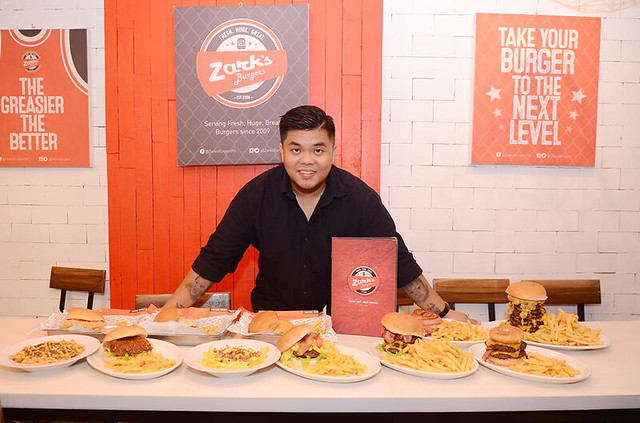
Rolandrei “Zark” Varona, 34, entered the game in unfavorable conditions with a failed franchise venture and dwindling capital.


Nevertheless, he paired his natural business acumen with an unwavering tenacity and grew from a humble stall owner to a food franchise powerhouse.
Although he lost his father at the age of two, he recalls many fond childhood memories with his mother and sister — especially their family meals after Sunday mass. The restaurants they frequented left a deep impression on him and by high school, he had his heart set on becoming a chef.
“I knew that I wanted my own restaurant someday,” he said.
It was natural that he went on to study Hotel and Restaurant Management in the Philippine Women’s University.
Even before graduating, Mr. Varona started with capital from his allowance and his salary as a paid intern for a famous steakhouse. He later had the opportunity to join a cruise ship as a cook, saving up most of his earnings for his future business.
Mr. Varona shared that he battled homesickness, but his determination to put up his own restaurant and the continuing support of his family pulled him through.
After two years at sea, he was 23 and had enough savings to start his own business. Wanting to learn the ins and outs of running a business, Mr. Varona decided to purchase a noodle house franchise. He personally filed the papers and got the necessary permits to open his stall in Divisoria.
He quickly realized that running a business was not easy. After a few months of operation, his stall was earning barely enough to break even and he was slowly using up his capital. He decided to close it down.
But Mr. Varona never faltered, he continued scouting for potential business locations. He found a small space along Taft Avenue, but thought that a food cart would not match the market.
However, something about the location kept drawing him back until he finally decided to create his own concept. He studied what kind of food would sell in the predominantly student market in the area. He realized that there wasn’t any burger joint with student-friendly prices. As a burger lover himself, Mr. Varona often felt frustrated that there were few options between fast food and gourmet burgers. With his experiences from travelling and his skill in cooking, he developed a concept that would address the market gap.
With a portion of his savings gone, Mr. Varona borrowed P200,000 from his mother to complete his P600,000 initial investment to make Zark’s Burgers a reality. Mr. Varona was in charge of almost everything — from filing permits, menu development, construction and interior design.
In 2009, Zark’s Burgers was finally unveiled to the public with a promise to deliver burgers that are fresh, huge and great.
Named after himself, Zark’s Burgers sports theme reflected Mr. Varona’s like for sports, big food and value for money.
“I don’t serve typical cheeseburgers,” Mr. Varona said of his culinary creations.
Customers have over 20 burgers to choose from — most of which are under P250 — with interesting variations such as the bacon wrapped burger and glazed donut burger.
Inspired by TV show Man vs. Food, Mr. Varona developed his own burger challenges — Tombstone and Jawbreaker — that captured his young market. The highly popular Jawbreaker challenge, where the winner wins a free shirt and has his picture included in a hall of fame, has become a standard dare for barkadas — inadvertently becoming part of youth culture.
In just seven months of operation, Zark’s Burgers was able to earn back Mr. Varona’s initial investment. Mr. Varona admits he did not expect the warm welcome he received from students. With this initial success, he was able to expand the original 16-seater space to 120 seats.
Soon enough, he started opening branches across Metro Manila and eventually entered the Visayas and Mindanao markets.
As he expanded, he started to struggle managing the company alone and realized that he couldn’t develop a sustainable business by himself.
“I was learning but it wasn’t at the same pace with the company’s growth,” Mr. Varona said.
Seeing his own limitation, he professionalized his team.
As a young entrepreneur, Mr. Varona knows he has much to learn and looks to seasoned professionals to gain insights on how to run the business. When he found out that his food cost was high, compared to industry standards, he approached one of his former mentors and worked with him to slowly improve efficiency at Zark’s Burgers.
While Mr. Varona was initially apprehensive about the possibility of franchising, he recognized the difficulty and cost of managing branches outside of Metro Manila — especially in the Visayas and Mindanao. He realized that in order to grow the business and eventually expand outside the Philippines, he had to franchise. He hired an expert on franchising and created a system for franchising. He would also partner with his long-time supplier to put up commissaries for burger patties and seasonings.
Now on its 10th year, Zark’s Burgers boasts of 60 branches nationwide and employs over 800 people across all facets of its operations.
For Mr. Varona, however, success is being able to do what you love and having the ability to give back. “Cheesy as it sounds, I want the economy itself to grow,” Mr. Varona said.
Apart from his regular outreach programs, he wants to transform lives by imparting to aspiring entrepreneurs the skills and knowledge needed to start their own business. He provides mentorship through Endeavor Philippines, Resto Coach, Go Negosyo and giving talks in universities.
Like many others, Mr. Varona embarked on his entrepreneurial journey armed with a dream. Unlike many, he never lost sight of his goal and persisted through every challenge. He tells aspiring entrepreneurs, “Look into yourself and find your purpose. From there, 

Wednesday, September 25, 2019

...the Filipino culture in Lisbon

Filipino culture showcased in Lisbon


Business Mirror
25 September 2019


LISBON—The Philippine Embassy led the monthlong celebration of the 121st anniversary of the Proclamation of Philippine Independence in June at the Terras Sem Sombra, Artes â Solta Festival in Ferreira do Alentejo.

In collaboration with organizers, the embassy and municipality officials, the Philippine Day activity provided an inclusive experience on the richness and vibrancy of Filipino culture through food, music, traditional games and handicrafts. The embassy also took the opportunity to promote various tourist destinations in the Philippines by giving away anahaw-woven fans from Quezon province, dried mangoes from Cebu and 3D holographic destination luggage tags from the Department of Tourism. 


Envoys06a 092619
Filipina entrepreneur and Chef Jaymaylyn Galiza Day prepares Filipino-style fried lumpia. Guests also got to sample spicy sisig.

The morning program started in the Ferreira do Alentejo Municipal Garden with a Filipino fiesta setting with kiosk of street food, exhibited and operated by Jaymalyn Galiza Day, a Lisbon-based chef who owns Diplomata catering service. Filipina entrepreneurs and co-owners of GustoKO, Paula Figueras and Queenie Guzman, also showcased a selection of handicraft products.

Figueras and Guzman are recognized as the embassy’s “cultural entrepreneurs” for not only creating economic value to Philippine products, but for also pursuing Filipino culture and heritage.

The afternoon event gave participants an ultimate Filipino eating experience with Filipino favorites, such as pork adobo with rice served in coconut rice bowls, as well as local snacks from Alentejo like ferreirense (cake), chouriço (sausage), as well as traditional cheese and olives.


Envoys06b 092619
Visitors enjoy Filipino pork adobo served in coconut rice bowls.

Visitors got to play Filipino traditional games such as sungka, dama and patintero, while Filipino children also enjoyed participating in the traditional Alentejo games like paper kite making, rope jumping, walking with stilts and face painting.

Pundaquit Virtuosi, a 28-member youth string ensemble from San Antonio, Zambales, ended their 2019 European tour with an evening concert before a crowd of 500. It played a diverse repertoire of classical music masterpieces, popular original Pilipino music staples and contemporary standards. 

The show ended with the string ensemble and Portuguese all-male singing group Os Boinas (The Berets) performing the song “Amor Pelo Dois,” the winning Portuguese entry at the 2017 Eurovision singing contest.

Ambassador Celia Anna M. Feria expressed her appreciation to the Municipality of Ferreira do Alentejo and to festival organizers for allowing the embassy to showcase the best of Filipino culture. Members of the Filipino community in Lisbon also came to partake in the festival. 

The Terras Sem Sombra festival is held annually since 2013, bringing music, heritage and biodiversity together. This year’s edition also featured Madrid-based Filipina soprano Aniway “Manila” Adap, who performed a full-concert repertoire at the Igreja Matriz de Sao Vicente in Cuba Alentejo in May.

The Philippines also shared its best practices of biodiversity conservation in April for the “Resist the Invader: The Water Hyacinth and the Guadiana Basin” event in Elvas, Alentejo.

The Philippine Day Activity at Ferreira do Alentejo is a culmination of the Country’s participation in the 2019 Terra Sem Sombra Festival. DFA

Saturday, September 14, 2019

...the best bartenders in the world

Expert opinion: Why Pinoys are among the best bartenders in the world


ABS-CBN NEWS
Cyrene Dela Rosa
14 September 2019 


Take a cruise or drop by a bar in most any part of the world, and chances are the bartender is Filipino. So why are Filipinos ruling the global bartending scene and what makes them so good? The industry experts weigh in.


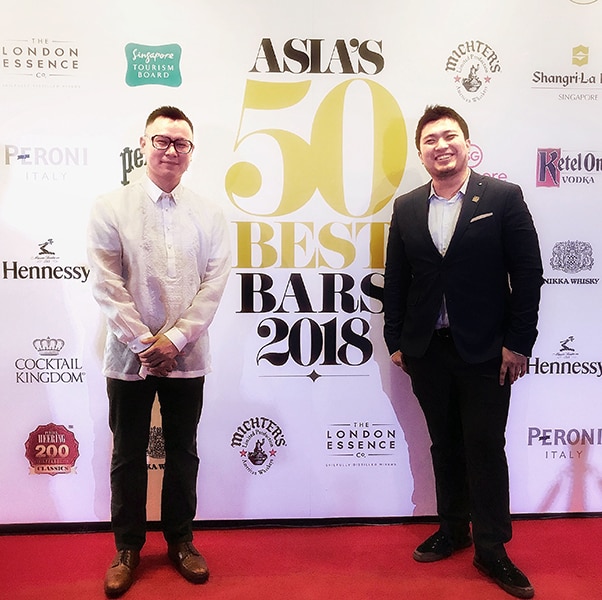
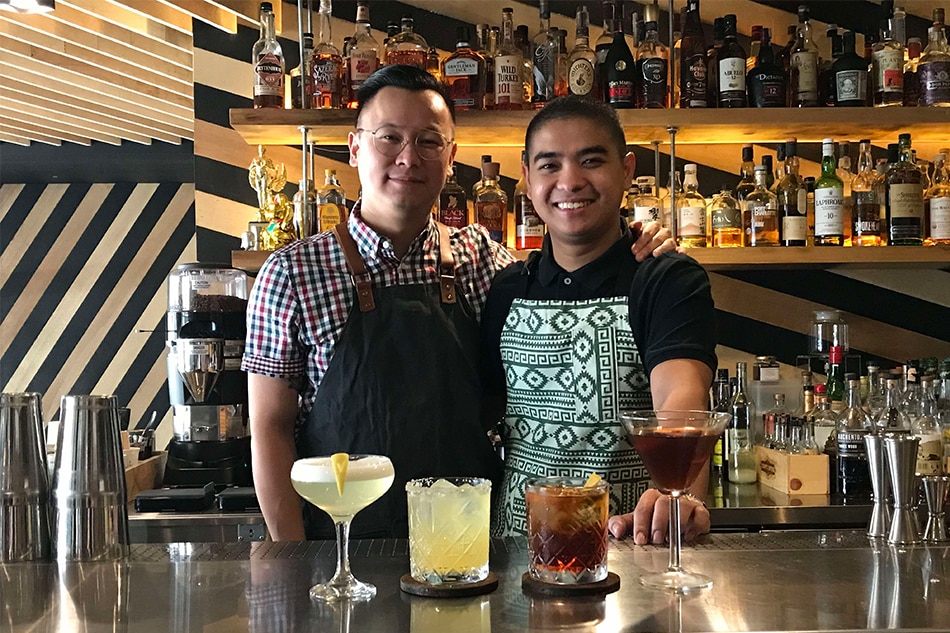
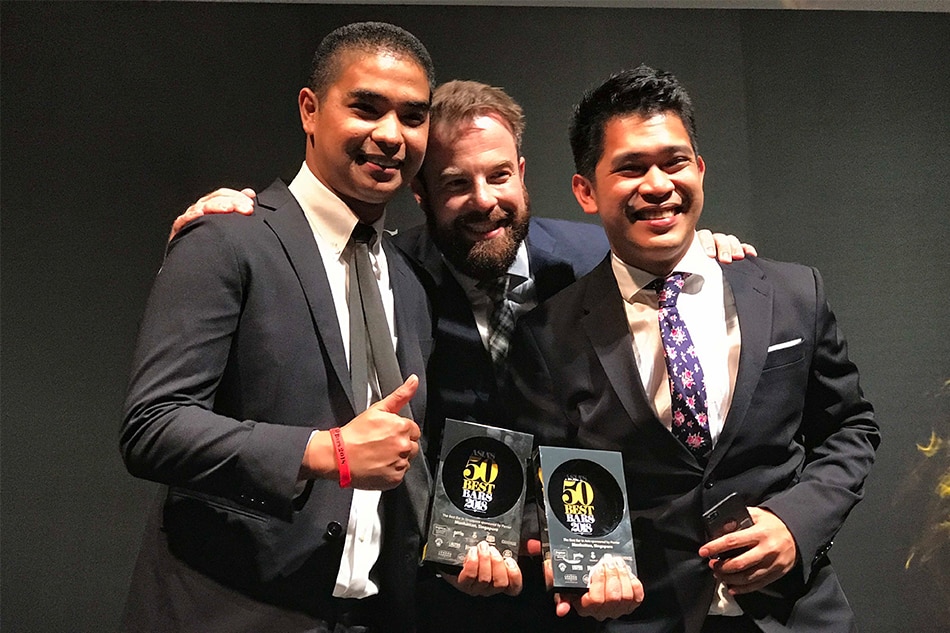
It has been a long time coming, but Filipino bartenders are now globally recognized as among the best in the world, not only in the Asia-Pacific region, but in the rest of the world, too. perhaps this became most apparent during the Asia's 50 Best bars ceremony in 2018 when Filipinos took the spotlight, with the Makati-based The curator taking the no. 25 spot, and most notably, with two Filipinos, Cedric Mendoza and Gabriel Carlos, helping Manhattan Bar in Singapore snag its no. 1 position. these are indeed glory days for Filipino bartenders worldwide.

I asked some of the most respected bar industry people to share their thoughts on what makes Filipino bartenders so sought after abroad and here is what they revealed:


Jericson Co


Owner and bartender, The Curator, Edsa Beverage Design, YKW at the Grid, and 205 (in photo, right, with David Ong)


It’s a mix of being raised in despair and family. These couple of generations of Filipino bartenders were kids in the 1990s and 2000s. We grew up with such ingrained structural negativity but were also cocooned by our families and culture who tried to make the best with what was available. So you have people that were familiar with washing away whatever rough situation was happening outside with hospitality, all the while knowing how to empathize with how tough it is outside. 


Erwan Heussaff


Owner, Yes Please, Revel, The Island


Filipinos have an innate knack for hospitality. We always want to make sure that our guests are comfortable, well fed, and happy, whether in our own house or our place of work. Pair that with our ability to adapt to foreign environments and our capacity to learn, you’ve got a strong base for a job that requires you to be precise, efficient, and creative, all in front of your customers.  Bartending looks like a laid-back job from the outside, but it’s a tough industry to be in. Filipinos are able to smile through it and make it look easy.


David Ong


Co-Founder and Managing Partner, The Curator, OTO (in photo, left, with Cedric Mendoza)


We’ve always thought that Filipinos make great bartenders in that half of the job is naturally inherent to us—that is, being hospitable. Thus our efforts to push our own bartenders at The Curator and OTO by guiding them to be 1% better than yesterday. If you give Filipinos the opportunity to better themselves (technique, knowledge, experience and wisdom), not only within the Philippines but abroad, then the sky is really the limit. Just look at Gab, Cedric, Yoma, Bryan, Mel, Davide, Joe, Gerry, Jake, Jon, and Kervin (all homecoming Filipino bartenders participating in the first Manila Cocktail Festival).


Holly Graham


Managing Editor of DRiNK Magazine Asia


I agree that Filipinos are good bartenders as they tend to be friendly and outgoing and hospitality comes naturally to them. I’ve seen many Filipinos do well outside the Philippines, including here in Hong Kong such as my dear friends Jake Mendoza at The Sea by The Old Man and Bryson Rivera of Bar Q88 who is also the founder of Circuit Square Tattoo (and has inked two designs on me!). Over in Singapore, Manhattan has seen some great Filipinos but I’m also really happy to see a strong community of female bartenders growing within Manila.


Rian Asiddao


Brand Ambassador, Diageo Reserve and Diageo Philippines Inc.


There are many traits us Filipinos have that make us really good in the hospitality industry. We excel in culinary, service, and in bartending. First, we are very hospitable and service oriented people. We love to host people, show them around, offer food and drinks, and we love to make people smile. Second, we are flexible enough to do many things, from the dirty work such as cleaning the glasses, dishes, and even going to the market to purchase ingredients, to admin work such as inventory, stock management, etc. Third, we are very open with ideas, and we are good in levitating an idea into something magical. And lastly, we are very charming and friendly, easy for other people to be comfortable with us. All these traits make us great in hospitality and because of that, we have so many amazing bartenders here and across the globe.


Giancarlo Mancino


Founder, Mancino Vermouth & Bar and beverage consultant for Rosewood Hotels


Based on my over 15 years of experience working with Filipino bartenders, I can say that they offer a complete package. Aside from their good command of the English language, most of them also have the ideal personality suited for the bar world. Compassionate, always smiling, and polite. And to top that, also willing to work hard.


Philip Bischoff


Beverage Manager and Beverage Ambassador APAC, Four Seasons Hotel Bangkok at Chao Phraya River (in photo, center, with Cedric Mendoza and Gabriel Carlos)


From my recent experience in Singapore, I can share that I have experienced amazingly talented, passionate, and committed bartenders at Manhattan Bar (No. 2 Asia’s 50 Best Bars 2019 and No. 3 World’s 50 Best Bars 2018). Clearly, Cedric Mendoza (formerly with Manhattan Bar, currently at Grain Bar, Sydney) and Gabriel Carlos (Manhattan Bar) are amazing examples of how passion and commitment can drive a story of success, but also taking the chance, when seeing one and realizing that it needs hard work to be successful. Great to see talents like Kelvin Saki rise as well, being driven by passion and the drive to learn and get better every day… It’s amazing to see how passionate people like David Ong are supporting and driving the local bartending scene and to be supportive as much as he can. I believe it all depends on every single one’s commitment and willingness to learn and being eager enough to get better. Somehow, I also trust it has to do with the environment and platform where talents are identified and supported.