Showing posts with label heroes. Show all posts

Tuesday, August 27, 2019

...the living heroes

Duterte: Every Filipino is a hero


Edith Regalado
Philippine Star
27 August 2019


DAVAO CITY, Philippines — President Duterte said there is no mistaking that every Filipino is a hero.

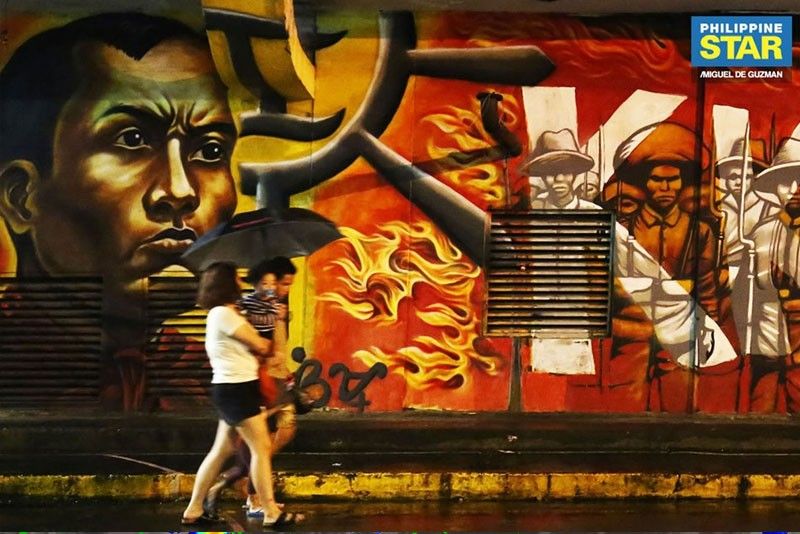
A family walks past a mural of hero and Katipunan founder Andres Bonifacio in Manila as the country celebrated National Heroes Day yesterday.

“I truly believe that every Filipino is a hero who can build on our vibrant legacy of fortitude and resilience,” the President said in his National Heroes Day statement yesterday.

Duterte called on Filipinos to reflect on the history and honor of those who sacrificed their lives and fought for the freedom and democratic ideals upon which the Philippines was founded.
“Let us make our forebears proud of our triumphs as a people by being everyday heroes who will reach out to those who are in need, especially to the ones neg-lected by society,” he said.

The President stressed that the collective sacrifice of the country’s forebears has made it possible for Filipinos to enjoy the blessings of liberty, and to continue strengthening the great nation they have left behind.


“We recognize their heroism not only by erection of statues in their honor but also by uplifting the welfare of the poor and marginalized for it is through our small deeds that their spirit of valor can live on,” he further said.

Citing the importance of solidarity in facing the future together, he encouraged everyone to “embody solidarity and sustain our momentum towards positive change not only for ourselves but for the succeeding generations as well.”

For her part, Vice President Leni Robredo stressed the importance of camaraderie, noting that no single leader could alone change the country for the better.

“Today, we remember the bravery of our heroes who sacrificed their lives for the freedom we enjoy now. Today, we remember not a single hero. Whether they were famous or not, have identities or not, we honor all those who made their contributions for the freedom of our country,” she said in Filipino.

She hopes the commemoration of National Heroes’ Day will serve as a reminder that no single hero can save the country from where it is now.

“The solutions to all our problems are not in the hands of one person and there’s no single leader that could give us a good life,” Robredo said.

“The Filipino is the hero of his fellow Filipino. You are the hero of your fellow countrymen and you have the power to make significant change on your country and on the life of other people,” she said.
Robredo also urged Filipinos to stand together for the country’s freedom, which their forefathers have died for. “In these times when we face threats against our democracy and sovereignty, let’s continue to stand firm for our freedom. It’s time for us to continue what they have started.”

Speaker Alan Peter Cayetano, who together with Vice Admiral Gaudencio Collado Jr., the Armed Forces of the Philippines vice chief of staff, led the wreath-laying ceremonies at the Tomb of the Unknown Soldier in the Libingan ng mga Bayani, urged Filipinos to “recommit ourselves to the choice to sacrifice and to love our country.”

“Their ultimate sacrifice will never be in vain. We, in our daily lives, learn to embody their courage in small deeds of heroism. And that will touch the lives of our countrymen, especially the poor and the marginalized,” Cayetano said in his speech.

He underscored that Philippine heroes are not limited to those who are honored in history, “but more so the overseas Filipino workers who have left their families in order to give their children a better future.”

AFP chief of staff Gen. Benjamin Madrigal Jr. also called on Filipinos to be heroes themselves by doing their part in serving and protecting the country and its people.

On Sunday, Philippine Army chief Lt. Gen. Macairog Alberto did his part in recognizing the living heroes by pinning the ranks and awards to soldiers who fought in battle and are still confined at the Army General Hospital.

Brig. Gen. Bernard Banac, spokesman for the Philippine National Police, said the country and the police force would never run out of heroes as he stressed that someone will always rise to the challenge to defend and protect.

It was a different take for Sen. Imee Marcos though as she asked if the holiday is not actually a misnomer.

“Here’s a historical fact that will shock most Filipinos. The reality is that, officially, we have no heroes. Little do most Filipinos know that ever since the Philippines gained independence, the government has never officially proclaimed who our national heroes really are even if it has been taught as early as grade school that the likes of Jose Rizal and Andres Bonifacio are among them,” she pointed out.

Marcos said that the Philippine National Heroes Committee officially recommended several people for the designation in 1995, including Jose Rizal, Andres Bonifacio, Emilio Aguinaldo, Apolinario Mabini, Marcelo H. del Pilar, Sultan Dipatuan Kudarat, Juan Luna, Melchora Aquino and Gabriela Silang.

However, the issue deteriorated into a debate involving regional interests and was never resolved. – With Helen Flores, Michael Punongbayan, Emmanuel Tupas, Cecille Suerte Felipe, Delon Porcalla, Rhodina Villanueva


Wednesday, June 12, 2013

...the modern hero

Fil-Am hero in Santa Monica shooting


06/12/2013


SANTA MONICA, California - With a memorial standing at the school entrance and library, classes resumed at Santa Monica City college just days after gunman John Zawahri killed five people in the surrounding area.

Thousands gathered at the school, joining the families of the victims in prayer.

Filipino American Marcel Kahn, the library worker who helped shelter eight other people as the gunman fired his way into the library, is still shaken up by the events.

"Honestly, it just saddens me that this happened, this whole thing happened. Really unexpected," he said.

News of the 22-year-old Filipino’s heroism went viral online after the Los Angeles Times snapped a picture of him.

"I only did what I could do and that was to follow my instinct. When that situation happens, you don’t know what you're going to do," he recalled.

Six people, including the gunman, died in what has been described as a 13-minute rampage, which started when Zawahri killed his father and brother and set their house on fire.


Monday, January 14, 2013

...the PH nurses in Dubai

PH nurses to the rescue


By Eunice Barbara C. Novio
Philippine Daily Inquirer
 

DIAL 999 Geoffery Panganiban in front of one of the smaller ambulances of the Dubai Corporation of Ambulance Services, where he works as a prehospital emergency nurse.


DUBAI, UAE—A man dials 999. Hazel Margarita Parado takes the call. Geoffrey Panganiban, part of a three-man ambulance team, prepares for dispatch. It is an emergency hotline in Dubai.

Hazel Margarita and Geoffrey are Filipino nurses, a growing presence in the government-backed Dubai Corporation for Ambulances (DCAS), one of the most modern ambulance services in the world.

“As an ambulance nurse, I have to attend to different kinds of emergencies. Most patients are those involved in road accidents and work or house emergencies. Most common cases are trauma, cardiac case, and diabetic emergencies,” explains Geoffrey.

Technically, they are pre-hospital ambulance nurses or paramedics. They are the first to respond and bring the victim to the hospital for further treatment.

Another overseas Filipino, Robert Fortinez of North Cotabato, has been working for 14 years as an emergency medical technician.

“We often work with the police and firefighters, since some emergency cases are accidents,” he says.

In the early ’80s, ambulance service in Dubai was under the police and the department of health services. In 2006 the government merged and unified all the ambulance services. In 2010, the Ruler of Dubai

established the Dubai Corporation for Ambulances (DCAS), which now has more than 60 ambulance stations working 24/7.


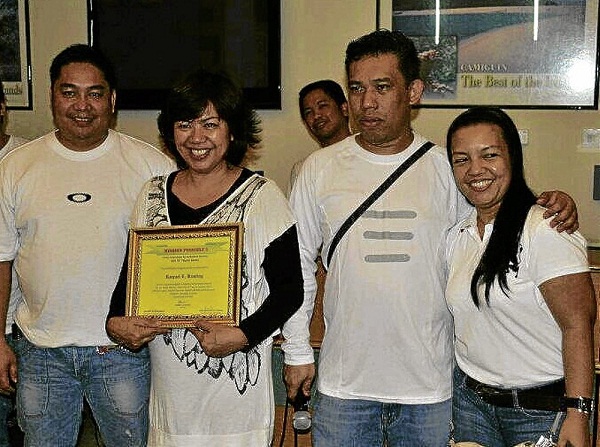
BADGE OF SERVICE From left: Robert, a staffer of the Philippine Overseas Labor Office with Hazel Margarita Parado and Geoffrey during ceremonies last October recognizing outstanding OFWs


Aside from giving first aid and transporting victims to hospitals, DCAS also has big mobile intensive care ambulances.

What they call “Mama units” are ambulances exclusively for emergencies involving a female patients, mostly obstetric or childbirth emergencies.

World’s biggest ambulance

Dubai, by the way, holds the Guinness record for having the largest ambulance in the world. The rich kingdom acquired in 2009 three Mercedes Benz Citaro bus-clinics comprising an operating theater, three intensive care units and eight immediate care units. Two of the clinic-

buses have a length of 12 meters while another is 18 meters long. They are available for rapid medical assistance, particularly in the event of major emergencies with a large number of injury victims. The DCAS has also licensed private air ambulances, also equipped with intensive care units.

Joining DCAS

Geoffrey, from Abra de Ilog, Occidental Mindoro, has been working with the ambulance service for five years now. In the Philippines, he had gained experience in rescue operations as a Red Cross nurse and a member of the UP Mountaineering Society.

“My work is very similar to paramedics in the TV series 911. I am under the ambulance operation department of DCAS. My office is my ambulance rig. An ambulance in Dubai is manned by two nurses and a driver,” explains Geoffrey.

He says weather conditions in the Middle East also make their work challenging.

“Can you imagine responding to a car accident under direct sun of almost 50 degrees Celsius? I have to carry a 20-kilo kit, kneel on concrete hot pavements and lift patients that are sometimes double my weight,” says Geoffrey.

Challenges at work

Hazel Margarita, who takes the calls, has been working six years as an emergency medical dispatcher. She immediately guides callers on first aid steps while locating and dispatching the nearest available ambulance.

Margarita’s job requires her to have knowledge of the Arabic language as well as familiarity with the streets and landmarks in Dubai to be able to guide the ambulances to the caller’s location.

A nurse needs to be able to imagine or picture the situation and guide the caller through initial first aid steps while he or she waits for the ambulance.

Confidence, patience and better judgment are needed in this kind of work, sums up Hazel Margarita.

Staying cool

The Filipino sense of humor and natural adaptation to any environment make them stand out among others, believes Hazel Margarita.

“We are hard working. In spite of the difficulties of any emergency situations, we show coolness and manage to smile and laugh,” she asserts.

Geoffrey, for one, is more than just an ambulance nurse. He has organized a mission for distressed OFWs housed at the Philippine labor office in Dubai. The project is implemented in coordination with Migrante Dubai, a private organization for the protection of Filipino migrants.

Geoffrey has also initiated humanitarian activities like the packing of goods for relief in troubled areas in Gaza and Pakistan. He was endorsed by the operations manager of DCAS to the Dubai Red Crescent where he has become one of its few Filipino volunteers.

“Wherever we are, we love what we are doing. We are always motivated, not only by financial gain, but even more by our commitment to service to others,” adds Robert.

Wednesday, August 15, 2012

...the "Heroes" protection

To protect Pinoy workers, recruitment agencies adopt Code of Ethics


August 15, 2012

To protect overseas Filipino workers (OFWs), at least 28 land- and sea-based recruitment agencies adopted Codes of Ethics, the Department of Labor and Employment (DOLE) said.


“We welcome this move from the overseas employment sector and we commend them for their commitment to safeguard the interest, not only of their industry, but also of our overseas Filipino workers,” Labor Secretary Rosalinda Baldoz said in a news release.

The 23 land-based recruitment agencies' associations and five sea-based manning agency groups signed their codes last Migrant Workers’ Day in June.

Philippine Overseas Employment Administration chief Hans Leo Cacdac said the land-based group pledged to observe what is best for the workers, the sector they represent, and their stakeholders.

Cacdac said the group also promised to uphold the highest principle of ethics and integrity.

He added that the manning sector stressed its adherence to the rule of law and committed to maintain the dignity and good reputation of the Philippine manning industry.

Land-based Groups

“The land-based groups’ Commitment to Ethical Conduct and Best Recruitment Practices put into writing their assurance to comply with all legal requirements, including local laws, and those of host countries as well as international standards,” the Labor department said.

By signing the Code, the recruiting agencies promised a full disclosure of all matters pertaining to the employment of the worker and non-discrimination of applicants because of political affiliation, religion, ethnicity, nationality, and gender, especially for household services workers.

The agencies likewise vowed to support the skills development of their recruits.
The land-based agencies seek to:
  • Make the process of seeking overseas employment cost-effective;
  • Eliminate the collection of placement fees;
  • Comply with regulations on the recruitment of workers;
  • Work actively with government agencies in addressing overseas employment issues, and
  • Stop predatory recruitment.

Sea-based groups
By signing the Code, recruitment agencies seek to spare sea-based workers from “unlawful, dishonest, immoral, deceitful and predatory” conduct of recruitment.

The Code sought to prevent opportunities for exploitation of seafarers.

The other salient features of the Code include:
  • The publication of all the cost that will be shouldered by the seafarers;
  • Negotiating for the best terms and conditions of employment for the seafarers;
  • Avoiding anything that may unjustifiably jeopardize seafarer’s current work or future work opportunities;
  • Safeguarding the seafarer’s information, and
  • Actively helping the cause of the seafarers.
The recruitment agencies
The land-based groups that signed the Code were:
1.    Associated Accredited Agencies for Cyprus
2.    Association for Professionalism in the Overseas Employment Inc.
3.    Association of Licensed Recruitment Agencies for Singapore Inc.
4.    Association of Manpower Agencies for Bahrain
5.    Association of Philippine Licensed Agencies for Technical Internship Program
6.    Coalition of Licensed Recruitment Agencies for Domestic and Service Workers
7.    Philippine Association of Agencies for Kuwait
8.    Federated Associations of Manpower Exporters, Inc.
9.    Society of Hong Kong Accredited Recruiters of the Philippines
10.Philippine Association of Agencies Accredited to Oman
11.Philippine Association of Manpower Agencies Deploying to Lebanon 
12.Philippine Association of Manpower Agencies for Jordan
13.Philippine Association of Manpower Agencies for Malaysia Affiliates, Inc.
14.Association of Service Contractors of the Philippines
15.Philippine Association of Manpower Agencies for Northern America
16.Philippine Association of Manpower Agencies for the United Arab Emirates
17.Philippine Association of Recruitment Agencies Deploying Artist, Inc.
18.Philippine Association of Service Exporters, Inc.
19.Pilipino Manpower Agencies for Taiwan
20.Philippine Recruitment Agencies Accredited to Saudi Arabia
21.Philippine Recruitment Agencies for Qatar
22.United Manpower Agencies for Israel Association, Inc.
23.Overseas Placement Association of the Philippines
Representing the five maritime associations in signing the Code were:
1.    Filipino Association for Mariners’ Employment, Inc.
2.    Filipino Shipowners’ Association, Inc.
3.    International Maritime Association of the Philippines
4.    Philippine Association of Manning Agencies and Shipmanagers, Inc.
5.    Philippine-Japan Manning Consultative

“The Joint Manning Group (JMG) manifested its adherence to the rules of law and to continue the development of the industry under a relationship of mutual respect, trustworthiness, and true brotherhood,” DOLE said.

Saturday, May 26, 2012

...the hero's statue

Dr. Jose Rizal statue to rise in Carson City

 05/26/2012
 
 
CARSON, California – In the next few months, the statue of Philippine national hero Dr. Jose Rizal will rise in this city that will make Filipinos around the world feel proud. 
 
The bronze Rizal statue will stand nearly 7 feet on top of a 6-foot tall granite base helped funded by the Jose P. Rizal Monument Movement. It is the first statue in what will be the International Sculpture Garden, which broke ground last November.
 

The Sculpture Garden is the brainchild of the City of Carson Mayor Jim Dear. He said, not only will this be a place dedicated for public art, but he envisions a walking history museum, where people can take their children to learn about heroes from around world. It just so happens that the Philippines wanted to display theirs first.
 
Dear said, “I feel it’s very important for young people to understand who these leaders were, the work they did, the changes they made in world history, and by having a sculpture garden with statues it’ll bring forth a greater educational experience for children who come here, and not just for Filipino American children, but all children.”
 
Dear said Rizal stands for everything right. Though some of his colleagues and community leaders from other ethnic groups complained at first about why a Filipino who died in 1896 should be erected first, he and fellow Councilman Elito Santarina quelled that controversy by teaching them about Rizal and the Filipino’s message.
 
Santarina said, “Dr. Jose Rizal is a man of peace, a champion of human rights, being a national hero. When they start to get to know more about Dr. Jose Rizal, they start to accept that.”
 
The theme of the garden is “Heroes of Liberation, Freedom and Justice from Around the World.”
 
Rizal was a proponent of democracy and peaceful reforms. He preached peace and justice but eventually became a martyr for his people in the Philippines.
 
There are only 8 Rizal statues in the US sculpted by Toym de Leon. This will be the first in California.
 
Officials said they hope to complete and celebrate this project before June 19, Rizal’s birthday

Monday, December 12, 2011

...the 2011 CNN Hero of the Year

Fil-Am midwife is named CNN Hero of the Year

 12/12/2011

Robin Lim (L), a Filipino-American midwife, as been named 2011 CNN Hero of the Year.

MANILA, Philippines - Robin Lim, a Filipino-American midwife who helps poor women have healthy pregnancies and births in Indonesia, has been named 2011 CNN Hero of the Year.

In Sunday's star-studded ceremony at The Shrine Auditorium in Los Angeles, Lim received the CNN Hero of the Year 2011 award from Anderson Cooper.

"Today on our Earth, 981 mothers in the prime of their life will die -- and tomorrow again and yesterday. And I'm asking you to help change that. We don't even know how many babies are lost, but all of us can help change that," a tearful Lim said, as she accepted the honor.

Lim, who was born to an American soldier and a Filipino mother, decided to become a midwife after her younger sister died from pregnancy complications a few years ago.

She and her husband sold their house in Hawaii, and moved to Bali, Indonesia to "reinvent" their lives.
In Indonesia, Lim noted pregnant women are 300 times more likely to die in the next 12 months than women who are not pregnant.


Fondly called as "Ibu Robin" (Mother Robin), she has been running her free clinics Yayasan Bumi Sehat (Healthy Mother Earth) in Bali and Aceh with Indonesian midwives since 2003. The clinic provides free prenatal and birthing services for poor Indonesian women. Lim also provides training for young midwives.

Christy Turlington Burns, model and founder of Every Mother Counts, introduced Lim as one of the Top 10 CNN Heroes during the ceremony. She recalled having a life-threatening complication during her own pregnancy.

"My wish is that every mother all over the world has the same chance surviving childbirth I had. My friend Robin Lim shares that wish and she spends her days and nights making it so," Burns said.

With Lim being named CNN Hero of the Year, her non-profit Bumi Sehat Foundation will receive a $250,000 grant. This is in addition to the $50,000 already given to each of the Top 10 CNN Heroes.

The CNN Heroes awarding ceremony was attended by stars such as Jerry Seinfeld, Sofia Vergara, will.i.am., Miley Cyrus and Kid Rock.

CNN Heroes is a multi-platform campaign that "shines a spotlight on individuals who go to extraordinary lengths to serve others." This year, the campaign reportedly received over 10,000 submissions from more than 100 countries.

In 2009, Filipino Efren Peñaflorida, who started a "pushcart classroom" to bring education to poor children as an alternative to gang membership, was named CNN Hero of the Year. He was the first Filipino to win the award.

Saturday, December 3, 2011

...the tribute

Viral OFW video leaves viewers in tears

INQUIRER.net


MANILA, Philippines—Raymond Marc tries to fight off tears as he watches a short video on YouTube. He failed.


“Coke has made me cry,” he posts on his Facebook account after watching the 4:27-minute “tearjerker” video of Coca-Cola that is now going viral on the internet.

His Facebook friend, Albert Madrigal, admits to being touched, too, by the short film.

“I cried. I could feel the message of the ad,” said Madrigal, a former University of the Philippines Los Baños professor who now works in Italy.

The video features three overseas Filipino workers: Joe Marie Ballon, Leonie Villanueva, Joey Doble.

Like many of the 11 million Filipinos trying their luck abroad, the three are hardworking OFWs who battle loneliness overseas to give their families back home a better life.

Ballon, an X-ray technologist, has been working overseas  for five years. And for him being away from his family is the most difficult part.


Leonie Villanueva
“I haven’t been home in a long time because my father got sick. He’s almost blind now,” says Ballon.
“Instead of spending for the ticket home, I would rather send him money to buy medicine."
 
 
Villanueva, a caregiver, has for nine years been fighting off the strong urge to fly back home and be with her children.


“I can’t go home, no matter how much I want to. I have house amortization bills to pay every month and all my children are depending on me,” she says.

“Even when I’m sick, I would force myself to go to work,” she adds.

Doble, meanwhile, left their family home in Pampanga when his youngest son was just one year old. That was  11 years ago.

“It can get very sad. I’m all alone here,” says Doble.

But Coke, through its Coca-Cola Where Will Happiness Strike Next: The OFW Project, gives the three a Christmas gift that left them in tears, but happy.

Watch the video and you’ll understand why.

Friday, October 14, 2011

...the midwife hero

Fil-Am midwife Robin Lim among Top 10 CNN heroes

ROSE-AN JESSICA DIOQUINO, GMA News
10/13/2011


A Filipino-American midwife — Robin Lim — has made it to the Top 10 of this year’s "CNN Heroes" for providing free maternal healthcare to thousands of poor women in Indonesia.


According to CNN, Lim, whose mother is a Filipino-Chinese, put up “birthing sanctuaries" for Indonesians in need of maternal and general health care.

In her “Meet the Hero" interview, Lim said it is common in Indonesia to hold babies in the hospital until the bills have been paid.

Lim, 54, said mothers should only worry about delivering their babies safely and not about how they should pay the hospital where they gave birth.

With average families in Indonesia earning only $8 a day, many cannot afford birthing services in hospitals, which can cost between $70 and $700. Thus, the country holds high maternal and infant mortality rates.

Lim, along with nine other “ordinary" citizens who have made differences in their communities, will all receive a $50, 000 grant and will be honored at an “All-Star Tribute" on December 11.

They are vying for online votes to become the fifth CNN Hero of the Year, which comes with an additional $250, 000. Voting is open until Dec. 7.

In 2009, Filipino Efren Peñaflorida was named CNN Hero of the Year for his Kariton classroom project, which brought the classrooms to children in the streets.

‘Calling’

Known in the area by the local term “Ibu" or mother, Lim began helping pregnant Indonesian women and their babies in 1994, when she and her brood of eight were still settling into the village of Nyuh Kuning near Bali.

The author and midwife easily made a home in the Asian country, having been raised in the Philippines while her father was stationed in Indonesia with the US military.

“When two baby owls fell out of a coconut tree and into my care, the villagers took it as an omen that I should become their new midwife," Lim told the online magazine, STEPS.

While it was unexpected, Lim— who first assisted local midwives in home-based childbirths— decided to return to the US to get a professional certification.

She told STEPS that she took the turn of events as a “calling" to follow in the footsteps of her maternal grandmother, Vicenta Munar Lim, who served as “healer and baby catcher for her people" in Baguio, even after the second World War.

Lim said she owes her values from her “Nanang" Vicenta and her Filipino-Chinese mother, who both taught her the gift of kindness to self and to others.

“My grandmother taught me to be a peaceful warrior. She gave me permission at a very young age to always follow my heart. That’s been my life’s greatest gift," she said.

‘With respect and kindness’

With the Balinese community and their friends rallying behind them, Lim and her husband put up the first clinic of Yayasan Bumi Sehat (Health Mother Earth Foundation) in 2003.

The tsunami tragedy a year later led to the establishment of a smaller clinic in Aceh.

These “birthing sanctuaries"—which also offers general medical services—work on a 24-hour basis and has collectively assisted in 5, 000 births.

Bumi Sehat has earned its share of foreigners and Indonesian celebrities—who all donate for the foundation— but Lim told CNN that about 80 percent of patients who come in express their gratitude with “a few mangoes."

“Rock star or prostitute, everyone gets treated [like a] VIP at Bumi Sehat... with kindness and respect," she said.

‘Reinvent their lives’

Before moving to Bali, Lim was a respected author with two books on maternal matters and a novel titled “Butterfly People." She lived in Hawaii with her husband and their eight children.

However, Lim was “just crushed" by the deaths of three special women in her life, including her sister, who succumbed to a complication that also killed the baby she was carrying.

“But I decided not to get angry. I decided to become part of the solution. If I could help even one family prevent the loss of a mother or a child, I would do that. I would dedicate might life to it," she told CNN.

Lim and her husband sold their house and the whole family trooped to Bali to “reinvent their lives." - with Gayna Kumar, VVP, GMA News

Monday, October 3, 2011

...the champions on a mission

Dragon boat champs join rescuers


By Dona Z. Pazzibugan, Niña Calleja
Philippine Daily Inquirer

The world champion dragon boat racing team, using the same vessel that earned them international renown, has joined military forces mobilized to rescue or bring relief to villagers trapped in heavily flooded parts of Bulacan and Pampanga.

The 20-member Philippine Dragon Boat Federation Team, dubbed the “Pinoy Dragon Warriors,” participated in the humanitarian missions on Sunday in response to a call from the Army chief, Lieutenant General Arturo Ortiz, for soldiers to join in the rescue effort.

They used the very same dragon boat they rode to five golds and two silvers and set two world records at the world championships held in Florida in August, according to the team manager, Army Major Harold Cabunoc.

Since the boat can accommodate only 20 people, team captain Sergeant Usman Anterola said that for every trip, the boat carried eight paddlers who ferried 10 villagers at a time.

There are 11 soldiers in the team, mostly from the Philippine Army, based at its headquarters in Fort Bonifacio. The rest are either members of the Coast Guard or civilians.

Cabunoc explained that the team practiced for six hours every day for more international competitions this year even without support from the Philippine Olympic Committee and the Philippine Sports Commission.

Payback time
Another team dispatched to the disaster zone in Bulacan at the weekend was made up of victims of Tropical Storm “Ondoy” in Marikina City two years ago, according to Marikina Vice Mayor Jose Fabian Cadiz.

“The city mayor, upon seeing the news about the floods on Friday morning, instructed our Rescue 161 to go to Bulacan and offer whatever help we can give,” Cadiz told the Philippine Daily Inquirer.

The city sent two motorboats, an ambulance, search-in-water equipment, outboard motors, generation sets, and other first-aid kits recently purchased in preparation for an Ondoy-type disaster. More than 100 of the nearly 500 lives Ondoy claimed came from Marikina.

In dispatching the 15-member team, Mayor Del de Guzman admitted that the city has yet to recover from the losses of properties and lives, but said, “Now, it’s our turn to help.”

Caught unprepared
Ronald Mejia, officer in charge of Marikina’s Rescue 161 and team leader in the two-day Bulacan rescue operations, said the floods in the coastal towns were “very much similar to Ondoy.”

Although the roof-high floodwaters reminded him of Ondoy, Mejia was able to spot the difference.
He said the flood that entered their homes in Marikina City came with mud while the floodwaters in Bulacan were crystal clear as it directly came from the dams.

“In Marikina, the floods were gone after a few hours. In Bulacan, it was taking several days for the floods to subside,” he added.

Mejia said that when his team arrived in Paombong town in Bulacan, people came rushing to them and asked them to rescue relatives marooned in their flooded homes.

The team managed to save more than a hundred lives, including a pregnant woman standing on her house’s roof.

“It was the first time they experienced huge floods so they were really shocked and caught unprepared,” Mejia said.

Wednesday, August 17, 2011

...the hero in us

Editorial

The Hero in Every Filipino


August 17, 2011
Manila Bulletin


MANILA, Philippines — Hero worship is often called “looking up to someone,’’ and as children, we looked up to those people like our parents, who were probably our first heroes. In ancient times, heroes were considered extraordinary, and performed astonishing deeds, far beyond the capabilities of the average person.
 

Heroes are brave, compassionate, committed to change, and prove that a good deed can help uplift a million lives. Through their words, actions, and good deeds heroes make a difference worth celebrating.


Drawing inspiration from simple people whose lives were made remarkable by their generosity in spirit, innovation, service, and concern for others, the alumni of the Ten Outstanding Students of the Philippines created Bayanibolusyon, a digital movement to unleash the Bayani (Hero) in every Filipino, especially among the youth.
 

The project seeks to be an inspiration to many who may have lost hope and aims to educate Filipinos that no act is too small or big, and that all Filipinos have the capacity to do their bit to make a positive impact on the lives of others.


The program has four elements: The Bagong Bayani which highlights the success of Pinoys who have set a model by walking the extra mile; the Bayanihan which focuses on organizations portraying the bayanihan or community spirit; the EDGE (Every Day Great Examples) which features Filipinos from various walks of life who have made contributions to their communities; and the Bayanitaktakan, a social platform which serves as a forum to engage every member to speak up, get heard, and be counted through wall posts and mouse clicks.


The Internet and the Web have made it possible for our fingers to change the world. A technological tool that has also made it viable for the world to instantly connect, it has become a means where service can be done, inspiration can be shared, and where Filipinos can affirm their potentials, and motivate others to lead, learn, and serve for the benefit of present and future generations.


Bayanibolusyon has big dreams for the Philippines and aspires for way of life that gives a chance for every Filipino to leave their constructive footprints that can change our lives forever. MABUHAY!

Sunday, August 7, 2011

...the seamen's hero

Filipino seamen’s hero is a girl

Philippine Daily Inquirer
 
 
Marissa Oca


MANILA, Philippines—Filipino seafarers are the most in demand in the world, accounting for 30 percent of about 1.2 million seamen abroad—from cruise liners to oil rigs. Dubbed “crewing capital of the world,” the Philippines has emerged as the world’s biggest supplier of international ship crew.

International manning principals have called Filipino seamen their “preferred choice” because of their outstanding qualities: Technical knowledge, flexibility, reliability, trustworthiness, hard work, and their command of the English language.

During the first quarter of 2011 seafarers have contributed $627.3 million to Philippine coffers. Last year, they brought $3.8 billion in remittances.

With a growing global requirement projected to grow at 50 percent in the next 10 years, and an aging international pool to boot, career prospects for Filipino maritime professionals are certainly bright.

With a lucrative seafaring industry it has then become imperative for maritime professionals to unite to protect their social, legal, moral rights both on the domestic and international fronts.

For 50 years, the late master mariner Gregorio S. Oca fought for seafarers’ protection through the Associated Marine Officers’ Union of the Philippines (AMOSUP), which he established in 1960. The largest organization binding maritime professionals, AMOSUP offers a wide spectrum of programs that include maritime education training, family dental and hospitalization, welfare and mutual benefit plans, and housing.

Earlier, his brother, labor leader Roberto S. Oca Jr., formed the Philippine Transport General Workers Organization (PTGWO) in 1951. By 1960, Gregorio, concerned with the plight of the licensed crew of several shipping lines, had constituted AMOSUP, with PTGWO as mother organization.

Today, Gregorio’s life’s work is being continued by his daughter Marissa, the current administrator of AMOSUP’s community development programs. Marissa’s early exposure to her father’s deeds planted the seeds in her young mind. Providing support are her brothers Conrado, president of AMOSUP, and Pedro Miguel, president of NAESS Philippines Incorporated.

“My exposure with AMOSUP began in high school when my father asked me to help out in AMOSUP’s 50-bed hospital, the Roberto S. Oca Worker’s Clinic which serviced seafarers and dock workers and their families,” recounts Marissa.

The said hospital would later become the 100-bed Seamen’s Hospital in Intramuros, Manila. This was followed by other hospital openings in the provinces: Cebu in 1997, Iloilo in 2005, and the Gig Oca Robles Seamen’s Foundation Hospital in Davao in 2008.

Fully immersed in hospital work after earning her economics degree from the University of California in Sta. Barbara, Marissa later enrolled at the University of the Philippines for a master’s degree in hospital administration.

Human cost

In the report “The Human Cost of Somali Piracy,” it was underscored that despite the many gains achieved by seafarers, problems continue to escalate globally as mariners are being subjected to increasing violence at sea including physical and psychological abuse—even torture.

Published by the Oceans Beyond Piracy, an organization dedicated to achieving a long-term, sustainable solution to piracy, the report stated that in 2010 alone, more than 4,000 seafarers were attacked—some vessels and crew multiple times.

“And this is a very critical issue that needs to be addressed because we have a lot of Filipino seafarers out there whose lives are on the line.  Certainly there is a need to impose additional safety measures. In extreme cases they suffer from significant psychological or physical abuse; worse, torture,” reveals Marissa.

In fact, as of May, 2011, there were 79 Filipino seafarers on board nine vessels still in captivity.

To address this escalating problem, the Philippine Overseas Employment Administration (POEA) last year imposed an additional requirement for departing seafarers to undergo a one-day defense training against sea pirates before boarding foreign sea vessels.

For its part, AMOSUP provides psychosocial counseling and support services to seafarers and families who were victims of abduction.

“This is a most difficult ordeal not only for seafarers but also for their next-of-kins who go through tough psychological torment. Our community development programs include activities that promote mental and psychological well-being of seafarers’ families,” she explains.

Making something out of a loss

Marissa is one who always puts the family first ahead of anyone else, be it for the seafarers that she deals with regularly, and more so with herself.

When she lost her 17-year old son Ambrosio Gregorio “Gig” Oca Robles IV after a tragic accident, Marissa’s deep and joyful appreciation for her departed son became the wellspring of many inspired actions.
Among them is a reading advocacy for the families of seafarers. “I would always read to my children at bedtime every night. When they grew, I found myself soliciting books for the library that supported a school in the Seamen’s Village, which my father founded. After Gig passed on, this simple desire to promote reading literacy would transform into an advocacy,” Marissa explains. She also spearheaded the creation of the Gig and Amazing Sampaguita Foundation, Inc., (GASFI).

“At any one time, when there are at least 230,000 Filipino seafarers on ships worldwide, there are one million children with their family members left at home. It is in the context of the one-parent family or the distant parent setup that we wish to advocate reading as bonding time at seafarer families’ homes,” explains Marissa.

GASFI has so far printed 10 children’s books targeted for seafarer families; and given away for free. The stories were culled from works written by authors who won in a story-writing contest GASFI launched last year.

Seafarers’ welfare

Underscoring the need to strengthen the bond between seafarers and family members amid difficult issues such as coping with loneliness, homesickness and “burn-out,” Marissa organized the 1st International Seafarer Family Convention (ISFC) 2011 at the Philippine International Convention Center (PICC), Pasay City.

With theme “The Bonds of Families, the Success of the World,” the two-day conference and exhibit was the first in the industry, and became the biggest gathering of maritime industry professionals and stakeholders.

“There are many issues being dealt by seafarer families left behind by parents who have to be away for long periods of time. We should all be aware that not only the family, but also the government, ship owners, employers, NGOs, and many others have a stake in keeping the families of seafarers together,” explains Marissa.

The Department of Labor and Employment (DoLE), through the support of local government units, has created more seafarers’ help desks in the different regions to allow services to become more accessible. It has also continued to implement schemes for a rationalized distribution of scholarship slots for the deserving children of seafarers throughout the country, and increase the number of family welfare officers and counselors, who are responsible for conducting regular family visitations.

Tuesday, June 28, 2011

...the Hero Acting to End Modern-day Slavery Awardee

News in Photo
by Yahoo! Philippines
28 June 2011


                                                (AP Photo/Manuel Balce Ceneta)

Secretary of State Hillary Rodham Clinton presents a 2011 Hero Acting to End Modern Day Slavery Award to Darlene Pajarito, a prosecutor from Zamboanga City, Philipines, coinciding with the release of the 2011 Trafficking in Persons Report, Monday, June 27, 2011, at the State Department in Washington.

Wednesday, June 22, 2011

...the 2009 CNN hero's dream

Efren Penaflorida realizes dream to build a learning center building


By ALEX VALENTIN BROSAS
June 21, 2011
Manila Bulletin

Even with the completion of a learning center building, Efren Penaflorida will continue his 'kariton' education to encourage more children to study


MANILA, Philippines – The 2009 CNN Hero of the Year Efren Penaflorida scores another feat by realizing his dream to build a learning center for street children.


Called Karbil or Kariton Building, the learning center is nearing completion in Cavite City. Its facilities will be used for direct tutorial for 150 street children. Operated by the Dynamic Teen Company, of which Efren is the founder, it has an activity area, classrooms and a library complete with laptops donated for the learning center.


Efren acknowledges the enormous blessing brought about by his being named CNN Hero of the Year in 2009.


“Tumagos ‘yung dumating na blessing. Aside from that ‘yung passion ng mga volunteers mas lalong nag-fire up,” he said on “Showbiz News Ngayon,” June 20.


He also credited some celebrities who helped him with his cause, like sportscaster TJ Manotoc.


“Si Bianca (Gonzalez) supportive siya pagdating doon sa encouragement, sa mga volunteers. Fineature kami ni Bianca sa 'Y-Speak' dati, eh. Wala pang CNN noon. Nakakatuwa nga siya, eh. Tapos hanggang ngayon naaalala pa niya pa rin kami. Nagpunta din dito si Karylle. Nagtulak din ‘yun. Si Gerald (Anderson) nagtulak din siya,” he shared.


He is utterly grateful for these celebrities as “’yung presence nila kasi dito sa ginagawa namin is ano, eh.
Iba’ng impact noon sa mga estudyante namin sa kalye. Kumbaga, nae-encourage ‘yung mga bata. ‘Yung love for learning mas parang napu-fuel up pa.”


Clarence Baptista, computer teacher at the learning center, shared that, “Nagtuturo po kami ng mga basic typing po. Tinuturuan po namin kung paano gumamit ng computer, kung ano ang tama po.”

With the new building, Clarence added, “Hindi na po limited ‘yung time niya (Efren) para turuan po ang mga bata.”


Even with the existence of a learning center, Efren and his group will continue with their concept of “kariton” education.


“‘Yung kariton class room, kumbaga, it’s an idea which evolved. Nangarap kami na someday magkaroon sana kami ng learning center, ng place para doon naming i-gather ‘yung mga bata and then we’re working on our dreams.”

AttachmentSize
Even with the completion of a learning center building, Efren Penaflorida will continue his 'kariton' education to encourage more children to study10.54 KB

Monday, June 20, 2011

...the ties that binds

Heidelberg still celebrates Jose Rizal’s birthday

By: Ramon M. Roda
Philippine Daily Inquirer


Unknown to many, Dr. Jose Rizal celebrated his 25th birthday with a Lutheran minister, Karl Ulmer, and his family on June 19, 1886, in Wilhelmsfeld, an idyllic and quaint suburban district 15 miles from Heidelberg town.

In commemoration of that occasion, the Ulmer family honored the “young Filipino eye doctor with a party in their house where strawberry punch was served,” as recounted by Fritz, one of Pastor Ulmer’s sons.

The Germans have a deep attachment and devotion to Rizal, and today he is still revered as one of their own in two places in Germany: Heidelberg and Wilhelmsfeld.

Old-timers and German Rizalistas of Heidelberg pay respect to our national hero with appropriate ceremonies during his birthday every year. They still share fond memories of our hero’s memorable six-month sojourn in Heidelberg and Wilhelmsfeld, which they reminisce with particular devotion and veneration.

Retracing Rizal’s footsteps

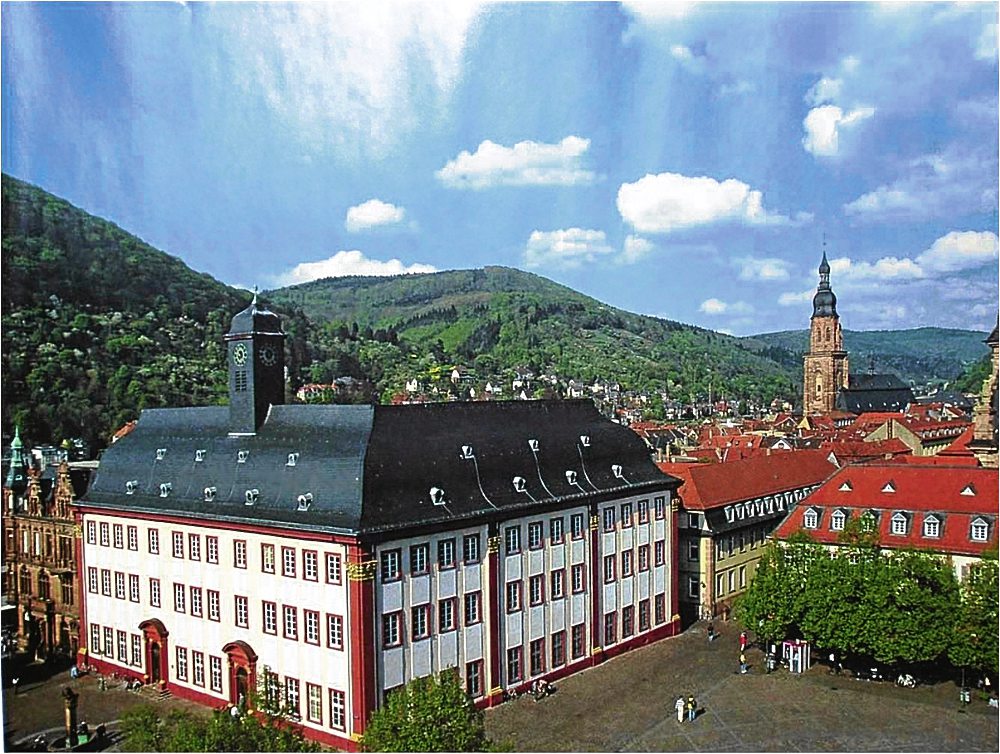
Heidelberg, a city in southern Germany, is famous for its ancient university, romantic surroundings, old churches, majestic castles and cobblestone streets redolent of a bygone era. Heidelberg is the best-known place and destination for Filipino tourists and Rizalistas bound for the historic German city because of Rizal’s poem “To the Flowers of Heidelberg,” and the three-story Baroque building, the Alte Universitat. It is Germany’s oldest university, founded in 1386.
The young Rizal arrived in Heidelberg on Feb. 3, 1886, from Paris and immediately fell in love with the beautiful city.

In October 1998, or 112 years after Rizal’s arrival in Heidelberg, I traveled to Germany for a one-month “centennial tour” (1998 being the 100th anniversary of the declaration of Philippine independence) to retrace Rizal’s footsteps in Germany’s oldest university town, where our hero stayed for six months.

I was enamored with Heidelberg’s romantic surroundings and picturesque scenery. The ruins of the magnificent castle perched on a steep bank of Neckar River, overlooking the city, give a very romantic aura. The Old Roman Bridge with its historic gateway is awe-inspiring.

In Heidelberg, Rizal studied the German language; attended lectures in ophthalmology as an observer under Dr. Otto Becker and professor Wilhelms Kuehne, at the Alte Universitat; and trained under two outstanding ophthalmologists, Dr. Becker and Dr. Galezowsky, in the “Augen Klinik” or eye clinic.

Rizal stayed for a while in a four-story pension house at Karlstrasse No. 16, but he soon moved to another boarding house—a three-story apartment at Lutwigsplatz No. 12 Grebangasse in front of University of Heidelberg.


The first floor of the place where Rizal used to live now houses a bookstore. It was here where Rizal in his lonely moment wrote his nostalgic poem “A las Flores de Heidelberg” on April 22, 1886, when he just turned 25.

Nick Joaquin said that “the poem is one of the most charming poems, luminous, not black, musical, not curt.” It was published in the December 1896 issue of La Solidaridad.

To pay tribute to the National Hero, a bronze marker placed at the façade of this well-preserved boarding-house reads: “In this building, former Ludwigsplatz 12, Rizal lived from Feb. 18 to June 1886. His poem ‘A las Flores de Heidelberg’ was written here on April 22, 1886. Embassy of the Philippines, June 19, 1960.”

The building has remained incredibly the same as it was during Rizal’s time. Another marker was affixed at the entrance of the University Eye Clinic where our young doctor trained in ophthalmology.

Rizal left Heidelberg and moved to Wilhelmsfeld. From Wilhelmsfeld, he would regularly commute to and from Heidelberg in this 12-km stretch, which took him three hours walking the marvelously beautiful forest to attend his studies at the university.

Idyllic Wilhelmsfeld


Wilhelmsfeld, a mountainous village with ancient trees on the hillside of Odenwald in West Germany, can be reached 30 minutes by car through a pine forest and zigzag roads from Heidelberg.

Rizal spent three months in Wilhelmsfeld as a house guest of Pastor Karl Ullmer, with whom Rizal had a chance meeting earlier while strolling along the Philosophen Weg (Philosopher Way), a “scenic path along the banks of Neckar River which overlooks Heidelberg’s majestic castle.” Pastor Karl Ullmer, the vicar of the paris, became Rizal’s devoted friend.

A long friendship blossomed between them, and the German pastor invited for the young foreigner to stay with his family as house guest. Rizal’s stay with the Ullmers gave him the chance to make incredible progress in speaking and writing in German. It also afforded him to savor and imbibe the spring peace of green valleys, farm house and picturesque scenery.

In this idyllic setting, he finished writing the last chapters of his first novel, “Noli Me Tangere,” as well as made crucial revisions on the draft.

To keep Rizal’s memory alive, a plaque carved in gold letters on the black marble was installed in the three-story, century-old stone house of Pastor Ullmer on Jan. 4, 1960. The plaque reads as follows from its original German: “Jose Rizal (1861-1896), National Hero of the Philippines, wrote the last chapters of his novel ‘Noli Me Tangere’ in this house while a guest of Pastor Ullmer in 1886.”

Outside Pastor Ullmer’s house is a street named Jose Rizal while an embankment along Neckar River bears the name of our national hero—Rizal-Ufer.

It was in Wilhelmsfeld where Rizal celebrated his 25th birthday. They toasted to strawberry punch and enjoyed the warmth of the company. It was an intimate relationship with Ulmer’s family that, three generations later, two grandsons of Pastor Ulmer would tenderly reminisce about their former tenant.

“My grandfather used to say that his vicarage had only two foreign guests, one an empress (Elizabeth of Austria, who stayed in their residence in 1885) and the other, Rizal, and that of the two it was Rizal whose memory lingered the longest.”

Rizal’s Memorial Park

The high point of any visit to Wilhelmsfeld has to be a tour of Rizal Park. It is nestled in a picturesque setting—rolling, steep hills bound and dominated by pristine forest amid bucolic surroundings.

Standing at the center of Rizal Park is a “larger-than-life bronze statue showing Rizal with a quill in his right hand touching his face slightly in deep thought with a far gaze.”

In front of the well-manicured park and cobblestone lawn is a statue with mini fountain and three manmade islets, while nearby is a concrete-and-wood bench canopied by huge ancient trees, half-bare, welcoming the coming of winter.

A tinge of sadness and nostalgia engulfed me as I sat on the bench reminiscing about Rizal merrily celebrating his 25th birthday in 1886 and toiling on his first novel “amid the sepulchral silence of the vicarage garden, among the German flowers he loved so much.”

Rizal’s statue, created by Filipino sculptor Anastacio Caedo, was unveiled on Sept. 2, 1978.

In naming a plaza for our national hero in Wilhelmsfeld, the people of Heidelberg was “honoring the memory of a man of letters and science, who, with courage and generosity and brotherhood, struggled until death for the moral and intellectual advancement of his people.”

Time and distance cannot obliterate the memory of Rizal in Heidelberg—“The City with Heart.” To the inhabitants of Heidelberg and the German government, “Danken” (Thank you).

Ramon M. Roda is a retired professor of Spanish and Rizal course at the College of Commerce of the University of Santo Tomas.

Monday, June 13, 2011

...the contemporary Pinoy heroes

Seven stories, seven inspiring Filipinos

 
AP Photo/Aaron Favila

When we started the 'Pitong Pinoy' project, we thought it would be hard to find seven Filipinos who have made a remarkable difference.
 
After all, it's not everyday that you run into people who could actually devote their entire life to serving others or champion advocacies that are seemingly hard to accomplish.

But we gathered an overwhelming number of nominations—from loving parents, courageous law enforcers,  devoted health workers, brilliant artists, magnanimous celebrities, exemplary athletes, astute youth leaders, inspirational public servants, to simple folk who have touched others with their kindness.

Believe us, it was a tough job to choose seven amazing Pinoys. Nonetheless, it is heartwarming to read stories of change, volunteerism, and selflessness.

Thanks to all your nominations, we finally have the seven people who make us prouder to be Pinoys (in alphabetical order):

1. Alexis Belonio. This engineer figured out an out-of-the-box way to make use of rice husks. He created a cooking stove designed to help poor people have access to hot meals.

Belonio invented a environment-friendly rice-husk stove which has a fan in its base. It provides air used in the conversion of rice hulls into gas—helping poor families cook without needing expensive fuel.

Belonio could have gotten a patent for his invention and gain millions from it; yet he left it patent-free so the technology would be free for everyone to use. His efforts have already been recognized abroad but shouldn't we appreciate him first?

2. Jean Enriquez. If you want to see female power at work, you'd have to meet this woman.

Despite the danger of drawing the ire of huge human trafficking syndicates, Enriquez continues to fight for the welfare of Pinays. Her steadfast efforts to empower Filipino women is admirable.

She heads the Coalition Against Trafficking in Women-Asia Pacific, which vigorously fights sex tourism, the mail-order bride trade, pornography, and sexual exploitation.

Enriquez also holds education camps among young women to ensure that they are not vulnerable to abuse. She also oversees the healing process of survivors and makes sure they get a second shot at having a decent life.

3. Jay Jaboneta. All it took him was one Facebook status message to change the lives of dozens of children in a far-flung village in Zamboanga.

When Jaboneta learned that 200 children in Layag-layag village had to swim to get to school everyday (painstakingly making sure that their books, if there was any, wouldn't get wet), he knew had to do something.

Through a Facebook status message, Jaboneta was able to raise funds—as much as P70,000—on the first week of his call for donations.

A Facebook group "Zamboanga Funds for Little Kids" was later established, expanding his advocacy's reach.

Now, the kids of Layag-layag go to school in their bright new yellow boats, each aptly dubbed as "New Hope."

4. Tomas Leonor. For Leonor, initiating change literally begins with a single step.

To raise funds for cancer-stricken children at the Philippine Children's Medical Center, Leonor organized 'StepJuan' and volunteered to travel sans any motored transportation.

Leonor's belief that cancer must not kill the hopes and dreams of children motivated him to walk hundreds of kilometers.

His walking expedition started on April 4, 11 at Allen, Samar.  To date, StepJuan's Leonor has walked a total of 1,241.5 kilometers and taken 2,887,208 steps in seven islands, ten provinces, 86 municipalities, and 20 cities.

5. Heidi Mendoza. She made headlines and risked her life to expose supposed corruption in the military, allegedly led by ex-Armed Forces of the Philippines comptroller Carlos Garcia.

Mendoza braved Senate hearings and bared details of suspicious military transactions, strengthening the multimillion plunder case against the former general.

In all likelihood, she could've chosen a simple, quiet life but she decided to take the road less traveled for the sake of the country.

She has recently been appointed by President Benigno "Noynoy" Aquino as commissioner of the Commission on Audit and we have high hopes that this would pave the way to clean and honest governance.

6. Anna Oposa. A lot of people claim to care for the environment but how many actually go out of their way and really work beyond lip service?

Oposa, director of the Law of Nature Foundation, has proven her love for Mother Earth by vigorously working on protecting marine life.

She also initiated "Save the Philippine Seas," spurred by recent reports of massive coral reef destruction in several parts of the country. Her initiatives made quite a huge social network ripple and united Filipinos through a national blog day to save the Philippine seas.

She is also lobbying to strengthen laws for environment protection, a long-term goal that we hope would live on far beyond our grandchildren's life spans.

7. Tzarina Saniel.In the age of e-books, tablet apps, and the internet, one would easily prefer going online instead of going to the library. But for Saniel, nothing beats a real book—the feel of the old manuscript, the smell of the paper and the idea that it has cultivated the minds of many.

Bibliophile Saniel has collected and preserved old Filipino books, even original manuscripts from Jose Rizal.
Because of her inspiring advocacy, she is definitely noteworthy for keeping Pinoy literature alive.

If your nominee did not make it to this list, fret not. This is just the beginning of our collection of good news and stories of how Filipinos beat the odds and make a difference.

Sunday, June 12, 2011

...the Rizal Center in Spain

Sentro Rizal: A Philippine cultural exhibit in Spain


By HANNAH L. TORREGOZA
June 12, 2011


MANILA, Philippines -- Sentro Rizal, the first Philippine institution that would showcase the country's arts, culture and language to the world opened Sunday in Madrid, Spain.


Sen. Edgardo Angara, chair of the Senate committee on Education, Culture and the Arts, led the opening of Sentro Rizal which was created under the National Cultural Heritage Act of 2009 he and Aurora Rep. Juan Edgardo Angara had authored.


Named after the country's national hero, Dr. Jose P. Rizal, the center aims to promote the Philippine heritage across the world in the same way the France, Spain and Germany did with Alliance Francaise, Spain with Instituto Cervantes and Goethe-Institut respectively.


The senator is here as the guest of honor at the Spanish capital in recognition of his untiring efforts in enhancing bilateral relations through cultural exchange, dialogue and cooperation.


Angara said branches of Sentro Rizal will be created overseas where there are large Filipino communities, especially Filipino children who need to be educated about their native country's history, culture and language.


“A Sentro Rizal will take root where there are Filipinos who wish to keep the connection with their motherland alive. It will foster understanding and friendship not only among overseas Filipinos, but also between Filipinos and foreign nationals with whom we share deep historic and cultural bonds,” Angara said.


He further said the Philippines' premier cultural institution also serves as the eponymous tribute to national hero Dr. Jose Rizal on the sesquicentennial of his birth.

Thursday, June 9, 2011

..the Heritage city

Dapitan City declared as ‘Heritage Zone’


Marlo Cueto/NPPA Images

Dapitan City in northern Mindanao was declared a Heritage Zone by the National Historical Commission of the Philippines (NHCP) in commemoration of the sesquicentennial or 150th birth anniversary of Dr. Jose P. Rizal on June 19.

"Because of its ancient beginning and Rizal's four-year exile in Dapitan, the district has become historically and culturally significant," NHCP said in its resolution.

Also known as the "Shrine City of the Philippines," this historic location in Zamboanga del Norte is where the national hero spent his years of exile from 1892 to 1896. During these years, Rizal acquired a 16-hectare sanctuary now the Rizal Shrine which is considered a major historical landmark in Dapitan.

"Every generation seeks and finds new meaning in the life and example of Rizal. His vision of nationhood continues to serve as an inspiration and challenge to all Filipinos who work to fight corruption and make inroads against poverty in our society," the Office of the Presidential Spokesperson said in its press statement.

Wednesday, June 8, 2011

...the Pinoy legacy in Alaska


Pinoys honored for their contributions to Alaska

By Jose Katigbak, STAR Washington Bureau
The Philippine Star
 June 09, 2011


Juneau, Alaska – Alaskeros, the original Filipino overseas workers (OFWs), are long gone but their contribution to the development of Alaska has not been forgotten.

A busy downtown location in the Alaskan capital of Juneau has been named Manila Square and a bust of Philippine national hero Dr. Jose Rizal placed atop a stone pedestal to honor contributions of Filipinos past and present.


“It was a long time coming but a well deserved honor,” said Dante Reyes, a board member of Filipino Community  Inc. (FCI), a social, non-profit body formed more than 50 years ago to foster better understanding and brotherhood among Filipinos and other ethnic groups and keep alive their culture, customs and traditions.

Today the Filipinos, estimated at between 2,000 and 2,500, continue to make their mark in Juneau, the third largest city in Alaska after Anchorage and Fairbanks, with a population of about 30,000.

Many of them are immigrants from the early 1970s when immigration to the US was still relatively simple and uncomplicated.

Unlike their nomadic Alaskero forefathers, who worked in the salmon canneries of Alaska in the summer and the farms of California, Washington and Oregon in other seasons, the Filipinos of today are mostly professionals who work for the state or own their businesses.

FCI prides itself as the oldest organized Filipino community in Alaska. It has its own two-story center with a spacious hall for meetings, bingo nights and socials.

“During the 1920s and 1930s, Filipinos worked in Southeast  fish canneries where they were referred to as ‘Alaskeros’ and labored in the Alaska-Juneau gold mine.

“The first Filipino community in Juneau was organized in 1929. It was later incorporated under territorial law on Feb. 1, 1956,“ reads a plaque in Manila Square.

Reyes said the parcel of land on which the community center stands was donated by the Juneau assembly, which also gives the community an annual grant of between $50,000 and $75,000 from state funds to enable it to remain active in civic and social work and provide scholarships to talented Filipino students.

The center, a stone’s throw from Manila Square, is a favorite stop off point for the hundreds of Filipinos who work the cruise ships that ply the Vancouver-Anchorage sea route packed with tourists wishing to see Alaska’s famous glaciers.

There they can play billiards or bingo, talk with their Juneau compatriots or have nice home-cooked food at one of the nearby Filipino restaurants.

Erlinda Ferrer, who owns a gift shop in South Franklin on the same street as the Filipino center, said she came to Juneau 30 years ago from Ilo-ilo as an immigrant and hasn’t regretted it since.

At the center itself Juneau residents Ruben Canon and Nestor Lim, both from Cebu, were playing billiards during their lunch hour.

“The vision and legacy of the early Filipinos continue to exist and thrive today as we honor and respect our forefathers, remember our heritage and prepare to celebrate the Independence Day anniversary of the Philippines,” Reyes said.


Thursday, June 2, 2011

...the hero's books

Penguin Books to publish Rizal’s ‘El Fili’

Another Jose Rizal classic will soon join the ranks of William Shakespeare, John Steinbeck, and Charles Dickens.

Three days before the 150th birth anniversary of Philippine National Hero Jose Rizal on June 19, Penguin Books will launch its English translation of “El Filibusterismo" at the Philippine Center in New York City.

The paperback version of “El Filibusterismo" will be available on September 1, 2011 according to the Penguin Books website.

Source: Penguin Books
Five years ago, Rizal’s first novel “Noli Me Tangere" was also published under the imprint Penguin Classics. The book deals with the themes of love and martyrdom and features the lead character Crisostomo Ibarra, who has just finished his studies abroad and wants to bring education reform to the small town of San Diego.

“El Filibusterismo" is the sequel to “Noli Me Tangere." Set 13 years after the events of the first novel, the book revolves around Simoun, a rich jeweler who is bent on starting a revolution. He also wants to rescue Mara Clara, one of the main characters from the first novel who entered the town nunnery towards the end of “Noli Me Tangere."

Many of the other characters and settings from the first novel make their reappearance in “El Filibusterismo" albeit with a darker, more sinister air.

The second novel’s themes, revenge and obsession, are a stark contrast to the focus of “Noli Me Tangere,’" according to the Penguin Books website. Both however, are generally regarded to have helped push forward the Philippine Revolution against Spanish colonizers toward the end of the 19th century.

High school and college students in the Philippines are required to study the life and works of Rizal, particularly the two novels, as mandated by Republic Act 1425.

Penguin Classics, an imprint of Penguin Books, is known for publishing inexpensive paperback versions. It is “the leading publisher of classic literature in the English-speaking world," according to their website. The company is also known for using sleek and modern designs in their editions of popular books.

E.V. Rieu’s translation of “The Odyssey" in 1946 was the first book published by Penguin Classics. Authors with the most titles under the brand include William Shakespeare, John Steinbeck, Henry James, Charles Dickens, and Graham Green.

Penguin Books’ announcement of the new El Filibusterismo publication is one of many events leading up to Rizal’s birth anniversary.

In early May, the Philippine and German governments unveiled plans to restore the original manuscripts of the two novels. The original manuscripts are in danger of being permanently ruined because of poor preservation conditions in the National Library.

Malacañang has declared June 20, the day after Rizal’s actual birth date, a special non-working holiday.

Click here to watch “Ang Mahiwagang Ngiti ni Rizal," a 2011 documentary by Howie Severino about the photographs of Jose Rizal and the stories behind them. – Bea Cupin/YA, GMA News