Showing posts with label Uganda. Show all posts

Monday, November 26, 2012

...the Gusi peace prize awardee

Filipino peace prize awardee

By Manila Standard Today
Nov. 26, 2012

Dr. James G. Dy, the Gusi Peace Prize winner for Social Services and Philanthropy, was the only Filipino among 20 Laureates out of 128 candidates from Canada, Sri Lanka, Colombia, Iraq, Kuwait, Serbia, Uganda, Mauritius, Argentina, USA, China, United Kingdom, Mexico, Slovenia, Finland, Ukraine, Malaysia, Peru, and Russia.


Recognition rites will be held on November 28 at the Philippine International Convention Center for the philanthropist, who has been involved in social, civic and charitable work for more than 30 years.

Dr. Dy is the President of the Philippine Chinese Charitable Association Inc., which operates the Chinese General Hospital and Medical Center that served as his vehicle in supporting various charitable causes, including fund-raising and livelihood projects, medical and dental missions to far flung areas, and relief operations to devastated communities in times of calamities and disasters.

In 2002, he was elected Governor of the Philippine Red Cross and Governor of the Philippine Constitution Association, positions which he holds up to this day.

He earned four honorary doctorate degrees: Doctor of Humanities, University of Pangasinan in 1999; Doctor of Business Administration, Lyceum-Northwestern University, Pangasinan, in March 2004; Doctor of Humanities, Central Luzon State University, Nueva Ecija, November 2006; and Doctor of Philosophy in Technology Management, Technological University of the Philippines, March 2007.

Dr. Dy was named Outstanding Filipino Awardee for Humanitarian Service by the Philippine Jaycee Senate and Insular Life Insurance Ltd. He also received the Outstanding Manilans Award for having distinguished himself in business and industry, hospital administration and humanitarian advocacy during the 428th Founding Anniversary of Manila, and was the outstanding Chinese-Filipino to receive the Lifetime Achievement Award in the Dr. Jose P. Rizal Awards for Excellence. His qualities as a civic leader and as a father were recognized by the Ulirang Ama Award along with the conferment of the title Ambassador for Medical Tourism in 2001.

Thursday, January 26, 2012

...the press feedom ranking


Phl improves rating in 2011 Press Freedom Index and censorship

By Artemio Dumlao
The Philippine Star
January 26, 2012


BAGUIO CITY, Philippines – The Philippines has improved slightly in the 2011 Press Freedom Index, the Reporters sans Frontières (RSF) or Reporters Without Borders said.

Now on its 10th year, RSF is a Brussels-based organization that publishes an annual rating index covering 178 countries worldwide.

Though still reeling from the stigma of the November 2009 Maguindanao massacre where at least 57 were killed including 32 media people, the Philippines ranked 140th in 2011.

A year after the Maguindanao massacre, Philippines dropped to 156th, a tremendous slide from its former ranking at 122nd.

Despite the improvement, the RSF still included the Philippines in its 2011 Press Freedom Index, together with Pakistan and Afghanistan “where violence and impunity persist” while indicating redress over “more repression in Sri Lanka, Vietnam and China.”

In the Philippines, the RSF said, “paramilitary groups and private militias continued to attack media workers.”

The Press Freedom Index this year specified the still lingering issue on the Maguindanao massacre, claiming “the judicial investigation into the Ampatuan massacre made it clear that the response of the authorities was seriously inadequate.”

The New York-based Committee to Protect Journalists (CPJ) earlier listed the Philippines third after Iraq and Somalia in the worldwide list of unsolved murders of journalists in 2011.

Maintaining its third spot since 2010, the Philippines “was adjudged from a 13-country list where journalists are murdered on a recurring basis and governments are unable or unwilling to prosecute the killers,” the CPJ said.
Violence and censorship around Asia
Journalists continued to be exposed to violence in Bangladesh (129th) and Nepal (106th), although less than in the past, the RSF noted, while citing Nepalese journalists were regularly subjected to threats from rival political groups and their supporters.

In Bangladesh, opposition groups and the ruling Awami League took turns attacking and obstructing the press. The Bangladeshi government maintains excessive control over the media and the Internet, the RSF claimed.

RSF cited China (171st) and Vietnam where freedom of information worsened because of authoritarian rule.

“China has a record of having more journalists, bloggers and cyber-dissidents in prison than any other country, stepped up its censorship and propaganda in 2011 and tightened its control of the Internet, particularly the blogosphere,” it said.

The RSF also documented that in Beijing and Shanghai, international correspondents were particular targets of security forces and had to work under the continual threat of expulsion or having their visas withdrawn. “Journalists were prevented from covering most of the events that threatened China’s stability or might have given it a negative image,” the press freedom watchdog said.

Vietnam (172nd), the RSF said, appeared to follow China’s repressive lead and fell seven places. “Politically committed journalists and pro-democracy bloggers were harassed by the authorities while courts continued to invoke state security to hand out prison sentences ranging from two to seven years,” the index claimed.

In Sri Lanka (163rd), the regime of the Rajapakse clan forced the last few opposition journalists to flee the country, RSF said.

Interestingly, the RSF saw Burma (169th) showing signs of beginning to carry out reforms including partial amnesties and a reduction in prior censorship, but it remained largely under the control of an authoritarian government run by former members of the military junta reinvented as civilian politicians. Less than 10 of its journalists remain in prison at the start of 2012.

In North Korea (178th), although news and information was able to move across its borders to a greater extent, no one knows whether this will continue under Kim Jong-un, the son and heir of Kim Jong-il. The dynastic succession, the dominance of the military machine and the government’s desire for power give no grounds for optimism.

‘Good turning bad’
RSF claimed that in 2011, countries which are traditionally good performers did not shine.

With New Zealand’s fall to 13th position, no country in the Asia-Pacific region figured among the top 10 in the index.

Hong Kong (54th), the RSF saw, showed a sharp deterioration in press freedom in 2011 and its ranking fell sharply. Arrests, assaults and harassment worsened working conditions for journalists to an extent not seen previously, a sign of a worrying change in government policy, it said.

In Australia (30th), the media were subjected to investigations and criticism by the authorities, and were denied access to information, while in Japan (22nd), coverage of the tsunami and the Fukushima nuclear accident gave rise to excessive restrictions and exposed the limits of the pluralism of the country’s press.

 Other developments
Syria, Bahrain and Yemen got worst-ever rankings owing to crackdowns after these countries’ political upheavals, the RSF said.

“This year’s index sees many changes in the rankings, changes that reflect a year that was incredibly rich in developments, especially in the Arab world.”

RSF also claimed “many media paid dearly for their coverage of democratic aspirations or opposition movements. Control of news and information continued to tempt governments and to be a question of survival for totalitarian and repressive regimes.”

This year, Eritrea, Turkmenistan and North Korea are immediately preceded at the bottom by Syria, Iran and China, three countries that “seem to have lost contact with reality as they have been sucked into an insane spiral of terror,” and by Bahrain and Vietnam, quintessential oppressive regimes, the RSF said in its report.

Other countries such as Uganda and Belarus have also become much more repressive, it added further.
On the other hand, countries like Finland, Norway and the Netherlands still “respect basic freedoms.”

RSF also noted the entry of Cape Verde and Namibia into the top 20, “two African countries where no attempts to obstruct the media were reported in 2011.”

“This serves as a reminder that media independence can only be maintained in strong democracies and that democracy needs media freedom.”


Sunday, October 23, 2011

...the best currency series

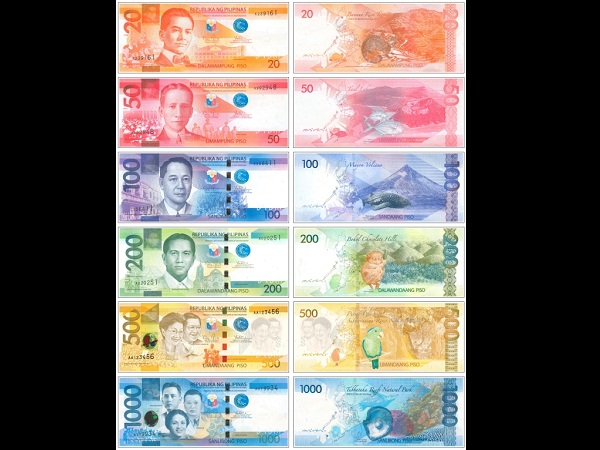
Like it or not, new peso bills star in currency award


By: Michelle V. Remo
Philippine Daily Inquirer


Photo taken from http://www.bsp.gov.ph/


What matter a mislocated map here or a wrong-colored beak there?

The series of new peso bills, which was vilified after its launch last December for those two design errors, has been judged as one of the best currency series in the world in an international design competition.

The set of new peso notes, called the “New Generation Currency (NGC)” series, was one of two finalists for best new currencies in the world in a worldwide contest organized by the International Association of Currency Affairs (Iaca).

Iaca is an international organization of central banks, currency-issuing authorities, currency producers and suppliers.

The winner of the Best Currency Award was the new series of shilling notes from Uganda. The other finalist for best new currencies was the new series of rupee notes from Sri Lanka.

The contest is aimed at recognizing the best currencies that have been issued within the last 18 months. The currencies were evaluated on the basis of their design, including innovativeness and security features.

‘Best security features’


Besides landing as a finalist, the Philippines’ NGC was also given a special award for best security features. The new series of peso notes was cited for its optically variable device patch, a feature of the new P500 and P1,000 bills.

This feature, which counterfeiters would find hard to imitate, is the reflective foil that bears the image of the Bangko Sentral ng Pilipinas (BSP) logo with a parrot in the P500 bill and the South Sea pearl inside a clam in the P1,000 bill.

The awards given to the Philippine currency were received by BSP Monetary Board Member Armando Suratos and BSP Deputy Governor Juan de Zuñiga at the award ceremony held earlier this month.

Diwa Guinigundo, the deputy governor who headed the committee in charge of the design of the new peso bank notes, said the BSP is proud of the new series of peso notes because of its sophisticated features.

The recognition of the new peso notes as one of the best in the world came after they were roundly criticized when they were launched in December last year.

The critics said the new peso notes had errors in design, and urged the BSP to recall the series.

Some of the errors cited were the allegedly inaccurately designed Philippine map and the wrong color used for the beak of the blue-naped parrot featured in the P500 note.

The BSP said what the critics are pointing out are not errors.

Sophistication of design

The map, which critics said mislocated the Tubbataha Reef by 400 kilometers and did not clearly show Batanes, was simply an artist’s rendition, the central bank said. The map need not be 100-percent accurate because it is an artistic depiction and not meant to be a navigational tool, it said.

As for the color of the parrot’s beak, which is rendered yellow in the P500 note when the actual color is red, the BSP said the inaccuracy was a consequence of printing-capability limitations. The printing of bank notes, unlike ordinary paper materials, have limited colors and the limitation did not allow the beak to be printed red, it said.

Instead of criticizing the peso notes, people should recognize the sophistication of the design, especially as far as security features are concerned, the BSP said.

For instance, the holograms and the embossed prints of monetary value in the peso notes make them difficult, if not impossible, to be imitated by counterfeiters, it said.

Fusion of substance, form


“NGC notes are beautiful. It is an elegant fusion of substance—the theme being what is the best and the brightest in the Philippines—and form rendered in a most artistic and tasteful fashion,” Guinigundo said.

“The jurors must have been impressed by the careful choice and use of cutting-edge security features that actually enhanced the color and thematic dimensions of our currency,” he said.

He said that besides being colorful, the new peso notes are durable (with 20-percent abaca and durability features embedded in the paper manufacture) and clean (it has bioguard properties that resist bacteria and other microorganisms).

So far between 400 and 500 million of the new peso notes are already in circulation.

Guinigundo said that despite this, there seems to be a scarcity of the new bank notes. He said this was because some people, when they get hold of a new bank note, tend to want to keep it rather than spend it.

Tuesday, July 5, 2011

...the Judges Spirit awardee

OFW choir group wins Judges Spirit Award in California

By Ed Yra
FilAm Star
 
From the Facebook group of Prime Note Ensemble
 
“The Prime Note Ensemble captured not only the audience but also the judge’s hearts, that is why they were awarded the Judges Award for Exemplifying the CICF Spirit,” said Pat Harris, the executive director of the California International Choral Festival and Competition (CICF).

It was noted by those who attended the choral competition, which was held from June 24 to June 26 at the Cal Poly Performing Arts Center in San Luis Obispo, that many audience members were captivated by the overseas Filipino ensemble’s arrangement and moving rendition of the song, “The Circle of Life” from the movie The Lion King.

Operated by the San Luis Obispo Vocal Arts Ensemble, a local nonprofit organization, the CICF competition is a world class event that began in 2007, and includes many choral groups from as far as Indonesia, Uganda, Republic of Congo, parts of Europe and the Philippines.

The gathering, which is held every other year, has been dubbed by Harris as a type of “choral Olympics,” and this year’s installment included a free concert by all choir competitors as part of the festivities at the Farmers Market along Garden Street in downtown San Luis Obispo.

Harris told FilAm Star that this year was unlike any of the previous competitions, where participants traditionally would stand around and sing in robes while swaying.

“The three-day event included livelier and intense performances in different categories that included Folk Song Competition, Required Pieces Competition and Choir’s Choice Competition,” said Harris.

She added: “Since this is an international choral competition, we were faced with many challenges about terrorist issues, visa issues and issues about participants coming over and not going back to their country.”

Harris noted that two choral group competitors, Lembaga Karsa Cipta Indonesia and Bangelus Choir, were not able to compete because of visa problems.

“We were thankful for the Filipino group, the Prime Note Ensemble to be able to participate on our short two week’s notice to them because of two cancellations,” Harris said. “They did not hesitate to join our competition.”

The Prime Note Ensemble, an all-male choir group composed of Overseas Foreign Workers (OFW) from the Philippines who were originally based in Saudi Arabia, recently participated in another choral group competition in Reno, Nevada.

Dubbed as the only Filipino a cappella choir group from Saudi Arabia that has won awards in international competition, the story of the Prime Note Ensemble is one of taking significant risk by forming a singing group in a strict Islamic country like Saudi Arabia, which prohibits congregation or gathering of any form.

Despite their risky situations in the Middle East kingdom, the group managed to overcome arrest or punishment by doing their rehearsals discreetly at their rented soundproofed apartment near a mosque.

Founded by Medard Obida in 2001, the group with no musical experience but an unrelenting passion to sing managed to rehearse and perform under the guidance of Novern Cabios, who as a professional and experienced choirmaster and music arranger was able to capture the talent of each member of the group.

Competing in events held in places like China in 2006 and in Austria in 2008, the Prime Note Ensemble won bronze and silver medals in the music chamber choir category.

Because of their number (22) as a choral group, Prime Note Ensemble were unable to compete in the same category versus choirs, such as the University of Redlands Chapel Singers, which won the second place award, or the Riverside City College Chamber Singers, which won  the first place competition award.

“But because they inspire us with their music, talent and performance, and they embody the spirit of what the CICF competition award stands for, we award them the Judges award to them  because they made an impact in this 2011 competition,”  Harris said.

The competition and the festival according to Harris is an opportunity for “international bridge building.”

Wednesday, June 22, 2011

...the Ateneo glee

Ateneo choir triumphs in Europe

06/22/2011

MANILA, Philippines - The Ateneo de Manila College Glee Club (ACGC) returned this week to Manila from their European tour bearing good news.


The ACGC, one of the oldest and most distinguished university choirs in the country, bagged several awards in Europe: grand prize and champion at the 33rd Varna International May Choir Competition in Bulgaria; first prize at the 47th Montreux Choral Festival in Switzerland; 3rd prize (Mixed Choir Category) at the Harmonie Festival 2011 in Germany, and; 2nd place at the 11th Mednarodno Zborovsko Tekmovanje Maribor (International Choral Competition Maribor) in Slovenia.

At the Varna competition, the group also won the 1st prize in the Mixed Choir Category and Best Interpretation of a Bulgarian piece. They also qualified for the European Chorale Grand Prix in 2012.

At the Montreux contest, meanwhile, ACGC also clinched the People's Choice, the Compulsory Work's Prize, and the Program's Choice and its Interpretation Prize.


Besting 11 other choirs from Belarus, Costa Rica, the Czech Republic, Singapore, Slovenia, Uganda, Ukraine and Germany, ACGC took home the 1st Prize in Folk Song rendition at the Harmonie Festival 2011 held in Lindenholzhausen, Limburg/Lahn in Germany.

Composed of 17 girls and 17 boys, ACGC also performed at Heidelberg and Wilhelmsfeld in Germany for the 150th birth anniversary of Filipino national hero Dr. Jose Rizal.

They capped their European tour by joining the International Choir Days in Mainhausen, Germany.

ACGC choir director Ma. Lourdes V. Hermo said their success is due to the team's hard work and dedication to bring honor to the country.

Friday, June 17, 2011

..the business challenger winner

Pinay wins business challenge award in Netherlands

06/17/2011

NETHERLANDS - For the second time, a Filipina took home the grand prize in the BiD Network Women in Business Challenge, a yearly competition for women entrepreneurs from around the world held here.

Hailing from Bukidnon, Philippines, Nathalie Arsonillo bested 140 businesswomen from Asia, Africa and South America with her organization Sustainable Growth for Rural Venture Inc. (SUGRUVI), which aims to better the lives and income of cassava farmers in her home province, particularly the Matinsalog-Manobo tribe.

Her goal to bring mobile cassava processing units to remote mountains in Bukidnon, in order to minimize spoilage and increase farmers' profits, earned the nod of judges from Dutch Bank ING, and business organizations United Success and iCCO.

“I’m very happy but this is just icing on the cake. My coming here and their efforts to connect me to future investors, I would not get it if I’m alone or if I’m just staying in the Philippines. I made a lot of contacts, I met a lot of people so the future looks great, not only for me but also for all the cassava farmers in the Philippines,” said Arsonillo in Tagalog.

The overwhelmed Arsonillo received 5,000 euros worth of business coaching from and membership to United Success, a women-only business network helping women entrepreneurs all over the world. She would also receive assistance in finding possible investors.

Advancing the lives of cassava farmers

A banker for 11 years, Arsonillo left her job at an international bank in the Philippines in 2008 to start SUGRUVI. Whenever she comes home to Bukidnon, she frequently sees cassava being grown in small patches in the province. She learned that cassava is not only for human consumption but for other productions as well. She thought of uniting cassava farmers into a community making cassava produce.

“Aside from being food on the table, cassava is also being made into noodles, one of the main components of glue, made into chalk, textile and many others. It has a lot of uses and now, one of the big markets for it is the production of ethanol. It’s like corn but only cheaper,” explained Arsonillo.

They partnered with a rural bank and sought other financing schemes to buy the good variety of cassava and distribute it to the farmers for free. She approached San Miguel Corporation to sell cassava chips but the company did not respond very early. For two years, the cassava farmers booked high costs, but no income. Because cassava rots in 48 to 72 hours, the farmers had little time to make them into something useful, thus lowering their income considerably.

“What we want is to make a transport unit that will go from the center to the mountains so the processing will take place there. This will avoid spoilage, lower transportation and labor costs and increase the productivity of the farmers and the organization,” she continued.

Fortunately, after two years of waiting, San Miguel started ordering from SUGRUVI. This inspired Arsonillo even more, as well as the farmers in her organization. She is proud of her kababayans' solidarity as they produce the amount of order that their clients demand.

SUGRUVI now has 278 members, 48% of whom are women and 23% are from the Matinsalog, Manobo tribe.

Social and environmental impact

The BiD Women in Business Challenge, now on its second year, was established to focus on women who are already in business but want to expand. According to Thierry Sanders, director and founder of BiD Network, 27% of all the business pitches they are receiving each year come from women entrepreneurs. Since there wasn't any international competition for these women, to help them assist in the expansion of their businesses, BiD Network pioneered one for them.

“There’s a lot of women entrepreneurs out there and they just need to put their business plans together, find a coach and get financed. They have great business ideas,” said Sanders.

Last year, it was Marianne Olano from Naga City who won the grand prize for her business Baycrafts Jewerly.

“The most important thing we are looking for is an entrepreneur who has growth ambitions. They must have social impact and we are looking for environmental businesses as well. So if you can have that combination of 20% of income growth, social impact and environmental impact you're in the right spot and you're looking for finance because we can help you look for finance,” continued Sanders.

According to Sanders, they do not entertain businesses which have lower that 20% predicted growth income in one year because these will not generate jobs that are needed in the community. He cited the statistics in the United States where 90% of jobs generated in the last 20 years were from companies which had start-up of $250,000 and more than 20% yearly growth.

All the five finalists, including four from Peru and Uganda, got business coaching from BiD and ING especially in areas like finance and investor match-making, marketing, women leadership, overcoming cultural barriers and finding export partners.

They were also advised to find business partners or investors who have solid background to build trust and track records, in addition to having perseverance.

Going International

SUGRUVI is currently only producing for domestic distribution but Arsonillo said that their end goal would be to go international. A few Dutch companies have already expressed interest in looking at their products and using tapioca starch instead of corn starch.

“The cassava chips are still on the starting level but starch is the end of the line. When the selling prices are high, the buying prices are also high so hopefully we can go and reach that goal (of going international),” said Arsonillo.

There is also a possibility of acquiring mobile units and other kinds of technology for their cassava processing. Some investors are also willing to buy SUGRUVI shares, prompting Arsonillo to turn the organization into a corporation.

“We waited for a long time but we didn’t think expect that it will this worth it,” she ended.