Showing posts with label Morocco. Show all posts

Monday, August 26, 2019

...the Filipino artists at Katara show

Works by Filipino artist on show at Katara


Raynald C. Rivera
The Peninsula
26 August 2019

A diverse array of works by renowned international Filipino visual artist Frederick Epistola is on show at his solo exhibition titled Hugis at Kulay (Shapes and Hues) which launched at Katara Cultural Village yesterday.


Officially inaugurating the exhibition, Dr. Khalid bin Ibrahim Al Sulaiti, General Manager of Katara, lauded the level of cooperation between Katara and the Philippine Embassy in Doha which has resulted to a variety of artistic and cultural activities, including this exhibition which shows visitors the stunning features of the Philippines and its rich culture.
Al Sulaiti stressed Katara’s keenness to diversify its exhibitions and host various artistic experiences that would open different cultural windows.
In his remarks, Alan L Timbayan, Ambassador of the Philippines, underlined the importance of the exhibition showcasing its several paintings, collages and sculptures depicting the historical, social and cultural changes experienced by the Filipino society to expose many customs and traditions.
Timbayan also praised the great efforts made by Katara in building bridges of cooperation and convergence between cultures and peoples.
The ambassadors of Morocco, Canada, Thailand, Vietnam, Iraq and Russia were among those who attended the launch of the exhibition.
The centerpiece of the exhibition is a mixed media on wood piece, one of the artist’s latest works, dedicated to hardworking overseas Filipino workers around the world.
An abstract expressionist painter, collagist, sculptor and photography enthusiast, Epistola has produced wide ranging art pieces in different mediums from mixed media to clay to metal sculpture some of which are now part of permanent collections of museums and cultural institutions in various countries such as the US, Switzerland and Italy.
With a degree in Fine Arts Major in Visual Communications from the University of the Philippines, Epistola has been featured extensively in numerous solo and group exhibitions abroad such as Malaysia, Italy, Sweden and the US.
Apart from his art, Epistola is also known for his advocacies and innovation including initiating the Solar Power Initiative (SPIN) project which provides homes in depressed areas in the Philippines access to affordable and clean power through the use of solar energy.
The exhibition is open for public viewing from 10am to 10pm until August 30 at Gallery 2 of Katara Building 22.

Sunday, May 18, 2014

...the emerging city of tomorrow

Why UN Habitat named CDO an ‘emerging city of tomorrow’


By Mozart Pastrano, Ninfa U. Along-Albania
Philippine Daily Inquirer


Cagayan de Oro City (CDO) has been named an “emerging city of tomorrow” in this year’s World Urban Forum in Colombia organized by the United Nations Human Settlements Programme (UN Habitat).
 
CDO is the only Philippine city on the list, which includes Hunchun, China; Johor Bahru, Malaysia; Malmo, Sweden; Nampula, Mozambique; Onitsha, Nigeria; Santa Marta, Colombia; Tetouan, Morocco; and Uberlandia, Brazil.
 
CDO is ranked by the National Competitiveness Council as the Philippines’ most competitive city.
 
The mayor of CDO is former Misamis Oriental 1st District Rep. Oscar S. Moreno.
 
The city government has pioneered in the computerization of business permits and licensing, as well as the assessment and payment of real property tax.
 
“Getting a business permit takes up less than an hour,” said Eileen Canoy Escobar-San Juan, the city’s local economic and investment promotions officer.
 
She also noted that a key driver in the city’s remarkable growth was the “very strong private sector support and initiative.”
CDO is the growth driver of Northern Mindanao (Region 10), whose economic growth continues to exceed those of the other regions in Mindanao.
 
CDO’s gross regional domestic product (GRDP) was P240 billion in 2012, up by 7.4 percent compared to its 5.8 percent growth in 2011. This was largely due to the acceleration of the industry and services sectors, which rose by 9.2 percent and 9.0 percent, respectively.
 
Although agriculture stepped up by only 2.4 percent, contributing 28 percent to the region’s economy.
 
Nationwide, Northern Mindanao (Region 10), which includes CDO, ranked third in per capita GRDP.
 
Dynamism
 
Fueling the region’s growth is CDO’s economic dynamism, government efficiency and appropriate infrastructure. New industries utilizing information technology are being established in the city.
This fast-growing city of over 600,000 people provides easy access to an enormous concentration of markets in Northern Mindanao.
 
The Mindanao Container Terminal (MCT) facilitates direct and cost-efficient movement of containerized cargoes to Manila, Cebu and international shipping hubs.
 
The multi-berth Cagayan de Oro Baseport handles inter-island passenger travel with connectivity to the country’s nautical highway and the logistics corridors of Mindanao.
 
Laguindingan Airport services air logistics requirements, while an extensive road network leads to and from the major production areas and markets of Mindanao.
 
The expansion of the MCT and Filinvest Development Corporation (FDC) Power Plant will consolidate CDO’s position as the largest logistics center in Southern Philippines.
 
While the rest of Mindanao has been experiencing severe power shortages for many months now (with up to 16-hour outages daily in one Mindanao city), CDO has been hit by brownouts only at the tail end of this summer.
 
That’s because it is approaching self-reliance in power: with Minergy’s 27.4-MW and 18.9-MW diesel power plants, STEAG State Power’s 210-MW coal-fired power plant—plus Bubunawan Power Company’s 7-MW run-off river hydro project in tandem with Cepalco’s 1-MW photovoltaic solar power plant—the only grid-connected PV power plant in the Philippines.

FAMILIES visiting their deceased relatives and staying overnight in Bolonsery public cemetery last Nov. 1. Right: Uncompleted bridge over Iponan River connecting Bulua with Opol.Once completed the bridge should be part of a new coastal artery crossing Cagayan de Oro.

Complementing the logistics infrastructure of Cagayan de Oro is the rapid modernization of the city’s telecommunications infrastructure, transforming the city into a business center and international logistics and telecommunications hub of the south.
 
Educational center
Beyond infrastructure, CDO is the center of education in Mindanao. Xavier University-Ateneo de Cagayan is Mindanao’s first university—and, in fact, is the first Jesuit university in the Philippines.
 
Capitol University and Liceo de Cagayan University are cited by the National Association of Colleges and Universities as among the country’s top 10 higher education institutions with the largest number of accredited programs.
With 15 universities and schools, CDO accommodates 82,000 students and 22,000 graduates every school year.
 
Custom-designed skills training and apprenticeship programs are readily available to serve human resource requirements. For example, Xavier University has partnered with Asian Carmakers Corp., the country’s official BMW distributor, to bring German automotive expertise to technical education students.
 
CDO’s strategic location and rich agricultural resources have made it the preferred site of major agribusiness companies such as Del Monte Philippines (which set up the world’s largest integrated pineapple processing plant here), NestlĂ© Philippines, Pilipinas Kao and other small and medium agri-based industries.
 
As a gateway to Southern Philippines, CDO provides direct access to rich agricultural areas in Mindanao—the source of 40 percent of the country’s food and livestock. CDO is a significant producer of oleochemical and other coconut products.
 
Higher-value products through agro-processing offer investment opportunities. Presently, Northern Mindanao is the top producer of cattle and is the third largest producer of poultry in the country.
 
CDO is also a key destination of meetings, incentives, conventions and exhibitions (MICE) in Southern Philippines. It has 4,806 rooms from various accommodation facilities that can handle conventions with 3,000 participants. It is trying to improve these rather limited numbers.
 
White water rafting capital

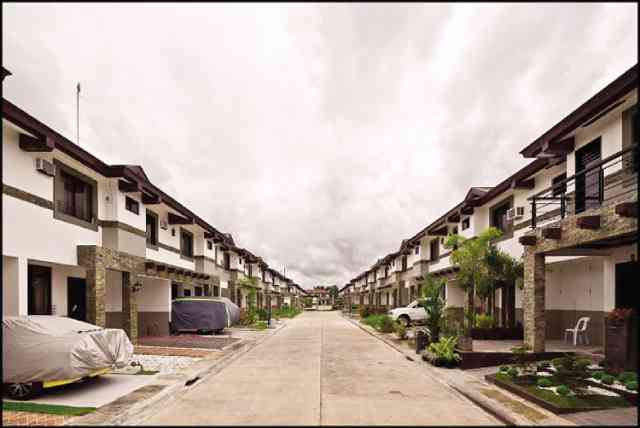
COURTYARDS in Carmen Barangay, developed by Pueblo deOro

CDO is the white water rafting capital of the Philippines, attracting ecotourism adventure seekers who also delight in experiencing ziplines and spelunking and diving, among other outdoor activities.
 
CDO is linked to Camiguin, which is renowned for its luxurious beaches, hot springs, waterfalls and historic landmarks; to the mountain ranges of Bukidnon, home to seven indigenous communities; to the Caraga region capitals of Butuan and Surigao with boast eco-tourism thrills; and to the Lanao del Norte nexus of Iligan City and Marawi City, home of the
colorful Maranao people.
Over the years, the Cagayan River has renewed its claim over CDO—the primordial gateway through which flowed the transactions and transformations of people and progress, commerce and culture, ideas and values.
Hit by Tropical Storm “Sendong” in 2011, CDO is a portrait of resilience, said Fr. Roberto C. Yap, SJ, president of Xavier University-Ateneo de Cagayan.


“Usually,” he said, “the word reminds us of the bamboo because of the way it dances with the wind in times of typhoons and then snaps back in place afterwards. But I would like to propose that resilience should mean not just overcoming challenges but prevailing over them to become better, stronger much more than we have been."

Tuesday, December 3, 2013

...the PH IMO seat

Philippines re-elected to IMO


By John Carlo Cahinhinan
Sun Star
Tuesday, December 3, 2013


MANILA (Updated) -- The Philippines once again bagged a seat in the International Maritime Organization (IMO) during its 28th Annual Assembly in London, United Kingdom.

The IMO is the United Nations' specialized agency responsible for ensuring maritime safety, security and protection of marine environment, while its assembly serves as the executive organ of the agency that is responsible for overseeing the work of the entire organization.

Maritime Industry Authority (Marina) administrator Maximo Mejia said the country was placed under "Category C," which includes countries with "special interests in maritime transport or navigation."

The Marina administrator explained that a "Category C" nation has special interest in maritime transport or navigation and whose election into the council will ensure the representation of all major geographic areas of the world.

Those member states that belonged to the same category include Australia, Bahamas, Belgium, Chile, Cyprus, Denmark, Indonesia, Jamaica, Kenya, Liberia, Malaysia, Malta, Mexico, Morocco, Peru, Singapore, South Africa, Thailand, and Turkey.

Around one-third of the world's seafarers' population comes from the Philippines.

Mejia noted that the country, as a maritime nation, is deeply committed to the goals of the IMO in a very concrete manner, particularly on the benefits from the operation of safe and secure ships on clean oceans.

"We rely on the seas to connect our thousands of islands and on its bounty for our food and our economy," Mejia said.

He also reassured the international maritime community of the Philippines' adherence to the conventions, rules and regulations set by the IMO and other international regulatory bodies.

"Being the source of more than a quarter of all seafarers on-board ships in the international trade is a position of great responsibility, and the Philippines reassures the international maritime community of its commitment to the letter and intent of the STCW Convention and to ensuring that the world’s ships are manned by able, competent, and qualified seafarers," Mejia said. (Sunnex)


Monday, January 14, 2013

...the 2013 Hottest Destination

Major int’l publications agree Philippines is ‘hottest’ destination


Philippine Daily Inquirer


MANILA, Philippines—The Philippines is at it again.

After the successful “It’s More Fun in the Philippines” tourism campaign, which observes its first anniversary on Saturday, two more respected international publications have included the country on their list of the top destinations in the world for 2013.

New York-based Travel+Leisure Magazine, the rival of CondĂ© Nast Traveler, named the Philippines as one of the 13 “Hottest Travel Destinations of 2013” in its January issue.

On Friday, The New York Times also placed the country at number 17 on its list of “46 Places to Go in 2013,” ahead of Bangkok, Paris and Casablanca.

“A surfing and beach destination goes luxe … Idyllic white sand beaches, secluded, little-known surf towns and pristine reefs are among the natural draws of this country made up of over 7,000 tropical islands,” The New York Times said.

“Now in addition to the more upscale choices cropping up in former backpacking enclaves like Boracay, there is a new generation of luxury hotels opening even further afield,” it added.

The paper noted the new Dedon Island resort on Siargao, adding that it was “close to one of the world’s best surf breaks, Cloud 9, (of which famous American surfer Kelly Slater is a fan), and has an outdoor cinema along with spa and paddle board classes.”

“And the private island resort of El Nido Pangulasian opens this month in the Unesco biosphere of Palawan, right by some of the world’s most pristine diving spots,” it added.

The New York Times said that while the Philippines has been subject to travel advisories in the past, “they mostly focus on Mindanao in the south.”

“For extra security, outfitters like Asian expert Remote Lands organize private transfers and local guides,” the paper said.

Travel+Leisure Magazine, which has 4.8 million readers, noted that while there were safety concerns before about the Philippines, it was now “safe to visit once again.”

“Two countries written off in recent years—Zambia and the Philippines—are safe to visit once again, and thriving with new safari camps and island thatched-roof villas,” Travel+Leisure said.

“The archipelago of Palawan, a Unesco biosphere reserve in the Philippines, just added a resort with a scuba center; hop a two-hour flight from Hong Kong, and you’ll soon be diving with the sea turtles,” it added.

The magazine particularly mentioned El Nido Pangulasian Island and the 125-acre private island of Ariara in Palawan, and the Eskaya Beach Resort and Spa in Panglao, Bohol.

“Boracay hogs the spotlight, but there are thousands of other islands to lure beach lovers,” Travel+Leisure added.

Serious player

Tourism Assistant Secretary Benito Bengzon Jr. said endorsement from these top publications showed that the Philippines was now “a serious player” in global tourism.

“This is a very good development for our country. It is a very concrete proof that foreigners now have a high awareness and appreciation of the great travel potentials of the Philippines,” Bengzon said.

“It shows that we are now a serious player,” he added.

Bengzon said the awareness of foreigners about the country was heightened by the launching of the “It’s More Fun in the Philippines” campaign in January last year.

“We’ve advertised and conducted our marketing campaign in all our major markets like Asia-Pacific, North America, Europe, India, Korea and China. And in 2013, we will be even more aggressive,” he said.

Bengzon said the Department of Tourism (DOT) expected the number of tourist arrivals for 2012 to reach 4.2 million to 4.3 million.

This is higher than the 3.9 million registered in 2011 but is lower than the 4.5-million target that the DOT set in 2012.

“There was a slowdown from our Chinese market but this is against picking. For 2013, we are targeting 5.5 million and we are very positive that we can reach that,” Bengzon said.

Very positive

“The feedback to [the “It’s More Fun in the Philippines”] campaign has been very positive not just in terms of tourist arrivals but also in the response of the private sector, from the airlines, travel agents, the hotels and resorts. More hotels are opening this year,” he added.

The other places that made it to Travel+Leisure’s list were Bahia Ballena in Costa Rica, Basilicata in Italy, Puerto Rico, Minneapolis in the United States, Reunion, Nepal, Charlevoix in Quebec, Uco Valley in Argentina, Zambia, Amsterdam, Australia’s Gold Coast, and Marseilles.

The magazine said it initially considered “40-odd places” for its list of top destinations this year.

“To determine which destinations … are coming up on the radar, T+L asked safari experts and art dealers, cutting-edge chefs and even branding agencies where they’re seeing a new neighborhood emerge or wineries getting more acclaim,” Travel+Leisure said.

“What started with 40-odd places we distilled down to a baker’s dozen: the hottest travel destinations of 2013,” it added.

World’s 5th Best Hotel

In the same issue, the magazine also named the Discovery Shores Hotel in Boracay as the 5th Best Hotel in the World.

“Barefoot elegance is undoubtedly the vibe on this tiny island, where the 2 1/2-mile stretch known as White Beach is often singled out for being the softest in the world,” the magazine said.

It said that Discovery Shores’ 88 spacious suites all have large glass walls that look toward a scenic rock garden, “but chances are you’ll spend more time by the water.”

“Take a dip in the infinity pool, or jet-ski on the crystalline sea. For people-watching, head to The Sandbar, where they stir up delicious mojitos, infused with local flavors like lychee and mango,” Travel+Leisure said.

“Once you’re sufficiently refueled, karaoke your heart out, with over 1,000 songs (mostly in English) to choose from at the resort’s recreation lounge,” it added.

The endorsement from Travel+Leisure came as the UK edition of its competitor, Condé Nast Traveller Magazine, also named the Philippines as one of the top 10 hottest new travel destinations for 2013.

“For travelers willing to go the extra thousand miles for a deserted beach, the Philippines has around 7,000 of the most heavenly islands in the world. It’s still not the most obvious beach-holiday destination, but it soon will be,” CondĂ© Nast Traveller said.

Sorry, Maldives

“Sorry, Maldives… We love you, but we’ve got a new flame,” it added.

The magazine said the Philippines was becoming particularly popular among serious divers, who visit for “the incredible underwater life, unspoilt coral gardens with rainbow-bright fish, green sea turtles and dugongs.”

“In Bicol you can swim with the biggest fish in the world, the whale shark. While fish-fans of a different nature can go deep-sea fishing in one of the deepest trenches in the oceans, not far from the little-known island of Siargao,” the magazine said.

“The archipelago of Palawan ticks all the boxes: palm-fringed white-powder beaches, crystal-clear turquoise waters, natural lagoons for wild swimming on Miniloc Island—all of it protected by Unesco,” it added.

CondĂ© Nast said Bacuit Bay in Palawan was something like Halong Bay in Vietnam, “only without all the tourists—for the time being, at least.”

“There are just a handful of resorts, which are tasteful and deliberately low-key. Two of the newest are Ariara Island and El Nido Pangulasian Island, a private-island resort with palm-thatched villas, a spa, its own dive center and sea views to melt the heart,” the magazine said.

Palawan in top 10

“Another super-stylish new opening is Dedon Island, on Siargao; it’s owned and designed by contemporary furniture brand Dedon. And a perennial favorite is Amanpulo, yet another high-design private-island hotel on Pamalican Island,” it added.

In October, Lonely Planet, reputedly the largest travel guidebook and digital media publisher in the world, also named Palawan among the top 10 best regions to visit in the world for 2013.

Lonely Planet said Palawan was “the ultimate archipelago for adventurers” and best for being “off the beaten track,” adventure and culture.

“Palawan incorporates thousands of sparkling, rugged islands and is fringed by 2000 km of pristine coastline. So far, Palawan’s natural marvels have only been sampled by plucky backpackers. Not for much longer,” Lonely Planet said.

“The trail these pioneers have blazed is set to explode, with regional airlines waking up to Palawan’s potential and clambering to schedule direct flights to the capital,” it said.

“Throw in the mushrooming growth of style-conscious boutique hotels normally found in places like Ko Samui or Bali, and you can feel that Palawan is ready to hit the big-time in 2013,” Lonely Planet added.