Showing posts with label medicine. Show all posts

Saturday, April 9, 2016

...the world's first public immunization program

Philippines launches world's first public immunization program against dengue


Dive Brief:

  • The Philippines this week launched the world's first large-scale vaccination effort against dengue, aiming to administer Sanofi Pasteur's dengvaxia to 1 million students from 6,000 public schools this year. Dengvaxia was first approved in Mexico in December 2015, followed by the Philippines, Brazil, and El Salvador
  • Dengue is particularly endemic in the Philippines, having one of the highest incidences of confirmed dengue among countries participating in clinical efficacy studies for dengvaxia. 
  • Dengvaxia is approved for use against all four serotypes of dengue fever, but only in individuals aged 9 to 45. 

Dive Insight:

Sanofi Pastuer invested over 20 years of R&D into developing dengvaxia, recruiting over 40,000 volunteers across 25 clinical studies. Now, it is finally reaching countries desperately in need for a treatment to counteract the spread of dengue.

In clinical studies, Dengvaxia prevented 8 out of 10 dengue hospitalizations and up to 93% of severe dengue.

Sanofi lauded the Philippines as a "global frontrunner" in the fight against dengue. In addition to the markets where dengvaxia is already approved, the company expects further regulatory decisions in 16 other countries.

Dr. Cecilia Montalban, President of The Philippine Foundation for Vaccination, said: “This first dengue vaccine has been developed and proven effective in countries like the Philippines where dengue is a major public health priority. As a physician and a mother, I am proud that my country plays a historic role in dengue prevention.”

Sunday, April 28, 2013

...the TIME's most influential people 2013

Sense and Science: The unsung Filipina who cured HIV


April 28, 2013

Pinay doctor part of US team that found cure for HIV
Pinay doctor part of US team that found cure for HIV. Dr. Katherine Luzuriaga, a Filipino-American pediatric immunologist, led a team that cured HIV in an infant in Mississippi, USA. She has cautiously pointed out that while this cure is unprecedented, it is only one case. It does, however, suggest that early and aggressive treatment of pediatric AIDS could result in a cure, without children having to take the drugs for the rest of their life. She and her colleagues were subsequently listed among Time's 100 Most Influential People in the World for 2013. University of Massachusetts Med School
Time Magazine’s 2013 listing of the 100 most influential people in the world included two Filipinos: President Benigno Aquino and Dr. Katherine Luzuriaga, a pediatric immunologist from the University of Massachusetts.

And yet, despite the groundbreaking impact of her work, she remains largely unacknowledged in her own country.

Luzuriaga —whose father is Filipino and who still does, in fact, speak Filipino— was part of an all-woman medical team acknowledged for the first cure of a baby with Human Immunodeficiency Virus (HIV), the cause of AIDS.

The cured baby was born in Mississippi more than two years ago to a mother who had HIV but was not diagnosed until she had gone into labor. The mother apparently did not have prenatal care because if she did, she would have been diagnosed early and given three drugs to prevent the fetus from being infected.

In this case, the child was first given the drugs 30 hours after she was born. Right before being given the medicines, the baby was tested for HIV, the results of which came back positive. Within the first month of therapy, tests could no longer find the virus. However, doctors kept the child on the drugs, standard practice in the United States and developed countries because of the possibility of reservoirs or “hideouts” for the virus that allow it to continue to replicate.

With time though, the mother began to become irregular with her hospital visits for her child. When the child was brought in for a check-up around the age of two, the mother admitted that the child had missing out on the drugs. Yet when tests were conducted, the child’s HIV levels still remained undetectable, which means a “functional cure”.

Luzuriaga herself explains the breakthrough in a brief interview:


The other two members of the team, Dr. Hannah Gay of the University of Mississippi and Dr. Deborah Persaud, a virologist at Johns Hopkins Children’s Center, were also included in Time’s 100.

A more detailed technical discussion with all three women physicians can be found here:


The child’s cure brings hopes into the rather bleak AIDS research front. HIV is a retrovirus and several anti-retroviral drugs have been developed over the last few years but these only slow down the replication of the virus. It does not cure AIDS and the expensive treatment has to be maintained for a lifetime. Efforts to develop a vaccine have been unsuccessful, the latest trial just halted this week after researchers reported the vaccine did not seem to be making a difference, and might even have led to an increase in the risk of infection.

Luzuriaga and her colleagues presented their case report at a conference last March, cautiously pointing out that while this cure is unprecedented, it is only one case. It does, however, suggest that early and aggressive treatment of pediatric AIDS could result in a cure, without children having to take the drugs for the rest of their life. Pediatric AIDS is still a major problem, with some 300,000 new infections each year in the world.

What struck me was that the local press initially only picked up on the president’s making it to the list. After the Time awards ceremony on April 23, there has been some, but, I feel, not enough, mention of Luzuriaga, who is acknowledged as one of the experts in the field of pediatric AIDS. She is also professor of pediatrics and molecular medicine at the University of Massachusetts, and directs the university’s Center for Clinical and Translational Medicine. (If you’re wondering, translational medicine involves linking research to actual applications in clinical practice.)

Even more importantly, the work of Luzuriaga and her two colleagues once again emphasize the contributions of women scientists, and how they remain all too invisible. — TJD, GMA News 


Saturday, November 3, 2012

...the center for medicine tests

PH now a center of trials for new meds, docs say


By Philip C. Tubeza
Philippine Daily Inquirer


MANILA, Philippines—The Philippines has become one of the centers for clinical trials for new medicines in the Asia-Pacific region, providing indigent patients with access to cutting-edge medical treatment, according to members of the Philippine Society of Medical Oncology (PSMO).

Doctor Ellie May Villegas, PSMO vice-president, said drug companies said more and more clinical trials were being conducted in the country “because of the credibility of tests” conducted here and because some medicines have turned out to be effective only on Asians.

She said the new drugs that have been clinically tested in the country include those intended for lung cancer, breast cancer, and colon cancer, with drug companies spending at least P2 million on the medication of each patient who participates in a trial that can last for two years.

“They’re very happy with the results because our results are not bogus. We really do the trials well,” Villegas said in an interview.

Besides drug companies, the European Medicines Agency and the National Institutes of Health of the United States also sponsor these clinical trials.

Such trials have become more common in the last five years, she said.

Villegas dismissed suggestions that these clinical trials were taking advantage of indigent patients who have no money for medicines.

“No, being poor is not a factor here. I have many patients who are millionaires and I also offer these to them. A patient is admitted to the clinical trial only if or she meets the criteria for that particular trial,” Villegas said.

Doctor Annielyn Ong-Cornel, a PSMO fellow, said the clinical trials do help patients who cannot afford medication.

Access to good meds

“There are many patients who are willing to be included because it gives you access to good medication and cutting edge science,” said Cornel, who has participated in 25 clinical trials since 2007.

“They started coming in 2005 because we are now seeing that people in different countries respond differently to the same medicine. The lung cancer of an Asian is different from that of a Caucasian,” Cornel said.

She said Asians are more responsive to some medications compared to Caucasians “or there are more side effects.”

“It’s all boils down to genetics. For example, treatment for lung cancer used to be uniform but nowadays, you have to do genetic testing for specific protein abnormalities in the cancer. And you have certain medications which target that abnormality,” Cornel said.

“We have a tablet that targets one specific genetic abnormality. If you have lung cancer, and you are positive for that (genetic mutation), then there is a bigger chance that you would respond (positively) to the tablet. If you don’t have that mutation, there is no response,” she added.

Cornel said patients who want to join a clinical trial are also thoroughly briefed before they are admitted.

“They are informed about the side effects, that they can quit any time, and that the data obtained would be used for scientific purposes. They usually discuss this with their families before they say yes or no,” Cornel added.

Monday, December 19, 2011

...the world class innovator

Caviteño doc is worldclass innovator

By Candice Yvette Palenzuela-Dalizon
Philippine Daily Inquirer
 
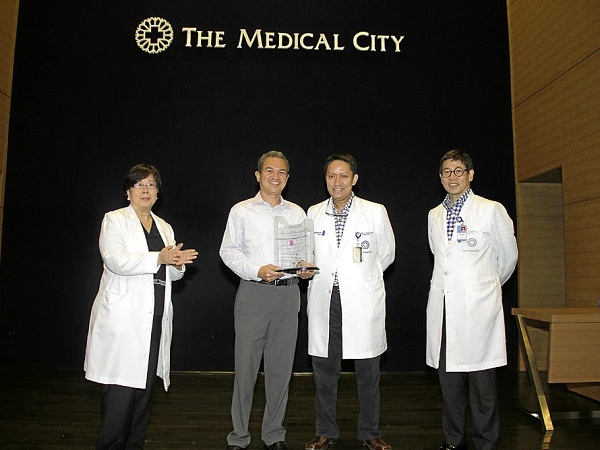
OUTSTANDING INNOVATOR Dr. Melvin A. Sarayba (second from left) receiving the Oustanding Innovator award for his work in eye laser technology. Cheering him are top officials of The Medical City (from left): Professional Staff Development Office head Dr. Blesilda E. Concepcion, Medical Services Group head Dr. Eugene F. Ramos, and Dr. Victor Caparas, chair of TMC Department of Ophthalmology


“It’s nice to be back home.”

Home to 43-year-old Dr. Melvin A. Sarayba is The Medical City (TMC) in Pasig City where he finished his residency training in Ophthalmology in 1999.

Sarayba came back to the Philippines early last month in time for the awarding of The Medical City Outstanding Innovator Award. The award was presented to him in recognition of his outstanding contributions and innovations in Ophthalmology, particularly in laser eye surgery.

During the awarding, TMC’s Chair Dr. Augusto P. Sarmiento told Sarayba: “You have given the country and TMC great honor because of your dedication and devotion.”

Sarayba is a research scientist in the United States. He is currently the Director of Clinical Affairs of LenSx Lasers, Inc, which developed the first femtosecond laser to receive US Food and Drug Administration (FDA) clearance for use in cataract surgery. Located in Aliso Viejo, California, LenSx Lasers, Inc. is now owned by Alcon Laboratories, one of the world’s largest eye care companies.

Femtosecond laser technology is considered among the most advanced and precise methods available today which could revolutionize minimally invasive eye surgery.

Exciting opportunities

Sarayba left for the US in 2001 for a research fellowship in cornea and refractive surgery at the University of California at Irvine (UCI).

After completing his fellowship, he joined Intralase Corp., the developer of the first femtosecond laser system for LASIK eye surgery, a procedure to correct near or far-sightedness.

“The plan was to do my fellowship training in UCI for one year and return to the Philippines to rejoin my group practice. It was during my fellowship training when I met Dr. Ron Kurtz, the cofounder of Intralase who presented me with the opportunity to pursue a career as a clinical scientist,” he said.

At first, Sarayba admitted he and his wife were hesitant to make such a bold move so they decided to give it a try for six months.

A backstage pass

“My experience took me to a place that I was never exposed to while I was back in the Philippines. It was like a backstage pass in the world of Ophthalmology. I got to see how the products I used as a clinician were developed and commercialized. I was hooked,” he said.

Sarayba narrated how he and Kurtz, his boss at Intralase, met and subsequently became partners. Kurtz was a retina surgeon working at UCI while Sarayba was then completing his cornea and refractive surgery subspecialty training.

“He (Kurtz) asked for my help on a small research project and I provided a quality research study. That initiated our collaboration.”

Sarayba then progressed from clinical consultant to Clinical Scientist to Senior Scientific Product Manager while he conceived and developed clinical applications of IntraLase-Enabled Keratoplasty (plastic surgery of the cornea) and advanced keratoplasty techniques.

He became Global Marketing Manager for Advanced Medical Optics when it acquired Intralase Corp in 2007.  After a year, Sarayba rejoined Kurtz in LenSx, Inc., a start-up formed to develop a femtosecond laser for cataract surgery.

The femtosecond laser

He was the key man in developing the clinical applications for the LenSx, running multi-nation clinical trials, and eventually getting it through FDA approval. Alcon Laboratories later on acquired LenSx with Sarayba staying on as Director of Clinical Affairs.

The development of a femtosecond laser for cataract surgery is indeed a remarkable achievement considering the prevalence of cataract cases worldwide. Cataract refers to the clouding of the lens inside the eye.

Cataracts generally occur as part of the aging process, but they can have other causes as well. In the Philippines, researches reveal that cataracts are one of the leading causes of blindness in adults.

Refractive cataract surgery allows the patient to be free or minimally dependent on eyeglasses after surgery.

Looking Back

Sarayba recalled that in 1997, when he was just a resident at TMC, the residency program was in its infancy.

“I was part of the 4th batch. We wanted to be a world-class training facility and we took it upon ourselves to make the change. The residents and the consultants in the Ophthalmology Department rolled up their sleeves and got to work. We wore many hats. It was like a little start-up company that showed great promise,” he said.

Sarayba believes the traits he acquired during his residency were instrumental in his success. He was always motivated to think outside the box. Thus, the term innovator fits him perfectly. His thirst for continuous learning brought him to UCI for fellowship training. And cliché as it is, the rest is history.

On being a Filipino

“Working in a start-up company required employees to wear many hats. Since Filipinos are known to be ingenious and resourceful, I fit right in. I found working with other nationalities easy. In fact, I can see many Filipinos would fit in well working with other nationalities because of our pakikisama(camaraderie, a traditional value)” he said.

Working alongside foreign engineers, doctors, and research scientists, Sarayba said “I never doubted my skills while working abroad. My training in the Philippines and further training in California provided me with superior knowledge in the field I was working in.”


On being an innovator

“Ask yourself this question: Can you live with the best things the world has to offer? If the answer is no, then you have the mind of an innovator,” he said.

The California-based doctor and research scientist said he would often hear people say, “I had that idea before” or “I could have invented that.”

“There is a big difference between coming up with an idea, turning that idea into concept and successfully commercializing a product. You have to go through all the stages,” he explained.

Sarayba likewise belied the common belief that opportunity to develop products is only available in advanced countries.

“That is not true. Doctors in the Philippines can be innovators too. They can find other applications for already available products and be innovators,” he said.

He stressed that being an innovator was not exclusive to people working in his field or in medicine.

“I would urge other people to ask themselves the same question. It doesn’t matter what you are: politician, public servant, entrepreneur, employee, etc. There are many things, I’m sure you’ll find, that need change. No one will do it for you. Wear the hat and take it all the way,” Sarayba advised.

Cavite born

Sarayba was born in Cavite City. He and his family visit the Philippines every two years. They spend time with family, relatives and friends, enjoying the Filipino food they terribly miss when they are in the US.

“My wife and I grew up with strong ties to our families and we would like our children to have the same experience. My kids enjoy spending time with their cousins while we are here, and we miss them terribly when we return to the US,” he said.

Saturday, December 10, 2011

...the international healthcare hub

Philippines becoming int’l healthcare hub


By: Charles E. Buban
Philippine Daily Inquirer

Medical or wellness tourism is a term involving people who travel to a different country to receive treatment for a particular health condition or in other cases pursue activities that maintain or enhance their personal health and well-being to enjoy much lower cost of care, higher quality of care if not different care than they could get at their home country.


It is a huge global business—projected to reach $100 billion (P4.32 trillion) by 2012.


From this figure, a total of $1.3 billion (P56.2 billion) went to the Philippines from 2006 to 2010, thanks to foreign tourists and balikbayans who chose to get their healthcare and wellness services here.


Expensive medical treatment costs, as well as limited healthcare coverage in countries such as the United States and a number of countries in Europe, along with capacity constraints in these countries’ healthcare facilities, are driving their citizens to seek elsewhere for more accessible, affordable and comparable medical and wellness services.


The Philippines wanted to grab a bigger share that is now being enjoyed by countries such as Singapore, Malaysia and Thailand.


During the 1st Philippine Global Healthcare Forum at the National Kidney and Transplant Institute, Health Secretary Enrique Ona acknowledged that the country already boasts world-class medical infrastructure and facilities (in fact, the top three tertiary hospitals located in Metro Manila even added hotel-quality facilities) as well as highly skilled and compassionate doctors, nurses and medical personnel.


Another advantage the secretary cited was the fact that the Philippines has the added competitive advantage of having English-speaking medical personnel.


Convened by HealthCORE, a private corporation specializing in healthcare research and communications and the official Philippine representative of National Accreditation Board for Hospitals and Healthcare Providers of India, the 1st Philippine Global Healthcare Forum discussed and exchanged information on how the Philippines, with the help of India, can develop into an international healthcare hub.


Medical tourism capital

India is regarded as the medical tourism capital of the world, offering the latest technological advances, experienced and expert physicians and surgeons and world-class patient care.
During the forum, India’s Dr. Sanjiv Malik said the Philippines becoming a regional giant is something that is very achievable as the country already has a caring people.


“Your Filipino nurses, doctors and healthcare professionals give the highest level of caring and compassion to patients—it’s in your DNA. What you need to do next is to modify your present healthcare practices and systems to conform with international benchmarks. When you do that, you are already on your way to providing the best healthcare to your people and to becoming an international healthcare hub,” he advised.


He related that when India improved its international healthcare services, its entire healthcare sector also improved.


Upgrade

“India was able to upgrade its healthcare system to international standards. As a result, both overseas patients and Indian patients are now receiving international quality health services and medical treatments at prices that are affordable to them,” Malik said.


India and the Philippines are now working together under a memorandum of understanding to exchange knowledge, expertise and training in various areas of healthcare and medicine for their mutual benefit.


These areas include medical education, public health, hospital management, health tourism, drugs and pharmaceutical products, medical consumable products, medical equipment, communicable disease control and surveillance, and traditional and alternative medicine.


A much-improved medical tourism, forum guests acknowledged, will have immediate effect in improving the country’s economy, much like the business process outsourcing industry is doing at the moment, while retaining its medical talents in the country and reducing the brain drain and its social and economic costs.

Tuesday, August 30, 2011

...the scientists vs. dengue

UP scientists develop test for early diagnosis of dengue

Scientists from the University of the Philippines in Manila may well be on their way to developing a method to diagnose dengue fever in just one hour, and potentially save lives in the process.

Early diagnosis will also help decongest hospitals of patients proven to be free of the virus.

The UP scientists developed a mixture, dubbed the Biotek-M Dengue Kit, that can detect the dengue virus in nucleic acid extracted from a patient's blood. The resulting fluid will turn either of two colors: a green-colored mixture indicates the presence of the virus, while an orange color shows its absence.

In an interview with GMA News TV's "News to Go," Dr. Raul Destura, director of the UP Manila Institute of Molecular Biology and Biotechnology, said the results from the test can be produced within just an hour, a much quicker diagnosis compared with the current ones in use which take 5 to 7 days.

Additionally, Destura said their dengue kit has a higher sensitivity rate of 95 percent, which means it is more accurate in detecting the virus than currently available tests which have sensitivities of only 30 to 70 percent.

He said the kit should be widely available before the end of the year, after field testing and approval by government regulatory authorities.

Early detection

Early and accurate detection of the virus is crucial, especially since the more advanced stages of dengue can claim patients' lives overnight, Destura stressed.

"Sa 30 to 70 percent sensitivity, maaaring hindi mo sya (virus) ma-pick-up. There is a missed [percentage] na puwedeng meron kang dengue na hindi nagpopositive dun sa test," he stressed.

Just this month, there have been several cases of children perishing due to dengue because they were rushed to the hospital only after several days of high fever.

Doctors have advised that patients be brought to the hospital at the early onset of fever so the virus could be detected and treated early on.

"Meron namang very sensitive na test [na available], 95 percent of the time kuha na kaagad yung diganosis. Ang problem lang, napakamahal at P5000 to P8000 per test, iyon 'yung tinatawag na PCR (polymerase chain reaction) technology," he added.

At present, tests carried out using the kit costs only P70 per use, but the number could change once the kit is commercialized for mass production, Destura clarified.

Quicker decision-making

Using the kit, Destura said early detection of dengue can help on three levels: so parents will promptly know when their feverish children have dengue; so doctors can quickly rule out dengue as the cause of a patient's condition; and so hospitals can improve healthcare services by no longer admitting patients suspected of contracting the dengue virus.

Current tests aren't very useful, according to Destura, because even if the results turn out to be negative, there are instances when doctors suspect that a patient has dengue, so they are still confined in hospitals.

"Dahil sa worry, sa maraming kaso sa bansa natin, ang knee-jerk reaction [ng doktor] ay i-admit na lang ang pasyente para sure," he said.

"Kung admit nang admit ang [decision] ng bawat doktor, the hospitals get clogged. Yung quality of care sa mga pasyente maaapektuhan kasi iisang doktor bente ang tinitingnan," he stressed.

Field testing

At present, Destura said they are still testing the kits in the field, but should become commercially available within the next several months.

"Pag na-prove namin na na-maintain iyong kanyang power kapag [nasubukan] na sa actual scenario, then that's the time na hihingi tayo ng [Food and Drugs Administration] approval," he said.

After getting FDA approval, the technology will then be offered to an industrial partner (manufacturing or pharmaceutical company), which will then mass-produce the technology.

"Ang target namin is makakuha ng isang industrial partner para sila na ang mag-large-scale manufacturing, kasi hindi lang dito sa Pilipinas may dengue," he said, adding that this could also be the Philippines' contribution to curbing cases of dengue fever worldwide.

Test-dependent

While welcoming the upcoming availability of a new test for detecting dengue cases, a government epidemiologist told GMA News Online that such technologies also have their downsides, "so guidelines for use must be clear."

"It's not completely accurate, even at 95 percent. There is still that five percent," said the epidemiologist.

With tests such as this, he said doctors may become overly dependent on the technology and not examine certain patients anymore.

"They may just make feverish patients take the test. But dengue can co-exist with other diseases like typhoid," he stressed.

Destura has refused to disclose the composition of the kit to the media since it is still in the process of patent review, but stressed that it has already passed performance testing in their laboratories. - JM Tuazon, HS, GMA News