Showing posts with label real estate. Show all posts

Thursday, October 17, 2019

...the PH ranking in Property Rights

Philippines gains 3 notches in International Property Rights Index

Louella Desiderio
Philippine Star
17 October 2019


MANILA, Philippines — The Philippines moved up to 67th place out of 129 economies in this year’s International Property Rights Index from 70th last year, amid improvements in two out of three components tracked by the report such as physical property rights and intellectual property rights (IPR).


Developed by the Property Rights Alliance which promotes protection of innovation, IPR and physical property rights, the index seeks to serve as a barometer for the state of property rights in the world by looking at three components – legal and political environment, physical property rights and IPR.File

Developed by the Property Rights Alliance which promotes protection of innovation, IPR and physical property rights, the index seeks to serve as a barometer for the state of property rights in the world by looking at three components – legal and political environment, physical property rights and IPR.

Released in partnership with the Foundation for Economic Freedom and Minimal Government Thinkers in the Philippines yesterday, the index showed the country was behind many of its neighbors in Southeast Asia.

In particular, the Philippines trailed behind Singapore (4th), Malaysia (32nd), Thailand (64th) and Indonesia (65th), but was ahead of Vietnam (83rd) and Brunei Darussalam (98th).

The index showed the Philippines’ overall ranking improved as its score increased to 5.309 this year from the previous year’s 5.217.

Sunday, March 10, 2019

...the world's fastest growing luxury market

The world’s fastest growing luxury market is in the Philippines

Luxury prices in Manila shot up by 11.1 percent year-over-year


The Real Deal
10 March 2019

Welcome to Manila, capital of the Philippines and the fastest growing luxury market in the world.

Manila (Credit: Getty, Pixabay)

The city’s luxury sector saw an 11.1 percent price increase year over year, making it the fastest growing city among 100 global prime markets that Knight Frank tracks, according to Mansion Global. This increase is due to the country’s strong economy and low supply of luxury housing.

But Manila’s growth is much lower compared to top cities in prior years, Knight Frank’s head of international residential research Kate Everett-Allen told Mansion Global.
“In the past 12 years that we have been compiling the index, the top-performing market has yet to record annual growth below 21 percent,” she said. “This is a breakaway from the norm.”
The only other cities this year to show double-digit growth were Edinburgh, Berlin, Munich and Buenos Aires. Knight Frank’s overall prime international residential index rose by 1.3 percent in 2018, the lowest annual growth rate since 2012.
New York’s luxury market declined by 2.5 percent thanks to a strong U.S. dollar, a volatile stock market and an over-saturated luxury market. It was still the third most expensive city to buy a prime property, with $1 million getting buyers about 330 square feet.
Monaco was the most expensive city by this metric, with $1 million buying just 172 square feet of space. [Mansion Global] – Eddie Small

Sunday, March 23, 2014

...the world's top performing home sales

Phl home prices among world’s fastest growing


MANILA, Philippines - The Philippines was among the top performers in terms of growth in housing prices worldwide, according to a survey by research house Global Property Guide (GPG).

In GPG’s global house price survey for 2013, the Philippines was the fourth top performer with the average price of three-bedroom condominium units in the Makati central business district rising 10.56 percent in 2013 following annual increases of 4.85 percent in 2012 and two percent in 2011.

“Demand remains strong, as indicated by soaring real estate loans,” the research house said.

It noted that based on data from the Bangko Sentral ng Pilipinas, the volume of real estate loans rose 38.5 percent year-on-year to P776.65 billion in September last year.

Citing real estate advisory services firm CBRE Philippines, GPG said the Philippine housing market is expected to accelerate this year, to be supported by the rising number of foreign investors as well as growing business process outsourcing industry.

The growth in the local housing market is seen amid the country’s favorable economic conditions.
 
The economy grew 7.2 percent in 2013, faster than the 6.8 percent expansion posted in 2012.
 
For this year, the government has set a 6.5 to 7.5 percent economic growth target.

Topping GPG’s list of countries with rising housing prices was United Arab Emirates with average prices of housing units in Dubai growing 21.52 percent in 2013.

This was followed by Estonia with average housing prices up 16.55 percent, while Taiwan came in third with average housing prices increasing 14.46 percent last year.

China placed fifth on the list as the average cost of housing units in Shanghai climbed 10.13 percent in 2013.

Out of the 42 countries covered by GPG’s survey, 27 markets showed housing price increases
“House prices are rising in many more countries than not, and the momentum trend is strongly upwards,” GPG said.

GPG which provides information on residential property development covers market trends in 101 countries.


Saturday, March 1, 2014

...the hotel growth area

International luxury hotel operators gravitate to PH


By Tessa R. Salazar
Philippine Daily Inquirer


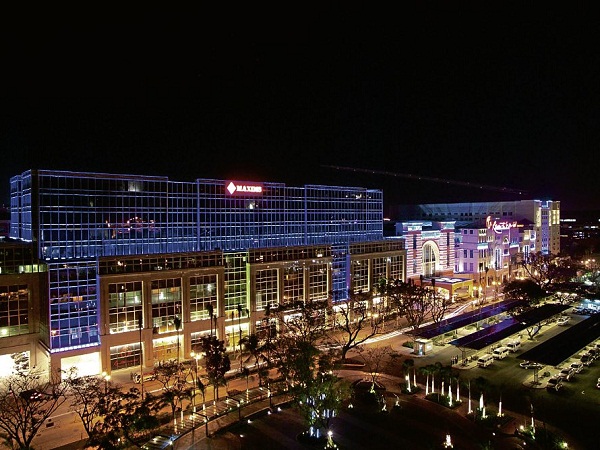
TO FURTHER accommodate the growing number of visitors, more hotels are slated to be constructed within Newport City by 2016.

Marco Polo Hotels, Ascott The Residence, Maxims Genting, City of Dreams, Solaire Resort and Casino, Hyatt, Marriot Manila, Shangrila Hotels and Resorts, Conrad Hotels and Resorts, The Westin Philippine Plaza Manila, Hilton, Sheraton Hotels and Resorts.
 
These are just some of the international luxury hotel operators that would either come into the country or experience boom times from 2014 to 2017, as forecast by CBRE Philippines during a Jan. 23 press briefing in Makati. It also reported that luxury hotel accommodations would play a major role in the hospitality sector, and that MICE (meetings, investments, conventions and exhibits) locations would pick up their businesses, and gaming establishments would draw in more foreign guests.
 
Property analyst Enrique M. Soriano III said, “Retail and hotels will likely post solid growth as employment and spending in the domestic front continue.”
 
The Colliers International market overview (for 4Q 2013) predicted that in the next three years, up to 4,300 rooms would be “delivered” annually, the highest number since 1988.
 
“Meanwhile, local real estate firms are entering the hotel and leisure sector, as SM Prime Holdings, Ayala Land and Robinsons Land introduce their new projects slated for completion in the next three years,” noted Colliers International Philippines Research. It added that last year, 1,372 new hotel rooms opened in Metro Manila, bringing the total room inventory to 17,517.
More branches expected
 
Jones Lang La Salle, in its JLL 2014 property market monitor, singled out Robinsons Land Corp. (RLC), which recently opened its seventh Go Hotel branch in Iloilo City. This one has 167 rooms
JLL forecasts more of such branches to be built over the next few years as RLC has offered the brand for franchise. In particular, Singapore-based Vanguard Hotels Pte. Ltd., in partnership with Roxaco Land Corp., is set to construct at least five new branches in the next two years.
 
JLL also cited residential property developer Vista Land & Lifescapes Inc., which plans to venture into hotel and resort development. According to the firm, the planned venture is mainly supported by the strong performance of the tourism industry. The firm has formed a new unit that would focus on the development of hotels and resorts, likely starting in 2015.
 
40% at Entertainment City
 
Colliers International Philippines’ comprehensive report indicated that of the 4,120 rooms to be completed in 2014, more than 40 percent would be concentrated within the Pagcor Entertainment City, such as Belle Grand City of Dreams (920 rooms) and the surrounding Mall of Asia Complex, such as Radisson Hotel (500 rooms) and Tune Hotel (204 rooms).
 
It also revealed a new player in the hotel and leisure market—Shanghai Jin Jiang International Hotels—one of the leading hotel groups in China, with two projects slated for turnover in 2014, the Jin Jiang Inn Ortigas (95 rooms) located beside Richmonde Hotel and the Jin Jiang Inn Greenbelt (70 rooms) located opposite New World Hotel Makati.
 
“As the government strives to reach its foreign tourist arrivals target of 10 million in 2016, local real estate firms are joining the hotel and leisure sector to augment the accommodation needs of foreign travelers,” reported Colliers.
 
It added that the Carlson Rezidor Group had partnered with the SM Hotels and Conventions Corp. (SMHCC) to launch the 150-room Park Inn by Radisson in Clark, Pampanga. This project is set for completion in 2016.
 
Colliers also observed that Ayala Land, through its hotel and resort corporation, had launched two new Seda hotels in its emerging mixed-use developments in Vertis North and Circuit Makati, both of which would be operational in the next three years.
 
RLC, for its part, aims to complete 1,200 rooms in its portfolio by 2014 by launching three Go Hotels—one in Ortigas Center, another in Butuan and one in Iloilo.
 
Decreased layovers
 
CBRE reported an 11-percent growth rate of tourist arrivals as of October 2013 (year-on-year) and possibly exceeding 4.5 million for the whole year.
 
Despite the increase, it estimates that the average hotel occupancy rate dipped from 67 percent in 2012 to 64 percent in 2013.
 
CBRE said: “This may be attributed to the increasing number of international flights to airports outside of Manila, thereby reducing the need to layover in Manila and easing the access to other major tourist destinations in the country like Boracay Island. The Mactan Cebu International Airport Authority, manager of the second largest airport in the country, reported a 15-percent increase year-on-year in the number of international flights at the airport from January to October this year from 3,972 to 4,581 flights.”
 
Hotel rates
 
Colliers also reported that growing interest in the Philippines as a tourist destination and a business investment option has been driving hotel room rates to consistently increase in Metro Manila.
 
It pointed to the trend that average five-star room rates had grown by 3.7 percent to $333 per night in the second half of 2013, versus the 1.1-percent increase in the first half of that year. Four-star room rates increased slightly by 1.1 percent in the second half to $273 per night.
 
On the other hand, three-star room rates continued to improve significantly at 9.5 percent half-on-half, 250 basis points higher than the 7-percent growth posted in the last period. This can be attributed to the increasing number of local and foreign tourists seeking quality accommodation at affordable prices. Meanwhile, corporate rates grew considerably across all classifications at an annual average of 15 percent.
 

Sunday, January 12, 2014

...the Manila property spot

Manila among top Asian property investment spots

Cliff Harvey C. Venzon
BusinessWorld Online
10 january 2014


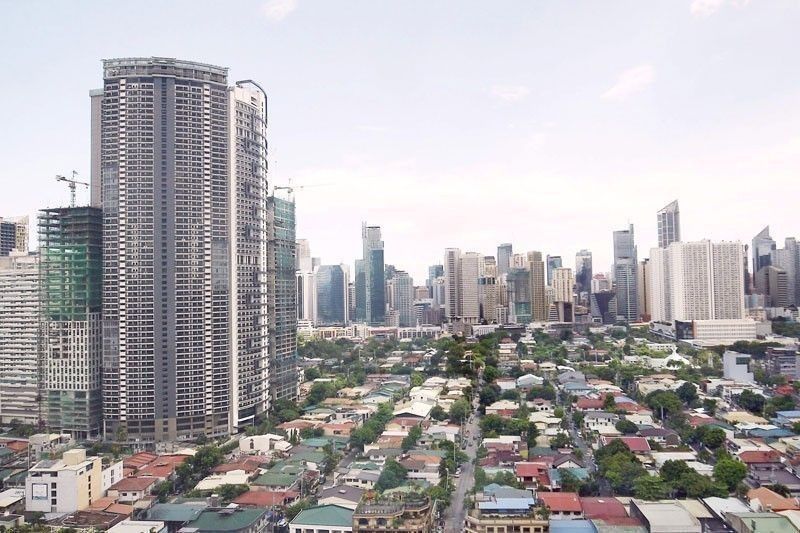
MANILA HAS emerged as one of Asia’s top real estate investment destinations for this year, according to a survey by Washington-based Urban Land Institute (ULI) and global financial services firm PricewaterhouseCoopers (PwC).


The Philippine capital placed fourth among 23 investment prospects in 2014, according to the Emerging Trends in Real Estate Asia Pacific report released on Thursday night. Manila ranked 12th last year.
 
"Manila has risen through the ranks this year, the result of a fast growing economy, increasing popularity of the city as a destination for multinationals seeking outsourced services (both business process outsourcing [BPO] and back office), and a growing awareness that the problems long associated with lack of transparency and governance issues have improved," the report stated.

The BPO industry’s head count grew by 21% to 776,794 in 2012, according to the Information Technology and Business Processing Association of the Philippines (IT-BPAP). That figure was expected to have grown by 20% last year, based on industry projections.

IT-BPAP, meanwhile, aims for revenues to reach $25 billion by 2016 with an estimated 1.3 million in labor force. Industry revenues reached $13.2 billion in 2012.

"The country also benefits from a young demographic, strong capital inflows from local citizens working overseas, and a workforce with a cultural affinity with the West," the report said.

According to the report, prime office rents are still well below pre-global financial crisis rates but are growing at 5-8% per year.

Office take-up hit 400,000 square meters last year, "with demand remaining high," it added.

The report also noted the constitutional restriction on land ownership.

"As with the other emerging markets, Manila can be a hard place in which to invest, partly because of laws that prevent foreigners from majority ownership of land and partly because there is already plenty of domestic liquidity," it said.

"Core product is therefore difficult to find, but on the opportunistic level a yield spread of 350 to 400 basis points can provide operating cash flow returns in the mid-teens," it added.

Meanwhile, Tokyo emerged as the top real estate investment destination for this year, displacing Jakarta, which slipped to third place after Shanghai.

Completing the list were Sydney, which placed fifth, Guangzhou (6th); Singapore (7th); Beijing (8th); Osaka (9th); Shenzhen (10th); Bangkok (11th); China’s secondary cities (12th); Melbourne (13th); Kuala Lumpur (14th); Seoul (15th); Taipei (16th); Auckland (17th); Hong Kong (18th); Ho Chi Minh (19th); Bangalore (20th); New Delhi (21st); Chennai (22nd) and Mumbai (23rd).

ULI and PwC researchers personally interviewed 120 individuals, while survey responses were received from 130 individuals who were affiliated in property, financial and investment companies.

Wednesday, September 4, 2013

...the world's first Forbes Tower

Philippines chosen site of Forbes property move


September 4, 2013


THE PUBLISHER of Forbes magazine and forbes.com has chosen the Philippines as the site for its foray into property development, underscoring growing interest in the country often tagged as Asia’s newest “bright spot.”


Forbes Media LLC has partnered with locally listed developer Century Properties Group, Inc. to build the first Forbes Media Tower in Makati City, both companies said in joint statement yesterday.

The first Forbes-branded tower, which will rise in a mixed-use development called “Century City,” is expected to be part of “a network of Forbes Media Towers around the world,” the statement read.

Construction could begin next year and finish in 2017, according to Century Properties’ corporate communications department.

Forbes Media Tower will have approximately 60,000 square meters of premium office space, featuring event space, restaurants, fitness center and exhibition facilities. Project details were not immediately available.

The statement quoted Mike Perlis, president and chief executive officer (CEO) of Forbes Media, as describing the Philippines as a “perfect location” for this foray.

“We’re very pleased to be collaborating with Century Properties for the first Forbes Media Tower as we extend our brand into the global real estate development market,” Mr. Perlis said.

“The Philippines, with its rapidly growing market and strong relations with the US, is the perfect location to launch this effort.”

Another Forbes official said the tower kick-starts Forbes Media’s expansion into the real estate space.

“This is a historic and groundbreaking moment for us. It is just the start of our plan for an expansion into Forbes real estate development projects around the world,” said Miguel Forbes, president of Worldwide Development of Forbes Media, who is spearheading this initiative.

“We will continue to explore new Forbes Media Tower opportunities globally and couldn’t be more excited to pursue this new and potentially transformative initiative.”

The same statement quoted Century Properties CEO Jose E. B. Antonio as saying: “It is also an honor for us that Forbes has recognized the Philippines as one of Asia’s bright spots and showed its confidence by choosing Makati, Metro Manila as the first site of its landmark business tower.”

Century Properties is known for its partnership with international brands and icons.

The company is building a 56-storey Trump Tower Manila in Century City, which is scheduled for turnover in 2016.

It had also tapped socialite Paris Hilton to “design” the beach club component of the nine-building Azure Urban Resorts Residences in Parañaque City, for which turnover will start before yearend.

Century Properties’ net income grew 6.57% to P1.06 billion in the first half from P944.5 million in the same six months last year. Revenues climbed 7.09% to P5.29 billion from P4.94 billion, while cost and expenses increased by 4.11% to P3.80 billion from P3.65 billion.

Its shares gained 12 centavos or 9.76% to close P1.35 apiece yesterday from a finish of P1.23 each last Tuesday. -- Cliff Harvey C. Venzon/Business World Online


Saturday, June 29, 2013

...the next Guam

Subic seen as new Guam


MANILA, Philippines - Subic Bay Freeport could be the next Guam, Ronald Wang said in a statement read by Dr. Johnson Yang, chairman of the Subic-based Grand Pillar International Development, Inc.,Wang, chairman of property developer Century 21 Subic Bay and also chairman and chief executive officer of Century 21 Taiwan, Century 21 Asia Pacific, and Fantai Real Estate Management Co., expressed high hopes for Subic as the next best thing in the real estate business.
“Subic is the next Guam in terms of economic growth,” Wang said.

Wang was the guest speaker in the groundbreaking ceremony for Grand Pillar’s Mi Casa Terrace, a P170 million three-storey commercial and office building project to be constructed in the Freeport Zone.

Wang said that when he was invited by Dr. Yang to Subic several years ago, he felt the passion in Subic and the opportunity that awaited in terms of leisure and commercial development.

“This is the reason why when I attended the 10th Asian Real Estate Association of America Global Summit held in Hawaii in May (2013), I was inspired and had the confidence to present to all the delegates and participants of the summit that Subic could be the next Guam,” he said.

Guam is a tiny island in the Western Pacific, which attracts more than one million tourists annually from Asia and America because of its more than 20 luxury hotels, duty free shops, indoor aquarium, entertainment venues, and several golf courses in what is dubbed as the Pleasure Island District.

Subic is said to have the potential to replicate Guam’s real estate boom because of its natural attractions that include mountain forests and the Subic Bay.

Subic Bay Metropolitan Authority (SBMA) chairman and administrator Roberto V. Garcia, meanwhile, said that the proposed three-storey commercial building is another manifestation of the increasing demand for spaces intended for tourism-related businesses.


Thursday, June 6, 2013

...the PH hot properties

Foreigners flock to PHL for property investments — consultancy firm


June 6, 2013


Foreigners are flocking to the Philippines for luxury residential investments amid tightening realty laws in other Asian countries, property consultancy firm CBRE Philippines said Wednesday.

Overseas Filipinos and the rising middle-class, on the other hand, continue to fuel demand for housing in the fringe areas of Metro Manila.

“The luxury residential sector will continue to pick up,” said Rick Santos, chairman at CBRE Philippines. “Foreigners are now moving from renters to buyers.”

“New restrictive property tax laws in Hong Kong and Singapore will drive more Asian residential investors to the Philippines,” he added.

While the Philippine Constitution prohibits foreign ownership of land, there is no restriction for foreigners to buy condominium units. Thus, foreign fund managers and retail investors buy luxury units by top developers here for investment purposes.

"Foreigners have opted to invest in branded condominium projects," said Santos. "And so far, they're very happy."

Early this year, Hong Kong and Singapore raised taxes for luxury homeowners and investment properties as part of their campaign against bubble risks stemming from speculative investments in the realty sector.

Investor-friendly tax laws

With tightening restrictions there, foreigners are turning to the Philippines – where tax laws are more investor-friendly and financing is relatively cheap – for secondary properties.

“Number one, it's much cheaper here from a tax perspective and cost. From a financing point of view, it's much more expensive to get financing there,” Santos said.

He noted that the Philippines' real-estate developers continue to benefit from foreign interest in branded developments.

Santos, however, was quick to add that he still doesn't see a bubble arising from such investment flows. “This isn't a bubble. This is sustainable,” he said.

“It is exciting. You will see a lot more money from mainland China, Russia, Europe, Korea and US flowing here,” Santos said.

OFWs and housing backlog

Overseas Filipino workers (OFWs) and middle-income earners support demand for residential products, particularly single-detached homes, in the fringe areas of Metro Manila

“OFWs and middle-income earners to sustain the demand for horizontal residential projects,” said Jan Custodio, CBRE Philippines' senior director for global research and consultancy.

“Economic housing will continue to observe strong take-up with its affordable prices and ample supply in the fringes of the country’s major cities,” he added.

Total housing needs for 2013 can reach 646,128 units, of which 57 percent will come from new households who can afford to own or rent, CBRE data showed. — KBK, GMA News


Friday, March 1, 2013

...the Asian bizwomen

Sy, Gotianun daughters in Forbes list of top Asian bizwomen


03/01/2013
 
 
MANILA, Philippines - The daughters of Filipino-Chinese tycoons Henry Sy and Andrew Gotianun made it to Forbes magazine's 2013 list of top 50 businesswomen in Asia.
 
In its March issue, Forbes Asia released its list of "Asia's 50 Businesswomen In The Mix," which includes women who led top companies to higher profits and stellar accomplishments last year.

Teresita Sy-Coson, 62, is the vice chairman of SM Investments, the Sy family's holding company for its retail, mall, banking and property businesses. Sy-Coson, an Assumption College graduate, is also the chairman of BDO Unibank Inc., the country's largest bank in terms of assets. She is the daughter of Henry Sy, who was named the Philippines' richest man by Forbes magazine last year.


This is the second year in a row that Sy-Coson was in the list. Last year, she even landed on the cover of Forbes Asia magazine.

For Lourdes Josephine Gotianun-Yap, this was her first time on Forbes Asia's list of most powerful Asian businesswomen. She is the 57-year-old president and CEO of Filinvest Development Corp. and its property unit Filinvest Land. She is the third child of Andrew Gotianun Sr., founder of Filinvest who is 17th on the Forbes list of richest in the Philippines.


Aside from Sy-Coson and Gotianun-Yap, Forbes Asia's list includes Eva Chen, the co-founder and CEO of antivirus software firm Trend Micro and South Korean entrepreneur Kim Sung-Joo, who turned MCM into a rising luxury brand.

The full list can be found on the Forbes Asia website.


Monday, January 28, 2013

...the PH property market

Philippines' property boom shows no sign of slowdown

By Christine Ong
Channel News Asia
28 January 2013


MANILA: A property boom in Metro Manila, described as the best in two decades, has pushed construction in the Philippines to its highest growth in at least six quarters.

The Philippines is experiencing a property boom like no other with developments covering office buildings, housing projects, hotels and new shopping districts.

This is all being fuelled by confidence in the Philippine economy which grew at a notable 7.1 per cent in 2012.

With the Philippine economy growing at an impressive pace, experts said there will be no slowdown in the demand for real property market as the country rides on strong macroeconomic fundamentals and investor confidence.

CBRE Philippines' chairman Rick Santos said: "We are seeing a very strong government. The Aquino administration is doing a very admirable job. The strong leadership and a strong cabinet have been reflected on the confidence of the foreign investors. A lot of countries around the world now are getting investment downgrades. In the Philippines, we are seeing investment upgrades so that is very positive. The Philippines is becoming this overnight success that took 20 years."

Property developers are now enjoying brisk sales with vacancy rates falling to its lowest on record.

In some cases, pre-leasing for office spaces are committed for the next two years.

The challenge now experts said is how to cope with the unprecedented success.

Jose Antonio, founder and chairman of Century Properties Group, Inc, said: "The challenge is actually not only for us as a company. The challenge for our country is how to sustain this growth. How do we sustain it? It is really to plough back all the income of both the private sector companies and the government into sustainable projects and relevant projects.

"For example, it is very important for the government to expand our infrastructure. There is a big need and we know it. (The government needs) to hasten the infrastructure program of the government."

The government has allotted a record budget of over US$9 billion this year to upgrade the country's roads, ports, bridges and airports.

Industry experts believe the aggressive infrastructure spending will further real estate growth in the country.

- CNA/fa

Saturday, January 19, 2013

...the booming PH real estate

EXPERTS’ 2013 FORECAST


Bullish PH economy to rouse real estate industry


By Tessa R. Salazar
Philippine Daily Inquirer


CENTURY Properties’ Acqua Private Residences is expected to do well this year since residential demand will stay strong across all subsectors.


What’s in store for the country’s property industry this year?

Going by the fearless forecast of five property analysts, the outlook for 2013 is rosy.

Julius Guevara, associate director for advisory services and head of consultancy and research of Colliers International, said that in general, “the bullish performance of the economy is seen to continue” in 2013. He said 2012 “proved to be a very good year for the Philippine economy and specifically for real estate.” He continued that “an end-of-year GDP (gross domestic product) growth rate between 6 and 7 percent has been forecast by various analysts, and we saw the stock market hit all-time highs during the past few months.”

Guevara added, “the residential condominium market has also exceeded historical sales levels this year, as low interest rates and record overseas remittances continue to fuel the housing boom.”

Colliers International recently released 10 forecast statements on the economy and property sectors for 2013—a collection of insights from various industry experts and Colliers.

“Similarly, the business process outsourcing (BPO) industry continued to drive the office property sector, and current vacancy rates in the major CBDs are in low single digits. The retail sector has also done tremendously well; occupancy rates in regional and superregional malls in Metro Manila are in the 90s. All in all, 2012 exceeded most of our expectations,” Guevara added.

Best real estate market

Rick Santos, CBRE founder and chair, noted: “We are now experiencing the best real estate market in the Philippines in the last 20 years. The Philippine real estate sector will have bright prospects in 2013. We see sustained growth in the BPO/office, residential, gaming and leisure sectors.”

Enrique Soriano, Ateneo program director for real estate and senior adviser for Wong+Bernstein Business Advisory, said: “Five years after the financial crisis triggered by a housing bubble, the global economy is convalescing. The Philippine economy is poised to move up. Real estate markets in all segments will grow. Some developers will fail and others will do better because they have a strategy and they have found exactly the right position.”

Claro dG. Cordero Jr., Jones Lang LaSalle’s head for research, consulting and valuation, said an estimated 11,200 units is expected to be completed within 2013 for the residential segment. He also explained that, though “the residential demand will stay strong across all subsegments, there are also various externalities which may challenge the growth of demand over the near- to medium-term.”

The first indicator cited by Colliers showed the Philippine economy would grow by around 6 percent in 2013. The forecast was made by Japanese financial services group Nomura and the World Bank.
 
The World Bank raised its forecast for the Philippine GDP in 2013 to 6.2 percent, up from 5 percent. Nomura also raised its forecast for the GDP to 6.6 percent in 2013. “Growth is expected to tick even higher in 2013 because of the impact of the elections, fiscal improvement and governance reforms in private investments,” Nomura said.

Karlo Pobre, Colliers International’s analyst for research and advisory services, explained that the recent growth in GDP indicates that economic activities in the country have further expanded.

“The higher the GDP is, the more attractive we become, specifically to foreign investors. Investment opportunities should reflect on the property industry, considering the recent developments in the market. This should preferably materialize in the office and industrial sectors,” he said.

Sector contribution

Pobre added that currently the construction sector contributes roughly about 8 to 9 percent of the GDP, while real estate services is at 11 percent.

Soriano said: “the long anticipated growth trajectory will happen this year; something that we have not felt for a long time. We have had growth spurts in the past years but never a real, sustained momentum. This time it’s for real. Our economic fundamentals are getting better. The housing and construction market has assumed the lead role in this trajectory, domestic demand is growing, PPP (public-private partnership) infrastructure will continue its aggressive pace and the midyear local elections will boost spending.

“Overseas remittance will grow as the US economy continues to improve, albeit at an annualized rate of 1 percent and Europe’s crisis is apparently showing some signs of remission. With this I expect the economy to pick up steam and grow to 6.8 percent.”

Wednesday, January 16, 2013

...the world's Best Letting Agency

CBRE Philippines named ‘World’s Best Lettings Agency’


Rick Santos (left), chairman and CEO of CBRE Philippines, holds the award from the IPA with Estela Cancio, marketing and sales director for global corporate services of CBRE Philippines.
 
 
MANILA, Philippines - Leading real estate services and advisory firm CBRE Philippines was awarded “World’s Best Lettings/Leasing Agency” at the recently concluded 2012 International Property Awards (IPA) in London. Earlier, the company also won at the national and Asia Pacific level, besting other lettings firm in the world.
 
CBRE represented both the Philippines and the Asia Pacific region at the world awards, where it was pitted against top-scoring champions from other regions like Aidan J Reed for the United Kingdom, Global Investment Properties for Africa, Smith & Ken for Arabia, as well as the other winners from Europe, Canada, Caribbean, Middle East, Central & South America, and the US.
 
“We are proud to have represented the country for this prestigious awards-giving body. Our success is an indication that the Philippine property market is thriving. This has been the best market I have experienced in my 20 years in the industry,” beamed Mr. Rick Santos after the win.
 
CBRE is the only company from the Philippines to have joined the awards and successfully made it to both the Asia Pacific and the World categories.
 
Established some 18 years ago, the IPA is the world’s most prestigious property competition that covers both residential as well as commercial categories. Premier developers, architects, interior designers and real estate agents from around the globe await the announcement of the winners of the awards to find out which companies have shown the highest levels of achievement by operating in all sectors of the property and real estate industry.

Tuesday, December 18, 2012

...the PH office spaces

Demand for PH office space breaks record


By Daxim L. Lucas
Philippine Daily Inquirer


The office space market in the Philippines is setting new records, led by demand from business process outsourcing (BPO) companies and multinationals, indicating growing business confidence, according to one of the country’s largest property consulting firms.


In a briefing on Monday, Jones Lang LaSalle Leechiu’s (JLLL) director for project leasing, Sheila Lobien, said that from January to November 2012, demand for office space rose to a total 425,000 square meters, and may rise further by yearend.

This level is at least 18 percent higher than the annual average demand of 360,000 sqm recorded in 2011.

Non-BPO firms consisting of multinational and local companies accounted for 100,000 sqm, or 25 percent of current demand, she said.

More importantly, companies are already committing to take up space even before office buildings are completed, indicating strong optimism and higher business activity projected for 2013.

Pre-commitments are backed up by signed lease agreements between parties, and advanced rent and security deposits are paid by the lessee.

Lobien said pre-commitments more than doubled in January to November 2012 as compared to the same period last year.

“In the 11 months of 2011, we recorded pre-commitments of 68,358 square meters,” said Lobien. “In 2012, the figure over the same period shot up to 175,922 square meters.”

JLLL studies also noted that a number of companies pre-committed to office space that would be completed as far forward as 2014.

The consulting firm’s findings confirmed a recent study of 22 cities in the Asia-Pacific region conducted by the Urban Land Institute entitled “2013 Emerging Trends in Real Estate.”

The study noted the increased attractiveness of Manila in terms of both investment and development prospects vis-a-vis investors, developers, property company representatives, lenders, brokers and consultants.

Saturday, December 8, 2012

...the top property markets

Manila among top property markets


International survey notes big leap in just 3 years

By Doris C. Dumlao
 
 
ONCE a laggard in the region, Manila is rising to be one of Asia-Pacific’s most appealing property markets amid escalating concerns over high property prices in China’s core markets.


Based on a research published by Urban Land Institute (ULI) and PwC “Emerging Trends in Real Estate 2013,” Manila ranked 12th out of 22 regional markets ranked in terms of investment prospects and ninth in terms of development prospects, marking a rapid rise from near the bottom of the rankings in previous years’ polls.

Manila was ranked 18th in the outlook for 2012 and 20th two years before that. This is the 7th edition of the trends and forecasts publication, which is based on the opinions of more than 400 internationally renowned real estate professionals, investors and other stakeholders.

Colin Galloway, principal author of the report, said in a presentation Thursday night that he was surprised that the Philippine did not rank even higher given the number of positive updates from this market. But he said as it would usually take time for all recent developments to be digested by the market, next year’s edition would likely show even more favorable results, even catapulting the Philippines to a leading position.

Manila has fared well in specific property segments, specially in the secondary or rental apartment residential segment where it ranked second to Jakarta. The ranking was based on the percentage of “buy” recommendations of survey respondents as opposed to “hold” or “sell.” Jakarta had a “buy” rating from 43.62 percent of respondents while Manila had 36.46 percent. The residential rental segment was where Manila got its best rating in the report although it also ranked high in office (6th) and hotel (8th) property segments.

Jakarta was named by the report as the top property market in terms of investment prospects. Other cities that ranked higher than Manila were Shanghai (2nd), Singapore (3rd), Sydney (4th), Kuala Lumpur (5th), Bangkok (6th), Beijing (7th), China secondary cities (8th), Taipei (9th), Melbourne (10th) and Hong Kong (11th).

On the other hand, the cities edged out by Manila in terms of investment prospects were Tokyo, Seoul, Guangzhou, Shenzhen, Auckland, Ho Chi Minh, Bangalore, Mumbai, New Delhi and Osaka.

“Markets in Manila have performed well in the past couple of years as a result of the growing economy, a transparent and business-friendly government and the country’s ongoing success—an eye-opener—in attracting foreign corporate clients to its business process outsourcing (BPO) facilities,” the report said.

“Bureaucracy has declined and transparency has improved considerably over the past few years. As a result, Manila’s appeal as an investment destination climbed from the near-bottom of the rankings in previous years’ polls,” it said.

The report also noted that a large casino development has provided impetus to property development and was expected to boost tourist arrivals when completed in phases over coming years.

But while investment prospects appeared bright, the report also noted that government regulations that bar foreigners from holding majority landownership continued to deter international investment.

“What is more, local developers have little incentive to partner with foreigners given the availability of ample liquidity from domestic sources. Foreign opportunities, therefore, are likely to remain restricted to the gaming and BPO sectors. Admittedly, both present large opportunities, with the latter currently accounting for some 70 percent of new office take-up in Manila,” the report said.

Judith Lopez, chair and senior partner at Isla Lipana & Co., PwC member firm, commented: “Manila is in the midst of a property boom. It’s the best that we’ve seen in decades—clearly a sign of the increasing confidence in our economy.”

Friday, November 30, 2012

...the top choice for offshoring

PH is top choice for ‘offshoring’


Study notes emergence of competing locations

By Doris C. Dumlao
Philippine Daily Inquirer

Employees work on a construction site in Manila on Sept. 17, 2012. The International Monetary Fund has kept its 2012 growth projection for the Philippines, but reduced its figure for next year as it sees a weaker global economy. AFP PHOTO/JAY DIRECTO


THE PHILIPPINES, India and China are the top three global shoring locations for corporations based on the number of jobs created in shared service centers, call centers and technical support centers from 2008 to 2011, according to a new report from global real estate adviser Jones Lang LaSalle.

The Philippines attracted 115 projects during that period, creating more than 72,000 jobs; India attracted 105 projects with 64,370 jobs and China, 56 projects with 25,455 jobs, said the JLL report “Onshore, Nearshore, Offshore: Still Unsure?” released last week.

The other top locations and the number of jobs created were: 4. United Kingdom (22,304); 5. United States (18,594); 6. Brazil (13,964); 7. Poland (13,476); 8. Mexico (11,515); 9. Romania (11,438), and 10. Costa Rica (8,878).

The JLL study said the changing global economic landscape was affecting corporate strategy and location decision-making. “The threat of recession, political uncertainty and rise of global emerging nations are causing international corporations to re-assess their location strategy. Companies are increasingly selecting from three ‘shoring’ options: onshore, offshore and near-shore,” it said.

Commenting on the decision companies faced, Ian Mackenzie, head of solutions development for JLL in Asia Pacific said: “A longer term focus on improving business productivity, operational efficiency and future scalability is now driving corporate real estate decision-making, rather than straight cost-savings in the short term. Corporations are undertaking comprehensive and early initial business case-and-option analysis” in designing their location strategies.

“For Asia Pacific-based corporations, a growing number are seeking the cost and productivity benefits associated with shoring, often sticking to offshoring or near-shoring options within the region. At the same time, in order for emerging nations such as India, Philippines, China and Malaysia to attract greater foreign direct investments (FDI), greater transparency is needed as well as access to quality labor and better location options,” he added.

Lylah Fronda, associate director for markets of JLL Philippines, added: “We see first-hand that the Philippines continues to be the preferred choice for offshoring. A highly skilled English-speaking population, coupled with a responsive real estate market with the right infrastructure creates a perfect mix for companies that understand the efficiency of going abroad for many business processes and call center operations.”

As to real estate conditions, the cost of offshoring operations in Manila was estimated by the study at $222 a square meter a year, more expensive than $187 in Bangalore or even $189 in Kuala Lumpur. But this was cheaper than the $300 in Mexico City, $606 in Sao Paolo or $372 in Buenos Aires.

The overall vacancy rate in the Philippines was estimated at 3.6 percent, suggesting less choice of office space compared to other typical offshoring destinations. In Bangalore, for instance, the vacancy rate was estimated at 7.7 percent while in Mexico and Sao Paolo, the rates were 13 percent and 11.9 percent. Buenos Aires’ rate was closer to that of the Philippines at 4.2 percent.

Meanwhile, the study noted that onshoring in mature markets was one trend that had re-emerged in recent months with a clear increase in strategic analysis and activity, particularly in the United States.

“Rebalancing within mature economies, as well as weakening currencies and growing availability of skilled labor, have led to a growth in the attractiveness of onshore locations. Locating business functions and supply chains onshore means companies can be closer to their customers, reducing supply chain complexity and risk and potentially allowing greater responsiveness to changes in demand,” the study said.

The study said paradoxically, the same logic of being close to the customer was also driving offshoring activity. “For international companies, particularly those in the pharmaceutical, and FMCG (fast-moving consumer goods) sector, seeking to align business functions and supply chains to high-growth emerging markets, an agile offshore location strategy can be a critical point of entry into a major market,” the study said.

...The SEA Real Estate Personality of the Year

Filipino named 2012 Real Estate Personality of the Year in Southeast Asia


November 29, 2012
GMA News


Century Properties Group Founder and Chairman Jose E.B. Antonio (left) was proclaimed as the 2012 Real Estate Personality of the Year by Jules Kay (left), Managing Editor of Ensign Media and presenter of the prestigious Southeast Asia Property Awards, held on November 21, 2012 at the Shangri-la Hotel, Singapore.

  For his works as :a true industry pioneer"; for "transforming the Manila skyline with quality
developments”; and for “drawing the global spotlight not only to the Philippines but to the entire Southeast Asian region with notable brand collaborations” – a Filipino entrepreneur was recognized as this year’s Real Estate Personality in the Southeast Asian region.
 
 
Jose E.B. Antonio, Founder and Chairman of Century Properties Group Inc., was proclaimed as the 2012 Real Estate Personality of the Year by the prestigious Southeast Asia Property Awards, held on November 21, 2012 at the Shangri-la Hotel in Singapore.
 
 
Antonio is the second recipient of the said award after Ho Kwon Ping, Executive Chairman of the Banyan Tree Holdings, won it in 2011. The Century Properties founder also received the Highly Commended citations bestowed by the awards to Trump Tower at Century City for the Best Residential Development-Philippines category, and Century Properties Group for the Best Developer-Philippines category.

 
A firm believer in the growth potential of the Philippines, Antonio founded Century Properties 26 years ago amidst one of the country’s most turbulent periods in history—the People Power Revolution. Five economic cycles and two and a half decades later, Century has emerged as a leader in innovative real estate concepts—from creating the first fully-fitted and fully-furnished condominiums in the Philippines to introducing interior design themes into residential spaces.
 
 
Under Antonio’s leadership, Century also announced unprecedented collaborations with global brands in real estate and interior design, including Versace Home for The Milano Residences, MissoniHome for Acqua Livingstone, Trump for Trump Tower at Century City, yoo inspired by Starck with John Hitchcox and Philippe Starck for Acqua Iguazu and Ms. Paris Hilton for the Azure Urban Resort Residences Beach Club.

Century Properties Group Founder and Chairman Jose E.B. Antonio
“I believe that Century’s remarkable competitive strength lies in the passion of its people. This has translated into a proven heritage of innovation and product differentiation. We are committed to not just introduce firsts but also deliver quality projects that help transform Metro Manila as a world-class and cosmopolitan city,” Antonio said.
 
 
Jules Kay, managing editor of Property Report Southeast Asia magazine, said of Antonio: “Despite such high-profile developments, as a seasoned property professional he remains focused on quality… He is a true industry pioneer. He and his sons have been slowly transforming the Manila skyline, drawing a global spotlight not only on the Philippines, but also the Southeast Asian region.”
 
 
In his acceptance speech, Antonio said: “Southeast Asia and the whole of Asia is moving towards the center of economic gravity of the world, and we are fortunate and excited to be working in this part of the world today, where growth will be the major theme.”
 
 
Antonio’s recognition is the third major honor of Century Properties this year after being awarded by BCI Asia as one of the Top 10 Real Estate Developers in the Philippines, and receiving the 2012 International Property Awards for Trump Tower at Century City in the categories of Best Architecture and Best Development.
 
 
The South East Asia Property Awards (SEAPA) aims to recognize the best of the region’s luxury real estate as well as underscore high caliber work in construction, architecture, interior design and property management.
 
 
The Personality of the Year title is a special award and the only one given by SEAPA for a personality’s outstanding body of work within the region’s real estate landscape. The rest of the SEAPA category titles are given to developers, their projects and other real estate consultants such as architects, interior designers and property consultancy firms.
 
 
The nominations for the said award are based on the following considerations: the candidate company’s overall impact on the quality of the regional property market, his or her personal influence on the region's business development, the candidate’s ability to innovate and introduce creative approaches to real estate growth and his or her commitment to philanthropy.
 
 
The South East Asia Property Awards highlights the hard work, passion and vision of real estate movers from property developers, interior designers, architects and agents from around the region, with emphasis on companies and individuals who push the envelope in luxury living.
 
 
This year’s roster of finalists comprised developers and projects from Singapore, Thailand, Indonesia, Malaysia, the Philippines and Vietnam, with a total of 38 awards handed out in different development, developer and property consultancy categories.

Tuesday, November 20, 2012

...the property driver in 2013

BPO to drive property market in 2013 - CBRE

11/20/2012


"The Philippines is one of the most cost effective outsourcing destinations in Asia ... Manila is now a strategic location for multinational companies and banks as it supports and runs the world's businesses out of the Philippines." - Rick Santos, CBRE Chairman and Founder


MANILA, Philippines - The country's real estate industry will remain strong next year, driven by demand for commercial space, particularly from the business process outsourcing sector, CBRE Philippines said.
 
 
BPO Offices development at One McKinley Hill, Bonifacio Global City

 
"We are now experiencing the best real estate market in the last 20 years. It took two decades to get the stars aligned, but now, we're looking at sustained growth and success," Rick Santos, CBRE Chairman and Founder, said in the statement.

"The Philippines is one of the most cost effective outsourcing destinations in Asia ... Manila is now a strategic location for multinational companies and banks as it supports and runs the world's businesses out of the Philippines," he added.

The BPO sector is expected to rake in as much as $25 billion in revenues by 2016, the BPO Association of the Philippines (BPAP) has said.

Aside from the demand from the outsourcing industry, Santos said demand for residential units will help drive the performance of the country's property market.

Moreover, the gaming industry and expected influx of tourists are foreseen to buoy demand for luxury and leisure properties, he added.

Wednesday, October 17, 2012

...the Zuellig

Makati building grabs international attention


Amid a construction boom that has seen high-rise buildings sprout all over Metro Manila, a development in Makati has grabbed the attention of an international real estate award-giving body.

The newly constructed Zuellig Building has made it to the top three in the "Best Office and Business Development" category of MIPIM Asia Awards.

This qualifies the 33-storey office building to vie for gold against two other shortlisted development: the Tianjin Global Financial Center in China and the 50 Connaught Road Central Building in Hong Kong.

The building, located at the intersection of Makati Avenue and Paseo de Roxas, was developed by Bridgebury Realty Corp. and designed by architecture firm Skidmore, Owings & Merrill LLP.

It is the first real estate development in the Philippines to be recognized by MIPIM.

"The Zuellig Building's commitment to environmental responsibility, its distinctive facade, and superior finishes will enable it to become Metro Manila's premier business location," MIPIM said in its website.

The building has also earlier been awarded a gold pre-certification under the "Leadership in Energy and Environmental Design" program of the U.S. Green Building Council.

The Zuellig is "the first 21st-century Premium Grade office building in the Philippines," MIPIM said further.

MIPIM (Le marché international des professionnels de l’immobilier) is a group of industry leaders which recognizes "excellence and innovation in Asian real estate development," the group's website showed.

A jury composed of experts met in July to shortlist three winners in 10 categories.
 
Aside from Best Office and Business Development, other categories are Best Hotel and Tourism Resort, Best Industrial and Logistics Development, Best Refurbished Building, Best Residential Development, Best Shopping Centre, Best Futura Project, Best Futura Mega Project, Best German Project and the Special Jury Award.

For the first time this year, MIPIM will also determine the winner of a People's Choice Award through online voting.

Results of the poll will meanwhile comprise 50 percent of the final scores of the shortlisted buildings, thereby determining the gold, silver and bronze winners.