Showing posts with label LGU. Show all posts

Sunday, May 18, 2014

...the emerging city of tomorrow

Why UN Habitat named CDO an ‘emerging city of tomorrow’


By Mozart Pastrano, Ninfa U. Along-Albania
Philippine Daily Inquirer


Cagayan de Oro City (CDO) has been named an “emerging city of tomorrow” in this year’s World Urban Forum in Colombia organized by the United Nations Human Settlements Programme (UN Habitat).
 
CDO is the only Philippine city on the list, which includes Hunchun, China; Johor Bahru, Malaysia; Malmo, Sweden; Nampula, Mozambique; Onitsha, Nigeria; Santa Marta, Colombia; Tetouan, Morocco; and Uberlandia, Brazil.
 
CDO is ranked by the National Competitiveness Council as the Philippines’ most competitive city.
 
The mayor of CDO is former Misamis Oriental 1st District Rep. Oscar S. Moreno.
 
The city government has pioneered in the computerization of business permits and licensing, as well as the assessment and payment of real property tax.
 
“Getting a business permit takes up less than an hour,” said Eileen Canoy Escobar-San Juan, the city’s local economic and investment promotions officer.
 
She also noted that a key driver in the city’s remarkable growth was the “very strong private sector support and initiative.”
CDO is the growth driver of Northern Mindanao (Region 10), whose economic growth continues to exceed those of the other regions in Mindanao.
 
CDO’s gross regional domestic product (GRDP) was P240 billion in 2012, up by 7.4 percent compared to its 5.8 percent growth in 2011. This was largely due to the acceleration of the industry and services sectors, which rose by 9.2 percent and 9.0 percent, respectively.
 
Although agriculture stepped up by only 2.4 percent, contributing 28 percent to the region’s economy.
 
Nationwide, Northern Mindanao (Region 10), which includes CDO, ranked third in per capita GRDP.
 
Dynamism
 
Fueling the region’s growth is CDO’s economic dynamism, government efficiency and appropriate infrastructure. New industries utilizing information technology are being established in the city.
This fast-growing city of over 600,000 people provides easy access to an enormous concentration of markets in Northern Mindanao.
 
The Mindanao Container Terminal (MCT) facilitates direct and cost-efficient movement of containerized cargoes to Manila, Cebu and international shipping hubs.
 
The multi-berth Cagayan de Oro Baseport handles inter-island passenger travel with connectivity to the country’s nautical highway and the logistics corridors of Mindanao.
 
Laguindingan Airport services air logistics requirements, while an extensive road network leads to and from the major production areas and markets of Mindanao.
 
The expansion of the MCT and Filinvest Development Corporation (FDC) Power Plant will consolidate CDO’s position as the largest logistics center in Southern Philippines.
 
While the rest of Mindanao has been experiencing severe power shortages for many months now (with up to 16-hour outages daily in one Mindanao city), CDO has been hit by brownouts only at the tail end of this summer.
 
That’s because it is approaching self-reliance in power: with Minergy’s 27.4-MW and 18.9-MW diesel power plants, STEAG State Power’s 210-MW coal-fired power plant—plus Bubunawan Power Company’s 7-MW run-off river hydro project in tandem with Cepalco’s 1-MW photovoltaic solar power plant—the only grid-connected PV power plant in the Philippines.
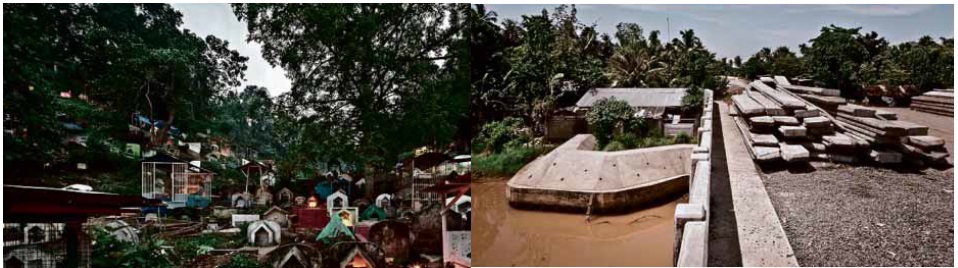
FAMILIES visiting their deceased relatives and staying overnight in Bolonsery public cemetery last Nov. 1. Right: Uncompleted bridge over Iponan River connecting Bulua with Opol.Once completed the bridge should be part of a new coastal artery crossing Cagayan de Oro.

Complementing the logistics infrastructure of Cagayan de Oro is the rapid modernization of the city’s telecommunications infrastructure, transforming the city into a business center and international logistics and telecommunications hub of the south.
 
Educational center
Beyond infrastructure, CDO is the center of education in Mindanao. Xavier University-Ateneo de Cagayan is Mindanao’s first university—and, in fact, is the first Jesuit university in the Philippines.
 
Capitol University and Liceo de Cagayan University are cited by the National Association of Colleges and Universities as among the country’s top 10 higher education institutions with the largest number of accredited programs.
With 15 universities and schools, CDO accommodates 82,000 students and 22,000 graduates every school year.
 
Custom-designed skills training and apprenticeship programs are readily available to serve human resource requirements. For example, Xavier University has partnered with Asian Carmakers Corp., the country’s official BMW distributor, to bring German automotive expertise to technical education students.
 
CDO’s strategic location and rich agricultural resources have made it the preferred site of major agribusiness companies such as Del Monte Philippines (which set up the world’s largest integrated pineapple processing plant here), NestlĂ© Philippines, Pilipinas Kao and other small and medium agri-based industries.
 
As a gateway to Southern Philippines, CDO provides direct access to rich agricultural areas in Mindanao—the source of 40 percent of the country’s food and livestock. CDO is a significant producer of oleochemical and other coconut products.
 
Higher-value products through agro-processing offer investment opportunities. Presently, Northern Mindanao is the top producer of cattle and is the third largest producer of poultry in the country.
 
CDO is also a key destination of meetings, incentives, conventions and exhibitions (MICE) in Southern Philippines. It has 4,806 rooms from various accommodation facilities that can handle conventions with 3,000 participants. It is trying to improve these rather limited numbers.
 
White water rafting capital
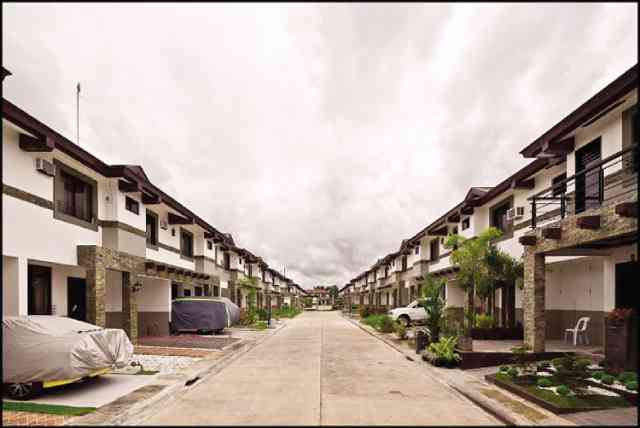
COURTYARDS in Carmen Barangay, developed by Pueblo deOro

CDO is the white water rafting capital of the Philippines, attracting ecotourism adventure seekers who also delight in experiencing ziplines and spelunking and diving, among other outdoor activities.
 
CDO is linked to Camiguin, which is renowned for its luxurious beaches, hot springs, waterfalls and historic landmarks; to the mountain ranges of Bukidnon, home to seven indigenous communities; to the Caraga region capitals of Butuan and Surigao with boast eco-tourism thrills; and to the Lanao del Norte nexus of Iligan City and Marawi City, home of the
colorful Maranao people.
Over the years, the Cagayan River has renewed its claim over CDO—the primordial gateway through which flowed the transactions and transformations of people and progress, commerce and culture, ideas and values.
Hit by Tropical Storm “Sendong” in 2011, CDO is a portrait of resilience, said Fr. Roberto C. Yap, SJ, president of Xavier University-Ateneo de Cagayan.


“Usually,” he said, “the word reminds us of the bamboo because of the way it dances with the wind in times of typhoons and then snaps back in place afterwards. But I would like to propose that resilience should mean not just overcoming challenges but prevailing over them to become better, stronger much more than we have been."

Wednesday, January 9, 2013

...the world's best mayors

Angeles City Mayor Edgardo Pamintuan is world's 8th best mayor


January 9, 2013
 
 
Angeles City Mayor Edgardo Pamintuan was ranked as the eighth best mayor in the biennial World Mayors Project (WMP) for 2012.

 
Mayor Edgardo Pamintuan, Angeles City

In an interview with GMA News Online, Pamintuan revealed that he was surprised to receive the award but was otherwise grateful for the recognition of his public service in Angeles.

Mayors Alfredo Lim of Manila and Rodrigo Duterte of Davao were also part of the top 50 best mayors of 2012.


Mayor Alfreo Lim, Manila

 
Mayor Rodrigo Duterte, Davao City

The WMP aims to promote the values of honesty, leadership, integrity, and excellence in local governance, among others.

The project awards the mayors with outstanding contributions to their communities.

During the online voting for the awards, Pamintuan said he was surprised to be one of four Asians and the only Filipino in the final 25.

Having assumed office only in July 2010, Pamintuan became even more surprised that he made it to the list of world's top 10 best mayors.

Commitment to health, education

Pamintuan, on his first term as mayor, was cited for his health, infrastructure, and education projects.

He likewise pushed for environmental care by implementing major drainage upgrades and promoting environmental infrastructure in Angeles.

Aside from these, to help prevent flooding in the city, he oversaw the planting of 200,000 trees.

Pamintuan also helped build a public city college – the City College of Angeles – which provides low-cost courses on computer, information technology and tourism.

The mayor noted that “80 percent of families in the Philippines can't afford to enroll (their children).”

Pamintuan also pushed for the installation of dialysis facilities in their city hospitals so that the residents would not have to go to Metro Manila or other areas to seek treatment.

He also plans to establish a cancer center for different types of cancer victims.

He likewise intends to improve the roads in his jurisdiction and establish the city's first public cemetery.

Campaign vs. graft, corruption

Pamintuan mentioned that he gained the confidence of Angeles City business leaders with his campaign to battle graft and corruption.

His administration's campaign received the Seal of Good Housekeeping by the Interior Department.

He says all the success he and his administration achieved were due to the support of all the people of Angeles.

As an advice to other Philippine mayors, he said leading by example is a good way to serve the public.

“Tutok lang. Hands-on dapat. Set an example and mauna ka muna. Yung pinapagawa mo dapat alam mo din gawin,” Pamintuan said. - VVP, GMA News

Sunday, November 18, 2012

...the PH renewable energy center

Sunny Ilocos town to feed Luzon grid with solar power


By Cristina Arzadon
Inquirer Northern Luzon
 

CURRIMAO, Ilocos Norte—A solar power farm that will feed the Luzon grid has broken ground in the sunniest corner of this province—the fishing and farming village of Paguludan.

Facing the West Philippine Sea, Paguludan is best known for its beaches. In 2010 the Philippine Tour Operators Association (Philtoa) declared the town one of the emerging tourist destinations in the country.

Ground breaking ceremony of the 20 megawatt solar power plant in Barangy Paguludan, Currimao, Ilocos Norte
Nov. 15, 2012 (Photo grab from Facebook of Gov. Imee Marcos)

The Currimao solar power farm is one of two projects that the Department of Energy (DOE) has approved for Ilocos Norte.

In the pipeline is the 50-megawatt solar power project of Energy Logics Philippines Inc. in the towns of Pasuquin and Burgos.

On Thursday the Korean power company Mirae Asia Energy Corp. (MAEC) and the Ilocos Norte government broke ground to signal the start of the construction of the 20-MW Currimao solar farm on a 60-hectare property here.

The area is within the 150-kilometer stretch of sand dunes in Barangay Paguludan.

With vast open expanses that border on Currimao Bay, the village is a suitable location for a solar power farm.

Albert Sacramed, Paguludan village chief, said life was bound to change for farming and fishing families in his community with the development of the solar power farm.

“We are assured of jobs during the construction period and, [we hope], more reliable and cheaper power for us,” Sacramed said.

The solar power farm is expected to be completed in May 2014, with an initial output of 10 MW in the first phase.

Formerly barren

Currimao Mayor Gladys Go-Cue said the site was formerly covered by a lease agreement between her family and the provincial environment and natural resources office (Penro) for a tree farm that was developed by her father, the late Mayor Ernesto Go, in the 1990s.

“This area used to be a desert. My father began filling it, improved the dirt roads and planted trees during his time as mayor. I feel like he prepared this site for the solar farm,” Cue said.

A portion of the property is now covered with fully grown trees, a requirement for the solar park in addition to abundant sunlight.

Cue’s family also wanted the area to be developed into a resort, but gave up on the development because of inability to meet the investment requirement.

Groundwork for the solar power farm began last year when Gov. Imee Marcos signed an agreement with Korean investor Jongson Bae, MAEC president, for the development of the project.

Marcos said Currimao, with an extended dry season of up to nine months, was the best choice for the project.

“With the solar park, we will establish our claim as the renewable energy center of the country after the wind farm in Bangui and the hydropower source in the towns of Pagudpud and Adams,” Marcos said.

Windmills of Ilocos

Ilocos Norte’s windmills remain the poster image of the Philippines’ renewable energy program, the country’s response to climate change.


Bangui Windmills

When the solar power farm begins operating, Marcos said, Ilocos Norte will generate 50 percent of its power requirement from clean energy and attract investment.

“It will power up industries in the Currimao port, the best area for passenger and cargo [shipping] in Luzon,” Marcos said.

Marcos said the Paguludan community and outlying villages would benefit from jobs that would be generated by the project.

Sunday, November 11, 2012

...the Pampanga's Star

Pampanga’s ‘parol’ goes global


By Tonette Orejas
Inquirer Central Luzon


CITY OF SAN FERNANDO—Ornamental Christmas lanterns in various shapes and sizes handcrafted in this Pampanga capital have gone global, having been shipped out to many Filipino communities abroad for the Christmas season.


The “Sampernandu parul” (as old folks still call the San Fernando lanterns) has brought its warm glow of lights overseas “to strengthen our Christmas tradition,” according to Mayor Oscar Rodriguez.


“It’s one of their (Filipino communities) connections back home. It reminds them of their families and our country while they work overseas,” Rodriguez said.


In Spanish colonial times, lantern making began in Bacolor, the Athens of Pampanga, a town from which San Fernando was founded. Bacolor was then the capital town of Pampanga, as well as of the entire Philippines under Spanish control.

The faithful lit candles encased in paper lanterns to illuminate the religious processions in this part of Pampanga, which was the seat of Augustinian missions in Central Luzon.

In 1908, salt vendor Francisco Estanislao of Barangay Sta. Lucia at the border of Bacolor shaped a big lantern out of bamboo and coco cloth for the Christmas dawn Masses.

Since then, the lanterns have evolved in design, lighting technique, size and materials and have also spurred household-based enterprises.

Since the first lantern competition in 1931, held to honor First Lady Aurora Quezon, the city government has vigorously promoted the lanterns for other objectives.

“For foreigners to know our city for tourism purposes, to showcase our products, to help our parul makers in finding a market and to show the special skills and talent of our people,” Rodriguez said.

Regular partners in the undertakings are associations of Filipinos, many of them Kapampangans, and embassies or consulates.

Honolulu fest

In December, Filipinos in Honolulu, Hawaii, are holding their first lantern festival.

According to San Fernando tourism officer Ching Pangilinan-Gonzales, the city government is shipping to Hawaii a giant lantern and bringing in craftsmen who will share the basics of lantern making.

The city government also sent out the first set of lanterns to the Philippine Embassy in Poland, she said.

Two giant lanterns will be displayed at the Cathedral of Good Shepherd in Singapore. The traditional beacons will also grace the Philippine embassies in Singapore, Moscow in Russia and Ottawa, Canada.

Pampanga’s pride embellished the Philippine embassy in Bangkok, Thailand, in 2011 just as they did the new Philippine Embassy in Dublin, Ireland; the consulate in Beijing, China; and the Ethnology Museum in Vienna, Austria, in 2010.

In 2009, the Philippine consulate in New York and the Lord Mayor’s House in Dublin decorated the premises with lanterns.

In 2007, they enhanced the Christmas tree that Filipinos put up on the Vienna City Hall grounds in Austria.

In 2006, they were exhibited to commemorate the centennial of Filipino migration to Hawaii and the 60th anniversary of Philippine-Austrian diplomatic relations.

The first documented overseas display of Pampanga’s giant lanterns was in 1979 for the 75th anniversary of the Philippine-Hawaii Commission that year.

In 1989, a giant lantern flickered to delight audiences at the Kunitchiwa Asian Fair in Yokohama, Japan.

In 1992, or just a year after the eruptions of Mt. Pinatubo, 40 kilometers west of Pampanga, a giant lantern was exhibited at the World Expo in Seville, Spain.

In 1993, a float that featured a giant lantern made in San Fernando won first place in the Hollywood Christmas parade.

In 2003, former Tourism Secretary Richard Gordon sent a giant lantern to the Taiwan International Lantern Festival in Taipei.

In 2005, the city joined the 3rd Annual Parol Lantern Parade organized by Filipino-American Development Foundation in California.

Popular craftsmen

Pampanga lanterns also adorned various international exhibits, competitions or contracts undertaken by popular lantern makers like Roland Quiambao and Eric Quiwa.

Quiwa, 40, a descendant of pioneer lantern maker Estanislao, exhibited household and giant lanterns in Seville in 1990, San Diego in California in 1993, Taipei and Hollywood in California in 1995, Dubai in 2008 and 2009, and Hawaii and Singapore this year.

The Cultural Center of the Philippines has also displayed them on its facade since 2011.

Craftsmen in San Fernando helped evolve the traditional lanterns.

From the “papel de japon” (rice paper), the lanterns were soon wrapped in sheets made of capiz (flattened white sea shells), plastic vinyl, handmade paper composed of grass and in the last four years, fiberglass.

From the original candle, the lantern used light bulbs powered by batteries, an initiative of Severino David, son-in-law of Estanislao, in the 1940s.

The bulbs allowed the operators of giant lanterns to switch the lights on and off, in sync with the music played by a brass band.

Mario Datu and Susing Manalang introduced the use of molded steel as the frames of Pampanga lanterns in 1950, replacing the bamboo and wood.

The addition of a rotary motor in 1957 improved the course of illuminating lanterns, by giving out the illusion of dancing lights and shadows. The rotor is credited to David’s son, Rodolfo.

By the 1970s, the small lanterns provided “dancing lights” through sequencers, which were appropriately attuned to international safety regulations, and which opened the opportunity for Pampanga lanterns to be exported.

Village beacon

The “ligligan parul” (lantern festival) has been sustained through “bayanihan” (volunteerism). Residents of a village contribute money, materials and food so their community can construct a fresh lantern and join a local contest.

The tourism ministry supported the festival for the first time in 1975.

No festival was held in 1978 and 1979 because then Mayor Armando Biliwang canceled the event due to martial rule.

Gov. Estelito Mendoza revived the festival in 1980. Mayor Vicente Macalino standardized the size of giant lanterns to a ceiling of 3 meters (at present, authorities allow lanterns to loom as large as 5.4 m in diameter) and began the policy of providing subsidies of up to P5,000 in 1982.

Held on Dec. 22, 1990, the festival was highlighted by two lanterns participating in the event, one of which was shaped by Ernesto Quiwa, a grandson of Estanislao.

In 2007, the subsidies were increased to P125,000, but lantern makers said that represented only a quarter of the P500,000 needed to make an outstanding lantern.

The first lanterns were exported in 1987 during the term of Mayor Virgilio Sanchez.

Robert David, another grandson of Estanislao, made lanterns to adorn the roofs of the Paskuhan Village and the Bren Z. Guiao Convention Center, both in San Fernando.

David also attempted to set a world record but failed to build a 31.5-m-tall lantern in 2002.

Tourist attraction

The lanterns are a Hall of Fame titlist in the Department of Trade and Industry’s One-Town One-Product (OTOP) program.

The festival draws foreign and local dignitaries as well as tourists. In 2007, Nileema Noble, United Nations resident coordinator in the Philippines, said: “Magnificent! The efforts here to preserve heritage and tradition are flourishing.”

There is no school that trains for the craft of lantern making, Pampanga-style.

Edwin David Jr., 29, learned by “albe-albe” (watching) or “ilig” (preference) or “tuki-tuki” (tagging along).

Fifth-generation lantern makers like Eric Quiwa are convinced that the rotor cannot be replaced by computers. “It really gives the lanterns the magical effect of dancing lights,” he said.

Computers are only used to design the lanterns, Eric added. His 19-year-old son, Carl Ernesto, and his 15-year-old nephew, Christian Lervin, have been learning the craft by observing, helping out and running errands.

In this year’s festival on Dec. 15 at the Robinsons Starmills in San Fernando, Eric expects to win the best lantern—his third in a row.

Saturday, November 10, 2012

...the UN Heritage Site Management awardee

Vigan City bags UN award for heritage site management


Keeping history alive is apparently more fun in the Philippines, with Vigan City bagging a United Nations award for world heritage site management.

The UN Educational, Scientific and Cultural Organization (UNESCO) has recently given the city in Ilocos Sur its first-ever "Best practice in World Heritage Site Management" award as the international body ended the 40th World Heritage Convention in Japan Thursday.

Vigan City bested 27 other cities from 23 countries considered for the recognition, which UNESCO said is aimed at highlighting challenges to world heritage conservation, lessons learned, priorities and opportunities.

"Vigan's successful and sustainable management has been achieved with relatively limited resources, which should make it adaptable to sites in all countries..." UNESCO said.

"[T]he local community is well integrated into many aspects of the sustainable conservation and management of the property; and a multi-faceted approach to the protection of the site has been developed," it added.

This year’s convention theme "World Heritage and Sustainable Development: the Role of Local Communities" highlighted the need to marry conservation programs with local community growth.

Vigan City, famous for conserving early architecture and other features, was named a world heritage site in December 1999.
"Vigan is an exceptionally intact and well-preserved example of a European trading town in East and South-East Asia," UNESCO said in its website.

"The architecture is truly reflective of its roots in both materials and design, in its fusion of Asian building design and construction with European colonial architecture and planning," it added.

The case of Vigan City and other sites discussed in this year's World Heritage Convention, UNESCO said, may "enrich current debates about the implementation" of conservation projects the international body is set to name the 1000th world heritage site.

Tuesday, October 9, 2012

...the Bangsamoro

UN Chief Hails Aquino Over ‘Bangsamoro’ Deal


Manila Bulletin
October 9, 2012
 
 
UNITED NATIONS (AFP) — UN Secretary General Ban Ki-moon Monday Ban commended President Benigno S. Aquino III for his vision and courage, as well as the commitment of the Moro Islamic Liberation Front (MILF) leadership in reaching a framework peace accord ending a decades-long Muslim separatist insurgency that killed 150,000 people.

This developed as Malacañang said nobody, not even the Moro National Liberation Front (MNLF), will be left out in the government’s consultations on the proposed creation of the new autonomous Bangsamoro region.

The agreement would see the establishment of a new semi-autonomous Muslim area in the resource-rich Mindanao, which the 12,000-strong MILF regards as its ancestral homeland.

Ban expressed “his heartfelt wishes for peace and prosperity to the government and the people of the Philippines,” and in particular the people in the new semi-autonomous region, called Bangsamoro.

Mindanao served as a base for the MILF, the biggest and most important remaining rebel group, after the Moro National Liberation Front signed a peace pact with the government in 1996.

It is one of the most fertile and resource-rich parts in the archipelago -- but decades of violence and unrest have left it into one of the poorest regions of the Philippines.

The rebellion, which began in 1978, has left 150,000 people dead and displaced hundreds of thousands more.

Senate President Juan Ponce Enrile said the framework agreement is doable without a constitutional amendment. This agreement must be “given a chance to work” and must be studied “carefully before shooting it down,” he stressed.

In a brief talk with Senate reporters, Enrile said the creation of Bangsamoro, a political entity that will replace the current Autonomous Region in Muslim Mindanao (ARMM), does not require amendments to the 1987 Constitution.

Chief Philippine negotiator Marvic Leonen, in an interview with Manila Bulletin, allayed fears about the framework peace deal, clarifying fears that the Moro National Liberation Front (MNLF) will be disregarded in the crafting of the peace agreement.

Leonen is certain that all Bangsamoro organizations such as the MNLF will play a crucial role in the crafting of the peace agreement.

He noted that the government peace panel (GPH) is certain to provide a seat for the MNLF in the creation of a Transition Commission that will work in the drafting of a Bangsamoro Basic Law to jumpstart the agreement. “We are definite that the MNLF will have a seat in the GPH,” Leonen said, citing that Cotabato City Vice Mayor Muslimin Sema, one of the founding members of the MNLF, has expressed his support to the framework agreement. Leonen also maintained that the agreement will push through this time following the stalling of a previous agreement five years ago on the memorandum of agreement on ancestral domain.

Leonen expressed confidence that there will no longer be any more delays in the creation of a Bangsamoro government. “How can you be wrong in this kind of approach? Look at the big picture.

The big picture is independence. They turned down to Cha-cha. They did not ask for an Islamic state.

We have been fair with respect to their territory, which is smaller than the MOA-AD, and culture such as applying the Shar’iah Court to the Muslims,” he said.

Deputy presidential spokeswoman Abigail Valte said the government has already posted the preliminary peace agreement with the MILF on its official website precisely to encourage public discourse prior to its formal signing next week.

Valte made the remarks after the MNLF reportedly expressed concern over the framework deal that seeks to create a new autonomous political entity by 2016.

Even former MNLF chief Nur Misuari has questioned the draft GRP-MILF peace agreement, insisting the government has not yet fully complied with the pact signed with the MNLF in 1996.

“The draft framework agreement was precisely announced even before the signing because we want to engage the public. We want to have discussions and consultations with the stakeholders,” Valte said in a Palace press briefing.

Meanwhile, various nations throughout the world has congratulated the Philippines and the MILF on the successful conclusion of the negotiations on the framework deal.

According to Catherine Ashton, the High Representative of European Union for Foreign Affairs and Security Policy and Vice-President of the Commission, "the early signature of this truly historical document is a major step towards a long-lasting peace in Mindanao, which will lead the island to stability and prosperity."

Ashton added that the EU recognizes the contribution of the Malaysian facilitator of the peace talks, Tengku Dato' Ab Ghafar Tengku Mohamed as well as the members of the International Contact Group, to the successful conclusion of the peace negotiations.

Earlier, United States Ambassador to Manila Harry K. Thomas, Jr. welcomed the announcement by the Philippines and the MILF that the two sides finalized a framework peace agreement.

UK Foreign Secretary William Hague said the UK believes the framework agreementhas the potential to bring peace, stability, and development for Muslims in Mindanao.

British Ambassador to Manila Stephen Lillie said the peace process between the GPH and the MILF has taken a huge step forward with this framework agreement. —wth reports from Sarah H. Velasco, Genalyn D. Kabiling, Mario B. Casayuran, and Roy C. Mabasa

Tuesday, August 28, 2012

...the queen city on "History"

History’s Asian travel series features Cebu

By: Oliver M. Pulumbarit
Philippine Daily Inquirer
 
 
“EXTREME” IN CEBU Program host Simon Yin (in dark glasses) with new friends and the jeepney that he got to drive as well


Although naturally athletic, Simon Yin had “zero training” as host of the new History show “Hidden Cities: Extreme.”

Yin said he neither practiced nor received lessons for the different tasks he had to complete in several Asian locations.

“I think the training comes with my own life experiences,” he said during an interview at New World Hotel, a day before he flew to Cebu for the first episode.

A spin-off of the successful History series “Hidden Cities,” the new show aims to further explore Asian territories and cultures. One of the finalists in the search for the original show’s presenter, Yin was later asked to host “Extreme.”

He said: “When they called me back, they asked me all these things: ‘Have you ever ridden a horse, shot a gun, driven a race car, rock-climbed?’ I said, ‘Yeah, I’ve done all those things!’ I wasn’t an expert in any of those activities, but apparently I was a good match for the show.”

Former banker

Yin, 35, born and raised in Michigan, lived for several years in Atlanta, Georgia.

He related: “I was a Business major out of college. I became an investment banker for a year. It’s the worst job ever! I spent so many hours in front of a computer. I thought there was more to life that that. One day, I saw a small advertisement for comedy classes. I went and I just loved it!”

Career shift

Yin pursued a full-time career in entertainment, eventually landing a hosting job on MTV for nearly three years. He later started his own production company and directed music videos, corporate videos, documentaries and the feature film “Super Capitalist,” a “financial thriller” shot in New York and Hong Kong.

Yin has been living in Hong Kong for four years, and is excited to experience other cultures through the six-part History series.

“What’s ironic these days is that my mom, who’s from Taiwan, tried so hard to get out of Asia to bring us to the States so that we can have a great upbringing, to be doctors and whatever,” he said. “And now we’re flocking back to Asia, because this is where the opportunity, the energy is!”

Cebu visit

“I’m going to be customizing my own jeepney. I’ll be driving it and picking up people,” he said before he left for Cebu. “We’re also going to make coconut wine. I have to climb a tree and learn how to make it. I’ll be spear-fishing. And I’m trying out balut (fertilized duck embryo)!”

Seems he got to do all those things—or at least the jeepney part (see above photo).

The new History host, who considers himself a “sexy, funny man,” is now looking forward to scheduled visits to Malaysia, Indonesia and China. He also hopes to get acquainted with other countries’ customs in future seasons.

“Asia is so huge that I don’t think we’ll ever run out of hidden treasures and cultures,” he enthused. “I think it’s so vast and magical that it will never run out of secrets!”

(“Hidden Cities: Extreme” will start airing in October. For schedule announcements, visit facebook.com/hiddencities.)

Sunday, August 5, 2012

...the Ilocos focus

Local Focus:

Ilocos eats: Cross-cultural cuisine at Saramsam


August 5, 2012
GMA News

Ilocandia’s landscape is charmingly rough and picturesque, and its cities are cut from the same cloth. Saramsam Ylocano Restaurant in the heart of Ilocos Norte’s capital, like an open secret waiting for the lucky foodie to find it, carries that same Old World charm while at the same time retaining an Ilocano vibe.

Saramsam Ylocano Restaurant carries that same Old World charm while at the same time retaining an Ilocano vibe.

After a year of postponing a vacation, my fiancée and I finally got the timing correct, booked a piso flight out of the city, and flew up to Laoag. We spent a couple of days getting chillaxed to the core in Pagudpud, enjoying the life of a beach head, and then scooted back down and east to Laoag on the third day.

The last time I was at Saramsam, it was on assignment in the fourth quarter of 2010. As such, my mind was always on work mode; taking pleasure was incidental and always thinking ahead first.

This time, I swear to savor the food, to enjoy everything that’s set in front of me without question, to be in the moment. The food, yes; a unique gourmet blend of international and Ilocano served at affordable prices.

When we’re seated, it’s like something out of a Spanish soap opera. It’s all elegant yet inarguably casual dining. The cozy, homely, and "back home" provincial ambience is reinforced by stained-glass dĂ©cor, wooden chairs and tables, immaculate settings with color palettes of the earthy and natural.

The details of the interiors are as enthralling and laid back as the lounge music floating upbeat notes in the air. The adjoining area is a function room where business meetings, parties and catered conferences can be held.

Owned by Samuel “Sammy” Blas, a native son and former expat who’s worked in the hotel and leisure industry of Europe, Saramsam was built from his savings, as was Balay Da Blas, the pension house he’s proprietor of and one of the more popular establishments in the city.

Y is for yummy in Saramsam.
The inspiration for what’s served here is cross-cultural blending, not “fusion,” a word that’s kind of like a unicorn for Mr. Blas—imaginary and mainly for fantasy novels, not for your dinner table. “Cross-cultural is seamless. A meeting of two things,” explained Blas. So what’s with the “Y” in their tagline of Ylocano Restaurant? It stands for “yummy.”

The staff wear uniforms: a maroon polo shirt, with a distinctive yellow “S” embroidered on the right side, and black pants complementing the muted pastels of the place.

We’re served Baraniw (or wild basil iced tea; P40 for a glass, P150 for a pitcher). With its sweet and strongly earthy flavor, it’s a welcome opener for the humid afternoon.

Dinardaraan Pizza

When the main course comes about, it’s Dinardaraan (dinuguan) Pizza (P170-P300, depending on size). It's for the adventurous, with the blood gravy contrasting with the stark, albeit mild heat of green chilli. It’s a great way to experience exactly how Saramsam is bending the rules on how to serve local dishes.

Next up is the brilliant Saramsam Pasta (P140 for the small serving). It’s spaghetti with shrimps, green and red bell peppers, fresh tomatoes and onions, green and ripe mangoes with olive oil and parmesan. It’s served with buttered thyme bread on the side. I’m not one for seafood but, darn, is that shrimp sweet and cooked to a perfect texture. Simply a filling delight, it’s best with bagoong and chilli oil to neutralize the tang of the kamias in it.

Poque Poque, classic pinakbet and bagnet.

The classic Ilocano pork dish, Bagnet (P220) with KBL ("kamatis, bagoong at lasona") also has a twist to it. It’s blanched and deep-fried then dried, then fried again until the skin is crispy and the meat is as tender as a virgin’s thigh. This explains how exquisite the meat is while the skin retains that chicharon-like texture that makes it crackle with flavor when you bite into it. Definitely not for those with arrhythmia or anybody watching their calories, it’ll make your heart thump and your taste buds do a backflip.

Another of the must-try dishes here is the Poqui Poqui (P110). If you’re wondering, yes, it’s pronounced just like what’s between a woman’s legs in Tagalog, or, twice with an American twang as “Pookie.” There’s also a pizza equivalent of this dish where they delicious slather this recipe onto a great dough.

What is it? It’s an vegetable omelette dish ala the flatlanders' tortang talong. It has grilled eggplant, tomatoes, onions and eggs. What makes it way smoother and creamier to the palate than your garden variety recipe of the same name is that the egg is mixed in and made the base instead of left out ensalada style.

Want more pork, meat lover? Try the Insarabsab (P190), grilled pork slices mixed with alt, vinegar, onions and calamansi.

How about something exotic and definitely off-menu? Then ask for the Abuos Tapenade (P175). “Abuos” is the Ilocano word for giant red ants and, if it’s harvest season, you’ll find that their eggs are bountiful wherever rice and yam crops are found. The eggs themselves look like small white beans but are soft and meaty when cooked.

Abuos Tapenade: red ant eggs a la Provencal

And here’s where the collision of cuisines comes out: a Tapenade is a Provencal dish that’s composed of finely-chopped black olives, capers, anchovies, and olive oil. With the ant eggs providing the base of the dish, the circle of fusion is complete. The dish has a sharp, very acquired taste that’s best alleviated by eating the freshly baked thyme bread served with it.

The glorious end to everything is the very inventive dessert that I truly loved the last time I was here. It’s their Ilocano take on the fondue called Kalti (P170). With sliced camote and banana chunks, a bowl that’s perpetually kept warm by a candle underneath it is filled with melted muscovado sugar and a sprinkling of bilo bilo, creamed with gata. People with a sweet tooth could eat this all day, and it’s great for any merienda scenario.

This high-voltage dessert is one of the best, most creative, collisions of the local and the international that I’ve ever tasted. With the taste of muscovado still on our tongues, it’s an apt and amazing way to cap our visit to this gem of a restaurant. So go north, people, go north. - BM, GMA News

Saramsam Ylocano Restaurant is located at the corner of Hizon and Rizal Streets, Barangay 7-A, Laoag City, Ilocos Norte.

Monday, July 30, 2012

...the land of promises and more

Butuan City bullish on Mindanao business conference

 
July 30, 2012
GMA News
 
 
Butuan City eagerly anticipates the upcoming 21st Mindanao Business Conference as the city sees it as a means by which to draw attention to the investment potential of the city and its surrounding area.
 
The 21st Mindanao Business Conference, which will be held from Aug. 2 to 4 in Butuan City, is expected to draw 300 participants, including senior business leaders, members of chambers of commerce, government policymakers, investors and foreign trading partners.
 
The conference is the main multi-sectoral platform for fostering competitiveness and accelerating growth in Mindanao. 
 
“This is a good time for public-private investment. We are finalizing build-operate-transfer schemes for upgrading the ports in Nasipit and Masao, and have worked with the Department of Environment and Natural Resources, other government agencies and the local private sector to open up 10,000 hectares of land for development,” said Butuan City Mayor Ferdinand Amante Jr. in a statement.
 
Butuan City is considered the gateway to the resource-rich Caraga region of Northern Mindanao.
 
Amante also cited several on-going business developments in Butuan, including the construction of a mall and 150-room hotel by a nationwide chain, as well as a golf course.
 
In addition to its tourism and mining industries, the Caraga region also has strong competitive advantages in agriculture. 
 
“We are looking forward to hosting this event and drawing attention to investment in Butuan City and surrounding provinces,” said the mayor.
 
The 21st Mindanao Business Conference was organized by the Philippine Chamber of Commerce and Industry, with support from the Mindanao Development Authority and the U.S. Agency for International Development through its Growth with Equity in Mindanao Program.
 
The Mindanao business community is expected to present their business policy agenda to President Benigno Aquino III during conference. 
 
The agenda contains Mindanao businessmen’s recommendations on how to improve the economy and business climate in Mindanao as well as how to address the most pressing economic policy concerns in the region. — DVM, GMA News

Tuesday, July 17, 2012

...the emerging tourist destination

Cotabato City: An emerging tourist destination


A city evaded by most travelers, Cotabato City’s reputation is scarred by bombings, infrequent kidnappings and the infamous Maguindanao massacre, the single deadliest attack for journalists in history. What was once one of the most progressive cities in Mindanao, has declined economically in the past few years. Located at the heart of Maguindanao, but politically independent from the said province, this blemished beauty is slowly making its mark on the map of domestic tourism.


For first timers, the city may seem ordinary, not exactly the type that you will put on your bucket list for a leisurely walk. The bustling city center is clogged by tricycles and jeeps, vendors, and old, forgotten buildings.

A few famed fast food chains have sprouted downtown, but still, nothing beats the Muslim dishes and delicacies sold at barbecue stalls and eateries.

After a heavy breakfast at one of the eateries near Filipino Hotel, we walked further down Sinsuat Avenue stopping by its famous landmark – the Sultan Kudarat monument. This brave man is a Muslim hero who successfully opposed the Spanish colonization, and hindered the Christianization of Mindanao. His monument stands in Pedro Colina Hill which was once his lookout. At the base of the hill, one can find the Kutawato Cave, “kuta” means stone and “wato” is fort. This cave which is said to be the only cave in the Philippines located in the heart of the city used to be a hide-out of the Japanese soldiers during World War II.


The old municipal building in front of Rizal Park is now a mecca for the Philippine Marines, while a new municipal building lies outside the city center which can be reached by an Awang-bound jeep. Along the way, at Governor Guttierez Street, a good stop over is the Barter Trade Center. Although the original concept of barter (exchange of commodities) no longer exists here, it is still worth a visit because of the abundance of bargain goods. Original hand crafted Maranao products, brassware, sarongs, hijab (headscarf worn by Muslim women), tubao (a traditional Muslim headdress consisting of a long scarf wrapped around the head), batiks, malong (a tubular Muslim fabric worn as a skirt of blanket) and inaul (a Maguindanao hand-woven fabric) are sold everywhere.


The Grand Mosque


But the highlight of our trip is the emerging tourist attraction of Cotabato City. The stunning Grand Mosque named after the Sultan of Brunei - Sultan Hadji Hassanal Bolkiah Masjid who partially funded this massive structure. The mosque has yellow domes and a couple of minarets, the walls inside are painted in white. This massive mosque can accommodate up to 800 male and 400 female worshippers. It can be reached by a habal-habal (motorcycle) or tricycle from the road fronting the Husky Bus Terminal.


With the rise of the Sultan Hadji Hassanal Bolkiah Masjid comes the hope that eventually more and more visitors will visit Cotabato City and finally understand why the city they fear earned the moniker - “The Promise Land”.

(Gael Hilotin is a female solo traveler who is currently traveling non-stop around the Philippines.

Saturday, June 30, 2012

...the smart city

Davao gov't, IBM push for 'smart city'

 
June 29, 2012
GMA News
 
 
“We believe that building a safer city will bring us one step closer to our ultimate goal of becoming a major growth pole in the international market..." - Mayor Sara Duterte, Davao City
 
 
The Davao City government signed an agreement last June 26 with IBM to help scale up the Public Safety and Security Command Center (PSSCC), according to a report on SunStar.com.  By integrating the city public safety operations and adapting key technologies, IBM and the local city government aim to create a “smart city”.
 
The PSSCC hopes to create a single, centralized operations dashboard where multiple city agencies can integrate and process information in real time to improve response efforts to emergencies and disasters. Using IBM’s Intelligent Operations Center (IOC), this centralized platform is expected to standardize, improve, and enhance the management of the four main pillars of public safety: crime prevention and suppression; emergency response; threat prevention and response; and traffic management.
 
In addition to creating a centralized platform and developing a standardized operation procedure for public safety response, the IOC will also be integrating advanced technologies that will improve data acquisition, information processing, and communications between concerned local city agencies.

Geographic Information System (GIS), video feeds and GPS-enabled patrolling vehicles will help improve real time situational awareness for those in the field. Video analytics capabilities in the PSSCC will help enhance law enforcement’s the ability to investigate and track down crime and traffic hotspots. An “early warning system” will also be installed that monitors Key Risk Indicators (KRI), allowing different city agencies to anticipate impending city crises and address them in a collaborative manner.
 
Mayor Inday Sara Duterte said that Davao City is ready and long overdue for this development. “We believe that building a safer city will bring us one step closer to our ultimate goal of becoming a major growth pole in the international market. By integrating information collected from multiple agencies that are dedicated to protecting the welfare of citizens, we are setting the foundation for a more efficient and safer environment that will foster economic growth,” she said.
 
IBM, on the other hand, welcomes the challenge of creating a unique and trailblazing solution to Davao City’s public safety problems.  “IBM supports Davao’s vision to create a smart and safety city by applying advanced technologies to existing infrastructure to improve city management and efficiency. Forward thinking cities like Davao are paving the way for the development of similar smarter cities projects around the globe,” said MarielsAlmedaWinhoffer, president and country general manager, IBM Philippines.
 
“This solution will enable Davao to more effectively address a wide spectrum of public safety and security related incidences pertaining to healthcare, fire outbreaks, accidents, flooding, crime tracking and the security of important locations -- making Davao a model city in terms of livability and safety,” Winhoffer said.
 
PSSCC’s and IOC collaboration on creating these public safety solutions would be unique to Davao City but it’s far from experimental. IBM’s IOC has already collaborated with over 2,000 cities all over the world with these Smarter Cities. The flexibility and scalability of the Smart Cities program has enable IBM to easily integrate its hardware, software, services and research divisions to any city and adapt it to a wide range of existing services like transportation and utilities.  — TJD, GMA News

Sunday, June 17, 2012

...the new PH air infrastructures

DOTC seeks bidders for airport projects

Philstar.com
15 June 2012


MANILA, Philippines - The Department of Transportation and Communications (DOTC) is looking for firms interested in the development of seven provincial airports worth over P300 million.

“The DOTC is inviting prospective bidders to be part of this initiative by joining the open and transparent bidding process for the construction, rehabilitation and/or expansion of seven airports in the Philippines,” the department said in a published notice yesterday.

The first project, it said, is the development of the Butuan airport in Agusan del Sur which has an approved budget of P45.5 million and will involve the expansion of the airport ramp, improvement of vehicle parking area and construction of hollow block fence and drainage system.

The second project is the development of the Cotabato airport in Maguindanao which serves 186,000 passengers each year.

The Cotabato airport development project with an approved cost of P58.1 million will involve the widening of taxiway and runway as well as the construction of a new perimeter fence.

For the development of the Dipolog airport in Zamboanga del Norte which will involve construction of a new passenger terminal building, the DOTC said the project has an approved budget of P55.2 million.

The government also wants to develop the Pagadian airport in Zamboanga del Sur, which serves about 118,000 passengers each year.

The Pagadian airport development project which has an approved budget of P42 million entails the rehabilitation and improvement of passenger terminal building, extension of runway, widening of taxiway, expansion of vehicle parking area and construction of perimeter fence and drainage system.

For the P63.9 million development of the Sanga-Sanga airport in Tawi-Tawi, the DOTC said the work will include putting up new passenger terminal building, expansion of airport ramp and construction of drainage system.

The government is also developing the Maasin airport in southern Leyte so that it can accommodate commercial flights.

The Maasin airport development project with an approved budget of P43.4 million will involve the construction of runway strip and runway subgrade extension.

In order to sustain the development of tourism in Palawan, the government wants to improve the San Vicente airport.

The development of the San Vicente airport which has an approved budget of P62.7 million will entail the construction of passenger terminal, runway extension with slope protection, hill obstruction removal, construction of fire station building and elevated 2,500-gallon water tank.

Interested bidders may obtain the bid documents for each airport development project from the DOTC office in Mandaluyong City or the websites of the Philippine Government Electronic Procurement System and the DOTC for P50,000 between June 13 to July 5.

A pre-bid conference for all the airport development projects is scheduled on June 22.

The deadline for submission and opening of bids for all the projects is on July 5.

“The DOTC is improving and expanding the passenger and airport traffic handling capacity of seven provincial airports in order to support growth in tourism and business activity in the country,” the department said.

The DOTC added that the projects will further ensure passengers are given a convenient, affordable, reliable, efficient and safe transport.

DOTC Secretary Manuel “Mar” Roxas II said the government was keen on improving the airports in San Vicente, Palawan; Pagadian City in Zamboanga del Sur; Butuan City in Agusan del Norte; Dipolog City in Zamboanga del Norte;  Sanga-Sanga in Bongao, Tawi-Tawi; Cotabato City in North Cotabato;  and Maasin in Southern Leyte.

“The government is committed to improve the airports in these areas where trade and tourism have been in an upswing for the past year,” Roxas said.

“And the government will not stop in implementing these programmed infrastructure projects, through a transparent public bidding, to improve the lives and welfare of the people in the rural areas.”

Roxas expressed belief that the local economy where the airports are situated will further grow.

“These projects will have a multiplier effect as more commercial establishments, factories and industrial plants are expected to be built in these areas, hence the creation of more jobs for rural folks.  It will also result in more consumer spending where these projects are located,” Roxas said. – With Rainier Allan Ronda - By Louella D. Desiderio (Philstar News Service, www.philstar.com)

Wednesday, May 9, 2012

...the zero crime town

Zero crime in Pampanga town since 2010


Philippine Star
May 09, 2012

MANILA, Philippines - It's peaceful in this side of Pampanga.

Chief Inspector David Arcega reported that the San Luis town police station has not recorded even a petty crime for the past two years.

Arcega said that there are no carnaping, shooting, riding in tandem incidents and other street crimes recorded by the local police station.

The police official boasted that the town has been peaceful because of the continuous dialogues and coordination by the police station with barangay officials.

"We have close coordination with the barangay leaders here. If there are any suspicious happenings in their respective areas, they immediately inform us," Arcega said.

He said that the barangay tanods have been effective partners of the local police in promoting peace and order situation in their respective localities.

With the remarkable achievement, Pampanga Police Provincial director Edgardo Tinio lauded Arcega's group. The police station also received tricycle patrol units.

Tinio said that the additional tricycle patrols in all the 17 barangays would help the local police and barangay officials maintain the unblemished peace and order situation in the town.

Saturday, April 28, 2012

...the new (planned) Metro face


MMDA eyes radical changes in the metro


To develop Metro Manila, it may be necessary for the city to move out.

Metro Manila Development Authority chairman Francis Tolentino said Friday that to make a better Metro Manila, there must be radical changes, which might include relocating the seaport to Batangas.

The old seaport space could then house a new Ninoy Aquino International Airport.

Speaking before the Philippine Tour Operators Association, Tolentino said Singapore, Hong Kong, and Japan have airports by the sea. "It's only here where the airport is inside a subdivision," he said.

In a related development, Transportation and Communications Secretary Manuel Roxas II said over DZMM on Friday that air operations may also have to be moved to Clark in Angeles because the runways in NAIA are congested.

Clearing the seaport will also remove container vans and large trucks in the port and San Marcelino areas, Tolentino said.

However, to execute such a plan and to extend planned Roxas Boulevard all the way to Navotas, require a large-scale relocation of residents, he said.

Metro Manila will also have to expand to parts of Rizal, Bulacan, and Laguna, he said.

A six-lane Skybridge from Quezon City to Makati is also being eyed. Tolentino said the Skybridge is expected to reduce 40 percent of traffic from Epifanio Delos Santos Avenue.

A planned extension of train lines to Cavite and Antipolo is also expected to decongest Metro Manila, which has around 14 million residents.

He said these proposals are part of Metro Manila Greenprint 2030, a long-term development plan that seeks to raise the standard of living in the metropolis.

Greenprint is currently being formulated and a final development plan is expected by June next year.

"The model here is to relocate little by little our government center," he said.

He said the same was done in Malaysia, where government offices were moved to Putrajaya from Kuala Lumpur in 1999. 

Brazil also founded Brasilia in the 1960s to replace Rio De Janeiro as the capital.

"We can retain the current spaces for heritage, residential, and mixed-use purposes," he said, but Manila has to move away from the center.

Saturday, April 21, 2012

...the boom tourism city

Puerto Princesa sees boom in tourism

04/21/2012
 
 
PUERTO PRINCESA, Palawan – With the Puerto Princesa Underground River being named as one of the 7 New Wonders of the World, more tourists are expected to flock to Palawan's "City in a Forest".
 
Puerto Princesa's city tourism officer Rebecca Labit told ABS-CBNnews.com there has already been a noticeable increase in the number of tourists to the city since last year.

In January alone, Labit said Puerto Princesa recorded 60,000 tourist arrivals, representing 15% of the total tourist arrivals in the Philippines for the month.

"In the last 5 years, we were not even in the top 20 (cities for tourist arrivals). Nung 2009, we were number 10. In 2010, we were 7. We're still waiting for the 2011 figures, but I hope we are able to climb a little higher. It's not impossible for us to be in the Top 5," she said.

Labit noted the Puerto Princesa Underground River's popularity soared after it was the subject of a campaign for it to become one of the New 7 Wonders of Nature.

Led by the city government and Mayor Edward Hagedorn, the campaign drew the support of many Filipinos and even President Benigno Aquino. The efforts were a success, with the Puerto Princesa Underground River officially declared as one of the winners of the New 7 Wonders of Nature Saturday evening.

"Malaking tulong ‘yung pagiging New Wonder of Nature. The President himself campaigned for it, and the entire country campaigned. ABS-CBN campaigned for us. We didn't really realize the campaign for the 7 New Wonders of the World is technically a campaign for tourism," Labit said.

At the current rate of the increase in tourists, Puerto Princesa is hoping to attract 1.2 million tourists by 2014.
"By 2025, we would achieve the 2.5 million mark in tourist arrivals. The city continues to grow in terms of development. There are 20 new hotels being constructed in the city. We used to have 40+ accommodations, now we have a hundred accommodations, ranging from small pension houses, inns to hotels," she said.

Tourism is also helped by the fact that airlines have increased the number of flights to Puerto Princesa. Last year, there were only 11 flights to Puerto Princesa. By the first quarter of 2012, the number of flights rose to 20.

On Friday, low-cost carrier AirAsia began its Puerto Princesa-Clark flights - increasing the number of Puerto Princesa flights to 21.

"Our earliest flight now is 6:45 a.m. It used to be that our earliest flight was 9 a.m. The last flight used to be 3 p.m. and now the last flight is 9 p.m.," Labit noted.

While other Philippine cities worry about attracting tourists, Puerto Princesa has the enviable problem of having too many tourists.

But Labit said the city government, led by Hagedorn, is committed to the protecting the city's environment and natural resources.

"The vision of the city is to become a model of sustainable development as a local government, anchored on the three principles: protect, rehabilitate and provide for maximum and intelligent use of the remaining resources. It's a tough challenge, while everyone else is having mining, cyanide fishing--kami walang ganun. Mahirap din ang pag-angat namin, but we believe in the vision," she said.

Sunday, March 25, 2012

...the heart of Asia

Puerto Galera cashes in on booming tourism sector


By: AmadĂ­s Ma. Guerrero, Contributor
Philippine Daily Inquirer


“There is more to Puerto Galera than White Beach,” claims Mayor Hubbert A. Dolor in a recent briefing with Manila media in his office.


“We are now promoting Puerto Galera as the heart of Asia, center of the center,” he adds.

The fabled coastal town—with its resorts, beach coves, waterfalls, abundant marine life, lim
estone cliffs, rock formations, coral gardens, dive sites and mountains—is at the northern tip of Oriental Mindoro.


It lays claim to having one of the most beautiful bays in the world.


As the international map puts it in French: “Les plus belle baies du monde.”

Dolor, who is also a physician and holder of a Master’s degree in Public Administration, says “the Philippines is part of the Coral Triangle and we are at the center of the center of marine biodiversity.”

Talking about biodiversity, shouldn’t Palawan lay claim to that? The mayor doesn’t think so.

“It (Palawan) is not in the center of the center,” he says.

Puerto Galera attracts two million tourists every year and its income is boosted by the Environment Usage Fee (EUF) of P50 per visitor.

By 2020, the town (now a first-class municipality) hopes to become a city, with its own airport.

The construction phase is starting, with an assist from the Department of Transportation and Communication.
Puerto Galera will likely have to wait a while to attain the status of a city, and in the meantime, it is bent on boosting its coffers through tourism.

“We have no other income except tourism,” the mayor says. “We have agricultural lands but our cooperative farmers have become tourist guides and boatmen.”

What about the dark side of tourism, as in sex tours and pedophilia?

“Gone are the days of human trafficking,” Dolor claims, “We have bars in Sabang but bars are part of tourism. There are regular checkups, and regular visits by doctors. So the bars are regulated and controlled.”

Gold also still exists in Puerto Galera and other parts of Oriental and Occidental Mindoro (the big island was known to the Spaniards as “mina de oro”).

Small-scale panning is tolerated but mining is a no-no.

“There is only one industry in Puerto Galera and that’s tourism,” the mayor declares.