Showing posts with label Pampanga. Show all posts

Friday, February 22, 2013

...the PH hot air ballon fest

Hot air balloon fest puts PH on aerial tourism map


Katherine Visconti
Rappler.com
02/21/2013


BIGGEST FIESTA SO FAR. This year's Philippine Hot Air Balloon Fiesta brings together 32 balloons from 15 countries. Photo by Katherine ViscontiBIGGEST FIESTA SO FAR. This year's Philippine Hot Air Balloon Fiesta brings together 32 balloons from 15 countries. Photo by Katherine Visconti
ANGELES CITY, Philippines - A floating bus, men dangling from parachutes, and military training jets dot the sky.
 
The view sounds fantastical and it is.
 
From February 21 to 24, paragliders, skydivers, helicopters, kites, jets, and hot air balloons take to the sky for the 18th Philippine International Hot Air Balloon Fiesta. Not surprisingly, the annual event is also known as "the weekend of everything that flies."
 
"A record number of 32 balloons represented by some 15 countries will participate in this year's 18th Philippine International Hot Air Balloon Fiesta, the biggest participation in the history of the Philippine Hot Air Balloon Fiesta to date," said Arnel Paciano D. Casanova, president and CEO of the Bases Conversion and Development Authority, in a statement.
 
AERIAL TOURISM. The Philippines is determined to take the lead. Photo by Katherine ViscontiAERIAL TOURISM. The Philippines is determined to take the lead. Photo by Katherine Visconti
Visitors have come from as far as Belgium, England, Poland, the United States, and the Netherlands to chart hot air balloons in the yearly aviation event.
 
Aimed at putting the Philippines on the map for aerial tourism, the event is supported by the Department of Tourism, the Clark Development Corporation, the Clark International Airport Corporation, and the Bases Conversion Development Authority.
 
An orchestra in the air
 
NEED FOR SPEED. The sexy jets of the Breitling Jet Team gleaming and ready to fly. Photo by Katherine ViscontiNEED FOR SPEED. The sexy jets of the Breitling Jet Team gleaming and ready to fly. Photo by Katherine Visconti
A special sight this 2013 is the acrobatic performance of the world-renowned Breitling Jet Team, which considers itself "the world's largest professional civilian flight team." The team was brought to Manila by jewelry and timepiece brand Lucerne.
 
Composed largely of former fighter pilots from France, the skilled crews steered 7 L-39 C Albatros aircrafts — Czech-made twin-seater military training jets — through a daunting series of tricks.
 
They looped through the air, barrel-rolled, and dove straight down together, splitting apart at exactly the same moment.
 
Watch a video on the team's stunts here:

Actor Dingdong Dantes was a passenger in one of the Breitling flights. He described the experience as "exciting and nerve wracking." He added that his dad used to fly planes and that he always dreamed of being a pilot since he was a child.
 
Dantes was in professional hands but there are always risks at every corner, explained Breitling pilot Patrick Marchand. Breitling said in a press statement that pilots flying upside down may be subjected to 9 times the amount of pressure on a typical human body, causing "immense strain on the muscles to keep blood flowing evenly throughout the body."
 
DREAM COME TRUE. Actor Dingdong Dantes's father was a pilot. Photo courtesy of GMA7DREAM COME TRUE. Actor Dingdong Dantes's father was a pilot. Photo courtesy of GMA7
The pilots' lives depend on working together as a team. Marchand said they are all extremely close and he intuitively recognizes his teammates' voices over the radio.
 
He called their team "a symphony in the sky" for whom precision is of utmost importance.
 
Captain Jacques Bothelin agreed. "I'm the conductor," he laughed. When he dives, his wingmen follow no matter what, he explained to Rappler.
 
Like musicians, they all have to be in perfect sync for the performance to come off without a hitch, added Marchand.
 
Here are photos from the Breitling Jet Team's shows on February 21 at 8:30am and 10:30am:
Photo by Angie de SilvaPhoto by Angie de Silva
ONE DOWN, 3 TO GO. The 18th Philippine International Hot Air Balloon Fiesta runs until February 24 at the Clark Freeport Zone in Angeles City, Pampanga. Photo by Angie de SilvaONE DOWN, 3 TO GO. The 18th Philippine International Hot Air Balloon Fiesta runs until February 24 at the Clark Freeport Zone in Angeles City, Pampanga. Photo by Angie de Silva

Monday, February 11, 2013

...the Asia's next Aerotropolis

Clark International Airport as Asia’s next ‘aerotropolis’


Published in Philippine Daily Inquirer


Clark International Airport. INQUIRER FILE PHOTO


MANILA, Philippines–With the world’s economic center of gravity rapidly moving eastward, there is increasing urgency to develop Clark International Airport into an aviation hub, and this is the focus of a two-day conference to be held this month at the Clark Freeport Zone in Pampanga.

“The Case for Asia’s Next Aerotropolis” is the theme of the Clark Aviation Conference 2013, a trade gathering that will examine Clark’s compelling case as an aerotropolis, an idea in community planning where airports serve as the center for new cities growing around them.

The conference, being organized by Clark International Airport Corp (CIAC) in partnership with Global Gateway Logistics City, takes place Feb. 21-22, 2013, at the Widus Convention Center in Clark Freeport Zone. It coincides with the annual Hot Air Balloon Fiesta.

“The event will highlight Clark International Airport’s critical role in easing air traffic congestion in Manila and driving economic expansion in Central Luzon. It will also identify infrastructure and policy developments at Clark Freeport Zone that are designed to attract airport-related businesses and investments,” said CIAC president and CEO Victor Jose Luciano.

“More importantly, the conference is a call for the full development of Clark International Airport as an aviation nerve center in the light of the economic growth in Asia.”

Heads of government agencies—including Tourism Secretary Ramon Jimenez, Bases Conversion and Development Authority president Atty. Arnel Casanova and Trade Assistant Secretary Fe Agoncillo-Reyes—and private-sector representatives will look at Clark’s prospects as an aviation and investment destination in Asia, even as they examine pressing aviation and tourism concerns and propose sustainable and long-term solutions.

Keynote speaker is Greg Lindsay, the US-based co-author of the bestselling book, Aerotropolis, The Way We’ll Live Next. Other speakers include Tourism Undersecretary Daniel Corpuz, John Forbes of the Joint Foreign Chambers of Commerce, former Tourism Secretary Narzalina Lim, and Capt. Benjamin Solis, adviser of CIAC.

The convention targets international investors, logistics and supply chain executives, tourism stakeholders, airline officials, import and export managers, and members of the academe. They are expected to gain insights into Clark’s potentials as an aviation and investment destination in Asia and understand better its increasing role in national and regional development.


Wednesday, January 30, 2013

...the Fil-foreign models

Filipino-foreign male models promote Pinoy pride on YouTube


GMA News
January 30, 2013


It’s not everyday that you encounter Westerners doing ordinary Pinoy jobs like driving pedicabs, selling balut on the streets or fish at the market. That’s the viral appeal of Island Media Asia, a group of seven half-Pinoy and half-Caucasian male models who love the Philippines so much that they decided to showcase the country's culture through their viral YouTube videos.

In one of Island Media Asia’s videos entitled “Foreigners Selling Buko Juice in the Philippines” (which has over 42,000 views to date), the group members actually did the work of coconut or buko juice vendors - from pushing the cart to slicing the buko, to serving the juice to their customers!

The boys of Island Media Asia

In a recent episode of the GMA News TV program "Tonight with Arnold Clavio," group members Daniel Marsh, Charlie Sutcliffe, Michael McDonnell, Matthew Edwards, Henry Edwards, Keys Cosido, and Brian Wilson spoke with Arnold Clavio about their love for the Philippines and their Filipino roots.

Island Media Asia members have different backgrounds. Michael, who is half-Boholano and half-Canadian, has already been in the country for ten years. Daniel, who is half-Cebuano and half-Irish, has been in the country for six years. Charlie, a half-Cebuano and half-British, has been in the country for three years. Keys, a half-Pinoy and half-British from Leyte, and Henry and Matt, both half-Kapampangan and half-British, have been in the country for over a year now.

The members of Island Media Asia first met each other through modeling. After becoming friends and discovering that they shared a common love for the Philippines, they came up with a project to showcase the country’s culture through the Internet.

The group is getting more and more popular online, offline, and even on air with numerous TV appearances such as their feature on “Reel Time,” a documentary-reality program of GMA News TV and on “Kape at Balita,” a morning news show of the same TV network.

Their mission is to educate the world about Pinoy culture. Michael says: "I find it amazing. The culture is quite diverse from province to province. You can keep coming back to the Philippines and still find something new each time you visit."

Making the videos

Each member of the group helps shoulder the cost of producing the videos. Without doing any prior research, the group spontaneously thinks of challenging jobs and randomly searches the streets for vendors willing to work with them. The group not only has fun shooting the videos, but are happy to give the vendors a much-deserved break.

"We wanted to help the vendors. We bought their products, sold them, and gave the profit to them," says Brian. “[We wanted to] spend some free time, immerse ourselves with locals [to] showcase the Philippines,” adds Daniel.

When people on the streets see them do the ordinary Pinoy jobs, some get really surprised. "Sasabihin nila, ‘Uy, foreigner yung pedicab driver!’" says Charlie, who appreciates the friendliness of the Filipinos.

“The people are great, friendly, helpful, and loving and whenever you need help, they will always be there to help you out,” says Matt.

It’s more fun in the Philippines

Island Media Asia members want their friends from other countries to see that it's really more fun in the Philippines–not only because the country has so many beautiful beaches, but because of the friendly and hardworking nature of many Filipinos.

“[We want to] show them what life in the Philippines is like - show them to our friends [and] family abroad,” says Keys.

“The culture here is so nice and wonderful - like riding trikes and jeepneys too and the food–wow! The food here is amazing,” says Henry. This coming summer, some of the group members' best friends are visiting the Philippines to see the country's beauty for themselves.

The group believes that Pinoy pride is about accepting the Philippines for what it is, both the good and the bad. "You stay in a place because you like it. It's the whole package, you don't just take the good but you take also everything else," says Michael.

Pinoy Pride

The group's love for the country is something the Filipinos also appreciate. During the airing of the group's guesting on “Tonight with Arnold Clavio,” some Pinoy Tweeps shared their opinions about the group’s project.


When asked about their future plans, Matt said they are not leaving the Philippines anytime soon.
 
“For now, oo, stay in the Philippines kasi gagawa ng videos [and modelling]. For now, we’re going to stay.”

To see more of Island Media Asia, check out their Facebook page.

—Ria Landingin/PF, GMA News

Sunday, November 11, 2012

...the Pampanga's Star

Pampanga’s ‘parol’ goes global


By Tonette Orejas
Inquirer Central Luzon


CITY OF SAN FERNANDO—Ornamental Christmas lanterns in various shapes and sizes handcrafted in this Pampanga capital have gone global, having been shipped out to many Filipino communities abroad for the Christmas season.


The “Sampernandu parul” (as old folks still call the San Fernando lanterns) has brought its warm glow of lights overseas “to strengthen our Christmas tradition,” according to Mayor Oscar Rodriguez.


“It’s one of their (Filipino communities) connections back home. It reminds them of their families and our country while they work overseas,” Rodriguez said.


In Spanish colonial times, lantern making began in Bacolor, the Athens of Pampanga, a town from which San Fernando was founded. Bacolor was then the capital town of Pampanga, as well as of the entire Philippines under Spanish control.

The faithful lit candles encased in paper lanterns to illuminate the religious processions in this part of Pampanga, which was the seat of Augustinian missions in Central Luzon.

In 1908, salt vendor Francisco Estanislao of Barangay Sta. Lucia at the border of Bacolor shaped a big lantern out of bamboo and coco cloth for the Christmas dawn Masses.

Since then, the lanterns have evolved in design, lighting technique, size and materials and have also spurred household-based enterprises.

Since the first lantern competition in 1931, held to honor First Lady Aurora Quezon, the city government has vigorously promoted the lanterns for other objectives.

“For foreigners to know our city for tourism purposes, to showcase our products, to help our parul makers in finding a market and to show the special skills and talent of our people,” Rodriguez said.

Regular partners in the undertakings are associations of Filipinos, many of them Kapampangans, and embassies or consulates.

Honolulu fest

In December, Filipinos in Honolulu, Hawaii, are holding their first lantern festival.

According to San Fernando tourism officer Ching Pangilinan-Gonzales, the city government is shipping to Hawaii a giant lantern and bringing in craftsmen who will share the basics of lantern making.

The city government also sent out the first set of lanterns to the Philippine Embassy in Poland, she said.

Two giant lanterns will be displayed at the Cathedral of Good Shepherd in Singapore. The traditional beacons will also grace the Philippine embassies in Singapore, Moscow in Russia and Ottawa, Canada.

Pampanga’s pride embellished the Philippine embassy in Bangkok, Thailand, in 2011 just as they did the new Philippine Embassy in Dublin, Ireland; the consulate in Beijing, China; and the Ethnology Museum in Vienna, Austria, in 2010.

In 2009, the Philippine consulate in New York and the Lord Mayor’s House in Dublin decorated the premises with lanterns.

In 2007, they enhanced the Christmas tree that Filipinos put up on the Vienna City Hall grounds in Austria.

In 2006, they were exhibited to commemorate the centennial of Filipino migration to Hawaii and the 60th anniversary of Philippine-Austrian diplomatic relations.

The first documented overseas display of Pampanga’s giant lanterns was in 1979 for the 75th anniversary of the Philippine-Hawaii Commission that year.

In 1989, a giant lantern flickered to delight audiences at the Kunitchiwa Asian Fair in Yokohama, Japan.

In 1992, or just a year after the eruptions of Mt. Pinatubo, 40 kilometers west of Pampanga, a giant lantern was exhibited at the World Expo in Seville, Spain.

In 1993, a float that featured a giant lantern made in San Fernando won first place in the Hollywood Christmas parade.

In 2003, former Tourism Secretary Richard Gordon sent a giant lantern to the Taiwan International Lantern Festival in Taipei.

In 2005, the city joined the 3rd Annual Parol Lantern Parade organized by Filipino-American Development Foundation in California.

Popular craftsmen

Pampanga lanterns also adorned various international exhibits, competitions or contracts undertaken by popular lantern makers like Roland Quiambao and Eric Quiwa.

Quiwa, 40, a descendant of pioneer lantern maker Estanislao, exhibited household and giant lanterns in Seville in 1990, San Diego in California in 1993, Taipei and Hollywood in California in 1995, Dubai in 2008 and 2009, and Hawaii and Singapore this year.

The Cultural Center of the Philippines has also displayed them on its facade since 2011.

Craftsmen in San Fernando helped evolve the traditional lanterns.

From the “papel de japon” (rice paper), the lanterns were soon wrapped in sheets made of capiz (flattened white sea shells), plastic vinyl, handmade paper composed of grass and in the last four years, fiberglass.

From the original candle, the lantern used light bulbs powered by batteries, an initiative of Severino David, son-in-law of Estanislao, in the 1940s.

The bulbs allowed the operators of giant lanterns to switch the lights on and off, in sync with the music played by a brass band.

Mario Datu and Susing Manalang introduced the use of molded steel as the frames of Pampanga lanterns in 1950, replacing the bamboo and wood.

The addition of a rotary motor in 1957 improved the course of illuminating lanterns, by giving out the illusion of dancing lights and shadows. The rotor is credited to David’s son, Rodolfo.

By the 1970s, the small lanterns provided “dancing lights” through sequencers, which were appropriately attuned to international safety regulations, and which opened the opportunity for Pampanga lanterns to be exported.

Village beacon

The “ligligan parul” (lantern festival) has been sustained through “bayanihan” (volunteerism). Residents of a village contribute money, materials and food so their community can construct a fresh lantern and join a local contest.

The tourism ministry supported the festival for the first time in 1975.

No festival was held in 1978 and 1979 because then Mayor Armando Biliwang canceled the event due to martial rule.

Gov. Estelito Mendoza revived the festival in 1980. Mayor Vicente Macalino standardized the size of giant lanterns to a ceiling of 3 meters (at present, authorities allow lanterns to loom as large as 5.4 m in diameter) and began the policy of providing subsidies of up to P5,000 in 1982.

Held on Dec. 22, 1990, the festival was highlighted by two lanterns participating in the event, one of which was shaped by Ernesto Quiwa, a grandson of Estanislao.

In 2007, the subsidies were increased to P125,000, but lantern makers said that represented only a quarter of the P500,000 needed to make an outstanding lantern.

The first lanterns were exported in 1987 during the term of Mayor Virgilio Sanchez.

Robert David, another grandson of Estanislao, made lanterns to adorn the roofs of the Paskuhan Village and the Bren Z. Guiao Convention Center, both in San Fernando.

David also attempted to set a world record but failed to build a 31.5-m-tall lantern in 2002.

Tourist attraction

The lanterns are a Hall of Fame titlist in the Department of Trade and Industry’s One-Town One-Product (OTOP) program.

The festival draws foreign and local dignitaries as well as tourists. In 2007, Nileema Noble, United Nations resident coordinator in the Philippines, said: “Magnificent! The efforts here to preserve heritage and tradition are flourishing.”

There is no school that trains for the craft of lantern making, Pampanga-style.

Edwin David Jr., 29, learned by “albe-albe” (watching) or “ilig” (preference) or “tuki-tuki” (tagging along).

Fifth-generation lantern makers like Eric Quiwa are convinced that the rotor cannot be replaced by computers. “It really gives the lanterns the magical effect of dancing lights,” he said.

Computers are only used to design the lanterns, Eric added. His 19-year-old son, Carl Ernesto, and his 15-year-old nephew, Christian Lervin, have been learning the craft by observing, helping out and running errands.

In this year’s festival on Dec. 15 at the Robinsons Starmills in San Fernando, Eric expects to win the best lantern—his third in a row.

Monday, July 16, 2012

...the top Global Free Zone

Editorial

Clark Top Global Free Zone


July 16, 2012
Manila Bulletin

MANILA, Philippines — The Clark Freeport Zone has been recognized as among “The Top Global Free Zones” for 2012-2013 by an International Business Magazine, the Foreign Direct Investment (FDI) Magazine, published by the Financial Times Business Group of London, citing its potentials as a world-class economic haven. With this recognition, more foreign and local investors are expected to relocate or set up their business in the sprawling freeport zone in Pampanga.

First quarter data from the Clark Development Corporation, the administrator of the 4,500-hectare Freeport, showed that there are today more than 533 locators at the Clark Freeport Zone, employing at least 65,000 workers. A subsidiary, Clark International Airport Corporation, runs the international airport, which has been ranked third in FDI Magazine’s top five best Freeport airport in the world for 2012-2013.

The FDI Magazine ranked the Clark Freeport Zone Number 8 in a survey of 600 zones in 120 countries.

The FDI Magazine has a readership of 47,000 senior decision-makers involved in overseas investment around the world. The magazine had previously cited Clark Freeport Zone in 2010, ranking it as 7th in the top 10 Best Economic Potential among the Global Free Zones of the Future for 2010-2011.

The former United States Air Base was transformed into an economic zone when US military personnel left in 1991. After a cleanup and airfield upgrading, Clark Air Base was opened to investors and businessmen who set up factories and offices. Today, Clark is a business and industry center, as well as entertainment and leisure center in Central Luzon. On March  20, 2007, it was named Clark Freeport Philippines, pursuant to Senate Bill 2260, entitling investors to the same tax-free and other duty-free privileges enjoyed by their counterparts at the Subic Bay Freeport.

We greet the Clark Development Corporation led by Chairman and Officer-In-Charge Retired General Eduardo S.L. Oban Jr., Executive Vice President and Chief Operating Officer Philip Jose B. Panlilio, Vice President for Business Development Ernesto S. Gorospe, Vice President for Corporate Services Pepito M. Galang, Vice President for Operations Franco Alejo L. Madlangbayan, other Officers and Personnel. CONGRATULATIONS AND MABUHAY!

Tuesday, July 10, 2012

...the Miss Teen USA

Fil-Am is Wisconsin's rep to Miss Teen USA

07/10/2012

ONTARIO, California - Briana Yamat was only 14 years old when she was crowned as Wisconsin's representative to the Miss Teen USA competition which will be held in July 28.
Winning on the first time she joined a pageant is an exciting surprise for Yamat.

“I could not believe it. It’s one of those moments that you don't believe it,” said Yamat.

Yamat said she is ready for the Miss Teen USA pageant, the junior edition of Miss USA.

However, there is only one thing that makes her nervous: falling down the stairs.

“I hope I can make it down there without falling. I feel that I'm very prepared and this whole year I have been preparing,” she said.
Although busy with her life as a beauty queen, Yamat remains an honor student.

Apart from her dream of one day winning as Miss Universe, the Fil-Am teen wants to be a doctor.

Born in America, Yamat’s grandparents hail from Pampanga. Her mother, a former beauty queen, is her pageant coach.

“Every Sunday night, we have a family get together and we eat Filipino food all the time. My favorite is sinigang, actually. I wish I could learn how to cook it, but I can't,” she said.

Miss Teen USA currently is a contest where the candidate with the most online votes secures an automatic place in the pageant's semifinals round. Individuals can vote 10 times a day.

“To all the Filipino viewers out there, please vote for me. I hope to make you all proud. Thank you,” she said.

Yamat said she admires Filipino beauty queen Venus Raj and Shamcey Supsup. If she wins, Yamat will follow the footsteps of her other idol, Vanessa Minnillo, the Fil-Am TV host and wife of singer Nick Lachey.


Vanessa Minnilio, Miss South Carolina 1998

Minnillo won Miss Teen USA in 1998.

Wednesday, May 9, 2012

...the zero crime town

Zero crime in Pampanga town since 2010


Philippine Star
May 09, 2012

MANILA, Philippines - It's peaceful in this side of Pampanga.

Chief Inspector David Arcega reported that the San Luis town police station has not recorded even a petty crime for the past two years.

Arcega said that there are no carnaping, shooting, riding in tandem incidents and other street crimes recorded by the local police station.

The police official boasted that the town has been peaceful because of the continuous dialogues and coordination by the police station with barangay officials.

"We have close coordination with the barangay leaders here. If there are any suspicious happenings in their respective areas, they immediately inform us," Arcega said.

He said that the barangay tanods have been effective partners of the local police in promoting peace and order situation in their respective localities.

With the remarkable achievement, Pampanga Police Provincial director Edgardo Tinio lauded Arcega's group. The police station also received tricycle patrol units.

Tinio said that the additional tricycle patrols in all the 17 barangays would help the local police and barangay officials maintain the unblemished peace and order situation in the town.

Monday, April 16, 2012

...the World Mayor prize nominee

Three PH Mayors vying for World Mayor Prize

16 April 2012 


Three city mayors from the Philippines are vying for the 2012 World Mayor Prize, an award given to outstanding mayors worldwide.

Manila Mayor Alfredo Lim, Angeles City Mayor Edgardo Pamintuan and Davao City Mayor Sara Duterte-Carpio were among the award's initial candidates, the City Mayors Foundation published last week.


Mayor Alfredo Lim, Manila


Mayor Edgardo Pamintuan, Angeles City


Mayor Sarah Duterte, Davao City

“The prize is awarded to a mayor who has made outstanding contributions to his/her community and has developed a vision for urban living and working that is relevant to towns and cities across the world,” the international foundation said in its website.

As of this month, 88 mayors from all over the world were nominated for the award – 16 from North America, 13 from Latin America, 30 from Europe, 19 from Asia, three from Australasia and seven from Africa.

Online nominations will be accepted until mid-May while a shortlist of 25 nominees will be published in early June. Winners and other results of the World Mayor Project will be announced in December.

“When contemplating the shortlist for the 2012 World Mayor Prize, the City Mayors Foundation will take into account the number of nominations a mayor has received from separate individuals and organizations and, more importantly, the persuasiveness of supporting statements,” it said.

Previous winners of the award were Marcelo Ebrard of Mexico City in 2010, Helen Zille of Cape Town in 2008, John So of Melbourne in 2006, Dora Bakoyannis of Athens in 2005, and Edi Rama of Tirana in 2004.

Meanwhile, three Philippine city mayors have made it to the top 10 since its establishment in 2004: then Marikina City mayor Marides Fernando ranked 7th in 2008; former Makati mayor now vice president Jejomar Binay placed 4th in 2006; and still incumbent mayor of San Fernando, Pampanga, Oscar Rodriguez, bagged the 4th spot in 2005.

The City Mayors Foundation, an international think tank on urban affairs, said it organized the World Mayor Prize to “honor mayors with the vision, passion and skills to make their cities incredible places to live in, work in and visit.”

The winner will receive the artistically acclaimed World Mayor trophy, while the runner-up will be given the World Mayor Commendation, it added.

Thursday, January 26, 2012

...the Big Apl

100% Made in the Philippines


By: Eric S. Caruncho
Philippine Daily Inquirer
(First Published 07 January 2012)


You can go home again.


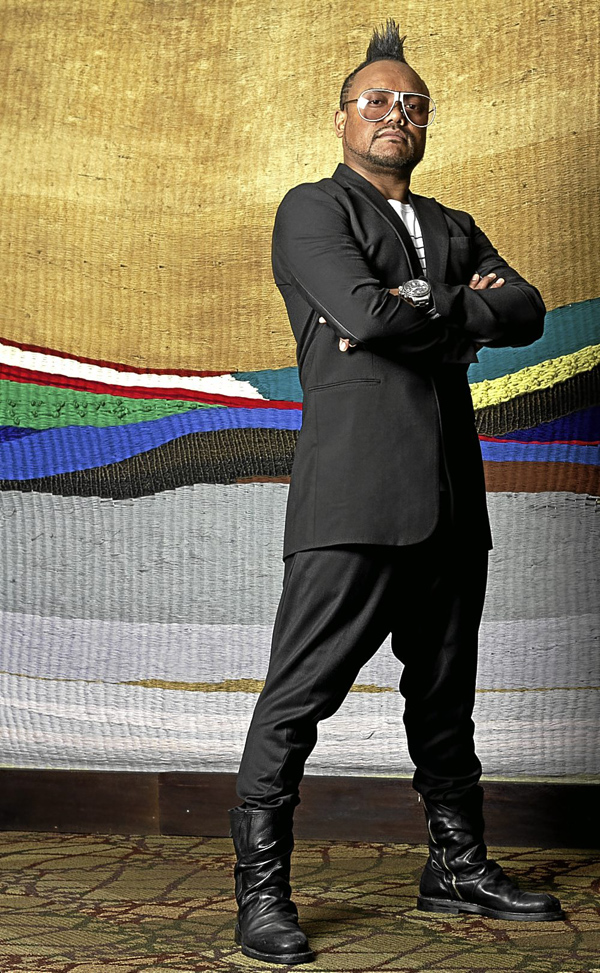
With his trademark Mohawk hairdo, and pimped out in an all black outfit and black, knee-high biker boots, Black Eyed Pea apl.de.ap a.k.a. Allan Pineda Lindo Jr. stands out in a sea of white barongs.

The cream of corporate Makati, mostly bank executives and their staff, have gathered together in a Legaspi Village penthouse ballroom to honor Apl who has been chosen one of the Bank of the Philippine Islands’ BPInoy awardees for 2011.

The annual accolade goes to Filipinos who have done their country proud in the international arena. apl has been chosen not only because of his membership in the Black Eyed Peas, a massive global pop franchise that has sold more than 56 million albums worldwide, but also because for the last few years, he has been coming home to the Philippines to give some of his blessings back to the land of his birth.

At first it was just an annual Christmas homecoming that saw apl giving out gift packages to the less fortunate residents of his hometown in Angeles City, Pampanga.


BIG APL: As BPInoy awardee (Inquirer Photo/Alanah Torralba)

The last couple of years, however, apl has made it more formal by establishing the apl.de.ap Foundation to serve as the vehicle for his humanitarian efforts.

Last August, he donated a computer lab and library to his old school, the Sapang Bato National High School in Pampanga. He also built a music studio at the Holy Angel University, also in Angeles City, where young Filipinos can hone their talents.

But apl has set his sights beyond his hometown: he plans to take his mission nationwide. In partnership with the Ninoy and Cory Aquino Foundation, which has appointed him a “special ambassador for education,” he has chosen to focus his efforts on an education advocacy campaign called “We Can Be Anything.”  It is a perfect fit for the man who once said: “dreaming big and doing something about it can get you really far.”

To help drive the message home, apl composed and recorded the single “We Can Be Anything,” complete with inspirational music video.

“I think that with an education, you can be anything,” he says.  “You could be a musician, you could be an artist, but with an education you always have a background to fall back on.  It’s really important for me to give the youth an equal opportunity. I want Filipino kids to compete around the world, with technology and computers and stuff.”


He plans to continue building more computer labs and music studios.

“I want talented kids that are into music to have an outlet, to have a place to go to and record demos, and practice,” says apl. “In the future I want to be able to discover talents from the Philippines, and that’s why it’s important for me to provide technology and music studios and library. You never know, I might find the next Black Eyed Peas.”

He has also pledged to help in building 10,000 new classrooms in the next two years, to help the Department of Education put a dent in the estimated shortfall of 68,000 classrooms throughout the country.  Among other things, he has been using his celebrity status to raise funds abroad for this purpose through various charities.

“I’ve also been talking to companies in the US like Google,” he says.  “There’s a Filipino team in Google who are planning to teach kids computer science and technology via the Internet.  Now that we’ve build these computer labs, we have to teach the teachers how to teach kids to work with these computers.”

Despite the Christmas rush, apl also took time out to visit calamity-stricken Cagayan de Oro, and to spend time in La Huerta, the underprivileged community in Parañaque where the video for “We Can Be Anything” was shot.

Like other celebrities who are driven to give back, he seems to be motivated by a deep sense of gratitude for the opportunities he has been given, and the realization that things could very easily have turned out differently.

Sapang Bato, where Allan Pineda Lindo Jr. was born on November 28, 1974, lies on the hilly outskirts of Angeles City, near Clark Air Base.  His biological father, a black American airman, abandoned the family right after Allan was born, leaving his mother Cristina Pineda to support him and six other siblings.


“We were poor, but my mom is like a superwoman—she’s just a great entrepreneur,” apl recalls.  “We used to have a store in front of the house, and she was great with turning money around.

Nevertheless, life was hard, and as the eldest, apl had to help feed the family from a young age.

“I remember when I was around 10 years old, I would go with my grandfather to the mountains to farm.

 Marunong akong magtanim ng mais, ng kamoteng kahoy (I know how to plant corn and cassava).  He taught me how to ride the kalabaw, and I know how to araro (to plough). And how to make charcoal.  I used to have to deliver the crops to the palengke at around 3 a.m.”

It was hard work, especially for a 10-year-old, but apl had imbibed the traditional Filipino family value that the eldest son had to share some of the responsibility for supporting the household.

“I used to like doing it,” he says.  “Being the panganay, I was just willing to help my grandpa and stuff.”

To make things even more difficult, he had been born with nystagmus, a condition that causes involuntary eye movements and which leads to impaired vision.  Although he was a good student, apl sometimes had to sit in front to be able to read the blackboard, or copy his seatmates’ notes.

“It was pretty hard, but I’ve learned how to adapt to my surroundings,” says apl, who is considered legally blind because of his affliction.  “When I was young I didn’t know how to control it, but since I’ve grown up I’ve learned to conquer it, I guess. It’s weird, sometimes I feel like I have selective sight, ’cause I’m very good at basketball, none of my friends can beat me in bowling, none of them can beat me in pool, I can break-dance, and pretty much do everything.  I just can’t drive.”

Being a “G.I. baby,” apl was eligible for assistance from the Pearl S. Buck Foundation, a US-based NGO founded by the author of “The Good Earth” and dedicated to helping Amerasian children.

Through the Pearl S. Buck Foundation, the young boy found a sponsor in Joe Ben Hudgens, a children’s rights attorney, who sent money for tuition and school supplies.  Eventually, his mother arranged for Hudgens to legally adopt her son.

apl had mixed feelings about being adopted: he was grateful for the opportunities that being in the US opened up for him, but he was also homesick and missed his family.

“When I first got adopted and brought to the US, I would write home, and sometimes I’d get my allowance and put it in the letter.  Sometimes it wouldn’t make it, so what I started doing was, every dollar I had I would write down the serial number in the letter, so at least if somebody took it, they would know that I tried to send some money back.”

Still, going from Angeles, Pampanga to Los Angeles, California was a culture shock for the 14-year-old boy.

“I remember when I first got to the US, there were a lot of gangs—Filipinos fighting other Filipinos.  It didn’t make sense to me.  I met a Filipino friend who used to dance, and he had a certain attire—long polo shirt, black pants and Vans, and I thought that was a dancer’s attire.  But when I tried to dress like him, I was chased home by other Filipinos.  I guess it was a gangster’s attire.

Music proved to be his salvation.  Back in Angeles, the year before he left for the States, he had gotten into break dancing after seeing youngsters at school doing the old school popping and locking moves.

“I didn’t come to the US to be a gangster, so I changed my whole attire and focused on break dancing and making music, and I became neutral with everybody.  I could hang out with the gangsters, I could hang out with the Fil-Ams, I could hang out with what they called the FOBs—fresh off the boat—because I was into music.  Music gave me that positive outlook instead of (me) getting caught up in gangs and fighting other Filipinos.  That wasn’t my purpose.  My purpose was to make it so I could help my family.”

apl also found a kindred spirit in future Black Eyed Pea William Adams, a.k.a. will.i.am—a nephew of his adoptive father’s roommate.

“My dad needed a babysitter for me, and Will’s uncle suggested Will’s mom Deborah.  They took me to Will’s house, and Deborah made Will stay home from school to hang out with the kid from the Philippines.

 He said, ‘So what do you guys do in the Philippines?’ and I said ‘I like to break-dance, I just learned this new move called the running man that I saw in a Pepsi commercial’ and he said ‘I dance too.’  We just started having conversations and the rest is history.  We became best friends.”

William lived in East LA, in the ghetto, and apl liked hanging out there, perhaps because it reminded him of home.  In any case, the pair got deeper and deeper into music, eventually forming a group called Tribal Nation, which later evolved into A Tribe Beyond A Nation or ATBAN.

“We would go to a lot of Filipino house parties in Glendale and West Covina and the Valley, and we would just start free-styling. From dancing we started rapping. And we wanted to learn, ‘where’s this music that we’re dancing to from,’ so we started researching that, and we got into producing and making beats and composing songs.”

Even in the eighth grade, apl already had that drive to make it.

“I made sure I surrounded myself with good friends, with the same values.  My whole purpose in being adopted and going to the US was for my family, so I never strayed from that.  I gotta make it.  I gotta pursue my dreams and be able to go back home to help my family—that was always in the back of my mind whatever I went through.”

It was a struggle, specially in the early days when hip hop was dominated by gangster rap and the whole East Coast vs. West Coast rivalry. Music business types didn’t know what to make of the multicultural stew that would become the Black Eyed Peas.

“I was influenced by groups like A Tribe Called Quest, De la Soul, the Jungle Brothers, Boogie Down Productions.  I gravitated more toward the old school and break dancing, and that’s really influenced how we wrote, because the way they made music was more for fun instead of killing and slapping girls, and ‘I got all this money.’  It was more about the art and the movement of hip hop and that’s why I think our music was positive. We didn’t have it in us to be gangsters.”

In a sea of bitch this and ‘ho that, apl’s music was actually a breath of fresh air.  But it would take time for the industry to catch up.

“It didn’t come overnight,” he recalls.  “It was hard to get signed by a record company because we weren’t gangsters and we were so different.  We had to prove ourselves—we would play at clubs, colleges, and what we would do was we would have a notebook with a mailing list, and we would call these people for the next show.  We had to actually create a following, and prove to the record companies that there is a market for that kind of music.  We would do shows for 5,000 people, and we had to prove to the record labels that there is room for eclectic and more progressive type of music.”

Finally, apl and Adams got themselves signed in 1992.  Three years later, after Jaime Gomez a.k.a. Taboo joined, they changed their name to the Black Eyed Pods, and then the Black Eyed Peas.  Their first two albums—“Behind the Front” (1998) and “Bridging the Gap” (2000) garnered critical acclaim, but after Stacy Ferguson a.k.a. Fergie joined in 2003, and the band released their third album “Elephunk,” critical mass was finally achieved, and the multi-platinum pop phenomenon that we know today as the Black Eyed Peas assumed its present form.

But apl’s elation at his band’s finally achieving success after years of struggle was tinged with personal tragedy.  Back home in Sapang Bato, his troubled brother Arnel had taken his own life.

“That was a dark period in my life,” he recalls.  “He had certain personal vices, and he suffered from depression.  I’m pretty sure he felt bad inside and couldn’t take it anymore.  I felt like if I had been there as a big brother, I could have stopped him.  Sometimes life just gets you down, and I wish he had somebody to run to.

These mixed emotions inspired apl to write what eventually became “The Apl Song” on “Elephunk.”

“I was in the studio experimenting with sampling, and I remembered that my mom used to listen to Asin all the time,” he says.  “That was the same time when my brother passed away, and I wanted to dedicate a song to him, and also tell my life story, and that chorus from [the] Asin [song ‘Balita’] just really touched how I was feeling, and I just kind of did it.  Will came over to the studio and I played it for him, and he said ‘That’s pretty dope, you should put that in the album yo.’  Really? But it’s in Tagalog—people wouldn’t understand.  But he said, it’s not about understanding it, it’s about the feeling.  You’re sharing your musical culture.”

The band’s wholehearted support strengthened apl’s inclinations to represent where he was from in his music.  While it wasn’t the worldwide hit that “Where Is The Love” was, “The Apl Song” endeared the Black Eyed Peas even more to their Filipino fans, and even gave the reunited Asin a boost for a time.

Even as the Black Eyed Peas’ star continued to rise, tragedy continued to dog apl.  In 2009, he lost another brother, Joven, this time to murder.

All of this darkness in his personal life only seemed to underscore how blessed Pineda has been, and has only strengthened his desire to share the fruits of his success with his countrymen.  Now that the Black Eyed Peas are on a hiatus, apl’s advocacy work has gone to the forefront.

“I’m going to focus on ‘We Can Be Anything,’” he reiterates.  “We’ve got two years to build 10,000 classrooms and I’m going to focus on that.  I’m also going to build my next computer lab from the apl Foundation.”

Also in the works is apl’s long-awaited solo project.

“It’s going to be more personal,” he says.  “I’m gonna try to write more Tagalog songs.   I’m Kapampangan so I wanna write a Kapampangan song in there. I like a lot of different music genres from dance music to drum and bass, so I’m going to mix it all up.

The solo project will likely reveal more of Apl’s Filipino roots

“I’m still into the classics. I love listening to Asin, Freddie Aguilar, Florante.  I like Gloc 9—big fan.  Also Bamboo, Slapshock.  Oh and I’ve just been researching Tito, Vic and Joey’s old stuff, all their dance disco stuff with VST and Co. I want to collaborate with them. I want to remix their song—I think it’s called ‘Magsayawan Tayo.’”

When he’s not performing with the Black Eyed Peas, apl is also a much-sought after DJ.

“My DJ career is getting bigger now,” he says.  “I’m apl.de.ap a.k.a. the Party Man.  I like to DJ around the world and play at festivals. I like going out to clubs and experiencing new types of music.  I think that’s how you stay fresh and how you can be current on what’s going on in the music world.”

But for all his globe-trotting, home for apl will always be here.

“I’m made in the Philippines all the way,” he says proudly.  “I grew up here until I was 14, and I could never change that.  It’s just a certain feeling.  When I’m here I feel at home.”

Tuesday, November 8, 2011

...the prod

American producer invests in the Philippines


American producer Russ Williams has good news for Filipino filmmakers and the local industry in general. He is packing his bags in Malaysia and moving to the Philippines in March next year to make international films. Russ even wants to settle in the Philippines indefinitely.

So he got investors in the US to fund Gothic Productions International (GPI), whose first production, “Darkest Night” will have its premiere night on Thursday, Nov. 10 at the U.P. Film Institute in U.P. Diliman.

The film’s lead may be American actor DJ Perry (an investor in the film). But its theme is as Filipino as its director, Noel Tan, who has 20 years of experience not only in directing, but in photography as well. Some of its cast members – Issa Litton, Nik Campos and Marife Necesito, are Filipinos. Leading lady Anne Gauthier is French-Filipino.

The ball starts rolling one Christmas season in Sagada, Mountain Province, where a happy family’s holidays turn bleak when bizarre events start happening.

Issa Litton talks of  serendipity.  A real storm breaks out, complete with a brown-out that sends chills down her spine while she was shooting her scene in Floridablanca, Pampanga.

But Williams would rather describe the film as a gothic drama, not something on the horror side of things.

After all, he reasons out,  “Darkest Night” doesn’t bear the gory, sensational look typical of horror films.

“It’s the story of  family that goes through dark, evil pressures,” he qualifies.

Calling card

Turns out Russ’ bagful of treats for Filipino filmmakers and moviegoers is stuffed with goodies.  He hopes “Darkest Night” will create enough buzz to serve as his “calling card” for GPI’s  follow-up project,  “Shadow of Death,” where one of the top leads will be  Filipino.

“We are looking for  veteran, famous Filipino actor for this sci-fi horror film which is a bit action-oriented,” says Russ. 

To add to its Filipino flavor, the producer is also injecting the kind of family drama moviegoers will see in “Darkest Night.”

And mind you, “Shadow of Death” is a more ambitious project than its predecessor.

“We’re looking at a much bigger budget for `Shadow of Death,” reveals Russ.

There’s more.  He wants to explore the width and breadth of films related to the gothic genre: fantasy, crime and drama,  etc.

So expect GPI not only to shock and make you cry.  Expect it to take you to unexplored worlds only a rich imagination can create.

“We already have a film called `Pandemonium’ which will start pre-production late next year.  And it will be shot in the Philippines,” Russ points out.

Big plans

All  this requires money --lots of it.  So Russ is crossing his fingers Filipino investors will join him and get the company established in the Philippines. This way, he can dream even bigger.

“We may come to the point where we might decide to release a film in Tagalog,” he reveals. When this day comes, he sees himself joining forces with  Filipino film companies and doing many things the Filipino way.

Russ doesn’t know if he will see this grand dream come true years from now.  But one thing he’s sure of: his best investment is quality.

“You end up with a half-baked product if you’re driven by the bottom line: money. The money will come when you’ve established a good reputation.”

As that famous line in the film “Field of Dreams” says, “If you build it, he will come.”

By doing his best, Russ hopes everything else will follow.

Wednesday, November 2, 2011

...the host for eco-friendly energy

Philippines to host one of P59-B world eco-friendly energy projects


By MARK ANTHONY N. MANUEL
November 2, 2011
Manila Bulletin
 
 
CLARK FREEPORT, Pampanga, Philippines – The Philippines will become one of the symbolic homes for a one-billion-euro (P59 billion) environmental projects by an international company that builds bio green power plants around the world.

Other countries included in the projects are the United States, South Korea, and China.

Officers from True Green Energy Group (TGEG), a US-based company that promotes world power and green technologies, revealed that the multifaceted agreement between them and international building corporation CJ consortium finalized the one-billion-euro line of credit to fund TGEG bio green power plants around the world.

The agreement will fund the expansion projects of the TGEG around the world, including its materials recovery facilities (MRF) in the Philippines.

Under the new agreement, TGEG will exclusively build a new factory in the Philippines for the construction of eco-friendly low-cost houses in places where TGEG's Material Recovery Facilities (MRF) and Biomass systems will be deployed.

On Nov. 5, shareholders from the two companies will attend a meeting here and will be able to visit the first $25 million green energy power plant site in San Fernando City, Pampanga.

TGEG said its material recycling facility system, shredder, and pelletizer in San Fernando make fuel from garbage. This fuel is then used to create electric energy on the grid by the gasification process.

The company added that by Nov. 10, the city and TGEG will begin to staff the green energy power plant.

“Once the TGEG bio systems specialists have been hired and fully trained to run the system, the Bio Green gasification system will be deployed creating electric energy from the fuel facility made from the MSW (municipal solid waste) from the landfill site,” it said.

Under the agreement, TGEG will also continue to contract and build MRF and biomass gasification systems for universal deployment throughout the globe.

TGEG’s corporate office in Asia is located inside this Freeport.

Ronald Flynn, founder and chairman of the board, said in a statement, “With the combination of TGEG viable renewable energy resources and landfill sites, coupled with energy efficiency, conservation and smart grid development for low-cost housing, we could lead the world in energy independence and a cleaner, more sustainable energy infrastructure — but also to what will soon prove to be the greatest investment opportunity of the 21st Century.”

“We spent five years working three shifts 24 hours a day in building our operation. Today you can find gasification systems and companies all over the globe who turn garbage into power. However, the key to success in this business is much like drilling for oil. You see, there are many ways to get oil out of the ground, but you must first find the oil before you can make money at it. In our business you can buy 101 different types of equipment to turn trash into energy. I admit, five years ago it was very tough, but today it is no big secret, everyone has this technology," Flynn explained.

Because of the many land fill sites now owned by TGEG both locally and internationally it will also announce on Nov. 5 three major biomass gasification companies from America, Korea and China which have awarded TGEG with a license to supply and deploy biomass gasification systems around the world.

Wednesday, August 17, 2011

...the Bataan freeport

HK firm to invest $30M in Bataan freeport
(philstar.com)
August 17, 2011


By Punto Central Luzon
 
MARIVELES, Bataan – A Hong Kong firm on Wednesday signed a memorandum of agreement with the Freeport Area of Bataan (FAB) signaling the start of its operation here by the first quarter of 2012 with an initial investment of $30-million.
 
Raymund Tan, president of Luen Thai International, said they will be operating in Bataan their fourth unit in the country under Luen Thai Group Philippines.
 
The publicly-listed company in Hongkong will invest in fabric mill and garment-related factory in the former Bataan Economic Zone turned FAB that will create jobs for 6,000 workers.
 
He said that depending in the global market, he will increase investments in five years.
 
Luen Thai has been in the Philippines for 22 years with a unit producing polo shirts in Pampanga, another unit manufacturing Adidas products in Cebu and another area manufacturing coat with combined manpower of more than 20,000 workers.
 
In Bataan, he is eyeing the production of a well-known polo brand like the one he wore in the MOU signing.
 
When asked why he chose Bataan and not establish in Cebu or Pampanga where he already has been operating for some time, Tan mentioned his strategy of diversifying focus. He said that each of his unit focuses on one particular customer.
 
“The company will not fight for the same workers and management team in the same way that workers will not be competing in one area,” he said.
 
Adidas is one particular customer he meant. He said that to be successful, a firm has to partner with the right customer. “I chose my customer and I do not allow customer to choose me,” he said.
 
“There is a need to manage well, balance the market and to have incomes in yen, euro, dollar and other currencies to counter the weakening of the market because of the depreciation of the United States dollar,” he added.
 
Tan admitted that the poor showing lately of the U.S. dollar is a global problem that affects many countries.
 
“But it opens new opportunity because when the American currency weakens, we will see China coming up and other Asian countries growing fast,” he said.
 
Joel Villanueva, director general of the Technical Education Skills Development Administration, said that TESDA is ready to supply Luen Thai with skilled and competent workers.
 
The former partylist representative even announced that Pres. Benigno Aquino by text has sent congratulatory message to Bataan officials, FAB management while thanking Luen Thai.
 
Rep. Albert Garcia of Bataan’s Second District said that FAB is the most strategic location for investments being nearest to Manila.
 
The Bataan Freeport, the congressman said, offers generous incentives, has ready facilities already existing, has highly-reliable manpower and has deep harbor that will complement the seaport in Subic Bay Metropolitan Authority and airport in Clark, Angeles City.
 
As add-on advantage, the young Garcia said that Bataan will soon have the cheapest power with the operation of GN Power, a Chinese firm, in Mariveles.
 
The Bataan lawmaker is the principal author in the House of Representatives in the creation of the Area of the Freeport Authority in Bataan (AFAB). He is chairman of the House Committee on Trade and Industry.
 
For his part, Gov. Enrique Garcia announced that they will be building a temporary port since AFAB is still preparing a master plan for a permanent port facility.

Tuesday, August 16, 2011

...the Apl gives back

Apl.de.ap gives back to fellow Cabalens

08/16/2011
 
 
Apl.de.ap gives back to his fellow Cabalens. Photo by Marie Lozano, ABS-CBN News


MANILA, Philippines – International Filipino-American performer Allan Pineda, better known as Apl.de.ap of the Black Eyed Peas, is currently in the country to fulfill a promise and to 'give back' to his fellow Cabalens.

On Tuesday, Pineda went to Sapang Bato National High School in Angeles, Pampanga to donate a music library and a computer room.

Pineda said he makes it his mission to help aspiring young Pinoy talents follow in his footsteps.
Sapang Bato National High School is where Pineda had his elementary education.

Earlier this year, Pineda visited the Philippines and worked on improving schools in his native province of Pampanga through the Apl.de.ap Foundation, his joint project with President Benigno Aquino III.

“We try to add extra classrooms in the Philippines. I’m also excited about my new school in Pampanga. There’s a computer lab for kids where that they can use for free and learn about computers,” he said. – Report from Marie Lozano, ABS-CBN News

Sunday, July 24, 2011

...the Pinoy dishes

Son of Prince Charles' wife raves about Pinoy dishes
 
By Wilma Yamzon
The Philippine Star
July 24, 2011
MANILA, Philippines - After eating sisig, kare-kare, adobo and sinigang, the son of the Duchess of Cornwall Camilla Parker Bowles, Tom Parker Bowles, raved about Filipino dishes in an article he wrote for a magazine in the United Kingdom.

Bowles, food editor of Esquire magazine, visited Manila recently to have a taste of Philippine cuisine.

He also dined with former first lady Imelda Marcos who, he said, was “clever, funny, and charming.”

In the article titled “Anyone for Filipino?” in Esquire’s Aug. 11, 2011 issue, Parker Bowles talked about dishes he enjoyed in Pampanga and Manila, food ingredients such as sili, bawang, sibuyas, and calamansi, and heirloom recipés.

He also gave recipés of Pampanga’s crunchy sisig and Manila’s adobong manok.

He also found delight in balut, which most, if not all, foreigners dread eating.

“Street food is not a big draw here, certainly when compared to Thailand or Vietnam. But then, there’s balut, the pavement equivalent of Animal Farm, the porno version you saw as a teenager on grainy VHS. It’s a fertilized duck egg, complete with embryo,” he wrote.

And finally, there’s lechon, a great shiny roasted pig, he said.

“It’s the finest piece of pigskin I’ve ever eaten. One of the best things I’ve ever tried, full stop. It’s a celebratory dish, but also a very traditional one, eaten before the Spaniards arrived.”

Parker Bowles also praised Filipino food prepared for him by top chefs such as Claude Tayag, Margarita Fores and Juanita Vazquez.

He also toured Market, Market! in Taguig where one can have a taste of food from various regions of the country.

And in his tours, culinary masters and historians Joel Binamira, Ivan Henares, and Ivan Man Dy guided him.

“Manila’s a city with a pockmarked face and a horrible limp, a place of erroneous preconceptions. But it has a heart of gold,” Parker Bowles concluded.

Saturday, July 16, 2011

...the International Choral Festival Grand Prix winner

UPLB Choral Ensemble wins top prize in China contest

07/16/2011
Members of the UPLB Choral Ensemble dish out a few songs upon their arrival at the Diosdado Macapagal International Airport fresh from their victory in China.


MANILA, Philippines - The University of the Philippines-Los Baños (UPLB) Choral Ensemble went back home to the country victorious after being named Grand Prix Winner at "A Voyage of Songs" International Choral Festival in Zhuhai, China.

The group also won top prizes in the Chamber Choir, Open-Mixed Choir, and Folk Choir Categories.

The UPLB Choral Ensemble in Zhuhai, China. Photo courtesy of UPLB Choral Ensemble


For the Chamber Choir Category, the choral group sang "Glongongo Ko", "Water Night" (a foreign song), and "Gapas".

They sang "De Rommel Pot", "O Naraniag a Bulan", and "Riverder Le Stelle" for the Open-Mixed Choir Category.

And for the Folk Choir Category, the group sang "Koya No Tebulul" and "Ilay Gandangan"

The UPLB Choral Ensemble, led by its choir master Vonn Lomarda, battled it out with 10 other choral groups from other countries in the competition. -- Report from Robert Tuazon, ABS-CBN Pampanga 

Sunday, June 26, 2011

...the green buildings

PH-designed green building ratings cited


By ROY C. MABASA
June 26, 2011
Manila Bulletin

MANILA, Philippines -- The British Embassy yesterday hailed the successful development of “Building for Ecologically Responsive Design Excellence,” (BERDE), the first green building rating system designed by Filipinos, even as it noted that it was unveiled at a time when the Philippine construction industry is booming and power costs in the country have escalated to become the highest in Asia.

"We are delighted to have contributed to the development of BERDE through our British experts who shared their knowledge and best practices in using the UK’s BREAAM system, which really pioneered green building rating systems,” British Ambassador Stephen Lillie said in a statement following a courtesy call by Philippine Green Building Council (PhilGBC) officers at the British Embassy last week.
 
BERDE provides a common language for green building in the Philippines by formulating national standards for sustainable construction that are tailored to Philippine conditions.
 
In developing its own green building rating system, the PhilGBC partnered with the British Research Establishment Energy Assessment Matrix (BREEAM), the first and most widely used green building rating system which sets the yardstick for energy efficient, sustainable design that minimizes the impact of building construction to the environment.
 
PhilGBC Chairman and President architect Christopher de la Cruz said there are 13 buildings going through the process of BERDE certification in areas such as Manila, Makati and Pampanga. There are now 100 certified BERDE professionals to assist project proponents in pursuing BERDE certification.

Research and development of several BERDE schemes for communities and educational institutions are also being developed.
 
De la Cruz pointed out that, with the Philippines among the most vulnerable to the negative impacts of climate change, he considers it a “primordial concern” to address high energy costs, water and air pollution and a solid waste crisis.
 
Green buildings, he explained, reduce the strain on energy resources as they need less energy than other structures.
 
The resulting improvement in resource management practices reduces waste, requiring less landfills and helping the government maintain cleaner water resources.

Wednesday, June 8, 2011

...the water lily bag

New eco-chic bags are made of water lily leather

When you say leather, quality comes to mind. Also, animals. But one social enterprise has come up with a lethear product that won’t get complaints from animal activists.

Water hyacinth leather is the main material used in the handmade bags by Jacinto&Lirio, the flagship brand of EcoIngenuity Inc.


A chocolicious tangerine dream of water lily leather.
Since 2009, the company has been showcasing their innovation in the form of fashionable  bags made from water hyacinth, the pest plant commonly called water lily. It is known as the most damaging aquatic plant worldwide, with its capability to reproduce at an extraordinary rate. The pesky plant grows in mats up to two meters wide and clogs up waterways, reducing light and oxygen, changing water chemistry and affecting local flora and fauna.

Filipino innovators introduced water hyacinth leather made from the plant's stalks. The Department of Trade and Industry has encouraged the commercial exploitation of the pest plant in handicraft production, especially woven placemats.


The Teodora bag has a hand-carved wooden water lily accent.
Inspired by the government support, Jacinto&Lirio partnered with Cora Cares Foundation and San Fernando Pampanga Community Association. Their social enterprise aims to raise the competitiveness of indigenous materials and help empower the water hyacinth community partners, many of whom are still struggling to sustain the industry.

"By being partners in the production process, our community suppliers join us in creating eco-fashion innovations, unique to the Filipino identity," according to a company statement.

Jacinto&Lirio gets support from the DTI and the Gawad Kalinga Center for Social Innovation. The company won the Grand Award in the 2009 Business in Development Challenge.

Social Socialite

This month, the company is launching its latest collection Unica which incorporates other indigenous materials like hand-carved wooden accents, shell base, and glass charms with the water hyacinth leather to create unique bags.

Jacinto&Lirio says the Unica collection is geared toward the modern career woman. "Despite the glamor that seems to surround her, she is actually proactive in making a difference in her own way," according to the press kit from the company.

Unica's covergirl Clarisse Simmoneu represents the "Social Socialite," whose lifestyle is actively immersed in empowering society.


A French model, Clarisse decided to come to the Philippines for an internship in social design. “I came to the Philippines because there is more urgent need here than in Europe to answer," she says.

Since she was young, Clarisse has been making her own clothes and bags, but her interest in social work grew with her observation that fashion now is more related to luxury.

“I did not agree with that. But when I discovered the brand [Jacinto&Lirio], I said ‘wow, they’re doing it with social and fair trade attitude," says Clarisse. “What I like also is that they use natural materials."

Unlike many ethical bags that tend to be have a rough texture and “hippie styles," Clarisse says Jacinto&Lirio bags are simple and strong yet elegant,

"I think women should think more about what they carry. Where does every product I wear come from? Or is it fair or not, if it has a message or not? I think it’s very important to know that," she says.

Jacinto&Lirio will be featuring the Unica collection with other "Social Socialites" on its website. They include supermodel and Philippine Fashion Week host Sara Meier, heiress and fashion guru Divine Lee, equestrian Mikee Cojuangco, Ford Supermodel of the World 2011 Danica Magpantay, and designer Hindy Weber-Tantoco.

“We want to create awareness for more women to show one’s personal style while making a statement that makes a positive impact in society," says a company statement. – CARMELA G. LAPEÑA/YA, GMA News