Monday, November 28, 2011

....the sexiest men of 2011

Pacquiao among world's sexiest men of 2011

11/28/2011
MANILA, Philippines - Filipino boxing superstar Manny Pacquiao is on the list of Salon.com's world's sexiest men in 2011.  

The Sarangani congressman, who narrowly defeated Mexican rival Juan Manuel Marquez in their third bout, expressed surprise at being included on the list.

Pacquiao believes that it is not just because of his looks but also because of his pleasant attitude and friendliness.

Salon.com said Pacquiao's "blood lust and killer instinct... has served the world’s greatest boxer well in 59 fights."

"But outside the ring, the boxer — with the Bieber-esque moptop — has an ability to croon romantic ballads that's just as deadly," it added.

"It’s unlikely for a man with ferocious fists to know his way around a love song. But even hotter? Pacquiao has a humanitarian side that hasn’t been seen in any boxer since Muhammad Ali. In his native Philippines, Pacquiao is considered the greatest national icon in the world (beating out Nelson Mandela, including all others).

"That might be national pride talking, but Pacquiao — elected to the Filipino Congress in 2010 on his second try — has quickly built a humanitarian record that’s every bit as impressive as his collection of championship belts," the US news and entertainment website said.

"He’s used his platform to push for good works; instead of bad-mouthing opponents in the run-up to a fight, he urges the audience to wear yellow to call attention to the fight against global poverty. When he gets an audience with Sen. Harry Reid before a fight, he uses it to lobby for a bill that would help the garment industry, and in turn, his fellow countrymen," it added.

Salon.com also praised Pacquiao's humanitarian work.

"At home in Congress, he’s taken on typhoon relief, improving medical conditions and raising literacy rates.

What he can’t achieve politically, Pacquiao handles himself, donating millions to improve living conditions in his poverty-stricken nation," it said.

"It's one thing to be humble and universally adored. It’s something else to put all that personal magnetism on the line to do something more than sell sneakers or collect endorsements. And these days, nothing makes you look good like doing good," it added. - with a report from RG Cruz, ABS-CBN News


...the UN development perspective


UN to invest  $375.7M for PHL development

GMA News
28 November 2011


The United Nations and the Philippine government on Monday launched the UN Development Assistance Framework or UNDAF under which $375.7 million will be allotted to help national and local agencies strengthen their capacities to deliver social services.  

“This is a statement of commitment by the UN to align the Organization’s development initiatives with the Philippine Development Plan for 2011-2016, which is the national government’s blueprint for inclusive growth,” the US said in a statement citing UN Resident Coordinator Dr. Jacqueline Badcock.  

The UNDAF serves as a framework for the UN Country Team (UNCT) in the Philippines in its strategic responses to the development priorities of the country, the UN said.

    “… [T]he UNDAF 2012-2018 is partnership-based, and will be implemented in accordance with the UN philosophy of ‘Delivering As One,” Badcock. 'Cost-effective impact'   This means all 25 UN agencies operating in the Philippines will converge “their respective programs when possible to have a greater, more cost-effective impact,” the UN said. 

 Under the seven-year UNDAF program, which starts next year, $147.2 million in development assistance will be used to strengthen capacities of national and local agencies to deliver quality social services for the poor.  

Also, $46.5 million will be used to generate employment through sustained and “green” growth.   For governance, the UNDAF is giving $67.2 million and $114.8 million to “strengthen national and local resilience to climate change, threats, and disasters.”  

To fund the development aid package, the US said it will source $79 million from regular UN sources and the rest from other sources.   Badcock and Socioeconomic Planning Secretary and NEDA Director-General Cayetano Paderanga Jr. signed the 2012-2018 UNDAF on July 21, 2011. — VS, GMA News 

...the Pinoy acoustic wave goes Asian


Sabrina gains following in other Asian countries

The Philippine Star
November 28, 2011

By Nathalie Tomada


Photo is loading...
Sabrina releases I Love Acoustic 4 album under MCA Music (Universal Music Philippines)| Zoom
MANILA, Philippines - Count Sabrina in among the Pinoy artists gaining fans in other Southeast Asian countries.

The acoustic singer’s I Love Acoustic album series under the recording label MCA Music, Inc., was released not just in the country, but also in other parts of Asia.

The first of the series, which came out in 2007 when she was only 18, was certified Gold in Thailand and Double Platinum in Indonesia. This spawned a follow-up record, I Love Acoustic Too, which again became certified Gold in Thailand, Double Platinum in Indonesia and did very well in Singapore. The third acoustic album turned Platinum in Indonesia and charted well in other Asian territories.

And she’s in good company: The Pinoy music artists who have enjoyed popularity if not released albums in other Asian countries include Christian Bautista, Rico Blanco, Jed Madela, Aiza Seguerra and of course, Charice.

“It’s very humbling to experience the appreciation of people from other countries,” says the now 21-year-old Sabrina.

Sometime mid of this year, she flew to Indonesia to meet her fans there for the first time. She also became a cover girl for the Indonesian glossy Eve and graced other mags like Cosmogirl. She recently went back to sing in a high-profile wedding. Indonesian fanpages have also been put up for her. Lahat ng mga ka-tweet ko mga halos Indonesian. Ang laki ng support group ko dun,” she adds.

Sabrina also has a couple of Thai fanpages. “Sa Thailand kasi nag-No. 1 yung songs ko,” she explains.

Meanwhile, Sabrina will be returning to Singapore end of this year, as a follow-up to her successful promo tour late last year.

“I love it so much even if (a promo tour abroad) can be so toxic. I think the best thing about it is that I learn about other people’s cultures, including their fashion and food,” she says.

Sabrina has released the fourth installment of the series dubbed I Love Acoustic 4 and will be available in other countries. The album boasts of her interpretations of such international hits as Price Tag, Who Says, Edge of Glory, On The Floor, Moves Like Jagger, Last Friday Night (T.G.I.F.), California King Bed, Hold It Against Me, Rolling In The Deep, The Lazy Song, Back To December, That Should Be Me, Marry Me and Rocketeer. On its first week of release last month, it went straight to No. 1 of Astroplus’ OPM and international album charts.

Sabrina says that among all the records in the I Love Acoustic series, the latest collection is which she can relate the most, it being a “clearer expression of who I am today, a girl slowly turning into a woman.”

The album also showcases a duet with Indonesian crooner Calvin Jeremy for a cover of Just The Way You Are and with Richard Poon for a version of the Jason Mraz/Colbie Caillat track Lucky.Sabrina, who was named Female Acoustic Artist of the Year in last month’s Star Awards for Music, doesn’t mind if there are impressions of her being more recognized in other places, rather than in her home country. In the same way, she is positive that even if there is a general perception that the acoustic scene is not as alive as before, the genre is here to stay because “soothing and mellow music” will always have its slice of the music-loving market.

“What I love about acoustic is the emotions it brings to its listeners. It’s soothing to the ears and very mellow,” says Sabrina.

Her albums are all covers and fresh arrangements of hit foreign songs, but she hopes she gets to sing original compositions someday.

Born Roli Alexandra Orial, Sabrina is a Communication Arts graduate, cum laude, from University of the Philippines Los BaƱos. She grew up in a very musical household. Her father used to be a folk singer and she once formed part of a performing trio with her older brother and sister. In one of her gigs with her siblings, she was discovered by MCA Philippines executives, who let her grow up a bit and signed her up two years later when she turned 18. Bossa Nova was her first genre, but MCA big bosses deemed it more age-appropriate for her to sing acoustic numbers.

Sabrina says, “My family is very supportive and happy that I pursued music because this is also their dream.”

...the cheer givers

PH places 3rd in world cheerleading tilt


abs-cbnNEWS.com | 11/28/2011


MANILA, Philippines -(1st UPDATE) Team Philippines, headed by the University of the Philippines (UP) Pep Squad, made a splash in the 6th Cheerleading World Championships in Hong Kong, placing third in the Cheer Mixed category.


Team PH finished just behind traditional cheerleading powerhouse Japan and Thailand, and bested squads from Singapore, Hong Kong, Russia, Indonesia, Chinese Taipei, Germany and China.

Joining the UP Pep Squad were members of the Centro Escolar University and Polytechnic University of the Philippines pep squads.

It was the first time that the Philippines had performed in the biennial event, held this year at the Hong Kong Coliseum.

UP Art Studies professor Eloi Hernandez, who accompanied the squad to Hong Kong, said the Pep Squad had a "perfect run" in the cheer mixed category.

The UP Pep Squad also participated in the cheer dance, group stunts, and partner stunts categories.

The UP Pep Squad was sent to the World Championships after winning the 2011 UAAP Cheer Dance Competition last September.

The PUP and CEU cheering squads also particpated in the all-female category of the world championships.

Sunday, November 27, 2011

...the booming property market

2011 ASSESSMENT

BPO demand high, top developers in construction ‘frenzy’

By: Tessa R. Salazar
Philippine Daily Inquirer
 
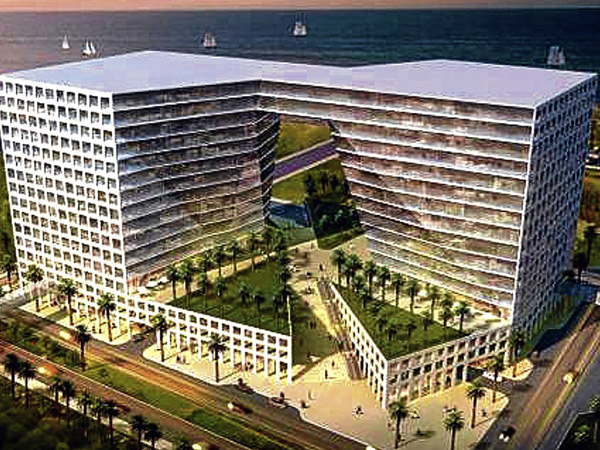
THE PROPERTY sector’s strength was focused on the vertical developments and the BPOs and the emergence of new growth centers.


Exactly 35 days before 2011 bids adieu, Inquirer Property has asked analysts to assess the performance of the Philippine real estate industry in 2011. Their unanimous reply:

It has been a banner year for the business process outsourcing (BPO) sector.

The mid-income condo development is in the midst of a “construction frenzy.”

The demand for spaces in the Makati, Bonifacio Global City and Ortigas central business districts was even higher this year compared to last year.

The emerging growth centers like Eastwood and Bonifacio Global City have “arrived” this year.

Leading global real estate services company Colliers International, which claims its research team had been tracking all the residential condominium developments in Metro Manila since 2008, said that in 2010 preselling activities were able to sell 36,000 units, and that in 2011 that number is projected to be surpassed by more than 11 percent to breach the 40,000 units sold mark.

This was revealed by Paul Vincent Chua, associate director for valuation and advisory services and head of consultancy and research.

Top 5

“There are a lot of developers who performed well this year, however, in terms of condominium units sold in Metro Manila, SM Development Corp. remains to be number one. The top five include developers Ayala Land Inc., Century Properties, DMCI and Megaworld,” said Chua.

Enrique Soriano, professor at the Ateneo Graduate School of Business and senior adviser at Wong+Bernstein Business Advisory, also cited Megaworld, ALI, SMDC and Robinsons Land Corp. (RLC) as the top-performing developers in 2011.

Soriano also added that the property sector in 2011 “was single-handledly fueled by private initiatives.”

Soriano also observed “no movement in the high-end condominium segment, and aggressive construction frenzy in the mid-income condo segment representing 80 percent of all residential developments in 2011.”

4% vacancies

Chua said that in terms of commercial space uptake, the demand from the BPO sector is still remarkably high.
“If you look at vacancies in Makati, Bonifacio Global City, and Ortigas, the average vacancy for the third quarter is now less than 4 percent compared to the same period last year, which had an average vacancy rate of more than 6 percent. Even with the (addition of a) number of planned office developments in the next couple of years, we expect vacancies to remain low as the demands for these spaces are still very high.”

Soriano said the industry’s strength was “focused on the vertical developments and the BPOs and the emergence of new growth centers following the success of Eastwood and BGC.”

But have there been any downsides to this year’s flurry of developments? “The singular focus on the mid-income segment, and neglecting other asset classes,” replied Soriano. He reasoned, however, that the property sector was just keeping up with “unmet demand, fueled by buyer demand, especially (from) overseas Filipino workers (OFWs) and overseas Filipino expats (OFEs).

Morale booster

The positive analyses for 2011 and the strength of the Philippine real estate industry this year come as a morale booster, coming at a time when the city of Manila has recently been tagged as “below fair” to “abysmal” by foreign investors in the Emerging Trends in Real Estate Asia Pacific 2011 survey conducted by the Urban Land Institute.

Global real estate investors, who participated in the survey, gave Manila a score of 4.56 points out of a possible 9. Topping the survey in the Asia-Pacific region was Singapore with a score of 5.96 points, followed by Shanghai with 5.87, Mumbai with 5.79 and Hong Kong with 5.70.

Chua countered that the Philippines has been one of the few countries in Asia where foreign land ownership is limited to 40 percent. He urged the sector to look at the brighter side, particularly the lower rental rates compared to other Asia-Pacific countries.

He pointed out that for the office sector alone, with 25 Asia-Pacific cities covered by Colliers International, Makati City offers the third lowest rent, ranking No. 22 on the list with an average net rent of $21.48/square feet. The city that commands the highest rent, Hong Kong, has an average net rent of $185.91/square feet.

Looking at the capitalization rate or prime yield of these cities, Makati ranked second with 9.77 percent, following topnotcher Mumbai with 10.6 percent.

Soriano said the low ranking was a wake-up call, and that the Real Estate Investment Trust law must now be implemented in the country, citing Hong Kong, Thailand, Singapore and Malaysia significantly benefiting from REIT. He added that implementing REIT would open more opportunities for investment.

...the future of Manila

What will Metro Manila be like in 2030?

By: Amado de Jesus
Philippine Daily Inquirer
 
MELBOURNE was judged in August 2011 as the most livable city by the Economist Intelligence Unit considering availability of goods and services, low personal risk and an effective infrastructure.umagoya.net


What will Metro Manila be like 19 years from now? How will it deal with natural disasters, especially those brought about by climate change? What will be the sources of energy? Will transportation problems be solved by then?  How will it handle corruption? How about the environment?

These are some of the issues discussed recently during a series of workshops titled “The Asia City Innovation System Project” or CIS-ASIA. The project aims to document, analyze and forecast the social issues that threaten the development and growth of cities more specifically in Southeast Asia.

CIS-ASIA was collaborated by six major Asean cities, namely: Bangkok, Ho Chi Minh, Jakarta, Kuala Lumpur, Manila and Singapore, and seeks to document, analyze and forecast major urban issues that will lead to city innovations for a more livable, prosperous and equitable city living.

The consultation process conducted through workshops included stakeholders representing the academe, industry and government.

Rapid urbanization

The world faces rapid urbanization as the United Nations reports that the world population is seen to be 69 percent urban in 2050. The greater percentage of increase in the urban population is concentrated in cities and towns of less developed economies.

This trend in urbanization led to the formation of megacities like Metro Manila. Megacities have more than 10 million in population.

In 2025, the same report predicted that more than half of the world’s 20 megacities will be in Asia including Manila and Jakarta in Southeast Asia.

This speedy migration of people to the city imposes strain on resources and creates social problems on housing, environment, transportation system, health and sanitation, and peace and order.

The Philippines, is described as a newly industrialized economy and the fastest growing economy in Southeast Asia. According to the World Economic Forum 2010, it is classified as a factor driven economy, ranked 85 out of 139 countries for global competitiveness.

Young population

The gold mine is our young population. Philippine population is young with 34.6 percent in age group 0-14 years, 61.1 percent in 15-64 years age group and 4.3 percent for 65 years and above.

This is in stark contrast to Norway for example where the average age today is 57 years old. In France, the average age is 39. This has given rise to the terms greying and shrinking cities in many discussions regarding future cities.

The project came up with 3 scenarios in 2030 based on current trends and present situation in the city.

Future scenarios

Mobility in the city will be improved with more roads and means of transportation through the build-operate-transfer scheme of the government.

Most schools will be privately owned so literacy will be maintained and quality of education will be dictated by competitive forces. The public school system will require mandatory enrolment of students up to age 16.

 Unabated unemployment will encourage the youth to be entrepreneurs rather than employees.

Unemployment will continue to rise since no effective programs have been instituted by the government. More people will try to find employment outside the country.

Current research will give rise to city farming and hydroponics technology in plants. Online business and transactions will be the norm.

...the Pinoy youth in Abu Dhabi Robot Olympiad

Three Pinoy kids make a splash at the World Robot Olympiad

By Sheila Ramos
Philippine Daily Inquirer


From Nov. 18 to 20, three teenage boys aspiring to be robotics engineers trekked to Abu Dhabi to compete in the World Robot Olympiad (WRO). It was a much-awaited trip for the boys, who put in hours upon hours of whatever spare time they had left after school, as well as on Saturdays and Sundays, in preparation for the competition.
 
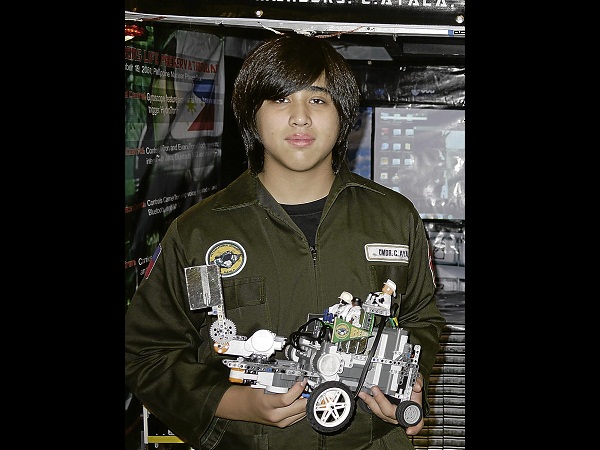
All that hard work paid off as teammates Lucas Ramos, Cristian Ayala and Rom Villarica had a truly unforgettable experience, bonding not only among themselves, but also with kindred spirits from around the world. Geeky as it may sound, they found themselves among peers who shared a passion for building Lego robots and for NXT programming.

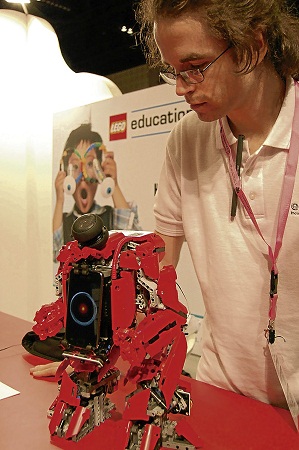
Much to their surprise, on their first day at the Abu Dhabi National Exhibitions Company (Adnec), Lucas, Cris and Rom were welcomed by the “rock stars” of the robotics world—Daniele Benedettelli and his Cyclops, Marc-Andre Bazergui and his Wall-E, David Gilday and Mike Dobson and their current Guinness World Record holder CubeStormer II, to name a few. All under one roof, face-to-face, with hands-on demonstrations of what their revered robotic inventions could do.

There was nothing more satisfying than seeing these students interact with their gurus, those truly credited for thinking out of the box and into the future, imagining a community where robots interacted with and assisted

humans in daily functions.


Rock stars


Benedettelli is a world-famous young Italian robotics engineer. His robots have been viewed more than three million times on his YouTube videos. He has written two best-selling books, which feature full building instructions of his robots. He is the first to build the Rubik’s cube solver Rubik Utopia.

In WRO, Benedettelli showcased Cyclops, a complex robot that could walk and turn smoothly, gesticulate, talk, understand natural speech and interact with people by detecting faces and gestures. Truly, it was an honor for the boys that Benedettelli came and sat to watch Lucas, Cris and Rom present their robots.

And then there was Bazergui, a Canadian IT specialist who created one of the more popular robots featured in the WRO. His robot is inspired by and carries the same moniker as the well-loved animated robot Wall-E. Marc built a 20-cm tall Wall-E that transformed from a cube to its cinematic inspiration.

This Wall-E moved around on tracks, had flexible arms and a bobbing head that featured those popular blue telescopic eyes. Lucas and his robotics coach found Bazergui online earlier this year while brainstorming on what robots they could create for the WRO competition. With a robot carrier in mind, Bazergui guided Lucas in creating the CarrierTron, simpler than Wall-E, but with its own unique functions.


Meeting and chatting with Bazergui made Lucas realize his love for building and figuring out how things moved. This certainly was the highlight of Lucas’ Abu Dhabi adventure, as he found a future mentor.

Throughout the competition, Lucas had in his pocket the two pieces of special Lego bricks Bazergui gave him.

Impressive work

Another impressive work of robotic art and a crowd favorite was CubeStormer II, created by Gilday and Dobson. Last 11-11-11, it set the Guinness World Record for the fastest time for a robot to solve a 3 x 3 x 3 Rubik’s cube, faster than the human world record. During demonstrations at the WRO, it consistently took around five seconds to solve the cube.

And, from robotic art to one robot that actually created art, Sacek’s 3D Milling Machines sculpted 3D faces and shapes with excellent precision. Such fine pieces created out of flower foam took one to two hours to create. Arthur’s machines milled different shapes over the three days that we spent at Adnec.

The possibilities are endless for what robots can be created for, and what these robotic inventions can, in turn, create. There was no better venue to be introduced to all these than at a Robot Olympiad where the minds of close to 1,500 finalists, selected from 15,000 teams from 38 countries, came together to exchange ideas and feast over each other’s creations.


Oh yes, by the way, there was a competition—almost upstaged by the Robotics Rock stars! Definitely worthy of mention is the fifth-place finish, out of 31 entries, of the team of Lucas, Cris and Rom, in the Junior High School Open Category that they competed in.

The highlight of the WRO for Cris was how the five-minute presentation of their robots to the judges was executed nearly flawlessly. Their teamwork and delivery were excellent. The buildup of pressure over the past eight months had been incredibly intense, starting in March when the boys started to plan and build their robots, increasing after they won the gold medal in the Philippine qualifying tilt in September, and intensifying upon their arrival at the gigantic Adnec to see the best robotics kids in the world, all busy getting ready for the big competition.

Global attractions

Though this competition was almost just an excuse to travel together and attend this convention, parents and brothers in tow, the boys were at the top of their game and came well-prepared. Fraser M. Smith, president of Raytheon Sarcos, dropped by to greet and watch the boys strut their stuff. It was Rom who was left in awe by this meeting, as Smith proved to him that one could be both a “hands-on” person and the president of a company.


He spoke at length with the boys about Raytheon’s many projects, including a motion-controlled robot that could lift heavy objects with ease. More notable was how Raytheon had built many robots for attractions across the globe, such as the Bellagio fountains display in Las Vegas and the robots for the Jurassic Park and Pirates of the Caribbean theme rides.

Smith handed each of the boys a business card, and it impressed Rom that he was a PhD—something Rom also aspires to be.

Smith is overseeing the creation of human exoskeletons for the US military—the real-life Ironman! Working in Raytheon would certainly be a dream job for the boys.

As Lucas, Cris and Rom made their way back home to Manila, back to school and their day-to-day homework, they now carry with them nuggets of inspiration from their experience at the Robot Olympiad, and a realization that there is a world out there where robots and their creators can thrive side by side.


Bulacan students win 4th place in World Robot Olympiad


Philippine Star
27 November 2011


MALOLOS CITY, Philippines  – A team of high school students from this province won fourth place in the annual World Robot Olympiad (WRO) held recently in Abu Dhabi.

The team from Dr. Yanga’s Colleges Inc.(DYCI) in Bocaue town also bagged the Best Technical Design Award for their robot “MAGIS,” which stands for “Man’s All-Around Global Interactive Solutions.”

The DYCI Primes robotics team is composed of Alexandra Mae Guevarra, Claire Receli ReƱosa, and Chelsea Andrea Morales. Beryl Cruz is head coach while Romyr Gimeno is assistant coach.

Team members ReƱosa and Morales competed for the first time, while Guevarra was part of the DYCI team that bagged the WRO championship last year.

“The competitions were tough and the competitors were very good, but we were glad that we made it to top four in the open category,” said Cruz.

Malaysia, South Africa and South Korea won the first, second and third place, respectively.

The International School of Manila won fifth place in the open category and the Philippine Science High School based in Camarines Sur, won fifth place in Robot Soccer.

Cruz said MAGIS is a robot that has a calamity tracker dog, which could detect flood. It is also has a mini-screen projector for entertainment; e-brail for the elderly who can’t read; a thermometer and blood pressure measuring device; and is also a personal savings machine.

“MAGIS was design to help man in his everyday life, that’s why it also have an amicus program which can play Tic-Tac-Toe with you and he can display happy and sad emotions,” he said.

The award is the third for DYCI in three consecutive years. In 2009, the DYCI team placed ninth in the WRO held in South Korea; and ruled the WRO held at the SMX Convention Center in Pasay City last year. - By Dino Balabo (Philstar News Service, www.philstar.com)