Monday, September 17, 2012

...the PH stocks new highs

Philippine stocks seen testing new highs


Philippine Daily Inquirer


Local share prices could test record highs this week with momentum supported by the central bank’s recent decision to keep rates at record lows to sustain economic growth.

After ending the week at a five-week high, the benchmark Philippine Stock Exchange index (PSEi) is seen testing higher ground, also partially due to the coming fourth-quarter holiday season.

The PSEi surged 2.33 percent week on week to close at 5,322.47 on Friday. “Local monetary authorities’ move to maintain benchmark interest rates will help build momentum, especially with the start of the fourth quarter,” brokerage 2TradeAsia.com said.

In a weekly note, the firm said lower interest rates would be positive for listed firms’ income statements as debt servicing was kept low.

“This is also conducive to capital expenditure (capex) strategy, especially for those that ventured into high-growth, capital-intensive initiatives. Property firms are also likely to benefit with the extension of flexible payment terms,” it added.

The optimism was also fueled by the US Fed’s call in the middle of the week to hold another bond purchase plan. Part of the support came from Germany’s ratification of a 500-billion euro bailout fund.

The firm said traders should see a recovery from the recent consolidation especially after the PSEi managed to keep its head above the 5,200 level.—Paolo G. Montecillo

...the new Japanese factory hub

Japanese manufacturers move to Philippines


Rising yen, risk factors in other countries

By Riza T. Olchondra
Philippine Daily Inquirer


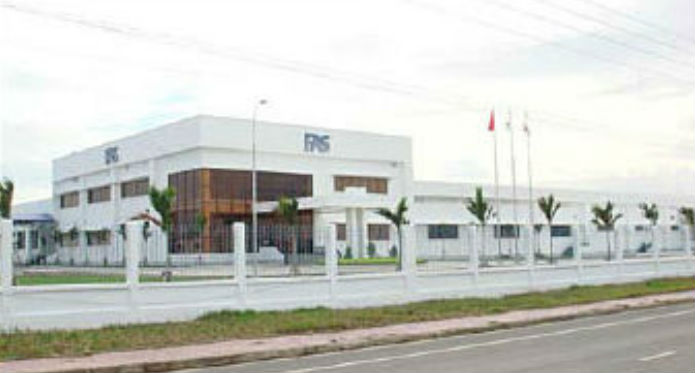
The Furukawa Automotive Systems plant in Vietnam PHOTO FROM FURUKAWA.CO.JP


Japanese manufacturers are making a beeline to the Philippines due to its young, English-speaking labor market following a rising yen at home and risk factors like floods and political changes in other hubs.

Electronics firm Furukawa Electric Co. Ltd. and adhesives maker Cemedine Co. Ltd. are the latest to invest with a combined 1.016 billion yen in initial capitalization alone. This brought new Philippine investments by major Japanese companies to at least 16.51 billion yen so far this year.

Furukawa Electric’s subsidiary, Furukawa Automotive Systems Inc. (FAS), established a wholly owned unit called Furukawa Automotive Systems Lima Philippines Inc. with a capitalization of 1 billion yen to make wire harnesses for Japan-made automobiles by March next year. FAS said in a report that increasing demand for its products made it put up a “first step” export hub in the Philippine for its Asian expansion.

Cemedine will establish Cemedine Philippines Corp. with a capitalization of 16 million yen to manufacture and sell adhesive, ceiling and related products by April 2013.

Also setting up new facilities by 2013 are Bandai, the toy maker of Power Rangers and Gundam fame (744 million yen); Fujifilm Corp., which will make optical lenses for digital cameras, projectors and surveillance cameras in Laguna (2.3 billion yen); and electronics components maker Murata Manufacturing Co. Ltd. (620 million yen).

Expanding their Philippine presence are Canon Inc. and Brother Industries Ltd., which are set to make printers with initial investments of 6 billion yen and 4.23 million yen, respectively.

These companies are targeting Asia, Latin America and Europe for exports, according to the Japanese Chamber of Commerce and Industry of the Philippines (JCCIP), which has 500 member-companies. As Japanese manufacturers locate in the Philippines, their suppliers will follow suit. This would create a supply chain that would attract a wider range of manufacturers and suppliers, JCCIP vice president Nobuo Fujii said.

Analysts said the Philippines has high-quality labor with lower cost and more stable growth compared with China or Vietnam. Transportation distance to Japan is also shorter from Manila and while Thailand has been a traditional choice for manufacturing expansion, the flooding that further hit supply chains that suffered from the triple tragedy in Japan in 2011 has made companies seek alternatives.

To nurture the Philippines’ supply chain, Trade and Industry Undersecretary Cristino Panlilio said in a phone interview that the Department of Trade and Industry (DTI) helped in marketing not only the major manufacturers but also their suppliers in a bid to nurture the Philippines’ supply chain. Exports zone locators also get incentives such as income tax holidays and exemption from duties on imported capital equipment.

Fujii also expressed hope that Japanese firms would soon be able to monetize billions of tax credits that were due way back in 2002 and 2003. He said the JCCPI was awaiting the schedule and rates to be provided by the Bureaus of Internal Revenue and of Customs. A tax credit is a rebate or refund of import taxes and duties paid to the government by a firm or manufacturer registered with the Board of Investments for raw materials, supplies and semi-manufactured products it has brought abroad to produce the goods it will export thereafter. To facilitate the refunds, the JCCPI has long been urging the Philippine government to implement a more flexible tax rebate system by allowing cash refunds, cross utilization and fast releases at par with those of other Asean economies.

The DTI and the Japanese Embassy have jointly reported that despite “difficult situations” the two countries faced, particularly in 2011, trade volume between the Philippines and Japan increased to P382.7 billion from P335.4 billion in 2010. Japan remains the biggest investor in the Philippines, with total investments of P77.4 billion last year, P19.1 billion more than P58.3 billion in 2010.
 
Asian Development Bank senior country economist Norio Usui has said in a presentation that manufacturing investments are good for the Philippines as these create more jobs than other sectors.
Nomura Research Institute’s Kengo Mizuno and Yoshihiko Iwadare have recommended that the Philippines target non-semiconductor electronic products (printers, multifunction peripheral, projectors, scanners, digital cameras, etc.) makers, shipbuilders, and their suppliers as potential investors.
Japan International Cooperation Agency economist Toru Yoshida said that although foreign direct investments across Asia plunged in 2009 during the global financial crisis, the Philippines lagged behind its neighbors in terms of attracting investors. However, the Philippines could take advantage of rapidly changing global conditions (labor issues in traditional manufacturing hubs, supply chain disruption due to Asian floods, hyper-appreciation of the yen that made firms look for new sites) to present itself as a new growth area.

...the tourism target

Philippines likely to get 4.5M tourist arrivals in 2012—DoT


By Michelle V. Remo
Philippine Daily Inquirer


Tourism Secretary Ramon Jimenez Jr.: Aiming for 18-percent growth. RYAN LEAGOGO/INQUIRER.net


MANILA, Philippines—The Department of Tourism (DoT) has expressed confidence that the number of foreign visitors to the country will hit at least 4.5 million this year, based on the tourist arrivals in the first half.

The targeted full-year tourist arrivals are higher by nearly 18 percent from the 3.917 million tourists that came to the country in 2011.

Tourism Secretary Ramon Jimenez Jr. sees a good chance the country can hit an 18-percent growth in tourist arrivals in 2012, citing the encouraging figure for the first semester.

Data from the DoT showed that foreigners who visited the Philippines in the first half totaled 2.14 million, up by 11.68 percent from close to 1.92 million in the same period in 2011.

“The second semester is actually the peak season for tourism. We are well on our way to hitting 4.5 million tourist arrivals,” Jimenez said on Monday, during an economic briefing by the government’s economic team.

Given the popular belief that the Philippines has much room to grow in terms of tourist arrivals and tourism revenues, the Aquino administration has decided to beef up the country’s tourism campaign.

The promotion is punctuated by advertisements carrying the tagline “It’s More Fun in the Philippines.”

The government considers tourism as one of its priority areas for development, citing the ability of the sector to generate more jobs.

Given the country’s natural resources, officials say sufficient promotion will significantly boost tourist arrivals.

Jimenez said, however, that the government should not be overly aggressive in its promotion. He said the increase in tourist arrivals should be at a pace consistent with the country’s ability to develop sufficient tourism facilities.

He said the country at this point would not be able to accommodate quite a sharp rise in tourist arrivals, pending the full development or upgrading of tourism facilities and infrastructure.

“We are calibrating the demand [for hotel rooms and other tourism facilities] because we might bust the machine,” he said.

Meanwhile, the government has announced plans of the government to significantly boost budget for tourism infrastructure and for training of manpower for the tourism sector.

“We (Department of Tourism) are working closely with Tesda [Technical Education and Skills Development Authority]. We will announce a convergence program for hospitality training,” Jimenez said.

...the growth forecast (NEDA)

PH tips economy to grow 6% in 2012


Agence France-Presse

AFP FILE PHOTO/JAY DIRECTO


MANILA – The Philippine economy could grow by almost six percent this year thanks to improving business optimism despite a series of destructive storms in recent months, officials said Monday.

The economy, which grew by 6.1 percent on year in the first half, could do even better in the rest of the year as the government implements measures to boost laggard sectors, Socioeconomic Planning Secretary Arsenio Balisacan said.

He added outsourced businesses, trade and tourism were all doing well and agriculture and manufacturing were expected to pick up in the second half.

“With the healthy macroeconomic fundamentals and the higher business optimism, we will most likely hit the upper end of the 5-6 (percent) target,” he told a forum with investors.

Heavy rains and storms last month and early September, which left huge parts of the capital flooded, killings scores and displacing millions, had only a minimal effect on the economy, Balisacan added.

He said farmers still had time to re-plant after the storms, adding that the floods affected mostly small businesses and not the large factories or call centers.

Tourism Secretary Ramon Jimenez cited the 11.68 percent rise in tourist arrivals to 2.2 million in the first half of the year as a further reason for optimism.

Central bank governor Amando Tetangco reported a 5.3 percent rise in remittances from the millions of Filipino working overseas to $13.3 billion in the first seven months of 2012.

The officials also reported increased interest from potential foreign investors, following President Benigno Aquino’s election in 2010 on an anti-corruption platform.

Aquino was already addressing corruption which had long been cited as one of the main deterrents to investment in this country, the officials said.

But they were also working to make the economy more efficient and streamlined, to address the investors’ other concerns as well.


...the Supranational beauty

Philippine bet Elaine Kay Moll is Miss Supranational’s 3rd runner up


By Bayani San Diego Jr.
Philippine Daily Inquirer


Elaine Kay Moll. PHOTO FROM MISSOSOLOGY.INFO/PINOYAMBISYOSO/AUGUST DELA CRUZ
 
 
MANILA, Philippines—The country’s representative, Elaine Kay Moll, places third runner up in the 2012 Miss Supranational pageant held in Warsaw, Poland, on Monday (Manila time).
 
Belarus’ Katsyariana Buraya wins the crown. Thailand’s Nanthawan Wannachutta placed first runner up and Czech Republic’s Michaela Dihiova is second runner up.
 
 
Miss Belarus/Miss Supranational 2012
Miss Thailand/First Runner-up

 
Miss Czech Republic/2nd Runner-up


Miss Philippines/3rd Runner-up 
Miss Ecuador/4th Runner-up
 

...the fastest growing smartphone market

Philippines fastest growing market for smartphones in SE Asia


1 in 4 mobile devices in PH a smartphone, says GfK

By Paolo G. Montecillo
Philippine Daily Inquirer

Samsung Electronics’ Galaxy S III, right, and Apple’s iPhone 4S are displayed at a mobile phone shop in Seoul, South Korea, Friday, Aug. 24, 2012. South Korea’s Samsung won a home court ruling in its global smartphone battle against Apple on Friday when Seoul judges said the company didn’t copy the look and feel of the U.S. company’s iPhone, and that Apple infringed on Samsung’s wireless technology. However, in a split decision on patents, the panel also said Samsung violated Apple technology behind the bounce-back feature when scrolling on touch screens, and ordered both sides to pay limited damages. AP/Ahn Young-joon


MANILA, Philippines—The Philippines remained the fastest-growing market for smartphones in Southeast Asia, with the number of devices jumping more than four-fold as of July from the same period last year.

Singapore-based research firm GfK in a report released Monday showed that one in four mobile devices sold in the Philippines as of July was a smartphone.

“The Philippines continues to report exponential three-fold growth of 326 percent in smartphone volume sales, rendering it the fastest-growing market for smartphones in Southeast Asia region,” GfK said.

“(The Philippines was) also the country with the highest jump in smartphone market share within a year, from 9 to 24 percent,” the report said.

The sales growth in the country was significantly higher than the 78-percent growth recorded in Southeast Asia’s seven major markets, namely the Philippines, Singapore, Malaysia, Thailand, Indonesia, Vietnam and Cambodia.

“Feature phones still reign as the more prevalent mobile phone type used by consumers in the region’s emerging markets,” GfK digital technology account director Gerard Tan said in a statement, “However, smartphones adoption is escalating at a rapid pace.”

Total mobile-phone sales, which include low-priced “feature phones,” grew in the seven countries by 24 percent year on year as of July.

While more feature phones were sold in the region, GfK said more money was spent on smartphones. Of the total $13.7 billion spent on new phones in the seven-month period, $8.75 billion went to smartphones.

GfK said the smartphone growth in the region was driven primarily by the entry of more affordable devices worth $100 to $200 each, which are now dominating the market.

“With major manufacturers recently announcing their intentions to launch low-end smartphones priced below $100, the device will be within the reach of an even larger pool of consumers and the market is expected to grow even faster when these models are made widely available,” Tan said.

“This move is likely to significantly expedite the demand surge for smartphones in the region’s yet to be converted feature phone user population, which we expect to see continued robust growth for at least the next two years,” he said.

In a previous report, GfK said the relatively low penetration of smartphones in the Philippines was a major factor behind the high growth rates.

The region’s most mature markets are Malaysia and Singapore, where penetration rates are at 90 percent.

In markets like the Philippines, three-quarters of phones sold are still feature phones, which are mainly used to call and send text messages.

The country’s top telcos Globe Telecom, Smart Communications and sister Sun Cellular have all started to bundle smartphone models with their affordable post-paid plans in a bid to make it easier for consumers to decide to switch phones.

Sunday, September 16, 2012

...the booming sector

Booming software sector seen to employ 80,000 in PHL in 2013

 
September 16, 2012
GMA News
 
 
The software industry is projecting $1.5 billion in revenues next year and expects to employ more workers as market demand increases, an industry executive said over the weekend.

“[W]e hope to sustain our momentum. By 2013, PSIA aims to achieve revenue of $1.5 billion and increase employment... to about 80,000 employees,” Philippine Software Industry Association president Nora Terrado said in a statement.

The software industry is among top contributors to the growth of the local information technology-business process outsourcing (IT-BPO) industry, says the Business Processing Association of the Philippines.

According to BPAP president Benedict Hernandez, the software industry earned $993 million in revenues in 2011 and employed 50,000 full-time workers.

“The Philippine software industry is positioned competitively in the global market,” he said.

The PSIA is composed of approximately 150 companies engaged in software development and IT outsourcing. It is also one of the BPAP's five partner associations.

A recent report by global management consulting firm Everest Group said the Philippines is a mature global location for software services, joining the ranks of China, Brazil, India, and Poland.

Hernandez said these gains clearly demonstrate the potential of the Philippine software industry as the demand for these value-added services is increasing exponentially.

Outsourcing summit

The growth of the software sector in the Philippines and in services centers elsewhere is among the key topics on the agenda of the fourth annual International Outsourcing Summit scheduled on Oct. 7 to 9 in Manila.

Organizers said the event provides a venue for top executives, domain experts, analysts, and representatives of key industry players to discuss opportunities and challenges for IT-BPO industry.

Around 500 delegates from almost 20 countries and 70 high-level speakers and panelists from around the world are expected to attend the annual summit. — BM, GMA News