Monday, June 2, 2014

...the Asian miracle

PH is more than ‘Asian miracle’–BSP


The Philippines is prepared to take on the risks and challenges of transforming the ASEAN trade grouping into an integrated, powerful economic community, opined Bangko Sentral ng Pilipinas (BSP) Governor Amando M. Tetangco Jr.
 
While his words are echoes of past pronouncements, Tetangco reiterates though that the economic growth of the last eight quarters – consistently above six percent GDP -- is not something he would describe as a miracle.

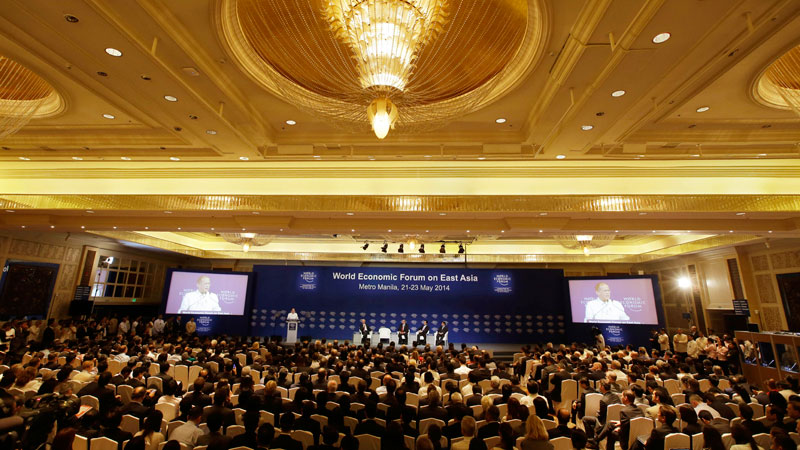
During the recently held World Economic Forum on East Asia, which the Philippines hosted for the first time, foreign officials, delegates, and investors have commonly referred to the country as an Asian miracle, a term Tetangco said may not be appropriate.

“Many during the WEF (called) the Philippines a country turning the tide from being the sick man of Asia to the next Asian miracle. To be perfectly frank though, I do not relish that we are called a miracle,” said Tetangco before a gathering of the country’s retail investors and financial analysts.

“The evidence will show that we are where we are now because of hard-fought reforms.”

In the region and across its ASEAN peers, the Philippines remains one of the fastest growing economies. The first quarter GDP growth of 5.7 percent, although falling short of consensus estimate of six percent, is third highest in GDP rate after China and Malaysia.

“Analysts have described the Philippine economy as being in the ‘pink of health’ and this rosy picture is expected to continue through 2014-2015,” said Tetangco. Consumption and capital formation, he said, continue to be the main drivers of growth.

“Our growth story has been underpinned by solid anchors – low and stable inflation due to credible monetary policy and a sound banking system maintained through responsive regulation,” he said. Inflation has remained within target for five consecutive years.

Tetangco also pointed out that local banks continue to be well-capitalized with a capital adequacy ratio of well above the 10 percent requirement and the standard eight percent by the Banks for International Settlements.

“Likewise the adoption of Basel 3 in 2014 is expected to strengthen further the financial system,” he said.

Tetangco said the healthy external sector position continue to shield the economy and the domestic financial market against financial market volatilities after the US Federal Reserve commenced its tapering move last year.

With the US Fed taper of asset purchases in place, markets are now watching developments in growth and unemployment in the US, to see if the Fed will change the perceived path of the taper, and when the “lift-off” (or when Fed would raise rates) would be, observed Tetangco.

“In this period of uncertainty and market volatility, good surveillance is key,” he stressed. “The BSP will not hesitate to deploy contingency measures in response to sharp volatility in capital flows. With an expanded monetary policy toolkit and a broad-range of macroprudential measures to help ensure financial stability, we are optimistic that we are equipped to deal with potential market volatility.”

In the meantime, the country’s favorable external sector dynamics has improved external liability management. The current account has been in surplus for 11 consecutive years.

The favorable sentiment is a positive multiplier, said Tetangco. “Both consumers and businesses continue to express upbeat views about the Philippine economy's growth trajectory,” he added. The positive sentiments are indicative of the “broad support to the general direction of economic policies, and this is expected to fuel the momentum of reforms moving forward.”

With sustained positive developments in almost all sectors of the economy, the outlook in 2014 remains upbeat.

“We are optimistic that GDP growth will reach the government’s growth target of 6.5 to 7.5 percent for the year,” said Tetangco. He is also confident inflation will settle within the three percent to five percent target for the year.

“External sector dynamics will remain favorable, as trade is expected to rebound in light of expected global turnaround while remittances are seen to remain on a steady growth path,” the BSP chief said.


Thursday, May 29, 2014

...the Asia's best parks

Rizal Park one of best parks in Asia — survey


MANILA, Philippines - The newly rehabilitated Rizal Park was cited as one of the best parks in Asia, according to the latest survey made by Agoda Company PTE Ltd. (Agoda.com), one of Asia’s leading hotel booking sites.

In a statement, Agoda.com said Rizal Park, also known as Luneta Park, ranked eighth in a competitive regional list.

The output was based on customer feedback and analyzed booking information to present Asia’s highest rated parks and green spaces as selected by Agoda.com customers.

According to Agoda.com, travelers surveyed loved a wide range of green space options from lush expanses of jungle to manicured parklands.

The list includes huge national parks perfect for hiking or outdoor activities, marine parks for diving or kayaking, and green areas in the middle of a city that offer important historical context. All of the entries on the list have left a large enough impression on Agoda.com customers to warrant consistently high ratings.

In the middle of the sprawling Philippine capital, Rizal Park is both a beautiful escape from the traffic and noise and a potent symbol of the country’s tumultuous history.

The park takes its name from national hero Jose Rizal, author and Filipino nationalist who was executed in 1896 for promoting sweeping social reforms during the Spanish colonial era.

The 140-acre park is located next to the famous Intramuros walled city.

It is one of the most popular spots in Manila for locals to picnic, exercise and relax among gardens and greenery.

Adjacent to the park are the Museum of the Filipino People, Department of Tourism and the National Library. An impressive monument to Rizal stands on the western end.

Trivia note: all road distances in the Philippines are measured from Kilometer Zero, just across the street from the Rizal Monument.

In 2011, Rizal Park underwent a massive renovation by the National Parks Development Committee (NPDC) aimed at restoring significant elements of the park.

The plans included the rehabilitation of the old musical dancing fountain located on the 40 m x 100 m pool, which is the geographical center of the park. The renovation was handled by German-Filipino William Schaare, the same person who built the original fountain in the 1960s.

Restoration in the park also included the Flower Clock, which was set for the inauguration on the 113th Philippine Independence Day; the Noli me Tangere Garden and the Luzviminda Boardwalk.

Agoda.com has also provided some great hotel recommendations to round out a perfect trip to visit Rizal Park such as the Manila Hotel, Hotel H2O and Bayleaf Intramuros Hotel.

Other national parks in Asia that made it to Agoda.com’s list are Hallasan National Park Jeju-do, South Korea; Taroko National Park, Taiwan; Osaka Castle Park, Osaka, Japan; Halong Bay, Vietnam; Ang Thong National Marine Park, Ko Samui; Khao Yai National Park, Thailand; and Penang National Park, Malaysia.

Aside from being the leading online hotel reservations company, Agoda.com specializes in securing the lowest discount hotel prices.

Agoda.com includes more than 360,000 hotels worldwide. The multinational staff of more than 1,400 professionals, located throughout the world, provide a first-rate reservation service that uniquely combines local knowledge and local connections to provide the best hotel deals to both business and leisure travelers.


...the (still) star of Asia

Philippines still 'star of Asia' despite GDP miss


Manila, Luzon, Manila, Philippines, South-East Asia, Asia
Seongjoon Cho | Lonely Planet Images | Getty Images
Manila, Luzon, Manila, Philippines, South-East Asia, Asia
The Philippines posted weaker-than-expected first quarter growth, but Southeast Asia's 'rising star' economy is still rising, analysts say.

Gross domestic product (GDP) expanded 5.7 percent from January to March, official data showed Thursday, below expectations for a 6.3 percent rise and marking the first sub-6 percent growth rate in nine quarters.

But analysts don't believe growth momentum has been derailed.

"Overall, the Philippines remains the bright spot in Asia. We expect GDP to gain momentum in the next quarters. The upside risk is that reconstruction activities may give a stronger impetus to growth and compensate Q1 under performance," Cynthia Jane Kalasopatan of Singapore's Mizuho Bank told CNBC.

Robust growth in recent years earned the Philippines the title 'Asia's rising star.' In 2013, it was Asia-Pacific's second fastest growing economy after China with growth of 7.2 percent.

But the economy was hit hard by a typhoon in November that killed 6,000 people and damaged crops. Analysts were concerned about the economic recovery, especially given the country's high unemployment and poverty rates.

The government began its reconstruction spending program earlier this year, but the effects were not as immediate as hoped, Mizuho's Kalasopatan said.

"It appears that the effects of Typhoon Haiyan were more severely felt in Q1. The breakdown of GDP components reveals that government spending was not as strong as expected," she said, adding that consumption also made a weaker growth contribution compared with the previous quarter. The poor performance in the nation's stock market also dampened growth.

Despite these negative factors the economy shows signs of resilience; this led Kalasopatan to maintain her 2014 growth forecast of 6.5 percent.

Private investment and net exports have surprised to the upside, Kalasopatan said. She expects reconstruction activity - another key growth driver - to pick up soon.
 
Other economists told CNBC the GDP number was a temporary setback. They are bullish on the prospect for a bounce back.

"We expect a rebound over the coming quarters, which would ensure the Philippines remains one of the region's strongest performers," said Daniel Martin, Asia economist at Capital Economics.

"The breakdown of the data was more encouraging than the headline numbers," he added.
 
Martin highlighted fixed capital formation, which grew to 11.2 percent compared with 8 percent in the previous quarter; exports, which rose to 12.6 percent compared with 3.6 percent; and public spending, which rose 2 percent after contracting in the previous quarter.

Other encouraging factors include resilient household spending despite higher food prices following the typhoon, said Martin. Remittances - wages sent home by Filipinos working overseas - will likely continue to support households.

"The broader demand outlook is still robust... we do not see the weak Q1 growth figure as part of a sustained slowdown," he said, adding that Capital Economics maintains its 2014 and 2015 growth forecasts of 6.5 percent and 7 percent.


Tuesday, May 27, 2014

...the Manila World Economic Forum impressions

‘It’s great to be here in the Philippines’


By Doris C. Dumlao
Philippine Daily Inquirer


Philippine President Benigno Aquino III delivers his speech at the opening of the two-day World Economic Forum on Asia in May 22, 2014, at the financial district of Makati city east of Manila, Philippines. The Philippines’ successful hosting of the World Economic Forum on East Asia last week opened the world’s eyes to the country’s renaissance amid challenging global and regional developments. AP Photo/Bullit Marquez

(First of two parts)
 
MANILA, Philippines—The Philippines’ successful hosting of the World Economic Forum (WEF) on East Asia last week opened the world’s eyes to the country’s renaissance amid challenging global and regional developments and at the same time raised hopes that Filipino creativity and youth dynamism would be the salvation of a nation weary of boom-bust cycles.
 
President Aquino took advantage of the event to highlight the country’s economic turnaround anchored on governance reforms as well as the nation’s resilience following the devastation caused by Typhoon Yolanda (international name: Haiyan). Aquino was also a diplomatic host and avoided talking about the country’s territorial dispute with China.
 
Territorial disputes were brought to the fore when Vietnam’s Prime Minister Nguyen Tan Dung—one of the heads of state who attended the WEF summit—gave a fiery speech against China’s territorial aggression during the opening plenary. After the emotional speech, WEF founder and executive chair Klaus Schwab had to immediately clarify that the WEF was a neutral platform and appealed to the parties to discuss peaceful solutions.
 
Instead of discussing China, Aquino dwelt more on how reforms were bearing fruit and benefiting ordinary Filipinos. He also spoke about the momentum being “irreversible,” to allay concerns that governance reforms would be put in jeopardy when his term ends in 2016.
 
‘PH has got it right’
 
“The key takeaway for the Philippines is a very strong articulation of the case for the Philippines. I myself am a longtime observer of the Philippines and aware of sometimes the weariness and skepticism due to many rounds the country had gone through of what seemed like a revival but were frustrated by politics one thing or another,” said John Pang, a visiting scholar from New York University and the chair of WEF’s Global Advisory Council on Southeast Asia. “Despite the natural disasters, it has really got it right,” Pang said.
 
“There’s a very strong sense that the Philippines is on track. It’s back and there’s a lot to look forward to. I think that it has managed to communicate to the world how the fundamentals work and how these fundamental advantages can be sustained,” he added.
 
Pang, a Malaysian academic and management consultant, has spent a lot of time looking at Southeast Asian economies as founder and former head of CIMB Asean Research Institute Ltd., which was created by the CIMB group as an independent research institute to further the integration agenda of the Association of Southeast Asian Nations.
 
“It’s great to be here in the Philippines at a time when the level of self-confidence and hope is so high. Understandably, this year’s East Asia Summit reflects the same exuberance and high spirits. But of course, there’s a lot more hard work to be done both on the public and private sectors,” added Malaysian Karim Raslan, chief executive officer of KRA Group, a Southeast Asian public affairs consulting firm specializing in stakeholder relations, political risk and business advisory.
 
Raslan, who was among the panelists at the session “Philippines: The Next Asian Miracle,” had the most memorable line in that session when he said Aquino had a “charisma deficit” but noted that he had “delivered” anyway. For such a leader, Raslan said one six-year term may not be enough and urged the current regime to use its political capital to “change the rulebook.”
 
For Pang, the Philippines had done a “tremendous” job hosting the East Asia Summit. The welcome reception hosted by the Ayala group on Wednesday night, he said, was “by any standard, quite a show and spirit of organization.”
Best of Filipino talent
 
The Ayala group’s reception for WEF delegates at the Ayala Triangle featured the best of Filipino talent through traditional dance numbers, a fashion show and a mini-concert by Lani Misalucha who wowed the audience, especially the foreigners who watched her for the first time. It also featured Filipino creativity by featuring furniture pieces proudly made in the Philippines.
 
Gary Valenciano and Jed Madela, on the other hand, top-billed the cultural show hosted by Aquino at the Philippine International Convention Center on Thursday night.
 
So-Young Kang, founder and chief executive officer of Singapore-based transformation design firm Awaken Group and part of WEF’s Young Global Leader (YGL) community, said she was “highly impressed” by the quality of people from the local service industry as well as the mindset of the young Filipinos she interacted with at the forum.
 
Indeed, what left a lasting impression on the foreign delegates who attended the three-day summit was the people: the high quality of Filipino talent and the growing mass of young people who are eager to make a difference and cement the country’s gains.
 
After the main event in Metro Manila, the US-educated Kang was among those who flew to Mactan, Cebu, to attend the YGL-led side summit Open Collaboration with East Asia New Champions 2014 (OCEAN14) at Movenpick Hotel.
“Overall, if I include WEF and also OCEAN14, I think my No. 1 takeaway is that Filipino people are so nice, so service-oriented,” Kang said.
Guillermo Luz, private sector cochair of the National Competitiveness Council, said that from the start of the conference planning, the Philippine team felt it was important to highlight the creativity of Filipinos.
 
“The Philippines of course, that’s the storyline—big turnaround since the new administration.
There’s no question in anyone’s mind that governance was a big factor behind it and they can see the results in terms of the economy growing at 7 percent, the improvement in competitiveness ranking and investment grade,” Luz said.
 
‘One of the best’ WEF summits
 
But on top of these, Luz said this summit also showed Filipino organizational skills in working with the WEF and likewise manifested creativity as a people.
 
Because most of the events during the three-day East Asia Summit were within the Makati central business district, heavy traffic in the metropolis was not much of an issue, at least for the participants. To ensure seamless transfer to the cultural show held at PICC, there were lanes dedicated to the shuttles from Makati City.
 
“They (delegates) were agog over the music, the passion, the entertainment part that showed off the Filipino creativity. Maybe what they don’t know is even the furniture placement around WEF are Filipino-made including (the creations of) Kenneth Cobonpue,” Luz said, noting the furniture pieces that were strategically placed in the lounge where bilateral meetings took place.
 
He added that some foreign delegates and East Asia Summit veterans had even said that the meeting in the Philippines was “one of the best” WEF East Asia Summits they had ever attended.
Over 600 top leaders in business, policymaking, media, academia and civil society from 30 different countries gathered in Metro Manila for three days of discussions on key global, regional and industry agendas most relevant to East Asia.
 
Issues linked to the upcoming integration of 10 member-states of Asean into a unified Asean Economic Community (AEC) by 2015 cornered much of the discussions inside and outside the formal sessions alongside key challenges such as inclusive growth, infrastructure backlog, skills gap and food security.
 
Hope for the country
 
As the country seeks new legs to sustain its economic growth, proponents of the so-called creative economy championed by British author and professor John Howkins—who first published a book on how to turn ideas into money in 2001—hope to see this segment playing a bigger role in the Philippine economy.
 
The creative economy comprises advertising, architecture, art, crafts, design, fashion, film, music, performing arts, publishing, R&D (research and development), software, toys and games, TV and radio and video games where Filipinos naturally excel in.
 
Filipino youth dynamism also left a good impression among foreign delegates.
 
With a population of some 100 million and average age of 23, the young were an integral part of the East Asia conversations and the young Filipino delegates—especially the social entrepreneurs and advocates of different causes—were great ambassadors for the Philippines.
 
(Editor’s Note: The author is a member of WEF’s Young Global Leaders Class of 2014).


Hosting the World Economic Forum: Is the Philippines the next tiger economy?


May 26, 2014 10:56am


With our country emerging as one of the fastest growing economies in the world, it should come as no surprise that Manila was chosen to host the 2014 World Economic Forum (WEF) on East Asia. As the new toast of the town among the global business elite, the Philippines -- along the likes of Mexico – has transformed into one of the most promising emerging markets in the early-21st century.

Meanwhile, the giant economies of China, Brazil, Russia, and India have been struggling with varying forms of “middle income trap”, as inflation, slowing growth, and policy paralysis undermine decades of robust economic expansion. In turn, the Philippines has managed to amass huge foreign exchange reserves and score above-average growth rates with relatively low inflation and interest rates.

Under the stewardship of the Aquino administration, there has been greater commitment to “good governance”, as exemplified by the ongoing anti-corruption initiatives and investigations. Host to about $300 billion in untapped mineral reserves, Mindanao is poised to benefit from large-scale foreign investments amid an increasingly promising peace process, which has paved the way for the establishment of the Bangsamoro state. No wonder, given our country’s youthful population, natural resources, myriad of tourist attractions, and huge reserve of skilled labor, it has become fashionable these days to talk about the Philippines as the new tiger economy of Asia.

In conjunction with the WEF, I had the privilege to join a distinguished panel of speakers in the 2014 Bloomberg Leadership Forum, in partnership with the Department of Finance (DOF), where we extensively discussed two inter-related questions of utmost significance: Whether the Philippines’ recent economic boom is sustainable, and whether it is poised to become a new tiger economy.
From our exchanges, it was quite evident that the panelists, featuring leading businessmen, policy-makers, and bankers in the region, more or less agreed on one thing: The Philippines suffers from an “infrastructure deficit”, which could seriously undermine the country’s long-term development trajectory. In addition, a more careful look at the Philippines’ recent economic growth also suggests that our biggest problem is that our growth is not trickling down to the greater population. In this sense, our challenge is not only to sustain high growth rates, but to ensure that our growth is meaningful and consequential to the greater population.

The Real Challenge

Despite years of robust economic expansion, the Philippines continues to suffer from a glaring absence of inclusive growth. Poverty and unemployment figures have hardly changed, while inequality is intensifying. Few major businesses swallow newly-generated growth, while the majority of the population is yet to benefit from the recent economic boom.

Much of our recent growth has been anchored by real estate expansion and low- to medium-end services. Hard-earned remittances from abroad have fuelled domestic consumption. In light of the continuing failure of our land reform program, rural poverty has forced millions of our citizens to search for better opportunities in increasingly congested urban centers, which provide cheap labour for few major conglomerates. Due to massive annual debt-payment (about 20% of our national budget in recent decades) and low tax-collection rates, the Philippine government still has one of the lowest spending rates on education and health in the developing world. Widespread corruption only compounds the situation.

In contrast, the tiger economies of Asia (South Korea and Taiwan) largely relied on successful land-reform, export-oriented manufacturing, and domestic capital to fuel decades of sustained economic expansion. Unless we make our growth more inclusive, there is a high probability that the Philippines will lose economic momentum in the medium- to long-run.

The Infrastructure Imperative

Developments in neighboring Southeast Asian countries have placed the Philippines in a more positive light. Thailand has been engulfed by a vicious political crisis, and the recent establishment of a military government has drawn international criticism and widespread opposition at home. In Vietnam, anti-China protests turned into a massive destruction of industrial plants owned by China and Taiwan, precipitating the exodus of thousands of Chinese citizens. Indonesia, in turn, has drawn huge criticism for imposing new protectionist measures against foreign investments, especially in the lucrative mining sector.

As the Philippines packages itself as an attractive investment destination in a highly competitive neighborhood, it seems quite scandalous that we continue to have one of the world’s worst airports. Due to legal squabbling, our government has struggled to efficiently transfer international flights to alternative sites. Our infrastructure spending is among the lowest in Asia, dwarfed by comparable economies such as Indonesia. The Aquino administration is set to double infrastructure spending, but it is yet to finalize a single Private-Public-Partnership (PPP) project, and the recent corruption scandals will further complicate budget-allocation for and implementation of strategic infrastructure projects.

Our transportation and communications infrastructure are highly underdeveloped. Commuting is a daily struggle for millions of ordinary Filipinos, while top government officials and businessmen benefit from convenient private transport. The internet speed in the Philippines, meanwhile, is among the slowest in Asia, while few companies make huge profits in a tightly-contested market.
 
Attracting high-quality foreign investment is crucial to our national development, since global companies have the resources and technology to turbo-charge industrialization and provide well-paying employment opportunities for the greater majority of the population. The Philippines has caught the attention of the international community, but it will continue to struggle to attract foreign direct investments unless it creates a robust physical infrastructure and a more stable regulatory environment. And this will require a committed and visionary leadership well beyond the current administration’s term.

_____________________________________________________________________________
Richard Javad Heydarian teaches political science and international relations at the Ateneo De Manila University, and is a columnist for “Asia Times” and “The Huffington Post.” As a foreign affairs specialist, he has regularly presented at varying local and international conferences and panel discussions, and been interviewed by leading media outlets such as Aljazeera, BBC, Bloomberg, CCTV, The New York Times, NPR, among other publications. He can be reached at jrheydarian@gmail.com

Sunday, May 25, 2014

...the WEF aftereffect

More investments seen coming to Phl

             
WEF drums up interest in rising SEA star


MANILA, Philippines - Foreign companies and local government officials, fresh from sharing insights during last week’s World Economic Forum (WEF), expect more investments and increased business exposure in the Philippines, one of the fastest growing economies in Southeast Asia.

With foreign investors’ interest in the Philippines already drummed up, local counterparts and government executives will likely conduct follow-up meetings to present specific investment opportunities even as calls for regulatory reforms remain strong.

“Obviously, as we heard in the discussions, there is a huge opportunity for more investment in the Philippines. We’re committed to be as helpful as we can in enabling that investment,” Michael S. Whalen, vice president for Structured Finance of US-based Overseas Private Investment Corp. (OPIC), said in an interview.

Whalen said OPIC, which has supported more than $200 billion investment in over 4,000 projects through investment guarantees and project loans to US firms, said US investors are encouraged by the strong economic growth in the Philippines.

Ho Hsing-Chan, Du Pont Co. Pte. Ltd., group managing director for ASEAN said, the robust economic growth provides an opportunity to boost the firm’s agriculture and food ingredients business.

Du Pont has been in the Philippines in the past 40 years, particularly in the agriculture sector through high-yielding rice seeds and industrial chemicals. But the expansion of food processing companies will increase sales of Du Pont’s healthy packaging and food enzymes, Ho said.

“We believe in the fundamentals of the Philippines, its a long-term growth...we will continue to invest in consumer-oriented sectors, logistics, manufacturing, healthcare and education,” said Omar Lodhi, partner at private equity firm The Abraaj Group that manages $7.5 billion in assets in Asia, Middle East and North Africa, Turkey, Sub-Saharan Africa and Latin America.

The Abraaj Group has invested more than $200 million in the Philippines’ consumer and retail space, including casual dining chain Pancake House, in the past 10 years.


Tuesday, May 20, 2014

...the tiger economy in the making

Philippines to become $1-trillion economy by 2030

05/20/2014 9:39 AM

From 'pussycat' to 'tiger' economy

MANILA, Philippines - The Philippine economy is projected to hit $1.2 trillion in 16 years or by 2030, according to a report by IHS.

"The Philippines economy has undergone a remarkable transition from a pussycat into a tiger economy over the last decade," Rajiv Biswas, Asia-Pacific chief economist at IHS, said in a statement.

IHS, a leading provider of global market and economic information, said the Philippine economy has a capacity for long-term economic growth of around 4.5 percent to 5 percent a year between 2016 to 2030. Last year, the Philippine economy grew by 7.2 percent, one of the fastest in the region.

"This (growth) will transform the Philippines economy from its current $280 billion economy to a $680 billion economy by 2024, with a projected GDP of $1.2 trillion by 2030,”

By 2024, IHS projects the total GDP per Filipino will rise to $5,800 (around P254,000) from around $2,800 (around P122,000) this year.

"This has considerable implications for the size of the Philippines consumer economy. These significant increases in per capita GDP will create one of ASEAN’s largest consumer markets of the future, as the middle class rapidly expands over time," Biswas said.

The Philippine economy's growth will be driven by the IT-business process outsourcing (IT-BPO) sector and continued strong flow of remittances from overseas Filipino workers.

The IT-BPO sector's export revenues more than doubled between 2008 and 2013, hitting around $13.3 billion. Remittances from OFWs reached $25 billion in 2013.

"The rapid growth of the IT and BPO industry is also creating positive transmission effects for the rest of the economy, including rapid growth in demand for commercial floor space, underpinning the development of existing and new office parks in urban centers," Biswas said.

However, the long-term outlook for the Philippines' future development will depend on its ability to make the manufacturing sector more competitive and to attract foreign and domestic investments in manufacturing, IHS said.

"This will require considerable improvement of the business climate, with the Philippines still ranked very low globally on the World Bank’s Ease of Doing Business rankings," he said.

The Philippines, Biswas said, also faces challenges such as "very high" poverty and unemployment incidence.

"However, sustained rapid growth will require continued economic reforms to improve the business climate of the Philippines, making it more attractive for foreign direct investment into sectors such as manufacturing and tourism," he said.

Sunday, May 18, 2014

...the emerging city of tomorrow

Why UN Habitat named CDO an ‘emerging city of tomorrow’


By Mozart Pastrano, Ninfa U. Along-Albania
Philippine Daily Inquirer


Cagayan de Oro City (CDO) has been named an “emerging city of tomorrow” in this year’s World Urban Forum in Colombia organized by the United Nations Human Settlements Programme (UN Habitat).
 
CDO is the only Philippine city on the list, which includes Hunchun, China; Johor Bahru, Malaysia; Malmo, Sweden; Nampula, Mozambique; Onitsha, Nigeria; Santa Marta, Colombia; Tetouan, Morocco; and Uberlandia, Brazil.
 
CDO is ranked by the National Competitiveness Council as the Philippines’ most competitive city.
 
The mayor of CDO is former Misamis Oriental 1st District Rep. Oscar S. Moreno.
 
The city government has pioneered in the computerization of business permits and licensing, as well as the assessment and payment of real property tax.
 
“Getting a business permit takes up less than an hour,” said Eileen Canoy Escobar-San Juan, the city’s local economic and investment promotions officer.
 
She also noted that a key driver in the city’s remarkable growth was the “very strong private sector support and initiative.”
CDO is the growth driver of Northern Mindanao (Region 10), whose economic growth continues to exceed those of the other regions in Mindanao.
 
CDO’s gross regional domestic product (GRDP) was P240 billion in 2012, up by 7.4 percent compared to its 5.8 percent growth in 2011. This was largely due to the acceleration of the industry and services sectors, which rose by 9.2 percent and 9.0 percent, respectively.
 
Although agriculture stepped up by only 2.4 percent, contributing 28 percent to the region’s economy.
 
Nationwide, Northern Mindanao (Region 10), which includes CDO, ranked third in per capita GRDP.
 
Dynamism
 
Fueling the region’s growth is CDO’s economic dynamism, government efficiency and appropriate infrastructure. New industries utilizing information technology are being established in the city.
This fast-growing city of over 600,000 people provides easy access to an enormous concentration of markets in Northern Mindanao.
 
The Mindanao Container Terminal (MCT) facilitates direct and cost-efficient movement of containerized cargoes to Manila, Cebu and international shipping hubs.
 
The multi-berth Cagayan de Oro Baseport handles inter-island passenger travel with connectivity to the country’s nautical highway and the logistics corridors of Mindanao.
 
Laguindingan Airport services air logistics requirements, while an extensive road network leads to and from the major production areas and markets of Mindanao.
 
The expansion of the MCT and Filinvest Development Corporation (FDC) Power Plant will consolidate CDO’s position as the largest logistics center in Southern Philippines.
 
While the rest of Mindanao has been experiencing severe power shortages for many months now (with up to 16-hour outages daily in one Mindanao city), CDO has been hit by brownouts only at the tail end of this summer.
 
That’s because it is approaching self-reliance in power: with Minergy’s 27.4-MW and 18.9-MW diesel power plants, STEAG State Power’s 210-MW coal-fired power plant—plus Bubunawan Power Company’s 7-MW run-off river hydro project in tandem with Cepalco’s 1-MW photovoltaic solar power plant—the only grid-connected PV power plant in the Philippines.

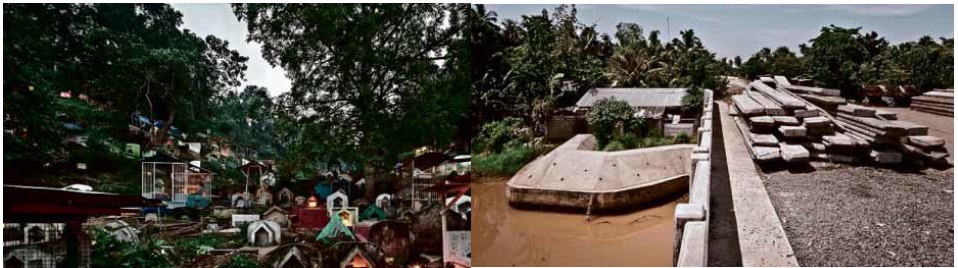
FAMILIES visiting their deceased relatives and staying overnight in Bolonsery public cemetery last Nov. 1. Right: Uncompleted bridge over Iponan River connecting Bulua with Opol.Once completed the bridge should be part of a new coastal artery crossing Cagayan de Oro.

Complementing the logistics infrastructure of Cagayan de Oro is the rapid modernization of the city’s telecommunications infrastructure, transforming the city into a business center and international logistics and telecommunications hub of the south.
 
Educational center
Beyond infrastructure, CDO is the center of education in Mindanao. Xavier University-Ateneo de Cagayan is Mindanao’s first university—and, in fact, is the first Jesuit university in the Philippines.
 
Capitol University and Liceo de Cagayan University are cited by the National Association of Colleges and Universities as among the country’s top 10 higher education institutions with the largest number of accredited programs.
With 15 universities and schools, CDO accommodates 82,000 students and 22,000 graduates every school year.
 
Custom-designed skills training and apprenticeship programs are readily available to serve human resource requirements. For example, Xavier University has partnered with Asian Carmakers Corp., the country’s official BMW distributor, to bring German automotive expertise to technical education students.
 
CDO’s strategic location and rich agricultural resources have made it the preferred site of major agribusiness companies such as Del Monte Philippines (which set up the world’s largest integrated pineapple processing plant here), Nestlé Philippines, Pilipinas Kao and other small and medium agri-based industries.
 
As a gateway to Southern Philippines, CDO provides direct access to rich agricultural areas in Mindanao—the source of 40 percent of the country’s food and livestock. CDO is a significant producer of oleochemical and other coconut products.
 
Higher-value products through agro-processing offer investment opportunities. Presently, Northern Mindanao is the top producer of cattle and is the third largest producer of poultry in the country.
 
CDO is also a key destination of meetings, incentives, conventions and exhibitions (MICE) in Southern Philippines. It has 4,806 rooms from various accommodation facilities that can handle conventions with 3,000 participants. It is trying to improve these rather limited numbers.
 
White water rafting capital

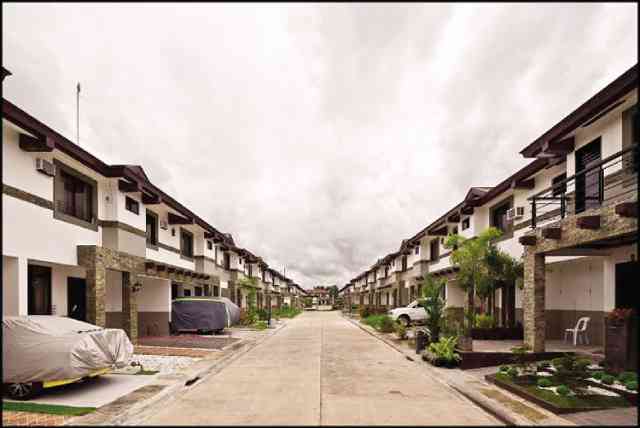
COURTYARDS in Carmen Barangay, developed by Pueblo deOro

CDO is the white water rafting capital of the Philippines, attracting ecotourism adventure seekers who also delight in experiencing ziplines and spelunking and diving, among other outdoor activities.
 
CDO is linked to Camiguin, which is renowned for its luxurious beaches, hot springs, waterfalls and historic landmarks; to the mountain ranges of Bukidnon, home to seven indigenous communities; to the Caraga region capitals of Butuan and Surigao with boast eco-tourism thrills; and to the Lanao del Norte nexus of Iligan City and Marawi City, home of the
colorful Maranao people.
Over the years, the Cagayan River has renewed its claim over CDO—the primordial gateway through which flowed the transactions and transformations of people and progress, commerce and culture, ideas and values.
Hit by Tropical Storm “Sendong” in 2011, CDO is a portrait of resilience, said Fr. Roberto C. Yap, SJ, president of Xavier University-Ateneo de Cagayan.


“Usually,” he said, “the word reminds us of the bamboo because of the way it dances with the wind in times of typhoons and then snaps back in place afterwards. But I would like to propose that resilience should mean not just overcoming challenges but prevailing over them to become better, stronger much more than we have been."