Saturday, November 23, 2013

...the PH best Islands

The Philippines: a guide to the best islands


Six of the country's 7,000-plus islands were devastated by Typhoon Haiyan; many of the others badly need tourists to return. Local writer Aya Lowe picks the best places to go.
 
 
Aya Lowe
theguardian.com (United Kingdom)              


Young surfers at Cloud Nine surf point, Siargao, Philippines
Two young surfers carrying boards at Cloud Nine surf point, Siargao. Photograph: Alamy
 
For a country with thousands of idyllic islands, plus world-class surfing and diving, the Philippines is a relatively undiscovered travel destination. Tourism is crucial to the country's economy, accounting for eight per cent of its GDP, but compare the UK visitor numbers – 120,000 in 2012 – to those of Thailand (800,000 per year) and you get some idea of just how off the radar this vast archipelago is.

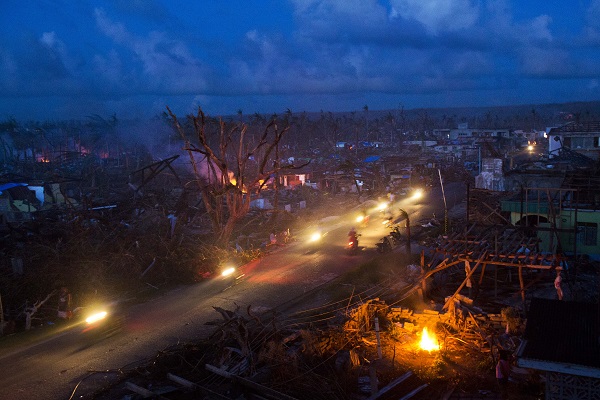
This month, of course, the country is firmly on the world's radar – for all the wrong reasons. Typhoon Haiyan caused wide spread destruction across the provinces of Leyte and eastern Samar on the mid-eastern side of the Philippines and some parts of Palawan and Cebu on the mid-western side. But while the areas in the path of the typhoon were devastated, much of the country was not damaged.

The storm caused havoc on six of the country's 7,107 islands, so most resorts and tourists activities are open and fully functional, and those that were hit are quickly getting back on their feet in the run up to December and January, two of their busiest months of the year.

The tourist board and tour operators are reassuring visitors that the country is not only safe, but in desperate need of visitors to bring a vital boost to the economy. Those who go will receive a very warm welcome. So, how do you choose which of those 7,000-plus islands to visit? Here's our guide to 10 islands, each offering something different.

1. Chill out in El Nido, Palawan

Bacuit Bay, Palawan, Philippines Bacuit Bay, Palawan, Philippines. Photograph: Alamy
 
This jungle beach town on the northern tip of Palawan hasn't changed much since before Spanish colonisation and has been cited as Alex Garland's The Beach. Explore the many islets of the nearby Bacuit archipelago on a boat-hopping tour, where the water so clear you can see the fish darting in between coral at 15 metres deep. Prices range from around £17-£20 per day for a tour and that usually includes lunch. There is grilled seafood is in abundance across the island.

Palawan was one of the islands in the path of Typhoon Haiyan, however it was only the city of Coron and the nearby island communities that were hit. El Nido has not suffered any damage and the surrounding coral reefs are intact, with only very shallow ones sustaining damage.

Where to stay: For beachfront living, Rainforest Beach Hotel offers rooms from £31 per night in high season. For a high-quality budget option, try Residencia Katrina , five minutes from the beach (from £21 per night).

How to get there: Local airlines fly directly to Palawan's capital, Puerto Princesa. From the city's main bus terminal, you can take a seven-hour Roll-On Roll-Off (RORO) bus to El Nido for £7, one way.

2. Shake your tail feather in Boracay

White Beach, Boracay, Philippines White Beach, Boracay Island, is often voted the best beach in Asia. Photograph: John Harper/Corbis


With endless beaches of powdery-white sand, long happy hours, abundance of restaurants and hotels to suit all budgets, and plenty of watersports, Boracay is the party island.

It has 12 beaches, the most popular being White beach and Bulabog. The island is divided up into "boat stations", which are used a reference points. Station One in the north is known for its high-end resorts and tranquillity; station two is the liveliest part, and station three is where all the budget accommodation can be found. While many locals look back longingly at good old days in the 70s before the hotels and restaurants started springing up, Boracay is still a Phuket in its infancy.

There was some storm damage to the island. Electricity still remains a problem for many parts of the island, but most hotels are up and running with generators.

Where to stay: Frendz Resort Boracay has one of the best beach locations out of all the midrange options (£50 for a beachside bungalow, sleeping four). Nigi Nigi Nu Noos has Balinese-style bamboo cottages furnished with handicrafts and wooden sculptures. Rooms are £70 per night.

How to get there: You can fly via Kalibo and then take a two-hour bus ride for £4, then a 15-minute ferry.

3. See a UNESCO World Heritage sight in Banaue, North Luzon

Rice terraces, northern Luzon, Philippines Amazing two thousand year old rice terraces, Banaue, northern Luzon. Photograph: Alamy
 
North Luzon, the biggest island of the Philippines, is a land of misty mountains, where pines replace palm trees. Head to Banaue and Batad to admire the 2,000-year-old rice terraces etched along plunging ravines. The 20,000km UNESCO-listed terraces still provide a livelihood for the various tribal groups that continue to live in relative isolation in the mountains. Treks along the rice terraces to various villages and waterfalls can be organised through the Banaue Tourist Information Center. Expect to pay around £10 for a guide for a whole day.

Where to stay: If you want to wake up to a view of the famous rice terraces, head to Batad, where a number of low-cost, basic guest houses line the mountains. Try Ramon's Homestay, where the owners are a great source of information about the local culture. It's £2.80 for a regular room or £3.50 to stay in a traditional Ifugao (local tribe) hut.

How to get there: North Luzon is best reached by bus, but be prepared for a long journey. Buses leave regularly from Manila and take nine hours to get to Banaue, costing £7.

4. See the curious in Bohol

Chocolate Hills Natural, Bohol, Philippines
Asia
Chocolate Hills, Bohol Island. Photograph: Per-Andre Hoffman/Alamy
 
Located just off Cebu, Bohol's most famous attraction is the surreal Chocolate Hills: over 1,500 mounds formed by coral deposits sculpted by a millennia of erosion. Depending on the season, they will either be green or brown. The island's famous resident is the camera-shy tarsier, the world's smallest monkey. Visit them in their protected enclosure at the Philippines Tarsier Foundation. Don't visit them in the cages kept along the river; they are mistreated and don't live long there. Either hire a motorbike or book a tour from a local company, such as Bohol Travel Tours, for around £35 with car, guide and lunch.

In October this year, the island suffered from a 7.2-magnitude earthquake, destroying many houses. Two weeks afterwards, Bohol was back on its feet, bringing in tourists as normal. The island was also hit by Typhoon Haiyan, but sustained little damage to its infrastructure. Tour operators and hotels remain fully open. The main issue being tackled by the island's authority is limited power supply, which is slowly but surely getting fixed.

Where to stay:Alumbung Bohol is a comfortable resort of beachside bungalows on popular Panglao island (from £20 per night). For something different head to Bohol Bee Farm , an organic vegetable and bee farm with rooms on Panglao, from £28 to £70 per person.

How to get there: Local airlines, including Cebu Pacific, fly to Tagbilaran airport from Manila, or you can catch a two-hour ferry from Cebu to Bohol (£7, one way).

5. Go surfing in Siargao

Facing the Pacific Ocean, just north of the island of Mindanao, is Siargao, one of the Philippines' surf centres. The town sees a steady stream of dedicated surfers who arrive to challenge themselves on the island's famous Cloud 9 reef break. The small beachside town hosts a number of international surfing competition, which make it a busy during surf season, but completely dead when the waves are down.

Novices can hire trainers, who you can find on the beach, for around £7 per hour, or you can book a package from a surf hotel, such as Kermit Surf Resort , which has a package for £394 per person per week, including accommodation, transfers and one-to-one surf lessons.

Where to stay: The no-frills, £5-a-night Bamboo Garden is popular among backpackers. Surfers tend to stay in Kermit Surf Resort (bungalows are £11 per night).

How to get there: There are direct flights to Siargao Island. Siargao airport is 45 minutes away from General Luna, the location of the popular Cloud 9 beach.

6. Get off the beaten track in Camiguin Island

Camiguin Island, Philippines Camiguin Island, Philippines. Photograph: Stuart Dee/Getty Images
 
This pear-shaped volcanic island, just off the northern tip of Mindanao, is often bypassed because of various Islamist uprisings that have been reported on Mindanoa. However, Camiguin itself has never had any incidents and those who make the effort to travel there are rewarded with an island barely touched by tourism. For such a small landmass, this tiny island packs quite a punch, its 29,187 hectares including seven volcanoes. It also offers good diving through an eerie sunken cemetery, waterfalls, a lagoon, and hot and cold springs. All of these can be reached easily by foot, or hire a motorbike (£11 a day with a driver,£7 without).

Where to stay: If you want to splurge, go to Bahay Bakasyunan sa Camiguin for £50 per night. If you are on a budget, try the Enigmata Tree House homestay at £15 per night (minimum of two people).

How to get there: The easiest way is to book a flight from Cebu, via Cebu Pacific Air, then take an 11-hour ferry to the island for (£2.30).

7. Go witch hunting in Siguijor

Cambugahay Falls, Siquijor, Philippines Cambugahay Falls, Siquijor. Photograph: Deddeda/Design Pics/Corbis

The magical Siquijor is both feared and revered by locals. It's the place to go, if you're looking for a boroboro, or witch doctor. The Provincial Tourism Department has a list of "official healers", or just ask any local and they'll be able to point you in the right direction. You'll need to rent a tricycle (a local motor taxi) for around £14 for half a day, as most of the healers live high in the mountains.

These witch doctors or healers welcome paying visitors – but be polite and respectful as it is an age-old tradition that is widely believed by locals. Away from all the magic, it's also a beautiful island for relaxing, snorkelling and diving.

Where to stay: Beachside bungalows at Coco Grove Beach Resort cost £19 per person.
How to get there: There are no direct flights. Fly to Dumaguete city, then take an hour-long ferry to Siquijor (£1.60).

8. Explore the misty mountains of Batanes

Batanes hills, Philippines Batanes, Philippines. Photograph: Ferdz Decena/Getty Images/Flickr RF

The Batanes Islands are found on the very northern tip of the Philippines archipelago, a land of gently sloping hills, thatched roof houses and locals who wear traditional straw hats. With weather reminiscent of drizzly British summers, locals visit the islands for some respite from the tropical heat, while tourists travel here for a completely different island experience from the rest of the Philippines. To get around, rent a bicycle or book a tour with a company, such as Batanes Travel and Tours , which charges £211 for a three-day trip including accommodation, transport and guide.

Where to stay: Batanes Resort offers comfortable, air-conditioned cottages for £25 per night.
How to get there: There are direct flights from Manila to Batanes, but being at the very tip of the country it's one of the more expensive islands to reach. Flights are often cancelled during bad weather.

9. Go diving in Mindoro

Apo Reef, Philippines Filipino divers swimming at the Apo Reef. Photograph: Dennis M Sabangan/EPA

Good dives spots are a dime a dozen in the Philippines, but the best scuba spots can be a bit harder to reach. Apo Reef is one of them. A mostly sunken atoll, two hours off the west coast of Mindoro, the 40 sq km reef is famous among the diving community for its abundance of larger creatures, such as sharks, rays and sea turtles. Most divers stay on Pandan Island (a 20-minute boat ride from Mindoro) and, from there, access the reef via a three-hour boat ride. Apo Reef Club is one of the closest dive operators to the reef. A package of five dives, including two night's accommodation and transfers, is £212.

Where to stay: As well as dive trips, Apo Reef Club offers clean, simple accommodation . Prices range from £10 to £46 per room.

How to get there: Domestic flights go from Manila to San Jose in Mindoro. Once you get on the island, head to Sablayan port (near the town market) and get a 30-minute boat ride to Pandan island (£7, one way).

10. Go hiking in Davao, Mindanao

Mindanao island, Philippines Mindanao island, with Mount Apo in the background. Photograph: Alamy

Davao is the biggest city on the island of Mindanao, an area that is scarce of tourists due to the aforementioned Islamist insurgencies. Davao City is widely regarded as a safe haven on the island and has been ranked as one best places to live in the country. This is where the world's smelliest fruit, the Durian, originates from. It is also home to the rare Philippine eagle (pay a visit to the Philippine Eagle Centre for an educational tour).

But the island's crown jewel is the country's tallest peak and semi-active volcano, Mount Apo. A 2,956-metre climb to the top will take you through the full spectrum of Filipino biodiversity, from steamy jungle to pine forests, and belching sulphuric vents. Join a group tour with Climb Mt Apo for £56 per person. If you go independently you will need a permit from the city hall in Santa Cruz, an hour south of Davao (contact Julius Paner, +63 2 441 1467). The permit costs £4 per person. You can then hire a freelance guide and/or porter at a rate of £4 per day for the porter and £7 per day for the guide. The permit office will be able to put you in touch with a certified porter and guide.

Where to stay: Green Windows hostel in the city centre offers clean and spacious dorm beds for £2.60 per night. A smarter option is Casa Leticia, £40 per night.

How to get there: Davao is a 1.5hr flight from Manila and there are at least six flights servicing the city on a daily basis.

Getting to the Philippines: Philippine Airlines flies to Manila five times a week from Heathrow. Once in Manila, the cost of domestic flights to get to the different islands can vary depending on what time of year you are flying and where. Local airlines such as Cebu Pacific, Air Asia and Tiger Airways offer seat sales throughout the year, where you can often bag return flights for around £50. Outside of the sales, expect to payaround £100 return.


Thursday, November 21, 2013

...the PH seat in UNESCO body

Philippines wins seat in UNESCO'€™s World Heritage Committee


The Ifugao Rice Terraces is one of the five World Heritage Sites in the Philippines designated by UNESCO. (Photo: Lira Dalangin-Fernandez, InterAksyon.com)
 
Tourism in the Philippines got an added boost as the country won a seat in the prestigious World Heritage Committee on Wednesday after elections were held during the 19th Session of the General Assembly of States Parties to the World Heritage Convention.

This year’s elections brought together 22 country candidates who vied for 12 available seats in the Committee.

The Philippines garnered the second highest vote in the elections, having received 116 votes from the total of 173 votes cast. This was a clear indication of States Parties’ support for and belief in the country’s capabilities to perform the important mission of the Committee.

Together with the Philippines, Croatia, Finland, Jamaica, Kazakhstan, Republic of Korea, Lebanon, Peru, Poland, Portugal, Turkey and Viet Nam will now join the other 9 current members of the World Heritage Committee.
 
The Philippines will serve a 4-year term until 2017.

During her remarks before the General Assembly, Ambassador Cristina G. Ortega expressed appreciation for the trust bestowed upon the Philippines. She assured the Assembly that the Philippines will be an active and responsible member who will work hard for the interests of the world’s cultural and natural heritage. She also said “that this is indeed happy news for my country”.

The General Assembly of States Parties meets every two years and elects new members to the World Heritage Committee to replace the outgoing members and it determines the uniform percentage of contributions to the World Heritage Fund applicable to all States Parties.

The 21-member World Heritage Committee is one of the most prestigious bodies associated with UNESCO whose main responsibility is to implement the World Heritage Convention. The Committee decides on whether a property is inscribed in or deleted from the World Heritage List. It examines reports on the state of conservation of inscribed properties and asks States Parties to take action when properties are not being properly managed. It also determines the use of the World Heritage Fund and allocates financial assistance upon requests made by States Parties.

The campaign for the Philippine candidature to the Committee was spearheaded by the Permanent Delegation of the Philippines to UNESCO, led by Ambassador Ortega, with valuable support and coordination provided by the Department of Foreign Affairs and the UNESCO National Commission of the Philippines.


Friday, November 15, 2013

...the Asian TV awards nominees


Filipino artists get nominated at Asian TV Awards 2013

Ferdie Villar
Asian Journal
14 November 2013


The Philippines was able to get nine nominations for this year’s Asian Television awards. Four of those nominations were performance or hosting, while five for programs.

Fighting in the category of Best Actress in a Leading Role are Marian Rivera and Lorna Tolentino.

 Marian has been nominated for her role as the martyr wife in the GMA-7 series, Temptation of Wife.


 Lorna on the other hand, is nominated for her character in the series Pahiram Ng Sandali, where she plays the role of a publisher having an affair with her daughter’s boyfriend.


The Queen of All Media Kris Aquino has been nominated for Best Entertainment Presenter/Host for her daily morning talk show, Kris TV.


Comedian Michael V. is again nominated for the category of Best Comedy Performance by an Actor/Actress for his show on GMA 7, Bubble Gang. He has won twice in the category—in 2005 and 2006—but is almost been nominated every year.


Other nominees include 24 Oras and Saksi for Best News Programme, while Reporter’s Notebook is nominated for Best Current Affairs Programme. All these shows are from GMA 7.


From ABS-CBN, The X Factor Philippines is nominated for Best Reality Show.


The announcement of winners will be during the awards/gala ceremony to be held in Singapore at the Resorts World Sentosa, Compass Ballroom on December 5.


...the Filipino Spirit

Filipino diaspora rallies after Typhoon Haiyan

From Hong Kong to Dubai, pastors, teachers and consular officials describe an unprecedented outpouring of support from a diaspora that even in normal times is renowned for sending large amounts of money home to family and friends.

“Everyone is mobilising, everyone is raising funds for organisations and churches,” says Joyce Demetillo, a pastor at the Jesus is Lord church in Hong Kong.

Verna Fajilan, a former ballerina at Ballet Philippines who teaches dance in Hong Kong, says that while the Filipino “spirit for helping . . . is instinctive”, Haiyan has sparked an altogether different level of response from expatriates.

“Because of the enormity of the typhoon, there are more people now who want to mobilise the relief efforts,” says Ms Fajilan, who is organising charity zumba dance classes to raise money.
The Philippines foreign ministry says there are more than 10m Filipinos overseas who, according to the central bank, sent $21bn home in 2012.

Rosanna Villamor, the Philippines deputy consul-general in Hong Kong where there are 180,000 Filipinos, says she has been amazed by the “sheer number of people who have come forward with a number of fundraising events”. She adds that one difference from previous disasters is that people are sending the consulate names of relatives and loved ones that they cannot locate.
 
Daisy Mandap, editor of the Sun, a newspaper for Filipinos in Hong Kong, says this Sunday – the day most of the city’s 163,000 domestic helpers have a day off – will see a big response, as Filipinos arrange fundraising events across the territory.
 
Similar events are happening across the world, including in the United Arab Emirates, home to 500,000 Filipinos, most of whom live in the business hub of Dubai. They are the second most dense concentration of migrants in the oil-rich Gulf after Saudi Arabia, where an estimated 1.2m work.

Get Flash Player
 
 
Wendell Castro, chairman of Task Force Yolanda – as Haiyan is known in the Philippines – in Dubai, is leading one of dozens of campaigns launched by about 100 Philippine community associations in the UAE. They have set up collection points for food, clothing, medicine and blankets, and are hoping to organise musical and prayer gatherings once they receive official approval.

“We are targeting about $200,000-$300,000 in donations,” Mr Castro says.

Filipinos from the affected areas have also spent the past week scouring the internet and awaiting phone calls for news about their families.

Jessa, a 26-year-old receptionist, has social media to thank for the end to six torturous days of uncertainty after her home town of Isabel in Leyte province was devastated, reduced to “only five homes”, she says.

I’d been looking at Facebook 24/7 and I recognised the landscape. So I sent a comment – ‘Please help me’ – and they gave me a number of a neighbour who went to my mother - Jessa, receptionist
 
Some residents of the town of about 45,000 people managed to bring a generator from a nearby island to charge mobile phones. They scaled a nearby hill to get a signal and posted pictures online.
“I’d been looking at Facebook 24/7, waiting for something, and I recognised the landscape,” says Jessa. “So I sent a comment – ‘Please help me’ – and they gave me a number of a neighbour who went to my mother.”

Thousands of kilometres away in New York, Elmer Villaluz, 66, treasurer at San Lorenzo Ruiz Chapel – the city’s main Filipino church whose masses have been bustling – says that parishioners and the local community have come together to donate cash and clothes to the Red Cross.

“Filipinos are very religious . . . but they’re asking why did this happen to them?” Mr Villaluz says. “We are thankful because the global community is giving us aid.”

Frank Cimafranca, the Philippines consul-general in Dubai, says the consulate is “trying to raise awareness” by directing donations to government bodies and non-government organisations that are taking donations. While many Filipinos may want to return home to help, he says that in most cases, it is not possible.

Some people will return to the Philippines because they worry for their loved ones, but most will stay for practical reasons – there is nothing more they can do and it is better to send money - Frank Cimafranca, Philippines consul-general in Dubai
 
“Some people will return to the Philippines because they worry for their loved ones, but most will stay for practical reasons – there is nothing more they can do and it is better to send money,” he says
But some people have decided that staying away is too hard. Patrizia Villamore, a domestic helper who has lived in Hong Kong for two decades, flew to Manila and then made her way to Cebu where she met up with her husband Brian Delima, a construction worker in Saudi Arabia, who had also flown home after the typhoon.

Speaking by phone from Cebu, the couple said that after they arrived in the Philippines they learned that his uncle had died. Mr Delima says his uncle survived the typhoon only to die several days later from the cold. Ms Villamore explains that the scale of the disaster made it impossible for them not to return home.

“It is a very different feeling. We want to see our families – are they alive or not.”
Additional reporting by Camilla Hall in New York


...the PH fundamentals

Moody’s says PH fundamentals intact

Impact of ‘Yolanda’ on country’s economy said to be limited

By Paolo G. Montecillo
Philippine Daily Inquirer
Supertyphoon “Yolanda” (Haiyan) survivors ride motorbikes through the ruins of the destroyed town of Guiuan, Philippine, on Thursday, Nov. 14, 2013. Yolanda killed thousands and caused billions of pesos in damage, but international rating agency Moody’s Investor Service said the Philippines’ economic fundamentals remained intact. AP Photo/David Guttenfelder, File)

Supertyphoon “Yolanda” killed thousands and caused billions of pesos in damage, but a major international rating agency said the Philippines’ economic fundamentals remained intact.

Moody’s Investor Service in a report this week said Supertyphoon Yolanda may be the worst calamity to hit Southeast Asia in nearly a decade, rivaled in scale only by the 2004 Indian Ocean tsunami that struck Indonesia.

However, while the loss in human lives was overwhelming, the overall effect on the real economy was likely to be muted.

“The 2004 Indian Ocean tsunami that struck Indonesia could be most similar to Typhoon Yolanda (international name: Haiyan) in terms of the scale of devastation, but it, too, had a limited effect on overall economic conditions,” Moody’s said.

Moody’s said the local economies of Leyte and other provinces in the Visayas hit hard by Yolanda last week would take the brunt of the impact.

The damage to road infrastructure, power lines, communications systems, and farmlands would likely lead to a steep drop in output.

Moody’s noted that, as of Wednesday morning, the National Disaster Risk Reduction and Management Council’s running count of casualties showed 1,833 deaths.

The rating firm, which upgraded the Philippines to “investment grade” last October, cited the government’s own initial estimate that the damage brought by Yolanda would shave just half a percentage point off the country’s estimated growth for 2013.

“The relatively small hit to growth reflects the small contribution of Region VIII to the country’s economic output,” Moody’s said.

In 2012, Region VIII accounted for only 2.2 percent of the Philippines’ gross domestic product (GDP), down from 2.7 percent in 2009.

In the same year, Region VIII’s real gross regional domestic product (GRDP) contracted by 6.2 percent and subtracted 0.2 percentage points from the country’s 6.8 percent growth rate.

The most important regions in terms of their contribution to Philippine GDP, Moody’s said, were Metro Manila and the Southern Tagalog region, which together constituted 53 percent of GDP in 2012.

Fortunately, these areas were unaffected by Yolanda.

Moody’s expects the Philippine economy to grow by 7 percent this year, matching the top end of the government’s official forecast.

The asset quality of rated Philippine banks will also be minimally affected.

As of the end of 2012, loans to Region VIII constituted only 0.4 percent of total system loans.

Moody’s also expressed confidence that the Philippine government would be able to adequately finance out of its own coffers the reconstruction in typhoon-affected areas.

The government registered a primary surplus of P156.9 billion through the first three quarters of this year, 12.7 percent more than the balance in the same period in 2012.

In its annual budget, the government had provisioned P7.5 billion in a calamity fund, as well as embedded P3.9 billion in quick response funds in budgets for different line agencies, “although some of these funds had already been spent to address earlier disasters,” Moody’s said.

“President Aquino also has discretionary funds available at his disposal. In addition, assistance from the international community will mitigate stresses on the government’s fiscal position.”


Sunday, November 10, 2013

...the featherweight showdown

This is PH's victory, says Donaire


 11/10/2013


MANILA, Philippines – Former world champion Nonito “The Filipino Flash” Donaire dedicated his victory to the Philippines after stopping Armenian fighter Vic Darchinyan in the ninth round of their featherweight showdown Saturday in Corpus Christi, Texas (Sunday in Manila).

Fighting for the first time at the featherweight division, Donaire overcame a sluggish start and felled Darchinyan in the ninth round with his left hook, eventually forcing the referee to stop the fight after he unloaded several bombs on the wobbly Armenian.

“It wasn’t my win tonight, it was the Philippines’ win,” Donaire posted on his social media accounts following his victory. “We are strong and we have faith. Thank you Lord for keeping me safe, giving me a sound mind, helping me see what needed to be done.”

“Thank you to the Archangels and especially all the fans and Filipinos who watched despite the typhoon,” he added.

The Philippines is reeling from the effects of Super Typhoon Yolanda (international name: Haiyan), with authorities estimating that at least 10,000 people were killed in Leyte.

In an interview following his victory, Donaire had asked for prayers for his motherland.

"First and foremost, prayers to people in the Philippines who were hit by the typhoon," he said.

"Please have your prayers for people in the Philippines."

Even prior to the fight, Donaire said he was dedicating his performance to the Filipino people.

“Dedicating my fight to uplift the Filipinos’ spirits. Our indomitable spirit has been recognized worldwide,” he said. “Keep the faith, He will not abandon us in our time of need. Continued prayers for the earthquake and typhoon victims.”

Even so, Darchinyan came very close to avenging his 2007 loss to Donaire, taking control of the fight in the middle rounds and at the end of the fifth round, unleashing a flurry of punches on the Filipino, who was saved by the bell.

Donaire even admitted that he doubted himself at one point in the fight.

“When he hit me in the cheek, I felt like he broke my cheek, and I thought, ‘Is this it for me? I’m losing the fight. Should I keep going?’ But I put my heart into it, and you know what, I will never, ever quit,” he said.

Malacañang on Sunday commended Donaire and beauty queen Ariella Arida for bringing pride to the Philippines during these trying times.

“We extend our congratulations to Ms. Arida and the Filipino Flash. We appreciate their efforts to bring a bt of smile to Filipinos who are going through so much,” said deputy presidential spokesperson Abigail Valte on radio dzRB on Sunday.

Arida had finished third-runner up in the 2013 Miss Universe pageant, a feat which she also dedicated to her countrymen.


...the Miss Universe 2013 runner-up

Ariella Arida is Miss Universe 3rd runner-up


11/10/2013

Coronation night dedicated to PH, Vietnam

Ariella Arida takes the stage in a yellow Alfredo Barazza dress at Crocus City Hall in Moscow, Russia during the Miss Universe preliminary competition. Darren Decker, REUTERS


MANILA  -- The Philippines' Ariella Arida on Sunday (Manila time) finished 3rd runner-up in Miss Universe 2013, a feat she dedicated to her countrymen who were devastated Friday by the world's most powerful typhoon this year.

Venezuela's Gabriela Isler won the title, besting 85 other candidates during the coronation night held at Crocus City Hall in Moscow, Russia, which hosted the 62-year-old pageant for the first time.

Said to have one billion viewers in over 190 countries, the event was announced in the opening minutes to be dedicated to the Philippines and Vietnam, neighboring countries in the path of destruction of super typhoon "Yolanda" (Haiyan).

Isler, a marketing graduate and professional model, was crowned by Miss Universe 2012 Olivia Culpo of the United States to become the new titleholder for one year.

The runners-up, in order, were Spain's Patricia Rodríguez, Ecuador's Constanza Báez, Arida, and Brazil's Jakelyne Oliveira.

The Philippines' bet was notably the only Asian in the Top 5.


Get Flash Player
Fan favorite

Dubbed an early favorite leading up to the finals night, Arida earned a spot in the Top 16 after winning the official online polls. She then took the stage in a red bikini for the swimsuit portion, along with her fellow semifinalists.

Advancing into the Top 10, Arida proceeded to parade in a yellow Alfredo Barazza dress for the evening gown segment.

In the final round of the pageant, Arida was asked by judge Tara Lipinski: "What can be done about the lack of jobs for young people starting their careers around the world?"

The Filipina beauty answered: "For the people who have lack of jobs, I do believe that we people should invest in education and that is my primary advocacy, because we all know that if everyone of us is educated and well aware of what we are doing, we could land into jobs and we could land a good career in the future. Education is the primary source and ticket to a better future."

Get Flash Player


Isler, meanwhile, was asked by judge Steven Tyler: "What is your biggest fear and what is your plan to overcome it?"

She responded through an interpreter: "I believe that one may have a lot of fears but nonetheless, this is nothing negative. I believe that we should all overcome our fears, and this in turn, would make us much stronger. And thusly, we can become stronger persons. As soon as we overcome our fears and we're sure of ourselves, we can face any challenge."

Of the five finalists, Arida was the only candidate who answered in English and without an interpreter.

With her 3rd runner-up finish, Arida replicated the success of Shamcey Supsup, the Philippines' candidate in the 2011 pageant. Janine Tugonon and Venus Raj finished 1st runner-up in 2012 and 4th runner-up in 2010, respectively.

The Philippines is still hoping to produce its third Miss Universe winner after Gloria Diaz in 1969 and Margie Moran in 1973.

'For the Philippines'
A day before the coronation night on Sunday, Arida, through a video on the official page of Miss Universe on Facebook, addressed her fellow Filipinos amid the destruction brought by "Yolanda" in several parts of the Philippines.

Said to be the strongest typhoon in recorded history to make landfall, "Yolanda" wiped out entire structures and left at least 138 dead as of Saturday night, according to the local disaster management council, with hundreds more feared unaccounted for.

"This fight, I offer to you guys, to all my Filipino people," Arida said in the online video. "It's for the Philippines. Keep safe and keep on praying. Be strong."

Amid news of the widespread destruction, Filipino pageant fans kept hopes high for Arida to take home the crown. Leading up to the finals night, Arida was widely tipped to win the title after her string of special appearances in pre-pageant events.

Viewing parties were held at different venues, including a government-sponsored gathering in her home province and packed bars, despite the coronation night kicking off at 2 a.m. local time.


In Moscow, some 700 supporters carrying banners and Philippine flags were gathered by the Filipino Association in Russia at the Crocus City Hall. The strongest cheers were heard whenever Arida took the stage, ABS-CBN News' Dyan Castillejo reported Sunday from the venue.

The same zeal for international pageants was also evident early this year, particularly with the back-to-back wins of Filipinas Megan Young and Mutya Datul in Miss World and Miss Supranational, respectively.