Friday, November 22, 2019

...the top foreign investment destination

Philippines a top foreign investment destination  with 613% surge in approved investments

PR  Newswire Asia
22 November 2019

BOI Figures Show +600% Rise by September 2019 with South Korea Topping Foreign Investments from East Asia

MANILA, Philippines, Nov. 22, 2019 /PRNewswire/ -- New data has unveiled a surge in BOI approved foreign investments which are expected to flow into the Philippines over the next 2-3 years.

These initiatives have made the Philippines a top investment destination, largely attributable to its continuing digital transformation and combined information and communications technology (ICT) and infrastructure efforts.

Skyline of Makati City, Manila, Philippines, Asia

Approved foreign investments by the end of September 2019 reached USD4.7 billion, a 613% rise from USD659 million in the same period in 2018, BOI figures show. Investment approvals as of September 2019 totaled USD15 billion, a 105% jump from USD7.31 billion in the same period of the previous year. 

The tourism sector also continues to rise with USD186.3 million worth of hotel and accommodation projects, while manufacturing is seeing consistent growth of USD1.24 billion of approvals, a 190% increase on last year. 

Trade and Industry Secretary and BOI chairman Ramon M. Lopez applauded the results, commenting: "This data shows that big-ticket projects are now rolling in, proving the strength and resilience of the Philippines economy in attracting foreign investors despite the global slowdown. 

"The results are a testament to the Philippines as a great place for foreign investment where business can thrive."

Explore investment opportunities in the Philippines

Investors can explore business opportunities in the Philippines at Invest ASEAN 2019 in Busan, South Korea on November 25-26 where the BOI will represent the country considered by the US News and World Report in 2018 as the best to invest in.

At this event, BOI will showcase opportunities in specific priority sectors: manufacturing, specifically electric vehicle and auto parts; infrastructure and construction; and tourism

"This growth, together with a suite of incentives such as tax holidays and exemptions from duties on imported spare parts makes the Philippines an enviable investment destination and one-stop-shop for business within Asia and beyond," added Lopez. 

Wednesday, November 20, 2019

...the Billboard 's Next Big Sound toppers

Pinoy group SB19 enters Billboard' s Next Big Sound Chart

ABS-CBN News
20 November 2019

MANILA -- Pinoy pop group SB19 has earned a spot on a Billboard chart which lists musical acts for their fast-rising popularity.


On Wednesday, SB19 grabbed the sixth spot on Billboard's Next Big Sound chart, behind K-pop boy band A.C.E.
he Next Big Sound chart tracks "the fastest accelerating artists during the past week, across all major social music sites, statistically predicted to achieve future success," according to the Billboard website.

The chart is measured by Next Big Sound, an American company which provides analytics on online music.

Fans of the five-member group took to social media to celebrate the milestone, with the hashtag #SB19onBillboardNBS topping local Twitter trends on Wednesday morning.
Comprised of Sejun, Stell, Ken, Josh, and Justin, SB19 debuted in October 2018 with the song "Tilaluha."
The group achieved mainstream popularity after a video of the members' dance practice for their sophomore single, "Go Up," went viral on social media in September.


Tuesday, November 19, 2019

...the PH improved world talent ranking

Philippines up 6 notches in world talent ranking


Louella Desiderio
Philippine Star 
19 November 2019


MANILA, Philippines — The Philippines was among 63 countries that posted the biggest climb in the latest World Talent Ranking (WTR) report of the International Institute for Management Development (IMD), as it rose six places to 49th place from 51st last year.


The country remained the laggard however, among Southeast countries.

Released in partnership with the Asian Institute of Management Rizalino S. Navarro Policy Center for Competitiveness in the Philippines, the WTR looks at countries’ ability to attract, develop and retain an employable talent pool.

The other countries which posted the biggest improvements are Taiwan, which went up seven places to 20th; Lithuania, which rose eight notches to 28th; and Colombia which advanced six places to 54th.

While the Philippines’ ranking improved in this year’s report, it was still behind its peers in the region.
All other Southeast Asian countries included in the report had better rankings than the Philippines such as Singapore (10th), Malaysia (22nd), Indonesia (41st), and Thailand (43rd).

In ranking countries, the WTR looked at three factors such as investment and development, appeal and readiness, and took into account responses to IMD’s executive opinion survey.

In the investment and development factor which measures funds poured in, as well as development of domestic human resources, the Philippines ranked 61st, up from the 62nd spot last year.

“This represents a one-place improvement from 2018, but this factor has consistently ranked in the 60s. Its low rank was mostly driven by pupil-teacher ratio in primary and secondary education and public expenditure on education per student,” IMD said.

As for the appeal factor, which looks at the ability to attract and retain high-quality talent from abroad, the Philippines rose to 31st place from 38th a year ago.

IMD said the highest ranked indicators for the Philippines under the appeal factor were cost of living and effective personal income tax rate, while the lower ranked ones were quality of life, justice, and brain drain.

When it comes to the readiness factor which assessed the quality and growth of the existing talent pool, the country placed 26th, 11 places higher than the previous year’s 37th.

“The relatively higher rank of the readiness factor was mostly driven by indicators on skilled labor, language skills, and share of science graduates among college degree holders,” IMD said.

Switzerland continued to top the WTR, strengthening its position as a global talent hub.

This was followed by Denmark in second place, and Sweden on the third spot. Mongolia, on the other hand, was at the bottom of the list or 63rd place.

...the world's most diverse football team

Philippines taking multicultural dream on to global stage

FIFA.com
19 November 2019


There is not a national squad like that of the Philippines anywhere else on the planet. This statement can only be understood by delving a bit deeper into the team’s recent history.


In 2005, an anonymous video games fan got in touch with the Philippine Football Federation (PFF) to inform them that Phil and James Younghusband, two English brothers coming through Chelsea’s youth set-up, had a Philippine mother and were eligible to play for the Azkals.

In a region where basketball and boxing tend to take centre stage, it was essential for the PFF to find a way of boosting football’s profile and popularity. And that is where history plays a decisive role: throughout the last century, Filipinos were long associated with searching for opportunities far outside their borders. As a consequence, thousands of Filipino citizens and their descendants play in countries with a richer footballing history.

The Miracle of Hanoi


The idea of unearthing players in far-flung parts of the world began to take shape, but results did not initially follow. The PFF decided not to enter the qualifying campaigns for the 2006 and 2010 FIFA World Cup™ tournaments, because, despite the significant economic and logistical efforts being made, the team’s level of play was still too low. In the end, the transformation of the Filipino national team was achieved through a focus on improving competitiveness, which would eventually bear fruit at major tournaments.

One of the most striking examples of tangible progress came at the AFF Championship, a competition which pits some of the best nations in south-east Asia against each other every two years. In 2010, Vietnam – hosts and defending champions – were drawn to play Philippines in the second match of the group stage – a daunting challenge for a side that had lost five and drawn one of their last six games.

However, an eye-catching performance by the Azkals led to what is now commonly known as the 'Miracle of Hanoi'. Goals from the English-born pair of Chris Greatwich and Phil Younghusband silenced the 40,000 home fans, in the new mixed-race generation’s first landmark victory.


From video games to social networks

Following that memorable success, a number of players with Filipino parentage expressed a desire to represent the national team.

Sometimes, it was the PFF that took the first step. “My mum is from the Philippines, and they contacted me to find out if I wanted to be part of the team,” forward Angel Guirado – born in Spain, and a Filipino international since 2011 – told FIFA.com.

On other occasions, word of mouth and the emergence of social networks provided the link. “I had a friend who played with Angel Guirado in Spain, and I’d heard the story,” explained Carli De Murga, who is another Spaniard with a Filipino mother, and who has also represented Philippines since 2011. “I contacted Angel through Facebook, and he put me in touch with the Federation. I sent them a video and they called me up straight away.”

Currently, the squad includes footballers born in 12 different countries: Germany, England and Spain make up the majority, but Denmark, Norway, the Netherlands, Scotland, Australia, Italy, Switzerland, Japan and the United States also feature.

What is it actually like to be part of such a multicultural squad? “The atmosphere is brilliant,” said De Murga. “Personally speaking, playing in the same jersey as people with so many different cultures and customs has really helped me to mature. It broadens your horizons. And I love that everyone’s also quite alike, and that we all feel comfortable in each other’s company.”


Syria showdown key to World Cup dream


Playing in this diverse and familiar environment has started to pay dividends. In January the Filipinos competed in the AFC Asian Cup for the first time, and they currently find themselves in an advantageous position in the second round of Asian qualifying for Qatar 2022.

Philippines lie third in Group A, with the same number of points as China PR. A draw in their upcoming match with Syria would be enough to move them up into second spot (based on their record, the runners-up may qualify for the third round), at least until the next round of games in March.

“That would be amazing – a fantastic achievement!” said Guirado from the team’s camp in Dubai, where the match is due to take place. “In football, nothing is impossible. The result in our first game with Syria (a 5-2 defeat) did flatter them quite a bit.”

“It’s now or never,” said De Murga. “We have an historic opportunity. Syria have a lot of talent up front, but they sometimes leave themselves open at the back. We have to play as a unit, try to frustrate them, and do them damage any time we get a chance.”

Curiously, Phil Younghusband, the youngest of the two long-serving siblings, announced his retirement from football on Monday. He bids farewell to the game as Philippines’ most capped player (108 appearances) and their all-time top scorer (52 goals), and will likely look on with great excitement as the world’s most multicultural team attempt to pull off another impressive result on Tuesday.

Thursday, November 14, 2019

...the ultimate luxury resort

The ultimate luxury retreat in the Philippines

A Philippine private-island paradise, Amanpulo is the ultimate tranquil treat, says Matt Hryciw

Matt Hryciw | Standard.co.uk
14 November 2019

Any holiday that begins on a private plane is going to be exclusive from the word to go. Taking off from the Philippine capital, Manila, from a VIP lounge out of sight from the melee of the main airport set the tone for five days at Aman's showpiece private island resort, Amanpulo, a trip would create a new benchmark for me in understated luxury and personalized service.


What's left to say about a place that's attained nearly legendary status in luxury travel circles? An hour's flight southwest of the traffic-choked capital, Pamalican Island in remote Palawan province feels like another world, with all the trappings of a luxury resort including hilltop spa and gourmet dining, but also with an immediate sense that you've just landed in a tropical wildlife preserve. I stepped out of the plane into a relative cool after a  morning of welcome heavy rain and was greeted warmly by my personal guest assistant, Mark, who would be looking after me during my stay. He led me to a solar-powered golf cart where I hopped in for a tour of the 2.5km-long island. Around the first corner we slowed to let a four-foot monitor lizard lazily cross our path on our way to the island's turtle hatchery to check for the new arrivals, before pulling up to the beach that would be my home for the next five days. 


Laying eyes on the beaches of Pamalican Island for the first time is much of what makes this private isle such a draw. All the daydreaming poring over photos online of the famously powdery white sand and sparkling turquoise ocean still hadn’t prepared me for having all those expanses — 5.5km in total — of shore virtually to myself. This is where the use of superlatives to describe Amanpulo’s biggest asset seems unavoidable: if you’re a sun-worshipper or simply love floating in a crystal clear, shallow sea above schools of colourful fish all by yourself, this is unparalleled heaven. 
Guests at Amanpulo can choose from two types of accommodation. First there are the 42 private, stand-alone rooms like mine called ‘casitas’, which are either cleverly tucked behind the coconut palms along the beach or nestled into the island’s lush interior. For a proper splurge, go for the larger, family-friendly, ultra-luxe villa compounds that boast their own pools and come with a personal chef and butler — naturally. My beach casita became my tranquil oasis, where I’d look up from my king-size bed at vaulted hardwood ceilings or out over my private corner terrace with it’s two heavenly sun beds, down my very own sandy path to the beach. It was there that I really got a sense of the refined, ultimate privacy that’s so sought after at Amanpulo.


For a little more action, the Clubhouse acts as  a hub for the island and hosts the wood-paneled library for games of backgammon as well as South East Asian all-day dining with an elegant feel. This space hugs the vast main pool deck, all clean lines and gleaming all white sun loungers. Try the Philippine Dining Experience for an impressive introduction to the nation's best flavours.
My favourite spot for breakfast was in the breeze at the Lagoon Club, overlooking miles of coral reef, while a casual meal of pizza hot from the outdoor oven at tables in the sand made for a lunch light years from those back at my office desk. By Christmas, the revamped Beach Club on the opposite shore will take over as a show-stopping all-day dining venue and bar. 
Getting around the island’s gravel roads was fun, too. I got to keep my golf cart — no driving licence required — to zip to meals or to farther beaches. That’s the freeing thing about Amanpulo: since its the only gig around I had free rein to explore everywhere on the island that didn’t require a key to enter. The only roadworks I saw were jolly guys up an overhanging tree removing coconut hazards. Plus, 7am trips to the light-filled gym, with 360-degree sea and jungle canopy views, were easy on the mountain bike I was given for my stay, which added extra animal-spotting to my routine.
All of this is run with sustainably in mind. There’s a desalination plant for safe drinking water (no plastic bottles needed), treated wastewater keeps the island lush and many of the vegetables served are grown on the island. And I was taken care of by a friendly army of staff, many of whom live on the island year-round and know it inside-out.
What became clear to me during my stay was how much thought — and work — has gone into carefully creating this tranquil paradise and then perfecting it over the past 25 years. Experience it, if you can

Wednesday, November 13, 2019

...the PH zero-waste city

Ten zero-waste cities: How Taguig in the Philippines became clean


By Sonia Henam, Swati Singh Sambyal
downtoearth.org

Last Updated: Wednesday 13 November 2019


Can we imagine a city in India without waste? Arguably, no. Rather our cities are drowning in their own wastes.

It is a big challenge now to collect, segregate and manage our waste in cities and towns. But there are cities across the world, including in India that have become completely waste-free.

They did so by adopting the ‘zero waste model’. This model is all about significantly reducing waste, eventually completely eliminating it.

Most of what we now waste can be safely and economically recycled, reused, composted, or turned into biogas through anaerobic digestion. It also creates a large number of well-paying jobs. Informal waste collectors are brought into the net and provided with decent earnings and dignity.

This is a unique model of solid waste management — frugal and generating wealth from waste. And it is successfully being implemented.

Down To Earth has curated a list of 10 cities across India and the world which are now ‘zero-waste’.

Taguig’s fight to be clean

The first among them is Taguig in the Philippines, which became clean mainly by segregating waste at source and diverting it. 
File:Bonifacio Global City - skyline (view from Pioneer) (Taguig and Makati)(2018-04-24) cropped.jpg

A few years back, the city, a barangay or community of metropolitan Manila, was known for its dumpsite, a vacant plot, where heaps of mixed waste from its households as well as those in its affluent neighbours landed.

Perhaps the best example of how Taguig’s transformation took place is one of its own barangays, Fort Bonifacio. The youngest barangay in Taguig, Fort Bonifacio had a population of about 11,739 according to the 2015 Census. It produces about 0.32 kilogram per capita per day of waste.

In 2009, Fort Bonifacio officials were facing challenges on managing its waste. They had limited resources and no clue from where to start the process of managing waste.

In order to address the increasing issue of solid waste, the city officials approached Mother Earth Foundation (MEF), a Filipino non-profit, for assistance.

In 2011, under the guidance of MEF, Fort Bonifacio officials visited barangays with the best RA 9003 (a legislation in the Philippines on SWM) practices such as Barangay Bagumbuhay in Quezon City; Teresa in Rizal; and Puerto Prinsesa in Palawan.

They then proceeded with a self-assessment and baseline survey, visiting each of Fort Bonifacio’s eight zones to scope out problem areas where waste accumulated.

The MEF trained barangay officials and project staff on waste analysis and characterisation study (WACS) and ecological solid waste management (ESWM). It followed this by conducting an intensive information education communication (IEC) campaign and finally setting up a materials recovery facility (MRF).

MEF and Fort Bonifacio formally launched ESWM in 2012 and the barangay passed an ordinance in full compliance with the national law on ESWM.

This ordinance formally established the barangay ecological solid waste management programme, mandating correct segregation, collection, recycling, and disposal, as well as an MRF site for the barangay. In 2014, the ordinances were updated to respond to new developments. This further helped the work on ground.

According to the WACS, organic waste comprised 40 per cent of the total waste in Fort Bonifacio, representing the amount that could easily be composted and converted into fertiliser, and thus diverted from the landfill. This showed that there was a value in waste, if segregated.

“Eighty per cent of the waste collected is diverted at the MRF and has 95 per cent household compliance rate,” Sonia Mendoza, chairman of MEF, said.

Source: Mother earth Foundation (2012)

 Waste Composition in Brgy. Fort Bonifacio (2012)


“During the pilot, 15 informal waste pickers were trained and absorbed as official waste collectors of the barangay. Now, the waste pickers earn about PHP 8,000 (US$ 186) as compared to PHP 3,000 (US$ 70),” she added.

Mendoza said this also reduced the number of city trucks collecting waste from the barangay, from the daily average of four trips per day, down to only one trip per day, resulting in savings of around P10, 000 (US $195) per day for the city.

According to the GAIA report on Taguig city, waste diversion serves as an indicator for both income — as recyclables are sold — and project success.

The project resulted in more efficient use of Taguig’s budget, saving PHP 800 (US$ 15) per cubic feet.

As the number of dump trucks dropped from four in 2012 to one per day in 2013, just a year after the project began, hauling expenses were similarly slashed by three-fourths, from PHP 7.3 million (US$ 141,200), to PHP 1.825 million (US$ 35,300) per year.

Today, 95 per cent of Taguig’s households segregate their waste before it is collected. The city is now clean and free of litter, and has shown remarkable progress in the fight against waste.

It was recognised as the ‘cleanest barangay in metro Manila’ in terms of solid waste management (SWM) in 2015.

Tuesday, November 12, 2019

...the Filipino language in German University

Leading German university launches Filipino language course 


Philippine Star 
12 November 2019

 
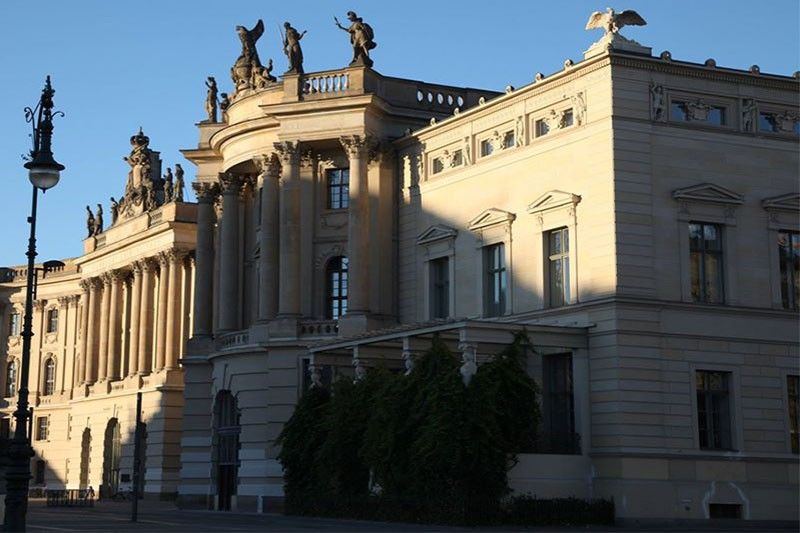
MANILA, Philippines— The Embassy of the Philippines in Berlin, Germany recently announced that one of the leading Germany universities, Humboldt University, would be offering a Filipino language course for the first time.


The course was launched during the first week of November by the Advancing Philippine Studies Program.

“Filipino language will be offered as a full module for the first time at the institute,” the organizers of the Advancing Philippine Studies Program in HU said on a Facebook post.


Advancing Philippine Studies Program, launched in July 2019, seeks to advance and promote Philippine and Filipino studies in HU "by developing academic programs, projects and activities related to the culture, society, and history of the Philippines and the Filipino people."

These projects are conceptualized and managed by Filipina sociocultural anthropologist and assistant professor at the Department for Southeast Asian Studies, Rosa Cordillera Castillo.

The Filipino language course, would be offered for the Winter term and would serve as one the major components of the Philippine Studies program.

It would be would be administered by Filipino language instructor Antonio Galang Jr. from the University of the Philippines.

The Philippine Studies program is overseen by HU's Institute of Asian and African Studies in partnership with the Philippine Embassy in Germany.

It is funded by a donation offered to HU through the office of former Sen. Loren Legarda and npw De[ity Speaker Loren Legarda and the Philippine Embassy in Berlin under the Cultural Diplomacy funds of the Department of Foreign Affairs.

HU, founded in 1810, is Germany’s premiere tertiary-level educational institution. It currently ranks 120th at the QS World University Ranking.

In May 2019, the Supreme Court ruled with finality that Filipino and Panitikan or Philippine Literature can be excluded as core subjects in college in the Philippines. —Rosette Adel